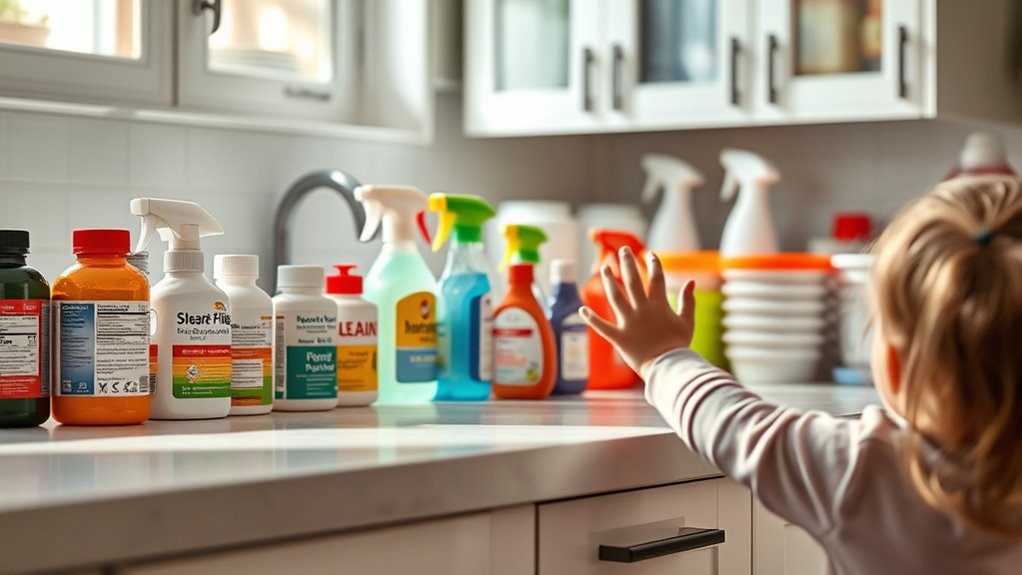

To prevent poisoning at home, store medicines and cleaners out of children’s reach in high or locked cabinets and use childproof containers. Properly dispose of expired or unused medications, and keep everything in their original packaging. Regularly check that safety caps are secure. Educate your family on hazards, recognize warning signs, and create an emergency plan. Continuing with these safety habits helps you better protect your loved ones from household hazards.
Key Takeaways
- Store medicines and cleaners in high, locked cabinets out of children’s reach and sight.
- Use childproof containers with secure caps and keep original labels for easy identification.
- Properly dispose of unused or expired medicines following pharmacist guidance or local disposal programs.
- Educate family members to recognize poisoning symptoms and practice immediate action if exposure occurs.
- Regularly review and update safety measures and storage practices to maintain a poison-free home environment.
childproof medicine storage cabinet
As an affiliate, we earn on qualifying purchases.
As an affiliate, we earn on qualifying purchases.
Understanding the Risks of Household Substances
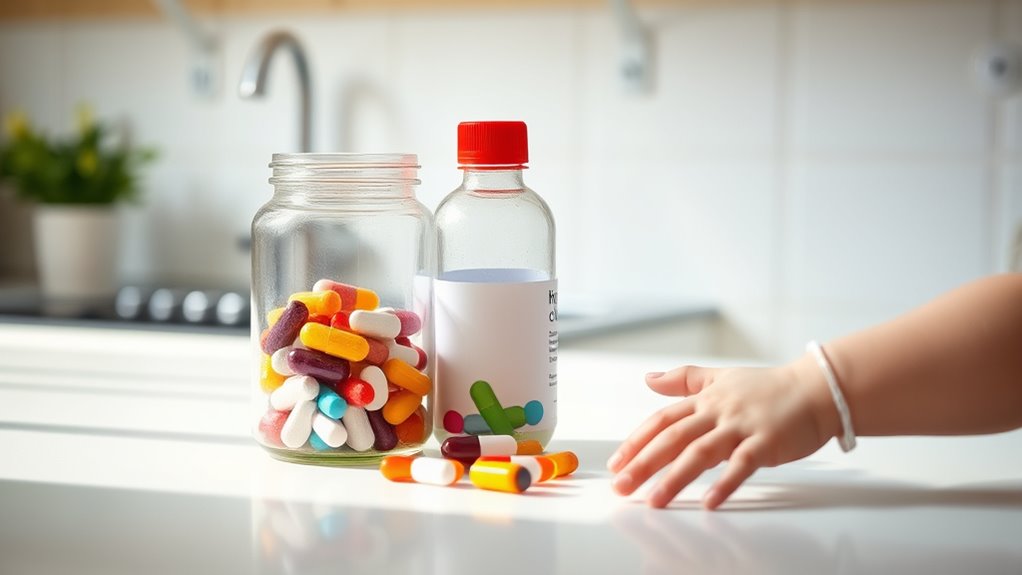
Many household substances can be dangerous if not handled properly, and it’s important to recognize the potential risks they pose. These substances are often household hazards that can lead to accidental poisoning, especially if children or pets are involved. Chemical exposure from cleaning products, medicines, or pesticides can happen quickly and cause serious health issues. You might not realize how easily these items can harm you or your loved ones, which is why understanding their risks is essential. Always remember that even common household products contain chemicals that can be toxic if ingested, inhaled, or absorbed through the skin. Being aware of these hazards helps you stay vigilant and take steps to prevent accidental poisonings at home.
Safe Storage Practices for Medicines
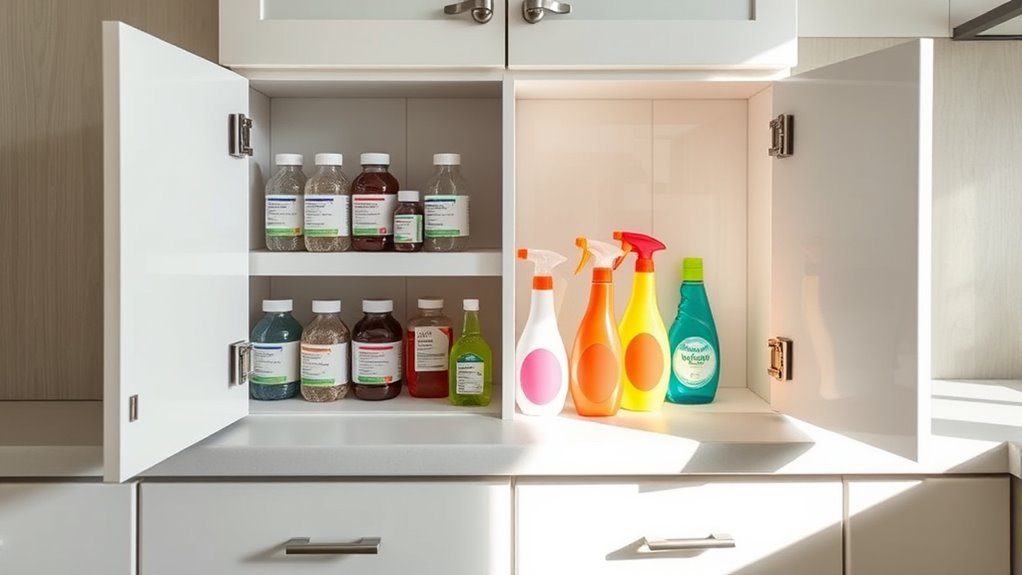
To keep your family safe, always store medicines out of children’s reach and sight. Use childproof containers to add an extra layer of protection, and keep the original labels intact for proper identification. These simple steps help prevent accidental poisoning and make sure medicines are handled safely. Additionally, regularly review and dispose of expired medications to prevent accidental ingestion.
Store Out of Reach
Keeping medicines out of reach is one of the most effective ways to prevent accidental poisoning at home. Children are especially curious and may ingest medications, risking serious health issues or medication side effects. Store all medicines high on a shelf or in locked cabinets, guaranteeing kids cannot access them. Remember that household toxin sources aren’t limited to medicines; cleaning products and chemicals are also dangerous if pulled down or ingested. Proper storage helps eliminate the risk of accidental poisoning and ensures your family’s safety. Always check that containers are secure and out of sight. By keeping medications out of reach, you reduce the chance of children exploring and accidentally ingesting substances that could cause harm or trigger medication side effects. Additionally, proper storage practices can help ensure that only authorized adults access potentially hazardous substances.
Use Childproof Containers
Using childproof containers is an effective way to enhance medication safety at home. These containers are designed to be difficult for children to open, reducing accidental poisoning risks. Always store medicines in original containers with secure caps, and ensure they are labeled clearly. When possible, choose containers with safety features like push-and-turn caps or blister packs. Keep medicines out of children’s sight and reach, even if they are in childproof containers. Educate family members about the importance of using these containers consistently. Remember, no container is completely child-proof, so ongoing supervision is essential. Additionally, understanding safe storage practices can further reduce risks. Use the table below to understand different childproof containers and their benefits:
| Container Type | Benefits |
|---|---|
| Push-and-turn caps | Difficult for children to open |
| Blister packs | Tamper-evident, child-resistant |
| Screw-on caps | Require effort to open |
Keep Original Labels
Storing medicines with their original labels is vital for guaranteeing safe and effective use at home. The labels provide essential information about dosage, expiration dates, and storage instructions, helping you avoid medication interactions or incorrect use. Keeping labels intact also helps you recognize potential side effects and identify the right medication in case of emergencies. If labels are removed or replaced, you might accidentally take the wrong medicine or miss important warnings. Always store medicines in their original containers, where the label can be easily seen, and keep them out of children’s reach. Proper labeling ensures you follow instructions correctly, reducing risks of accidental poisoning and ensuring medicines work as intended. Remember, a clear label is your best safeguard for safe medication management. Additionally, utilizing medication tracking tools can help you stay organized and maintain proper medication schedules.
Proper Handling and Disposal of Medications
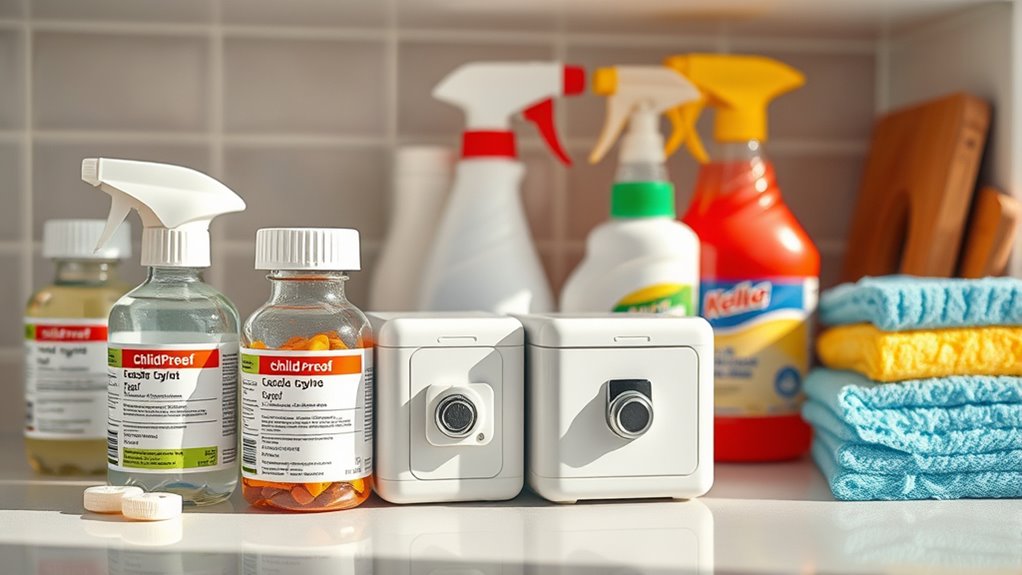
Proper handling and disposal of medications are essential steps in preventing accidental poisoning at home. You should always store medications properly in a secure, child-resistant container, away from children’s reach. This helps prevent medication side effects from accidental ingestion. When disposing of unused or expired medicines, follow your pharmacist’s guidance or local disposal programs to avoid environmental harm. Never flush medications down the toilet unless instructed, as this can contaminate water sources. Keep medications in their original containers with labels intact for easy identification. Always double-check that you’re giving or taking the correct medication and dosage. Proper medication storage and responsible disposal minimize risks of accidental poisoning and ensure your home remains safe for everyone. Implementing safe storage practices can further reduce the risk of unintentional ingestion by children or pets.
Securing Cleaning Products and Chemicals
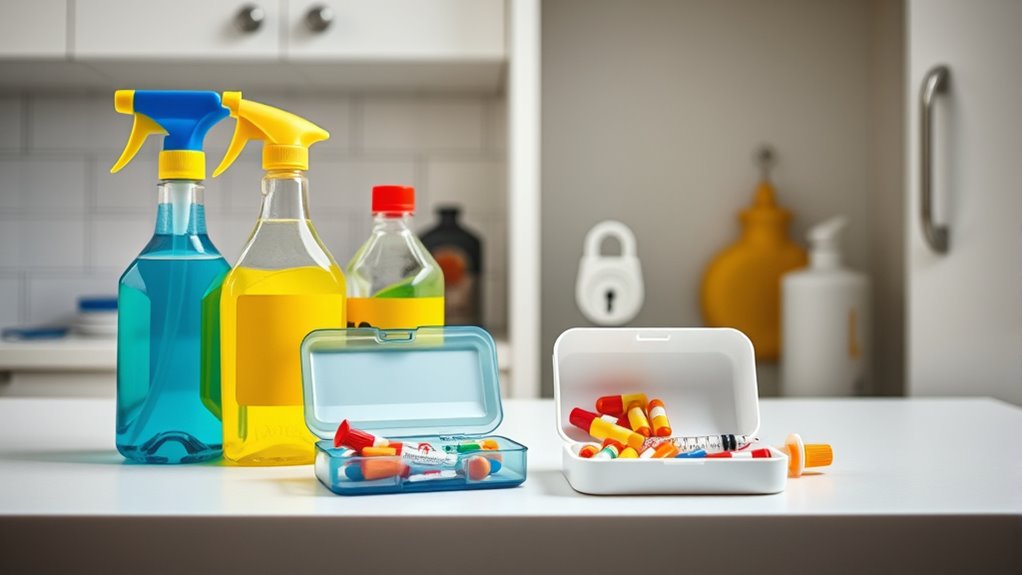
Since cleaning products and chemicals can pose serious health risks if mishandled, it’s essential to keep them out of children’s reach and securely stored. Proper storage minimizes exposure to chemical hazards and prevents accidental poisoning. Always check labels for importance—look for warnings and safe handling instructions. To enhance safety, consider these steps:
Secure cleaning supplies out of children’s reach and always read labels for safety instructions.
- Store chemicals in high, locked cabinets.
- Keep products in their original containers with clear labels.
- Never transfer chemicals into food or drink containers.
- Regularly review and dispose of expired or unused cleaners.
- Use appropriate spray tips to prevent overspray and accidental spills during cleaning tasks.
Childproofing Your Home Against Poisoning
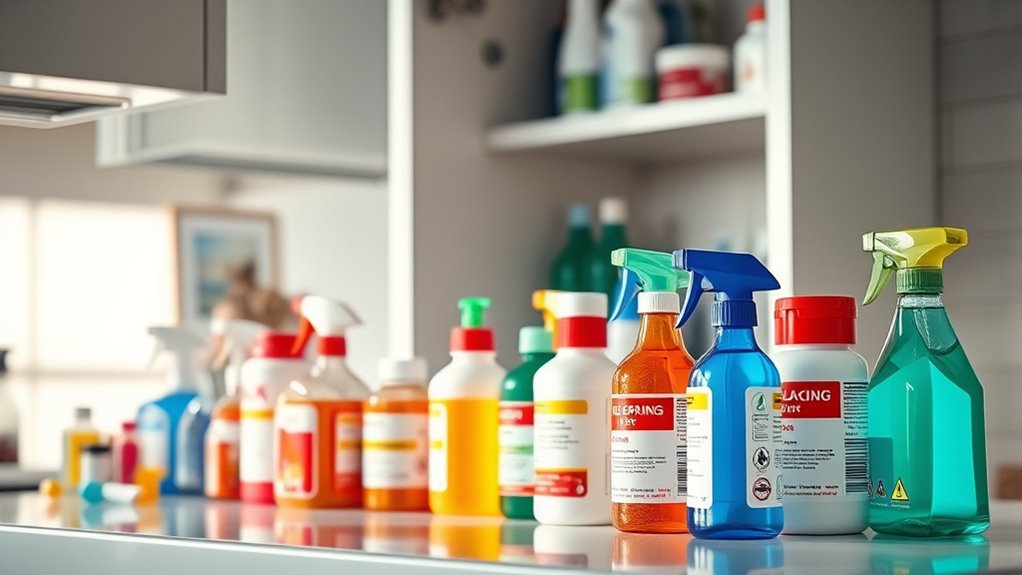
You should secure cabinets and drawers to keep harmful substances out of your child’s reach. Store dangerous items in areas away from children and always use child-resistant packaging when available. Taking these steps can substantially reduce the risk of poisoning in your home. Consider using childproof planters or similar safety measures to prevent accidental ingestion of plants or soil.
Secure Cabinets and Drawers
Have you ever wondered how easily a curious child can access dangerous substances in your home? Securing cabinets and drawers is a vital step in childproofing. Here are four tips to improve cabinet safety:
- Install a child lock on all cabinets containing medicines or cleaners.
- Use latch locks that are difficult for children to open but simple for adults.
- Keep frequently used dangerous items in high or locked cabinets.
- Regularly check locks to guarantee they’re secure and functioning properly.
- Consider incorporating wall organization systems to keep hazardous items out of children’s reach and maintain a clutter-free environment.
Child locks prevent children from opening cabinets on their own, reducing the risk of poisoning. Make sure every cabinet and drawer holding hazardous substances has a reliable child lock. This simple safety measure greatly lowers the chance of accidental poisoning at home.
Store Away From Children
Securing cabinets and drawers is a key step, but it’s equally important to store hazardous items out of your child’s reach altogether. Keep medicines, cleaning supplies, and other household hazards on high shelves or in locked cabinets. This prevents accidental exposure and reduces the risk of medication interactions if your child finds and ingests multiple substances. Being aware of household hazard awareness helps you identify and eliminate potential dangers before an incident occurs. Never leave medications or cleaners unattended, even for a moment. Use childproof locks if possible, and regularly check that all containers are secure. Proper storage practices are essential in preventing poisoning, helping to minimize the chances of accidental ingestion. By storing dangerous items away from children, you create a safer environment, reducing the chance they’ll get into something toxic or harmful. Prevention starts with proper storage.
Use Child-Resistant Packaging
How can you further protect your children from accidental poisoning? Using child-resistant packaging is a simple, effective step. Always choose medicines and cleaners stored in tamper-proof containers, which are designed to be difficult for children to open. These containers act as a first line of defense, reducing the risk of accidental ingestion. To maximize safety, consider these tips:
- Ensure all containers have the proper child-resistant caps.
- Keep medications and cleaners in their original packaging.
- Regularly check that tamper-proof seals are intact.
- Store these items out of children’s reach, ideally in locked cabinets.
- Be aware of the importance of cookie consent and privacy controls, which can also be relevant when shopping for childproofing products online.
Educating Family Members About Poison Safety
To effectively prevent poison incidents at home, it’s vital to educate all family members about poison safety. Teach them the warning signs of poisoning, like unusual odors, spills, or symptoms such as dizziness or nausea. Discuss prevention strategies, including keeping medicines and cleaners out of reach and using child-resistant packaging properly. Make certain everyone understands the importance of immediate action if they suspect poisoning. Use the table below to highlight key safety tips:
| Safety Tips | Explanation |
|---|---|
| Store dangerous items securely | Keep out of children’s reach and locked away |
| Recognize warning signs | Be alert to odors, spills, or unusual behaviors |
| Practice prevention strategies | Use safety caps and proper storage techniques |
| Educate all family members | Ensure everyone knows what to do in emergencies |
Educating your family creates a safer home environment.
Recognizing and Responding to Poisoning Incidents
Recognizing a poisoning incident promptly can make all the difference in ensuring immediate help and reducing health risks. Watch for poisoning symptoms like difficulty breathing, vomiting, dizziness, or unusual drowsiness. If you suspect poisoning, act quickly. Here are key steps:
Prompt quick recognition of poisoning signs to ensure immediate help and prevent serious health risks.
- Identify possible sources of poison, such as medicines or cleaners.
- Call emergency contacts immediately—local poison control or emergency services.
- Keep the container or bottle handy for reference.
- Do not induce vomiting unless instructed by a professional.
Responding swiftly can prevent severe health consequences. Remember, staying calm and acting fast is *vital* when you notice signs of poisoning. Always have emergency contacts programmed into your phone and share this information with family members. Your prompt action can save lives.
Creating an Emergency Plan for Poisoning

Have you prepared a clear emergency plan for poisoning incidents? A well-planned home emergency response can save lives. Start by designating who will handle poison response and where emergency contacts are stored. Practice what to do if someone ingests a poison, including calling poison control immediately. Use this simple table to organize your plan:
| Step | Action | Contact Info |
|---|---|---|
| Recognize signs | Identify poisoning symptoms | Poison control: 1-800-222-1222 |
| Immediate response | Call poison control, don’t induce vomiting | Emergency services: 911 |
| Prevent further harm | Remove the poison source if safe | |
| Follow-up | Seek medical attention if needed |
Having a plan guarantees swift, effective poison response during a home emergency.
Regularly Reviewing and Updating Safety Measures
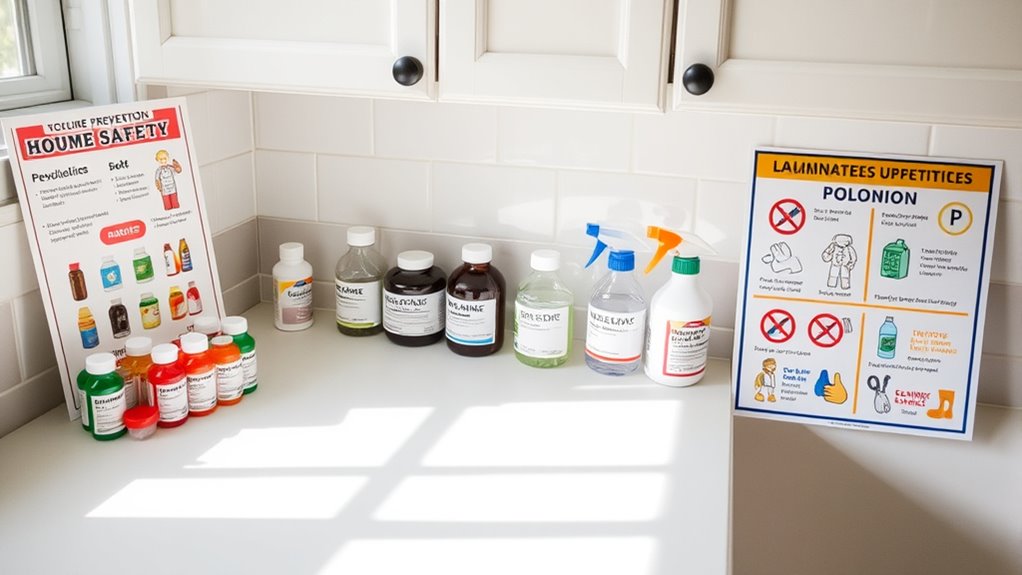
Once you’ve established an emergency plan for poisoning incidents, it’s important to maintain that plan current and effective. Regularly reviewing and updating your safety measures ensures your home stays secure. Consider these key actions:
- Check for new medication interactions that could increase poisoning risks.
- Update poison prevention policies as your household changes, like new family members or medications.
- Reassess storage locations to keep medicines and cleaners out of reach.
- Review your emergency contacts and procedures periodically.
Frequently Asked Questions
How Can I Tell if a Substance Is Toxic or Safe?
You can tell if a substance is toxic or safe by checking toxicity indicators like warning labels, ingredient lists, and safety data. Always follow safe storage tips—keep medicines and cleaners out of reach and in original containers. If you’re unsure, consult product labels or contact poison control. Remember, if someone shows symptoms of poisoning, seek medical help immediately. Staying cautious helps protect you and your loved ones from harm.
Are Natural or Organic Products Safer to Store at Home?
Natural or organic products aren’t automatically safer to store at home. While natural alternatives may seem less harmful, they still require proper organic storage to prevent accidents. Always read labels carefully, keep products out of children’s reach, and store them in secure, clearly labeled containers. Even organic items can be toxic if misused. Being cautious and following safe storage practices helps protect your family from potential poisoning.
What Should I Do if a Child Swallows a Non-Medicinal Item?
If a child swallows a non-medicinal item, act quickly by calling emergency contact or poison control right away. Don’t try to induce vomiting or give them food or drinks unless instructed by a healthcare professional. Follow first aid procedures, such as keeping the child calm and comfortable. Stay with them until help arrives, and provide details about what was swallowed to assist responders efficiently.
How Often Should I Review My Home’s Poison Prevention Measures?
Think of your home like a fortress, constantly defending against unseen threats. You should review your home safety and prevention checks at least once every three to six months, or whenever you introduce new items. Regularly evaluating your poison prevention measures ensures hazards stay guarded. By staying vigilant, you keep your fortress safe and your loved ones protected from potential dangers lurking in everyday objects.
Can I Use Childproof Locks on All Household Cabinets?
Yes, you can use childproof locks on all household cabinets to enhance cabinet safety. These locks are effective in preventing children from accessing dangerous substances like medicines and cleaners. Installing them on all cabinets ensures thorough protection, especially in high-risk areas such as kitchens and bathrooms. Regularly check and maintain the locks to guarantee they work properly, providing peace of mind and a safer environment for your little ones.
Conclusion
By staying vigilant about storing medicines and cleaners safely, you naturally reduce the risk of poisoning. Sometimes, a simple reminder or a quick check can prevent a dangerous accident—like finding a child near an unsecured cabinet or a forgotten medication. When you educate your family and create a plan, safety becomes second nature. Remember, prevention often comes down to small, consistent actions—sometimes, a forgotten bottle is all it takes to make a difference.