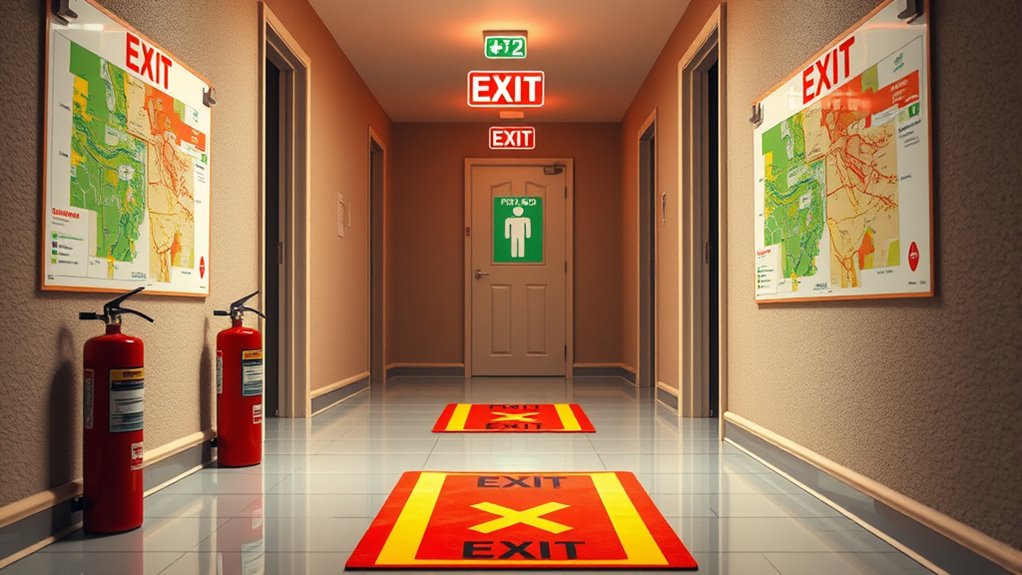
Creating an emergency exit plan for your home involves identifying all accessible escape routes, marking safe outside meeting spots, and practicing fire drills regularly. Make certain smoke alarms are working, exits are clear, and escape ladders are nearby if needed. Consider the needs of children, seniors, or disabled family members, and include safety devices like interconnected alarms. Staying calm and prepared can save lives — continue for essential tips to develop and maintain effective escape strategies.
Key Takeaways
- Identify and mark at least two accessible, unobstructed escape routes from every room in your home.
- Create a detailed floor plan with clear exit routes and a designated outside meeting place.
- Regularly practice fire drills, including simulated conditions, to ensure everyone knows how to escape quickly.
- Install and maintain interconnected smoke alarms and ensure all safety devices are functioning properly.
- Keep pathways, exits, and safety equipment free of obstacles, and tailor escape strategies for vulnerable household members.

Hausse Retractable 2 Story Fire Escape Ladder, 13 Feet
- Secure Hooks: Retractable hooks for secure attachment
- Easy Deployment: No assembly or tools needed
- Durable Construction: Slip-resistant rungs for safety
As an affiliate, we earn on qualifying purchases.
As an affiliate, we earn on qualifying purchases.
Why Fire Escape Planning Is Essential for Your Home
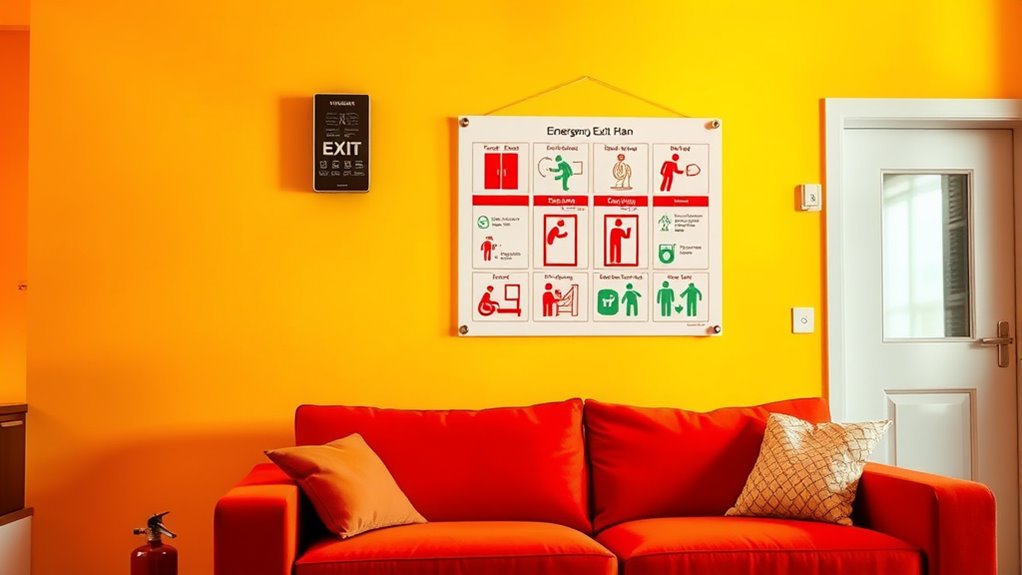
Having a fire escape plan is crucial because fires can spread rapidly, leaving you only a minute or two to escape. To guarantee your plan is effective, follow manufacturers’ instructions carefully when installing smoke alarms. Proper placement on every home level and in all sleeping areas greatly boosts your chances of early detection. Knowing how to quickly access multiple escape routes can save lives, especially if one path is blocked. Using closed doors during escape helps slow smoke and fire spread, providing more time to evacuate safely. Regularly reviewing and practicing your household escape plan ensures everyone understands their roles and responds swiftly during a fire emergency. Following manufacturers’ instructions carefully guarantees that safety devices work correctly when it matters most. Additionally, understanding the importance of regularly checking your smoke alarm hours can help maintain your home’s safety preparedness. Being aware of special occasion safety tips, such as fire safety during celebrations, can further enhance your readiness in emergency situations. Incorporating a financial preparedness plan can also ensure that your household is equipped to handle unexpected emergencies effectively. Moreover, understanding fire behavior can help you better anticipate how fires might develop in different scenarios, improving your overall safety. Staying informed about home safety regulations ensures that your fire escape plan complies with local codes and standards.
Key Components of an Effective Escape Strategy
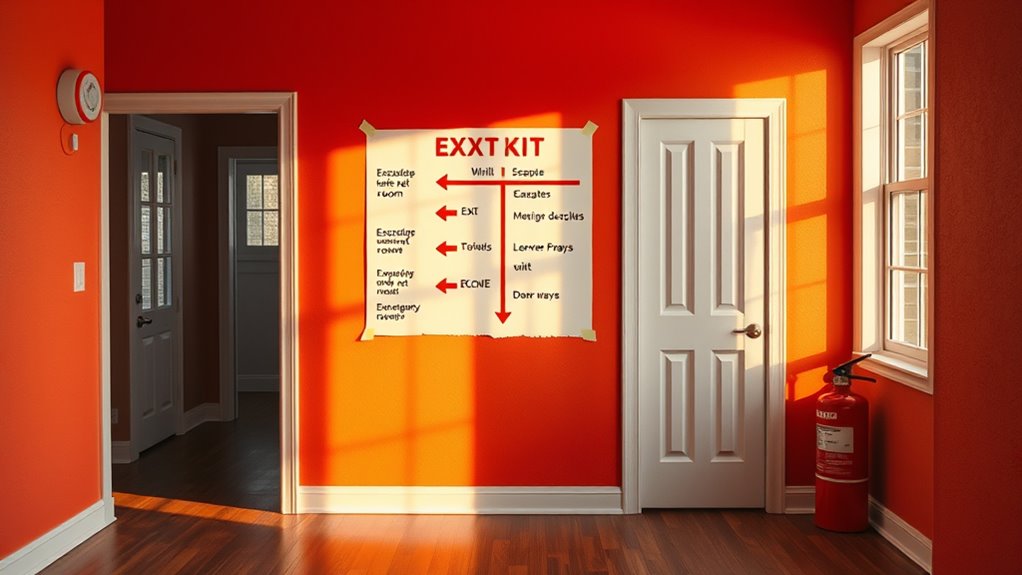
An effective escape strategy relies on well-planned routes and clear procedures. You should have at least two options from each room, like a door and a window, so you’re prepared no matter the situation.
A solid escape plan includes multiple routes from each room for quick, safe evacuation.
Mark a safe outside meeting place on your plan to guarantee everyone knows where to gather after evacuating.
Regularly practicing fire drills twice a year helps you and your family become familiar with the routes and respond quickly. Incorporating home safety protocols into your drills can further improve your preparedness.
Make sure doors and windows are easy to open and free of obstructions for a swift exit. Proper planning includes ensuring that escape routes are accessible and unobstructed at all times.
Additionally, consider special needs, like escape ladders or assistance plans for vulnerable family members, to enhance safety for everyone.
Having a comprehensive safety plan ensures all family members are prepared in case of emergencies. These components form the backbone of a reliable and effective escape strategy.
Understanding industry trends can help you stay updated on new safety tools and methods to improve your emergency preparedness.
Step-by-Step Guide to Developing Your Household Escape Plan
To develop an effective household escape plan, start by walking through your home and identifying all possible exits, such as doors and windows, ensuring they’re easily accessible and unobstructed. Additionally, consider the importance of home safety protocols to ensure everyone knows how to respond in emergencies. Next, create a detailed floor plan marking at least two escape routes from each room, including windows and doors. This helps everyone know their options during an emergency. Then, designate a safe outside meeting place at a distance from your home and mark it clearly on your plan. It’s essential to involve all family members, including children and those with disabilities, so everyone understands their role. Regularly review and update your plan as needed. Having a clear, practiced plan minimizes confusion and increases safety during a fire or emergency. Additionally, understanding the importance of contrast ratio in projectors can help you better prepare for home cinema setups, ensuring clear visuals during your emergency drills or entertainment sessions.
Practicing Drills to Reinforce Fire Safety Preparedness
Practicing fire drills regularly is essential for guaranteeing everyone in your household knows how to respond quickly and safely during an emergency. You should conduct drills at least twice a year to familiarize everyone with escape routes and procedures.
Regular fire drills ensure your household responds quickly and safely during emergencies.
During each drill, simulate real fire conditions by using low lighting or smoke to encourage crawling low and staying calm. Include all family members, including children and those with disabilities, practicing their specific escape steps safely. This helps ensure effective evacuation in real situations. Incorporating cultural beliefs and confidence-building strategies can further motivate family members to take safety seriously and stay engaged during drills.
After each drill, review what went well and identify obstacles or issues, then adjust your plan accordingly. Use visual cues such as marked escape routes and predetermined outside meeting spots to reinforce quick decision-making. Incorporating emotional branding strategies can motivate family members to take safety seriously and stay engaged during drills. Additionally, ensuring everyone understands the importance of emergency exits can improve overall responsiveness and reduce panic during actual incidents.
Understanding headphone compatibility with various devices can enhance communication during drills, especially if family members use wireless or Bluetooth headphones. Consistent practice builds confidence and ensures your household reacts efficiently when it counts most.
Safety Devices and Precautions to Enhance Your Escape Routes
To guarantee your escape routes are reliable, you should install interconnected smoke alarms that sound all at once when smoke is detected. Make sure doors and windows are unobstructed and easy to open quickly in an emergency. Additionally, use emergency release devices on security bars and keep escape ladders nearby and ready to deploy. Furthermore, regularly testing your fire safety devices ensures they function properly during an emergency. Ensuring your smoke alarm system maintains optimal performance can significantly enhance your safety during emergencies. Properly maintaining and understanding the best arcade machines for home game rooms can also be a fun way to prepare for leisure activities after escaping an emergency. Always check for signs of spoiled items like mold or off-smells to prevent unexpected hazards in your home. Being aware of potential security vulnerabilities in your safety systems can help you address weaknesses before an emergency occurs.
Interconnected Smoke Alarms
Interconnected smoke alarms work together to provide a synchronized alert system that can save lives during a fire. When one detects smoke, all alarms activate simultaneously, ensuring you’re alerted no matter where you are in your home. This setup is essential for early warning, especially if a fire starts in a distant room. To maximize safety, install interconnected alarms in every sleeping area, on each level, and near common spaces. Regular testing and battery replacements keep them functioning effectively. Use the table below to understand their key features:
| Feature | Benefit | Placement |
|---|---|---|
| Wired or wireless | Flexible installation options | Every level and sleeping area |
| Simultaneous alert | Early warning for the entire home | Near bedrooms and main living spaces |
| Regular testing | Maintains alert reliability | Monthly checks |
A comprehensive approach to installation and maintenance ensures that your interconnected smoke alarms remain reliable and effective. Additionally, security measures such as surveillance cameras can further enhance your home safety by providing visual monitoring of your property. Being aware of potential false alarms and how to prevent them also contributes to maintaining an effective alert system. Regularly updating your alarm system software can help address vulnerabilities and improve performance. Furthermore, understanding proper maintenance procedures can extend the lifespan and reliability of your smoke alarms.
Clear Escape Pathways
Ensuring your escape routes are clear and unobstructed is vital for a quick and safe evacuation during emergencies. You should regularly check that all doors and windows open easily without resistance, especially during drills, to confirm they won’t jam or stick when needed.
Keep all pathways to exits free of clutter, furniture, or other obstructions that could slow your escape. Make sure lighting along escape routes is sufficient so you can see clearly in low visibility conditions.
Additionally, verify street numbers are visible from the road to help emergency responders locate your home quickly. If you have security bars, install and maintain emergency release devices so you can exit swiftly without delay.
Clearing your escape routes now can make all the difference in an urgent situation.
Emergency Release Devices
Emergency release devices on security bars are crucial safety features that allow you to exit quickly without fumbling for keys or tools. These devices enable a fast push or release mechanism, ensuring you can escape swiftly during an emergency.
To keep them reliable, regularly test and maintain the release systems, preventing malfunctions when you need them most. Installing devices that meet safety standards helps avoid delays and minimizes injury risks.
Clear instructions and signage should be placed near the bars, guiding everyone on how to operate the release device efficiently. Combining these devices with routine emergency drills ensures all household members know how to use them confidently.
Properly maintained and understood, emergency release devices markedly enhance your home’s safety during urgent situations.
Special Considerations for Children, Seniors, and Disabled Family Members
When planning your emergency exits, you need to consider the unique needs of children, seniors, and family members with disabilities.
Ensuring accessible routes and having assistance strategies in place can make a big difference during an emergency.
Tailored Escape Strategies
Creating escape plans that address the unique needs of children, seniors, and family members with disabilities is essential for a safe evacuation. Your plan should consider mobility limitations and specific assistance needs.
Keep assistive devices like wheelchairs or walkers near exits and ensure they’re accessible during an emergency.
Practice specialized rescue techniques, such as safe lifting or guiding methods, so you can help family members with limited mobility quickly and confidently.
Use visual and auditory signals—like flashing lights or vibrating alerts—to ensure everyone’s alerted, including those with sensory impairments.
Additionally, coordinate with emergency responders to familiarize them with your household’s specific needs.
This proactive approach guarantees everyone can evacuate safely, reducing confusion and delays during a real emergency.
Assistive Device Planning
Planning for assistive devices is a key step in ensuring everyone’s safe evacuation. Make sure devices like stairlifts, hospital beds, or mobility aids don’t block escape routes or pathways.
Create a personalized evacuation plan that includes children, seniors, and disabled family members, identifying helpers and specific steps to follow.
Practice using mobility aids and assistive devices during fire drills so everyone feels confident operating them under stress.
Keep emergency contact information, medical supplies, and necessary tools near exits for quick access.
Also, install visual and tactile alert systems, such as vibrating smoke alarms or flashing lights, to help family members with hearing or vision impairments.
Proper planning guarantees that assistive devices support a swift, safe evacuation for everyone in your home.
Preparing for Unique Fire Emergency Situations
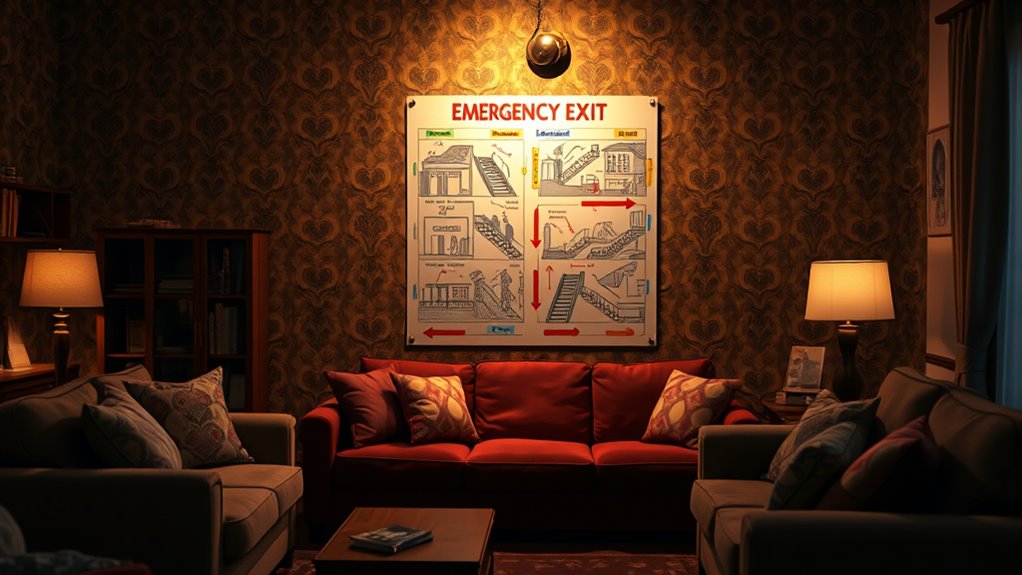
Preparing for unique fire emergency situations requires proactive measures beyond basic escape routes. You need to plan for scenarios where standard exits are blocked or unsafe.
Practice setting up and using escape ladders from second-story windows so you can quickly evacuate if needed. Regularly simulate waking children to ensure they respond promptly to smoke alarms.
Store escape ladders in accessible locations near windows for rapid deployment. When exits are blocked by smoke or fire, seal rooms with towels or duct tape to prevent smoke inhalation and call emergency services immediately.
Cover air vents and seal cracks to keep smoke out if you’re trapped inside a room. These precautions help you adapt to unexpected fire challenges and improve your chances of a safe escape.
Maintaining Clear and Accessible Exits at All Times

To guarantee you can escape quickly in an emergency, it’s essential to keep all exits clear and accessible at all times. Regularly inspect doors and windows to ensure they open easily and aren’t blocked by clutter or furniture.
Keep pathways leading to exits free of obstacles so you can move swiftly without tripping or delays. Avoid storing heavy or valuable items near exits, which could obstruct escape routes during a fire.
Check that door hinges, locks, and latches work smoothly, allowing quick opening under stress. Make it a habit to periodically test all emergency exits, confirming they remain accessible and functional.
Staying vigilant about maintaining clear exits ensures you can escape swiftly and safely when every second counts.
Tips for Staying Calm and Acting Swiftly During a Fire Emergency

When a fire breaks out, staying calm and acting quickly can make all the difference. Take deep breaths to stay focused and clear-headed, which helps you think clearly under pressure.
Recall your practiced escape plan instantly and follow it without hesitation—timing is essential. Alert others nearby immediately so everyone knows to evacuate safely.
Use your designated escape routes, avoiding elevators, as they can be dangerous during a fire. Once outside, move swiftly to your predetermined meeting place and avoid re-entering the building.
Staying calm enables you to make better decisions and act efficiently, increasing safety for everyone involved. Remember, quick, decisive actions save lives, so keep these tips in mind during an emergency.
Frequently Asked Questions
How Do You Plan an Emergency Exit?
When planning an emergency exit, start by identifying all doors and windows you can use to escape.
Map out at least two routes from each room, and pick a safe outside meeting spot a good distance away.
Make sure everyone knows how to open windows and doors quickly, practice regularly, and consider any special needs.
Review and update your plan often, practicing drills to keep everyone prepared.
How to Draw an Evacuation Plan for Your Home?
Creating an evacuation plan is your home’s secret weapon, and you can do it easily! Start by drawing a detailed floor plan, marking every room, door, and window.
Identify at least two escape routes per room, including windows if possible.
Choose a safe outdoor spot, and practice walking each route to confirm they’re clear.
Keep your plan updated, so it’s always ready when you need it most.
Is There a Free Software to Draw an Evacuation Plan?
You’re wondering if free software exists to help you draw an evacuation plan. Luckily, there are great options like Floorplanner, Sweet Home 3D, and Roomstyler.
These tools let you easily create detailed floor plans, mark escape routes, and add doors, windows, and furniture for realistic simulations. Using them regularly helps you visualize routes, identify obstacles, and keep your plan up-to-date for maximum safety.
How to Create a Fire Escape Plan for Home?
To create a fire escape plan for your home, first walk through your space and identify all exits, making sure they’re clear.
Draw a detailed floor plan, marking at least two escape routes from each room, including windows and doors.
Pick a safe outside meeting spot and practice your plan twice a year.
Make sure everyone, especially children and disabled family members, knows and rehearses their escape routes regularly.
Conclusion
Remember, your home’s escape plan is your shield against chaos—like a lighthouse guiding you through the storm. Keep it clear, practiced, and ready, so when fire strikes, you can navigate darkness swiftly and safely. Your family’s safety depends on your vigilance and preparation; it’s the steady flame that illuminates hope amid uncertainty. Stay alert, stay prepared, and let your exit plan be the beacon that leads everyone to safety.