
TL;DR

Turn quiet afternoons into listening time
- Thousands of audiobooks, podcasts and originals
- Listen on your phone, tablet or Echo — also offline
- Cancel anytime
A randomized controlled trial in Barcelona found that both group nature activities and access to activities people could do alone were associated with lower loneliness scores among 320 older adults. Average reductions persisted through one year, though the study does not establish that the same results will apply in other populations or settings.
A randomized trial in Barcelona found that nature-based activities were associated with lower loneliness scores among 320 older adults in low-income neighborhoods, with average reductions still recorded one year later. The study compared organized group activities such as gardening and birdwatching with access to similar activities people could do on their own, adding trial evidence to efforts to connect health care with community resources.
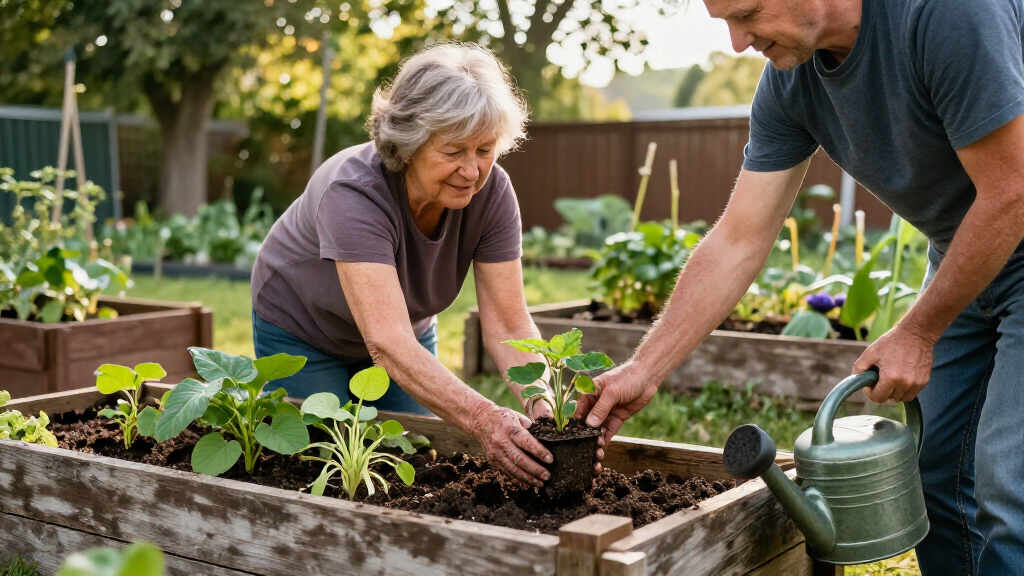
The participants were divided into two groups. One took part in activities in groups of eight to 10, meeting for two hours a week for nine weeks with two trained facilitators. Options included gardening, birdwatching and nature-based art. The other group received a menu of free, accessible nature activities to do independently. The study did not compare either approach with a no-intervention group, according to the report.
Both groups recorded lower loneliness scores on average: 11% at three months, 12% at six months and 17% at one year. The report says the group intervention worked better for participants who started with lower emotional wellbeing. It does not provide enough detail in the supplied material to establish how the score changes translate into individual experiences or whether one format is generally more effective.
The findings appear in a 2026 paper by Coll-Planas and colleagues in The Lancet Regional Health – Europe. The trial is part of RECETAS, a wider research project studying nature-based social prescribing. Its results are evidence about a particular program and group of participants, not proof that nature activities will relieve loneliness for everyone.
Connecting Social Care With Green Spaces
The results point to a possible way for clinicians and public services to respond to loneliness through community activities outside traditional medical care. Social prescribing refers to directing people toward non-clinical resources, such as a community garden or walking group. If programs are accessible and effective in other settings, they could offer another option for people who feel lonely and support social connection without treating loneliness as a condition that medication alone can address.
The study also suggests that activities do not necessarily have to be group-based to be useful: both the facilitated group program and the independent activity option were associated with lower average scores. That may matter for people with different preferences, mobility or comfort levels. However, the findings do not show that nature itself caused the reductions, or that every participant benefited. The results support further testing and implementation work, not a universal prescription.
Loneliness is a subjective feeling of disconnection, rather than simply being physically alone. The source report describes links between chronic loneliness and health risks including cardiovascular disease, dementia, depression and anxiety. Those broader health concerns help explain why public health agencies are examining interventions, but this trial was focused on loneliness and health-related quality of life in a specific urban population.
As an affiliate, we earn on qualifying purchases.
A Barcelona Trial Within RECETAS
RECETAS, short for Re-imagining Environments for Connection and Engagement, began in 2021 with a 5.6 million euro European Union grant, according to the source report. The project studies a model called Friends in Nature across six cities. It has conducted randomized trials in Barcelona, Prague and Helsinki, and quasi-experimental studies in Marseille, Cuenca and Melbourne.
The Barcelona study involved older adults from 12 low-income neighborhoods. Its focus on a population facing vulnerability is relevant to local planning, but also limits how confidently the results can be applied to younger people, rural communities or places with different access to green space. The reported findings are from one site within a larger international project; results from the other cities are not detailed in the source material.
Corresponding author Jill Litt, a professor of environmental health at the University of Colorado Boulder and a researcher at the Barcelona Institute for Global Health, said earlier enthusiasm for nature-based prescriptions had outpaced the available evidence. The Barcelona trial adds randomized evidence, while leaving practical questions about scale, costs and delivery for future research and public services.
“There has been a lot of passion about nature-based prescriptions, but not a lot of evidence.”
— Jill Litt, corresponding author and professor of environmental health at the University of Colorado Boulder
Limits of the Barcelona Findings
The supplied report does not explain whether participants were randomly assigned to the two activity options, provide confidence intervals or describe all measures used to assess loneliness. It also does not report a comparison with usual care or no activities. Those details matter when judging how much of the observed change can be attributed to the programs rather than other factors.
It remains unclear whether reductions will be similar in other age groups, cities or health systems, and whether the programs are affordable and accessible at a wider scale. The report gives average changes but does not establish how many individuals experienced meaningful improvement, how outcomes varied across participants, or whether benefits continue beyond one year. The findings should not be read as evidence that nature activities replace clinical or social support.
Testing Programs Beyond Barcelona
RECETAS has research sites in five other cities, but the supplied source does not give their results or a timetable for further findings. Comparing outcomes across those locations may help researchers understand whether local conditions, participant needs and program design affect results.
Litt said she is working to bring similar trials to the United States. She also described a possible future role for insurers in covering community-garden memberships or birdwatching clubs, but the report does not announce a coverage plan. For now, the next steps are further evaluation and work with public agencies and health systems on how referrals, access and costs might be handled.
Key Questions
What did the Barcelona study find?
Among 320 older adults, average loneliness scores fell after participants were offered facilitated group activities or a menu of activities to do independently. Reported reductions were 11% at three months, 12% at six months and 17% at one year.
Which activities were included?
The group program included gardening, birdwatching and nature-based art. Participants met for two hours weekly over nine weeks. The other group received a menu of free, accessible activities to do on their own.
Does the study prove nature activities treat loneliness?
No. The trial found lower average scores in the two activity groups, but the supplied report does not describe a no-intervention comparison. It also does not show that the approach will work for everyone or replace professional support.
Will health insurance cover these activities?
There is no coverage announcement in the report. Litt said she hopes future work could lead insurers to cover options such as community-garden memberships or birdwatching clubs.
Source: rss
Fall Picks
fall essentials
As an affiliate, we earn on qualifying purchases.