TL;DR

Turn quiet afternoons into listening time
- Thousands of audiobooks, podcasts and originals
- Listen on your phone, tablet or Echo — also offline
- Cancel anytime
A first-person essay published by Sixty and Me describes the grief of realizing that parts of a deliberately built life no longer fit. The writer, who says she is 63, frames the change as neither proof of past mistakes nor a call to make immediate replacements, but as a reason to reconsider old roles and allow for uncertainty.
Sixty and Me has published a first-person essay about the sadness that can accompany outgrowing a life built through deliberate choices. The writer, who says she is 63, describes feeling less at home in some relationships, routines and roles, while stressing that this change does not mean those choices were mistakes.
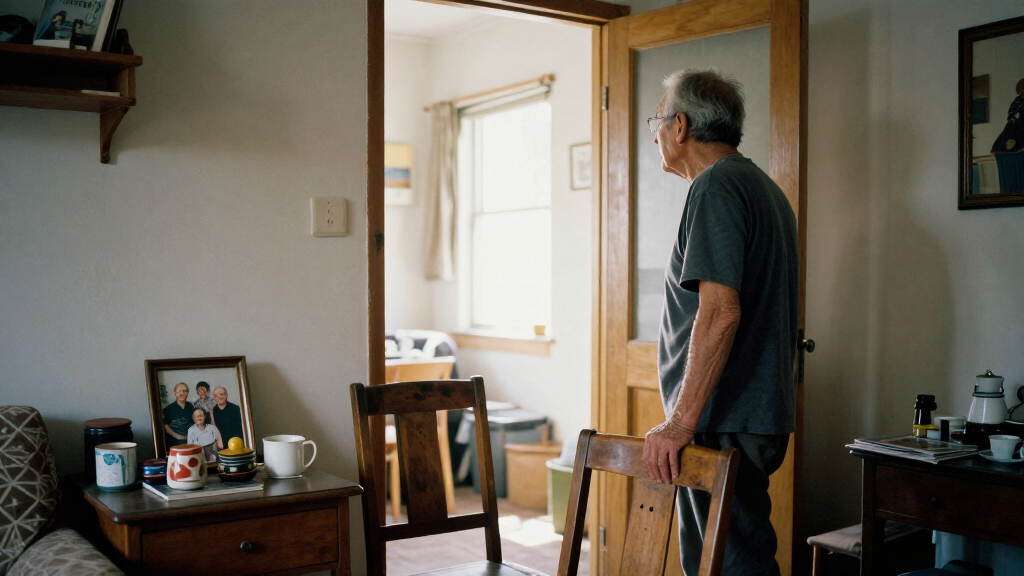
The essay describes a form of grief that can be hard to name because it is not necessarily triggered by death, illness or a dramatic crisis. The writer says a life may look fine from the outside and still feel less like a reflection of who someone has become. She points to homes, clothes, friendships and familiar activities as parts of life that may take on a different meaning over time.
She also focuses on long-held roles, including being the dependable person, caregiver, peacemaker, wife, mother or professional. Such roles can bring satisfaction and make others rely on a person, she writes, but continuing to perform them may become habitual even after the person’s wishes have changed. The essay argues that time invested in a role does not, by itself, create an obligation to keep it indefinitely.
The writer does not offer a fixed plan for what should replace an identity or ambition that has faded. Instead, she says there may be an interval when someone knows what no longer fits but cannot yet describe what comes next. She presents that uncertainty as part of change, rather than evidence that a person must find an answer immediately.
When Familiar Roles Stop Fitting
The essay puts words to a change that can be difficult to explain to family and friends: feeling grief without a single, visible loss. Someone may appreciate the life they built while recognizing that some parts no longer feel right. Naming the distinction can help readers avoid treating change as proof that the past was wasted or that gratitude requires maintaining every old commitment.
Its focus on roles also makes the subject practical. A person who is known as the one who always helps may find it difficult to question that expectation, particularly when others have come to depend on it. The essay does not prescribe ending relationships or abandoning responsibilities; it invites readers to ask whether they are continuing them because they still choose them or because they have become familiar.
The piece is a personal reflection, not a research report, and it does not establish how common these feelings are among older women or people generally. Its significance lies in offering a vocabulary for an experience the writer says can seem ungrateful to acknowledge.
self-discovery journal for women over 60
As an affiliate, we earn on qualifying purchases.
As an affiliate, we earn on qualifying purchases.
A Personal Account at 63
The report is written in the first person and centers on the author’s own experience at age 63. She describes looking back at choices she once wanted and recognizing that some belonged to an earlier version of herself. Her framing is that past choices can have been right for their time even if she would not make them again now.
The essay appears on Sixty and Me under the title “The Strange Grief of Outgrowing Your Own Life.” It also connects the subject to the writer’s book, The Sovereign Self, which she describes as exploring the idea that becoming more fully oneself can involve letting go of earlier identities. The source offers personal observations and questions for readers, rather than reporting survey findings or outside expert research.
““They belonged to another time, and in some cases, another version of me.””
— The essay’s author, writing at age 63
The Limits of One Writer’s Account
The essay does not include data showing how often people experience this kind of grief, nor does it establish that the experience is specific to women or to people in their 60s. Its observations should be read as one writer’s account, not as findings about a broader population.
It also does not identify a single cause for the changes it describes or prescribe what readers should do about relationships, responsibilities or living arrangements. The writer leaves open how long the uncertain period may last and what new interests or roles may follow it. The source provides no publication date.
Questions the Essay Leaves Open
The essay does not announce a follow-up report or a specific next step. It closes by inviting readers to reflect on whether a friendship, routine, role or identity still feels chosen, and what might become possible if they accepted that they do not yet know what comes next.
The writer also links the subject to The Sovereign Self, the book she says explores releasing identities that no longer fit. Any further reporting on the issue would need outside evidence or additional interviews to establish how widespread the experience is and how people respond to it.
Key Questions
What is the Sixty and Me essay about?
It is a first-person reflection on feeling grief when parts of a once-chosen life—such as roles, routines or relationships—no longer feel like a fit.
Who wrote the essay, and how old is the writer?
The source describes the author writing at age 63. The provided material does not include the author’s name.
Does the writer say past choices were mistakes?
No. She says those choices belonged to another time and version of herself, and that recognizing a change in the present does not mean the past was wrong.
Does the essay recommend leaving relationships or responsibilities?
No specific course of action is prescribed. The writer encourages reflection on whether a role or commitment is still wanted, while acknowledging that the next direction may not yet be clear.
Source: rss
Halloween Picks
halloween
As an affiliate, we earn on qualifying purchases.