

To build more calm in your caregiving household, focus on organizing and decluttering spaces to reduce visual noise, and designate specific spots for essentials to keep things streamlined. Establish simple routines and predictable schedules to create stability, while using soft lighting and calming colors to foster a peaceful atmosphere. Practice effective communication and gentle distraction techniques to prevent frustration. By consistently applying these strategies, you’ll create a more serene environment — and there’s plenty more to explore for lasting calm.

Turn quiet afternoons into listening time
- Thousands of audiobooks, podcasts and originals
- Listen on your phone, tablet or Echo — also offline
- Cancel anytime
Key Takeaways
- Declutter and organize household spaces to reduce visual noise and promote a sense of calm.
- Establish consistent routines and predictable transitions to create stability and minimize stress.
- Incorporate soothing colors, soft lighting, and natural light to foster a peaceful environment.
- Prioritize self-care and emotional support to maintain caregiver well-being and emotional balance.
- Use distraction and engagement techniques to redirect focus and promote relaxation during caregiving activities.
calming LED soft lighting for home
As an affiliate, we earn on qualifying purchases.
As an affiliate, we earn on qualifying purchases.
Identify Household Stressors That Disrupt Calm

Understanding what causes stress in your household is the first step toward creating a calmer environment. Household tension often arises from ongoing conflicts or unmet expectations, while unexpected disruptions can throw your routine off balance. Pay attention to patterns that heighten stress, like loud arguments, clutter, or last-minute changes. These disruptions can increase anxiety for everyone involved, especially in a caregiving household. By identifying specific sources of tension, you can work toward addressing or minimizing them. Notice what triggers frustration or overwhelm, whether it’s noise levels, lack of organization, or unpredictable events. Recognizing these stressors helps you develop strategies to reduce their impact, making your home a more peaceful space for everyone. Supporting caregivers’ emotional health through self-awareness can also help in recognizing and managing these household stressors more effectively. Incorporating calming environmental factors such as soothing colors or gentle lighting can further ease tension and promote relaxation, especially when considering visual clarity and how it affects mood and focus in your space. Paying attention to protective styling benefits, like crochet or other styling techniques, can also contribute to less daily stress over hair maintenance, creating a smoother routine. Being aware of cybersecurity measures and ensuring secure communication can also prevent additional stress related to digital safety concerns in the household.
Prioritize Self-Care to Stay Calm and Supportive

Taking care of yourself is crucial for maintaining a calm and supportive household, especially when you’re caring for others. Prioritizing self-care helps you build emotional resilience, enabling you to handle stress more effectively. Incorporate mindfulness techniques, like deep breathing or short meditation sessions, to stay grounded during hectic moments. Regularly taking time for yourself replenishes your energy and keeps frustration at bay. When you nurture your well-being, you’re better equipped to remain patient and supportive. Consider incorporating relaxation techniques like gentle stretching or meditation to further reduce stress. Remember, self-care isn’t selfish—it’s a fundamental part of caregiving that benefits everyone. By actively managing your mental and emotional health, you create a calmer environment where everyone feels more secure and understood. Engaging in hobbies or creative outlets—such as crafting or listening to music—can also serve as effective stress relief strategies. Incorporating self-care routines into your daily schedule can make a significant difference in maintaining your overall well-being. Additionally, practicing mindfulness can help you stay present and reduce anxiety in challenging moments. Developing a support network of friends or fellow caregivers can provide encouragement and practical advice during tough times. Prioritizing self-care ensures you’re your best caregiver and a steady source of support.
Establish Clear Routines to Keep Things Steady
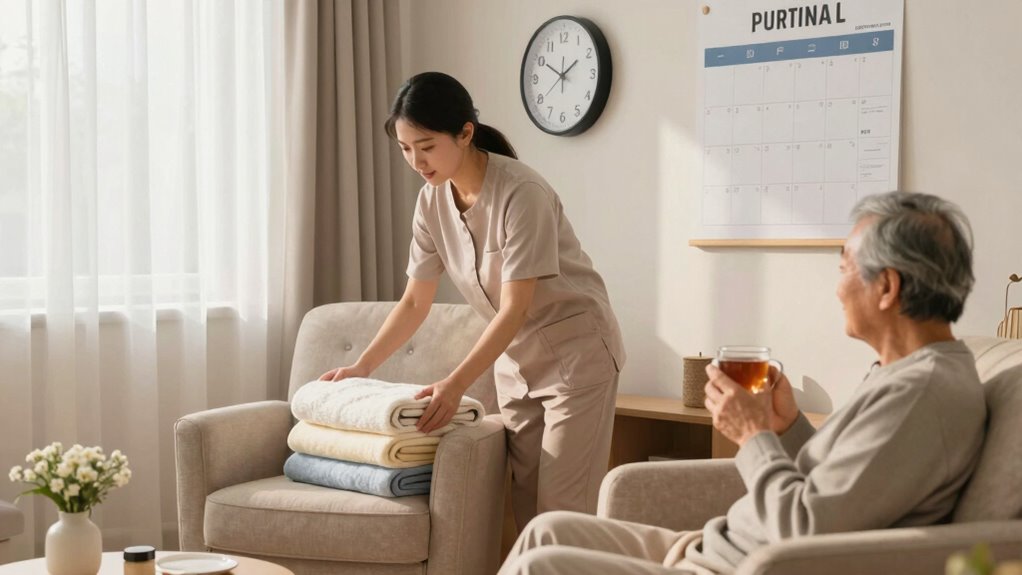
Creating consistent daily schedules helps everyone know what to expect and reduces stress. Establishing predictable activity shifts keeps the day flowing smoothly and minimizes confusion. When routines are clear, your household feels more stable and calm. Incorporating personal finance strategies into your daily routine can also help manage household expenses more effectively. Additionally, implementing troubleshooting techniques for common household issues can prevent minor problems from escalating into major disruptions. Leveraging AI-driven governance tools can further streamline household management by providing clear oversight and reducing decision fatigue. Understanding emerging trends in digital publishing can also offer innovative ways to access helpful resources and support networks for caregivers. Being aware of comogenic ratings for skincare products can help prevent skin issues that might add stress to caregivers and household members.
Consistent Daily Schedules
Establishing consistent daily schedules can considerably reduce stress and confusion for everyone in a caregiving household. When routines are predictable, it becomes easier to manage daily tasks and respond calmly to unexpected challenges. This predictability also allows for better integration of home design/architecture details, such as door swings and stair proportions, which can help create safer and more accessible environments for all household members. Incorporating natural elements like greenery and water features can further promote relaxation and emotional well-being within the space. This consistency supports caregiver resilience by reducing feelings of overwhelm and burnout. It also promotes emotional regulation, allowing you to stay patient and composed even during difficult moments. Keep routines simple and flexible enough to adapt as needed, but firm enough to create a sense of stability. Regular wake-up times, meal plans, and activity periods help everyone know what to expect. Incorporating ergonomic principles into daily routines, such as proper seating and workstation setup, can further enhance comfort and reduce physical strain. By sticking to a predictable schedule, you create a calmer environment where all household members can feel secure and supported.
Predictable Activity Transitions
When shifts between activities are predictable, it helps everyone in the household feel more secure and less anxious. Establishing predictable activity progressions creates seamless schedule shifts that reduce confusion and frustration. Use clear cues, such as timers, visual signals, or consistent phrases, to signal upcoming changes. Maintain a steady rhythm to routines so household members know what to expect next. This predictability minimizes stress during progressions, especially for those who thrive on routine. Prepare everyone in advance for upcoming changes, and stick to the same cues each time. Consistent cues and smooth progressions foster a calm environment, making daily shifts less disruptive. Ultimately, predictable activity progressions help create a sense of stability, making caregiving smoother for everyone involved.
Organize Your Space for Ease and Serenity

To create a calm environment, start by decluttering your space to reduce visual chaos and increase clarity. Next, assign specific areas for daily activities and caregiving items to keep everything organized and easy to find. These simple steps make your home more serene and manageable for everyone involved. Incorporating educational resources can also help caregivers learn effective strategies for managing household peace and efficiency. You might also consider exploring regional flavor influences or calming beverage pairings that promote relaxation within your space.
Declutter for Clarity
A cluttered space can quickly feel overwhelming, making it harder to find calm amid daily caregiving demands. To create clarity, focus on establishing simple organizational systems that keep essential items within reach and out of sight. Clearing clutter reduces visual noise, helping you think more clearly and respond with greater emotional resilience. Regularly assess what’s necessary and donate or discard items that no longer serve a purpose. Use storage solutions that suit your space and routines, making tidying effortless. When your environment is organized, you conserve mental energy, allowing you to better handle stress and care tasks. Decluttering isn’t a one-time fix; it’s a continuous process that nurtures a peaceful, manageable household. Clear space, clear mind—that’s the key to sustained calm.
Designate Organized Spaces
Creating designated spaces in your home makes caregiving tasks more manageable and promotes a sense of calm. Use organized storage solutions to keep essential items within easy reach, reducing frustration and saving time. Assign specific spots for medications, medical supplies, and everyday essentials, so everyone knows where to find and return items. Clear labeling is key—label drawers, bins, and shelves clearly to guarantee that belongings are easy to identify. This organization system can be tailored to fit the unique needs of your household, ensuring that everything functions smoothly. This system not only streamlines daily routines but also minimizes chaos and confusion. When everything has a place, you’ll find it easier to maintain order and reduce stress. Incorporating soundproofing elements like studio dividers or acoustic drum shields can further help create a quiet, calming atmosphere in busy household areas. Additionally, integrating urban greening elements such as indoor plants or small garden spaces can enhance the overall tranquility and connection to nature within your home environment. Being aware of essential oils for calming and incorporating calming scents like lavender or frankincense can also support a peaceful environment. Understanding the importance of organized spaces can significantly improve household harmony and caregiver well-being. Regularly review and adjust your designated spaces to keep them functional and clutter-free, creating a peaceful environment that supports your caregiving needs.
Control Household Noise to Promote Tranquility
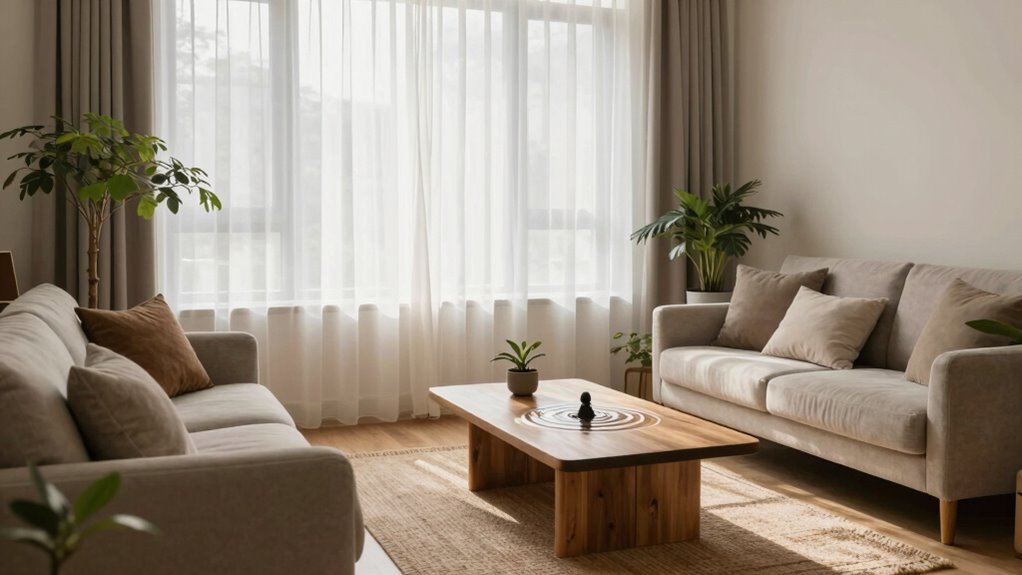
Managing household noise is essential for fostering a calm environment in a caregiving household. You can start by implementing soundproofing measures, such as adding rugs, heavy curtains, or door seals to reduce noise travel. Using noise canceling devices, like white noise machines or headphones, helps mask disruptive sounds and creates a peaceful atmosphere. Encourage family members to keep noise levels low during quiet times, especially when caregivers or those being cared for need rest. Simple steps like closing doors or turning down volume on electronics can make a significant difference. By controlling household noise, you create a more tranquil, predictable space that supports relaxation and reduces stress for everyone involved.
Add Stress-Relief Activities to Your Daily Routine

Adding simple stress-relief activities to your day can make a big difference. Try incorporating breathing exercises, scheduling short walks, or practicing mindful meditation to help you stay calm. These small practices can create a more peaceful and balanced caregiving environment.
Incorporate Breathing Exercises
Incorporating breathing exercises into your daily routine can substantially reduce stress and promote calm in a caregiving household. These relaxation methods help you stay centered amid chaos and improve overall well-being. Simple breathing techniques, like deep inhaling through your nose and slow exhaling through your mouth, can quickly ease tension. Consistently practicing these methods creates a calming rhythm that benefits both you and your loved ones. Use this table to explore different options:
| Technique | How to Practice |
|---|---|
| Deep breathing | Inhale slowly for four counts, hold, then exhale for four counts |
| Box breathing | Inhale, hold, exhale, hold, each for four counts |
| Diaphragmatic breathing | Breathe deeply into your belly, not your chest |
Schedule Short Walks
Even a few minutes of fresh air can make a significant difference in how you handle stress throughout the day. Schedule short walks into your routine to help clear your mind and reduce tension. Use this time for mindful walking, paying close attention to your breath and surroundings, which can promote calmness. Incorporate gentle stretching before or after these walks to loosen tight muscles and release built-up stress. These brief movements can boost circulation and improve your mood, helping you feel more centered. By making short walks a regular habit, you create a simple but effective way to break up busy caregiving tasks and find moments of peace. Consistency is key—over time, these small steps can lead to a more relaxed, balanced household.
Practice Mindful Meditation
After taking short walks to clear your mind, setting aside a few minutes for mindful meditation can deepen your sense of calm. Focus on cultivating mindful awareness by paying close attention to your breath, sensations, and thoughts without judgment. This practice helps you stay grounded amidst caregiving stresses, improving emotional regulation. When you notice tension or overwhelm, gently bring your attention back to your breath or body. Consistently practicing mindful meditation enhances your ability to respond calmly rather than react impulsively. Even a few minutes daily can create a noticeable shift in your mental clarity and emotional resilience. Over time, this habit nurtures a calmer household by helping you manage stress better and foster a more peaceful environment for everyone.
Create a Peaceful Atmosphere With Lighting and Colors

Creating a peaceful atmosphere starts with thoughtful lighting and color choices that promote calmness. Using color psychology, select soothing hues like soft blues, gentle greens, or warm neutrals to create a tranquil environment. These colors can reduce stress and foster relaxation. Incorporate lighting techniques such as dimmable lights or warm-toned bulbs to soften the room’s ambiance, avoiding harsh or overly bright lighting. Natural light is also beneficial; let sunlight flow during the day to boost mood and reduce anxiety. Avoid jarring or high-contrast colors that can cause agitation. Instead, aim for a harmonious palette combined with gentle lighting to create a space where everyone feels safe and relaxed. This simple step considerably contributes to a calmer, more comforting caregiving household.
Communicate Effectively to Avoid Misunderstandings

A peaceful atmosphere relies heavily on clear and compassionate communication. You can prevent misunderstandings by practicing active listening and empathy building. Focus fully on what others say, nodding or paraphrasing to show understanding. This helps identify unspoken concerns and clarifies intentions. Use gentle, open-ended questions to encourage sharing. Remember, empathy means seeing the situation from their perspective, which fosters trust and reduces tension.
| Active Listening | Empathy Building | Clear Communication |
|---|---|---|
| Pay full attention | Imagine their feelings | Use simple, direct language |
| Paraphrase their words | Validate emotions | Confirm understanding |
| Ask open-ended questions | Show compassion | Avoid assumptions |
| Minimize distractions | Reflect feelings | Stay calm and patient |
| Provide feedback | Offer support | Be honest and respectful |
Use Gentle Distractions and Engagement Techniques

Using gentle distractions and engagement techniques can help soothe someone who’s feeling upset or overwhelmed, redirecting their attention in a calming way. These strategies prevent escalation and promote a sense of calm. Here are some effective ways to use gentle distractions:
Gentle distractions help calm upset feelings and encourage a peaceful, focused mindset.
- Offer a favorite object or toy to shift focus and provide comfort.
- Engage in a simple activity like coloring or listening to music to redirect attention.
- Ask open-ended questions about their interests or surroundings to gently shift focus and foster connection.
Review and Adjust Your Strategies for Lasting Calm

Regularly reviewing and adjusting your strategies for maintaining calm guarantees that your approach remains effective and responsive to changing needs. As circumstances evolve, your methods should adapt to support emotional resilience for everyone involved. Reflect on what’s working well and where stress tends to build. Use adaptive communication to address new challenges and clarify expectations. Flexibility is key; what calmed the household yesterday might need tweaking today. By staying proactive, you prevent frustration from piling up and ensure your household remains a calm sanctuary. Keep an open mind and encourage honest feedback from those you care for. This ongoing process helps you identify gaps and refine your approach, promoting lasting calm and a more resilient caregiving environment.
Frequently Asked Questions
How Can I Involve the Entire Family in Maintaining Household Calm?
You can involve the entire family in maintaining household calm by fostering open family communication and encouraging everyone to share their feelings. Create regular check-ins to discuss concerns and offer emotional support, ensuring everyone feels heard. Assign simple calming tasks, like deep breathing or quiet activities, to each member. When everyone participates, it promotes a supportive environment, helping to keep the household peaceful and emotionally balanced.
What Are Quick Ways to De-Stress During a Busy Caregiving Day?
When your day gets hectic, take a moment for mindful breathing—inhale deeply through your nose, hold, then exhale slowly through your mouth. Incorporate aromatherapy relaxation by diffusing calming scents like lavender or chamomile to create a peaceful environment. Even just a few minutes of focused breathing and soothing aromas can markedly reduce stress, helping you regain focus and calmness during busy caregiving moments.
How Do I Handle Disagreements Calmly in a Caregiving Environment?
You might find that emotional resilience is key to handling disagreements calmly. When conflict arises, take a deep breath and listen actively, seeking understanding rather than immediate solutions. Use conflict resolution techniques like staying neutral and focusing on shared goals. By practicing patience and staying composed, you create a calmer environment, encouraging others to do the same. Over time, this approach strengthens your ability to navigate disagreements with compassion and clarity.
What Should I Do if Household Routines Are Consistently Disrupted?
If household routines are consistently disrupted, you should practice mindful communication with everyone involved. Clearly explain the importance of routine consistency and listen to their concerns. Adjust the routines gradually, keeping everyone informed and involved. Establishing predictable schedules helps reduce stress and confusion. By staying patient and maintaining open dialogue, you create a calmer environment where routines are more likely to be followed, fostering stability and peace in your caregiving household.
How Can Technology Help Create a More Peaceful Caregiving Household?
Technology can help create a more peaceful caregiving household by integrating a smart home system that automates lighting, temperature, and security, reducing daily stress. You can also use meditation apps to encourage relaxation and mindfulness for both caregivers and those they care for. These tools promote a calmer environment, making routines smoother and helping everyone feel more secure and centered amidst the caregiving responsibilities.
Conclusion
Building calm in your caregiving household is like tending a delicate garden. With daily care, you nurture peace amidst the chaos, prune misunderstandings, and create a space where serenity can flourish. By tending to routines, organizing your space, and communicating gently, you become the gardener of tranquility. Keep adjusting your approach, and watch your household bloom with harmony, turning stress into a gentle breeze that comforts everyone under your care.
Fall Picks
fall essentials
As an affiliate, we earn on qualifying purchases.