
To keep your smoke and CO alarms reliable, test them monthly by pressing the test button and make certain doors and vents aren’t blocked during checks. Replace batteries yearly and inspect for dust or debris quarterly. Schedule these tests on specific days, like the 1st or 15th, and set reminders to stay consistent. Regularly maintain and eventually replace alarms every 8-10 years. Learn more about creating a safe testing routine to protect your home.
Key Takeaways
- Test smoke and CO alarms monthly by pressing the test button and replacing batteries as needed.
- Set recurring reminders on calendars or apps for scheduled monthly and quarterly tests.
- Perform quarterly checks by inspecting for dust, debris, and secure mounting of alarms.
- Replace backup batteries annually and alarms every 8-10 years according to manufacturer guidelines.
- Ensure alarms are properly placed on each level, inside bedrooms, and outside sleeping areas for optimal safety.
Understanding the Importance of Regular Testing
Regular testing of alarm systems is essential because it guarantees your safety devices work properly when needed most. Fire safety relies on timely alerts, preventing injuries and property damage. Neglecting this vital step can lead to false confidence or dangerous failures during emergencies. Regular testing also ties into home maintenance, ensuring your alarms remain functional over time. Batteries can weaken, sensors may become dirty, and devices can malfunction without notice. By routinely checking your smoke and CO alarms, you stay proactive in safeguarding your home and loved ones. This simple habit minimizes risks and keeps your safety systems in excellent condition. Remember, a well-maintained alarm is your first line of defense in any fire or carbon monoxide incident. Additionally, understanding the signs of malfunction, such as unusual noises or failure to alarm during testing, can help you address issues before an emergency occurs.
Monthly Alarm Checks

To keep your alarm systems dependable, performing monthly checks is a smart habit. Regular alarm maintenance ensures your smoke and CO alarms function properly and that safety inspections are up to date. Each month, press the test button on your alarms to verify they sound correctly. Replace batteries if needed, and check for dust or debris that could interfere with sensors. Use the table below to guide your routine:
| Step | Action | Notes |
|---|---|---|
| Test alarms | Press and hold the test button | Confirm they sound loud |
| Battery check | Replace if weak or old | Use fresh batteries |
| Clean sensors | Wipe with a dry cloth | Remove dust and cobwebs |
| Verify placement | Confirm alarms are in correct locations | Ensure visibility and accessibility |
Ensuring your alarms are correctly installed and functioning properly can help prevent dangerous situations.
Quarterly Testing Procedures
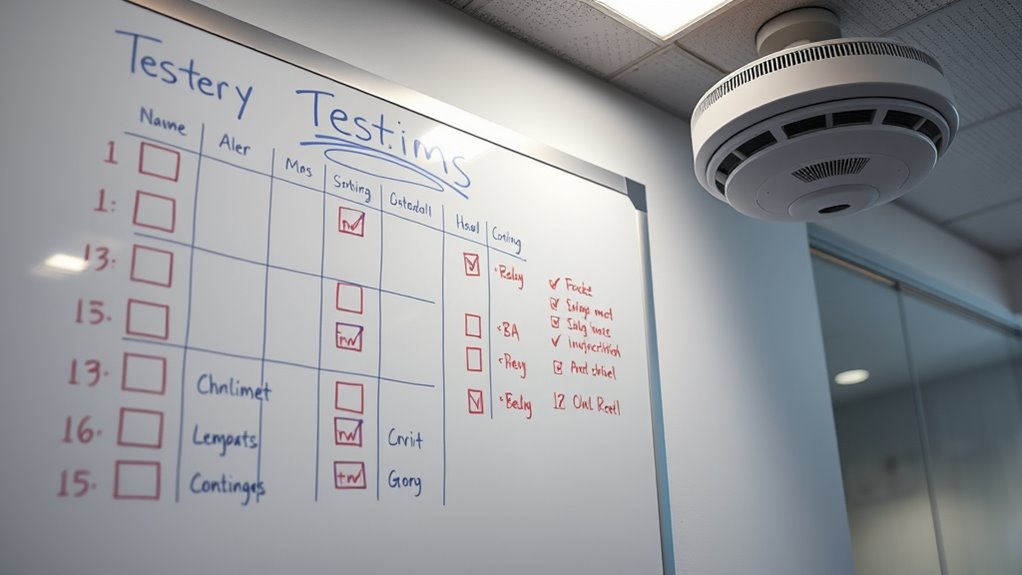
Performing quarterly testing of your alarm systems makes certain they remain reliable and ready in case of an emergency. Regular testing is a crucial part of fire safety and home maintenance, ensuring your smoke and CO alarms function correctly. To start, press the test button on each device and listen for the alarm to sound. If it doesn’t, replace batteries or the device itself. Visual inspections are also essential: check for dust, debris, or obstructions that could impair sensor performance. Confirm that the alarms are securely mounted and that the wiring is intact. Additionally, inspecting alarm maintenance practices helps prevent malfunctions and ensures optimal performance. By sticking to your quarterly testing routine, you help protect your household and maintain your home’s safety standards. Consistent checks reduce the risk of malfunction during critical moments, reinforcing your commitment to fire safety and home maintenance.
Annually Replacing Batteries and Devices
You should replace your batteries and devices annually to guarantee they function properly. Follow the recommended replacement timeline and device guidelines to avoid malfunctions. Proper testing procedures help verify everything is working correctly after replacements. Regularly performing safety checks ensures your alarms provide reliable protection when needed.
Battery Replacement Timeline
Since batteries naturally lose their charge over time, it’s important to replace them annually to guarantee your alarm system remains reliable. Regularly changing batteries ensures your smoke and CO alarms function correctly, especially if your alarm installation relies on backup power. This helps prevent false alarms or failures during emergencies. Remember, even if your alarms are hardwired with electrical wiring, they typically still have a backup battery that needs regular replacement. To stay on schedule, check your alarms every year and replace batteries promptly. Consider marking the date on the battery or alarm itself. Keep these tips in mind:
- Replace batteries at least once every year
- Test alarms after replacing batteries
- Use manufacturer-recommended batteries
- Keep spare batteries accessible
- Check for signs of device wear or damage
- Regular maintenance of alarm systems is essential for fire safety and overall home security.
Device Replacement Guidelines
Regularly replacing smoke and CO alarm batteries and devices is crucial to maintaining a reliable safety system. Over time, device durability decreases, making it more likely for alarms to fail during emergencies. To guarantee maximum performance, plan to replace alarms every 8 to 10 years, depending on manufacturer recommendations. This proactive approach minimizes the risk of malfunction and enhances your safety. Although the replacement cost may seem like an expense, it’s a small price for peace of mind and protection. Remember, older devices may not meet current safety standards or detect hazards effectively. By adhering to these guidelines, you can avoid unexpected failures and ensure your alarms remain dependable in critical moments. Regular replacement is a simple yet essential step in your home safety plan. Proper maintenance of alarms plays a vital role in ensuring they are always ready when needed.
Proper Testing Procedures
To guarantee your smoke and CO alarms function properly when needed, it’s important to follow proper testing procedures each year. First, ensure alarms are correctly placed in bedrooms, hallways, and near kitchens for optimal coverage. Use the testing button on each device to verify functionality. Keep testing tools like smoke aerosols or CO simulators handy for more thorough checks. When testing, avoid blocking vents or covering alarms to ensure accurate results. Regularly check alarm placement to prevent dead zones. Remember to replace batteries annually or when alarms chirp. If an alarm fails testing, replace the device immediately. Proper alarm placement and diligent testing help ensure your safety during emergencies. Always follow manufacturer instructions for testing and maintenance. Incorporating professional voiceover elements can also enhance the clarity and impact of your safety messages.
Special Considerations for Different Alarm Types
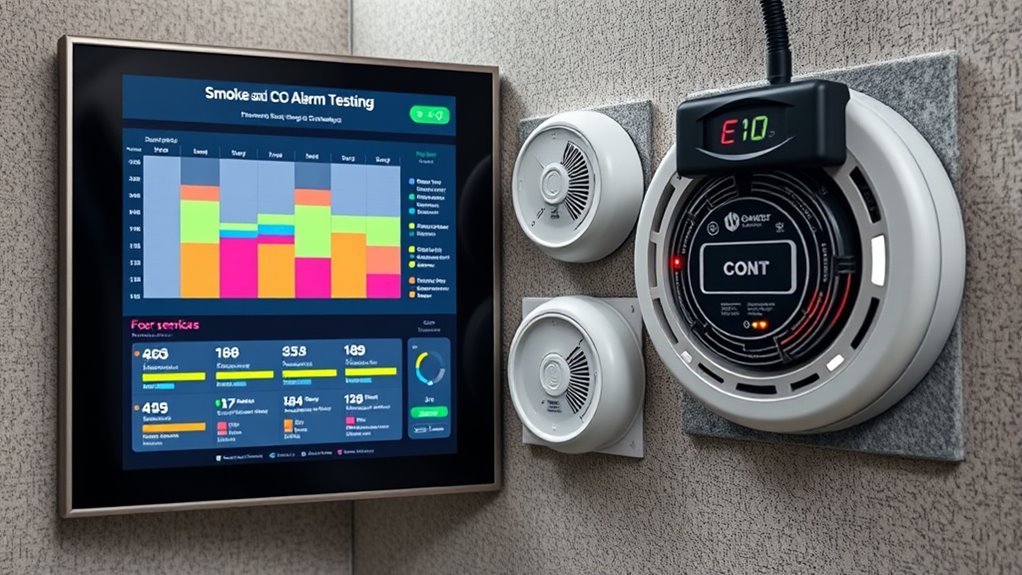
Different alarm types require tailored testing approaches to guarantee reliable performance. Ionization alarms detect fast-flaming fires by sensing small electric currents, so testing should include smoke from burning paper or incense. Photoelectric alarms, on the other hand, detect slow-smoldering fires through light scatter, making them more responsive to smoke from smoldering materials. When testing ionization alarms, avoid using aerosol sprays or chemicals that could damage sensitive components. For photoelectric alarms, gentle dust or smoke from a match or incense stick works best. Regular testing ensures each alarm responds correctly to smoke, but remember, the methods differ slightly based on alarm type. Following these specific considerations helps maintain your alarms’ effectiveness and keeps your home safe. Additionally, understanding Kia Tuning options can help optimize vehicle safety features, ensuring your car systems are also reliable in emergencies.
Creating a Testing Schedule Calendar

To keep your alarm system reliable, you need to set regular testing dates on your calendar. Using reminders guarantees you won’t forget scheduled tests and stay consistent. This approach helps catch issues early and maintains your alarm’s effectiveness. Incorporating regular practice into your routine can also help reinforce the importance of consistent testing.
Set Regular Testing Dates
Establishing regular testing dates is essential for maintaining an effective alarm system. Consistent testing guarantees your smoke and CO alarms function properly, supporting your fire safety and home maintenance routine. To create a reliable schedule, consider these ideas:
- Choose specific days each month, like the 1st or 15th
- Set reminders to test alarms at the same time weekly
- Mark testing dates on your calendar or planner
- Coordinate testing with other home maintenance tasks
- Record test results to track alarm performance over time
- Stay informed about alarm technology updates to ensure your system remains current and effective
Use Calendar Reminders
Using calendar reminders is an effective way to keep your alarm maintenance on schedule and guarantee safety protocols are followed. Setting alerts for testing dates helps you stay consistent and avoid missed inspections. You can use digital calendars or apps to assign recurring reminders, making it easy to track your testing routine. To visualize your schedule, consider this plan:
| Month | Alarm Type | Reminder Date |
|---|---|---|
| January | Smoke Alarm | 1st Monday |
| July | CO Alarm | 1st Monday |
| April | Smoke Alarm | 1st Monday |
| October | CO Alarm | 1st Monday |
This structure keeps testing organized, reinforcing safety protocols through regular, timely alarm checks.
Tips for Ensuring Alarm Functionality
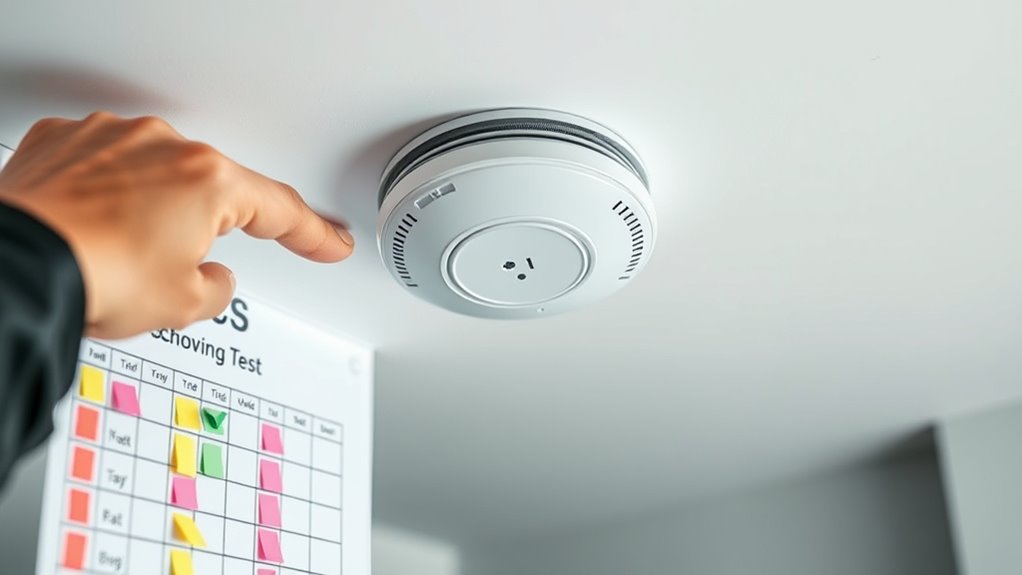
Regularly testing your alarm systems is essential to guarantee they work properly when needed. Proper alarm placement is key to effective detection, so ensure smoke and CO alarms are installed on every level, inside bedrooms, and outside sleeping areas. Regular testing also involves cleaning alarms to prevent dust buildup that can impair function. Use the test button weekly to confirm the alarms activate properly. Replace batteries annually or when low-battery notifications occur. For emergency preparedness, replace alarms every 8-10 years. Additionally, consider interconnected alarms so that one triggers all others during an emergency. Keep a checklist to track testing and replacement dates. Remember, well-placed and maintained alarms are vital for your safety and peace of mind.
Frequently Asked Questions
How Do I Recognize a Malfunctioning Alarm?
You can recognize a malfunctioning alarm if it beeps unexpectedly, fails to respond during testing, or shows inconsistent sensor sensitivity. Regular alarm maintenance helps guarantee proper function, so check for dust or debris that might block sensors. If your alarm is old or unreliable, replace it promptly. Trust your senses—if it sounds off or doesn’t respond when needed, it’s time to get a new one for your safety.
What Are the Signs of a Faulty Smoke or CO Alarm?
You’ll notice a faulty smoke or CO alarm if it chirps unexpectedly, fails to sound during tests, or shows a constant false alarm. Poor alarm placement can cause these issues, so verify alarms are correctly installed and maintained. Regular alarm maintenance, like cleaning and testing, helps detect malfunctions early. If alarms are old or damaged, replace them promptly to keep your home safe and functioning properly.
Can Alarms Be Tested With Household Items?
You should avoid household item testing for smoke and CO alarms, as it can be unsafe and ineffective. Instead, use the test button on your alarms to check their functionality regularly. For alarm maintenance tips, replace batteries annually and clean the units with a soft cloth. If you’re unsure about your alarms’ performance, contact a professional to perform proper testing to guarantee your safety.
How Long Do Smoke and CO Alarms Typically Last?
You’re playing with fire if you ignore alarm lifespan. Usually, smoke and CO alarms last about 7 to 10 years. To keep them in top shape, replace batteries annually and perform alarm calibration to guarantee proper function. Don’t wait until it’s too late—regular maintenance extends their life, but when they start beeping or become outdated, it’s time for a fresh start. Stay safe by staying proactive.
Are There Legal Requirements for Alarm Testing in Rental Properties?
Yes, there are legal obligations you must follow for alarm testing in rental properties. Rental regulations often require landlords to verify smoke and CO alarms are functioning properly and tested regularly, typically at the start of a tenancy and periodically thereafter. You’re responsible for maintaining compliance, which helps protect tenants and avoid penalties. Regular testing and documentation are essential parts of meeting your legal obligations and ensuring safety.
Conclusion
By sticking to this testing schedule, you’ll be unstoppable in protecting your home! Imagine a fire happening and your alarms remaining silent—catastrophe! Regular checks and replacements turn your alarms into invincible guardians, always ready to alert you instantly. Don’t leave safety to chance; with consistent testing, you’ll have peace of mind knowing your alarms will sound at the first hint of danger. Make testing a priority—your home’s safety depends on it!