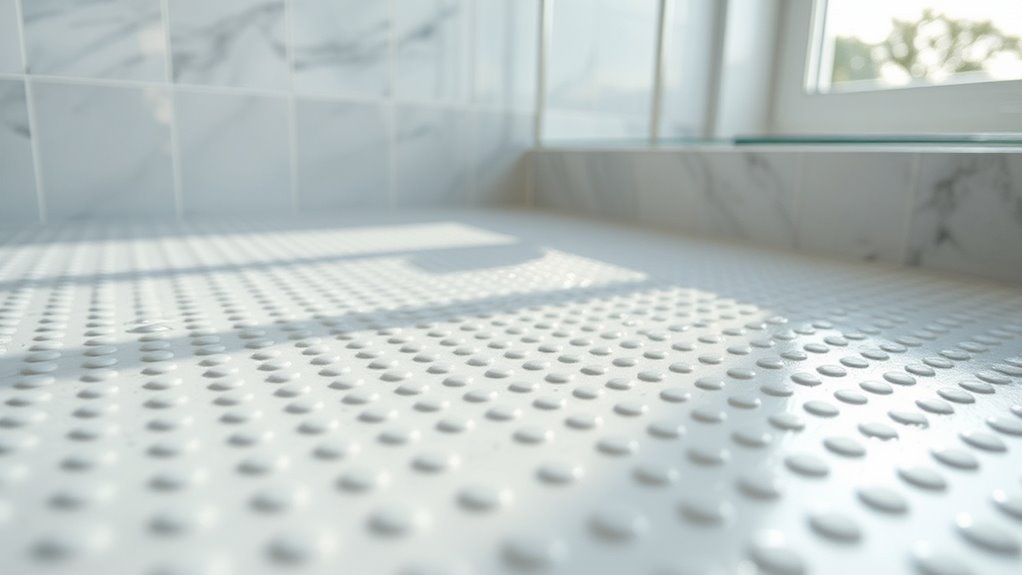

To keep floors and showers slip-resistant, use specialized non-slip cleaning products that won’t leave slick residues. Regularly sweep or vacuum to remove debris, then clean with gentle, non-abrasive solutions suitable for your surface type. After cleaning, thoroughly dry the area and consider applying anti-slip coatings or textured mats for extra safety. Proper maintenance and environmental controls prevent buildup and moisture, helping guarantee safe, slip-free surfaces—continue for more tips on maintaining ideal safety.

Turn quiet afternoons into listening time
- Thousands of audiobooks, podcasts and originals
- Listen on your phone, tablet or Echo — also offline
- Cancel anytime
Key Takeaways
- Use non-slip floor cleaners that do not leave slick residues and are compatible with slip-resistant coatings or textured surfaces.
- Regularly sweep, vacuum, and thoroughly dry floors and showers to remove debris, soap scum, and water, reducing slip hazards.
- Avoid harsh chemicals that can degrade slip-resistant coatings; opt for gentle, pH-balanced cleaning solutions.
- Incorporate slip-resistant mats with non-slip backing in wet areas and ensure they are cleaned and dried frequently.
- Inspect and maintain anti-slip coatings and textured surfaces regularly to ensure long-term effectiveness and safety.
As an affiliate, we earn on qualifying purchases.
Understanding Slip Hazards on Different Surfaces
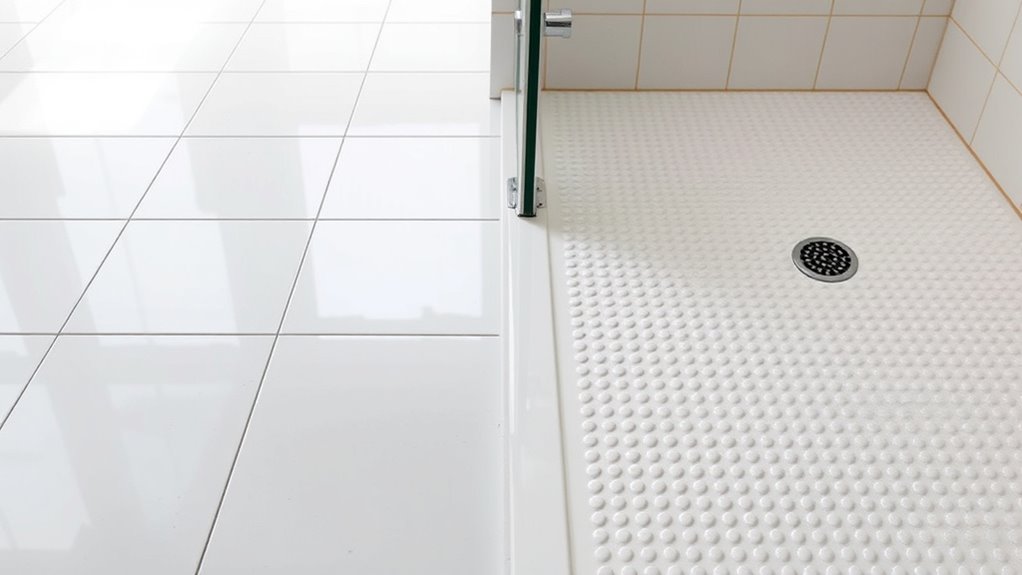
Different surfaces pose varying slip hazards, making it essential to understand their unique characteristics. Surface texture plays a critical role in slip risk—smooth, polished floors can be slick when wet, while textured surfaces provide better grip. When walking on different materials, your footwear considerations become vital; shoes with good traction can reduce your chances of slipping. For example, rubber soles with deep treads work well on slippery surfaces, whereas smooth-soled shoes may increase the risk. Recognizing how surface texture affects slip potential helps you stay safer. Understanding market trends can help you choose the most appropriate footwear for different flooring conditions. Adjusting your footwear based on the floor type and conditions ensures better stability. By understanding these factors, you can proactively prevent slips and falls, especially in environments where surfaces are prone to becoming slick or hazardous.
Choosing the Right Cleaning Products for Slip Resistance
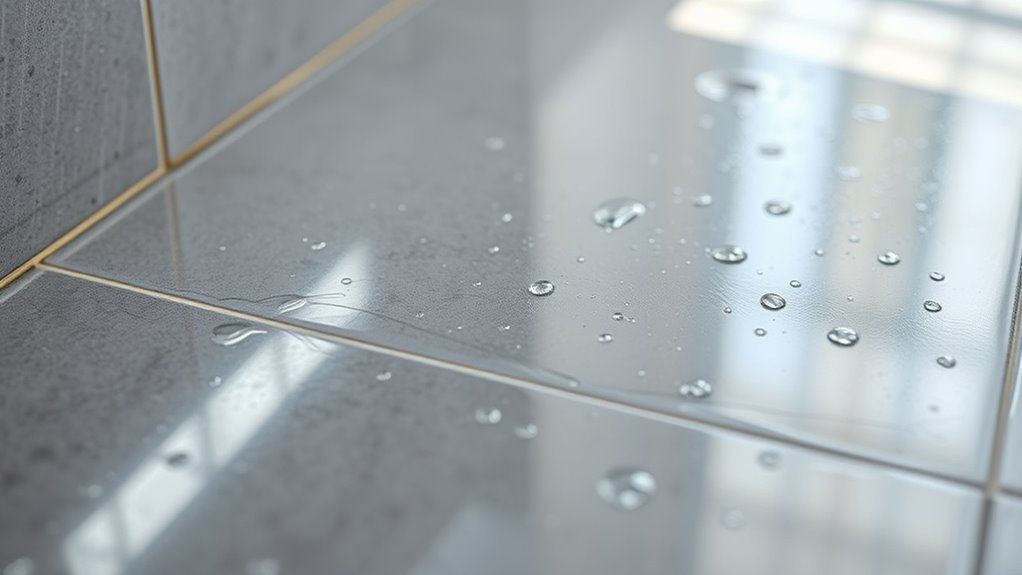
Selecting the appropriate cleaning products is essential for maintaining slip-resistant surfaces. You want cleaners that preserve the texture of slip-resistant flooring and shower tiles. When choosing products, consider these factors:
- Use non-slip floor cleaners that don’t leave slick residues.
- Avoid harsh chemicals that can degrade slip-resistant coatings.
- Incorporate cleaners that work well with slip-resistant footwear to prevent slipping during cleaning.
- Always display hazard signage to alert others of wet surfaces and use slip-resistant footwear yourself.
Choosing the right products helps maintain safety standards and prevents accidents. Proper cleaning combined with hazard signage and slip-resistant footwear ensures that floors stay safe. Regularly inspect surfaces for signs of wear and choose cleaning solutions that support long-term slip resistance.
Techniques for Safe and Effective Floor Cleaning
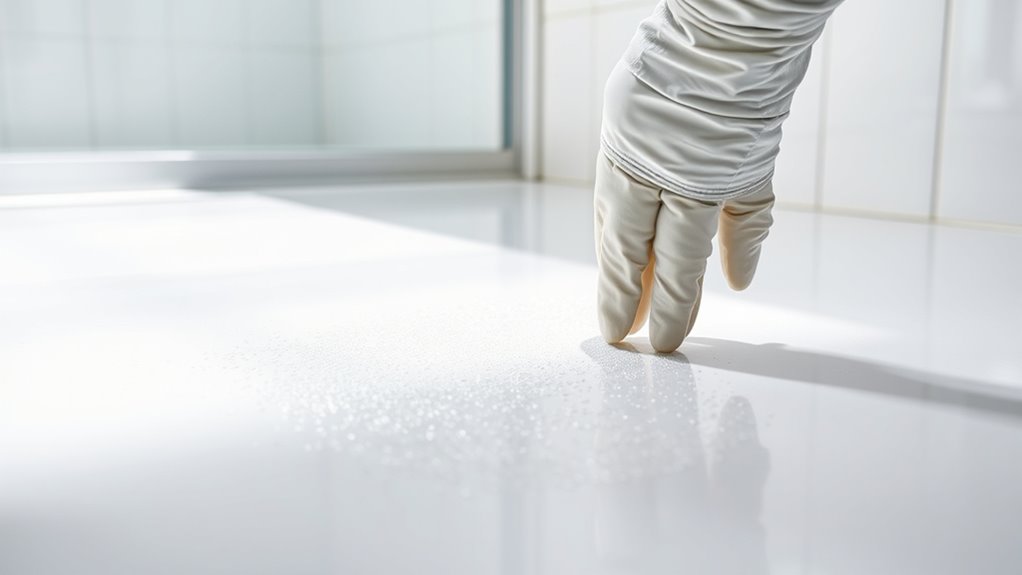
To guarantee your floor cleaning is both safe and effective, it’s essential to follow proper techniques that minimize hazards and maximize cleanliness. First, avoid common floor cleaning myths, such as using excessive water or harsh chemicals, which can increase slip hazards. Instead, use minimal water, paired with appropriate cleaning solutions, to prevent slick surfaces. Regularly sweep or vacuum to remove debris that can cause uneven footing. Pay attention to slip hazard statistics, which show that most accidents occur on wet floors, so always dry surfaces thoroughly after cleaning. Use slip-resistant mats in high-risk areas and ensure that cleaning tools are appropriate for your flooring type. Proper technique not only enhances cleanliness but significantly reduces the risk of slips and falls. Additionally, considering the subconscious power during sleep can help reinforce habits of safety and attentiveness in your daily routines.
Maintaining Shower Surfaces to Prevent Slips
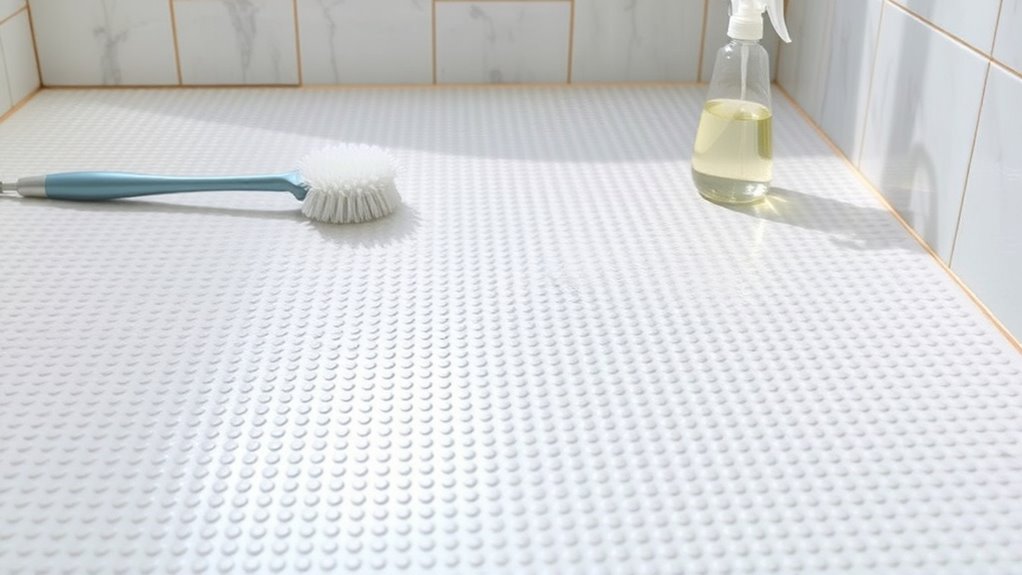
Keeping your shower surfaces slip-resistant starts with a regular cleaning routine to remove soap scum and grime. Using non-slip products, like textured mats or coatings, adds extra safety. Consistent maintenance helps prevent slippery buildup and keeps your shower safer every day. Regularly inspecting your non-slip coatings ensures they remain effective and intact over time.
Regular Cleaning Routine
Regular cleaning of your shower surfaces is essential for preventing slips and maintaining a safe bathroom environment. A consistent routine keeps buildup like soap scum and mold at bay, reducing slip hazards. To stay on top of shower maintenance, consider these steps:
- Clear the area before cleaning to access all surfaces easily.
- Spray a mild cleaner on floors and walls, focusing on grout lines.
- Scrub thoroughly with a brush or sponge to remove grime and soap residue.
- Rinse and dry surfaces completely to prevent mold growth and water spots. Proper cleaning also helps maintain the safety of the bathroom, reducing the risk of accidents.
Use Non-Slip Products
Using non-slip products is a simple yet effective way to enhance safety in your shower. Apply slip-resistant coatings or mats designed for wet surfaces to minimize the risk of slips. Encourage visitors or household members to wear slip resistant footwear when entering the shower area. Additionally, display anti slip signage to remind everyone to be cautious. Regularly inspect and replace worn-out mats or coatings to maintain effectiveness. To highlight key safety tips, consider this table:
| Safety Measure | Purpose | Example |
|---|---|---|
| Slip-resistant coatings | Increase surface grip | Anti slip shower paint |
| Non-slip mats | Provide stable footing | Rubber shower mats |
| Warning signage | Alert users to hazards | Anti slip signage |
Implementing these products and signs keeps your shower safer for everyone. Choosing the right products can further improve your safety measures.
Applying Anti-Slip Treatments and Coatings
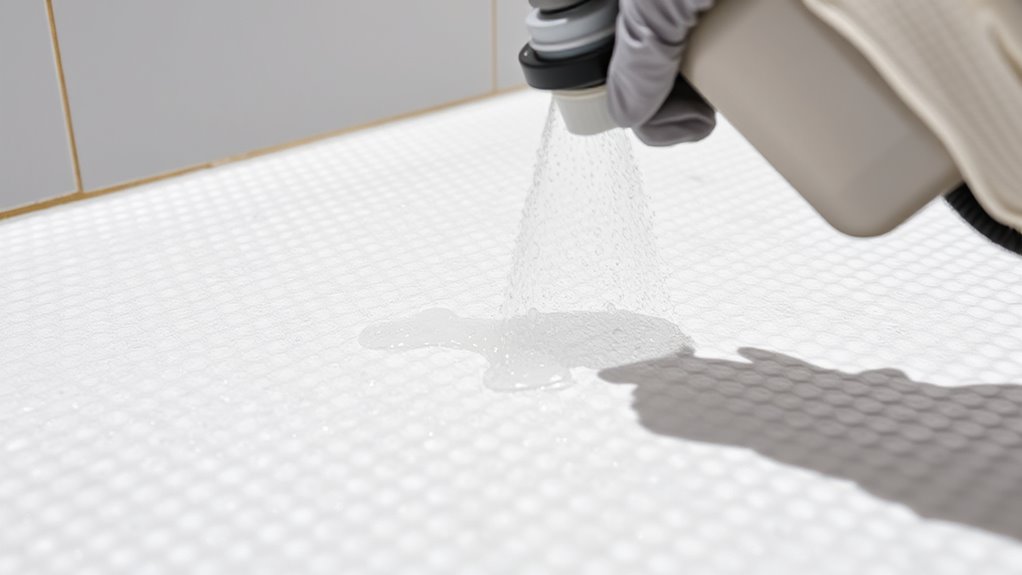
Applying anti-slip treatments and coatings is a crucial step in enhancing safety on slippery surfaces. To guarantee effectiveness, consider these key factors:
- Assess the floor surface textures to determine the right coating, as smooth surfaces may need different treatments than textured ones.
- Choose the appropriate anti-slip coating—some are transparent, preserving aesthetics, while others add grip visibly.
- Select the correct cleaning tool, like a soft brush or mop, to avoid damaging the coating during application.
- Follow manufacturer instructions carefully, ensuring even coverage and proper curing time. This helps the coating bond effectively and provides long-lasting slip resistance. Proper application not only improves safety but also prolongs the life of your flooring.
- Incorporate proper maintenance techniques to ensure the longevity and effectiveness of the anti-slip treatment over time.
Regular Inspection and Maintenance Practices

To guarantee slip-resistant surfaces remain safe over time, it’s essential to conduct consistent inspections and maintenance. Regularly check the floor texture to identify worn or smooth areas that might reduce slip resistance. Keep to a strict cleaning schedule to remove debris, soap scum, and other residues that can make surfaces slippery. During inspections, look for signs of damage, such as cracks or uneven spots, and address them promptly. Maintaining the correct floor texture through routine cleaning helps preserve the effectiveness of anti-slip features. Document your inspections and cleaning routines to ensure consistency and track any issues over time. By staying proactive, you prevent hazards and extend the lifespan of slip-resistant surfaces, creating safer environments for everyone.
Tips for Creating a Safer Environment in Wet Areas

To create a safer environment in wet areas, start by using non-slip mats to provide better footing. Applying anti-slip coatings to floors can also markedly reduce the risk of slips. Additionally, keeping surfaces dry and promptly addressing spills helps maintain a safe space for everyone. Incorporating traction-enhancing features, such as textured surfaces or specialized coatings, further minimizes slip hazards in these environments.
Use Non-Slip Mats
Non-slip mats are an essential safety measure for wet areas because they provide traction and prevent slips and falls. When choosing non slip mats, consider their placement and durability. For example:
- Place mats at the entrance of showers or bathtubs to catch water and reduce slipperiness.
- Use safety flooring with textured surfaces in high-traffic wet zones.
- Select mats with non-slip backing to prevent shifting during use.
- Regularly clean and dry mats to maintain grip and avoid mold buildup.
- Choosing mats with appropriate material properties can further enhance their effectiveness and longevity.
Apply Anti-Slip Coatings
Applying anti-slip coatings is a highly effective way to enhance safety in wet areas, especially where traditional mats might not be sufficient. By applying a durable floor coating designed for slip resistance, you create a safer surface that reduces the risk of slips and falls. Choose a coating formulated specifically for your floor type, whether it’s concrete, tile, or fiberglass. Proper application involves cleaning the surface thoroughly, removing any debris or grease, and ensuring the area is dry before applying the coating evenly. Multiple coats may be necessary for ideal slip resistance. Once cured, the anti-slip coating provides a textured surface that maintains safety even when wet. Regular inspections and touch-ups will help preserve the coating’s effectiveness over time. For enhanced durability, consider using a vetted anti-slip coating product designed for high-traffic or wet environments.
Maintain Dry Surfaces
Keeping surfaces dry is essential for preventing slips and falls in wet areas. To achieve this, focus on spill prevention and strategic floor mat placement. First, place non-slip mats at entrances to catch moisture before it spreads. Second, use absorbent mats in high-traffic zones to soak up excess water. Third, promptly clean up spills as soon as they happen, preventing puddles from forming. Fourth, make certain drains are clear and functioning to remove excess water quickly. Regularly inspect mats for wear and reposition them as needed. Additionally, ensuring proper ventilation helps reduce humidity and moisture buildup, further decreasing slip hazards. These simple steps create a safer environment by reducing wet spots and encouraging quick spill response, making your floors and showers less slippery and safer for everyone.
Frequently Asked Questions
How Often Should Slip-Resistant Treatments Be Reapplied?
You should reapply slip-resistant treatments every 6 to 12 months, depending on surface wear and foot traffic. Regular use and cleaning can diminish slip resistance, so inspecting your surfaces regularly helps determine the right reapplication frequency. If you notice increased slipperiness or visible signs of wear, it’s time to reapply. Consistent maintenance guarantees your floors and showers stay safe and slip-resistant, reducing the risk of accidents.
Are There Eco-Friendly Options for Slip-Resistant Cleaning Products?
Sure, eco-friendly options exist, and who wouldn’t want biodegradable cleaners that don’t harm the planet? You can choose natural slip prevention methods like adding essential oils or using plant-based cleaners that are gentle yet effective. These products are safe for your family and the environment, proving that slip-resistant cleaning doesn’t have to come with a guilty conscience. Embrace green solutions and keep your floors safe without sacrificing sustainability.
Can Everyday Household Cleaners Affect Anti-Slip Coatings?
Yes, everyday household cleaners can affect slip coating durability. When you use the wrong cleaner, it may interact negatively with slip-resistant coatings, stripping away or damaging the surface. To protect your slip coatings, always check labels for compatibility and opt for gentle, eco-friendly options. By being cautious about household cleaner interactions, you help maintain the slip resistance and longevity of your flooring or shower surfaces.
What Are the Signs That a Surface Needs Re-Treatment?
Like a worn-out map, your surface shows signs of aging. If you notice increased slipperiness, surface wear, or residue buildup that resists cleaning, it’s time for re-treatment. These signs indicate the coating’s effectiveness is diminishing, risking safety. Regularly inspect your surfaces and respond promptly to maintain their slip-resistant properties. Don’t wait until it’s too late—re-treatment guarantees your floors and showers stay safe and secure.
How Do Different Shoe Types Impact Slip Risk on Treated Surfaces?
Your slip risk varies with shoe types because shoe sole textures and footwear material choices matter. Shoes with smooth soles, like dress shoes, increase slip risk on treated surfaces, while those with textured or rubber soles improve grip. Choose footwear with good traction to reduce falls, especially in environments with slip-resistant coatings. Always evaluate your shoes’ sole patterns and materials to guarantee safety on treated floors or showers.
Conclusion
By staying vigilant and using the right cleaning techniques, you can keep your floors and showers slip-resistant. Regular maintenance and anti-slip treatments act as your first line of defense, helping you avoid accidents before they happen. Remember, a stitch in time saves nine—taking proactive steps now prevents bigger issues down the road. Keep safety a priority, and you’ll create a safer environment where slips are less likely to trip you up.
Fall Picks
fall essentials
As an affiliate, we earn on qualifying purchases.