
To simplify home upkeep for an older adult living alone, focus on safety, accessibility, and routine maintenance. Clear clutter, add grab bars, improve lighting, and re-arrange furniture for ease of movement. Use smart technology for automating chores like lighting and temperature. Regularly check for hazards and keep tools accessible. Incorporate easy gardening tips and cozy decor for comfort. If you keep exploring, you’ll find many practical ways to make daily life safer and easier.

Turn quiet afternoons into listening time
- Thousands of audiobooks, podcasts and originals
- Listen on your phone, tablet or Echo — also offline
- Cancel anytime
Key Takeaways
- Implement safety modifications like grab bars, non-slip mats, and clear pathways to prevent falls and enhance independence.
- Establish regular, manageable maintenance routines for cleaning, gardening, and seasonal inspections to avoid overwhelming tasks.
- Use smart home technology for automation of lighting, heating, security, and routine chores to increase safety and ease.
- Organize home layout with accessible storage, ergonomic furniture, and good lighting to promote comfort and reduce physical strain.
- Connect with community resources, support services, and volunteer programs to provide additional assistance and social engagement.
As an affiliate, we earn on qualifying purchases.
Why Simplifying Home Maintenance Helps Older Adults Stay Independent

Simplifying home maintenance is essential because it helps older adults maintain their independence longer. When tasks like gardening become easier with simple gardening tips, it reduces physical strain and prevents accidents. For example, choosing low-maintenance plants or using raised garden beds makes gardening more manageable. Seasonal decorating also plays a role; opting for easy-to-change accents instead of complex setups keeps the home cozy without extra effort. By reducing clutter and simplifying routines, you prevent hazards and build confidence in handling daily chores. Incorporating emerging trends in digital tools can also streamline home management, making it easier to stay organized and safe. This approach encourages self-sufficiency, so you can enjoy your home without feeling overwhelmed. Overall, streamlining routines such as gardening and decorating guarantees that staying independent remains achievable and enjoyable, especially by incorporating free floating backyard features that require minimal upkeep.
How to Assess Your Home Maintenance Needs?
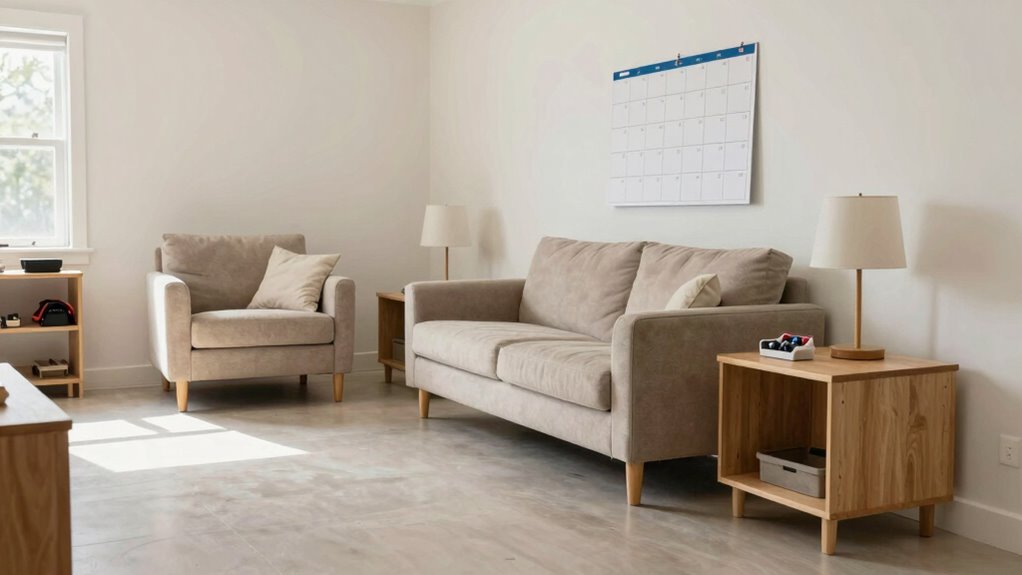
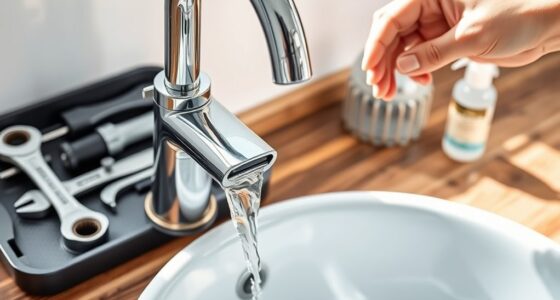
To assess your home maintenance needs, start by identifying key areas like the roof, plumbing, and electrical systems that require regular attention. Check for safety hazards such as loose rugs or poor lighting, which could cause falls. Also, evaluate your home’s accessibility features, like door widths and bathroom setups, to see if adjustments are needed for easier daily living. Incorporating home theater setup considerations, such as evaluating lighting conditions and space arrangement, can also enhance your entertainment experience while maintaining safety and comfort.
Identify Key Maintenance Areas
Evaluating your home maintenance needs starts with identifying the areas most prone to wear and tear. Focus on key spaces like the roof, gutters, plumbing, and HVAC systems, which benefit from seasonal inspections. These inspections help catch small issues early, preventing costly repairs down the line. Pay close attention to appliances, as regular checks can extend their longevity. Look for signs of leaks, unusual noises, or inefficiency, and plan maintenance or replacements accordingly. Prioritize high-traffic areas such as stairs, floors, and doorways, which may need frequent upkeep. Creating a list of these critical zones helps you organize maintenance tasks and avoid surprises. Staying proactive guarantees your home remains safe, functional, and easier to manage over time.
Check for Safety Hazards
After pinpointing key areas that need regular upkeep, it’s important to shift your focus to safety hazards that could pose risks to daily living. Check for fire hazards like overloaded outlets, frayed cords, or unattended candles. Inspect for pest control issues, such as signs of rodents or insects, which can compromise health. Remove clutter and guarantee pathways are clear to prevent trips and falls. Test smoke and carbon monoxide detectors regularly. Consider installing grab bars in bathrooms and non-slip mats in wet areas. Here’s a quick reference:
| Safety Hazard | Action |
|---|---|
| Fire hazards | Unplug unused appliances, check wiring |
| Pest control | Seal holes, keep food stored securely |
| Trip hazards | Remove clutter, secure loose rugs |
| Smoke detectors | Test monthly, replace batteries |
| Bathroom safety | Install grab bars, add non-slip mats |
Regular checks keep home safe and manageable.
Evaluate Accessibility Needs
How can you determine if your home layout and features meet your current mobility and comfort needs? Start by walking through your space and noting any areas where movement feels restricted or unsafe. Consider the use of assistive devices and mobility aids, like grab bars, ramps, or stairlifts, to improve accessibility. Check if doorways are wide enough for wheelchairs or walkers, and verify that light switches and controls are within easy reach. Evaluate your bathroom and kitchen for potential hazards or obstacles. Think about whether your current setup supports your daily routines comfortably. Making adjustments based on these observations helps create a safer, more accessible environment, reducing the risk of falls and making everyday tasks easier for you to manage independently.
Home Modifications to Make Living Easier and Safer

Making thoughtful home modifications can considerably improve safety and ease for older adults living alone. Simple changes, like updating interior decorating or adjusting garden landscaping, can reduce hazards and boost comfort. For example, installing grab bars or non-slip flooring makes daily tasks safer. Rearranging furniture can improve mobility, while better lighting reduces falls. Consider incorporating outdoor ramps or removing tripping hazards in the garden area to prevent accidents. These modifications support independence and peace of mind. Additionally, understanding home safety tips can help identify specific areas that need attention to enhance overall security. Incorporating specialized kitchen gear, such as easy-to-use appliances, can also make daily routines more manageable. Regularly assessing the home environment for mobility-friendly features can further ensure safety and ease of movement. Integrating smart controls into heating and cooling systems can enhance comfort and energy efficiency, especially for those with limited mobility. Incorporating accessible design principles can help create a more inclusive and safe living space.
Support Systems and Services to Ease Your Burden
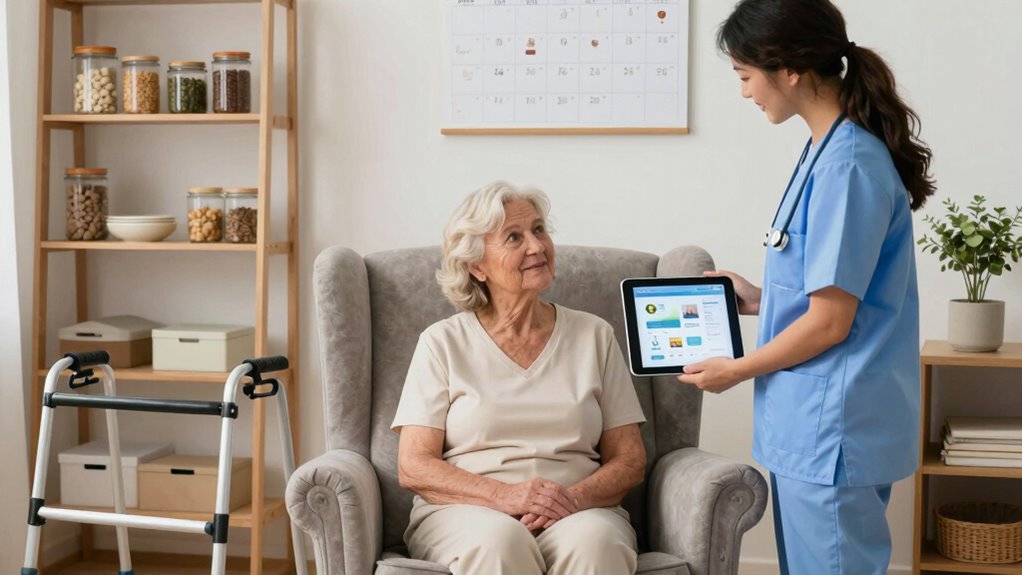
Implementing home modifications can markedly improve safety, but additional support systems and services are crucial for maintaining independence and reducing daily burdens. Community resources and caregiver support play a critical role in this. To make life easier, consider:
Supporting independence with community resources and caregiver help enhances safety and eases daily challenges.
- Connecting with local senior centers or volunteer programs that offer transportation and companionship.
- Enrolling in home health services for regular check-ins and medical assistance.
- Joining support groups to share experiences and gain practical advice from others in similar situations.
- Exploring personalized in-home care options to ensure tailored assistance that respects individual needs and preferences.
Using visual communication tools like large-print signage or simple visual cues can further enhance safety and independence at home. These resources help you stay connected, guarantee safety, and ease the caregiving load. Incorporating indoor air quality improvements, such as proper ventilation and humidity control, can also contribute to a healthier living environment for your loved one. Additionally, integrating Indonesian decor masks or other cultural artifacts can create a comforting and familiar atmosphere that promotes emotional well-being. Leveraging community programs and caregiver support can profoundly improve quality of life, making everyday tasks more manageable for your loved one living alone.
Using Technology to Automate Routine Tasks
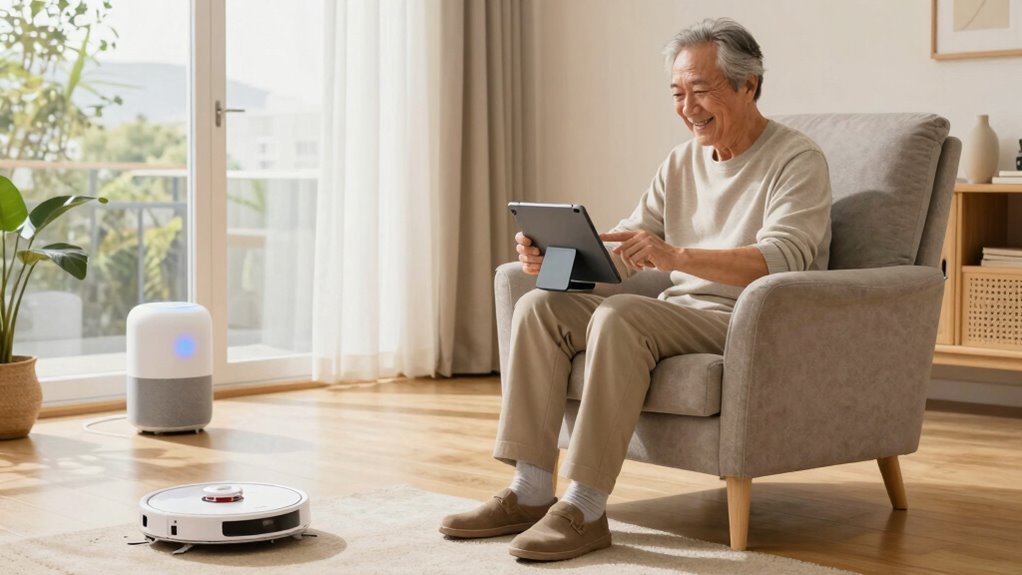
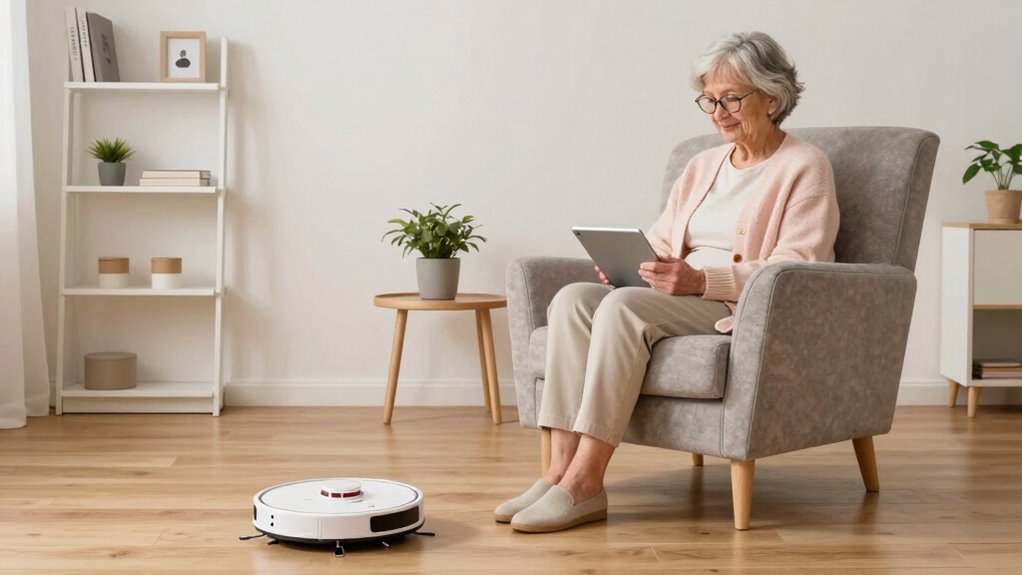
Technology offers practical solutions to simplify daily routines for older adults living alone. Smart appliances, like refrigerators that track inventory or ovens you can control remotely, help manage household tasks effortlessly. Automation systems can turn on lights, adjust thermostats, or lock doors automatically, reducing the need for manual effort. These tools can be programmed to perform routine chores, saving time and energy. Voice-activated devices, such as smart speakers, allow you to control appliances or get reminders without physical effort. Setting up these technologies might take some initial effort, but once in place, they make home upkeep more manageable. Incorporating local automation and cross-platform integration can further streamline daily activities and enhance safety. Additionally, utilizing smart home trends can help keep up with the latest innovations in home automation. By integrating smart appliances and automation systems into daily life, you can enjoy greater independence and peace of mind, especially when combined with regional flavors and insights to tailor your setup to your environment. Exploring home safety features can also add an extra layer of security to support independent living. Incorporating energy-efficient devices can further reduce utility costs and environmental impact.
Creating an Accessible and Comfortable Living Space
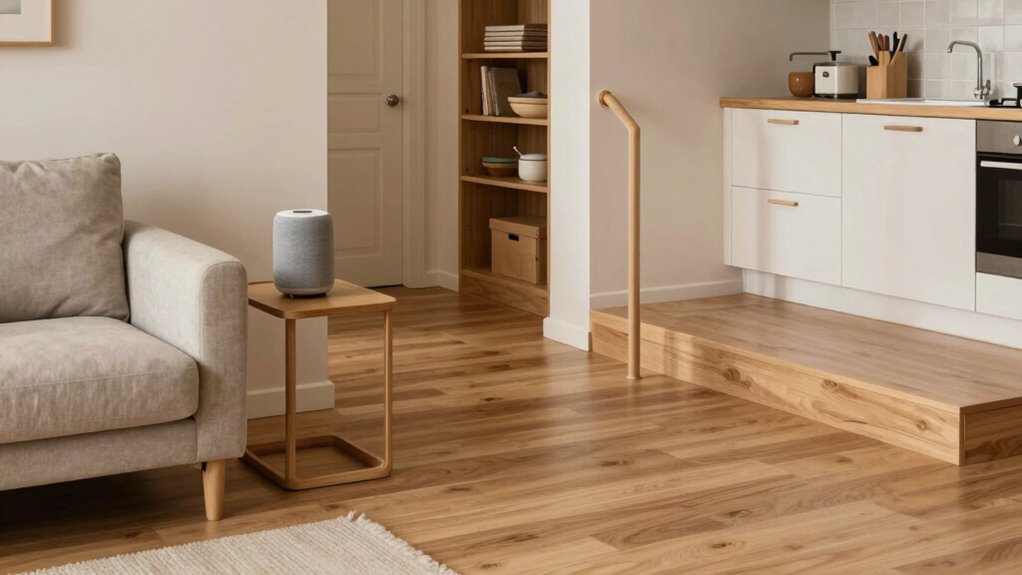
To guarantee your living space remains both accessible and comfortable, focus on thoughtful modifications that support mobility and safety. Start by implementing easy-to-reach storage and non-slip flooring to prevent falls. Enhance your interior decorating with comfortable, supportive furniture and good lighting to create a cozy environment. Incorporate gardening tips like raised garden beds or container gardening to enjoy outdoor activities without strain. Consider using colors and decor that promote calmness and clarity, making the space inviting and easy to navigate. Additionally, utilizing airless paint spraying tips can help you efficiently update your walls with minimal effort, creating a fresh and vibrant atmosphere. Ensuring proper home safety measures can further enhance peace of mind and independence. Incorporate accessible design principles to optimize your space for safety and ease of movement. Here are three key updates:
- Install grab bars and handrails in bathrooms and hallways.
- Use ergonomic furniture that’s easy to get in and out of.
- Design a garden with accessible features to enjoy nature effortlessly. Incorporating universal design concepts can also help create a more adaptable and inclusive environment for aging in place.
Establishing an Easy Home Maintenance Routine
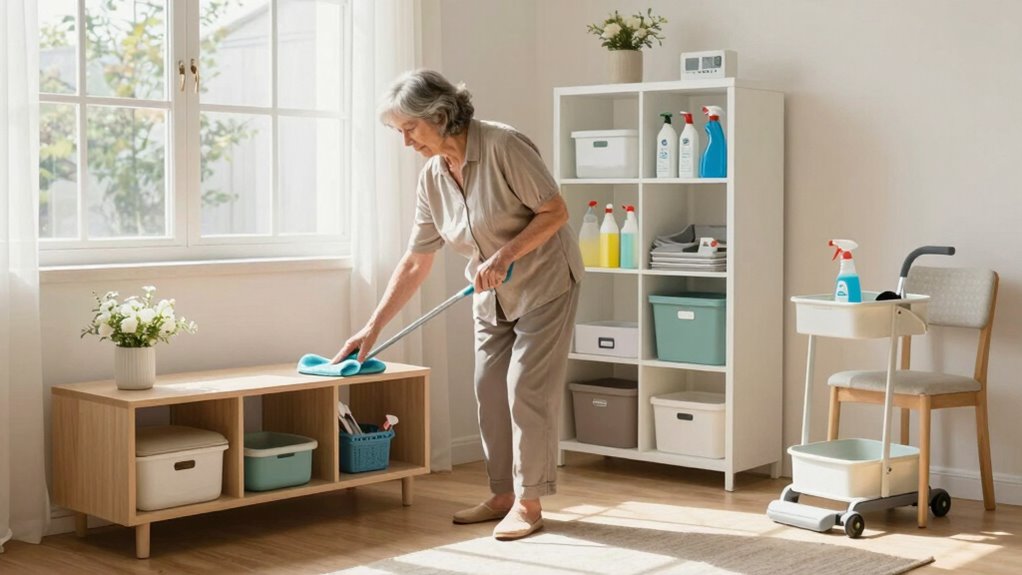
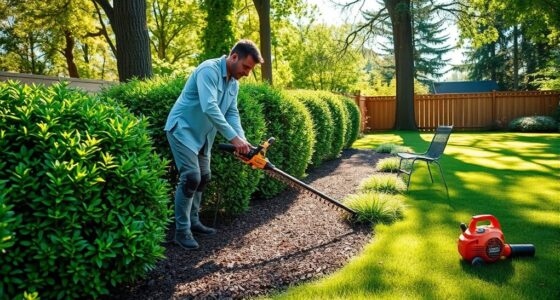
Establishing a simple home maintenance routine helps you stay on top of chores without feeling overwhelmed. Create a schedule that breaks tasks into manageable steps, like weekly vacuuming or monthly gutter cleaning. Incorporate gardening tips to keep your outdoor spaces tidy and healthy, such as watering plants early in the morning or trimming overgrown bushes. Use interior decorating ideas to keep your home organized and visually appealing, making chores easier and more enjoyable. Keep tools and supplies in accessible spots to streamline maintenance. Regularly inspecting your home for repairs prevents small issues from becoming big problems. By establishing these routines, you’ll reduce stress, save time, and maintain a safe, welcoming environment that’s easy to care for daily.
Frequently Asked Questions
How Can I Involve Older Adults in Decision-Making About Home Modifications?
You can involve older adults in decision-making by practicing shared decision making, guaranteeing they voice their preferences and concerns. Encourage open conversations about potential home modifications, highlighting how these changes can enhance their independence. Respect their choices, provide clear information, and explore options together. This approach empowers them, making them active participants, which boosts their confidence and ensures modifications truly meet their needs for a safer, more comfortable living environment.
What Are Cost-Effective Ways to Simplify Home Upkeep?
Did you know that homeowners who do their own maintenance save an average of $2,000 annually? To simplify home upkeep affordably, focus on budget-friendly solutions like routine DIY maintenance—changing filters, fixing leaks, or cleaning gutters. These small tasks prevent costly repairs and keep the home safe. You can also prioritize easy-to-maintain features, reducing the need for frequent repairs and making daily upkeep manageable for an older adult.
How Do I Prioritize Safety Improvements Over Aesthetic Changes?
You should prioritize safety improvements over aesthetic upgrades by focusing on essential modifications like installing grab bars, improving lighting, and removing tripping hazards first. While decorative enhancements and aesthetic upgrades can make the space more inviting, they shouldn’t compromise safety. Make certain that safety features are in place and functioning properly before considering decorative enhancements, creating a secure environment that’s both functional and comfortable for the older adult living alone.
What Common Household Tasks Can Be Delegated or Outsourced?
Imagine freeing up your time by outsourcing household tasks. You can delegate cleaning schedules to professional cleaners and schedule regular appliance maintenance with specialists, preventing breakdowns. These tasks, often time-consuming, become less stressful when entrusted to experts. Outsourcing lets you focus on what truly matters, ensuring the home stays safe and comfortable without the hassle of constant upkeep. It’s a simple way to lighten your load and maintain peace of mind.
How Can Community Resources Support Independent Living?
Community resources can greatly support your independence by offering local volunteering opportunities, where neighbors assist with chores or errands, and peer support groups provide emotional encouragement. You can connect with these programs through local senior centers or community organizations. They help reduce isolation, guarantee daily needs are met, and foster a sense of belonging, making it easier for you to maintain an active, independent lifestyle.
Conclusion
By simplifying your home upkeep, you’re planting seeds of independence that flourish with each easy step. Think of your home as a gentle river, flowing smoothly without rocks or debris—making daily life calmer and more manageable. With the right modifications, support, and a little tech, you’ll sail through chores effortlessly, turning your home into a cozy, safe harbor. Embrace these simple changes, and watch your independence blossom like a beautiful garden in full bloom.
Cold & flu season Picks
humidifiers
As an affiliate, we earn on qualifying purchases.