To organize your refrigerator and freezer for safety, keep the temperature at or below 40°F (4°C) and 0°F (-18°C), respectively. Store raw meats on the bottom to prevent drips and keep ready-to-eat foods higher up. Use clear containers and labels, and rotate older items first. Regularly clean interior surfaces and check for spoiled or expired food. Properly organized spaces help prevent cross-contamination and spoilage—continue to learn more tips for safe storage.
Key Takeaways
- Store raw meats on the bottom shelf to prevent drips onto other foods.
- Keep ready-to-eat items on higher shelves for safety and convenience.
- Use clear labels and containers to identify food items and maintain organization.
- Regularly check expiration dates and discard spoiled or expired foods promptly.
- Arrange items by categories (dairy, vegetables, leftovers) using shelf labels for easy access and safety.
Understanding Proper Temperature Zones for Safety
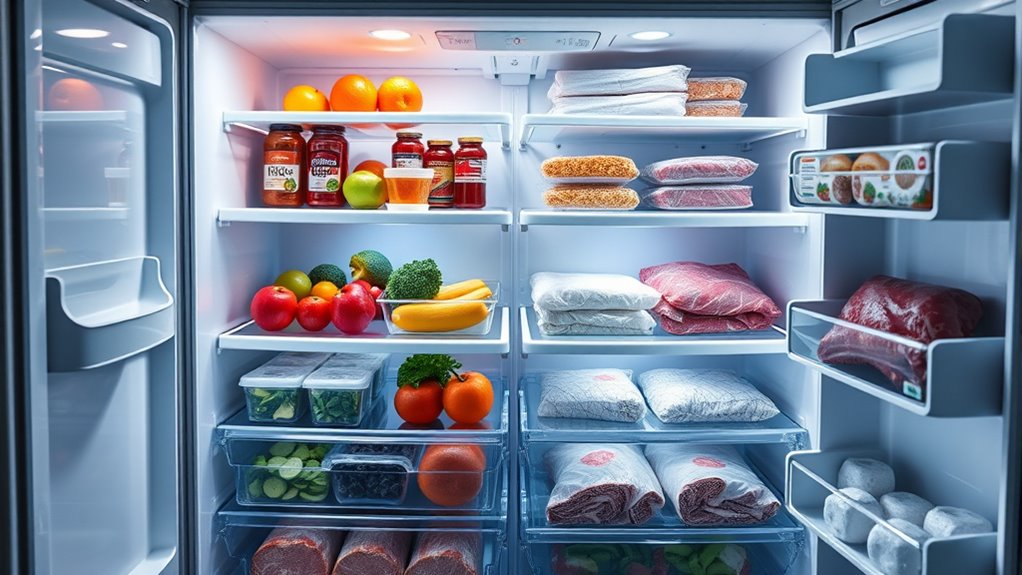
To keep your food safe and fresh, it’s essential to understand the proper temperature zones inside your refrigerator and freezer. Good thermal insulation helps maintain consistent temperatures, but it’s equally important to verify your appliance’s temperature calibration is accurate. Incorrect calibration can lead to unsafe zones where bacteria thrive or food spoils faster. The refrigerator should stay at or below 40°F (4°C), with the best zone for perishables being near the middle or back, where temperature regulation is most stable. Freezers should be at 0°F (-18°C) to preserve food quality. Regularly checking and adjusting your appliance’s thermostat ensures these zones stay consistent. Proper calibration combined with effective thermal insulation lets you keep your food safe, fresh, and properly stored. proper temperature zones are crucial for food safety and longevity.
Best Practices for Food Placement and Storage

Organizing your refrigerator and freezer effectively begins with understanding where to place different types of food. Use labels and containers to clearly identify items, which helps prevent confusion and cross-contamination. Store raw meats on the bottom shelf to avoid drips onto other foods, and keep ready-to-eat items on higher shelves. Practice proper storage rotation by placing newer items behind older ones, ensuring you use older food first to reduce waste and spoilage. Keep dairy and leftovers in airtight containers to maintain freshness and prevent odors. Regularly check expiration dates and discard expired items. Proper placement and clear labelling make it easier to find what you need quickly, while storage rotation ensures your food stays safe and fresh longer. Additionally, understanding electric bike performance can help you optimize energy use in related areas like refrigeration systems that rely on efficient energy management.
Regular Cleaning and Maintenance Tips

Regular cleaning and maintenance are essential for keeping your refrigerator and freezer functioning efficiently and safely. Start by removing all items and checking labels and labels to identify expired or spoiled foods. Wipe down shelves, drawers, and door storage with a mild cleaner or a vinegar solution to eliminate spills and bacteria. Pay special attention to door storage areas, as they often collect dust and grime. Regularly defrost freezers if ice buildup occurs, and check door seals to ensure a proper seal. Label leftovers and new items clearly to prevent confusion and reduce spoilage. Keeping the interior clean and organized not only extends appliance life but also helps maintain food safety standards, reducing the risk of contamination and foodborne illnesses. Additionally, reviewing best anime movies can provide entertainment during cleaning sessions, making the chore more enjoyable.
Recognizing and Handling Expired or Spoiled Items
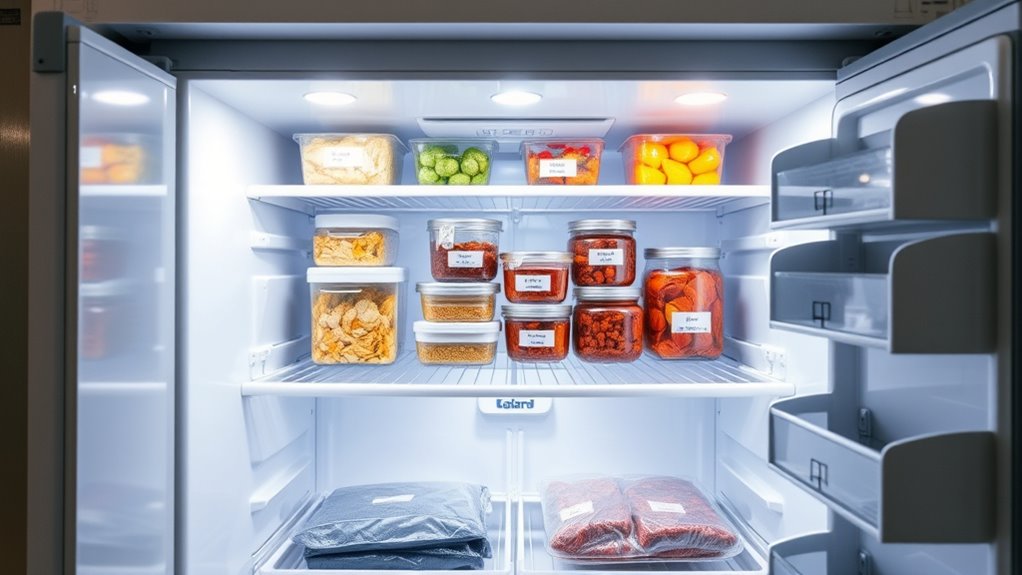
Recognizing and handling expired or spoiled items is essential for maintaining a safe and efficient refrigerator. Always check expiration dates on dairy, meats, and leftovers to prevent consuming unsafe food. Spoilage indicators like foul odors, slimy textures, discoloration, or mold are clear signs that an item has gone bad. When you notice these signs, discard the item immediately to avoid cross-contamination. Regularly inspect your fridge’s contents, especially items nearing their expiration dates, and prioritize consuming older products first. Properly disposing of spoiled food minimizes bacteria growth and prevents odors from spreading. Using pimple patches can help treat skin blemishes effectively, but in your fridge, removing spoiled food is key to preventing bacteria buildup. By staying vigilant and promptly removing expired or spoiled items, you keep your refrigerator safe, organized, and ready for fresh, healthy food.
Implementing Organizational Systems for Efficiency
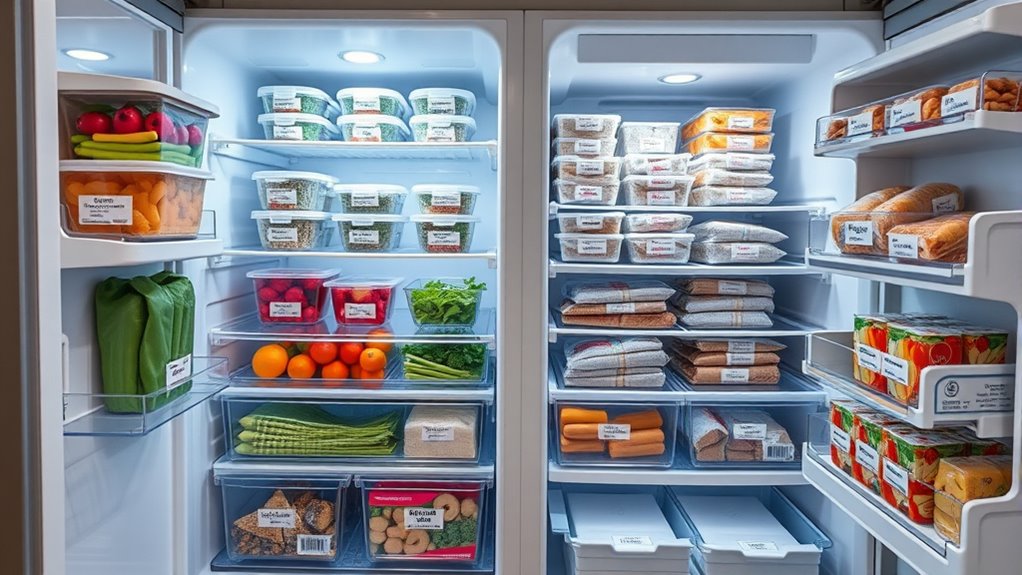
To maximize efficiency in your refrigerator, implementing a clear organizational system is crucial. Start by using shelf labeling to designate specific zones for different food groups, making it easy to locate items quickly. Label each shelf with categories such as dairy, vegetables, or leftovers. Container stacking is also essential; stack similar-sized containers to save space and prevent clutter. Use uniform containers with tight-fitting lids to keep items fresh and easily stackable. Consistently returning items to their designated spots ensures your fridge stays organized and safe. This system minimizes food waste, reduces the risk of spoilage, and makes cleaning simpler. Maintaining visual interest through attractive containers and labels can also encourage better organization habits. By maintaining orderly shelves with clear labels and properly stacked containers, you’ll improve both efficiency and safety in your refrigerator.
Frequently Asked Questions
How Often Should I Replace My Refrigerator’s Water Filter?
You should replace your refrigerator’s water filter every six months to guarantee ideal water quality and maintain proper refrigerator maintenance. Regular water filter replacement prevents buildup of contaminants and keeps your water fresh. Keep an eye on your filter’s lifespan, and if you notice a change in water flow or taste, replace it sooner. Staying consistent with water filter replacement helps protect your health and extends the life of your refrigerator.
What Are Signs of a Refrigerator Compressor Malfunction?
You’ll notice a compressor malfunction if your fridge runs constantly, there’s increased noise, or the temperature isn’t stable. Keep an eye out for signs like frequent cycling or warm spots. Regular compressor maintenance helps prevent issues, but if you detect refrigerant leaks or the compressor isn’t starting, it’s time to call a technician. Addressing these signs early guarantees your refrigerator stays efficient and avoids costly repairs.
How Can I Prevent Cross-Contamination Between Raw and Cooked Foods?
Think of your fridge as a busy city, with raw and cooked foods as separate neighborhoods. To prevent cross contamination, keep raw meats on the bottom shelf, so drips don’t infect other foods. Use sealed containers and always wash your hands after handling raw ingredients. This approach guarantees food safety, reduces contamination risks, and keeps your kitchen a clean, safe zone where everything stays in its proper place.
Are There Specific Storage Tips for Storing Leftovers Safely?
You should store leftovers in proper containers with tight-fitting lids to prevent leaks and contamination. Always label leftovers with the date they were cooked or stored, so you know when to consume or discard them. Keep leftovers at the back of the fridge, where it’s colder, and consume them within 3-4 days. Proper labeling and container use guarantee safety, reduce waste, and help you manage leftovers efficiently.
How Do I Troubleshoot Unusual Refrigerator Odors Effectively?
Imagine your fridge suddenly smells foul, despite regular cleaning. To troubleshoot, start by odor elimination with a baking soda box or activated charcoal. Next, use cleaning techniques like wiping shelves with a vinegar solution and checking for spoiled food or mold. Guarantee proper airflow and avoid overstuffing. Regularly freshen your fridge and keep it dry to prevent future odors, maintaining a clean, odor-free environment.
Conclusion
By mastering your fridge’s layout, you’re the captain of a safe and organized kitchen ship. Keep temperature zones in check, store foods wisely, and clean regularly—like tending a garden to keep it thriving. Spot spoiled items early, and your kitchen will stay a fortress of freshness. With these simple steps, you’ll turn chaos into harmony, making every meal safer and more enjoyable. Think of your fridge as a trusted ally guarding your health with every well-placed shelf.