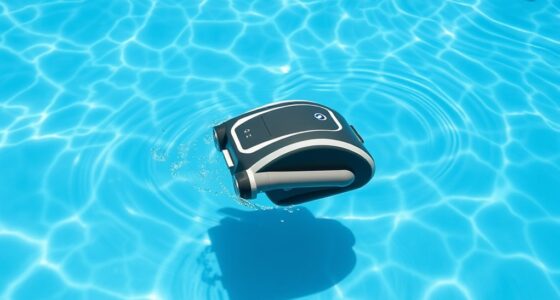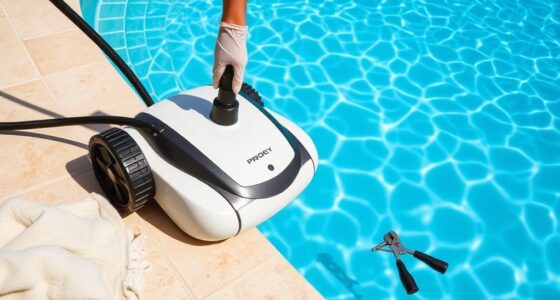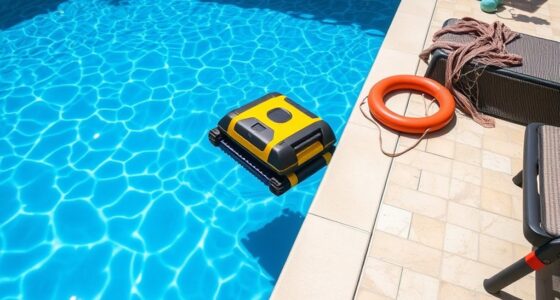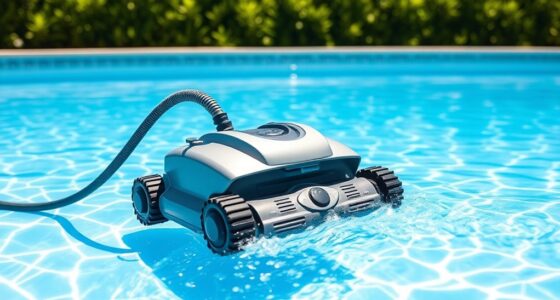
Choosing between automatic and manual pool cleaning depends on your budget, time, and control preferences. Automatic cleaners save effort with smart navigation but can be costly upfront and require maintenance. Manual cleaning gives you full control and can be more thorough but demands elbow grease and time. To weigh your options effectively, consider your pool size and how much effort you’re willing to invest—there’s more to discover to help you decide.
Listen free for 30 days with Audible
Thousands of audiobooks and originals — cancel anytime.
As an affiliate, we earn on qualifying purchases.
Key Takeaways
- Automatic cleaners save time and effort with smart navigation but may struggle with large debris and require maintenance.
- Manual cleaning offers precise control and better removal of stubborn debris but is more labor-intensive and time-consuming.
- Initial costs for automatic cleaners are higher ($300-$1,200), while manual tools are inexpensive but need ongoing effort.
- Automatic systems may incur repair and replacement costs over time due to wear and mechanical issues.
- Manual cleaning allows for thorough inspection and targeted care, potentially reducing long-term maintenance expenses.
As an affiliate, we earn on qualifying purchases.
Overview of Pool Cleaning Methods

When it comes to keeping your pool clean, you have two main options: manual and automatic cleaning methods. Manual cleaning involves physically skimming the surface, brushing the walls, and vacuuming the pool, giving you control over every detail. Automatic cleaners, on the other hand, use devices like robotic or suction-side cleaners to handle debris and dirt with minimal effort. Both methods require regular attention to pool chemical balancing to ensure water stays safe and clear. Additionally, choosing the right pool cover options can help reduce debris buildup, making maintenance easier. While manual cleaning offers precision, automatic cleaners save time and effort. Understanding these methods helps you decide which approach best fits your lifestyle and pool maintenance needs. For those seeking convenience, automatic pool cleaners can be a significant time-saver, especially for busy households. Regular maintenance, including filter cleaning, is essential regardless of the method chosen to keep your pool in optimal condition. Proper method selection can also influence the overall cost of maintenance over time. Incorporating advanced cleaning technology can further improve efficiency and effectiveness in maintaining a pristine pool.
Advantages of Automatic Pool Cleaners

Automatic pool cleaners offer several compelling advantages that make pool maintenance easier and more efficient. With smart technology, these cleaners can navigate your pool precisely, reaching every corner and removing debris more thoroughly than manual methods. They operate automatically, saving you time and effort, so you can enjoy your pool without constant supervision. Additionally, automatic cleaners are designed for energy efficiency, consuming less power than traditional pool equipment while still delivering effective cleaning. Many models adapt their cleaning patterns based on pool size and shape, optimizing performance. This automation technology allows for consistent and thorough cleaning without manual intervention. This combination of smart technology and energy efficiency means you get a consistently clean pool with less hassle and lower energy bills, making automatic pool cleaners a smart investment in your pool maintenance routine. Moreover, cost-effectiveness over time makes these devices a financially sound choice for regular pool upkeep.
Drawbacks of Automatic Pool Cleaners

Automatic pool cleaners can struggle to pick up larger or stubborn debris, leaving your pool less clean. They also often come with high maintenance costs and may require frequent repairs. Plus, improper use or malfunction can lead to damage, adding to your worries. Additionally, their reliance on mechanical parts means that performance metrics can decline over time, affecting cleaning efficiency. Furthermore, the integration of AI in some models aims to improve automation capabilities, but many devices still face limitations in handling complex debris. Moreover, the design of certain automatic cleaners can restrict their ability to navigate around tight corners or obstacles effectively. Since they depend heavily on mechanical components, the durability of these parts can influence the long-term effectiveness of the cleaner.
Limited Debris Pickup Efficiency
Have you noticed that some automatic pool cleaners struggle to pick up larger or heavier debris effectively? This is a common drawback related to limited debris pickup. These cleaners often excel at surface coverage, but their ability to handle bigger leaves or debris can be inconsistent. They may miss debris near the pool edges or get stuck on obstacles, reducing overall efficiency. Automated cleaners tend to focus on small debris or dirt, leaving larger items behind, which can lead to more manual cleanups. If your pool collects a lot of sizable debris, an automatic cleaner might not be the most effective choice. This limitation means you’ll still need to occasionally intervene for thorough cleaning, especially after storms or heavy leaf fall. Additionally, the types of debris that automatic cleaners can effectively handle are often limited by their design and suction power. To improve their performance, some models incorporate advanced navigation features that help them bypass obstacles and cover more area efficiently. Recognizing these performance limitations can help you choose the right cleaning method for your specific needs. Regular maintenance of filters and brushes can also help optimize their efficiency and extend their lifespan.
High Maintenance Costs
While automatic pool cleaners offer convenience, they can also lead to high maintenance costs over time. These costs include frequent chemical adjustments to maintain water balance, as automatic cleaners tend to stir up debris and algae, requiring more chemicals. Additionally, the constant operation puts stress on parts like brushes, filters, and motors, leading to frequent replacements. You might find yourself spending more on replacement parts to keep the cleaner functioning properly. Regular maintenance is essential to prevent breakdowns and ensure efficiency, but it can quickly add up financially. If you’re on a tight budget, these ongoing expenses could outweigh the savings from automated cleaning, making manual cleaning a more cost-effective option in the long run. Furthermore, the wear and tear on components can accelerate, increasing the likelihood of costly repairs. Proper understanding of maintenance requirements is crucial to avoid unexpected expenses and keep your pool in optimal condition. For example, ignoring routine upkeep can lead to unexpected breakdowns, which can be costly to repair. Additionally, the initial investment for automatic cleaners can be substantial, which further impacts overall costs.
Potential Equipment Damage
Frequent use of automatic pool cleaners can sometimes lead to equipment damage that’s costly to repair. These devices may cause equipment malfunctions if they’re not maintained properly or if they collide with pool features. Over time, motors and brushes can wear out prematurely, leading to expensive replacements. Additionally, automatic cleaners pose electrical hazards, especially if they’re not properly grounded or if water seeps into electrical components. Short circuits or electrical shocks can occur, risking safety and further damaging the cleaner. While automatic pool cleaners offer convenience, you must stay vigilant for signs of damage or malfunction. Regular inspections and prompt repairs can minimize risks, but unresolved issues may lead to significant repair costs and safety concerns. Using proper maintenance techniques can help prevent many of these issues and extend the lifespan of your equipment. Regularly checking the electrical connections and ensuring proper grounding are crucial steps to avoid potential hazards. Incorporating professional servicing periodically can also help identify hidden issues before they escalate. Furthermore, being aware of regional safety standards can help ensure your equipment operates safely within your specific area. Additionally, understanding the potential for equipment damage emphasizes the importance of proactive care to safeguard your investment.
Benefits of Manual Pool Cleaning

Manual pool cleaning gives you greater control over the cleaning process, so you can target specific areas that need attention. It’s also more effective at removing stubborn debris that automatic cleaners might miss. With your hands-on approach, you guarantee your pool stays spotless and well-maintained. Additionally, understanding self-watering plant pots concepts can help you organize your cleaning tools efficiently for better results. Moreover, a manual approach allows you to inspect the pool for potential issues like cracks or leaks that automated systems might overlook.
Greater Cleaning Control
Manual pool cleaning gives you greater control over the cleanliness of your pool. You can customize your cleaning routine to target specific areas or stubborn spots, ensuring no debris gets overlooked. This level of control allows you to focus on trouble spots that automatic cleaners might miss, providing superior cleaning precision. You decide when and how often to clean, giving you flexibility based on your pool’s usage and environment. With manual cleaning, you can adjust your approach for delicate features or hard-to-reach corners, tailoring the process to your pool’s unique design. This hands-on method empowers you to maintain your pool exactly to your standards, ensuring a pristine, inviting swimming environment. Additionally, manual cleaning allows you to better understand the condition of your pool, which can help in early detection of potential issues such as equipment malfunctions or structural damages related to pool maintenance.
Effective for Stubborn Debris
Because stubborn debris like leaves, algae, and dirt can sometimes evade automatic cleaners, manual pool cleaning often proves more effective in removing these persistent particles. When dealing with stubborn debris, a thorough manual approach allows you to target problem areas and guarantee deep cleaning. This method is especially useful for removing debris trapped in hard-to-reach spots or embedded in the pool’s corners.
Here are four reasons why manual cleaning excels for stubborn debris:
- You can physically dislodge and lift embedded dirt and algae.
- It allows for more precise cleaning of difficult areas.
- You can perform deep cleaning to remove debris that automatic cleaners might miss.
- Manual tools give you control to handle large or heavy debris effectively.
Challenges of Manual Pool Maintenance

Maintaining a pool manually often involves tackling time-consuming and physically demanding tasks that can quickly become overwhelming. You need to regularly check and adjust the pool chemical balance, which can be tricky without proper tools. Ensuring algae prevention requires consistent brushing, skimming, and chemical treatments, demanding attention and effort. Mistakes in chemical levels can lead to algae growth or cloudy water, making maintenance frustrating.
| Challenge | Impact |
|---|---|
| Inconsistent chemical balance | Algae growth, cloudy water |
| Labor-intensive cleaning | Fatigue, missed spots |
| Monitoring water quality | Time-consuming, prone to error |
These challenges highlight why manual maintenance isn’t always practical, especially when balancing pool chemicals and preventing algae becomes a constant battle.
Cost Analysis: Upfront and Ongoing Expenses
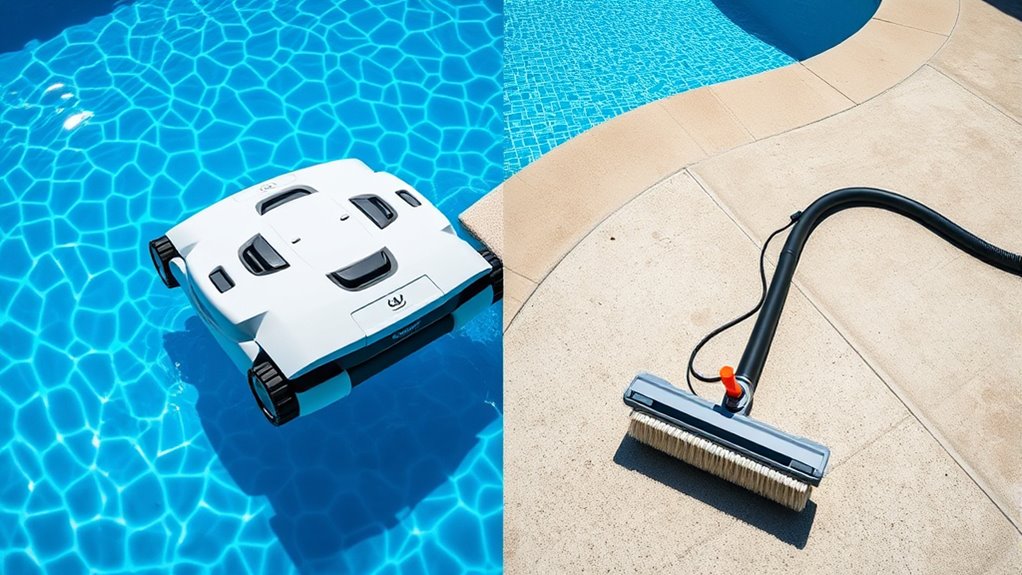
When considering pool cleaning options, understanding the cost implications is essential. Your budget considerations should include both upfront and ongoing expenses to evaluate long-term savings accurately. Automatic cleaners often require a higher initial investment but lower maintenance costs over time. Conversely, manual cleaning involves minimal upfront costs but can add up with frequent labor and supplies. Key points include:
- Automatic cleaners typically range from $300 to $1,200 upfront.
- Manual tools are inexpensive initially, usually under $50.
- Maintenance costs for automatic systems include parts and repairs.
- Manual cleaning demands more time but fewer financial outlays long-term.
Balancing these expenses helps you choose a solution that fits your budget now and saves money in the future.
Suitability Based on Pool Size and Usage

The size of your pool and how often it gets used play significant roles in determining the most suitable cleaning method. Pool size considerations are essential because larger pools require more time and effort to clean manually, making automatic systems more efficient. Conversely, smaller pools might be perfectly manageable with manual cleaning, saving you money. Usage frequency impact is also critical; if your pool is used daily, an automatic cleaner can keep it consistently maintained with minimal effort. In contrast, infrequent use might mean manual cleaning suffices. By evaluating your pool’s size and how often it’s used, you can better decide whether an automatic cleaner’s convenience outweighs the upfront cost or if manual cleaning remains a practical, cost-effective choice.
Making the Right Choice for Your Pool

Choosing the right pool cleaning method depends on balancing your budget, lifestyle, and pool characteristics. Consider how each option impacts pool safety and energy consumption. Automated cleaners typically save time and reduce manual effort, but they may use more energy and require regular maintenance. Manual cleaning offers control and lower energy use but demands more of your time. To make the best choice, evaluate these factors:
- Your budget for equipment and maintenance costs
- How much time you want to dedicate to cleaning
- The safety features needed for your pool environment
- Energy efficiency and long-term operational costs
Frequently Asked Questions
How Long Does Each Cleaning Method Typically Take?
When considering cleaning duration, manual pool cleaning usually takes longer because it requires your manual effort to scrub and vacuum the pool, often lasting about 1-3 hours depending on pool size and debris. Automatic cleaners are quicker, often completing a cycle in 30 minutes to an hour, saving you time. The key difference is that manual effort affects cleaning duration, making it more time-consuming compared to the efficiency of automatic systems.
Are Automatic Cleaners Effective for All Pool Shapes?
Automatic cleaners are generally effective across most pool shapes, thanks to their advanced design features. They offer good pool shape adaptability, steering corners and irregular edges with ease. However, for highly complex or uniquely shaped pools, their cleaning precision might vary, and manual cleaning could be more thorough. Overall, automatic cleaners provide convenient, efficient cleaning for standard pools, but you should assess your pool’s specific shape for optimal results.
What Maintenance Is Required for Manual Cleaning Tools?
When maintaining manual cleaning tools, you need to regularly check and clean your brushes and skimmers, and guarantee the equipment is stored properly to prevent damage. You’ll also want to balance the chemicals in your pool for ideal water quality. After each use, rinse out tools to remove debris and store them in a dry, sheltered spot. This helps keep your equipment in good shape and your pool water healthy.
Can Automatic Cleaners Operate in Saltwater Pools?
Saltwater compatibility concerns are common when considering automatic cleaners. You can confidently choose automatic operation for saltwater pools because many models are designed to withstand the salty environment without corrosion or damage. These cleaners operate efficiently, ensuring your pool stays pristine. Just check the manufacturer’s specifications to confirm saltwater compatibility, and you’ll enjoy automatic cleaning that works seamlessly in your saltwater pool, saving you time and effort.
How Do Weather Conditions Affect Cleaning Efficiency?
Weather impact can substantially influence your pool cleaning efficiency, especially with seasonal variation. Rain, wind, and temperature changes can bring debris or alter water chemistry, making cleaning more challenging. Wind can blow leaves into your pool, while rain can dilute chemicals, reducing effectiveness. Cold weather may slow down automatic cleaners or cause mechanical issues. To maintain cleanliness, adjust your cleaning schedule based on seasonal weather patterns and stay vigilant during weather changes.
Conclusion
Choosing between automatic and manual pool cleaning comes down to your needs, budget, and how much effort you’re willing to put in. Both have their perks and pitfalls, so don’t put all your eggs in one basket. Remember, the right choice can make your pool sparkle without turning your life upside down. Weigh your options carefully, and you’ll find the perfect cleaning method that keeps your pool pristine and stress-free.
NFL season / tailgating Picks
team gear
As an affiliate, we earn on qualifying purchases.