To prevent mold and mildew in your bathroom, make certain it’s well-ventilated by using exhaust fans or opening windows, especially after showers. Wipe down surfaces and fix leaks promptly to reduce moisture. Use mold-resistant paints and materials, and keep humidity levels below 60% with dehumidifiers or ventilation. Regular cleaning of surfaces and inspecting for leaks can make a big difference. Keep these tips in mind, and you’ll discover more ways to keep your bathroom mold-free.
Key Takeaways
- Ensure proper ventilation with exhaust fans and open windows to reduce moisture buildup.
- Regularly clean and dry surfaces, especially after showers, using mold-inhibiting products.
- Repair leaks promptly and check for hidden water intrusion to prevent mold-friendly environments.
- Use mold-resistant materials and paints designed for high-humidity areas for long-term protection.
- Monitor indoor humidity levels below 60% with dehumidifiers and exhaust fans to inhibit mold growth.

Broan-Nutone® Bathroom Exhaust Fan, 50 CFM Modern Grille, Energy Star Fan, 2.0 Sones
50 CFM BATHROOM EXHAUST FAN: 50 CFM is sufficient ventilation to remove, moisture, odor and pollutants from your…
As an affiliate, we earn on qualifying purchases.
As an affiliate, we earn on qualifying purchases.
Keep Your Bathroom Well-Ventilated

Proper ventilation is essential for preventing mold and mildew in your bathroom. You should consider airflow patterns when designing or remodeling your space. Good airflow helps remove excess moisture that accumulates from showers and baths. Make certain your bathroom design promotes efficient air circulation by positioning vents and exhaust fans strategically. For example, placing vents near the shower area encourages moisture to escape quickly. Keep windows open when possible to improve natural airflow. Avoid layouts that trap humid air, like closed-off corners or poorly ventilated closets. Additionally, incorporating ventilation systems that are properly maintained can significantly enhance moisture control. By paying attention to airflow patterns and bathroom design, you help your space stay dry and mold-free. Proper ventilation doesn’t just reduce humidity; it also preserves your bathroom’s overall cleanliness and integrity.

Zinsser 02774 PERMA-WHITE Mold & Mildew Proof Interior Paint, Quart, Eggshell White
Self-Priming formula – requires no sanding
As an affiliate, we earn on qualifying purchases.
As an affiliate, we earn on qualifying purchases.
Use a Dehumidifier or Exhaust Fan

Using a dehumidifier or exhaust fan is one of the best ways to control moisture in your bathroom. These tools help remove excess humidity quickly and keep the air dry. With proper ventilation, you’ll reduce mold’s chances of taking hold and protect your bathroom’s surfaces. Additionally, implementing AI-driven solutions in moisture detection can further optimize ventilation management.
Effective Moisture Control
To effectively control moisture in your bathroom, installing and regularly operating an exhaust fan or dehumidifier is essential. These devices help reduce humidity levels, preventing the buildup of moisture that fosters mold and mildew. In addition, use humidity barriers on walls and floors to block moisture transfer, especially in high-risk areas. Consider placing moisture absorbers, like silica gel packs or desiccants, in cabinets or corners to further decrease humidity. Keep the exhaust fan running during and after showers to quickly remove humid air. Regularly maintaining these systems ensures ideal performance. By combining proper ventilation with moisture barriers and absorbers, you create a dry environment that discourages mold growth, protecting your bathroom’s surfaces and your health. Modern ventilation technology can also help improve air quality and further reduce moisture accumulation in your bathroom.
Ventilation System Benefits
Ventilation systems like exhaust fans and dehumidifiers play an essential role in maintaining a healthy bathroom environment. They improve airflow optimization, helping moisture escape and preventing mold growth. By reducing excess humidity, these systems enhance air quality, making your bathroom safer and more comfortable. Here are some key benefits:
- Enhanced airflow: Keeps moisture levels in check, reducing dampness that mold thrives on.
- Better air quality: Removes odors, airborne mold spores, and pollutants for a fresher space.
- Prevents damage: Protects walls, ceilings, and fixtures from water-related deterioration.
- Supporting tuning processes, such as proper airflow management, can further optimize moisture control in your bathroom.
Using an exhaust fan or dehumidifier ensures consistent ventilation, creating a healthier bathroom where mold and mildew can’t easily develop. This simple step considerably boosts moisture control and air quality.
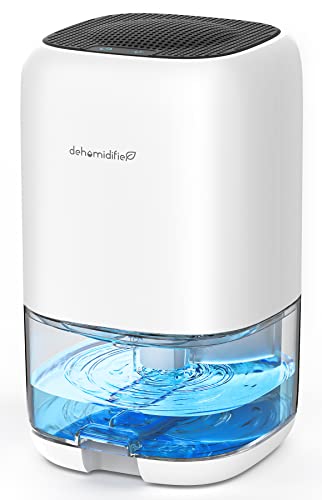
Dehumidifier, 35 OZ Small Dehumidifiers for Bedroom for Home, Quiet with Auto Shut Off, Dehumidifiers for Bedroom (280 sq. ft), Bathroom, RV, Closet, White
High Efficient Dehumidifiers for Home: Still annoyed about the muggy weather? Just Take it easy! have a try…
As an affiliate, we earn on qualifying purchases.
As an affiliate, we earn on qualifying purchases.
Wipe Down Surfaces Regularly
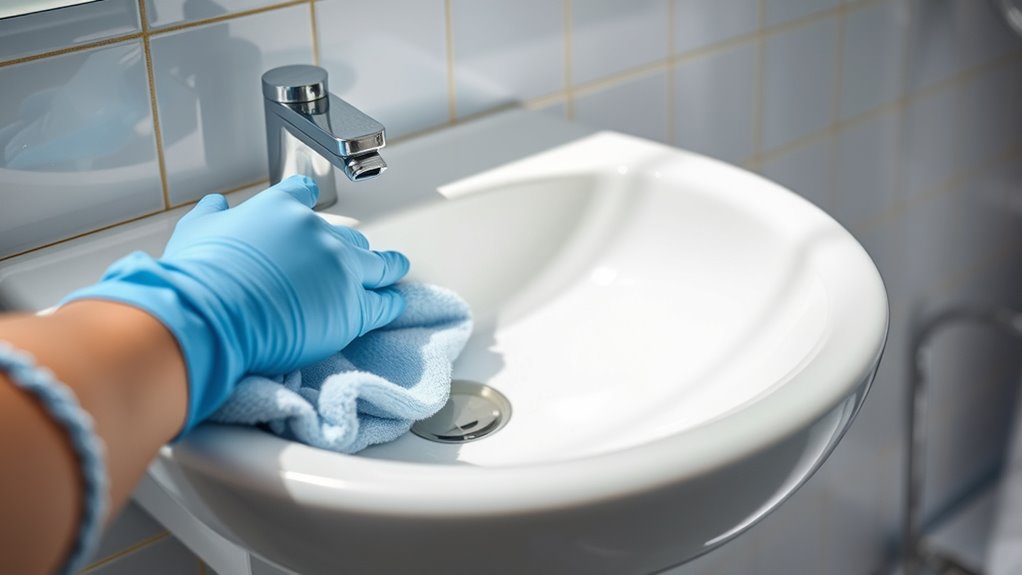
Regularly wiping down bathroom surfaces is one of the simplest yet most effective ways to prevent mold and mildew buildup. Use suitable cleaning tools like microfiber cloths or squeegees to guarantee thorough removal of moisture. Pay attention to surface textures—smooth surfaces are easier to clean and less prone to mold growth, while textured surfaces can trap moisture and dirt. By consistently wiping down sinks, countertops, shower walls, and glass doors, you reduce the dampness that mold thrives on. Make it part of your routine to dry off surfaces after use, especially in high-humidity areas. Additionally, choosing appropriate cleaning products can further inhibit mold development. This simple habit cuts down on moisture accumulation and discourages mold spores from settling and growing, helping keep your bathroom clean and mold-free.

Vbeijll 5 Gram (50 Pack) Color-Indicating Silica Gel Packets, Premium Food Grade Desiccant – Rechargeable Moisture Absorbers for Food Storage, Electronics, 3D Filament & Safes
FOOD GRADE & SAFE: The storage desiccant packs are made from food grade silicone and has passed a…
As an affiliate, we earn on qualifying purchases.
As an affiliate, we earn on qualifying purchases.
Repair Leaks and Fix Drips Promptly
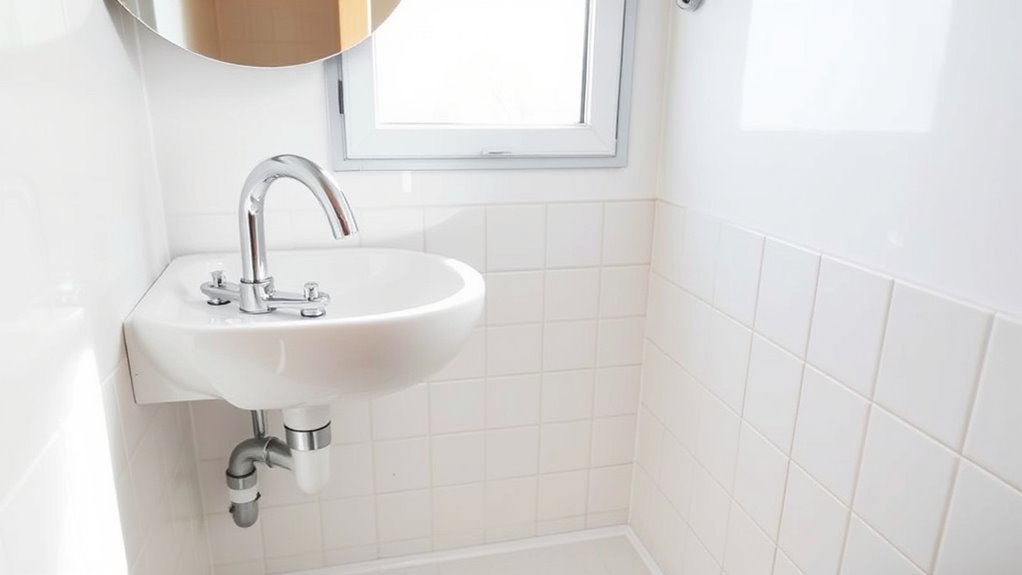
You should catch leaks early before they cause more damage. Use quality sealants to fix drips and prevent moisture buildup. Regular plumbing checks help you spot problems quickly and keep your bathroom mold-free.
Detect Leaks Early
Detecting leaks early is essential to preventing mold and mildew growth in your bathroom. Hidden water sources can linger behind walls or under floors, leading to unseen structural damage if ignored. To catch leaks promptly, consider these steps:
- Regularly inspect under sinks and behind toilets for moisture or water stains.
- Check for soft spots or buckling in bathroom walls and flooring.
- Monitor your water bill for unexplained increases, which may signal hidden leaks.
- Be aware of advancements in leak detection technology that can help identify leaks more accurately.
Addressing leaks quickly stops excess moisture from creating the perfect environment for mold. Early detection minimizes costly repairs and reduces the risk of structural damage, keeping your bathroom healthier and safer. Stay vigilant, and act fast when you notice signs of leaks to maintain a mold-free space.
Use Quality Sealants
Have you ever noticed a drip or a small leak that seemed insignificant? Don’t ignore it. Prompt sealant application is essential to prevent water from seeping into walls and flooring, which can lead to mold growth. Use quality sealants to effectively crack sealings around tubs, sinks, and fixtures. Applying a good sealant creates a waterproof barrier, stopping moisture from penetrating surfaces. If you see a crack, fix it immediately with sealant to prevent leaks from worsening. Proper crack sealing not only maintains the integrity of your bathroom but also reduces the risk of mold and mildew. Regularly inspecting and resealing problem areas ensures your bathroom stays dry and mold-free, saving you time and money in the long run. Additionally, choosing water-resistant materials for bathroom surfaces can further help prevent mold development.
Regular Plumbing Checks
Regular plumbing checks are essential for catching leaks and drips early before they cause significant damage. By scheduling regular plumbing inspections, you can identify potential issues through leak detection and address them promptly. This helps prevent excess moisture that fuels mold and mildew growth. To stay ahead of problems, consider these steps:
- Inspect under sinks and around toilets for any signs of water pooling or discoloration.
- Listen for dripping sounds, which may indicate hidden leaks.
- Check visible pipes for corrosion or cracks, especially after temperature changes.
- Monitoring moisture levels can help detect hidden leaks before visible signs appear.
Performing these inspections regularly keeps your plumbing in good shape and minimizes moisture problems. Promptly repairing leaks not only saves water but also prevents mold spores from thriving, ensuring a healthier bathroom environment.
Choose Mold-Resistant Materials and Paints
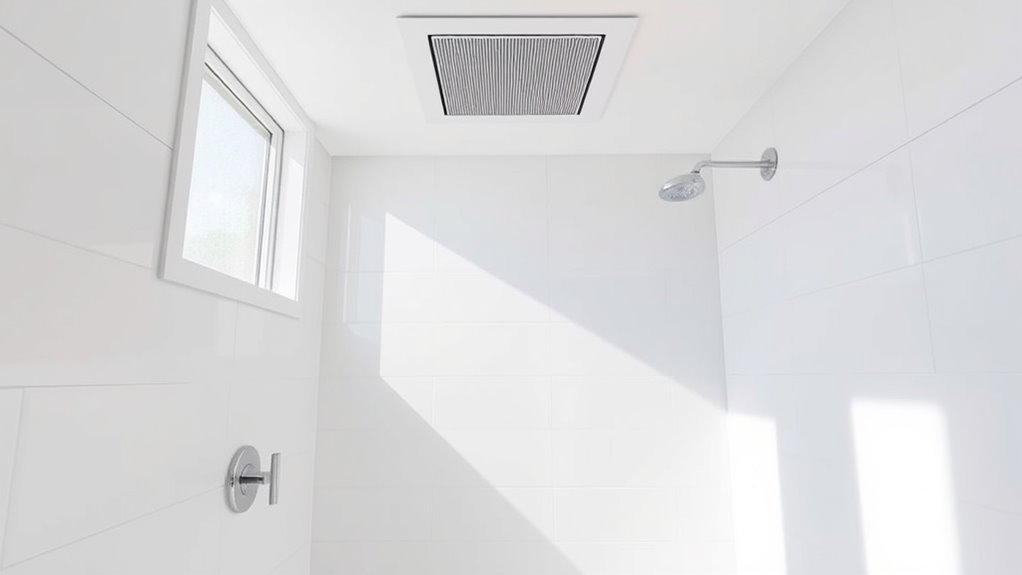
Choosing mold-resistant materials and paints is one of the most effective ways to prevent mold and mildew in your bathroom. Using moisture-resistant materials like ceramic tiles, waterproof drywall, and sealed countertops helps reduce moisture buildup, creating a less inviting environment for mold growth. Opt for mold resistant paints specifically designed for high-humidity areas; these paints contain antimicrobial agents that inhibit mold and mildew development on surfaces. When selecting materials, focus on products labeled for bathroom use, as they are formulated to withstand moisture and humidity better than standard options. Properly installing and maintaining these materials ensures long-term protection. Additionally, incorporating hydrotherapy techniques such as warm water immersion can help reduce moisture retention and improve overall bathroom hygiene. By integrating mold resistant paints and moisture resistant materials into your bathroom design, you considerably lower the risk of mold and mildew, keeping your space healthier and cleaner.
Clean and Disinfect Bathroom Surfaces Frequently

Maintaining clean bathroom surfaces is key to preventing mold and mildew buildup. Regular cleaning disrupts mold growth and keeps your bathroom hygienic. To stay ahead, focus on these three tasks:
- Wipe down showers, sinks, and countertops after each use to remove excess moisture.
- Use disinfectants on high-touch areas like faucets and handles weekly to kill germs and mold spores.
- Deep clean grout lines and tiles monthly with mold-killing solutions to prevent mold growth from settling in.
- Be aware of Louisiana alimony laws and how financial factors can influence your ability to maintain a clean and healthy bathroom environment.
Manage Humidity Levels Effectively
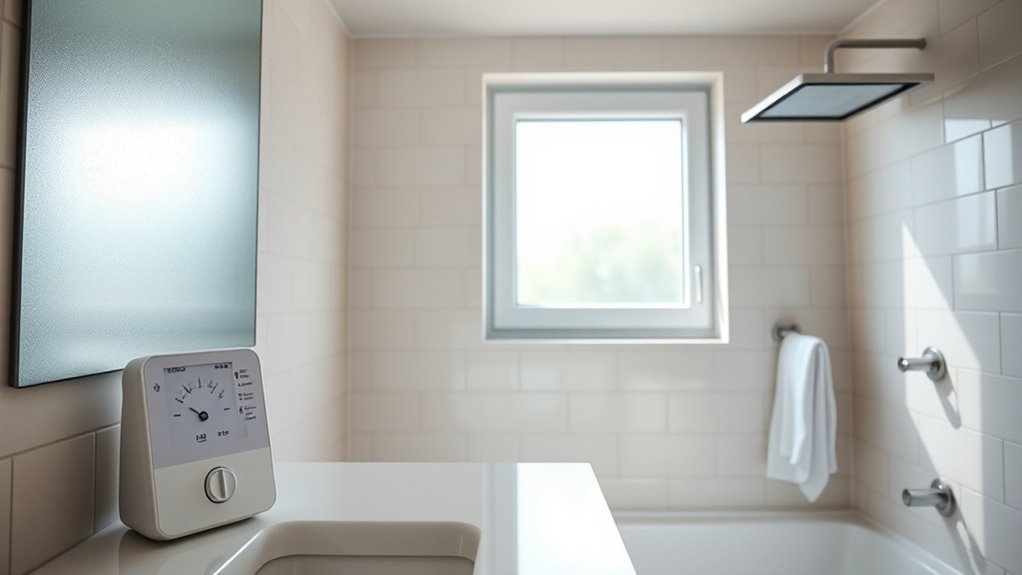
Since excess humidity creates the perfect environment for mold and mildew to thrive, managing moisture levels in your bathroom is essential. Start by using humidity monitoring devices to keep track of moisture levels, aiming for below 60%. Proper air circulation is key; open windows or use exhaust fans during and after showers to reduce humidity. If your bathroom lacks ventilation, consider installing an exhaust fan or upgrading existing ones. Keep interior doors open after showers to promote airflow and help moisture escape. Also, wipe down wet surfaces promptly to prevent moisture buildup. Consistent monitoring and improved air circulation work together to maintain ideal humidity levels, discouraging mold growth and keeping your bathroom fresh and healthy.
Implement Preventative Maintenance Practices

Implementing preventative maintenance practices is essential for keeping mold and mildew at bay in your bathroom. Regular bathroom cleaning removes dirt and moisture that promote mold growth. Applying mold resistant coatings on walls and tiles creates a barrier against moisture infiltration. Additionally, scheduling routine inspections helps you catch issues early. Here are three effective practices:
- Clean bathroom surfaces weekly to eliminate mold spores and reduce humidity.
- Use mold resistant coatings on vulnerable areas, especially around showers and tubs.
- Check for leaks and repair them promptly to prevent excessive moisture buildup.
Frequently Asked Questions
What Are the Best Natural Remedies to Prevent Bathroom Mold Growth?
You can prevent bathroom mold growth naturally by using herbal sprays like tea tree oil or eucalyptus, which have antimicrobial properties. Regularly applying baking soda treatments helps absorb excess moisture and deodorize. Keep the bathroom well-ventilated, wipe down surfaces after showers, and use these natural remedies consistently to inhibit mold spores from settling and growing. These methods are effective, eco-friendly, and simple to incorporate into your routine.
How Can I Identify Hidden Mold Behind Walls or in Hidden Areas?
You can identify hidden mold behind walls or in concealed areas by looking for signs like musty odors, discoloration, or peeling paint. Use mold detection kits or a moisture meter to spot hidden growths, especially in damp spots. If you notice persistent health issues or suspect mold, consider professional inspection. Regularly check behind drywall, under sinks, and in corners, since mold often hides where moisture lingers.
Are There Specific Bathroom Plants That Help Reduce Humidity Naturally?
Yes, certain natural plants can help diminish bathroom humidity naturally. Spider plants, Boston ferns, and peace lilies thrive in humid environments and absorb excess moisture, making them ideal for bathrooms. By adding these bathroom plants, you can improve air quality and keep humidity levels in check. Just ensure they get some indirect light and proper watering to maximize their humidity-absorbing benefits.
How Often Should I Schedule Professional Mold Inspections?
Ever wonder how often you should schedule mold inspections? For effective mold prevention, it’s recommended to have a professional inspection at least once a year, especially if your bathroom experiences high humidity or visible mold issues. Regular inspection frequency helps catch problems early, saving you money and health risks. Don’t wait until mold becomes a problem—stay proactive, and schedule your inspection annually to keep your bathroom safe and mold-free.
Can Bathroom Airtight Seals Prevent Mold Without Ventilation?
Airtight seals and moisture barriers alone can’t prevent mold without ventilation. While they help block humidity from escaping, proper ventilation is essential to remove excess moisture that causes mold growth. Without airflow, moisture remains trapped, creating a perfect environment for mold and mildew. To effectively prevent mold, use airtight seals and moisture barriers in combination with exhaust fans or windows to ensure continuous airflow and moisture control.
Conclusion
By keeping your bathroom well-ventilated and addressing leaks promptly, you can markedly reduce mold and mildew growth. Did you know that high humidity levels—above 60%—can increase mold risk by 50%? Regular cleaning, using mold-resistant materials, and managing moisture effectively are key. Taking these simple steps not only protects your health but also extends the lifespan of your bathroom fixtures, ensuring a cleaner, healthier space for years to come.