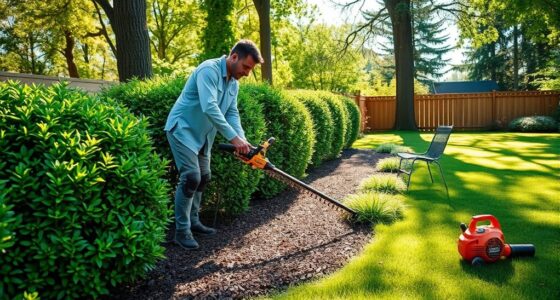
To prevent slips and trip hazards around your home, regularly clear walkways of debris, leaves, and ice, especially after bad weather. Make sure outdoor and indoor pathways are well-maintained, repairing cracks and uneven surfaces promptly. Keep walkways clutter-free and use non-slip mats or rugs in high-traffic or wet areas. Proper lighting and contrasting colors also help identify hazards easily. If you follow these tips, you’ll be better prepared to keep your home safe from falls and accidents.
Key Takeaways
- Regularly inspect and secure rugs, mats, and carpets to prevent curling or sliding hazards.
- Keep walkways clear of clutter, cords, and objects that could cause trips or falls.
- Promptly clean up spills, wet areas, and debris to reduce slipping risks.
- Repair cracks, uneven surfaces, and damaged pavement on outdoor pathways promptly.
- Ensure proper lighting and high contrast in walkways to improve hazard visibility.

Slips can happen suddenly and lead to serious injuries, but many accidents are preventable with simple precautions. One of the most effective ways to reduce the risk is by paying attention to floor mat safety. If you have mats inside your home, make sure they have non-slip backings to prevent them from sliding out of place. Regularly check that mats are secure and replace any that are worn or curling at the edges. This simple step can prevent many falls, especially in areas prone to moisture like kitchens and bathrooms. Outside your home, outdoor walkway maintenance is equally important. Keep walkways clear of debris, leaves, and ice, and repair any cracks or uneven surfaces that could cause you to trip. Regularly sweeping and inspecting your outdoor paths ensures they’re safe to walk on, especially during rainy or snowy weather. Proper lighting along walkways also plays a vital role; well-lit paths help you see potential hazards and avoid them. Additionally, understanding the importance of contrast ratio can help you identify hazards more effectively in various lighting conditions, making your environment safer.
When it comes to indoor safety, you should also pay attention to high-traffic areas where spills or wetness are common. Quickly clean up any water or other liquids to prevent slipping. Use absorbent mats in entryways to catch moisture from shoes, and make certain they stay in place to avoid creating new tripping hazards. In addition, consider using rugs or runners with non-slip backing in hallways or areas where slipping is more likely. Always double-check that these rugs are secure and won’t slide when stepped on. Inside and outside, clutter is another hazard you can easily control. Keep walkways free of clutter, cords, or objects that could cause someone to trip. Be especially cautious during bad weather—snow and ice can disguise hazards, so shovel and salt walkways regularly to keep them safe.
non-slip indoor mats with backing
As an affiliate, we earn on qualifying purchases.
As an affiliate, we earn on qualifying purchases.
Frequently Asked Questions
How Often Should I Inspect My Home for Tripping Hazards?
You should inspect your home for tripping hazards at least seasonally, especially during spring and fall when changes occur. Regular inspections help you identify new hazards early. Keep detailed hazard documentation to track issues and guarantee timely fixes. By staying proactive and consistent with seasonal inspections, you reduce the risk of accidents, making your home safer for everyone. Don’t wait—make hazard checks a routine part of your home maintenance.
What Footwear Best Prevents Slips and Trips Indoors?
When choosing footwear to prevent slips and trips indoors, you should prioritize shoes with slip-resistant soles to provide better grip on smooth surfaces. Make sure they also have a proper fit to avoid slipping or losing balance. Look for shoes with good tread and supportive features, and avoid worn-out or smooth-soled shoes. Properly fitting, slip-resistant shoes help you stay steady on your feet and reduce fall risks inside your home.
Are There Eco-Friendly Options for Anti-Slip Treatments?
Imagine your floors dressed in a gentle, invisible armor—eco-friendly coatings that safeguard without harming. You can choose biodegradable solutions that act like a nurturing shield, gripping surfaces with sustainable strength. These eco-friendly options reduce environmental impact while providing effective slip resistance. By opting for biodegradable solutions, you create a safer home environment that cares for both your family and the planet, blending safety with sustainability seamlessly.
How Can Children and Elderly Residents Stay Safe From Tripping Hazards?
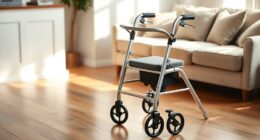
You can keep children and elderly residents safe by implementing childproofing measures like securing cords and removing small objects, and ensuring pathways are clear. Use elderly mobility aids such as walkers or handrails to provide extra stability. Regularly inspect your home for potential tripping hazards, fix uneven flooring, and add non-slip mats in key areas. These steps create a safer environment, reducing the risk of falls for everyone.
What Should I Do if I Find a Hidden Tripping Hazard?
If you find a hidden tripping hazard, start with hazard identification to understand what it is and where it’s located. Then, take immediate removal steps, like cleaning up clutter, fixing uneven flooring, or securing loose rugs. Don’t delay—addressing hazards promptly reduces the risk of falls. Regularly inspect your home to catch hidden dangers early, keeping everyone safe and preventing accidents before they happen.
Conclusion
By regularly inspecting your home and promptly addressing potential tripping hazards, you create a safer environment for everyone. Remember, a little effort goes a long way in preventing accidents before they happen. Isn’t it worth taking those extra steps to protect yourself and your loved ones? Stay vigilant, keep your floors clear, and enjoy the peace of mind that comes with a hazard-free home. After all, isn’t safety everyone’s top priority?