To breathe easier, focus on improving your indoor air quality by using HEPA air purifiers to trap dust, pet dander, and mold spores, and guarantee regular filter changes. Proper ventilation helps remove stale air and odors, while controlling humidity prevents mold and dust mites. Avoid smoking indoors and minimize chemical use during cleaning. Keeping a clean, well-ventilated home fosters healthier air, and more tips are available to help you create a sense of fresh, breathable space.
Key Takeaways
- Use high-efficiency air purifiers with HEPA filters to reduce airborne pollutants effectively.
- Ensure proper ventilation by regularly exchanging indoor air with fresh outdoor air.
- Maintain low humidity levels to prevent mold growth and dust mite proliferation.
- Minimize indoor chemical sources by choosing natural cleaning products and avoiding smoking.
- Keep your home clean with frequent dusting and vacuuming using HEPA-filtered vacuums.

Have you ever wondered how the air inside your home affects your health? Poor indoor air quality can lead to a variety of issues, from allergies and respiratory problems to fatigue and headaches. Fortunately, there are simple steps you can take to breathe easier and create a healthier environment. One of the most effective ways to improve indoor air quality is by using air purifiers. These devices work by capturing airborne pollutants such as dust, pet dander, mold spores, and airborne bacteria, markedly reducing their presence. When you choose an air purifier, look for models with HEPA filters, as they are proven to trap tiny particles that can compromise your health. Keep in mind that regular maintenance, like changing filters on schedule, guarantees your air purifier continues to perform at its best.
Alongside air purifiers, ventilation systems play an essential role in maintaining good indoor air quality. Proper ventilation helps remove stale air, odors, and indoor pollutants, replacing them with fresh outdoor air. If your home lacks adequate natural ventilation, consider installing mechanical ventilation systems, such as exhaust fans or heat recovery ventilators. These systems work silently in the background, continuously cycling air and preventing the buildup of indoor contaminants. When you optimize your ventilation, you’re not only reducing harmful particles but also controlling humidity levels, which can help prevent mold growth and dust mites—two common triggers for allergies and asthma.
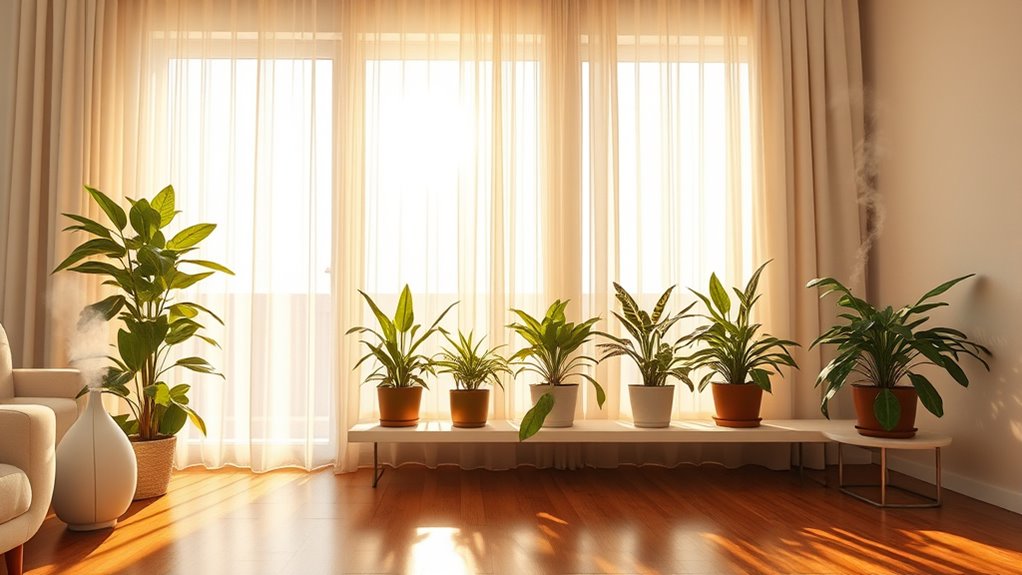
You should also be mindful about everyday activities that impact air quality. Smoking indoors, using harsh cleaning chemicals, or burning candles can introduce pollutants into your environment. Choosing natural cleaning products and ensuring proper ventilation during and after cleaning can make a noticeable difference. Additionally, keeping your home clean by regularly dusting and vacuuming with a vacuum equipped with a HEPA filter can greatly reduce airborne allergens. Be cautious about indoor plants, too, as some can harbor mold if overwatered, which might worsen indoor air quality for sensitive individuals.
Frequently Asked Questions
How Do Air Purifiers Compare to HVAC Filters?
Air purifiers and HVAC filters both enhance air purification, but they serve different roles. Air purifiers typically have higher filter efficiency, targeting smaller particles like allergens and bacteria directly in a room. HVAC filters, on the other hand, improve overall air quality by filtering the entire system’s airflow. For better indoor air, use an air purifier for localized purification and upgrade your HVAC filters regularly for exhaustive coverage.
Can Houseplants Significantly Improve Indoor Air Quality?
Plant perks pack a punch, providing natural benefits that boost your home’s air quality. While houseplants do support air purification, they won’t completely clear pollutants or toxins. You’ll notice some improvement in fresh, fragrant air, but relying solely on plants isn’t enough. For truly clean, clear air, combine plant benefits with proper ventilation and air filtration. Plants are a helpful, healthy addition, but they’re part of a broader air improvement plan.
What Are the Health Effects of Poor Indoor Air Quality?
Poor indoor air quality exposes you to indoor pollutants that can harm your respiratory health. You might experience symptoms like coughing, sneezing, or wheezing, and over time, these pollutants can lead to more serious conditions such as asthma or allergies. Recognizing the health effects of poor indoor air quality helps you understand the importance of proper ventilation and air purifiers, ensuring you breathe cleaner, healthier air every day.
How Often Should I Replace Indoor Air Filters?
You should replace your indoor air filter based on its filter lifespan and recommended replacement frequency, which varies by filter type and usage. Typically, it’s best to check monthly and replace every 1 to 3 months for standard filters. If you notice reduced airflow or increased dust, replace it sooner. Regular changes maintain air quality and system efficiency, so stay attentive to signs that your filter needs a swap.
Are There Natural Methods to Improve Indoor Air Quality?
Did you know that indoor air can be up to five times more polluted than outside? To improve it naturally, you should prioritize natural ventilation by opening windows regularly, especially when outdoor air quality is good. Additionally, DIY air purifiers, like placing activated charcoal or houseplants in your space, help filter airborne toxins. These simple methods effectively enhance your indoor air quality without relying solely on commercial solutions.
Conclusion
By taking these simple steps, you’re not just improving air quality—you’re opening the door to healthier living. Think of your home as a sanctuary, where clean air acts as a gentle guardian, shielding you from unseen dangers. Don’t wait until poor air quality whispers its toll; act now and breathe easy, because every inhalation you take is a gift. Remember, your environment reflects your well-being—make it a fresh gust today.