To easily change your HVAC filter, watch for signs like dust buildup, weaker airflow, or higher energy bills, which indicate it’s time to replace it—typically every 1 to 3 months. Gather the right size, turn off your system, and carefully remove the old filter, noting airflow direction. Install the new filter correctly, making sure it fits snugly. Keep an eye on maintenance tips and common pitfalls to keep your system running smoothly. If you continue, you’ll learn how to simplify the process even more.
Key Takeaways
- Replace your HVAC filter every 1 to 3 months or sooner if dirty, clogged, or during high pollution seasons.
- Recognize signs like reduced airflow, higher energy bills, or visible dirt to determine when to change the filter.
- Choose the correct filter size and type, ensuring it matches your system’s specifications and airflow needs.
- Turn off the HVAC system before removing and installing the filter, and install it with airflow arrows pointing correctly.
- Dispose of used filters responsibly by sealing them in plastic bags and following local waste management guidelines.

12" x 140" Air Vent Filters Kit – Cut to Size Floor Vent Filters for home. MERV 8 Electrostatic Air Filter Roll & Adhesive Hook Tape(30+ Filters)
【High quality】This series of filter is engineered from 100% non-woven blue and white polyester. Two distinctly different plies…
As an affiliate, we earn on qualifying purchases.
As an affiliate, we earn on qualifying purchases.
Signs That Indicate It’s Time to Replace Your Filter

Knowing when to replace your HVAC filter is essential to keep your system running efficiently. If your air quality seems to decline, and dust or allergens are more noticeable, it’s a clear sign your filter needs changing. Reduced airflow, resulting in weaker heating or cooling, also indicates it’s time for a replacement. You might notice higher energy bills because your system works harder to circulate air through a clogged filter. Visible dirt, debris, or a darkened filter are obvious signs it’s overdue. Regularly checking your filter helps maintain good air quality and maximizes energy savings. Additionally, understanding filter lifespan and replacement guidelines can help prevent system strain and ensure optimal performance. Don’t wait until your system shows signs of strain; proactive replacement ensures peak performance and a healthier indoor environment.

Simply 16x20x1 Air Filter, Merv 13, 6 Pack, For Home AC Furnace & HVAC (Actual Size: 15.75"x19.75"x0.75") DUST, Pet, & Allergy Control
Universally Compatible: Measuring 16" x 25" x 1" inch, with an actual size of 15.75"x24.75"x0.75", Simply Filters works…
As an affiliate, we earn on qualifying purchases.
As an affiliate, we earn on qualifying purchases.
How Often Should You Change Your HVAC Filter?
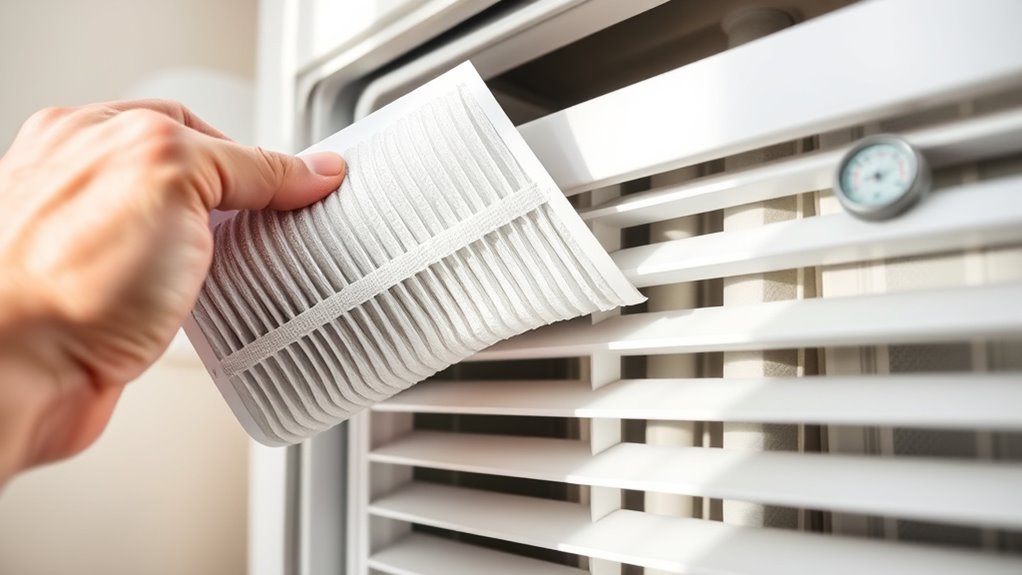
How often you should change your HVAC filter depends on several factors, including your household size, indoor air quality, and system usage. Generally, it’s recommended to replace filters every 1 to 3 months. If you have pets, allergies, or live in a high-pollution area, more frequent changes are essential to maintain good air quality. A clean filter improves indoor air quality by trapping dust, allergens, and pollutants, helping you breathe easier. Additionally, changing your filter regularly supports energy savings because a clean filter allows your system to operate efficiently, reducing energy consumption and lowering utility bills. Keep an eye on your filter’s condition, and don’t hesitate to change it sooner if it looks dirty or clogged. Regular maintenance keeps your system running smoothly and your indoor environment healthier, especially if you have a Dog breeds – My dog names who sheds often.
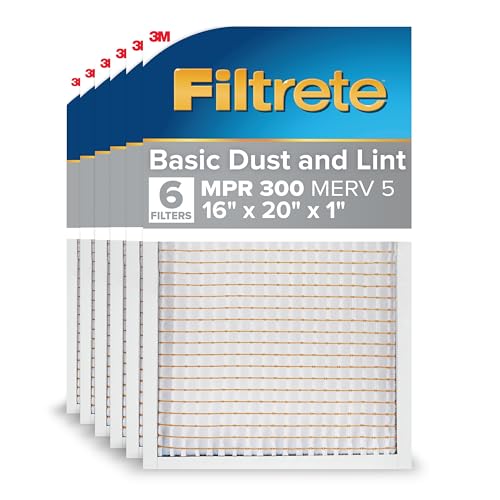
Filtrete 16x20x1 Air Filter MERV 5, 6-Pack AC Furnace HVAC Filters for Home, MPR 300 Basic Dust Defense, Pleated Electrostatic Removes Lint & Dust (Actual Size 15.69×19.69×0.81 in)
16x20x1 AIR FILTER FOR FURNACE & AC SYSTEMS – Filtrete MERV 5 furnace filters designed for standard HVAC…
As an affiliate, we earn on qualifying purchases.
As an affiliate, we earn on qualifying purchases.
Choosing the Right Filter for Your System
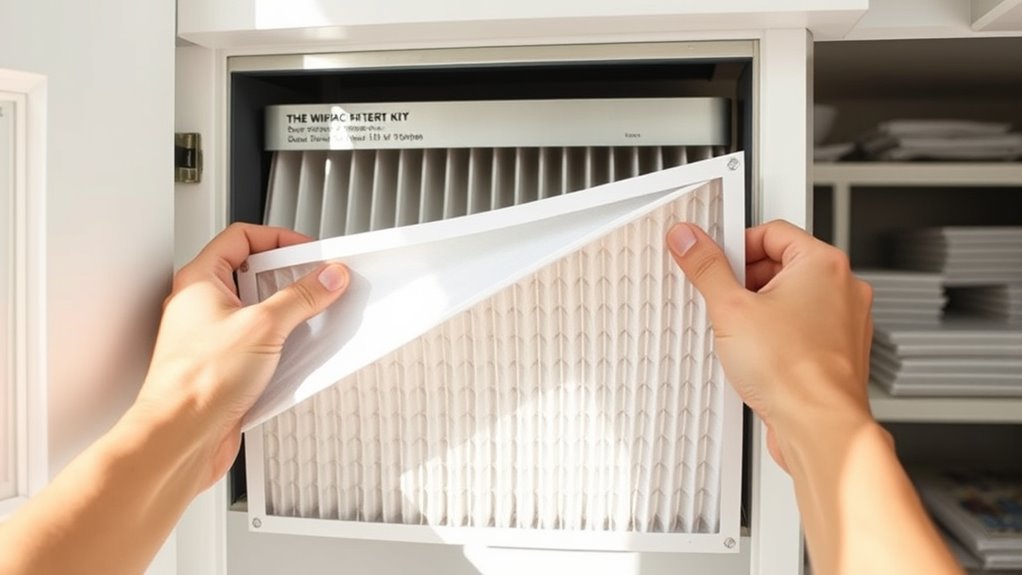
Choosing the right filter for your system guarantees peak performance and indoor air quality. You need to consider filter material and airflow compatibility to ensure optimal operation. The filter material affects filtration efficiency, while airflow compatibility ensures your system runs smoothly without strain. Here’s a quick comparison:
| Filter Material | Airflow Compatibility | Best Use Cases |
|---|---|---|
| Fiberglass | Moderate | Basic filtration |
| Pleated | High | Improved air quality |
| Electrostatic | Variable | Allergies, pets |
Selecting a filter with the right material and airflow compatibility prevents system strain and maintains air quality. Always check your system’s specifications before choosing, so your filter works seamlessly with your HVAC. Additionally, understanding filter lifespan can help you plan timely replacements for sustained performance.

Filtrete Allergen Reduction + Odor Reduction HEPA-Type Room Air Purifier Filter, F1
Effective Allergen Reduction: Captures 95% of airborne particles as small as 2 microns, helping to reduce allergens like…
As an affiliate, we earn on qualifying purchases.
As an affiliate, we earn on qualifying purchases.
Gathering Tools and Preparing for Filter Replacement
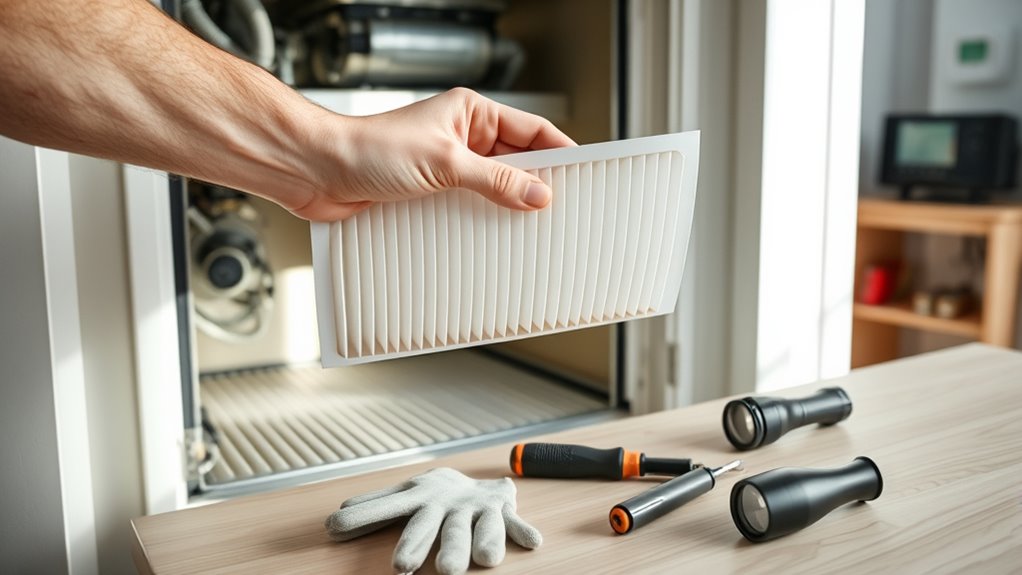
Before you begin replacing your HVAC filter, gather all the necessary tools and prepare your workspace. You’ll need the new filter, which includes the appropriate filter material for your system. Having a flashlight can help you see clearly inside the vent or filter slot. Keep a pair of gloves nearby to avoid dirt transfer and protect your hands. Clear the area around your furnace or air handler to ensure easy access. Good air quality depends on a clean, properly installed filter, so take your time to avoid damage. Confirm you have the correct size and type of filter. Preparing your workspace minimizes mess and makes the replacement quick, guaranteeing your HVAC system runs efficiently and maintains ideal air quality. Additionally, understanding angel numbers can provide spiritual guidance during times of change, including when updating your home’s air filtration system.
Step-by-Step Guide to Removing the Old Filter
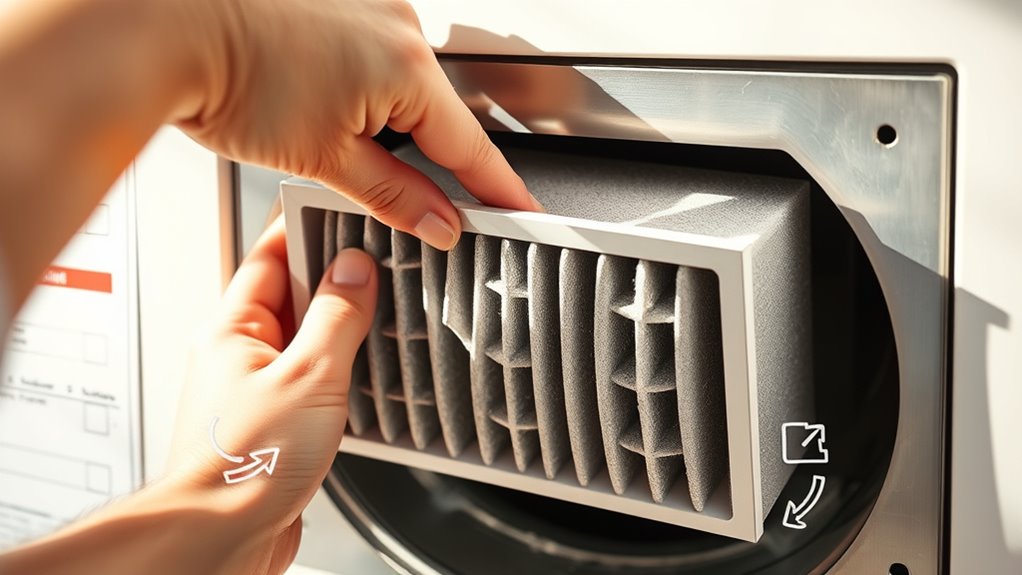
To remove the old filter, start by turning off your HVAC system to prevent airflow and debris from spreading. Locate the filter slot, which is usually near the return vent or air handler. Carefully slide out the filter, noting its orientation for proper installation later. Check the air filter materials; most are made of fiberglass, pleated paper, or washable fabric. As you remove it, inspect the filter’s condition—if it’s dirty or exceeds its filter lifespan, it’s time to replace it. Handle the filter gently to avoid releasing dust or debris. Remember, a clogged or worn filter reduces efficiency and can lead to system damage. Taking your time during removal ensures you handle the filter properly and prepare for a smooth replacement process. Regularly replacing filters can also help prevent false alarms and maintain optimal system performance.
Installing Your New HVAC Filter Correctly

Make sure you install your new filter with the correct orientation, paying attention to the airflow arrows. Properly securing the filter prevents gaps that can let dust and debris pass through. Double-check that it fits snugly in the slot before closing the cover. Using the correct filter type ensures optimal performance and air quality.
Proper Orientation Matters
Installing your new HVAC filter with the correct orientation is essential for peak performance. Pay close attention to airflow orientation, which indicates the direction the air should flow through the filter. Most filters have arrows on the side showing the proper filter positioning. Ensuring the arrows point in the direction of airflow—usually toward the blower motor—maximizes efficiency and prolongs filter life. Incorrect orientation can reduce filtration effectiveness and strain your system. Before installing, double-check the airflow direction and match it with the filter’s markings. Proper orientation guarantees that your HVAC system functions smoothly, maintaining air quality and energy efficiency. Taking a moment to install the filter correctly saves you time and money in the long run. Understanding airflow helps optimize your system’s performance and extend filter longevity.
Securing the Filter Properly
Once you’ve oriented your filter correctly, securing it firmly in place guarantees it functions properly and doesn’t shift or fall out during operation. To guarantee proper filter sealing and secure placement, follow these steps:
- Insert the filter so the arrow on the frame points in the direction of airflow.
- Push the filter all the way into the slot, making sure it sits flush.
- Engage the securing latch to lock the filter in place.
- Double-check that the filter doesn’t wobble and that the securing latch is fully engaged.
A tight fit prevents air leaks and maximizes filter efficiency. Proper filter sealing is essential for peak HVAC performance, and the securing latch keeps everything firmly in position during operation.
Tips for Making Filter Changes Quick and Easy
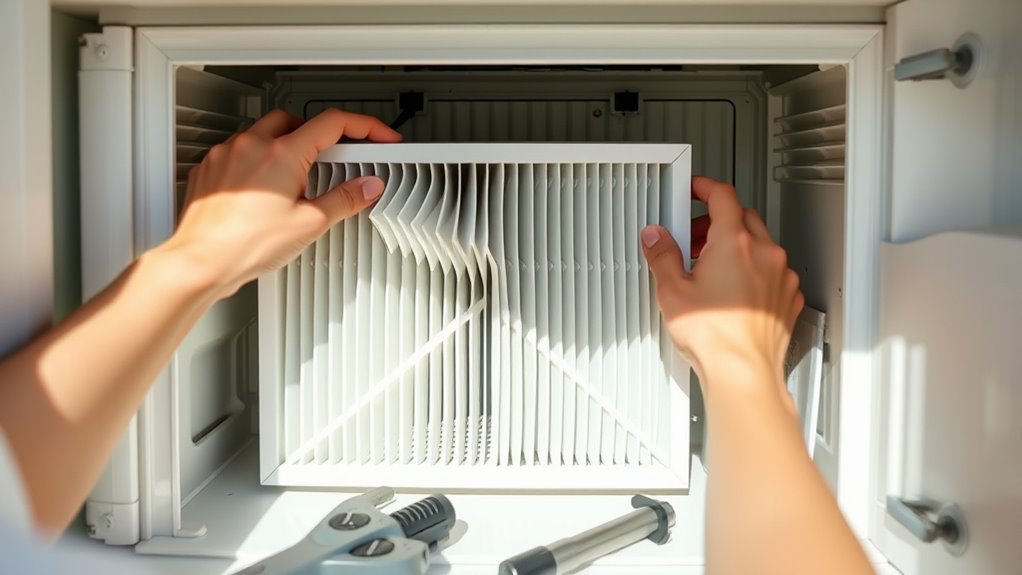
To make filter changes quick and straightforward, start by gathering all the tools you’ll need beforehand. Then, locate your filter easily and have a trash bag or recycling bin ready for proper disposal. Keeping these steps in mind helps you complete the task efficiently and cleanly. Additionally, understanding the importance of regular filter replacement can prevent issues like decreased airflow and reduced system efficiency such as in HVAC systems.
Gather Necessary Tools
Having the right tools on hand can make changing your HVAC filter much faster and easier. First, gather your new filter, guaranteeing it matches the correct filter size to fit snugly. Second, have a screwdriver ready if your filter cover is secured with screws. Third, keep a flashlight nearby to see into dark or hard-to-reach compartments. Fourth, grab a pair of gloves to protect your hands from dust and debris. Knowing the filter material helps you choose the right replacement, and the proper filter size ensures a secure fit. Additionally, understanding sneaker culture trends can inspire you to keep your home stylish and modern. With these tools, you’ll streamline the process, avoid delays, and keep your HVAC system running smoothly. Being prepared makes filter changes less of a chore and more of a quick maintenance task.
Identify Filter Location
Locating your HVAC filter quickly starts with knowing where to look. Most filters are housed behind a vent grille or access panel near your furnace or air handler. Check your vent location—these are typically in the hallway, closet, basement, or utility room. Once you find the vent, look for a filter housing behind or within the vent cover. Some filters slide out easily, while others may require removing a panel or opening a door. Knowing the exact location reduces guesswork and saves time. Remember, filters are usually rectangular and fit snugly in the housing. Familiarizing yourself with your system’s vent layout makes filter changes faster and less frustrating, ensuring your HVAC runs efficiently. Additionally, understanding the filter type used in your system can help you select the right replacement when needed.
Proper Disposal Techniques
Once you’ve removed your old filter, proper disposal helps keep your home and environment safe. First, check if your filter is recyclable—many filters can be recycled through specific programs or local facilities. Second, never toss filters with hazardous waste; they may contain pollutants that require special handling. Third, seal the used filter in a plastic bag to prevent dust or contaminants from escaping during disposal. Fourth, consult your local waste management guidelines to determine if your city accepts used filters in regular trash or if they need to be taken to a hazardous waste facility. By following these steps, you ensure responsible disposal, reduce environmental impact, and keep your home safe. Proper disposal techniques make filter changes quick, easy, and eco-friendly.
Maintaining Your Filter for Long-Term Efficiency
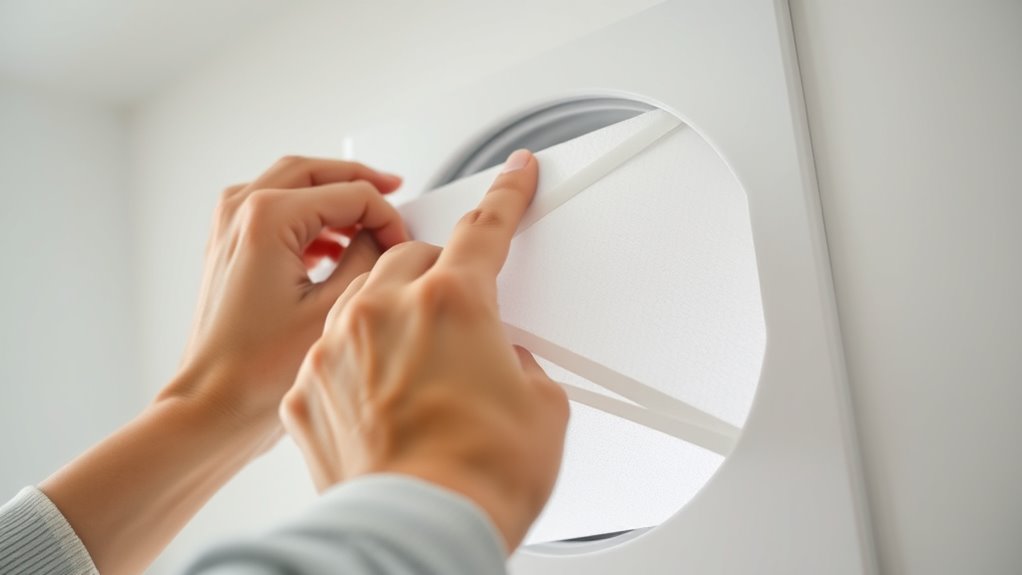
To guarantee your HVAC system runs efficiently over time, maintaining your filter regularly is vital. A clean filter helps improve indoor air quality by capturing dust, pollen, and other allergens, making your home healthier. Check your filter monthly, especially during peak seasons, and replace it as needed to prevent buildup. Proper maintenance ensures consistent airflow, reducing strain on your system and lowering energy bills. When you keep your filter clean, you’re also better controlling allergens and pollutants, which benefits everyone in your home, especially allergy sufferers. Remember, a well-maintained filter not only prolongs your HVAC system’s life but also keeps your indoor environment fresh and safe. Regular upkeep is a simple step toward long-term efficiency and healthier air.
Common Mistakes to Avoid When Changing Filters

Even when you know how to maintain your filter properly, mistakes can still happen during the replacement process. Common errors include selecting the wrong filter size, which can cause airflow problems or damage your system. Failing to check compatibility issues might lead to installing a filter that doesn’t fit or isn’t rated for your HVAC system. Here are four mistakes to avoid:
- Ignoring the correct filter size—measure or check your old filter carefully.
- Overlooking compatibility issues—ensure the filter matches your system’s specifications.
- Installing the filter backward—look for arrows indicating airflow direction.
- Forgetting to turn off the system before replacing the filter—avoid damage or injury.
Avoid these pitfalls to keep your HVAC running smoothly and efficiently.
Frequently Asked Questions
Can I Use a Different Filter Size Than Recommended?
You can use a different filter size than recommended, but it’s not ideal. The wrong size can compromise the filter material’s effectiveness and reduce the filter lifespan. A filter that’s too small might let more dust in, while one that’s too big won’t fit properly. Always aim for the recommended size to guarantee ideal air quality and filter durability. If you must use a different size, consult your HVAC manual or a professional.
How Do I Know if My Filter Type Is Compatible With My System?
You can determine if your filter type is compatible by checking your system specifications or owner’s manual. Look for recommended filter sizes and MERV ratings. If you choose a different filter, make sure it matches those specifications for proper filter compatibility. Avoid using filters that are too thick or thin, as they may restrict airflow or reduce efficiency. Always verify with your system’s guidelines to guarantee ideal performance and air quality.
What Should I Do if My Filter Won’T Fit Properly?
Imagine trying to fit a square peg in a round hole—that’s what it feels like when your filter won’t fit properly. First, double-check for incorrect measurement or debris blocking the slot. Gently remove the filter, measure it again, and compare with your system’s specifications. If it still doesn’t fit, consider getting a replacement with the correct size. Proper filter replacement guarantees your system runs efficiently and avoids damage.
Are There Filters That Improve Indoor Air Quality Beyond Basic Filtration?
Yes, you can choose air purifier options that go beyond basic filters to improve indoor air quality. Look for models with HEPA filters, which excel at allergen reduction, capturing tiny particles like pollen, pet dander, and dust mites. Some air purifiers also include activated carbon filters to remove odors and VOCs. By selecting the right device, you’ll breathe easier and enjoy a healthier indoor environment.
How Can I Tell if My HVAC System Is Working Efficiently After Changing the Filter?
You can tell your HVAC system is working efficiently after changing the filter by checking airflow inspection results; if the airflow feels strong and steady, it’s a good sign. Also, monitor your energy consumption—if your bills decrease or stay consistent, your system likely runs effectively. Regularly inspecting airflow and tracking energy use helps ensure your system operates at its best and maintains good indoor air quality.
Conclusion
Keeping up with your HVAC filter is like tending a gentle garden—small, consistent care guarantees everything runs smoothly. When you pay attention to the signs, choose the right filter, and follow simple steps, you’ll enjoy cleaner air and better efficiency without any fuss. So, embrace these easy changes, and your system will thank you with quiet, reliable performance. After all, a little attention now can create a more comfortable home for years to come.