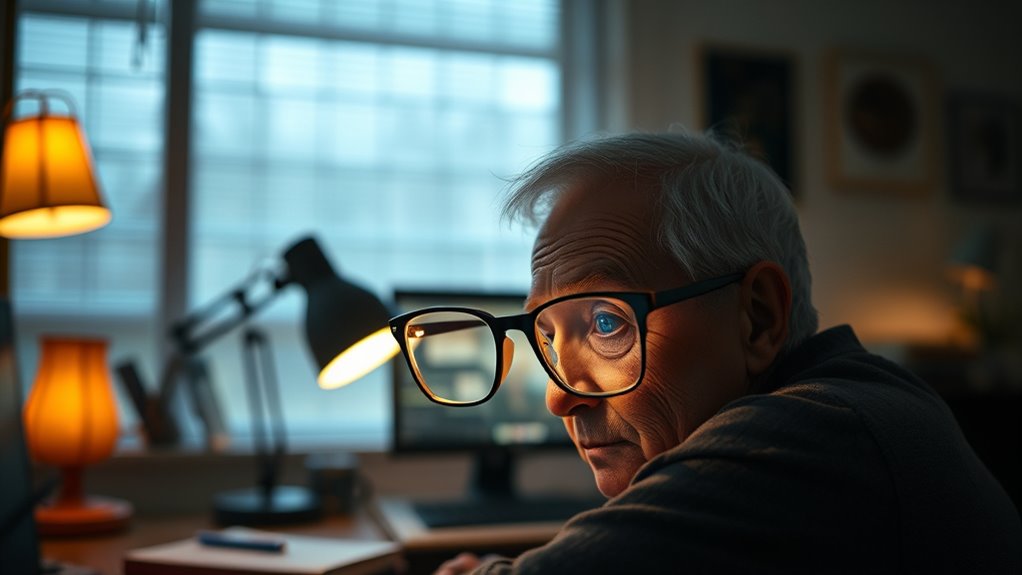

To support aging eyes, you should layer your lighting with ambient, task, and accent sources. Use soft, diffused ambient light to reduce glare and create a gentle, even glow. Add task lighting directly over work areas with warm tones and glare-reducing fixtures to improve clarity and minimize strain. Incorporate accent lights sparingly to highlight features without overwhelming your sight. Creating this balanced setup helps you see clearly and stay comfortable—keep exploring to learn how to perfect each layer.
Key Takeaways
- Incorporate layered lighting with ambient, task, and accent lights to reduce glare and shadows for aging eyes.
- Use diffused, soft lighting with warm color temperatures (2700K–3000K) to create soothing and glare-free environments.
- Implement adjustable dimming controls to modify brightness levels easily for comfort and safety.
- Position task lights directly above or beside work areas to enhance visibility without causing glare.
- Highlight key features with accent lighting that minimizes harsh reflections, supporting focus and reducing eye strain.
Understanding the Needs of Aging Eyes
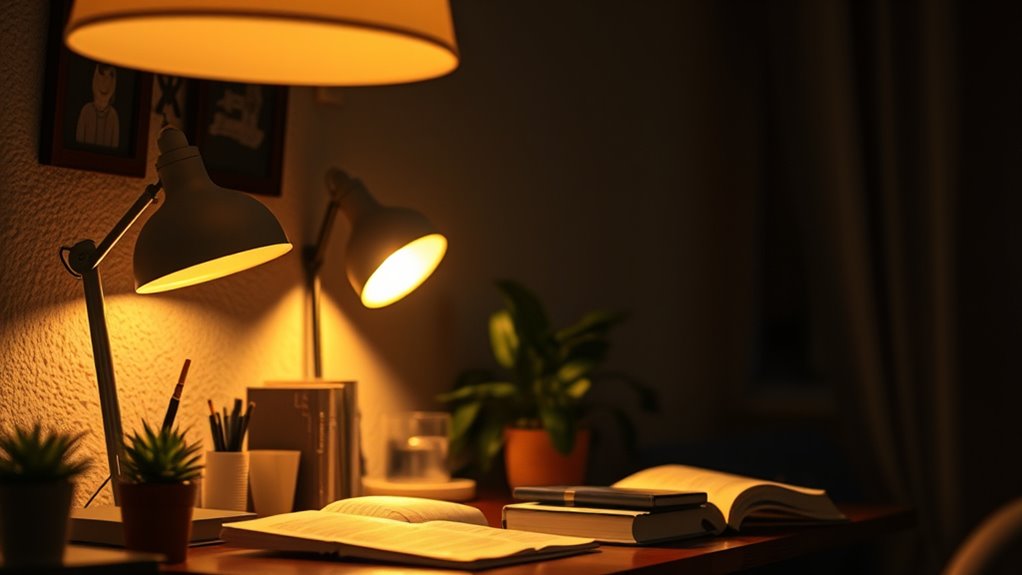
As eyes age, their ability to adapt to different lighting conditions diminishes, making tasks like reading or seeing in low light more challenging. You may notice your vision clarity declining, especially in dim or overly bright environments. To support aging eyes, it’s important to reduce glare, which can cause discomfort and further impair sight. Proper lighting can enhance your ability to see clearly without straining, helping you perform daily activities comfortably. Your eyes become more sensitive to harsh lighting, so soft, layered lighting options are ideal. By understanding these needs, you can choose lighting that minimizes glare and improves vision clarity, making everyday tasks easier and safer as you age. Using appropriate lighting technology, such as adjustable lamps or dimmable fixtures, can further optimize visual comfort and safety.
The Role of Ambient Lighting in Comfort and Safety

Ambient lighting plays a crucial role in creating a comfortable and safe environment for aging eyes. Proper ambient lighting reduces glare, which can cause discomfort and impair vision. It also helps balance light levels to prevent eye strain. When choosing ambient lighting, consider these key factors:
- Use diffused light sources to minimize glare reduction and avoid harsh reflections.
- Opt for warm color temperatures (around 2700K–3000K) to create a soothing atmosphere that’s easier on aging eyes.
- Guarantee even illumination across the space to prevent dark corners and contrast issues, supporting better safety and comfort.
- Incorporating lighting layers tailored to specific needs enhances overall visual clarity and minimizes the risk of accidents.
Task Lighting Strategies for Better Visibility

Effective task lighting enhances visibility for specific activities, reducing eye strain and improving safety. To achieve this, focus on glare reduction by choosing fixtures with diffusers or adjustable shades that minimize harsh reflections. Proper placement is also key—position lights directly above or beside your workspace, avoiding direct glare into your eyes. Additionally, consider the color temperature of your lighting; warmer tones (around 2700K-3000K) tend to be gentler on aging eyes, helping to reduce fatigue. Brightness should be sufficient without being overwhelming, so use dimmable fixtures when possible. Color temperature adjustments influence how comfortable your eyes feel during prolonged activities. By strategically combining glare reduction techniques with appropriate color temperature, you create a comfortable environment that supports clear vision and less eye strain during daily tasks.
Using Accent Lighting to Reduce Eye Strain

Using accent lighting thoughtfully can substantially reduce eye strain by highlighting specific areas without overwhelming your eyes with brightness. Proper accent lighting minimizes glare and improves visual focus, making tasks easier and more comfortable. To optimize its benefits, consider these key points:
- Choose fixtures with glare reduction features to avoid harsh reflections.
- Set the color temperature to warm tones (around 2700K–3000K) to create a soothing environment.
- Use accent lights sparingly, directing them toward artwork, architectural features, or task zones to add depth without cluttering the space.
Tips for Creating a Balanced and Adaptive Lighting Environment

Creating a balanced and adaptive lighting environment is essential for supporting aging eyes, as it allows you to adjust light levels to suit different activities and times of day. Start by selecting lighting with adjustable dimming controls, so you can easily modify brightness as needed. Incorporate lights with flexible color temperature options; warmer tones reduce glare and eye strain, while cooler tones improve alertness for tasks. Use layered lighting—ambient, task, and accent—to create a harmonious environment that prevents harsh shadows and excessive brightness. Regularly evaluate your lighting setup, making adjustments based on natural light changes or changing visual needs. This approach helps you maintain visual comfort, reduces fatigue, and supports clear vision in your daily routines. Additionally, understanding lighting layers can help optimize your space for comfort and functionality.
Frequently Asked Questions
How Can Smart Lighting Enhance Aging Eye Comfort Effectively?
Smart lighting enhances your eye comfort by adjusting color contrast and light intensity to suit your needs. You can set brighter, cooler light for reading or softer, warmer tones for relaxation, reducing strain. With smart controls, you effortlessly customize lighting to improve clarity and reduce glare, making everyday tasks easier and more comfortable. This adaptability helps support aging eyes by creating a well-lit environment that minimizes fatigue and enhances visual comfort.
Are There Specific Color Temperatures Best Suited for Aging Eyes?
You might wonder which color temperature best boosts visual comfort for aging eyes. Generally, warmer temperatures around 2700K to 3000K create a soothing glow that reduces eye strain. Cooler temperatures, above 5000K, can cause glare and discomfort. Choosing the right color temperature is vital for visual comfort, especially as eyes become more sensitive with age. Don’t overlook this detail—your eyes will thank you for the thoughtful lighting.
What Are the Signs Indicating Lighting Needs Adjustment for Seniors?
You should adjust lighting if you notice seniors struggling to read, seeing glare or halos, or experiencing eye strain. Changes in vision correction needs, such as increased difficulty focusing, indicate that lighting may need enhancement. Maintaining good eye health involves providing consistent, well-lit environments with appropriate color temperatures. If these signs appear, it’s time to reassess and improve lighting to support clarity and reduce eye fatigue for aging eyes.
How Does Glare Affect Vision in Aging Individuals?
Glare can markedly impair your vision as you age, making it harder to see clearly and increasing discomfort. It often causes stray light to scatter in your eyes, reducing visual clarity and straining your eyes further. To protect yourself, focus on glare reduction strategies like using softer lighting and anti-glare screens. These adjustments help maintain sharp vision, reduce eye fatigue, and make everyday activities safer and more comfortable.
Can Adjustable Lighting Reduce the Risk of Falls?
Yes, adjustable lighting can decrease your fall risk. By using lamps and bulbs with dimming features and versatile lighting fixtures, you can customize brightness levels to suit your needs. This guarantees better visibility, especially in tricky areas like stairways or hallways, minimizing tripping hazards. Properly adjustable lighting helps you see clearly, navigate safely, and maintain independence, ultimately lowering your chances of falls.
Conclusion
By thoughtfully layering your lighting, you create a space that truly adapts to your changing eyes. When you prioritize comfort and safety, you not only see better but feel more at ease in your home. It’s amazing how a few simple adjustments can make aging less of a challenge, turning your environment into a gentle refuge. After all, lighting isn’t just about visibility — it’s about reclaiming confidence and warmth in every moment.