TL;DR
Researchers created biophysical computer models of 6,986 people’s brains using resting-state fMRI data from participants aged 18 to 100 in 16 countries. The models revealed associations with age, diagnosis and several environmental indicators, but they are research tools—not validated predictions of an individual’s future health or evidence that environmental factors caused brain differences.
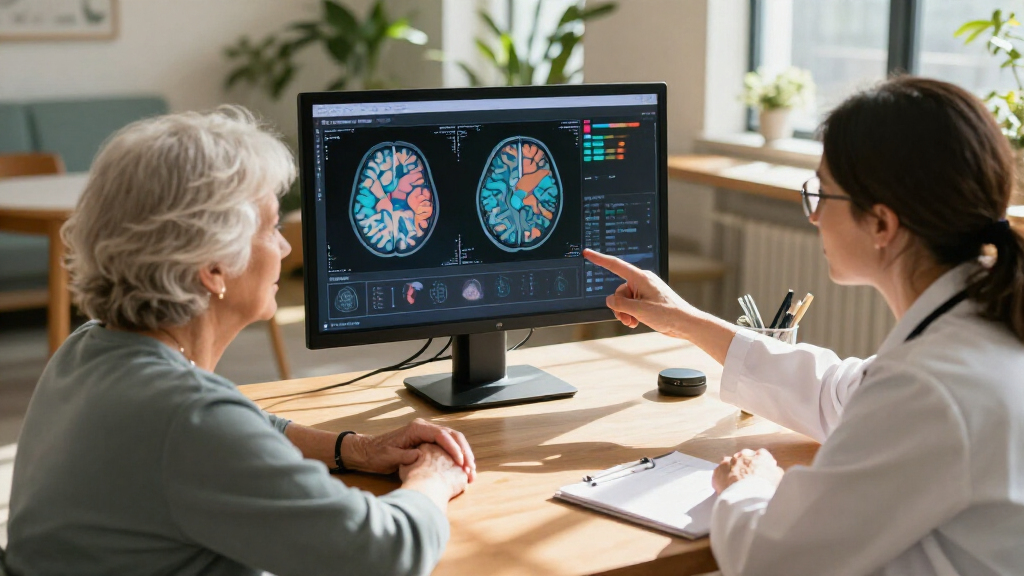
An international team has developed 6,986 biophysical digital brain models from participants’ fMRI scans, creating a research platform to investigate how brain activity relates to aging, neurodegenerative conditions and environmental factors. The study, published November 23 in Nature Biomedical Engineering, covers people aged 18 to 100 across 16 countries and reports associations in the models; it does not establish that environmental conditions cause changes in brain function.

Give the gift of listening to someone you love
- Choose a 1-, 3-, 6- or 12-month membership
- They pick the audiobooks they love
- Easy to send by email
The researchers mapped 90 connected brain regions for each participant and adjusted a computer model until its simulated signals closely matched that person’s resting-state MRI recordings. The models use biological equations to represent aspects of brain activity, including the balance between neural signals that encourage or restrain neurons from firing. MRI records indirect signals, so the models are intended to estimate processes that might produce the observed patterns, rather than directly measure those processes.
The team found that age was most closely associated with the regularity and unpredictability of simulated neural activity over time. Differences between healthy participants and people diagnosed with mild cognitive impairment, Alzheimer’s disease or frontotemporal degeneration involved multiple features, including activity levels, variability and excitation-inhibition balance. Frontotemporal degeneration showed the greatest overall departure from the healthy pattern in the analyses, rather than a uniform increase or decrease in brain activity.
Researchers also examined 10 environmental domains and reported associations in seven of them. The strongest involved indicators of democratic conditions, soil and water quality, and air pollution. The reported patterns remained consistent after the team accounted for age, sex, diagnosis, country, MRI scanners and data quality. A separate analysis using individual social information found associations involving healthcare access, childhood experiences and financial circumstances. These are statistical relationships, not proof of cause and effect.
A Wider View of Brain Aging
The project addresses a challenge in brain research: scans show patterns of activity, but those patterns do not by themselves explain the biological processes behind them. By fitting a model to each person’s scan, the researchers aim to move beyond group averages and test possible explanations for differences between individuals. The models may help researchers identify which mechanisms merit closer study in laboratory or clinical research.
The breadth of the dataset also matters. Its participants span ages 18 to 100 and 16 countries, while the analyses consider personal and broader environmental information. That gives researchers a way to examine brain function alongside varied life circumstances. It does not mean the sample represents every population equally, or that the models can diagnose disease or predict how a particular person’s brain will change.
Products Worth Considering

Withings Sleep Tracking Pad

Oral-B iO Series 7 Deep Clean + Protect Rechargeable Electric Toothbrush, Black, with 2 Brush Heads and Charging Travel Case

Philips Sonicare DiamondClean 9300 Electric Toothbrush, 2 Brush Heads, Black
As an affiliate, we earn on qualifying purchases.
How the Brain Models Were Built
A digital brain twin is a personalized computer simulation, not a physical copy of a brain. In this study, each model was adjusted to reproduce patterns in a participant’s resting-state fMRI. The researchers then used the fitted models to estimate properties such as regional excitability and the variability of activity. They reported that model-derived regional excitability correlated with grey matter volume, an independent measure they used as evidence that the models fit features of real brains.
The team presents the work as a response to limitations in research based on smaller or narrower samples, group averages and analyses that separate brain data from environmental conditions. It says it is sharing the code and model parameters so other researchers can reproduce the analyses and build further virtual experiments. The study does not report that the models have been used to select or test treatments in patients.
“Every brain ages in a different context.”
— Agustín Ibáñez, corresponding author and BrainLat scientific director
Limits of the Reported Associations
The findings do not establish that air pollution, political conditions, water or soil quality, healthcare access or other social factors caused the modeled brain differences. The source describes associations and says they persisted after statistical adjustments, but it does not provide enough detail here to assess the size of each association, how the sample was recruited, or how representative it is of populations within the 16 countries.
It is also unclear how well the models perform when used to forecast changes in a person over time, or whether their estimates can guide clinical decisions. The reported comparisons with grey matter volume support model fit, but do not by themselves show that the simulations identify the true biological cause of a scan pattern. The work is a research platform, not a demonstrated diagnostic or treatment tool.
Testing Future Virtual Experiments
The researchers say the shared code and model parameters will let other teams reproduce the analyses and develop new simulations. Future work could examine how modeled brain activity changes when conditions are altered, including scenarios linked to improved air quality or healthcare access. Such virtual tests could help researchers decide which hypotheses to investigate further; they would not, on their own, show that a real-world intervention improves brain health.
The team also proposes adding maps of neurotransmitter receptors and simulating changes in glutamate and GABA signaling. Researchers could then test whether those modeled changes shift activity toward patterns observed in healthy participants of a similar age. Whether such simulations identify useful therapeutic targets will require further research and testing beyond the current study.
Key Questions
What is a digital brain twin?
It is a personalized computer model that uses biological equations to simulate aspects of brain activity. In this study, each model was fitted to a participant’s resting-state fMRI patterns.
How many people were represented?
The researchers built 6,986 models from participants aged 18 to 100 across 16 countries. The source material does not give a full breakdown of recruitment or representation by country.
Did the study show that pollution causes dementia?
No. It reported associations between environmental indicators, including air pollution, and modeled brain features. The findings do not establish causation or show that pollution causes dementia.
Can the models diagnose Alzheimer’s disease?
The report describes a research platform for studying brain dynamics, not a validated diagnostic test. It does not establish that the models can diagnose individuals or predict their outcomes.
What will researchers do next?
The team says it is sharing code and model parameters for replication and further studies. Proposed work includes simulating neurotransmitter signaling and examining how modeled activity responds to changes in conditions; those ideas still require testing.
Source: news-medical.net