To successfully plan an aging-in-place project, start by evaluating your home’s safety and accessibility needs, such as grab bars and lighting. Set a realistic budget and timeline, breaking the project into manageable phases. Focus on modifications that maximize impact like door widenings and slip-resistant flooring. Collaborate with experienced professionals and keep communication open throughout. Monitoring progress helps you stay on track and make adjustments as needed—continue exploring these steps to create a safer, more comfortable home.

Turn quiet afternoons into listening time
- Thousands of audiobooks, podcasts and originals
- Listen on your phone, tablet or Echo — also offline
- Cancel anytime
Key Takeaways
- Assess safety hazards and mobility needs to prioritize modifications like grab bars and non-slip flooring.
- Develop a realistic budget and timeline, including buffers for unforeseen delays.
- Focus on modifications that enhance safety, accessibility, and comfort based on individual routines.
- Collaborate with experienced professionals, designers, and healthcare providers for effective planning.
- Monitor progress regularly, adjust plans as needed, and evaluate the effectiveness of implemented changes.
As an affiliate, we earn on qualifying purchases.
Evaluating Safety and Accessibility Needs
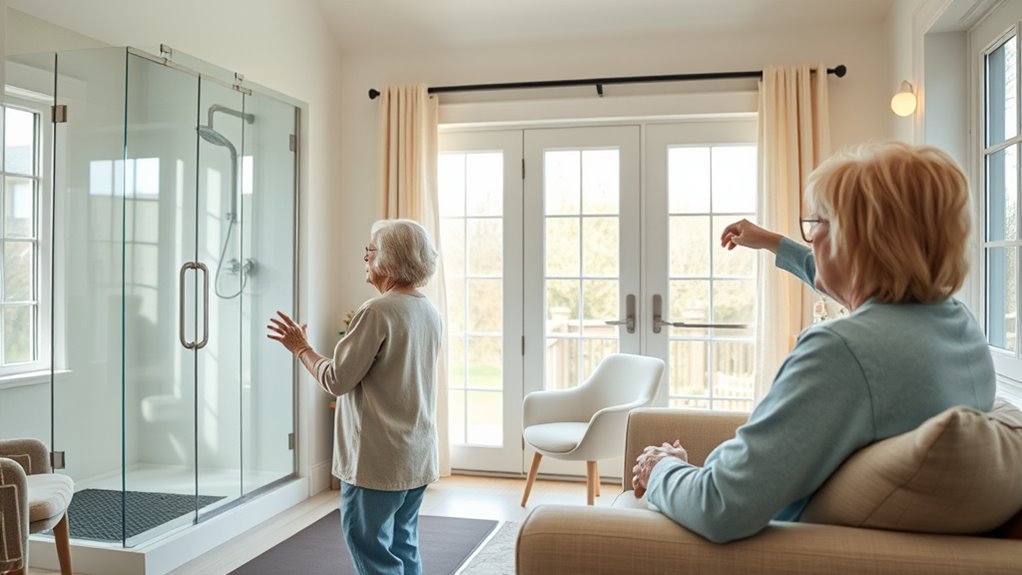
Evaluating safety and accessibility needs is a crucial first step in aging-in-place project planning. You need to assess how well your home supports your daily activities and identify potential hazards. Consider mobility aids like grab bars, stairlifts, or walkers to improve movement and independence. These aids can markedly reduce the risk of falls, which are common among older adults. Look around your home for areas prone to clutter, poor lighting, or uneven flooring that could cause accidents. Prioritize fall prevention by installing non-slip mats, handrails, and adequate lighting. By thoroughly evaluating your environment, you can pinpoint safety gaps and make targeted improvements. Incorporating home customization options such as ergonomic fixtures and adaptive tools further enhances safety and usability. This proactive approach helps create a secure, accessible space where you can age comfortably and confidently.
Developing a Realistic Budget and Timeline

Creating a realistic budget and timeline is essential to guarantee your aging-in-place project stays on track and within your financial means. Start with accurate cost estimation by researching prices for materials, labor, permits, and unexpected expenses. Break down your project into phases, and assign a timeline schedule to each task, considering lead times and dependencies. Be realistic about how long each step will take, and include buffer time for delays. Prioritize transparency in your planning to avoid surprises and ensure you’re prepared financially. Regularly review and adjust your budget and timeline as the project progresses, keeping your goals achievable. Incorporating smart features can help streamline ongoing maintenance and improve efficiency throughout your project. This approach helps you stay organized, avoid overspending, and complete your modifications successfully.
Prioritizing Modifications for Impact and Feasibility
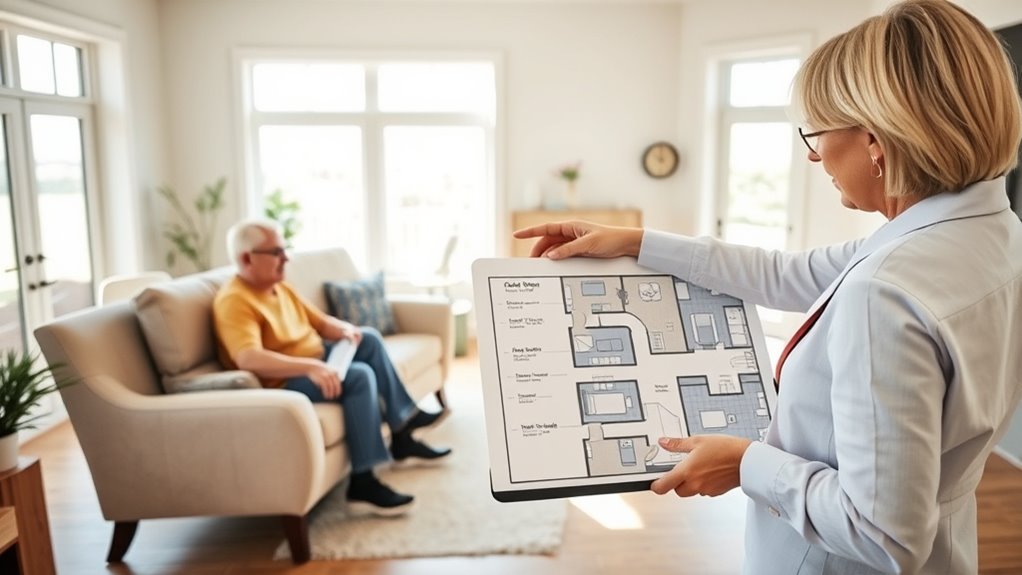
Once you’ve established a realistic budget and timeline, the next step is to determine which modifications will have the greatest impact on safety, comfort, and independence. Focus on design considerations that enhance functionality without compromising aesthetic appeal. Prioritize changes like wheelchair-accessible doorways, grab bars, and non-slip flooring that improve safety and usability. Evaluate each modification’s feasibility, considering space, existing structure, and your daily routines. Remember, aesthetic appeal matters—choosing finishes and fixtures that blend seamlessly with your home’s style can boost your comfort and satisfaction. Incorporating essential oils for safety and well-being, such as lavender or eucalyptus, can also promote a calming environment conducive to health. By balancing impact, practicality, and visual harmony, you ensure your aging-in-place plan is both effective and visually pleasing. This strategic prioritization helps maximize benefits within your available resources.
Collaborating With Professionals and Stakeholders
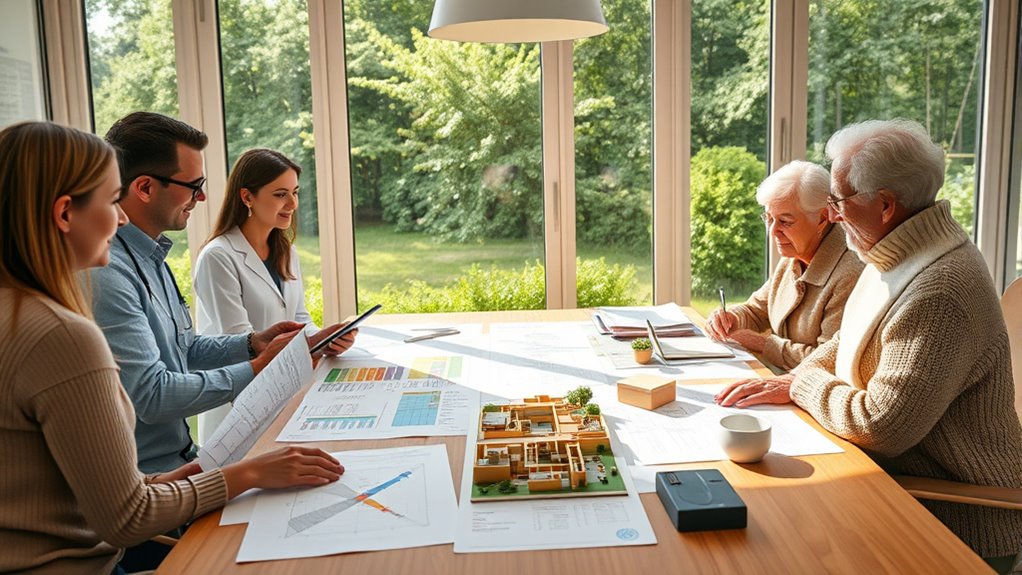
Collaborating with professionals and stakeholders is crucial to guarantee your aging-in-place modifications are safe, practical, and aligned with your goals. Start by carefully selecting a contractor with experience in aging-in-place projects—this ensures quality work and reliable advice. Clear stakeholder communication is essential; keep everyone informed and involved throughout the process to address concerns and set expectations. Engage with designers, contractors, and any healthcare providers early to identify potential challenges and solutions. Building strong relationships allows for smoother decision-making and minimizes misunderstandings. Remember, your team’s expertise and open dialogue are key to creating a home that meets your needs now and in the future. Incorporating best practices for project management can significantly improve coordination and outcomes. Effective collaboration ultimately results in a safer, more functional living space tailored to your lifestyle.
Implementing and Monitoring the Project Progress

To guarantee your aging-in-place project stays on track, it’s essential to actively implement and monitor each phase of the work. You’ll need to integrate assistive technologies that enhance safety and independence, while regularly evaluating their effectiveness. Keep communication open with your team, making sure tasks stay aligned with your plan. Monitor progress by reviewing timelines, budgets, and quality benchmarks, making adjustments as needed. Support from caregivers plays a vital role; they can provide real-time feedback and ensure the environment remains suitable for evolving needs. Use checklists and status updates to track milestones, and address any issues promptly. Regularly assessing the effectiveness of eye patches can help determine if they are meeting your skin’s needs and adjust your routine accordingly. Consistent oversight helps you stay proactive, ensuring your project advances smoothly toward creating a safe, accessible, aging-in-place environment.
Frequently Asked Questions
How Do I Choose the Right Contractor for My Aging-In-Place Project?
To select the right contractor, start by checking their qualifications and experience with aging-in-place projects. Make sure they’re licensed and insured. Ask for references and review their past work. Discuss your project timeline upfront to ascertain they can meet your needs. Trust your instincts—choose someone who communicates clearly, listens carefully, and demonstrates professionalism. A dependable contractor will help you create a safe, comfortable space tailored to your needs.
What Legal Considerations Should I Be Aware of During Modifications?
Did you know that nearly 60% of home modifications face legal issues? You should make sure your contractor has proper liability insurance to cover potential damages. Also, check permit requirements before starting any work; failure to do so can lead to fines or project delays. Being aware of local building codes and securing necessary permits helps protect you legally and ensures your modifications are compliant and safe.
How Can I Ensure My Modifications Remain Accessible as I Age?
To keep your home accessible as you age, incorporate Universal Design principles that prioritize flexibility and ease of use. Install Safety Features like grab bars, non-slip flooring, and lever handles to prevent falls and improve mobility. Regularly review and update these modifications to adapt to changing needs, and consult professionals to guarantee your home remains safe, functional, and accessible throughout your aging years.
What Funding Options Are Available for Aging-In-Place Renovations?
You can explore various funding options for aging-in-place renovations, including financial assistance and grant programs. Many local, state, and federal agencies offer grants specifically designed to support home modifications for seniors, such as the U.S. Department of Housing and Urban Development (HUD) or Medicaid waivers. Additionally, look into non-profit organizations and community programs that provide financial assistance, making it easier to fund accessible modifications without overwhelming your budget.
How Do I Handle Unexpected Costs or Delays During the Project?
When unexpected costs or delays pop up, you should implement contingency planning by setting aside a reserve fund for surprises. Maintain budget flexibility by regularly monitoring expenses and adjusting plans as needed. Communicate promptly with contractors to stay informed about potential delays, and prioritize critical updates to minimize impact. Being proactive and adaptable helps keep your aging-in-place project on track despite unforeseen challenges.
Conclusion
Think of your aging-in-place project as planting a sturdy tree. With careful planning, you nurture safety and accessibility, set realistic goals, and work with experts to guarantee strong roots. Just like a well-tended tree provides shade and stability for years, your thoughtful modifications will create a safe, comfortable home you can enjoy for the long haul. When you stay proactive and monitor progress, your home will stand tall, supporting you every step of the way.
Fall Picks
fall essentials
As an affiliate, we earn on qualifying purchases.