
Your coffee tastes bitter mainly because of over-extraction caused by brewing too long, using too fine a grind, or high water temperatures. Stale beans or using poor-quality water can also amplify bitterness. To fix this for around $5, try adjusting your grind size, lowering the water temperature, and using fresh beans stored properly. Keep these tips in mind to enjoy smoother, tastier coffee—there’s more to uncover if you want the perfect cup.
Key Takeaways
- Over-extraction from fine grounds or long brewing times causes bitter flavors; adjust grind size and brewing duration.
- Use water between 195°F and 205°F to prevent harsh extraction; proper temperature preserves balanced flavor.
- Choose lighter roasts and fresh beans for brighter, less bitter coffee; stale beans increase undesirable bitterness.
- Regularly clean your coffee equipment to remove residual oils and buildup that contribute to bitterness.
- Use filtered, mineral-balanced water to improve extraction and reduce harsh, bitter notes in your coffee.
Understanding the Causes of Bitter Coffee
Bitter coffee often results from specific factors during brewing or bean selection that you can control. One common cause is over-extraction, which happens when brewing techniques are too aggressive or extraction time is too long. This process pulls out bitter compounds, overpowering the coffee’s natural flavor. Additionally, using too fine a grind or brewing at too high a temperature can intensify bitterness. The coffee flavor you desire depends heavily on proper brewing methods—using the right grind size, water temperature, and brewing time helps highlight sweetness and balance. It’s essential to adjust your brewing techniques to avoid extracting excess bitter compounds. By paying attention to these factors, you can better control the flavor profile of your coffee and enjoy a smoother, more enjoyable cup. Proper tuning of your brewing equipment can also make a significant difference in achieving the desired flavor.
The Role of Coffee Beans and Roast Levels
The type of coffee beans and their roast level play a significant role in shaping the drink’s final flavor. Single origin beans often have unique flavor profiles that can influence bitterness, depending on their region and processing method. Lighter roasts tend to highlight the beans’ natural acidity and bright flavors, while darker roasts develop richer, more bitter notes due to longer roasting times. Your choice of roast profile impacts the balance between sweetness and bitterness—light roasts are generally less bitter, whereas dark roasts can intensify it. Additionally, understanding heat pump technology can help in selecting the optimal roasting equipment or brewing methods that preserve desired flavors. Understanding these factors helps you select beans and roast levels suited to your taste preferences, reducing unwanted bitterness and enhancing the overall flavor of your coffee.
How Water Temperature Affects Flavor
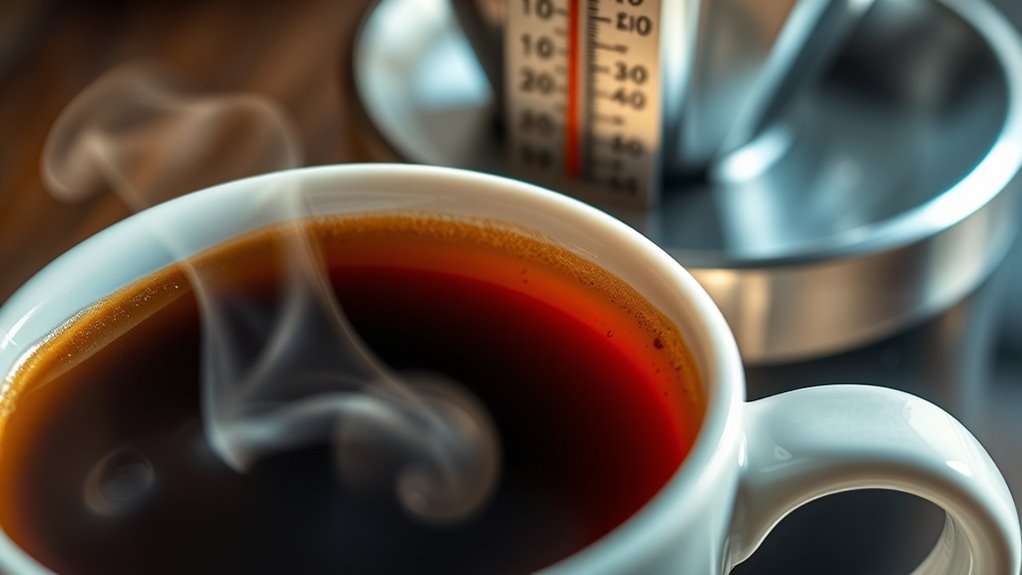
Water temperature plays a crucial role in extracting flavors from your coffee grounds; if it’s too hot or too cold, it can greatly impact the final taste. Proper temperature control ensures you extract the right balance of flavors without bitterness. Ideally, water should be between 195°F and 205°F, hot enough to release essential oils and soluble compounds. Water quality also matters—clean, fresh water free of impurities enhances flavor clarity. If water is too hot, it can over-extract bitter compounds, making your coffee taste harsh. Conversely, too cold water won’t extract enough flavor, leading to weak coffee. By maintaining consistent temperature control and using good-quality water, you optimize flavor extraction, resulting in a smoother, more balanced cup that’s free of unwanted bitterness. Additionally, AI advancements in drug discovery are revolutionizing how we approach health solutions, signaling a future where many common ailments could be cured more efficiently.
The Impact of Grind Size and Extraction
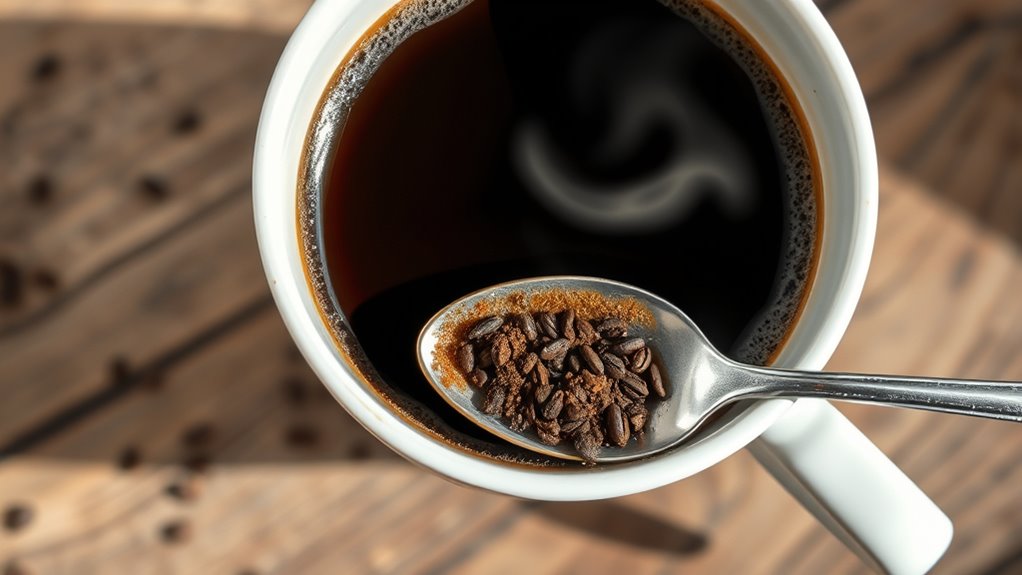
Grinding your coffee to the right size directly influences how evenly flavors are extracted during brewing. If your grind is too fine, you risk over-extraction, leading to bitterness. Conversely, a too-coarse grind can cause under-extraction, making your coffee weak and sour. Achieving the correct grind size guarantees a balanced extraction level, highlighting desirable flavors without bitterness. Using a high-performance heat pump can also ensure consistent brewing temperatures, further improving flavor extraction.
Common Over-Extraction and Under-Extraction Issues
Over-extraction happens when your coffee brews too long or uses grounds that are too fine, causing excessive flavor release and resulting in a bitter taste. Poor coffee storage can also contribute, as exposed beans lose freshness and develop uneven extraction. When your beans are stale, brewing techniques may need adjustment to avoid pulling too much from the grounds. Additionally, using crochet styles for locs can inspire creative ways to approach your brewing process, encouraging experimentation with different methods. Under-extraction, on the other hand, occurs when you use coarse grounds or brew too quickly, leaving behind bitter compounds and resulting in a weak, sour flavor. To fix these issues, pay attention to your storage—keep beans airtight and fresh—and refine your brewing techniques to find the right balance. Properly stored coffee and precise brewing help prevent over- and under-extraction, leading to a smoother, more balanced cup.
The Importance of Proper Brewing Time

Brewing your coffee for the right amount of time is key to avoiding bitterness. If you brew too long, you risk over-extraction, which releases bitter compounds. Finding that ideal duration helps you get a balanced, smooth flavor without crossing into over-extraction pitfalls. Paying attention to top beach towns on the East Coast can also remind you of the importance of timing and balance, whether in travel plans or brewing techniques.
Optimal Extraction Duration
Have you ever wondered why your coffee sometimes turns out bitter or sour? The key lies in the *ideal* extraction duration. If you brew too long, over-extraction occurs, pulling out bitter compounds. Too short, and under-extraction leaves your coffee weak and sour. To get it just right:
- Maintain consistent grind size for even extraction
- Use proper temperature control to prevent rapid or sluggish brewing
- Time your brew precisely, usually between 3-4 minutes for drip coffee
- Stir or agitate the grounds for even extraction
- Adjust the grind to match your brewing method for balanced flavor
- Monitoring extraction time helps prevent over- or under-brewing, ensuring optimal flavor
Balancing these factors ensures your brew hits the sweet spot, avoiding bitterness or sourness. Proper timing, combined with consistent grind and temperature control, makes a noticeable difference in taste.
Avoid Over-Extraction Pitfalls
When you leave your coffee grounds in contact with hot water too long, bitter flavors start to dominate the profile. Over-extraction can ruin your coffee’s flavor and make it less enjoyable. To maintain brewing consistency, it’s vital to stick to the right brewing time. Use a timer or follow recommended guidelines for your method. Be aware that longer contact increases extraction of undesirable compounds, resulting in bitterness. Here’s a quick guide:
| Brewing Time | Resulting Coffee Flavor | Tips |
|---|---|---|
| Short | Underdeveloped | Increase time slightly |
| Ideal | Balanced, rich flavor | Stick to recommended timing |
| Long | Bitter, over-extracted | Reduce contact time |
| Very Long | Harsh, astringent | Avoid over-brewing |
Proper timing preserves your coffee’s intended flavor and ensures consistent, satisfying brews. Regularly monitoring brewing time can help prevent over-extraction and maintain a great taste.
How Freshness Can Influence Taste
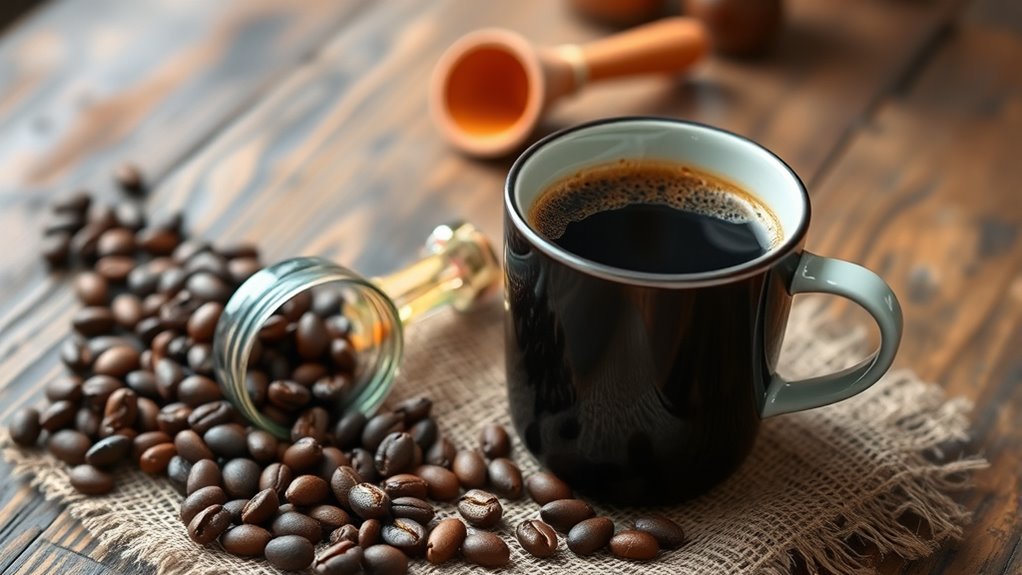
Freshness plays a crucial role in shaping the flavor of your coffee, as it directly affects the aroma and overall taste. When beans are fresh, they release a vibrant coffee aroma that signals quality. As beans age, their aroma diminishes, leading to a duller flavor. Bean freshness impacts more than aroma; it influences acidity, sweetness, and bitterness. Cookies used on coffee websites can track how freshness affects user preferences and purchasing habits.
- Fresh beans have a lively, complex coffee aroma.
- Older beans can taste flat or stale.
- Freshness preserves essential oils that enhance flavor.
- Ground coffee loses freshness faster than whole beans.
- Using fresh beans results in a brighter, well-balanced cup.
The Simple $5 Fix to Improve Your Coffee’s Flavor
One quick way to boost your coffee’s flavor is by using better water. Even small improvements, like filtered water, can make a noticeable difference. Also, regularly cleaning your equipment prevents bitterness caused by old coffee oils and residues. Maintaining your coffee maker ensures optimal performance and better-tasting coffee.
Use Better Water
The quality of water you use can make or break your coffee’s flavor, and often, a simple change can yield surprising results. Poor water quality or high mineral content can introduce bitterness and mask the coffee’s nuanced flavors. To improve taste, consider these tips:
- Use filtered water to reduce impurities.
- Avoid distilled water, which lacks minerals essential for flavor.
- Opt for water with balanced mineral content to enhance extraction.
- Check your tap water’s pH; slightly acidic water often brews better coffee.
- Invest in a water filter pitcher or system to maintain consistent quality.
- Being aware of water mineral content helps you select the best water for a richer, more balanced coffee experience.
Properly Clean Equipment
Even a small amount of leftover coffee oils and residue can quickly turn your brew bitter, but cleaning your equipment regularly is an easy and inexpensive fix. Establishing simple cleaning routines ensures your coffee maker stays free of buildup that can taint flavors. Regular equipment maintenance, like rinsing filters and descaling your machine, prevents bitter compounds from accumulating. Use warm water and mild detergent or vinegar to clean parts such as carafes, filters, and the brew basket. Avoid neglecting these steps, as residue can develop within hidden crevices. By dedicating just a few minutes after each brew, you maintain ideal equipment performance and improve your coffee’s flavor. Properly cleaned equipment is key to a smoother, less bitter cup every time. Incorporating sound cleaning techniques can further enhance the effectiveness of your routine and ensure a fresher taste.
Frequently Asked Questions
Can Using Filtered Water Reduce Coffee Bitterness?
Yes, using filtered water can reduce coffee bitterness. When you choose filtered water, you improve water quality by removing impurities and excess minerals that can make coffee taste harsh or bitter. Adjusting mineral content guarantees a balanced brew, allowing the true flavors of your coffee to shine. So, switching to filtered water is a simple, effective way to enhance your coffee’s taste and avoid bitterness with just a small investment.
Does Brewing Method Affect Bitterness Levels?
Yes, your brewing method impacts bitterness. When you use high brew temperatures or grind your beans too finely, you extract more bitter compounds. To improve flavor, aim for a moderate brew temperature and adjust your grind size to match your method—coarser for French press, medium for drip. Experimenting with these variables helps balance extraction, so your coffee tastes richer and less bitter.
How Does Storage Affect Coffee Flavor Over Time?
You should store your coffee in an airtight storage container to maintain its freshness and prevent exposure to air, light, and moisture that can degrade flavor over time. Coffee freshness diminishes quickly once exposed to these elements, leading to a flat or bitter taste. Keep your container in a cool, dark place, and avoid refrigeration, which can introduce moisture. Proper storage preserves the rich, nuanced flavors of your coffee longer.
Are There Specific Coffee Beans Less Prone to Bitterness?
If you’re seeking beans less prone to bitterness, consider choosing sour beans or a medium roast instead of a dark roast. Sour beans often have a brighter, more balanced profile, while dark roasts can sometimes amplify bitterness. Opting for specialty beans with vibrant acidity and roasting them lightly helps you enjoy smoother, less bitter coffee. Experimenting with these options lets you craft a cup that’s flavorful and gentle on your palate.
Can Adding Milk or Sugar Eliminate Bitterness Effectively?
Adding milk can mellow out bitterness by coating your taste buds, while sugar’s effectiveness lies in balancing the sharpness with sweetness. You might find that a splash of milk smooths the flavor, making it less harsh, and a small amount of sugar can enhance the overall taste. Experiment with both to see which method works best for your specific coffee, creating a more enjoyable experience.
Conclusion
By paying a little more attention to these simple tips, you can turn your coffee experience around without breaking the bank. Sometimes, a small adjustment is all it takes to uncover better flavor and enjoy each sip more fully. Don’t overlook the little details—they can make a big difference. With just a modest investment, your mornings can become brighter, and your coffee, truly worth savoring. Cheers to elevating your everyday brew!