

To spot AI voice scams pretending to be your grandkids, listen for unnatural speech patterns like unusual pauses, robotic tone, or inconsistent background noise. Ask specific questions only your grandkid would know and verify details through trusted sources. Be wary of urgent or emotional requests that pressure quick decisions. Carefully observe the caller’s responses and environmental clues. If you stay alert, you’ll discover more ways to protect yourself from these convincing impersonations.
Key Takeaways
- Listen for unnatural speech patterns, inconsistent tone, or robotic pauses that differ from typical human voices.
- Pay attention to background sounds that may be manipulated or inconsistent with the caller’s environment.
- Verify caller identity by asking specific questions only your grandkid would know before sharing personal info.
- Be cautious of urgent, high-pressure requests or emotional appeals designed to prompt quick decisions.
- Notice if the caller avoids answering questions or provides overly formal, repetitive, or oddly phrased responses.

CHIRSMIP Hidden Camera Detector, Bug Detector & GPS Tracker Scanner – Magnetic Field & Wireless Signal Detection Device for Privacy Protection in Hotel, Home, Office, Car & Travel
- Multiple Detection Modes: Identify various suspicious devices
- Adjustable Sensitivity: Customize detection range for accuracy
- Visual & Vibration Alerts: Discreet notifications for inspections
As an affiliate, we earn on qualifying purchases.
As an affiliate, we earn on qualifying purchases.
Recognizing Unusual Voice Patterns and Inconsistencies
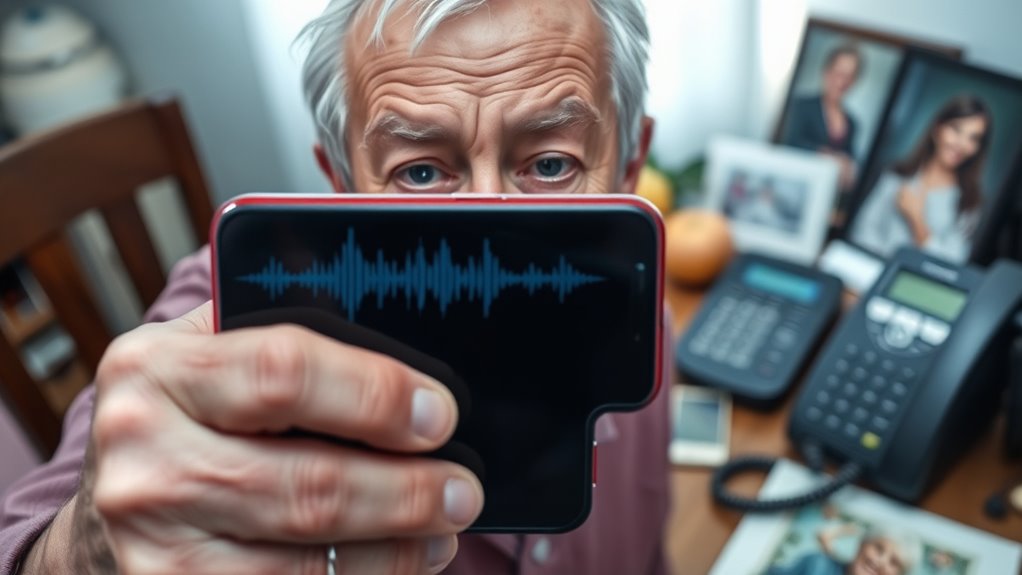
When listening to a voice that seems off, your best bet is to pay close attention to unusual patterns and inconsistencies. AI-generated voices often struggle with natural voice modulation, so you might notice flat, robotic, or overly exaggerated tones. Pay attention to speech tempo—if it suddenly speeds up or slows down unexpectedly, that’s a red flag. Human speech usually flows smoothly with subtle variations, whereas AI voices can sound mechanical or choppy. Listen for abrupt changes in pitch or emphasis that don’t match the context of the conversation. These irregularities often reveal that the voice isn’t genuine. By sharpening your awareness of voice modulation and speech tempo, you’re better equipped to spot signs of AI voice scams early on. Additionally, vetted audio samples can help you compare and identify authentic voices more effectively.
Verifying the Context and Details of the Call

Always confirm who’s calling before sharing any personal information. Cross-check the details they provide with your records or trusted sources. If something feels off, don’t hesitate to ask questions or end the call. Using self-watering plant pots as an analogy, it’s important to verify the source of the information to prevent overwatering your trust.
Confirm Caller Identity
Verifying the caller’s identity is a crucial step in spotting AI voice scams, especially since scammers often impersonate trusted organizations. Pay close attention to emotional cues, like sudden urgency or fear, which can be telltale signs of a scam. Listen carefully to the voice pitch; AI voices might sound slightly off or lack natural variation, even if they mimic tone well. Ask questions that only the real person would know, and observe how the caller responds. If something feels off—such as inconsistent details or unusual emotional responses—trust your instincts. Remember, genuine callers typically remain calm and composed. Never rush into sharing personal information or making quick decisions. Confirm their identity through independent contact methods before proceeding further. Additionally, understanding the subtle differences in voice patterns can help distinguish AI-generated voices from authentic ones.
Cross-Check Personal Details
After evaluating a caller’s identity, it’s important to cross-check the personal details they provide. Fake caller scenarios often rely on emotional manipulation to get you to reveal information or act quickly. Ask specific questions about your grandkid’s recent activities, their favorite things, or other details only they would know. If the caller’s responses seem inconsistent or vague, it’s a warning sign. Be cautious if they pressure you to keep the call secret or make urgent requests. Cross-referencing details helps confirm whether the caller truly knows your grandchild or if they’re fabricating a story. Remember, scammers may use emotional manipulation to make you doubt your instincts. Verifying personal details is a vital step in protecting yourself from falling victim to AI voice scams.
Listening for Signs of AI-Generated Speech

AI-generated speech often has subtle clues that can help you identify it. Listen carefully to the voice’s tone and voice modulation—AI voices may sound overly uniform or lack natural emotional shifts. Pay attention to speech clarity; AI-generated speech sometimes sounds too perfect or unnaturally smooth, missing the quirks of human speech. Notice if the person’s voice maintains a consistent pitch or rhythm without the typical pauses, hesitations, or variations you’d expect from real conversations. Sometimes, AI voices struggle with pronunciation or produce slightly off-word sounds. Trust your instincts: if the voice sounds too perfect or robotic, it might not be genuine. Being aware of these signs can help you better distinguish between real speech and AI impersonations. Additionally, research indicates that AI voices can sometimes exhibit bias in outputs, which may manifest as unusual or inconsistent language patterns.
Asking Specific Personal Questions

When someone asks you personal questions that seem overly specific or intrusive, it can be a red flag, especially if you’re unsure whether you’re speaking with a real person or an AI. Scammers often use emotional appeals or make gift requests to manipulate your feelings. They might ask for details like your favorite place or recent activities, aiming to gain trust or gather sensitive info. Recognize these tactics by observing how they frame questions and whether they avoid direct answers. Here’s a quick comparison:
| Genuine Conversation | Scam Tactics |
|---|---|
| Personal details naturally shared | Overly specific or intrusive questions |
| Willing to answer questions | Evasive about their identity |
| Focused on real connection | Push for emotional or financial favors |
Stay alert and question unusual requests to protect yourself. Additionally, being aware of common scam tactics related to AI voice impersonation can help you stay one step ahead of fraudsters.
Watching for Urgency and Pressure Tactics

Scammers often create a sense of urgency to pressure you into making quick decisions without thinking. They use emotional manipulation to make you feel anxious or scared, pushing you to act immediately. Pay attention to cultural cues that seem out of place or inconsistent with your grandkid’s usual mannerisms. Look for signs like:
- Urgent language designed to panic
- Requests for immediate financial help
- Statements that ignore normal communication patterns
- Pushy tone to override your better judgment
- Emotional appeals that exploit your love and concern
These tactics are meant to override your rational thinking, making you less likely to question the caller. Recognizing this pressure helps you stay calm and avoid falling for scams disguised as emergencies.
Confirming Identity Through Alternative Methods

To verify someone’s identity during a suspected scam call, it is vital to use alternative methods beyond trusting their initial words. Listen carefully to their voice modulation; scammers often have unnatural pauses, inconsistent tone, or robotic speech patterns indicating AI-generated voices. Pay attention to background noise as well—genuine calls usually have familiar sounds from the caller’s environment, while AI scams may lack these or produce sterile, unnatural audio. You can also ask specific questions that only your grandkid would know the answer to, or request a quick video chat to confirm their identity visually. Additionally, voice recognition technology can sometimes help identify if the voice matches previous authentic recordings, further aiding in verification. These methods help you differentiate between authentic callers and AI voice scams, giving you a better chance to protect yourself from fraud.
Staying Informed About Common AI Scam Techniques

Staying informed about common AI scam techniques is essential to protect yourself from falling victim to these increasingly sophisticated attacks. Scammers now use voice modulation to mimic loved ones’ voices and add background noise to make calls seem authentic. Recognizing these tactics helps you stay alert and avoid being duped. Be aware that:
Staying informed about AI scams helps you recognize voice manipulation and protect your loved ones.
- Voice modulation can alter tone and pitch, making it hard to identify the caller.
- Background noise may be used to mask or mimic real environments.
- Calls might sound overly urgent or emotional to pressure quick action.
- Unusual language or phrasing can signal AI manipulation.
- Inconsistencies in voice quality or background sounds may reveal a scam.
- The contrast ratio of the audio can also affect how natural or artificial the voice sounds.
Staying educated about these techniques helps you spot red flags early and protect your loved ones.
Protecting Personal Information During Unexpected Calls

When you receive an unexpected call, it’s crucial to be cautious about sharing personal information. Scammers often use voice modulation to mimic familiar voices, making it harder to detect deception. Pay close attention to their language patterns; scammers might use urgent or emotional language to pressure you into revealing details. Avoid giving out personal info like your address, banking details, or social security number over the phone unless you’re certain of the caller’s identity. Ask questions that only your loved ones would know answers to, and don’t hesitate to hang up if something feels off. Remember, legitimate callers won’t mind verifying their identity or waiting while you confirm their details. Protecting your personal information is your best safeguard against AI voice scams. Additionally, being aware of common voice spoofing techniques can help you better recognize fraudulent calls.
Frequently Asked Questions
How Can I Differentiate Between Genuine and Fake Voice Messages?
You can differentiate genuine from fake voice messages by paying attention to voice modulation and emotional cues. Real voices typically have natural variations in tone and emotion, while AI-generated ones often sound monotone or overly perfect. Listen for subtle inconsistencies or unnatural pauses. Trust your instincts if the message feels off or exaggerated. Confirm with your grandkids directly if something seems suspicious, and always stay cautious with unexpected requests.
What Are the Best Tools to Detect Ai-Generated Voices?
To detect AI-generated voices, you should use tools focused on voice synthesis and audio authenticity. Programs like Deepware Scanner, Sensity AI, and Pindrop analyze audio for signs of manipulation, helping you spot fake voices. These tools examine subtle inconsistencies and artifacts that humans might miss, giving you confidence in the authenticity of the message. Always rely on specialized detection tools for the best protection against AI voice scams.
How Often Do AI Voice Scams Occur in My Region?
AI voice scams vary in regional prevalence, but scam frequency can be surprisingly high in some areas. You should stay alert, especially if you notice sudden spikes in reports or suspicious calls. Local news or community alerts often highlight scam trends. By staying informed about regional prevalence, you can better recognize potential scams and protect yourself from falling victim to these increasingly common AI voice impersonations.
Can Scammers Mimic Family Members’ Voices Realistically?
Scammers can mimic family members’ voices realistically through advanced voice imitation technology, making scam tactics more convincing. They often use this to create urgent situations, like pretending to need money or help. To spot these scams, pay attention to unusual speech patterns, background noises, or inconsistent details. Always verify calls through a trusted number before acting, since AI voice scams can sound surprisingly authentic, increasing the risk of falling victim.
What Steps Should I Take if I Suspect a Voice Scam?
Stop and scrutinize the suspicious situation immediately. If you suspect a scam, don’t dismiss your doubts—delay and discuss! Call your grandkids directly using a trusted number, avoiding links or contacts in the message. Protect yourself from emotional manipulation by trusting your instincts. Use scam prevention tips like verifying identities and staying cautious with urgent requests. Stay vigilant, stay safe, and always prioritize personal peace over panic.
Conclusion
Staying vigilant against AI voice scams is like being a lighthouse amid a storm—your steady light keeps you safe. Trust your instincts, verify details, and never rush to share personal info. If something feels off, hang up and confirm through a trusted number. By staying informed and cautious, you can outshine scammers and protect your loved ones from falling prey to these clever impersonations. Your awareness is your best defense.