
Staying hydrated in cold weather is essential because your body loses fluids through breathing, sweating, and dry indoor air, even if you don’t feel thirsty. Keep sipping warm beverages like herbal teas or broth and include water-rich foods such as fruits and vegetables to boost your fluid intake. Carry insulated bottles to prevent freezing and take regular water breaks during outdoor activities. Continue exploring tips to help you stay well-hydrated all winter long.

Turn quiet afternoons into listening time
- Thousands of audiobooks, podcasts and originals
- Listen on your phone, tablet or Echo — also offline
- Cancel anytime
Key Takeaways
- Drink warm beverages like herbal teas and broths to stay hydrated and maintain body warmth during winter.
- Carry insulated water bottles to prevent freezing and ensure access to fluids outdoors.
- Incorporate water-rich foods such as fruits and soups to boost hydration naturally.
- Use reminders and establish routines to drink regularly despite decreased thirst signals in cold weather.
- Maintain indoor humidity levels with humidifiers to prevent skin dryness and support overall hydration.
insulated water bottles for winter
As an affiliate, we earn on qualifying purchases.
As an affiliate, we earn on qualifying purchases.
Understanding the Importance of Hydration in Winter

Even though it’s cold outside, staying hydrated in winter is just as essential as in summer. Cold weather often makes you think hydration isn’t a concern, but winter skin can suffer without enough fluids. Dehydration can lead to dry, flaky skin and irritation, which worsens in low humidity. Your body still loses water through breathing and sweating, even if you don’t feel sweaty. When you’re exposed to cold, your body works harder to regulate temperature, increasing water needs. Drinking enough water helps maintain your skin’s moisture barrier and prevents discomfort. Additionally, AI-driven diagnostics are increasingly used in healthcare to monitor hydration levels and other vital signs. Remember, staying well-hydrated supports overall health and keeps your winter skin looking healthy and vibrant despite the chilly environment. Hydration is a year-round priority, no matter the season.
How Cold Weather Affects Your Fluid Needs

Cold weather can increase your fluid needs because your body works harder to stay warm, which in turn causes more water loss through respiration and increased metabolic activity. This leads to winter dehydration if you don’t replenish fluids properly. To manage this, consider these points:
- Cold weather fluids are essential, even if you don’t feel thirsty.
- Breathing cold air causes moisture loss from your lungs.
- Physical activity outdoors boosts fluid needs.
- Dry indoor heating also contributes to dehydration.
- Additionally, the use of home theatre projectors indoors can reduce the need to go outside, but it’s important to remember that ambient conditions like dry air still increase hydration requirements.
You might not realize it, but your body loses water more quickly in winter. Staying ahead by drinking warm or room-temperature drinks helps maintain hydration. Remember, cold weather doesn’t mean you can skip fluids—your body still needs hydration to function properly.
Recognizing Signs of Dehydration During Winter Months
During winter, it’s easy to overlook dehydration because the signs can be subtle or mistaken for other cold-related symptoms. Recognizing dehydration symptoms helps you stay ahead of potential health issues. Common signs include dry mouth, dark urine, and fatigue. You might also notice dizziness or headaches, which are easy to dismiss in cold weather. Here’s a quick guide:
| Symptom | Possible Cause | Action |
|---|---|---|
| Dry mouth | Low fluid intake | Drink water regularly |
| Dark urine | Dehydration | Increase fluid consumption |
| Fatigue | Lack of hydration | Rest and hydrate promptly |
Pay attention to these signs, especially in winter weather, to maintain proper hydration and avoid dehydration symptoms. Staying aware of hydration needs during the colder months is crucial for maintaining overall health.
The Role of Hot and Warm Beverages in Staying Hydrated
Hot and warm beverages provide you with comfort and help keep you warm during cold days. They also boost your fluid intake, making it easier to stay hydrated. Plus, these drinks offer enhanced hydration benefits that support your overall well-being in winter. Incorporating hydrating drinks like herbal teas and warm broths can further improve your hydration levels and provide additional nutrients.
Comfort and Warmth
When the temperature drops outside, turning to hot and warm beverages can considerably enhance your comfort and help you stay hydrated. These drinks provide thermal insulation, keeping your core warm and reducing heat loss. They also promote cozy layering, making you feel snug even in harsh conditions. To maximize comfort:
- Choose beverages at a consistent, warm temperature to maintain body heat.
- Savor them slowly to enjoy lasting warmth and hydration.
- Pair hot drinks with layered clothing for added thermal insulation.
- Use insulated mugs to retain heat and prevent rapid cooling.
- Incorporating sound design techniques, such as ambient sounds of crackling fires or pouring hot liquids, can enhance the sensory experience of enjoying warm beverages.
Increased Fluid Intake
Although cold weather often discourages drinking fluids, consuming hot and warm beverages can substantially boost your overall hydration. These drinks not only keep you warm but also help maintain your fluid balance, an essential part of cold weather hydration strategies. Hot teas, broths, and warm water encourage regular intake, preventing dehydration caused by dry indoor air and outdoor chill. To illustrate, consider this table:
| Beverage | Benefits | Ideal Temperature |
|---|---|---|
| Herbal Tea | Hydrates, soothes throat | Warm, not boiling |
| Chicken Broth | Provides electrolytes | Hot |
| Warm Water | Basic hydration, easy to consume | Lukewarm |
| Hot Chocolate | Comforting, moderate hydration | Hot |
| Spiced Apple | Flavorful, encourages drinking | Warm |
In cold weather, these hydration strategies ensure you stay properly hydrated despite the chill. Incorporating hydration habits such as drinking warm beverages regularly can make a significant difference in maintaining fluid levels during winter months.
Enhanced Hydration Benefits
Warm and hot beverages don’t just provide comfort; they markedly enhance your hydration efforts in cold weather. These drinks offer several benefits that boost hydration:
- They improve flavor enhancement, making it easier to drink more often and stay consistent.
- Warm liquids help soothe your throat and keep you comfortable, encouraging regular intake.
- Hot beverages can assist in maintaining electrolyte balance, especially if infused with minerals or added electrolytes.
- They promote better absorption of fluids, ensuring your body stays properly hydrated despite the cold.
- Utilizing professional voice actors in advertisements or content can effectively convey the importance of hydration and encourage healthy habits.
Incorporating Hydrating Foods Into Your Winter Diet

Incorporating hydrating foods into your winter diet is a smart way to maintain your fluid levels despite the colder temperatures. Many fruits and vegetables, like cucumbers, oranges, and watermelon, contain high water content and can help with frostbite prevention by keeping your skin healthy and resilient. These foods also support winter skincare by providing essential vitamins and hydration, reducing dryness and chapping. Soups and broths are excellent options, offering warmth and hydration simultaneously. Incorporating these foods into your daily meals ensures you stay refreshed and protected from the harsh cold. Foraging practices can help you discover seasonal, water-rich foods locally, enhancing your diet and supporting sustainable harvesting. By choosing water-rich foods, you can naturally boost your hydration without relying solely on drinks, making your winter routine both nourishing and effective in maintaining your overall health.
Tips for Drinking More Water When It’s Cold Outside
Staying hydrated in cold weather can be challenging because people often forget to drink enough water when it’s chilly outside. To boost your intake, try these tips:
Cold weather can make hydration tricky—remember to drink water regularly to stay healthy.
- Carry a stylish water bottle that complements your winter fashion and reminds you to sip regularly.
- Warm your water or herbal teas to make hydration more appealing during chilly days.
- Use a humidifier indoors to maintain indoor humidity, which helps prevent dehydration caused by dry indoor air.
- Set reminders on your phone to drink water throughout the day, especially when you’re bundled up and less aware of your thirst.
- Be aware that automation in business and other technological advancements have made it easier to develop tools that help you stay on top of your hydration goals.
Managing Hydration During Winter Sports and Outdoor Activities
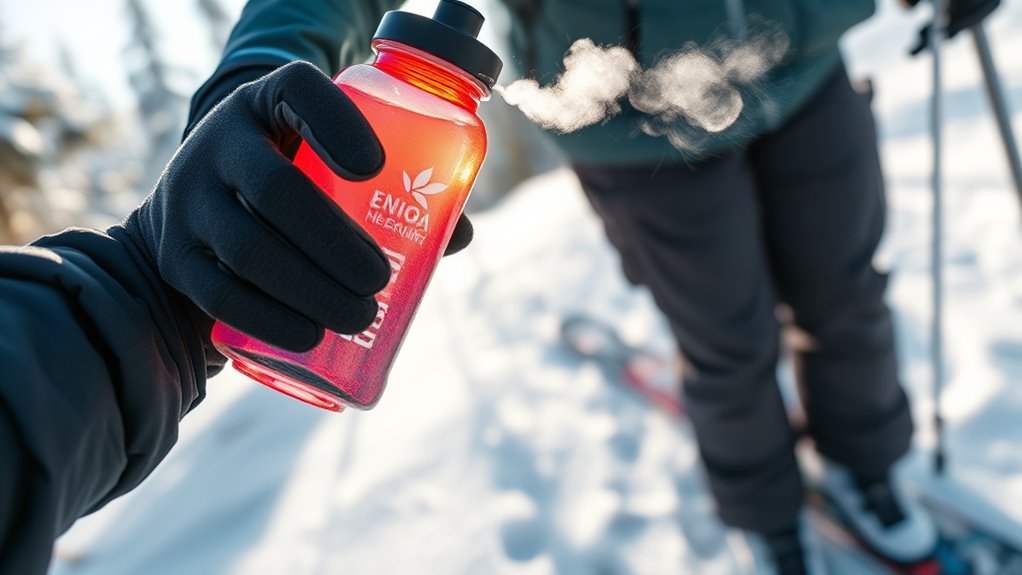
Even during winter sports and outdoor activities, maintaining proper hydration remains essential, yet it often gets overlooked amidst the cold. When you’re active outside, your body still loses fluids through sweat, breathing, and increased respiration. Cold air can suppress your thirst, making you less likely to drink enough. To manage hydration effectively, carry a portable water bottle or insulated flask to prevent freezing and guarantee easy access. Take regular water breaks, even if you don’t feel thirsty, and include electrolyte drinks if you’re sweating heavily. Dress appropriately to reduce sweating and avoid dehydration caused by excessive sweating or rapid breathing. Being mindful of your hydration level helps you stay energized, prevent fatigue, and enjoy your winter sports and outdoor activities safely. Additionally, understanding air purification technology can help improve indoor air quality when you return indoors, supporting overall respiratory health during the winter months.
Debunking Common Myths About Cold Weather and Thirst
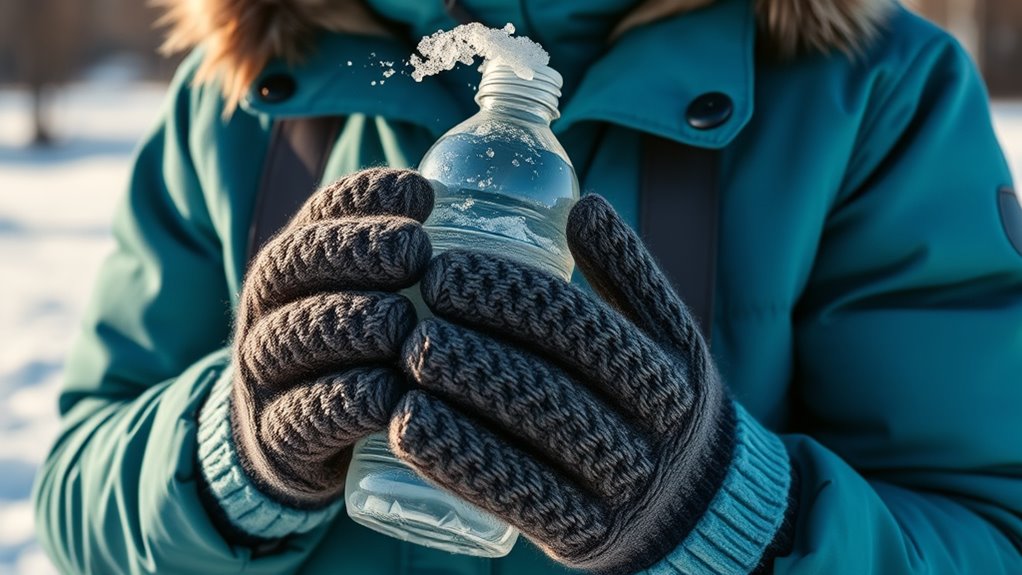
Many people believe that cold weather diminishes your thirst, but this is a myth. Myth busting reveals that you still need adequate hydration, even when it’s chilly. Thirst misconceptions can lead to dehydration without realizing it. Here’s what you should know:
- Cold air can dry out your mouth, increasing your need for fluids.
- You might not feel thirsty, but your body still loses water through respiration and sweating.
- Overdressing or heavy gear can make you sweat more, reinforcing the need to hydrate.
- Alcohol and caffeine, common in winter, can dehydrate you despite the cold.
Understanding these myths helps you stay properly hydrated, preventing dehydration and ensuring your body functions best during winter activities.
Creating a Hydration Routine That Fits Your Winter Lifestyle
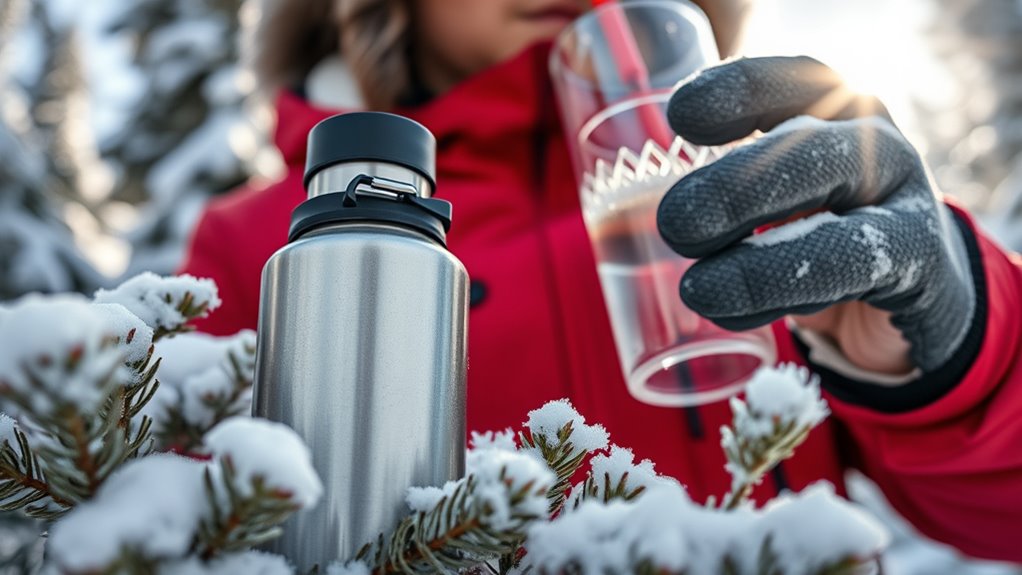
To stay properly hydrated during winter, try incorporating warm beverages like tea or warm water to make drinking more inviting. Set daily reminders on your phone to make sure you don’t forget to sip throughout the day. Keep convenient bottles nearby so you can easily take a drink whenever you need it.
Incorporate Warm Beverages
Have you considered how warm beverages can seamlessly become part of your winter hydration routine? Incorporating hot drinks helps maintain your winter hydration while providing comfort. Here are four ways to do it:
- Choose herbal teas or warm water with lemon to hydrate without added sugars.
- Replace afternoon coffee with a comforting cup of hot herbal infusion.
- Use a thermos to keep warm beverages handy during outdoor activities.
- Incorporate warm milk or dairy alternatives for added nutrients and hydration.
Set Daily Reminders
Adding reminders to your daily routine makes it easier to stay on track with winter hydration, especially when your days are busy or unpredictable. Cold weather often dulls your thirst signals, so setting regular alerts guarantees you don’t forget to drink water. You can use phone alarms, calendar notifications, or hydration apps to prompt you at specific times. Consistent reminders help you develop a habit that fits your winter lifestyle, making winter hydration second nature. By creating a structured schedule, you’re less likely to neglect your fluid intake during chilly days. This approach keeps you hydrated, supports your immune system, and prevents dehydration caused by dry indoor air. Establishing these reminders is a simple, effective way to maintain ideal hydration throughout cold weather.
Use Convenient Bottles
Choosing the right bottle makes it easier to stay hydrated during cold weather. A well-designed bottle suits your winter routine and encourages consistent drinking. Look for a bottle with a convenient design, such as a leak-proof lid or one that fits easily in your bag or pocket. To create a hydration routine that works for you:
- Pick a bottle with clear markings for hydration tracking, so you know how much you’ve consumed.
- Choose a lightweight, insulated bottle to keep drinks warm and prevent freezing.
- Opt for a bottle with a wide mouth for easy filling and cleaning.
- Use a portable, durable bottle that you can carry everywhere, ensuring hydration becomes a seamless part of your day.
These choices help you stay on track and hydrate effectively, no matter the weather.
Sustainable and Healthy Hydration Practices for the Cold Season
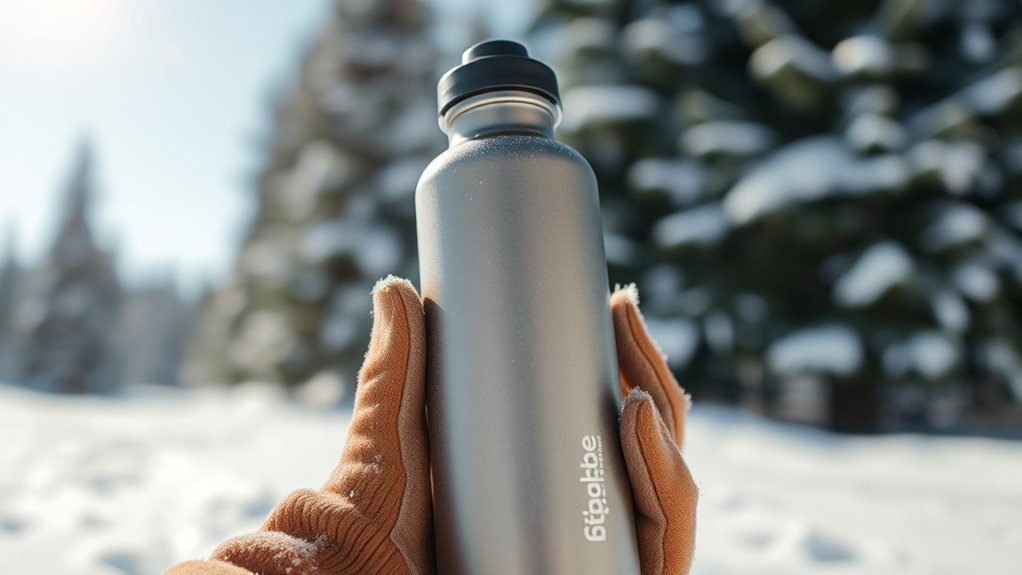
While it may seem that staying hydrated becomes less important in cold weather, maintaining sustainable and healthy hydration habits is essential for your well-being during the winter months. To support this, focus on improving indoor humidity, which helps prevent your skin from drying out and enhances overall hydration. Incorporate hydrating foods like soups and fruits into your diet, and drink warm beverages to soothe winter-related discomforts. Be mindful of winter skincare, using moisturizers that lock in moisture and protect your skin barrier. Avoid over-relying on dehydrating drinks like caffeine and alcohol, which can worsen dryness. By staying consistent with these practices, you’ll maintain better hydration, protect your skin, and enjoy a healthier, more comfortable winter season.
Frequently Asked Questions
Can Cold Weather Cause Dehydration Even if I Don’T Feel Thirsty?
Yes, cold weather can cause dehydration even if you don’t feel thirsty. When you’re engaging in winter sports or spending time indoors with heating, your body loses moisture through sweat and dry air. You might not notice thirst, but dehydration can still happen. Make sure to drink water regularly, stay aware of your hydration levels, and avoid overlooking your body’s needs during cold days.
How Much Water Should I Drink Daily During Winter?
During winter, aim for about 8-10 cups of water daily, especially if you’re engaging in winter sports or spending time indoors. Cold air can dehydrate you, even if you don’t feel thirsty, so keep a water bottle handy. Stay hydrated by drinking regularly, warming up fluids if needed, and including hydrating foods. Proper hydration helps maintain energy and prevents dehydration during chilly days.
Are There Specific Hydration Tips for Winter Outdoor Work?
Think of your body as a snow globe—shaken and ready to settle. For winter outdoor work, stay hydrated by sipping water regularly, just like maintaining winter sports hydration. Keep a water bottle handy and take breaks in the shade. Indoor hydration tips include drinking warm fluids and avoiding dehydrating beverages. By staying mindful, you guarantee your body stays balanced, even in the cold, keeping you sharp and energized.
Do I Need to Drink More Water if I Wear Layers?
Yes, wearing layered clothing can make you think you’re less thirsty, but you still need to increase your water intake. Layers trap heat, reducing sweating, but your body still loses moisture through respiration and minor perspiration. So, even if you’re bundled up, make sure to drink enough water regularly. Staying hydrated helps maintain energy, keeps your body functioning properly, and prevents dehydration during cold outdoor activities.
Can Cold Temperatures Increase My Risk of Dehydration?
Cold temperatures can increase your risk of dehydration because your body works harder for thermal regulation, even if you don’t feel hot. Sweat evaporation from your skin can continue in winter, leading to fluid loss. You might not notice thirst as easily, so it’s important to drink water regularly. Staying hydrated guarantees your body can properly regulate temperature and prevents dehydration caused by hidden fluid loss from sweat evaporation.
Conclusion
Think of winter hydration as tending a delicate garden buried under snow. Just as you water your plants to keep them alive and thriving beneath the frost, you need to regularly nourish your body with fluids—warm or cold—to stay healthy. Don’t wait until the snow melts to see signs of drought. By tending your hydration garden consistently, you’ll guarantee your body blooms brightly, even in the coldest months.
Fall Picks
fall essentials
As an affiliate, we earn on qualifying purchases.