
TL;DR

Turn quiet afternoons into listening time
- Thousands of audiobooks, podcasts and originals
- Listen on your phone, tablet or Echo — also offline
- Cancel anytime
A qualitative study published in the Journal of Advanced Nursing examined how specialist palliative care nurses make decisions when dying patients become unresponsive. Interviews highlighted observation, knowledge of patients’ wishes and family communication, while pointing to a need for stronger training, mentorship and clinical guidance.
A qualitative study from Flinders University, published in the Journal of Advanced Nursing, describes how specialist palliative care nurses make decisions when dying patients become unresponsive. Based on interviews with nurses at a metropolitan palliative care service, the research identifies clinical judgment, close observation and communication with families as central to care when patients can no longer express their needs.
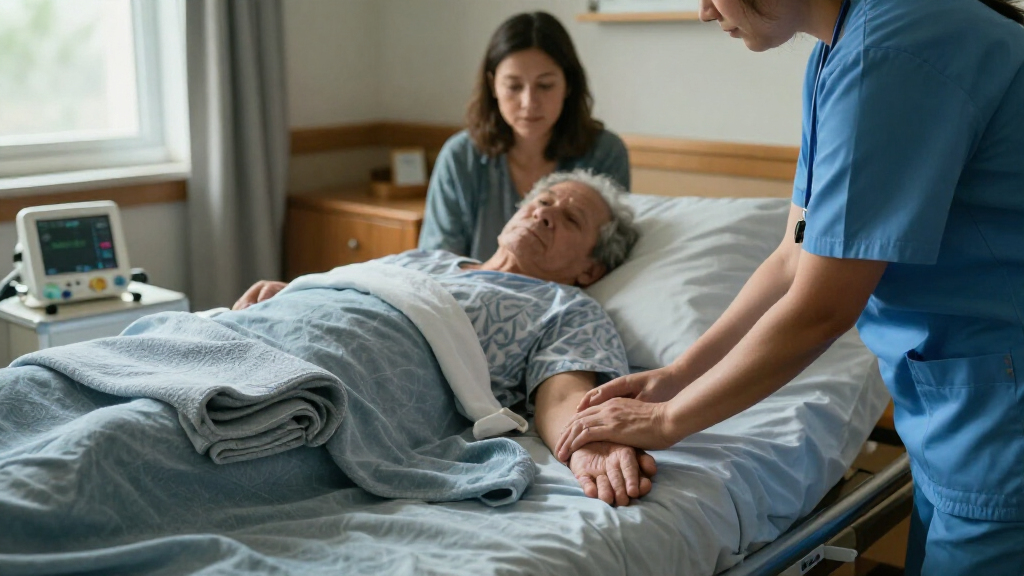
The nurses described trying to recognize subtle signs of pain or discomfort and using what they knew about a patient’s wishes, identity and values to guide care. They also drew on relationships with family members, whose knowledge could help inform decisions and support communication during a patient’s final days. The researchers characterize this as seeing the patient as an “absent presence”: unable to speak, but still shaping care through their known preferences and life.
The report says the time between becoming unresponsive and death averages about two days. During that period, patients may be unable to communicate pain, fear, discomfort or care preferences, leaving nurses to assess needs through observation and available information. The study describes these decisions as affected by communication and uncertainty, as well as ethical and moral considerations.
Researchers found that nurses did not always explicitly identify the ethical dimensions of their decisions. The study’s authors say those judgments were often made implicitly in practice. They call for stronger palliative care education and clinical learning environments, including mentorship, reflective discussion and communication-skills development, alongside guidance for caring for unresponsive dying patients.
Care When Patients Cannot Speak
The findings focus attention on a short but demanding phase of end-of-life care: a patient may remain alive for days after losing the ability to communicate, while still needing comfort and dignified, individualized care. Nurses must make assessments without direct answers from the patient, relying on observed cues, previous knowledge of the person and discussions with family.
The study does not test whether particular training or guidelines improve outcomes. Its relevance is that it describes the decisions nurses report making and identifies areas for support. The authors argue that preparation and structured guidance could help nurses recognize needs and make the ethical dimensions of care more explicit, including in settings beyond specialist palliative services.
Products Worth Considering

Therabody Theragun Relief Massage Gun, 3-Speed, Black

Therabody JetBoots Prime Wireless Compression Boots – Short (under 29 inseam)

Oura Ring 4 Smart Ring – Silver – Size 8
As an affiliate, we earn on qualifying purchases.
How the Research Was Conducted
The research, titled When Dying Patients Fall Silent: How Nurses Navigate Decision-Making in the Last Days of Life—A Qualitative Study, was led by Tricia O’Connor, a doctoral student at Flinders University, with co-author Catherine Paterson, a professor of cancer nursing at the university’s Lifewell Cancer Research Centre. It was published in the Journal of Advanced Nursing in 2026.
The report describes interviews with specialist palliative care nurses working in one metropolitan service. That design offers accounts of nurses’ experiences, rather than a measurement of how frequently particular decisions occur across health care or a comparison of patient outcomes. The study’s authors frame the findings as a contribution to a gap in research on nursing decisions in this phase of dying.
“The findings highlight the need to recognize this unresponsive phase of dying—and this recognition should prompt health care leaders, educators and policymakers to strengthen training and support for nurses caring for dying patients across all settings.”
— Catherine Paterson, study co-author
Limits of the Interview Findings
The report does not give the number of nurses interviewed, detailed participant characteristics or evidence that the findings apply to every palliative care service. It also does not assess patient outcomes or establish that a particular training program, guideline or decision-making framework would improve care. The account is based on interviews at a metropolitan service, so experiences in other locations and care settings may differ.
The article does not specify which clinical cues nurses used in individual cases or how disagreements between family members, patients’ previously expressed wishes and clinical assessments were resolved. The researchers’ recommendations are proposals for strengthening practice, not evidence that new guidelines have already been adopted.
Training and Guidance Proposals
The authors recommend stronger palliative care education and clinical learning environments, with structured mentorship, reflective dialogue and communication-skills development. They also call for support that helps nurses discuss the ethical aspects of decisions more openly and for clinical guidelines or frameworks specific to caring for unresponsive dying patients.
The report does not announce a rollout, timetable or named policy response. Any next steps would depend on health care leaders, educators and policymakers deciding whether and how to act on the recommendations. Further research could test how well the findings apply across services and whether specific supports change nursing practice or patient and family experiences.
Key Questions
What did the Flinders University study examine?
It examined how specialist palliative care nurses make decisions when dying patients become unresponsive, drawing on interviews at a metropolitan palliative care service.
How do nurses assess needs when a patient cannot respond?
According to the study, nurses use clinical judgment and observation of possible distress, alongside knowledge of a patient’s wishes and communication with family. The report does not provide a single assessment method for all patients.
What does “absent presence” mean in the report?
It describes how a patient’s values, identity and known preferences can continue to inform care even when the patient can no longer speak.
What support do the researchers recommend?
The authors call for stronger palliative care education, structured mentorship, reflective discussion, communication-skills development and clinical guidance for caring for unresponsive dying patients.
Does the study show that new guidelines have been introduced?
No. The report says the researchers recommend developing guidelines or frameworks; it does not describe an adopted policy or implementation plan.
Source: medicalxpress.com