
To set up a home for better sleep, movement, and meals, create a calm, clutter-free sleeping space with good lighting, comfy bedding, and a cool, dark environment. Design open areas that invite spontaneous movement and add fitness gadgets for ease. Keep your kitchen organized with healthy snacks visible and easy to access, and guarantee natural light boosts your mood. Small changes in your environment can make a big difference—keep going to discover more ways to optimize your space.

Turn quiet afternoons into listening time
- Thousands of audiobooks, podcasts and originals
- Listen on your phone, tablet or Echo — also offline
- Cancel anytime
Key Takeaways
- Create a calm, dark, cool bedroom with comfortable bedding and minimal clutter to promote restful sleep.
- Design open, inviting spaces with natural light and movement-friendly layouts to encourage daily activity.
- Organize the kitchen with visible healthy foods, clear containers, and clutter-free surfaces to support nutritious meal choices.
- Incorporate ergonomic furniture, proper lighting, and plants for a healthy, stress-reducing living environment.
- Personalize and maintain a tidy, relaxing space with calming colors, natural elements, and designated areas for relaxation and exercise.
As an affiliate, we earn on qualifying purchases.
How to Create a Restful Sleep Environment at Home

Creating a restful sleep environment starts with optimizing your bedroom for comfort and relaxation. Prioritize good sleep hygiene by keeping your space dark, quiet, and cool. Use blackout curtains or an eye mask to block out light, and consider earplugs or white noise machines to minimize disruptions. Establish consistent bedtime routines that signal your body it’s time to wind down, such as reading or gentle stretching. Avoid screens at least an hour before bed, as the blue light can interfere with melatonin production. Keep your bed comfortable with supportive pillows and quality bedding. Staying consistent with these habits helps your body associate your bedroom with rest, making it easier to fall asleep and enjoy restorative sleep every night. Additionally, maintaining proper indoor air quality can help reduce allergens and irritants that might disrupt your sleep or cause discomfort. Proper ventilation in your bedroom can also prevent the buildup of indoor pollutants, promoting better breathing and overall sleep quality. Ensuring good air circulation can also help minimize the presence of microplastics in dust, which may irritate your respiratory system and disturb sleep. Incorporating air purifiers can further enhance your indoor air quality and create a healthier sleep environment.
Design Your Bedroom for Better Sleep and Relaxation
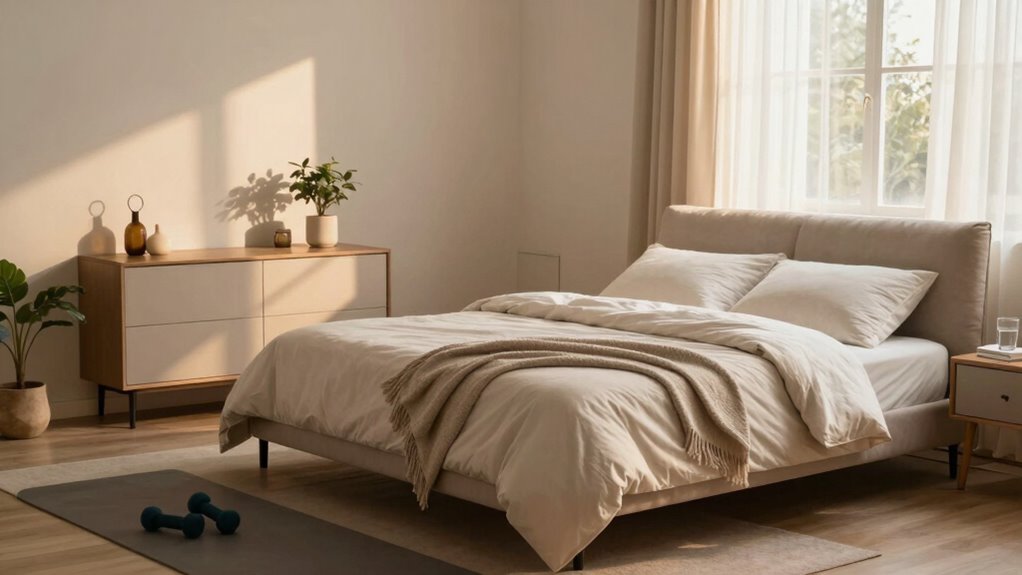
Have you considered how your bedroom’s design can influence your sleep quality? The right setup creates a calming environment that promotes relaxation. Focus on color schemes—soothing shades like soft blues, gentle greens, or neutral tones can help ease your mind. Avoid bright, stimulating colors that might make it harder to wind down. Bedside lighting also plays a vital role; opt for dim, warm lights or adjustable lamps to create a gentle glow before sleep. Keep lighting minimal and soft to signal to your brain that it’s time to relax. Minimize clutter and distractions, and choose comfortable bedding to enhance your sleep environment. Incorporating natural light can also help regulate your circadian rhythms and improve overall sleep quality. Additionally, incorporating minimalist design principles can reduce visual noise and foster a sense of calm. Utilizing landscaping elements in your bedroom view can further promote a sense of tranquility and connection with nature. Thoughtful design choices can make your bedroom a sanctuary for restful nights and rejuvenating relaxation.
Set Up a Home Space That Inspires Daily Movement
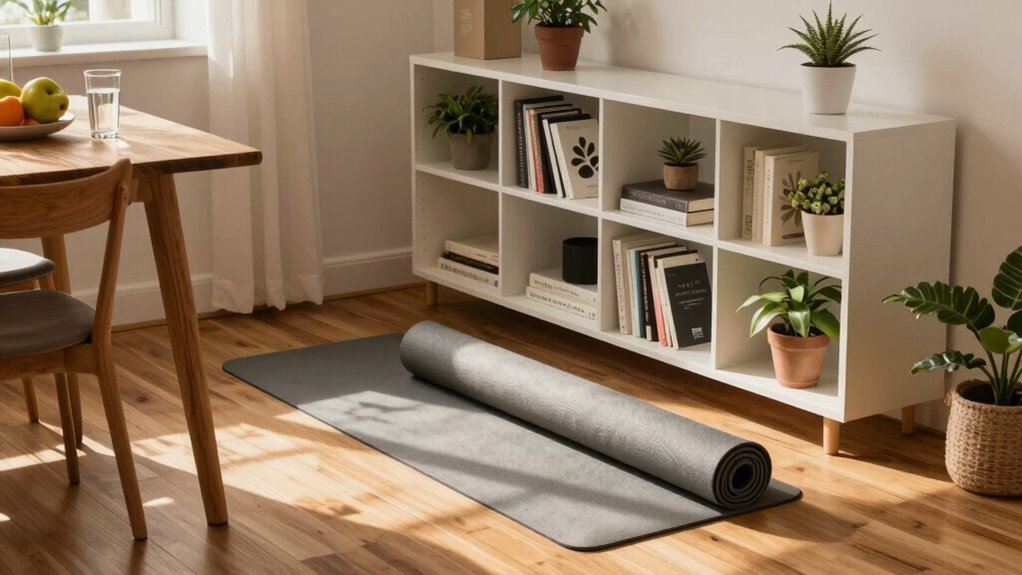
Creating open, inviting spaces in your home encourages you to move more naturally throughout the day. Incorporating fun fitness tools makes exercise enjoyable rather than a chore. When your environment inspires movement, staying active becomes a seamless part of your routine. Using eco-friendly and sustainable recycled materials in gardening can also create a healthier, more vibrant space that motivates outdoor activity. Exploring sound healing science can add calming elements to your environment, fostering mindfulness and encouraging gentle movement or stretching routines. Integrating smart home devices like motion sensors or automated lighting can further promote movement by making your space more responsive to your activity levels. Considering solar system safety measures, such as proper placement of panels and safety disconnects, ensures your home environment remains secure and conducive to your well-being. Incorporating environmental psychology principles can enhance your space’s ability to motivate physical activity and well-being.
Design Open, Inviting Areas
Designing open, inviting areas in your home encourages movement by making it easy to shift between activities. Start with a cozy corner that motivates you to stretch, do gentle exercises, or relax between tasks. An inviting entryway sets the tone for a welcoming space, inviting you to move freely into different areas. Keep pathways clear and furniture arranged to promote easy flow, reducing obstacles that might discourage activity. Use lighting and decor to create a lively atmosphere that inspires movement rather than confinement. Incorporating versatile vacuum options can help maintain clean, unobstructed spaces that support an active lifestyle. Additionally, selecting multi-functional furniture can optimize space and facilitate seamless transitions between different activities. Being mindful of space planning ensures your home remains flexible and encourages spontaneous movement. By prioritizing open, accessible spaces, you make it simple to incorporate movement into your daily routine. This setup not only enhances your physical activity but also fosters a sense of ease and comfort throughout your home.
Incorporate Fun Fitness Tools
Adding fun fitness tools to your home makes movement more engaging and enjoyable. These tools turn exercise into a playful experience, motivating you to stay active daily. Incorporate interactive fitness gadgets that challenge your coordination and boost your energy. Playful exercise equipment like bouncing balls or mini trampolines can make workouts feel effortless and fun. Imagine feeling excited to move, rather than viewing exercise as a chore. Creating a space filled with vibrant, inviting equipment encourages spontaneous activity and helps establish healthy habits. Using reliable troubleshooting techniques can ensure your fitness gadgets stay in top condition, making your workouts more seamless. For example, understanding the parts of herbalism and their applications can inspire a holistic approach to wellness that complements your active lifestyle. Incorporating anti-fatigue mats into your space can also provide comfort and safety during your movement routines, enhancing your overall experience. Additionally, selecting equipment designed with balance and coordination in mind can help improve your overall fitness and prevent injuries.
Organize Your Kitchen to Support Healthy Eating Habits

Keeping your kitchen organized makes healthy eating easier. Regularly clearing clutter and making nutritious options visible help you make better choices effortlessly. When everything is in its place, you’ll feel more motivated to stick with your goals. Incorporating family-friendly meal planning tips can further simplify preparing balanced meals for everyone. Additionally, using effective stain removal techniques to keep your cookware and surfaces clean encourages more frequent, healthy cooking habits.
Clear Clutter Regularly
Regularly clearing clutter from your kitchen makes it easier to access healthy ingredients and stay on track with nutritious meals. Incorporate declutter habits into your organization routines to keep your space inviting and functional. When you remove unnecessary items, you create a sense of calm and control that motivates healthier choices. Plus, a tidy kitchen reduces stress and makes cooking more enjoyable. Incorporating visual and auditory cues can further support your organization efforts and reinforce healthy habits. Incorporating urban greening principles like adding indoor plants can improve air quality and create a more calming environment. Additionally, using simple craft projects such as decorating with handmade clay bead bracelets or embroidery can personalize your space and promote a sense of well-being.
Store Healthy Options Visible
When your kitchen is organized to keep healthy options visible, making nutritious choices becomes effortless. Place healthy snacks at eye level in your pantry or fridge so they’re easy to grab. Keep accessible options like fresh fruit, cut vegetables, and nuts within reach, reducing the temptation to choose less nutritious alternatives. Clear containers and designated spots make it simple to see what’s available, encouraging you to snack smart. Avoid hiding healthy foods in hard-to-reach areas; instead, display them prominently. This setup motivates you to choose wholesome options throughout the day. By organizing your kitchen to highlight nutritious snacks and accessible options, you create an environment that supports your health goals effortlessly.
Create a Meal Prep Area for Nutritious Cooking
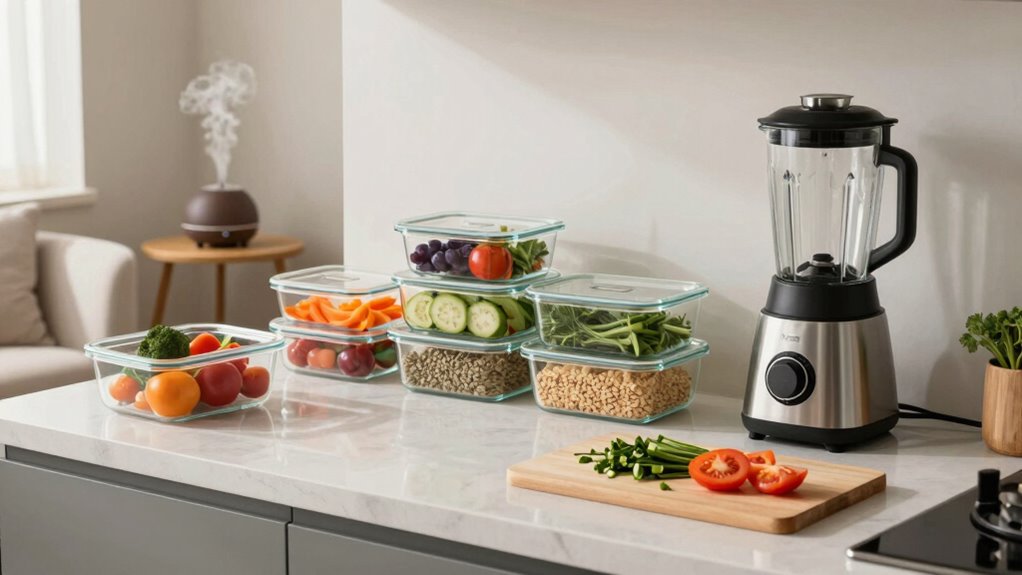
Creating a dedicated meal prep area can considerably streamline your cooking routine and promote healthier eating habits. When you organize this space efficiently, meal planning becomes easier, and ingredient storage stays tidy. You’ll feel motivated to cook nutritious meals more often, knowing everything is within reach. To evoke emotion, consider these tips:
- Visualize a clutter-free zone that invites creativity and calm
- Keep your favorite ingredients front and center for quick access
- Use clear containers to see your healthy options at a glance
- Designate specific spots for prep tools to avoid frustration
This setup inspires confidence in your cooking, making it simple to prepare balanced meals that support your wellness goals. An organized meal prep area turns healthy eating into a rewarding, enjoyable part of your daily routine.
Use Natural Light and Comfortable Spaces to Boost Well-Being
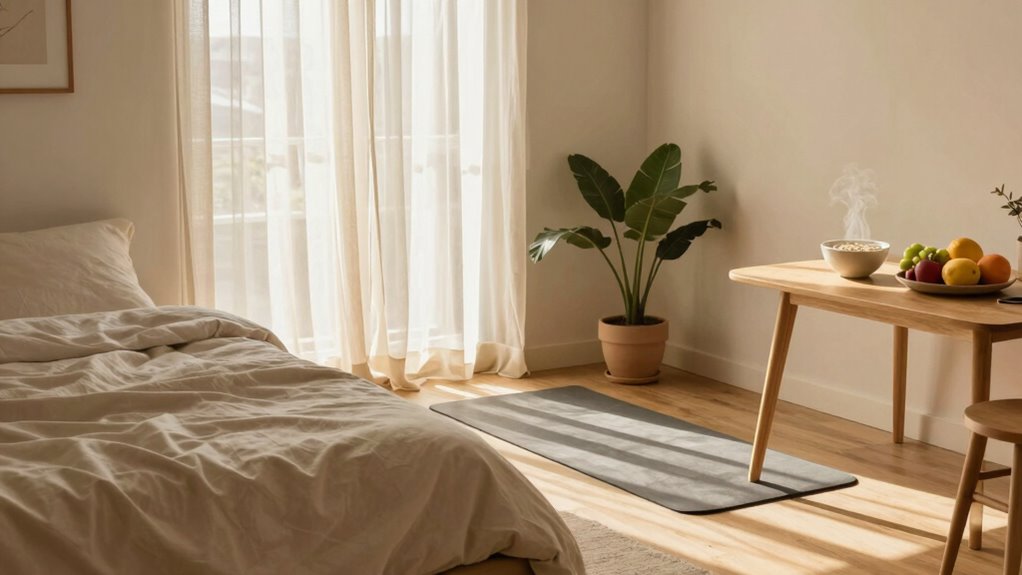
Natural light has a powerful effect on your mood and energy levels, so incorporating it into your living space can considerably boost your well-being. Sunlight exposure helps regulate your circadian rhythm, improving sleep quality and daytime alertness. Maximize natural lighting by keeping windows unobstructed and using light, airy curtains. Position your work and relaxation areas near windows to benefit from sunlight during the day. Create comfortable spaces with inviting furniture and calming colors that reflect natural light. Well-lit rooms not only elevate your mood but also make your home feel more open and inviting. Prioritizing natural lighting and comfortable spaces supports your overall health, making your home a sanctuary for better sleep, movement, and meals.
Maintain Your Home Setup for Long-Term Health Benefits
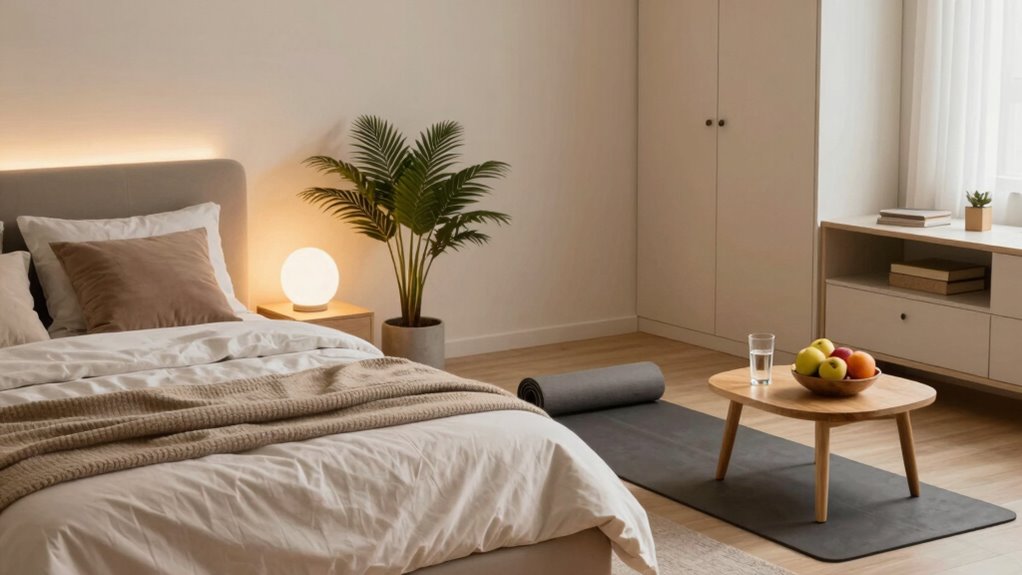
To guarantee your home setup continues to support your long-term health, regular maintenance is essential. Keep your space optimized with ongoing updates to home automation systems that enhance comfort and efficiency. Check that ergonomic furniture remains in good condition, ensuring proper support for your body during daily activities. Regularly clean and declutter areas to reduce stress and prevent accidents. Stay mindful of lighting and ventilation to sustain a healthy environment.
- Feel the joy of a space that adapts effortlessly to your needs
- Experience peace knowing your home promotes your well-being
- Rejuvenate your environment to maintain motivation and energy
- Celebrate the stability of a thoughtfully maintained sanctuary
Frequently Asked Questions
How Can I Personalize My Home to Improve Sleep Quality?
You can personalize your home to improve sleep quality by creating a sleep sanctuary that reflects your favorite calming colors and textures. Incorporate personalized relaxation elements like soft lighting, cozy bedding, and soothing sounds. Keep your space clutter-free, and add meaningful decor that promotes tranquility. These touches make your environment more inviting, helping you unwind and enjoy restful nights, ultimately enhancing your overall sleep experience.
What Are Simple Ways to Encourage Daily Physical Activity at Home?
Did you know that just 30 minutes of daily activity can boost your mood and health? To encourage daily physical activity, create designated activity zones in your home for exercises like yoga or strength training. Incorporate simple exercise routines, like stretching or jumping jacks, into your day. Keep these zones visible and inviting, making it easy to stay active without needing extra time or complex equipment.
How Do I Choose the Best Materials for a Healthy Kitchen Environment?
To choose the best materials for a healthy kitchen, start with eco-friendly countertops like bamboo or recycled glass, which reduce chemical exposure. Opt for non-toxic paint with low or zero VOCs to improve indoor air quality. Look for appliances and cookware made from safe, non-reactive materials. Prioritize natural, sustainable options to create a space that promotes health and minimizes environmental impact. This way, your kitchen stays both functional and safe.
What Are Easy Tips to Keep Natural Lighting Consistent Year-Round?
Think of your home as a greenhouse, where sunlight nurtures growth. To keep natural lighting steady year-round, focus on strategic window placement to maximize sunlight during winter and shade in summer. Use light diffusion techniques like sheer curtains or frosted glass to soften harsh rays. Regularly trim outdoor foliage blocking windows, and consider installing reflective surfaces to bounce light deeper into your space, ensuring consistent brightness no matter the season.
How Often Should I Update or Reorganize My Home for Optimal Health?
You should update or reorganize your home every few months to maintain ideal health. Regularly refresh your home decor to promote a positive environment, and assess your storage solutions to guarantee clutter doesn’t hinder your well-being. Small changes, like switching up furniture placement or decluttering, can boost mood and energy. Staying proactive helps your space support better sleep, movement, and meals, keeping your home aligned with your health goals.
Conclusion
Creating a home that promotes better sleep, movement, and meals can considerably boost your well-being. Did you know that quality sleep reduces the risk of heart disease by 24%? By designing your space thoughtfully, you support healthier habits effortlessly. Keep your environment organized, inviting, and aligned with your goals—it’s an investment in your long-term health. Small changes today make a big difference in how you feel tomorrow and beyond.
Cold & flu season Picks
humidifiers
As an affiliate, we earn on qualifying purchases.