

To help seniors feel familiar with new equipment quickly, start with simple, clear instructions using large icons, diagrams, and visual cues. Customize the device’s settings for their comfort, and encourage hands-on practice in a patient, supportive environment. Celebrate small successes and provide ongoing support through positive feedback and peer interactions. By creating a calm, encouraging space, you help build confidence faster. If you keep exploring, you’ll discover more effective ways to make technology feel like second nature.

Turn quiet afternoons into listening time
- Thousands of audiobooks, podcasts and originals
- Listen on your phone, tablet or Echo — also offline
- Cancel anytime
Key Takeaways
- Simplify device interfaces with large icons, clear labels, and visual cues for easier understanding.
- Personalize settings like font size and contrast to match individual needs.
- Introduce features gradually, focusing on core functions first to build confidence.
- Use positive reinforcement and encouragement to reinforce successful interactions.
- Incorporate hands-on practice and visual aids to enhance retention and familiarity.
large icon smartphone for seniors
As an affiliate, we earn on qualifying purchases.
As an affiliate, we earn on qualifying purchases.
How Seniors Learn Best and How to Support Them

Understanding how seniors learn best is key to helping them adapt to new equipment quickly. You can support their learning by encouraging intergenerational mentorship, where younger users guide seniors through new devices. This approach builds confidence and fosters a sense of community. Emotional adaptation plays a vital role; acknowledging their feelings about technology helps reduce anxiety and resistance. Patience and positive reinforcement strengthen their comfort level, making the learning process smoother. When you create a supportive environment that values their experiences, seniors feel more motivated to try new things. Remember, learning isn’t just about understanding the device but also about managing emotions tied to change. Recognizing the importance of time perception can help tailor training to fit their learning styles and unique needs. Additionally, understanding how seniors perceive and process visual information—such as contrast ratio and color accuracy—can further improve their comfort and comprehension. Incorporating principles of cognitive load can also make technology more accessible by reducing unnecessary mental effort. A focus on user-friendly interfaces can significantly enhance their ability to navigate new devices with confidence. By combining mentorship and emotional support, you help seniors embrace new technology with confidence and ease.
Practical Steps to Make New Devices Easier for Seniors
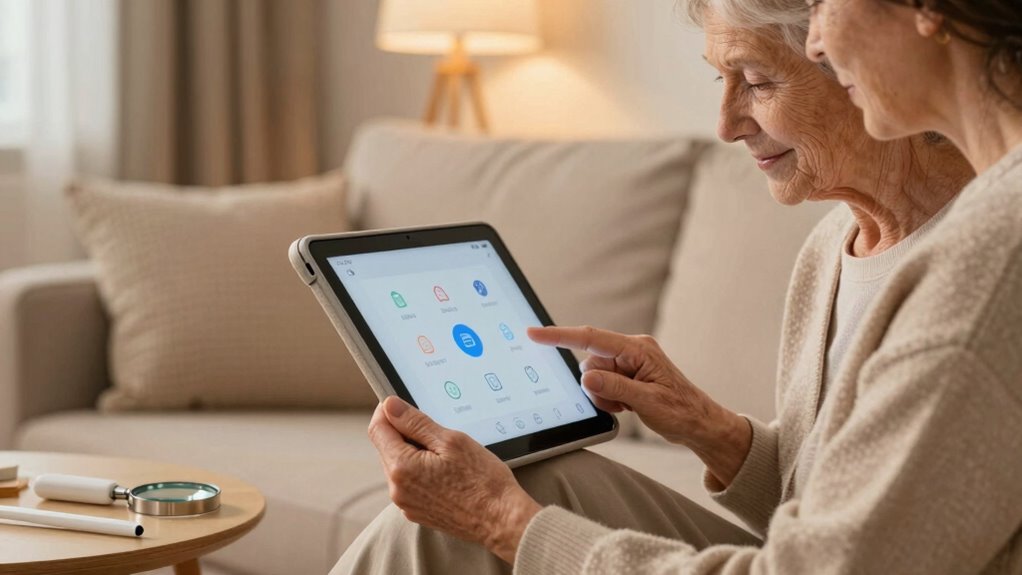
To make new devices easier for seniors, start by simplifying the user interface. Clear, large icons and straightforward menus reduce confusion and make navigation easier. Use device customization options, such as adjustable font sizes and contrast settings, to suit individual needs. Consider ergonomic design when selecting or modifying devices—devices with easy-to-press buttons, comfortable grips, and accessible layouts help prevent frustration. Position controls within easy reach and avoid cluttered screens to minimize errors. Training seniors on how to adjust settings for comfort can boost confidence. Keep instructions simple and visual whenever possible. These practical steps help seniors become familiar with new equipment faster, making the experience less intimidating and more empowering. Additionally, understanding ethical considerations in technology can guide manufacturers and caregivers in creating more accessible and responsible devices. Incorporating user-centered design principles ensures that the development process prioritizes the needs and preferences of older users. Being aware of inclusive design strategies can further enhance device accessibility for diverse users. Recognizing that certain odors, such as ear wax odor, can affect comfort levels, is also important in designing environments and equipment for seniors. Moreover, optimizing ease of use features in devices can significantly boost confidence and independence for older adults.
Personalized Training Techniques to Build Confidence

Using personalized training techniques helps seniors feel more confident with new equipment. You can start with tailored instruction strategies and gradually increase skill complexity. Positive reinforcement keeps motivation high and encourages continued progress. Incorporating familiar elements, such as electric bike features, can also help ease the transition and build comfort. Additionally, integrating outdoor transformation essentials can create a more inviting environment that promotes familiarity and relaxation. Recognizing the importance of user-friendly design can further support seniors’ independence and ease of use. Understanding the environmental impact of tissue paper can inspire the use of eco-friendly craft materials, fostering a sense of sustainability and responsibility. Recognizing the importance of emotional well-being can enhance the overall adaptation process and foster a positive experience.
Tailored Instruction Strategies
Personalized training techniques are essential for helping seniors feel confident with new equipment. You can boost memory retention by tailoring instructions to their learning style and pace. Incorporate plenty of hands-on practice, allowing them to physically interact with the device rather than just observe. Break down complex steps into simple, manageable tasks, and repeat these steps to reinforce understanding. Use clear, simple language and encourage questions to address any concerns. Visual aids or written checklists can also help reinforce learning. Remember, every senior learns differently, so adapt your approach based on their responses. By customizing your instruction, you create a supportive environment that fosters familiarity and confidence, making the learning process smoother and more effective. Understanding learning styles can further enhance your training approach. Additionally, incorporating accessibility features tailored to their needs can significantly improve usability and comfort. Recognizing the importance of cultural shifts in technology adoption can also help you better connect with seniors and ease their transition to new devices. Moreover, staying informed about innovative teaching methods can provide new avenues to improve engagement and understanding, especially as positive mindset plays a crucial role in embracing new technology.
Gradual Skill Progression
Gradual skill progression is key to helping seniors build confidence with new equipment. When you introduce devices slowly, it reduces tech anxiety and makes learning feel less overwhelming. Start with simple tasks that focus on core functions, allowing seniors to become comfortable with device ergonomics and basic operations. As they gain confidence, gradually add more complex features, ensuring each step feels manageable. This method also allows for repetition and reinforcement, which are essential for long-term retention and comfort. Incorporating learning pace and adjusting the speed of instruction can further enhance understanding and comfort levels. Paying attention to device ergonomics during training also reduces physical discomfort, making the experience more positive. Additionally, tailoring the training to each individual’s learning style can further improve engagement and success. Incorporating mobility tips into the training can further enhance comfort and ease of use. By pacing learning and celebrating small successes, you help seniors develop familiarity and confidence, ultimately making new equipment feel less intimidating and more like a helpful tool in their daily life.
Positive Reinforcement Techniques
Building confidence with new equipment becomes more effective when you incorporate positive reinforcement techniques. Praise and encouragement reinforce successful attempts, boosting motivation and making the learning process enjoyable. This approach supports memory retention by associating positive feelings with the task, helping seniors remember how to use the equipment correctly. Use motivational coaching to highlight progress, no matter how small, and celebrate each achievement. Consistent positive feedback builds trust and reduces anxiety, making seniors more willing to try again. Personalize your praise to match individual preferences, which enhances engagement and confidence. Over time, this nurturing environment helps seniors feel more comfortable, ensuring they connect positive experiences with new equipment and accelerate their familiarity. Recognizing learning strategies can further optimize the training process and foster quicker adaptation.
Creating a Supportive Environment for Senior Tech Learning
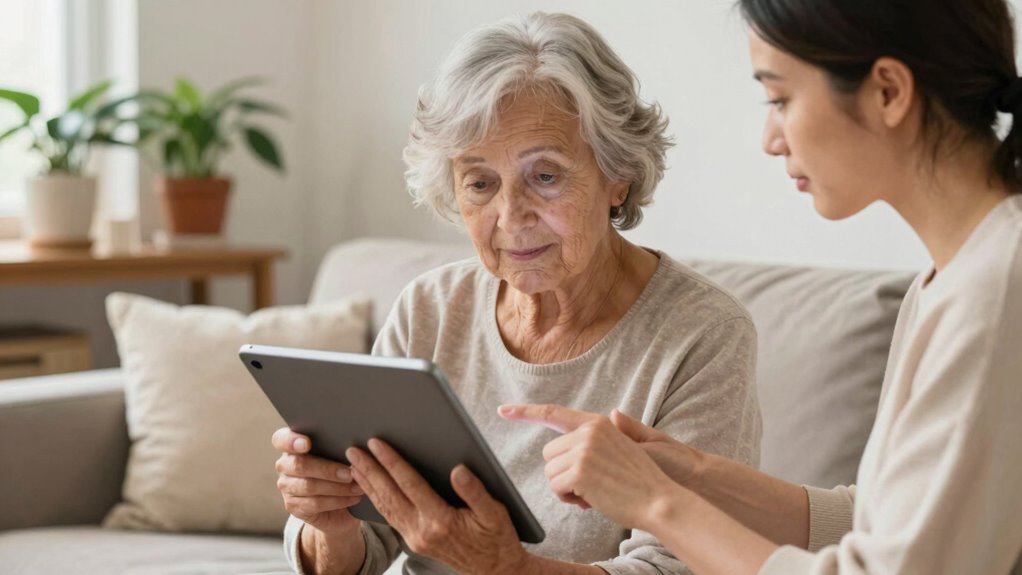
Creating a supportive environment starts with showing patience and understanding as seniors learn new technology. Use clear, visual instructions to make steps easier to follow, and encourage peer interactions for shared learning. These approaches help seniors feel comfortable and confident while exploring their devices.
Foster Patience and Understanding
When seniors are learning new equipment, patience and understanding are essential to fostering a positive environment. You can help by practicing patience cultivation, allowing them to process information at their own pace without pressure. Remember, frustration can hinder learning, so stay calm and encouraging. Empathy development is key—try to see things from their perspective, recognizing that unfamiliar technology can be intimidating. Celebrate small successes to build confidence and reinforce their progress. Avoid rushing or showing impatience, as this can create anxiety and discourage effort. By maintaining a supportive attitude and demonstrating genuine understanding, you create a space where seniors feel safe to explore and learn. Your patience and empathy empower them to embrace new technology with confidence.
Use Clear, Visual Instructions
Clear, visual instructions are a powerful way to support seniors as they learn new technology. Use simple, clear visual cues like icons, diagrams, and step-by-step images to guide them. These cues help reduce confusion and build confidence. Incorporate hands-on practice by allowing seniors to follow visual instructions directly on the device, reinforcing learning through doing. To organize ideas, consider this visual representation:
| Technique | Benefits |
|---|---|
| Step-by-step images | Clarify each action |
| Icons and symbols | Increase quick recognition |
| Color coding | Highlight important buttons |
| Diagrams | Show device layout |
| Hands-on practice | Reinforces understanding |
Using these methods creates a supportive environment where seniors feel comfortable exploring new equipment. Visual cues and hands-on practice foster independence and reduce frustration.
Encourage Supportive Peer Interactions
Encouraging supportive peer interactions can considerably boost seniors’ confidence as they learn new technology. When peers offer encouragement, it creates a positive environment that fosters social bonding and reduces feelings of isolation. Encourage group activities where seniors can share their experiences and troubleshoot together, emphasizing peer encouragement. This helps build trust and camaraderie, making the learning process more engaging and less intimidating. Highlighting success stories among peers reinforces motivation and shows that everyone can improve. By cultivating a community where seniors support each other, you create a safe space that promotes patience and persistence. Ultimately, social bonding through peer encouragement makes technology learning feel less overwhelming and more enjoyable, speeding up the process of making new equipment feel familiar.
Common Mistakes to Avoid When Introducing New Equipment

Introducing new equipment to seniors can be a smooth process, but it’s easy to make mistakes that hinder their comfort and confidence. One common mistake is using tech jargon that confuses rather than helps. Keep explanations simple and avoid technical terms they might not understand. Another pitfall is rushing training; giving too little time or skipping steps can overwhelm seniors and reduce their willingness to try. Remember, patience is key—allow plenty of time for questions and practice. Also, avoid assuming they’ll pick up skills quickly without proper guidance. Providing clear, slow demonstrations and checking in regularly helps build trust. By steering clear of rushed training and confusing language, you set a supportive tone that encourages seniors to become comfortable with their new equipment faster.
Ongoing Support Strategies for Long-Term Comfort

After the initial training, providing ongoing support helps seniors stay comfortable and confident with their equipment over time. You can achieve this by:
- Encouraging intergenerational mentorship, where family members or younger volunteers regularly check in, answer questions, and offer guidance. This fosters familiarity and reduces anxiety.
- Offering consistent emotional support to address frustrations or fears, helping seniors feel understood and reassured as they adapt.
- Creating a routine for follow-up visits or calls, ensuring seniors know help is always available, which builds trust and long-term comfort.
These strategies keep the learning process active and engaging, making new equipment feel more familiar and less intimidating over time.
Simple Tips to Help Seniors Adapt to New Technology Quickly

Want to help seniors pick up new technology faster? Focus on clear, simple instructions and repeat key points to boost memory retention. Break tasks into small steps, so they don’t feel overwhelmed. Encourage patience and celebrate progress to provide emotional support, which builds confidence. Demonstrate how to use new devices hands-on, allowing them to practice and ask questions. Use visual aids or written guides to reinforce learning and serve as quick references later. Stay positive and reassure them that mistakes are normal, fostering a comfortable learning environment. Regularly check in to see how they’re doing, adjusting your approach as needed. These simple tips help seniors adapt quickly, making new technology feel familiar and less intimidating.
Frequently Asked Questions
How Can I Assess a Senior’s Specific Learning Preferences?
You can assess a senior’s specific learning preferences by observing how they respond to different teaching methods and asking personalized questions about their past experiences. Focus on their sensory preferences—whether they learn best through visual, auditory, or tactile cues—and tailor your instruction accordingly. Engaging in open conversations helps you understand their comfort levels, allowing you to provide personalized instruction that makes new equipment feel familiar and easier to learn.
What Are the Best Ways to Motivate Seniors to Try New Devices?
Imagine a warm smile guiding you as you explore new tech, making the unfamiliar feel inviting. To motivate seniors, boost their tech comfort by demonstrating simple, relatable uses of devices. Peer encouragement works wonders—seeing someone they trust successfully try new equipment inspires confidence. Celebrate small victories together, turning new device exploration into a positive, social experience. This approach helps seniors feel more enthusiastic and comfortable to embrace new technology.
How Do I Handle Resistance or Frustration During Learning?
When seniors show resistance or frustration, acknowledge their technological anxiety with patience strategies, like reassuring them it’s okay to make mistakes. Use calm, encouraging language and break tasks into small steps, giving plenty of positive reinforcement. Show empathy, listen to their concerns, and avoid rushing. This approach helps them feel supported, reduces frustration, and gradually builds confidence, making the learning process more comfortable and less overwhelming.
Are There Recommended Age-Appropriate Apps or Tools for Seniors?
You should explore age-appropriate apps and tools designed for seniors that emphasize simplicity, clarity, and engagement. Look for apps that incorporate voice commands to reduce frustration, visual aids to enhance understanding, and intuitive interfaces for ease of use. These features help seniors feel confident, connected, and capable while learning new equipment, making the experience enjoyable and less intimidating. Prioritize apps that cater specifically to their needs and comfort levels.
How Often Should I Revisit Training to Ensure Retention?
You should revisit training sessions regularly, ideally every few weeks, to boost memory retention and reinforce learning. Consistent learning frequency helps seniors retain new skills and prevents forgetfulness. Keep the sessions short and engaging, and gradually increase complexity. By maintaining a steady schedule, you help seniors build confidence and guarantee they remember how to use new equipment effectively over time. Regular reviews make the learning process more successful and sustainable.
Conclusion
Think of introducing new equipment to seniors as planting a seed. With patience, personalized care, and ongoing support, you nurture confidence and familiarity, allowing growth to flourish. Each small step is a gentle watering, shaping comfort and trust. As the roots deepen, the device becomes an extension of them, no longer foreign but familiar. With your guidance, they’ll embrace new technology, blossoming into independence and joy—one nurturing moment at a time.
Cold & flu season Picks
humidifiers
As an affiliate, we earn on qualifying purchases.