

Using color effectively highlights hazards by instantly grabbing attention and guiding safe actions. Red signals danger and urgency, prompting quick responses, while yellow warns you to proceed with caution. Green marks safe zones and exits, helping you identify secure areas easily. Consistent color use, combined with clear signage and training, enhances hazard recognition and reduces accidents. To learn more about how colors improve safety and communication, keep exploring the details below.
Key Takeaways
- Use standardized colors like red for immediate danger, yellow for caution, and green for safety to ensure clear hazard communication.
- Apply high-contrast, vibrant colors to enhance visibility and quick recognition of hazards in various environments.
- Incorporate consistent color coding across signage, labels, and markings to reduce confusion and reinforce hazard awareness.
- Consider cultural interpretations of colors to ensure universal understanding and effective hazard highlighting.
- Leverage digital color systems for real-time hazard updates and adaptive signaling, improving responsiveness and safety management.
Understanding Color Codes in Safety Signage
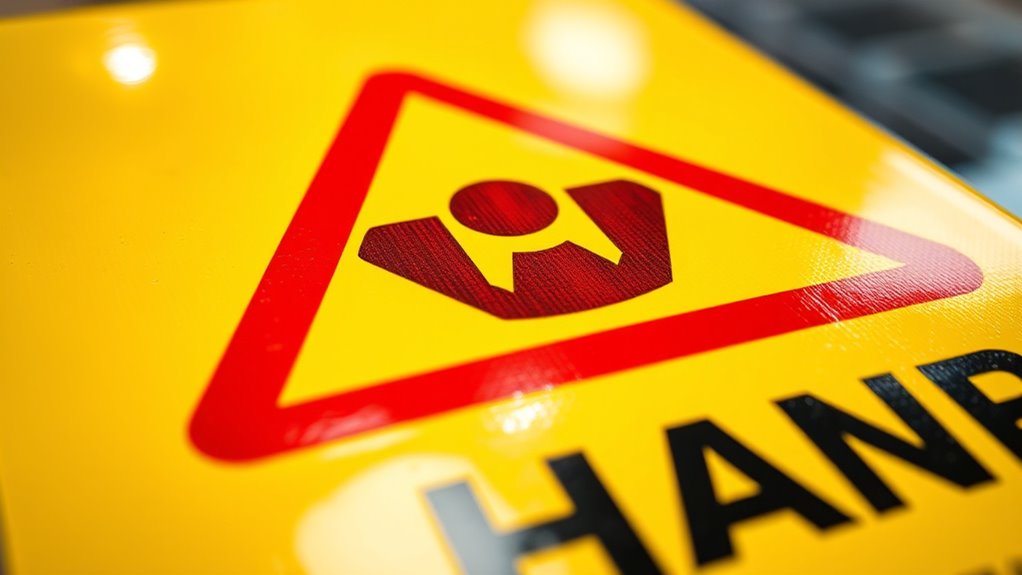
Color codes in safety signage quickly communicate hazards and guide safe behavior. Your understanding of color perception is key, as different individuals may interpret colors differently based on visual acuity and experience. For example, red often signals danger in many cultures, prompting immediate caution, but in some regions, it may also symbolize prosperity or celebration. Recognizing these cultural differences guarantees you interpret signage correctly, especially in diverse workplaces or international settings. Consistent color coding helps unify safety messages, reducing confusion and preventing accidents. By learning what each color signifies in specific contexts, you’ll respond appropriately to warnings and instructions. Ultimately, awareness of how cultural differences influence color perception enhances safety, making it easier to recognize hazards and act swiftly to protect yourself and others.
The Psychology Behind Color Choices

Understanding what different colors communicate isn’t just about cultural conventions; it also taps into how our brains respond to visual stimuli. Color symbolism influences emotional impacts, guiding your reactions and decision-making. For example, red often signals danger or urgency, triggering alertness, while green evokes safety and reassurance. Your brain associates colors with specific feelings, shaping your perception of hazards. Here’s a quick look at common color meanings:
| Color | Symbolism | Emotional Impact |
|---|---|---|
| Red | Danger, Warning | Urgency, alertness |
| Yellow | Caution, Attention | Anxiety, focus |
| Green | Safety, Go | Calm, reassurance |
| Blue | Trust, Reliability | Confidence, stability |
| Orange | Warning, Caution | Caution, alertness |
Your awareness of these subconscious cues helps you better interpret hazard signals.
Common Colors and Their Associated Hazards

You’ll notice that red signals immediate danger and demands your attention right away. Yellow indicates caution, so you should stay alert and prepared. Green shows a safe zone, letting you know it’s okay to proceed or relax your guard.
Red: Immediate Danger
Have you ever noticed how red signals immediate danger? This color’s strong symbolism instantly grabs attention, signaling urgency across many contexts. Its cultural perceptions vary—while red often warns of risk, it also symbolizes passion or importance in some cultures. Red’s vivid hue triggers a primal response, making it ideal for hazards requiring quick recognition. Here’s a quick look at how red communicates danger:
| Aspect | Explanation |
|---|---|
| Color symbolism | Represents alertness and urgency worldwide |
| Cultural perceptions | Seen as hazardous or warning in many societies |
| Immediate response | Triggers instinctive caution and action |
Using red for hazards leverages these perceptions, ensuring you recognize danger at a glance, no matter where you are. Glycolic acid is often used in skincare to improve skin texture and appearance, but it’s important to understand its effects to avoid irritation.
Yellow: Caution Advised
Just as red signals immediate danger, yellow is widely used to indicate caution and alert you to potential hazards ahead. In color psychology, yellow is associated with alertness and attention, making it effective for warning signs. Its high contrast enhances hazard visibility, ensuring you notice warnings quickly. When you see yellow, your mind recognizes the need for caution without immediate alarm. This color is commonly used on signs, barriers, and equipment to prompt careful behavior. Yellow’s bright, energetic tone captures your attention and signals that you should be alert, but not necessarily stop. By understanding the psychological impact and visibility of yellow, you can better interpret warnings and respond appropriately to potential hazards before they escalate. Additionally, incorporating visual cues like yellow can improve overall safety by effectively communicating risks.
Green: Safe Zone
Ever wondered which colors symbolize safety and reassurance in hazard communication? Green is universally recognized as the “Safe Zone” color, signaling that an area or equipment is secure. Its color symbolism promotes calmness and reassurance, helping you identify safe pathways or emergency exits quickly. Keep in mind that cultural perceptions influence this association; in many countries, green signifies safety, health, and permission. To effectively use green in hazard communication:
- Clearly mark emergency exits and safe routes with green signage
- Use green labels for equipment that’s safe to operate
- Incorporate green tape to designate safe zones
- Ensure consistent use of green to avoid confusion during emergencies
- Color coding helps standardize hazard communication across different environments.
Understanding these cues helps you navigate hazards confidently and reinforces safety protocols.
Best Practices for Implementing Color-Coded Safety Systems

Implementing a color-coded safety system effectively requires careful planning and consistency. You must guarantee visual accessibility so everyone can easily identify hazards, regardless of lighting or vision impairments. Additionally, consider cultural interpretations, as colors can have different meanings across regions. To do this, establish clear standards and train staff on color meanings. Use the table below to guide your choices:
| Color | Meaning | Cultural Consideration |
|---|---|---|
| Red | Danger, stop | Avoid in regions where red signifies luck or celebration |
| Yellow | Caution, warning | Ensure clarity for all employees |
| Green | Safety, go | Confirm it aligns with local interpretations |
Consistency and awareness of cultural nuances help prevent miscommunication and improve safety outcomes. Incorporating proper signage and regular training further enhances the effectiveness of the system.
Case Studies: Successful Use of Color to Prevent Accidents

Real-world examples demonstrate how effective color-coding systems can markedly reduce accidents and improve safety. In industrial plants, clear color signals enhance hazard perception, making dangers instantly recognizable. For instance, yellow safety tape around machinery alerts workers to potential risks, leveraging color psychology to evoke caution. Similarly, red emergency stop buttons stand out, ensuring quick response times. Here are key points:
- Strategic use of vibrant colors boosts hazard awareness.
- Consistent color schemes prevent confusion.
- Proper placement reinforces hazard perception.
- Training improves understanding of color meanings.
- Incorporating color perception training ensures that employees recognize hazards quickly and accurately.
These case studies show that integrating color thoughtfully can save lives by making hazards obvious and encouraging safer behaviors. When you use color wisely, you create a safer environment where risks are immediately understood and addressed.
Future Trends in Color-Based Hazard Communication

As technology advances, emerging color standards will shape how hazards are communicated more clearly and consistently. Digital tools and displays will integrate color cues seamlessly, making hazard identification faster and more accurate. You should consider how these innovations can improve safety protocols and guarantee everyone stays informed. Additionally, the use of self-watering plant pots as an analogy highlights the importance of reliable and consistent systems in hazard communication.
Emerging Color Standards
Emerging color standards aim to create more consistent and intuitive hazard communication across industries. As these standards develop, focus on refining color palette selection becomes vital to guarantee clarity and universality. You’ll find that standardized colors help reinforce branding consistency, making hazard signals easily recognizable regardless of context. To achieve this, consider these key points:
- Collaborate with industry experts to align color choices.
- Adopt universally accepted color codes for specific hazards.
- Prioritize high-contrast palettes for visibility.
- Ensure color schemes support clear differentiation between hazard levels.
- Incorporate color accuracy considerations to enhance the reliability of hazard indications.
Digital Color Integration
Digital color integration is transforming hazard communication by enabling real-time updates and adaptive displays that enhance safety. With a dynamic digital palette, you can quickly adjust colors to signal changing hazards or priorities, ensuring workers stay informed. This technology also improves color accessibility by incorporating customizable options for individuals with color vision deficiencies, making safety signals more inclusive. Resources and Tools highlight the importance of understanding local resources and laws, which can be crucial when addressing safety compliance in various environments. As digital displays become more prevalent, you’ll find that hazard indicators can be tailored to specific environments, reducing misinterpretation. Real-time updates mean that alerts can be instantly modified or deactivated, minimizing confusion and response times. Overall, digital color integration streamlines hazard communication, creating safer workplaces that adapt to evolving conditions while prioritizing clarity and accessibility.
Frequently Asked Questions
How Do Cultural Differences Impact Color Interpretation in Safety Signage?
Cultural differences greatly impact how you interpret safety signage colors due to cultural symbolism and color perception. For example, red may symbolize danger in some cultures but good luck in others. You should consider these differences to guarantee your safety signs are understood universally. Tailoring color choices to your audience’s cultural background helps prevent misinterpretation, ensuring your safety messages are clear and effective across diverse groups.
Can Color-Blind Individuals Effectively Interpret Color-Coded Hazard Signs?
Color-blind individuals can still interpret hazard signs effectively if you use alternative color schemes and tactile hazard indicators. You should incorporate high-contrast patterns or textures alongside colors to make signs distinguishable. By combining these methods, you help guarantee everyone, regardless of color vision, can identify hazards promptly. This inclusive approach makes your safety signage more accessible and effective, reducing the risk of accidents or misunderstandings.
What Are the Costs Associated With Implementing Color-Based Hazard Communication Systems?
While embracing the benefits of color-coded hazard systems, you should consider the subtle costs involved. Cost analysis reveals expenses like purchasing new signage, training staff, and adapting existing safety protocols. Implementation challenges may include ensuring consistency across varied environments and addressing accessibility for color-blind individuals. Although these investments might seem significant initially, they often enhance safety and communication clarity, ultimately preventing costly accidents and fostering a safer workplace culture.
How Does Lighting Environment Affect the Visibility of Safety Colors?
Lighting environment critically impacts the visibility of safety colors by affecting lighting contrast and color perception. In poor lighting, safety colors may blend into the background, making hazards harder to notice. Bright, well-distributed lighting enhances contrast and ensures colors stand out clearly, improving safety. You should regularly assess and optimize your lighting conditions to maintain high visibility of safety colors, especially in areas where hazards are present.
Are There International Standards for Color Use in Hazard Communication?
You’re steering a world of safety where international standards serve as a universal language for hazard colors. Standards like ISO and ANSI work to harmonize color codes, making safety signals clear across borders. Yet, compliance challenges arise as countries adapt and interpret these guidelines differently. This ongoing standardization effort aims to create a seamless safety landscape, ensuring you recognize hazards instantly, no matter where you are, like a lighthouse guiding you through fog.
Conclusion
By mastering the art of color in safety signage, you turn everyday warnings into a clear, powerful language that speaks directly to everyone. Think of color as your safety’s secret handshake—universal, quick, and unmistakable. When you implement thoughtful color coding, you’re not just following rules; you’re creating a safer environment where hazards are as obvious as a red stop sign. Embrace this vibrant tool and watch safety become second nature.