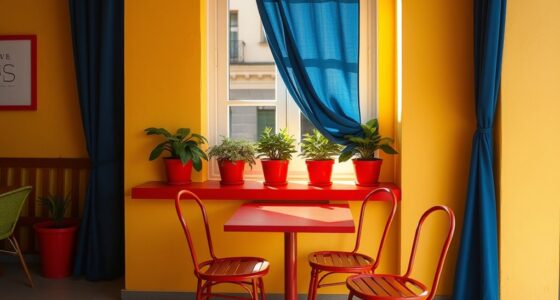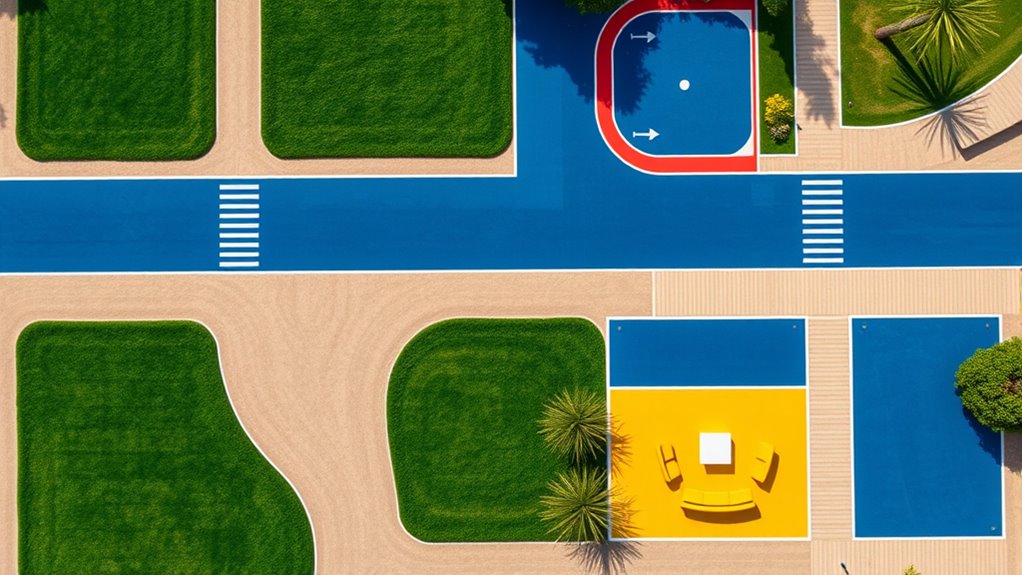

Color zoning helps you organize open spaces effectively by using specific colors to define different areas based on their purpose. Bright, contrasting hues can guide visitors, signal safety zones, and highlight pathways, making navigation easier. Warm tones energize social zones, while cool shades promote relaxation. Proper planning and maintenance make sure the zones stay clear and functional over time. If you want to discover more about creating vibrant, organized outdoor environments, there’s much more to explore ahead.

Turn quiet afternoons into listening time
- Thousands of audiobooks, podcasts and originals
- Listen on your phone, tablet or Echo — also offline
- Cancel anytime
Key Takeaways
- Use distinct color zones to define different functional areas like dining, play, and relaxation for easy navigation.
- Apply contrasting colors to pathways and boundaries, enhancing clarity and guiding visitors efficiently.
- Incorporate color psychology to evoke desired emotions and improve the usability of each outdoor zone.
- Maintain consistent color coding for safety signs, hazard areas, and emergency routes to ensure quick recognition.
- Regularly update and refresh color zones and markings to sustain visual clarity and adapt to seasonal or environmental changes.
As an affiliate, we earn on qualifying purchases.
Understanding the Principles of Color Zoning
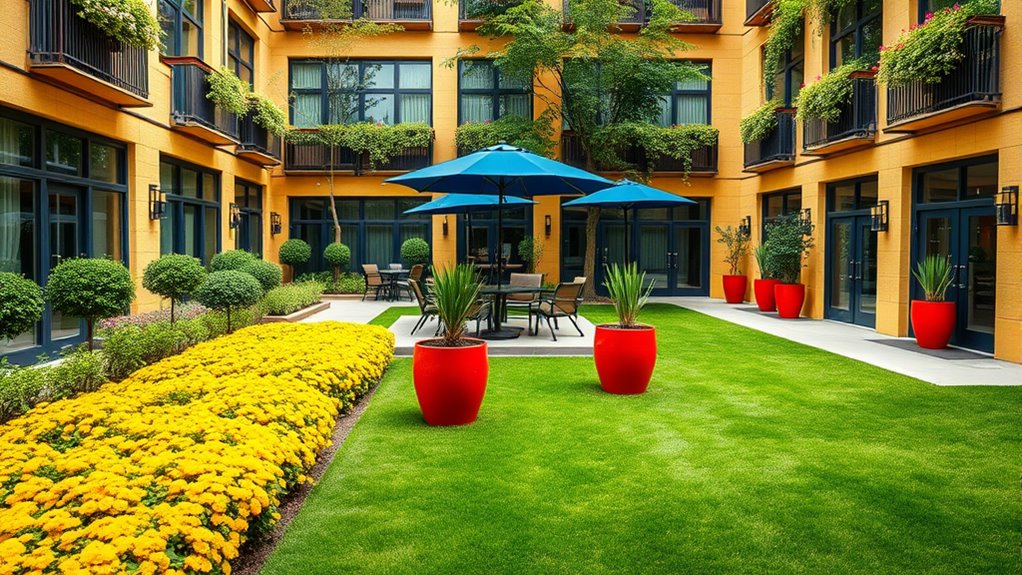
Understanding the principles of color zoning is essential for creating organized and visually appealing open spaces. When you apply color zoning effectively, you influence the psychological impact of each area, guiding emotions and behaviors subtly through color choices. For example, warm tones like reds and oranges can energize a space, while cool blues promote calmness. Additionally, cultural symbolism plays a crucial role; certain colors hold specific meanings in different cultures, affecting how your space is perceived. By understanding these principles, you can intentionally designate zones that evoke the desired reactions and respect cultural contexts. Incorporating color psychology into your design helps you craft open spaces that are both functional and emotionally resonant, ensuring that each zone communicates its purpose clearly and harmoniously.
Selecting the Right Color Palette for Outdoor Spaces
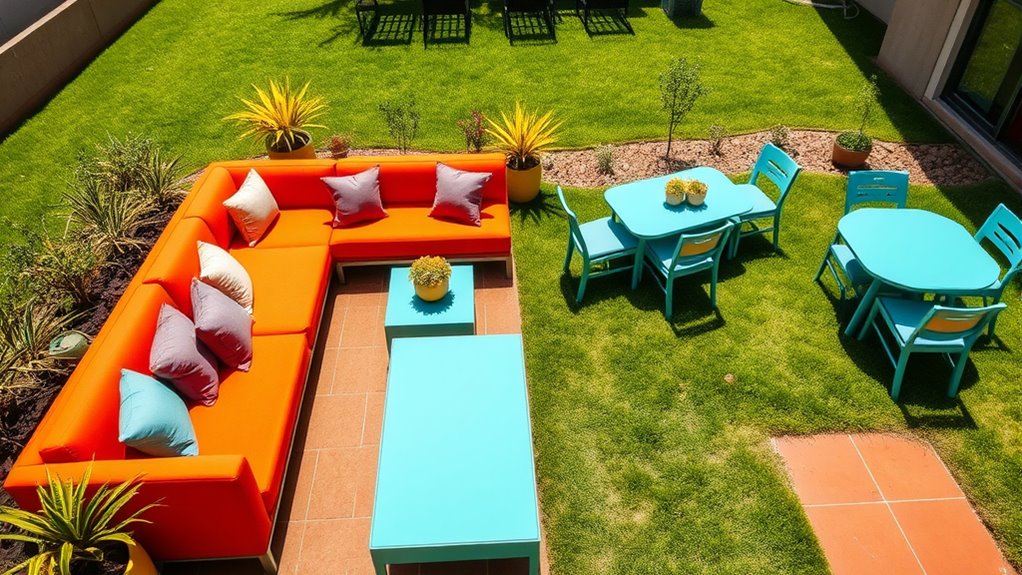
Choosing the right color palette for outdoor spaces requires thoughtful consideration of how colors interact with natural surroundings and influence mood. You should select hues that complement existing landscape lighting, enhancing ambiance during evening hours. Plant color coordination is essential; aim for a harmonious mix of foliage, flowers, and ground cover that creates visual balance. Neutral tones like soft grays and beiges provide a versatile backdrop, while bold colors can highlight focal points. Consider how the palette will work across different seasons, ensuring year-round appeal. Remember, the right combination can make your outdoor space feel inviting, cohesive, and lively. Incorporating rustic decor and textures inspired by farmhouse style can further enhance the overall aesthetic. Balance vibrant and muted tones to achieve a natural, appealing aesthetic that resonates with your landscape’s unique features.
Planning Your Zones for Functionality and Aesthetics
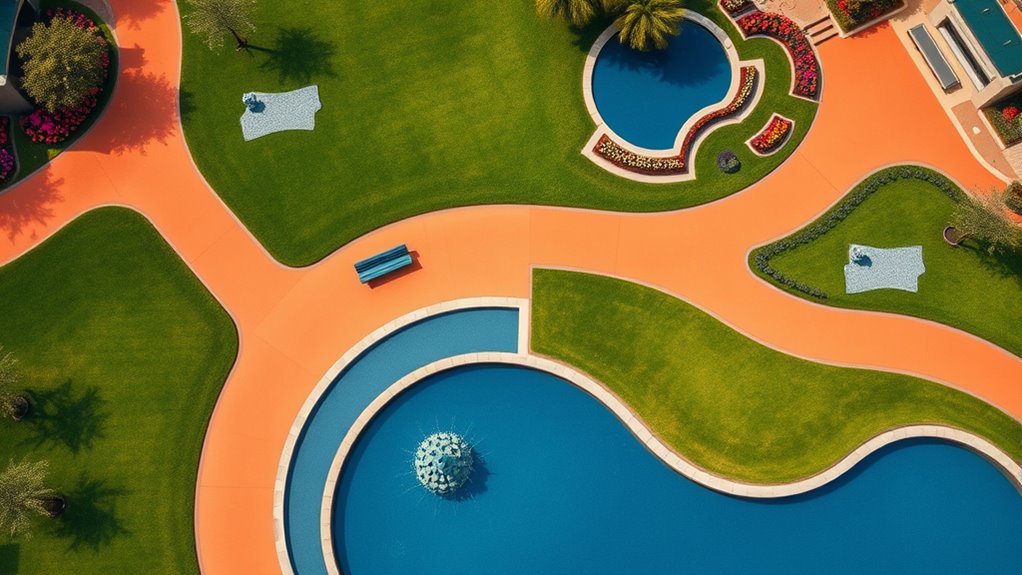
To create a functional and visually appealing outdoor space, start by clearly defining your zones based on how you’ll use each area. Consider landscape psychology to craft spaces that evoke specific emotions—calm, energy, or relaxation—by arranging zones thoughtfully. Incorporate cultural symbolism into your planning to reflect personal or community values, making each zone meaningful. Think about the purpose of each space: a dining area, a play zone, or a garden retreat. Use distinct shapes, boundaries, and color zones to differentiate these functions visually. This approach guarantees your outdoor space isn’t just attractive but also intuitive and practical. Proper planning lays the foundation for a balanced blend of aesthetics and functionality, making your outdoor area both enjoyable and purposeful. Empowering families with an understanding of space organization can help create environments that support both relaxation and active living.
Implementing Color Zoning With Materials and Surfaces

Choosing the right materials and surfaces sets the foundation for effective color zoning in your space. You can use various surface finishing techniques and color application methods to enhance visual separation and harmony. By selecting appropriate strategies, you’ll create dynamic zones that are both functional and visually appealing. Consider how different support hours can influence the timing of your project to ensure timely completion and access to necessary resources.
Material Selection Strategies
Selecting the right materials and surfaces is essential for effectively implementing color zoning in open spaces. You need to prioritize material durability to ensure the surfaces withstand weather, foot traffic, and time without frequent replacement. Durable materials like concrete, brick, or treated wood can maintain their color integrity longer. Additionally, consider the environmental impact of your choices; opt for eco-friendly, sustainably sourced materials that minimize your project’s carbon footprint. Using recycled or low-impact materials not only supports sustainability but also aligns with modern design values. Balance durability and environmental impact to select surfaces that are both resilient and responsible. This strategic approach helps create vibrant, long-lasting zones while reducing future maintenance and ecological costs. Understanding how relationships influence team cohesion can also inform your material choices, ensuring the zones foster a sense of community and well-being.
Surface Finishing Techniques
Surface finishing techniques play a crucial role in bringing color zoning to life by enhancing both aesthetics and durability. Faux finishes allow you to create visual interest and depth, transforming flat surfaces into dynamic focal points. Textured coatings add tactile dimension, helping differentiate zones while providing resistance against wear and tear. By applying these techniques, you can emphasize transitions between different color zones and establish a cohesive look throughout your open space. Faux finishes, such as sponging or rag rolling, provide subtle variations that enrich the environment. Textured coatings, like stucco or sand finishes, add a tactile element that invites touch and adds character. These surface treatments not only improve longevity but also help your color zones stand out, creating a vibrant, organized space that’s both functional and visually appealing. Additionally, understanding regional surface finishing techniques can help you select the most durable and suitable materials for your specific environment.
Color Application Methods
Implementing color zoning effectively depends on your choice of application methods and materials tailored to different surfaces. For paint application, you can use brushes, rollers, or spray tools, selecting the best option based on the area’s texture and size. Precision in paint application ensures clean boundaries and smooth progressions. To achieve seamless color blending, consider techniques like wet-on-wet blending or gradual shading, which help create harmonious zones. When working on textured or uneven surfaces, textured paints or specialty rollers can enhance coverage and blending. Using masking tape or stencils can also improve boundary sharpness. Your goal is to combine these methods to create distinct yet cohesive color zones that visually organize and define open spaces effectively. Incorporating proper surface preparation ensures the durability and clean appearance of your color zones over time.
Enhancing Navigation and Safety Through Color Coding
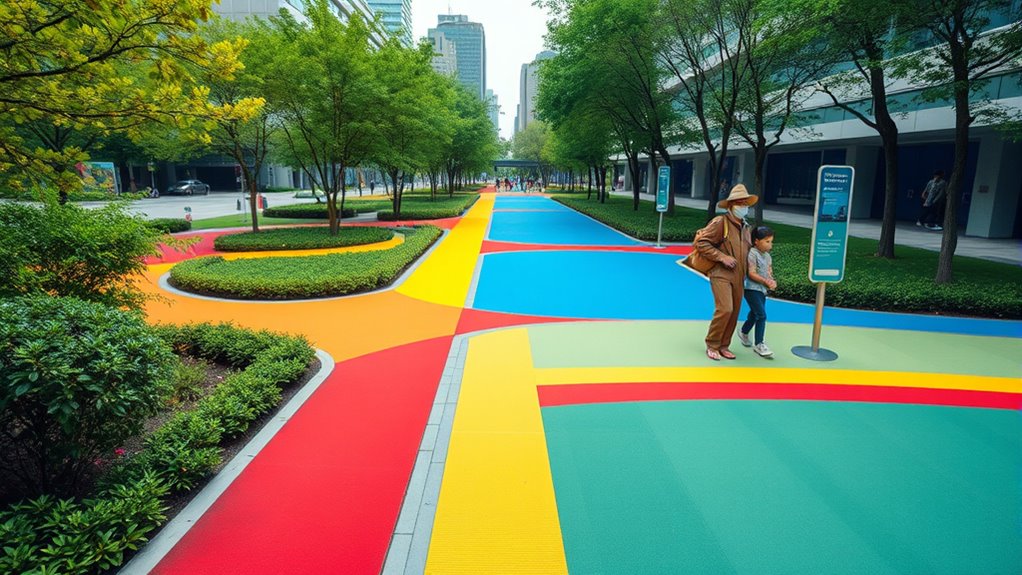
Using color coding helps you navigate open spaces more easily and stay safe. Clear path indicators guide you where to go, while hazard zone markings warn you of potential dangers. Emergency access routes ensure quick entry when every second counts. Incorporating visual cues like color-coded signs can further improve safety and efficiency in complex environments.
Clear Path Indicators
Clear path indicators utilize color coding to guide people efficiently through open spaces, making navigation intuitive and reducing confusion. They serve as visual cues that instantly communicate where to walk or move, especially in busy or complex environments. By using strong color contrast, these indicators stand out against surrounding surfaces, catching your eye quickly. For example, bright yellow or green lines can mark the safest routes, while contrasting colors help differentiate pathways from rest areas or zones. This clarity helps prevent accidents and ensures smooth flow, especially for visitors unfamiliar with the layout. When designed effectively, clear path indicators simplify navigation, enhance safety, and create a more organized space where everyone can find their way effortlessly. Proper visual communication is essential for effective wayfinding and safety management in open spaces.
Hazard Zone Markings
Building on the concept of guiding people with visual cues, hazard zone markings leverage color coding to highlight areas that pose risks or require extra caution. These markings clearly define safety perimeter delineation, alerting you to potential dangers. For example, red often indicates high-risk zones, while yellow signals caution. Properly applied hazard zone markings help prevent accidents by directing awareness and movement. To deepen understanding, consider this table:
| Color | Purpose | Example Area |
|---|---|---|
| Red | High risk, danger | Construction zones |
| Yellow | Caution, awareness | Machinery operation zones |
| Green | Safe zones, exits | Emergency exits |
Using these color codes consistently guarantees safety and clarity across open spaces, reducing hazards effectively. Additionally, integrating hazard zone markings with other safety protocols enhances overall environmental safety.
Emergency Access Routes
Emergency access routes are vital for ensuring quick and safe evacuation or response during emergencies. To make them effective, use strong color contrast that stands out from surrounding areas, guiding responders and evacuees effortlessly. Establish a clear visual hierarchy by applying consistent colors—such as bright red or orange for routes—so their importance is immediately recognizable. This contrast helps people quickly identify the pathways, even in stressful situations or low visibility. Properly color-coded access routes minimize confusion and delays, ensuring emergency services reach their destination without hesitation. Regularly maintain these markings to preserve their visibility. By emphasizing color contrast and visual hierarchy, you create a safer environment where everyone can navigate emergency routes confidently and efficiently.
Maintaining and Updating Your Color Zones Over Time
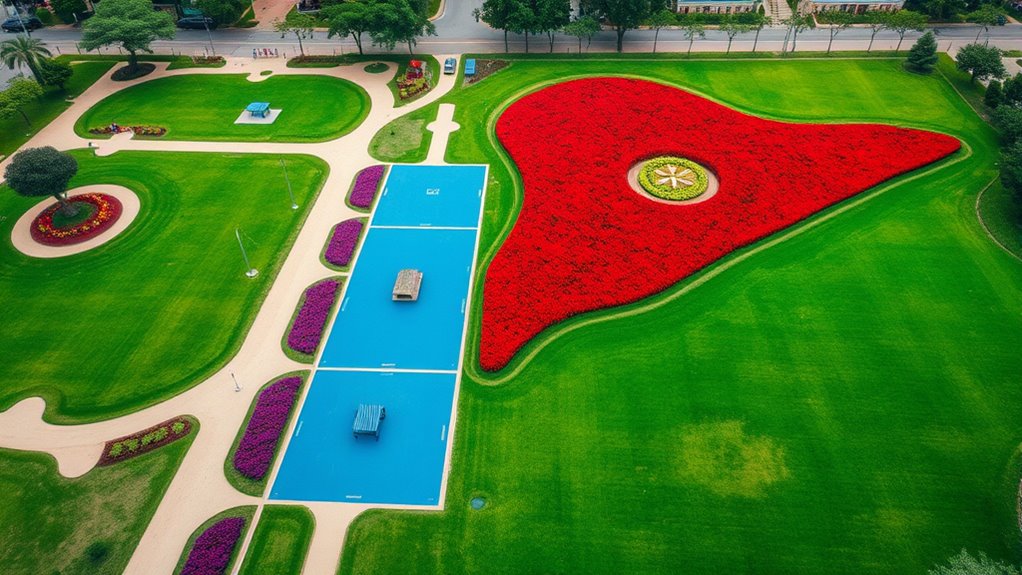
Over time, your color zones may need adjustments to stay effective and relevant. Regular maintenance schedules help you identify wear and tear, ensuring colors remain vibrant and visible. Use color touch-up techniques to address fading, chipping, or dirt buildup promptly. Keep a record of when touch-ups are performed to track the longevity of each zone and plan future updates. Repainting or reapplying colors may be necessary as your space evolves or as environmental conditions change. Stay attentive to any signs that a zone’s clarity is diminishing, and act quickly to refresh the areas. Consistent upkeep maintains the clarity and purpose of your color zones, preventing confusion and ensuring that open spaces stay organized and accessible over time.
Inspiring Examples of Color Zoning in Public Spaces

Public spaces around the world showcase how effective color zoning can transform environments and improve usability. One inspiring example is how vibrant murals and public art use color to define areas, encouraging community engagement and making spaces more inviting. In parks and plazas, bold color zones guide visitors intuitively, creating designated spots for relaxation, play, or gatherings. These examples demonstrate how thoughtful color choices foster a sense of ownership and pride among residents. By integrating public art into color zoning, cities turn ordinary spaces into memorable landmarks that reflect local culture. The success of these projects proves that strategic color zoning not only organizes open spaces but also strengthens community bonds, making public spaces more vibrant, accessible, and engaging for everyone.
Frequently Asked Questions
How Does Color Zoning Impact Environmental Sustainability?
Color zoning enhances environmental sustainability by guiding you to choose native plantings, which thrive naturally and require less water. This approach encourages water conservation, reducing your reliance on irrigation and decreasing runoff. By organizing open spaces with specific zones, you create a balanced ecosystem that supports local wildlife and minimizes environmental impact. Overall, color zoning helps you design sustainable landscapes that are both beautiful and eco-friendly.
Can Color Zoning Be Adapted for Small or Irregularly Shaped Spaces?
Isn’t it true that small or irregularly shaped spaces challenge traditional design? You can adapt color zoning by embracing creative space planning and design flexibility. Use bold color blocks or varied hues to define zones within confined areas, making them appear larger and more organized. This approach helps you maximize every inch, creating a vibrant, functional environment that feels intentional and harmonious, even in unconventional or limited spaces.
What Are Cost-Effective Options for Implementing Color Zoning?
You can achieve cost-effective color zoning by exploring budget-friendly alternatives like using removable paint or adhesive tapes for DIY color zoning. These options are easy to implement and don’t require professional help, saving you money. Additionally, repurposing existing materials or using inexpensive chalk or fabric can create visual zones without high costs. With a little creativity, you can effectively organize open spaces on a budget.
How Do Cultural Perceptions Influence Color Choices in Outdoor Zones?
Have you ever wondered how cultural perceptions shape your outdoor color choices? Cultural symbolism deeply influences your decisions, as certain colors evoke specific feelings or traditions. You’re likely to lean on traditional palettes that resonate with local beliefs or customs, making your open spaces more meaningful. By understanding these cultural nuances, you guarantee your color zoning respects and enhances the cultural identity, creating a more harmonious and authentic environment.
Are There Any Maintenance Challenges Unique to Color-Zoned Areas?
You might face some maintenance challenges in color-zoned areas, especially with plant maintenance and color fading. Regular upkeep is essential to keep the zones vibrant and distinct. You’ll need to monitor plant health closely, prune, and replace plants as needed. Additionally, weather exposure can cause color fading over time, so consider using fade-resistant plants or applying protective treatments to maintain the visual impact of your color zones.
Conclusion
By mastering color zoning, you turn outdoor spaces into vibrant, organized landscapes that invite exploration. Think of it as painting a canvas where each hue guides visitors effortlessly and creates harmony. With thoughtful planning and maintenance, your open areas will flourish like a garden in full bloom. Embrace the power of color to transform your environment—making it not just functional, but a vivid tapestry that delights and directs all who enter.
Cold & flu season Picks
humidifiers
As an affiliate, we earn on qualifying purchases.