To support aging eyes, make certain your space has ample overall lighting by maximizing natural light and using well-designed artificial options. Incorporate task lighting for detailed activities, choosing bulbs with adjustable brightness and daylight-like color temperatures. Reduce glare with matte finishes and strategic fixture placement. Layer your lighting with ambient, task, and accent sources for flexibility, and add night lights for safety. Regularly clean fixtures and adjust as needed—if you proceed, you’ll discover more tips to make your environment both safer and more comfortable.
Key Takeaways
- Maximize natural daylight and ensure even artificial lighting to improve contrast and reduce eye strain for aging eyes.
- Incorporate task lighting with adjustable fixtures for focused illumination during detailed activities.
- Select bulbs with appropriate brightness and color temperatures (daylight or warm) to enhance clarity and comfort.
- Reduce glare and reflections by using matte finishes and adjustable fixtures to create a softer, safer environment.
- Use layered lighting, including dimmable and motion-activated lights, for adaptable, safe, and age-friendly illumination.

Motumen Led Desk Lamp for Home Office, Eye-Care Architect Light with Clamp, Smart Double Head Computer Monitor Table Clip Lamp, Adjustable Flexible Goose-Neck, 25 Lighting Models, Task Lamp, Black
Super Bright & Eye-Caring: This LED desk lamp features a dual-head design for a wider lighting range, delivering…
As an affiliate, we earn on qualifying purchases.
As an affiliate, we earn on qualifying purchases.
Ensuring Adequate Overall Illumination
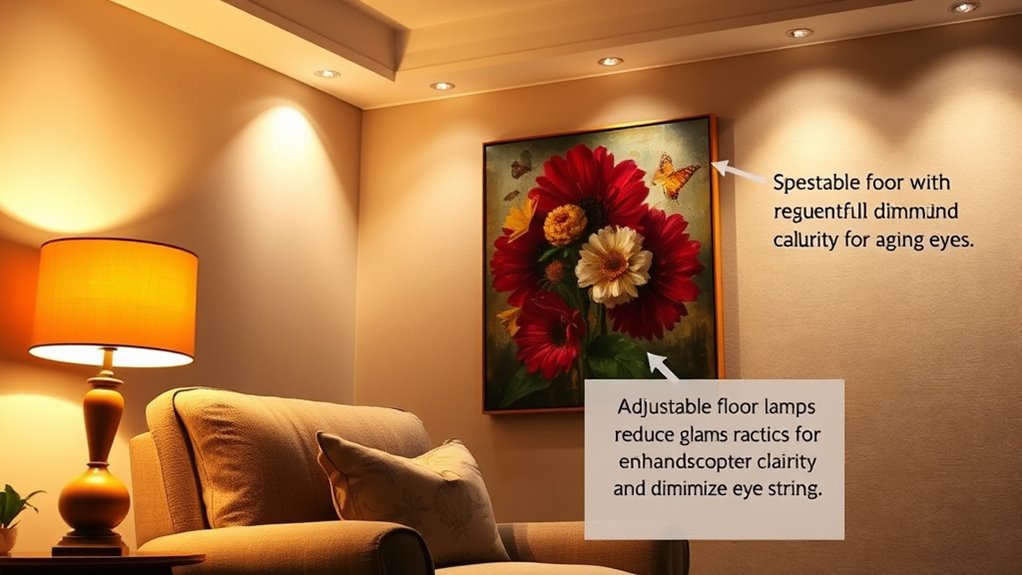
Adequate overall illumination is essential for maintaining safe and comfortable vision as you age. Natural daylight plays a crucial role in this, helping to enhance visibility and reduce eye strain. During the day, maximize sunlight by opening curtains or blinds, especially in rooms where you spend a lot of time. Be mindful of seasonal variations, as shorter days in winter can reduce natural light, making it harder to see clearly. To compensate, supplement with well-designed artificial lighting that evenly illuminates your space. Avoid harsh glare or uneven lighting that can cause discomfort. Consistent, bright lighting improves contrast and depth perception, making everyday tasks safer. Incorporating high-quality projectors with adjustable brightness settings can further optimize lighting conditions in your environment. By paying attention to natural daylight and seasonal changes, you can create a well-lit environment that supports your aging vision effectively.
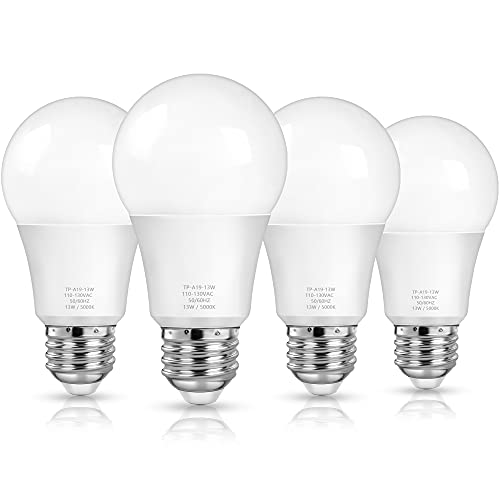
MAXvolador A19 LED Light Bulbs, 100 Watt Equivalent LED Bulbs, Daylight White 5000K, 1500LM, E26 Base, Non-Dimmable, 13W Bright LED Bulbs, 4-Pack
Energy-Efficient: Replaces 100-125W incandescent bulbs with 13W LED technology, largely reducing energy consumption while lowering heat output.
As an affiliate, we earn on qualifying purchases.
As an affiliate, we earn on qualifying purchases.
Incorporating Task Lighting for Specific Activities
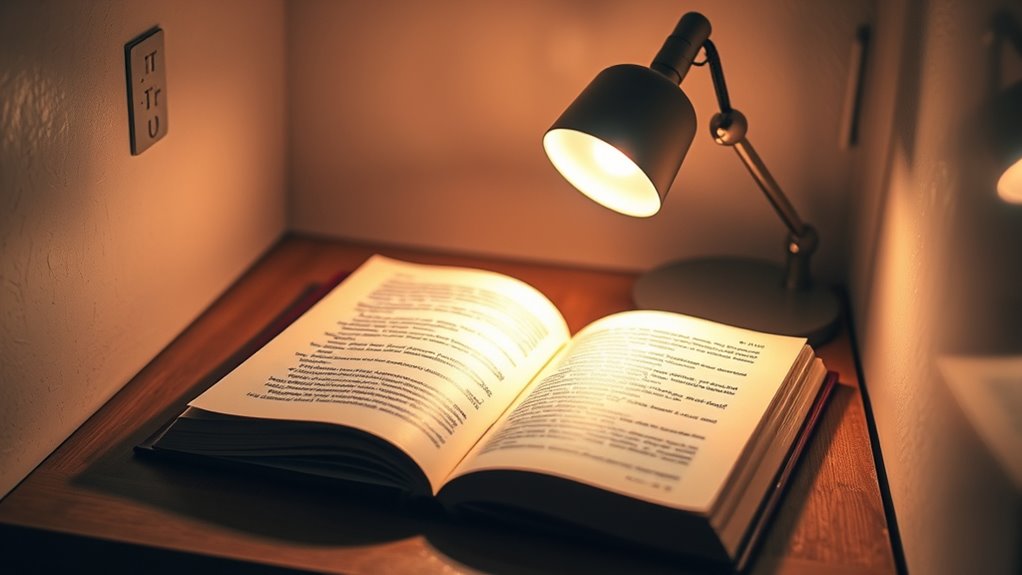
Since specific tasks often require different levels of detail and focus, incorporating task lighting can considerably improve your vision and safety. Task-specific illumination guarantees you have adequate light directly where you need it, reducing eye strain and enhancing accuracy. Use adjustable desk lamps or under-cabinet lighting for reading, writing, or cooking, making activity-focused lighting easy to control. Position lights to minimize shadows and glare, which can be problematic with aging eyes. By tailoring lighting to each activity, you create a safer environment and improve your ability to see fine details. Remember, well-placed task lighting complements overall illumination, helping you perform daily tasks more comfortably and confidently. Focus on specific needs to optimize both vision and safety in your home. Additionally, understanding industry trends can help you select the most effective lighting solutions suited for aging eyes.

AUVON Plug-in LED Backlit Night Light with Motion Sensor & Dusk to Dawn Sensor, Dimmable Warm White Nightlight with 1-50 lm Adjustable Brightness for Bedroom, Bathroom, Stairs, Hallway (4 Pack)
Diffuse Backlit Design: AUVON backlit night light features 16 LED bulbs with uniform luminescence and produces diffuse backlight…
As an affiliate, we earn on qualifying purchases.
As an affiliate, we earn on qualifying purchases.
Choosing the Right Bulb Brightness and Color Temperature
Choosing the right bulb brightness guarantees you see clearly without glare or eye strain. You’ll want to find a balance that provides enough light for your tasks while avoiding excessive brightness. Additionally, understanding how color temperature affects visibility can help you select bulbs that reduce eye fatigue and enhance contrast. Using the appropriate light intensity can also support overall eye health and comfort.
Optimal Brightness Levels
Have you ever wondered how the right light can make a difference for aging eyes? Ideal brightness levels are essential in lighting design to support your vision health. Too bright, and glare can cause discomfort; too dim, and details become hard to see. For everyday tasks, aim for a balanced brightness that illuminates spaces without overpowering your eyes. Use adjustable fixtures or dimmable bulbs to customize lighting based on activity. Proper illumination reduces eye strain and helps maintain clarity, especially when reading or working on detailed tasks. Remember, the goal is consistent, even lighting that minimizes shadows and glare. Selecting the appropriate color temperature can also influence visual comfort and clarity, further supporting your eye health. Choosing the right brightness levels boosts comfort and enhances your overall vision health, making daily activities safer and more enjoyable.
Color Temperature Effects
The color temperature of your bulbs considerably impacts how well you see and how comfortable your eyes feel. Understanding color temperature effects helps you select lighting that reduces eye strain and supports mood enhancement. Cooler temperatures (around 5000K-6500K) mimic daylight, improving focus and clarity, ideal for tasks like reading or detailed work. Warmer temperatures (2700K-3000K) create a cozy atmosphere, easing fatigue and fostering relaxation. Choosing the right balance enhances visual comfort and emotional well-being. Consider these points:
- Cooler bulbs boost alertness and reduce glare.
- Warmer bulbs promote relaxation and comfort.
- Adjusting color temperature influences mood and concentration.
- Combining different temperatures can optimize overall lighting quality.
- Incorporating ambient lighting options can further improve the overall environment and reduce eye fatigue.

DESIGNERS FOUNTAIN Reedley 2-Lights Flush Mount Ceiling Light, 13 Inch Lighting Fixture for Kitchen, Bedroom, Bathroom, and Hallway, Matte Black with Etched Glass, 1257M-MB-W
BRIGHTEN ANY INDOOR SPACE: This sleekly modern overhead light fixture features a durable steel construction with a sleek…
As an affiliate, we earn on qualifying purchases.
As an affiliate, we earn on qualifying purchases.
Minimizing Glare and Reflections
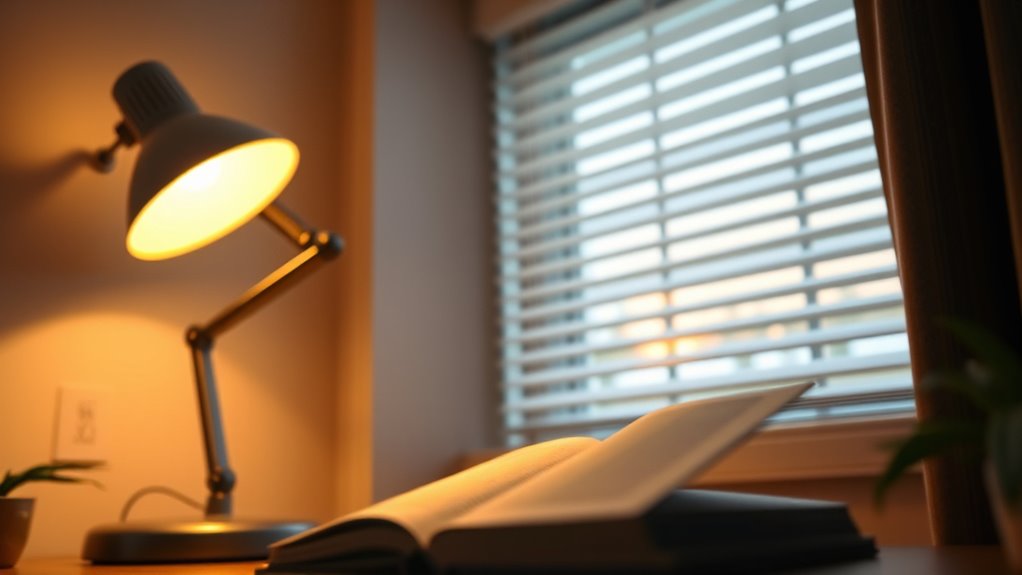
To reduce glare and reflections, start by choosing matte finishes on walls and furniture, which diffuse light and prevent harsh reflections. Installing adjustable fixtures allows you to direct light where needed and minimize unwanted glare. Opting for warm lighting creates a softer ambiance that’s easier on aging eyes and helps reduce discomfort. Using appropriate lighting can further enhance visual clarity and comfort.
Use Matte Finishes
Using matte finishes on walls, furniture, and fixtures can considerably reduce glare and reflections that often challenge aging eyes. Matte surfaces diffuse light more evenly, enhancing light diffusion and creating a softer environment. This minimizes harsh shadows and bright spots, making spaces more comfortable and easier to navigate. When selecting finishes, opt for matte textures to improve overall visual clarity. Incorporating lighting assessment can help identify areas where matte finishes will be most beneficial.
- Choose matte paints over gloss or semi-gloss for walls
- Use matte finishes on furniture surfaces
- Avoid shiny fixtures that reflect light
- Incorporate matte textures in decorative accents
These small adjustments help create a balanced lighting environment, reducing eye strain and enhancing visibility. Incorporating matte finishes is a simple yet effective way to optimize lighting for aging eyes, making daily living more comfortable.
Install Adjustable Fixtures
Installing adjustable fixtures allows you to control lighting levels and angles, which is essential for reducing glare and reflections that can strain aging eyes. Proper fixture placement ensures light is directed where needed without causing discomfort. Use fixtures with adjustable heads to fine-tune light direction, minimizing harsh shadows and unwanted reflections. Incorporate ambient diffusion to soften light and prevent harsh glare. Thoughtful placement helps avoid direct beams into your eyes, reducing visual fatigue. Here’s a guide to fixture placement:
| Area | Recommended Fixture Placement |
|---|---|
| Reading Areas | Adjustable fixtures directed downward |
| Workspaces | Angle fixtures away from reflective surfaces |
| General Rooms | Spread ambient diffusion evenly throughout space |
Adjustable fixtures give you flexibility, making your environment more comfortable for aging eyes. Considering the importance of proper lighting storage and maintenance can further enhance visual comfort and safety.
Opt for Warm Lighting
Choosing warm lighting can considerably reduce glare and reflections that often trouble aging eyes. Warm tones create a softer environment, enhancing color contrast and improving visual clarity. This minimizes eye strain and helps you focus better on daily tasks. To maximize benefits, consider these tips:
- Use fixtures with dimmable warm bulbs to control brightness
- Position lights to avoid direct reflections on shiny surfaces
- Opt for lampshades that diffuse light evenly
- Incorporate layered lighting to balance ambient and task illumination
- Remember, attention plays a vital role in maintaining visual comfort, so creating an environment that supports focused lighting can further improve your experience.
Using Layered Lighting for Flexibility and Comfort
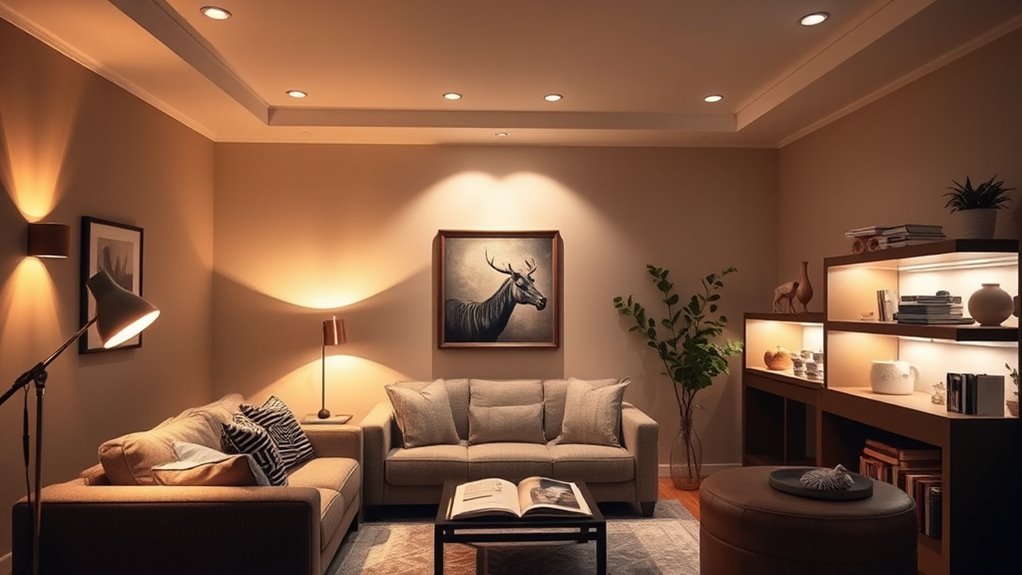
Layered lighting creates a versatile environment that can be easily adjusted to meet your changing needs. By combining different light sources—ambient, task, and accent lighting—you gain flexible illumination that enhances visibility and comfort. For example, overhead fixtures provide general brightness, while table lamps and under-cabinet lights target specific areas, reducing glare and shadows. This setup allows you to modify lighting levels throughout the day, ensuring ideal clarity for reading, cooking, or relaxing. Using layered lighting helps prevent eye strain and creates a more comfortable space as your vision changes with age. Incorporating proper lighting techniques can further optimize visual comfort and reduce fatigue. By thoughtfully integrating various lighting layers, you can customize your environment for both function and ambiance, making everyday activities safer and more enjoyable.
Installing Motion-Activated and Dusk-to-Dawn Lights
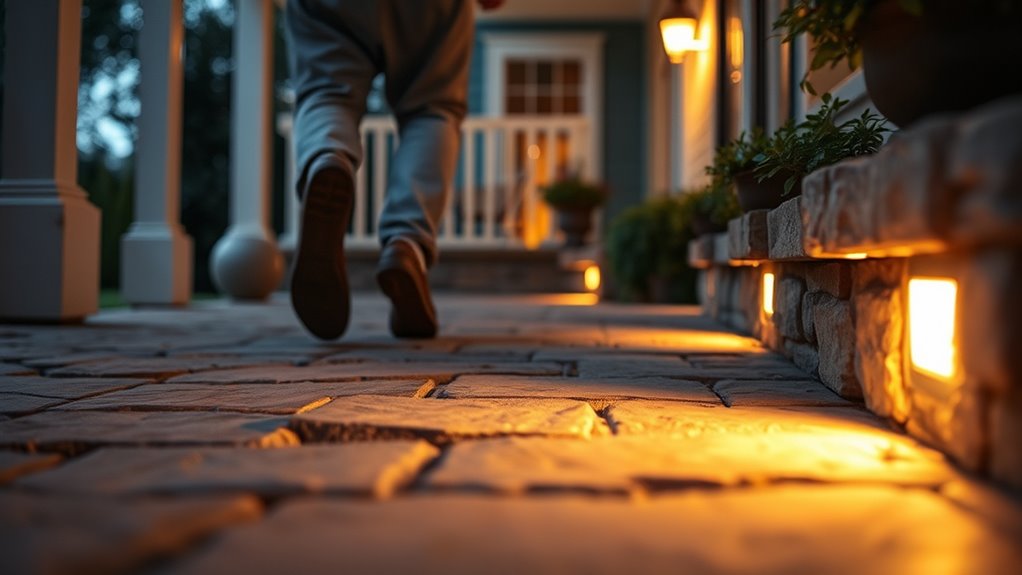
To enhance safety and convenience around your home, motion-activated and dusk-to-dawn lights are excellent options. These lights use motion sensors to detect movement, turning on automatically to illuminate dark areas. Dusk lighting adjusts based on ambient light levels, providing consistent nighttime visibility without manual switches. Installing these lights helps prevent accidents by lighting walkways, stairs, and entrances as needed. They also improve security by deterring intruders when unexpected movement triggers bright illumination. Consider these features when choosing your lighting:
- High-sensitivity motion sensors for quick response
- Adjustable dusk lighting settings
- Energy-efficient LED options
- Weather-resistant fixtures for durability
Improving Lighting in Key Living Areas
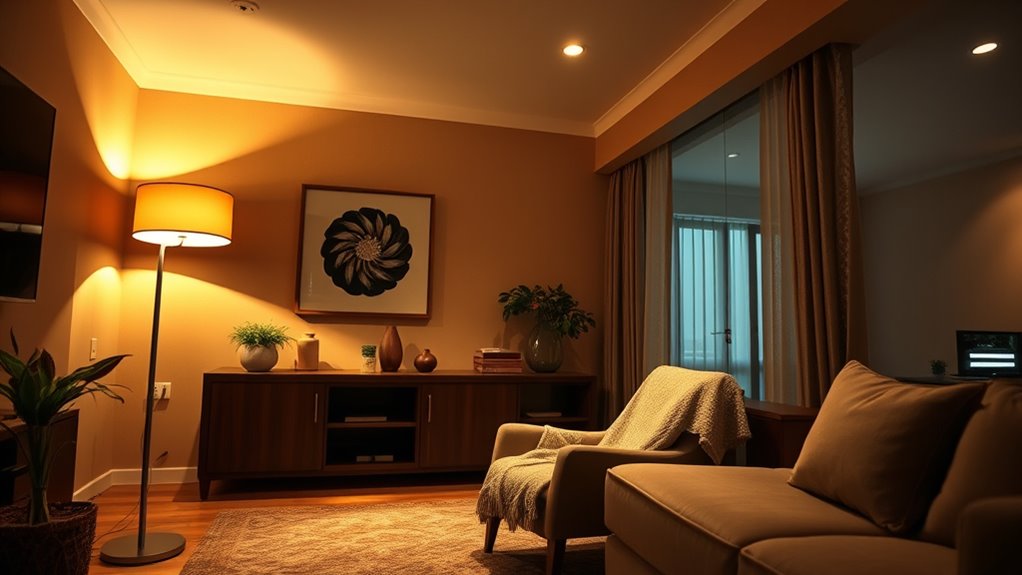
Improving lighting in key living areas is essential for both safety and comfort, especially as you age. Incorporate plenty of natural light by opening curtains or using sheer window coverings during the day. Natural light boosts visibility and helps regulate your sleep-wake cycle. Additionally, consider installing smart lighting solutions that can be easily adjusted for brightness and color temperature. These systems allow you to customize lighting levels based on the time of day or activity, reducing eye strain and enhancing visibility. Use layered lighting—combining ambient, task, and accent lights—to eliminate shadows and brighten dark corners. Properly lit living spaces make navigation safer, improve mood, and support your overall well-being. With these strategies, your home becomes more age-friendly and inviting.
Utilizing Night Lights for Safe Navigation
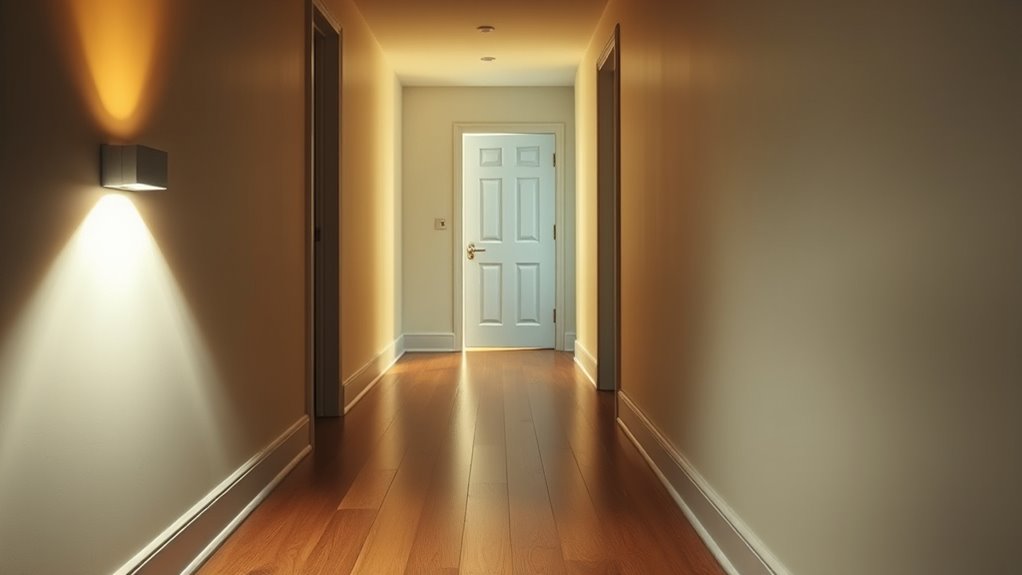
Even with well-designed lighting during the day, steering your home at night can still pose challenges. Night lights are essential tools for safe navigation, providing subtle illumination without disrupting sleep. Proper night light placement guarantees critical areas like hallways, staircases, and bathrooms are visible. Position lights near doorways and along pathways to prevent falls and accidents. Use plug-in or battery-operated options that automatically turn on when it’s dark. Keep the brightness low to avoid glare but high enough for visibility. Strategic placement minimizes shadows and highlights potential hazards. Remember, the goal is to create a safe, well-lit environment that supports your independence and reduces nighttime risks.
- Focus on high-traffic areas and stairs
- Install near beds and bathrooms
- Use warm, soft lighting to avoid glare
- Ensure easy access and control
Maintaining Clean and Well-Focused Light Fixtures
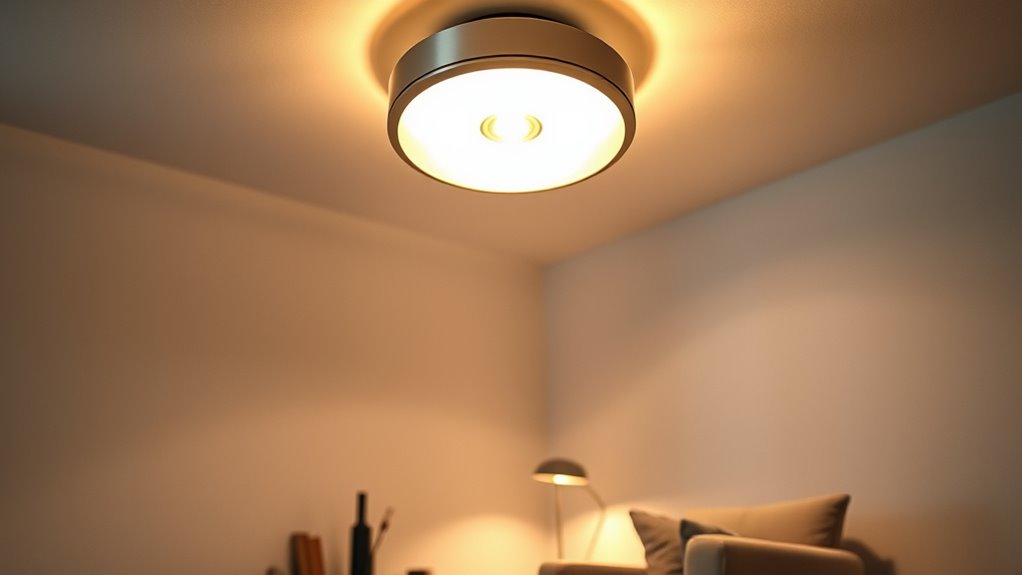
Keeping your light fixtures clean guarantees they shine brightly and reduce glare that can strain your eyes. Regularly wiping off dust and dirt helps maintain their effectiveness. Additionally, adjusting the focus of your lights ensures you get the right amount of illumination where you need it most.
Regular Fixture Cleaning
Regularly cleaning your light fixtures guarantees they deliver the brightest, most focused illumination. Dust, dirt, and grime can diminish light output and cause uneven distribution, especially on decorative fixtures and outdoor lighting. To maintain peak performance, inspect fixtures frequently and clean them with gentle, non-abrasive solutions. Keep in mind that well-maintained fixtures enhance both safety and aesthetics. Consider these aspects:
- Use microfiber cloths to prevent scratches on delicate surfaces
- Avoid harsh chemicals that may damage finishes
- Regularly check for corrosion or buildup on outdoor lighting
- Remove insects and debris from outdoor fixtures to ensure clear illumination
Proper Light Focus
Clean light fixtures not only improve brightness but also guarantee the light is properly focused where you need it most. Well-maintained fixtures prevent dim or uneven lighting that can hinder your vision. Proper light focus involves adjusting light placement to minimize shadows and glare, making tasks easier and safer. Ensuring your lights direct illumination toward work areas enhances color contrast, helping you distinguish objects and details better. Regularly check that fixtures are aligned correctly and free of dust or debris, which can scatter light and reduce focus. Use adjustable fixtures to direct light precisely, especially in areas where clarity is essential. Focused, clean lighting reduces eye strain and supports your aging vision, making everyday activities safer and more comfortable.
Regularly Assessing and Adjusting Lighting Needs

Because your eyesight changes over time, it’s important to periodically evaluate whether your lighting still meets your needs. Regularly examining your lighting setup ensures ideal brightness, reduces eye strain, and enhances visibility. Consider implementing adaptive lighting that adjusts automatically to different tasks or times of day. You can also customize light color to improve contrast and reduce glare, making activities easier. To keep your lighting effective, check for the following:
- Adjust brightness levels as vision evolves
- Incorporate adaptive lighting systems for convenience
- Use light color customization to enhance clarity
- Regularly reposition light sources to minimize shadows and glare
Frequently Asked Questions
How Can Lighting Reduce Eye Strain for Older Adults?
You can reduce eye strain by using lighting that minimizes glare and enhances color contrast. Choose fixtures with glare reduction features, like diffusers or shades, to prevent harsh reflections. Opt for lights with higher color contrast, which makes objects stand out more clearly. Adjust the brightness to avoid overly bright or dim settings, and position lights to evenly illuminate your space, helping your eyes focus more comfortably and reducing fatigue.
What Are the Best Practices for Outdoor Lighting Safety?
Are you ensuring your outdoor lighting is safe and effective? You should place lamps strategically along walkways and entrances, avoiding harsh shadows. Keep color temperature in mind—warm lights minimize glare and create a welcoming atmosphere. Regularly check and maintain your lighting fixtures to prevent outages. By thoughtfully positioning lamps and choosing appropriate color temperatures, you reduce tripping hazards and enhance safety for everyone, especially during nighttime outdoor activities.
How Does Lighting Affect Sleep Quality in Seniors?
Lighting markedly impacts your sleep quality as you age. Bright, blue-enriched light in the evening can suppress melatonin production, disrupting your circadian rhythms and making it harder to fall asleep. To improve sleep, you should dim the lights at night and limit exposure to screens before bedtime. Using warmer, softer lighting in the evening helps maintain your natural sleep cycle and promotes better rest.
Can Smart Lighting Systems Improve Aging Vision?
Smart controls and adjustable color temperature can considerably improve your aging vision. By customizing lighting, you make environments more comfortable and clearer, reducing eye strain and enhancing focus. With smart lighting systems, you effortlessly fine-tune brightness and hue to suit your needs, creating a cozy, convenient space. This tailored approach helps you see better, feel safer, and stay more independent, all while enjoying the benefits of modern, intelligent illumination.
What Maintenance Is Needed to Keep Lighting Effective Over Time?
To keep your lighting effective over time, you need to monitor bulb longevity and replace bulbs as needed. Regularly clean fixtures to remove dust and dirt, which can dim the light. Check for flickering or dimming, indicating it’s time for replacements. Ensuring fixtures are in good condition and bulbs are functioning properly helps maintain ideal lighting, supporting your aging vision and creating a safer, well-lit environment.
Conclusion
By implementing these lighting strategies, you can transform your space into a haven of clarity and comfort. Imagine walking through your home, each room perfectly illuminated, shadows minimized, and glare kept at bay. But don’t stop here—your environment can change even further, revealing hidden corners and subtle details you never noticed before. With just a few adjustments, you hold the power to brighten your world and see it in a whole new light—are you ready to take that step?