
To create a kitchen workflow for limited mobility, focus on optimizing space and accessibility. Measure your area carefully, ensure pathways are wide and clear, and position frequently used items within arm’s reach. Use ergonomic tools, adjustable surfaces, and adaptive equipment like pull-out shelves or voice-controlled appliances. Keep safety in mind by installing grab bars and using slip-resistant mats. If you keep these tips in mind, you’ll discover ways to make your kitchen safer and more efficient.

Turn quiet afternoons into listening time
- Thousands of audiobooks, podcasts and originals
- Listen on your phone, tablet or Echo — also offline
- Cancel anytime
Key Takeaways
- Design clear, wide pathways (at least 36 inches) to ensure safe wheelchair or walker navigation during kitchen tasks.
- Organize items with accessible storage solutions like pull-out shelves and adjustable racks for easy reach.
- Adjust countertop heights to 30-34 inches and incorporate ergonomic work surfaces for comfortable access and reduced strain.
- Incorporate adaptive tools with textured handles and secure placements to facilitate safe, independent food preparation.
- Implement safety features such as cushioned mats, grab bars, and proper lighting to enhance safety and workflow efficiency.
adjustable kitchen countertop height
As an affiliate, we earn on qualifying purchases.
As an affiliate, we earn on qualifying purchases.
Assessing Space and Accessibility Needs
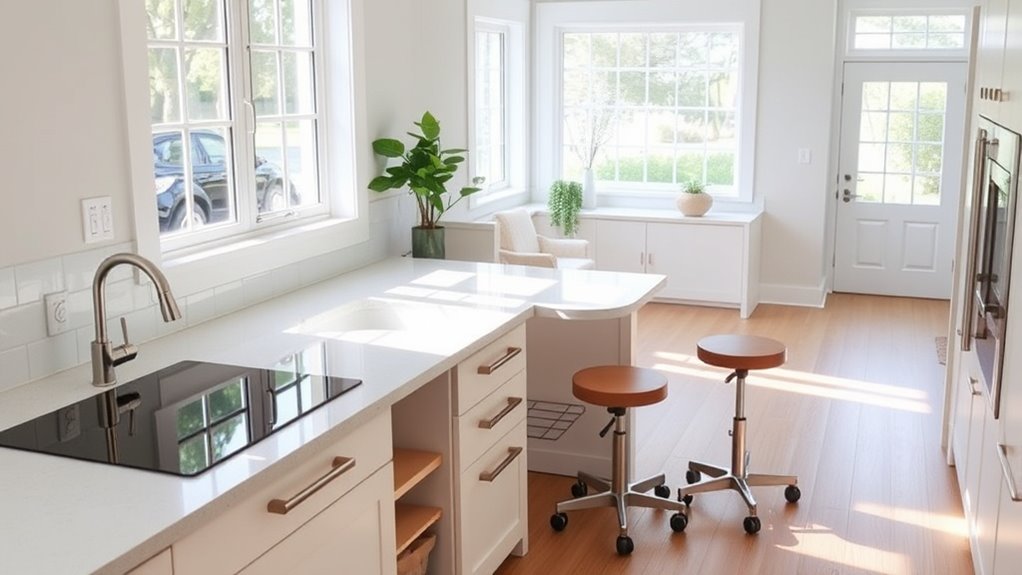
Before redesigning your kitchen for limited mobility, it’s vital to evaluate your available space and accessibility needs. Measure the workspace carefully, considering how much room you need for maneuvering comfortably in your wheelchair or walker. Focus on adjusting the countertop height to guarantee it’s within a comfortable reach, typically between 30 to 34 inches. This makes food prep easier and reduces strain. Also, assess cabinet accessibility—opt for lower cabinets or ones with pull-out shelves and easy-to-grip handles. Clear pathways are essential; ensure doorways and aisles are wide enough for easy navigation. By understanding your space limitations and specific accessibility needs, you can create a kitchen that’s safer, more functional, and tailored to your daily routines. Incorporating space optimization strategies can further enhance usability and safety in your kitchen design.
Organizing the Kitchen for Efficiency
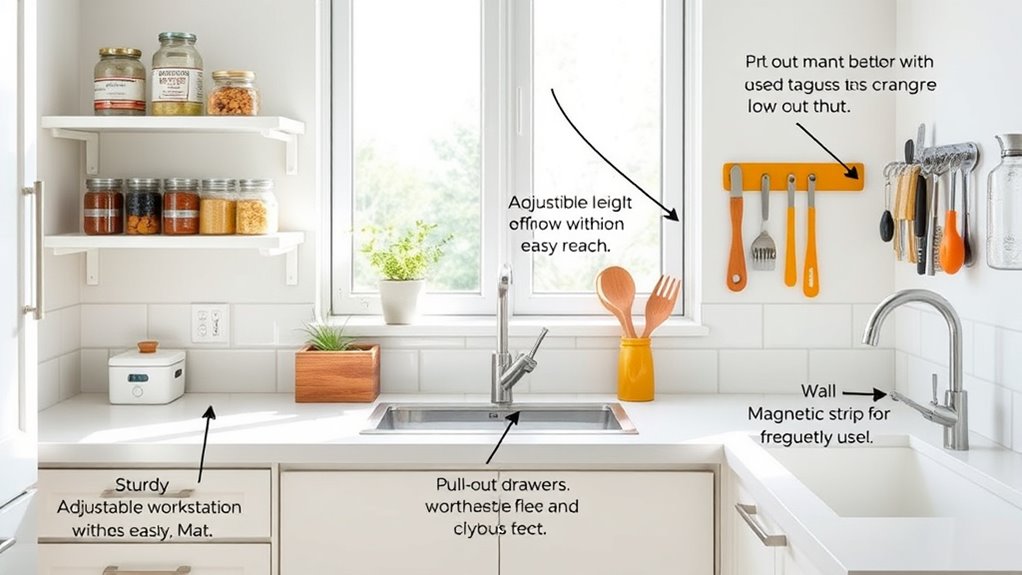
To maximize safety and ease of use in your kitchen, organizing your tools and supplies for efficiency is essential. Well-placed items reduce clutter, streamline meal planning, and simplify cleaning routines. Keep frequently used items within arm’s reach, and group similar tools together. Use clear containers for ingredients to easily identify supplies. Designate specific spots for utensils, pots, and cleaning supplies to minimize movement. Consider installing pull-out shelves or lazy Susans to access items effortlessly. Here’s a helpful layout:
| Zone | Items | Tips |
|---|---|---|
| Prep Area | Cutting boards, knives | Keep sharp tools accessible but safe |
| Cooking Zone | Pots, pans | Store near stove, organized for quick access |
| Storage | Dry goods, canned foods | Use labeled containers for easy meal planning |
| Cleaning | Sponges, detergents | Store in accessible, designated space |
| Recycling | Bins | Keep separate for efficient waste management |
Choosing Adaptive Equipment and Tools
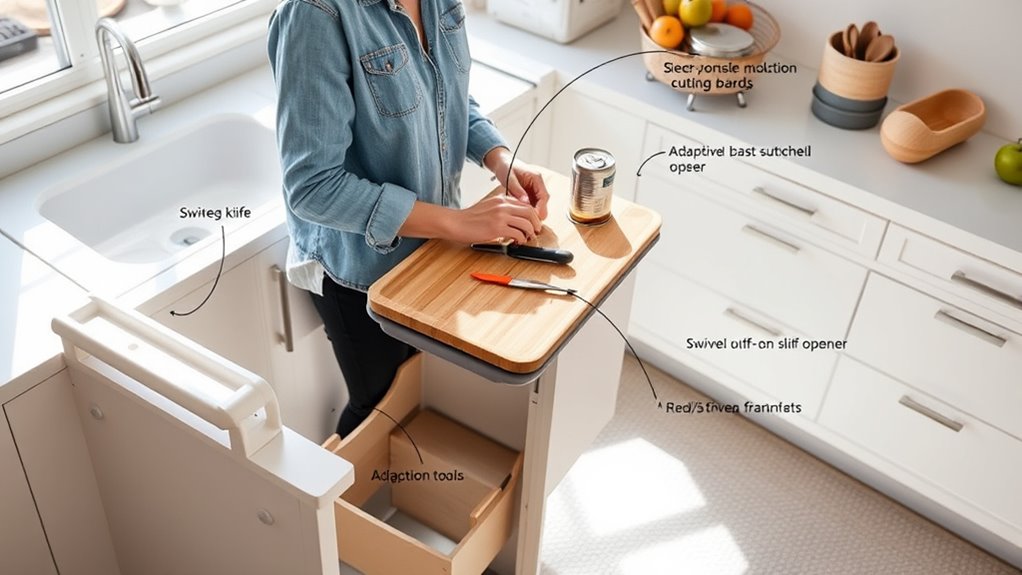
When choosing adaptive equipment and tools, focus on ergonomic options that decrease strain and enhance comfort. Adjustable fixtures can make reaching and working in the kitchen easier, while non-slip equipment guarantees safety during use. Selecting the right combination of these tools helps create a more accessible and efficient cooking space. Incorporating user-friendly interfaces can further support ease of use and improve overall kitchen functionality.
Ergonomic Tool Selection
Selecting the right adaptive tools is essential for creating an ergonomic kitchen that accommodates limited mobility. Handheld gadgets, like easy-grip peelers or ergonomic can openers, reduce strain and make tasks simpler. Countertop aids, such as raised cutting boards or non-slip mats, provide stability and ease of use. When choosing these tools, prioritize lightweight, non-slip handles, and designs that require minimal force. Look for products with ergonomic shapes that fit comfortably in your hand, minimizing fatigue. Select tools that enhance your reach and control, reducing awkward movements. Proper tool selection not only improves safety but also increases efficiency. By focusing on ergonomic features, you’ll create a more accessible, comfortable kitchen environment tailored to your needs. For example, considering Kia Tuning options can inspire ergonomic modifications that improve vehicle handling and control, similar to how ergonomic tools enhance kitchen usability.
Adjustable Kitchen Fixtures
Adjustable kitchen fixtures empower you to customize your workspace for better accessibility and ease of use. They help guarantee cooking safety and streamline ingredient prep by reducing strain and improving reach. For example, adjustable countertops, pull-down shelves, and adaptable lighting let you work comfortably without unnecessary bending or stretching. This flexibility allows you to maintain control and stability during meal prep, minimizing accidents. Using the right fixtures can also help organize tools and ingredients more efficiently, saving time and effort. Consider fixtures that suit your specific needs, such as height-adjustable tables or swivel-mounted shelves. These modifications create a safer, more functional kitchen environment tailored to your mobility needs.
| Fixture Type | Benefit |
|---|---|
| Adjustable countertops | Easier ingredient prep, safer cooking |
| Pull-down shelves | Improved reach, better organization |
| Swivel-mounted fixtures | Enhanced flexibility and access |
Non-slip Equipment Options
Choosing non-slip equipment is essential for creating a safe and functional kitchen for limited mobility. Cushioned mats placed under your workspace or near the sink help prevent slips and provide comfort when standing for extended periods. Look for mats with textured surfaces that grip well and stay in place. Grip-enhanced utensils are also vital; they help you maintain better control while cutting, stirring, or eating. These utensils often feature non-slip handles or textured grips that reduce slipping and fatigue. Incorporating these options into your kitchen minimizes the risk of accidents and makes meal preparation easier. Always guarantee that equipment stays secure and stable during use. Optimal angles can also influence the effectiveness of your setup and improve overall safety. With the right non-slip tools, you’ll enjoy a safer, more efficient cooking experience tailored to your needs.
Designing Work Zones for Ease of Movement

You should create clear pathways in your kitchen to prevent accidents and make movement easier. Incorporate accessible storage solutions so you can reach what you need without hassle. These adjustments help guarantee your workspace is both safe and functional. Paying attention to layout and furniture placement can further improve ease of movement for limited mobility individuals.
Clear Pathways for Safety
Creating clear pathways in the kitchen is essential for safety and ease of movement, especially for those with limited mobility. To achieve this, plan your space carefully, ensuring walkways are wide enough—at least 36 inches—to prevent congestion. When considering custom cabinet design, choose units that maximize open space and avoid clutter. Your color scheme selection can also influence visibility; opt for high-contrast colors to delineate different zones and make navigation easier. Keep pathways free of obstructions like mats or stored items, and position frequently used appliances within reach without straining. Adequate lighting along these routes is vital, so install bright, even illumination. Incorporating ergonomic design principles into your layout can further enhance safety and comfort. These steps help create a safe, functional environment that supports independence in your kitchen.
Accessible Storage Solutions
To guarantee smooth movement in your kitchen, designing accessible storage solutions that keep frequently used items within easy reach is essential. Use pull-out shelves and adjustable racks to minimize bending and stretching. Incorporate smart appliances with voice control or remote access, so you can operate them without hassle. Color coding storage zones helps you quickly identify where items belong, reducing clutter and confusion. Place everyday essentials—like utensils, pots, and spices—at waist level or in drawers close to your work zones. Keep less-used items higher or lower, out of the way. Clear labels and organized compartments streamline your workflow, making cooking safer and more efficient. Additionally, using ergonomic storage solutions can further enhance accessibility and comfort in your kitchen. By thoughtfully designing your storage, you create a more accessible kitchen tailored to your mobility needs.
Implementing Safe and Ergonomic Practices

Implementing safe and ergonomic practices is essential for ensuring a comfortable and injury-free kitchen experience for individuals with limited mobility. Focus on improving cooking safety by keeping pathways clear and using non-slip mats. Next, enhance kitchen aesthetics by choosing accessible tools that complement your space without cluttering. Finally, adopt these steps:
Ensuring safety and comfort with ergonomic solutions creates an accessible, injury-free kitchen environment.
- Use adjustable countertops and seating to reduce strain.
- Arrange frequently used items within easy reach to minimize overextension.
- Maintain good posture by positioning work surfaces at comfortable heights.
- Consider using self-watering plant pots to keep indoor greenery healthy with minimal effort, adding both functionality and aesthetics to your space.
Incorporating Technology to Simplify Tasks
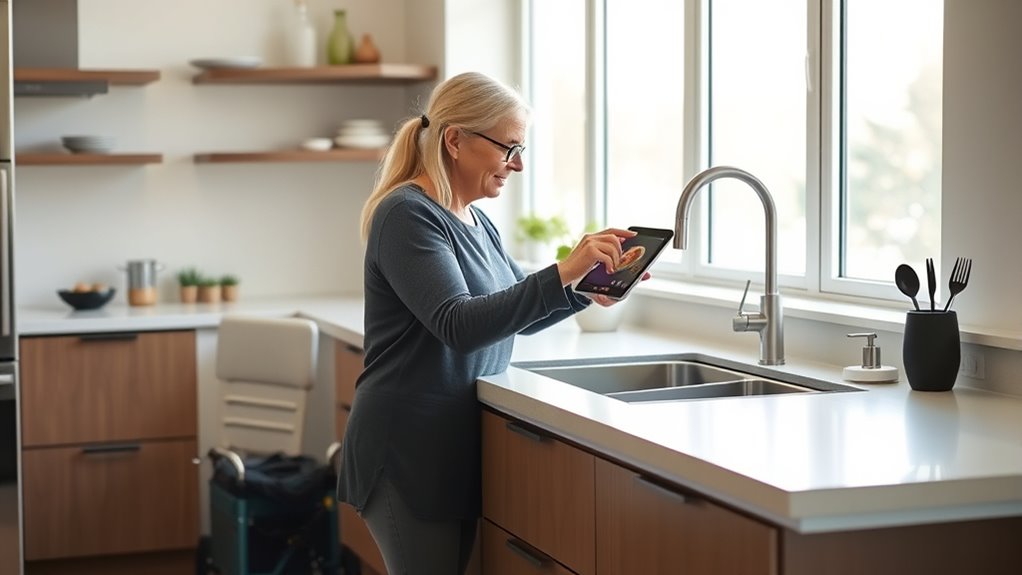
Incorporating technology into your kitchen can considerably simplify tasks and enhance safety for those with limited mobility. Voice control allows you to operate appliances hands-free, reducing strain and risk. Smart appliances, like refrigerators, ovens, and lighting, can be programmed for ease of use and remote control. These tools help you manage your kitchen efficiently and safely. Additionally, celebrity lifestyle insights demonstrate how innovative home design can improve daily routines and comfort.
Tips for Maintaining and Adjusting Your Workflow
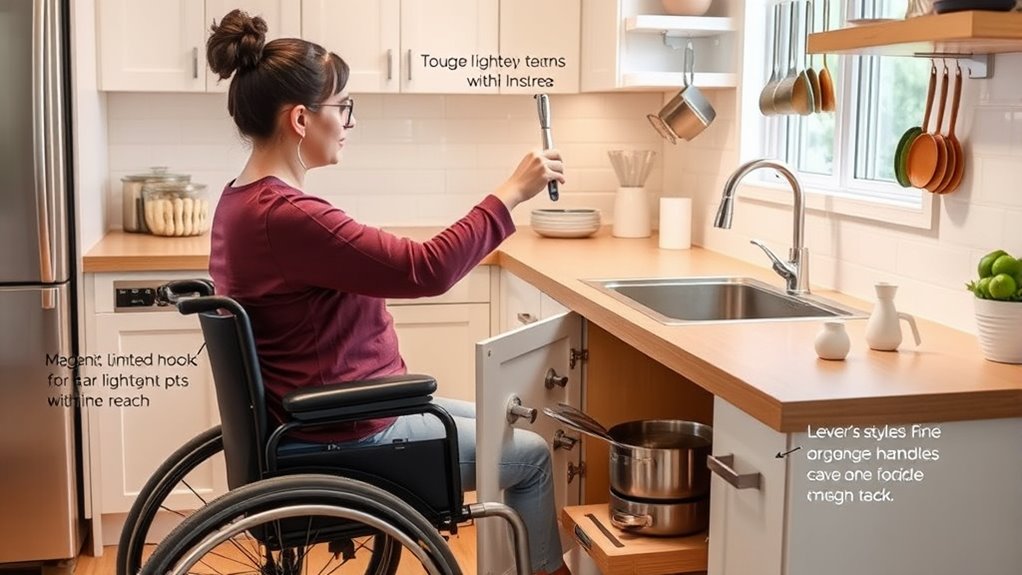
Regularly reviewing and adjusting your kitchen workflow guarantees it continues to meet your changing needs. To keep your setup effective, focus on these steps:
- Assess your current routines for adaptive cooking, ensuring they remain comfortable and efficient.
- Identify potential hazards to improve kitchen safety, like repositioning utensils or installing grab bars.
- Experiment with new tools or layouts that streamline tasks and prevent strain.
- Consider incorporating ergonomic kitchen tools designed to reduce physical effort and enhance safety during food preparation.
Frequently Asked Questions
How Can I Customize My Kitchen Layout for Specific Mobility Challenges?
You can customize your kitchen layout by incorporating ergonomic cabinet adjustments, like lowering shelves or adding pull-out drawers, to mitigate strain. Use accessible storage solutions such as open shelves and easy-to-reach cabinets to minimize bending or reaching. Position frequently used items at waist level, and ensure pathways are clear for easy navigation. These modifications make cooking safer and more manageable, tailored perfectly to your mobility needs.
What Funding Options Are Available for Adaptive Kitchen Equipment?
You can explore financial assistance and government grants to fund adaptive kitchen equipment. Many programs, such as those from local or federal agencies, provide grants or subsidies to help cover costs. Check with organizations like the Department of Veterans Affairs or local community services, as they often offer support. Applying for these options can make it easier to afford necessary modifications, ensuring your kitchen meets your mobility needs without financial strain.
How Do I Train Family Members to Assist With Kitchen Tasks Safely?
Like a trusty sidekick in a classic film, you can train family members to assist safely by demonstrating clear safety protocols and practical tasks. Show them how to handle adaptive equipment, emphasizing caution around hot surfaces and sharp objects. Use hands-on practice and simple instructions to reinforce learning. Keep communication open, encourage questions, and always supervise initially to make sure they understand and follow safety guidelines confidently.
Are There Specific Brands Recommended for Ergonomic Kitchen Tools?
You should look for brands that specialize in ergonomic kitchen tools, such as OXO, Joseph Joseph, and KitchenAid. These brands offer utensils with ergonomic handles that provide a comfortable grip, reducing strain. Opt for lightweight utensils that make cooking easier and safer for limited mobility. By choosing these brands, you’ll find tools designed to enhance safety and efficiency, making kitchen tasks more manageable and enjoyable.
How Often Should I Reassess My Kitchen Setup as My Mobility Needs Change?
You should reevaluate your kitchen setup whenever your mobility needs change, such as after an injury or health improvement. Regularly reviewing your kitchen safety and how you prepare meals helps ensure comfort and safety. Keep an eye on whether tools are accessible and your workspace remains functional. By doing this, you maintain an efficient environment that adapts to your evolving needs, making meal preparation easier and safer over time.
Conclusion
By tailoring your kitchen to your needs, you turn a space of challenge into one of empowerment. With thoughtful planning and adaptive tools, you’ll find yourself maneuvering tasks with confidence and grace. Remember, a well-designed workflow isn’t just about convenience; it’s about reclaiming independence—transforming obstacles into opportunities. So, embrace these strategies and let your kitchen become a sanctuary where accessibility and efficiency dance in perfect harmony.
Halloween Picks
halloween
As an affiliate, we earn on qualifying purchases.