
To save your back when packing a carry-on, focus on proper weight distribution. Spread heavier items like shoes and jackets evenly, and place them at the bottom or sides. Use packing cubes or compression bags to keep things organized and reduce bulk. When packing, position heavier items near the wheels and close to your back for stability. Adjust straps and handles for comfort, and stay mindful of good posture as you lift and carry. Keep going for more helpful tips!

Turn quiet afternoons into listening time
- Thousands of audiobooks, podcasts and originals
- Listen on your phone, tablet or Echo — also offline
- Cancel anytime
Key Takeaways
- Properly distribute weight by placing heavier items near the wheels and at the bottom of the bag.
- Use packing cubes and compression bags to organize and reduce bulk, making weight easier to carry.
- Adjust straps and handles to ensure a snug fit and balanced load, preventing strain during transport.
- Keep lighter items on top and centered to maintain stability and reduce back fatigue.
- Maintain good posture by lifting with your legs and using lumbar support, minimizing back stress during travel.
carry-on luggage with packing cubes
As an affiliate, we earn on qualifying purchases.
As an affiliate, we earn on qualifying purchases.
Understanding Proper Weight Distribution
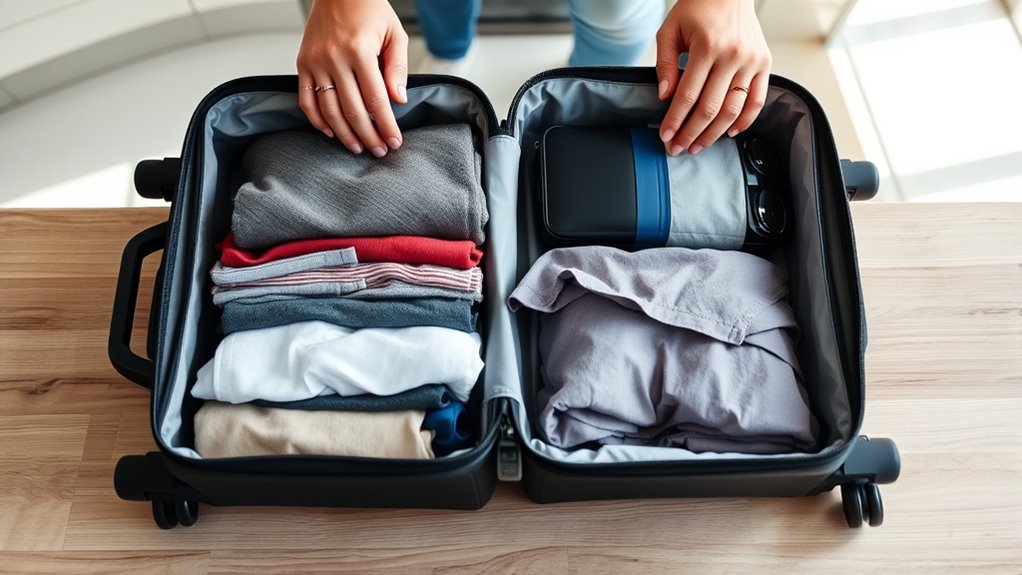
To guarantee your carry-on stays balanced and easy to handle, understanding proper weight distribution is essential. Start with clothing organization—spread out heavier items like jeans and jackets evenly across the bag to prevent it from tipping. Use shoe packing strategies by placing shoes at the bottom or sides, filling them with smaller accessories or socks to maximize space and stabilize weight. Keep lighter items, such as underwear and t-shirts, toward the top and in the center for better balance. Distributing weight evenly reduces strain when lifting or carrying your bag, making travel more comfortable. Remember, a well-organized carry-on not only eases handling but also minimizes the risk of damage or mess during transit. Proper weight distribution is your key to hassle-free travel, and incorporating space-saving fixtures and materials can further enhance organization and ease of packing.
The Role of Packing Cubes and Compression Bags
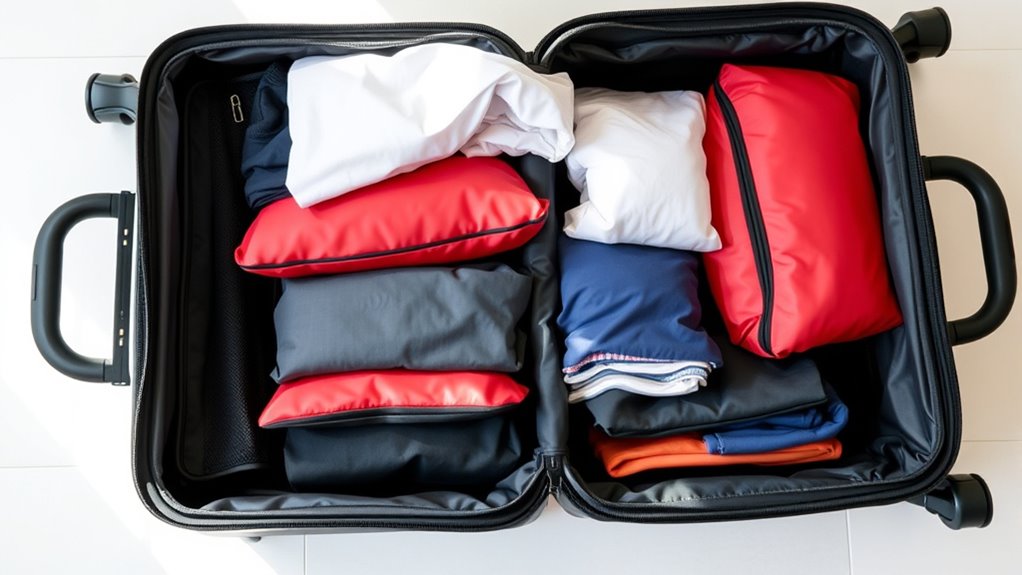
Packing cubes and compression bags are essential tools that help you maximize space and maintain organization within your carry-on. These travel accessories streamline your packing process and keep your belongings neat. By using packing cubes, you can categorize clothing and accessories, making unpacking quick and effortless. Compression bags reduce bulky items, freeing up space for more essentials. They also protect your clothing from wrinkles and moisture. Plus, they simplify luggage organization, so you always know where everything is. Utilizing these tools can also help prevent overpacking, which contributes to easier handling and less strain on your back and shoulders during travel. Consider these benefits:
Maximize space and stay organized with packing cubes and compression bags.
- Save space and fit more in your carry-on
- Keep items organized and easy to find
- Protect clothes from wrinkles and dirt
- Simplify packing and unpacking processes
Incorporating these tools into your packing routine ensures your carry-on stays manageable, reducing strain on your back and shoulders during travel.
How to Pack Heavy Items Strategically

When organizing your carry-on, placing heavier items thoughtfully can make a big difference in comfort and space management. Keep these items close to the wheels or bottom of your bag to distribute weight evenly and prevent strain. Use travel accessories like smaller pouches or compartments to keep heavy objects secure and organized, which also enhances luggage security. Be mindful of how heavy items are packed so they don’t crush lighter belongings or cause the bag to become unbalanced. If possible, pack heavier items against the back of the suitcase to stabilize it and make handling easier. Properly positioning weight not only improves comfort but also reduces the risk of damage to fragile items. Incorporating weight distribution techniques can further optimize your packing strategy. Strategic packing ensures your carry-on stays manageable and secure throughout your trip.
The Importance of Adjusting Straps and Handles
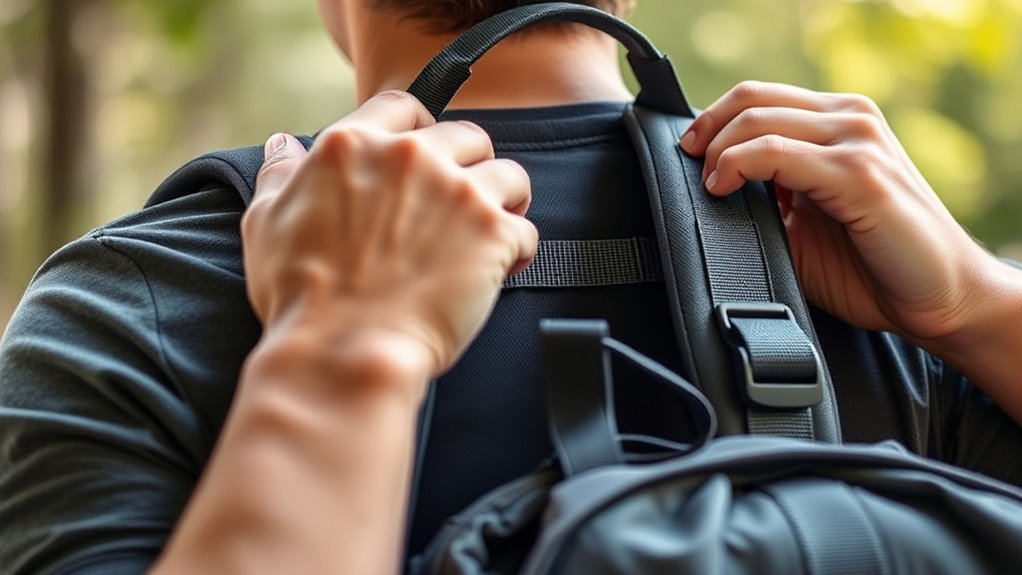
Adjusting your straps and handles properly is essential for comfortable and secure travel. Proper strap adjustment ensures weight is evenly distributed, reducing back strain, while correct handle positioning prevents awkward pulls and injuries. To optimize comfort:
- Adjust straps so they sit snug but not tight on your shoulders
- Ensure handle positioning allows for a natural grip without twisting your wrist
- Check that straps are evenly tightened to balance weight
- Keep handles at a height that minimizes bending or reaching
- Regularly reassess your fit and positioning to adapt to different loads and maintain comfort
Consistently tweaking your strap adjustment and handle positioning helps maintain good posture and prevents discomfort during transit. Don’t neglect these details—small adjustments make a big difference in preventing back pain and fatigue, especially on longer journeys. Properly fitted straps and handles keep your carry-on secure and comfortable, making travel smoother.
Tips for Maintaining Good Posture During Travel
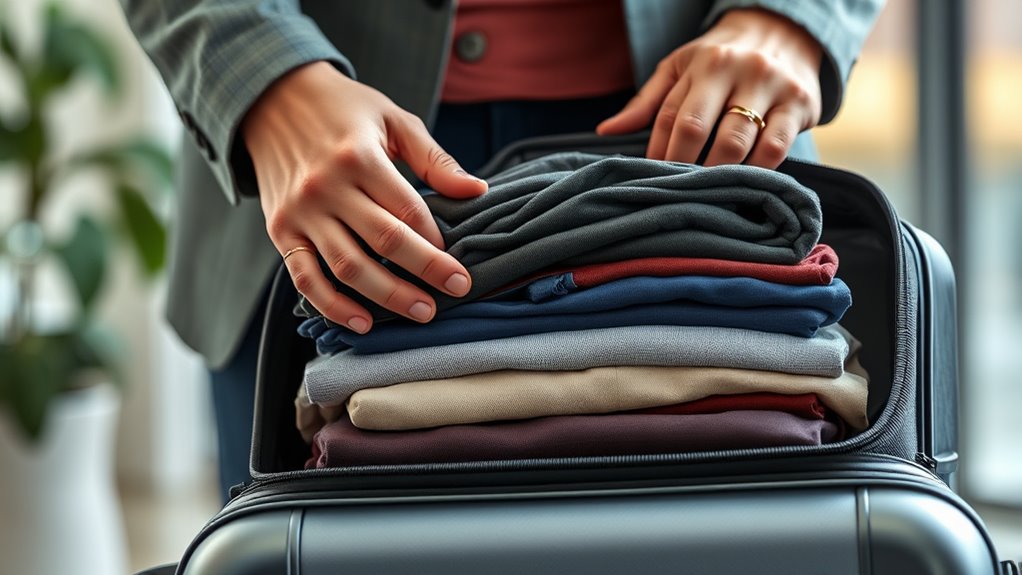
Keeping your posture in check while traveling can make a significant difference in how you feel during and after your trip. Use travel accessories like lumbar support pillows or adjustable straps to keep your spine aligned. When carrying luggage, guarantee it’s secure and properly balanced to prevent strain. Always lift your luggage with your legs, not your back, and keep it close to your body to reduce stress. When sitting, maintain good posture by sitting upright and avoiding slouching. Adjust your seat or use cushions if needed. Regularly shift positions and stretch to prevent stiffness. Proper luggage security helps you avoid sudden shifts or falls that could compromise your posture. Staying mindful of these tips helps you travel comfortably and avoids unnecessary back pain. Additionally, being aware of your privacy policy and cookie preferences can ensure a safer browsing experience during your travels.
Frequently Asked Questions
How Can I Prevent My Carry-On From Exceeding Weight Limits?
To prevent your carry-on from exceeding weight limits, focus on weight management and packing efficiency. Weigh your bag before heading to the airport to make certain it’s within limits. Use a scale and pack only essentials, avoiding unnecessary items. Opt for lightweight clothing and compact gear to save space and weight. Rolling clothes instead of folding also helps maximize space, making your packing more efficient and preventing overweight baggage charges.
What Materials Are Best for Lightweight, Durable Carry-On Bags?
Think of your bag as a trusty steed—what it’s made of matters. Opt for lightweight, durable fabrics like ripstop nylon or ballistic polyester; they’re tough as nails yet easy to carry. These fabric choices combine material durability with a featherweight feel, making your carry-on resilient against rough handling while keeping overall weight down. With the right materials, you’ll travel lighter and smarter, ready for anything that comes your way.
How Do I Organize Fragile Items in My Carry-On?
For fragile packing, you should use dedicated storage solutions like padded cases or zippered pouches to protect delicate items. Wrap fragile items in clothing or bubble wrap for extra cushioning. Place these in the center of your carry-on, surrounded by softer items, to prevent movement and breakage. Always pack fragile items last, and keep them accessible for easy inspection at security checkpoints.
Are There Specific Luggage Designs That Reduce Back Strain?
Yes, you should look for luggage with ergonomic handles and lightweight frames. Ergonomic handles reduce strain on your back by providing a comfortable grip and better control, especially when maneuvering stairs or crowded areas. Lightweight frames make carrying or rolling your luggage easier, minimizing back fatigue. Choose a design with smooth-rolling wheels and adjustable handles to guarantee you stay comfortable and avoid unnecessary back pain during your travels.
How Often Should I Take Breaks During Long Travel Days?
Taking rest breaks during long travel days is like pausing a long hike to enjoy the view—you’ll feel refreshed and less strained. Aim for every 1-2 hours, especially if you’re sitting for extended periods. Use these breaks to do ergonomic stretching, which relieves tension and promotes circulation. Remember, regular rest breaks help prevent fatigue and back pain, making your journey more comfortable and enjoyable.
Conclusion
By mastering these packing tricks, you’re channeling the wisdom of ancient travelers who knew the secret to effortless journeys. Think of your back as a vessel of resilience, strengthened by strategic weight and mindful posture. Like the wise owl, stay alert and balanced, ensuring your travels remain smooth and stress-free. Embrace these habits, and you’ll carry your burdens with the grace of a seasoned explorer, turning every trip into a journey of discovery rather than strain.
Cold & flu season Picks
humidifiers
As an affiliate, we earn on qualifying purchases.