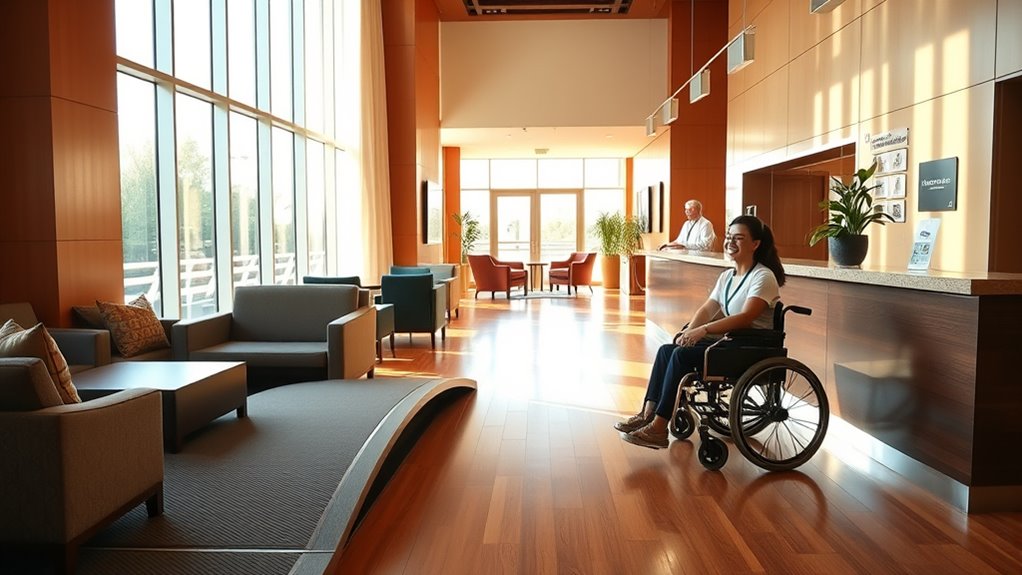

When booking a hotel for accessible travel, ask, “Are all your public and private areas fully accessible for wheelchair users?” This question covers essential features like ramps, elevators, bathroom layouts, and doorway widths. It helps you quickly determine if the hotel can meet your needs without surprises. Ensuring these details are addressed makes your trip smoother; keep exploring to discover key questions that can help you find the best accessible options.
Key Takeaways
- Ask if the hotel has fully accessible rooms with wheelchair-friendly layouts and easy-to-reach fixtures.
- Confirm that all entrances, exits, and pathways are equipped with ramps and wide, slip-resistant surfaces.
- Inquire whether elevators are accessible, with features like low buttons, audible signals, and spacious interiors.
- Verify that bathrooms have barrier-free showers, reachable controls, and enough space for maneuvering.
- Ensure staff are trained to assist guests with mobility needs and can accommodate specific accessibility requests.
wheelchair accessible hotel room
As an affiliate, we earn on qualifying purchases.
As an affiliate, we earn on qualifying purchases.
Understanding Hotel Accessibility Features

Understanding hotel accessibility features is essential for ensuring a comfortable stay if you use a wheelchair. You’ll want to review hotel amenities carefully, focusing on details like wheelchair ramps, wide doorways, and accessible bathrooms. Guest reviews are invaluable—they often highlight real experiences regarding a hotel’s accessibility and reveal issues that official descriptions might miss. Look for feedback from other travelers with mobility needs to gauge whether the hotel truly meets your requirements. Pay attention to comments about elevator accessibility, bed height, and whether common areas are easy to navigate. Additionally, data-driven strategies can help you identify accommodations that prioritize measurable accessibility standards. By understanding these features upfront, you can better assess if the hotel suits your needs, avoid surprises, and enjoy a smoother, more comfortable visit.
The Importance of Confirming Wheelchair Accessibility
Confirming wheelchair accessibility before booking a hotel is crucial to guarantee your comfort and independence during your stay. It ensures you can easily access transportation options, whether taxis, shuttles, or public transit, that accommodate your needs. Additionally, verifying the availability of local wheelchair services can make a significant difference, providing assistance when you arrive at your destination. Ask the hotel specific questions about ramps, elevators, door widths, and accessible bathrooms to avoid surprises. Knowing these details beforehand helps you plan your trip more effectively and reduces stress. Being aware of necessary cookies and how they enhance site functionality can also help you navigate online resources for accessible travel options. By confirming these aspects early, you’ll feel more confident steering your environment and enjoying your trip without unnecessary obstacles. This proactive step keeps your travel experience smooth, safe, and enjoyable.
Key Areas to Focus On When Asking About Accessibility
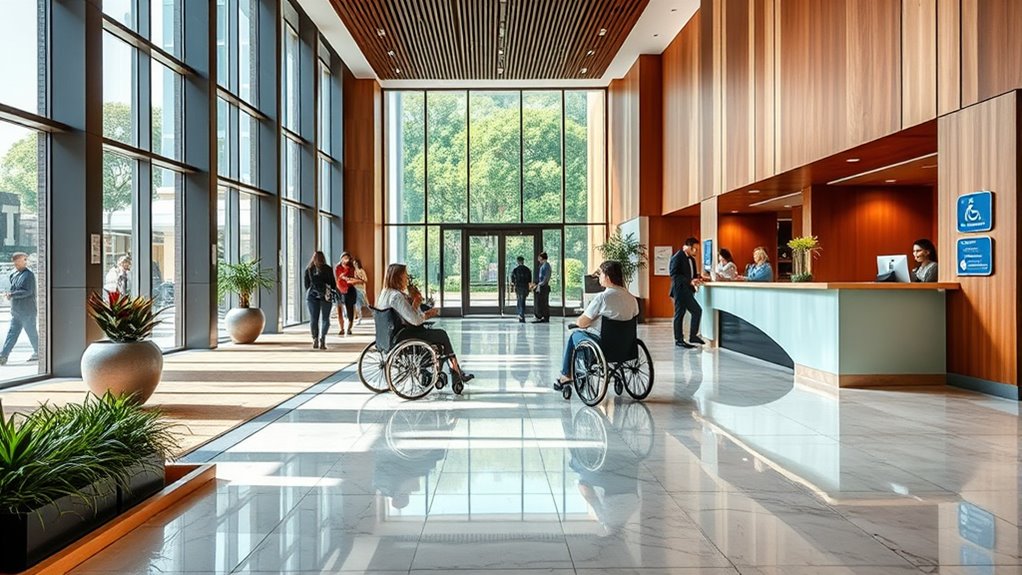
When inquiring about accessibility, focusing on specific key areas guarantees you gather the most relevant information for a smooth stay. First, ask about hotel amenities, ensuring they include accessible features like roll-in showers, lowered counters, and grab bars. Next, inquire whether staff training covers accessibility needs, so staff can assist effectively and answer your questions confidently. Lastly, check if there are accessible public spaces, such as lounges or dining areas, that accommodate wheelchairs comfortably. These areas are vital for a seamless experience and comfort throughout your stay. Additionally, confirming that the Ring security camera setup is suitable and well-maintained can help ensure your safety and peace of mind during your visit. Being clear about these key areas helps you determine if the hotel truly meets your accessibility needs and guarantees a more enjoyable, stress-free visit.
How to Verify Entrance and Exit Accessibility
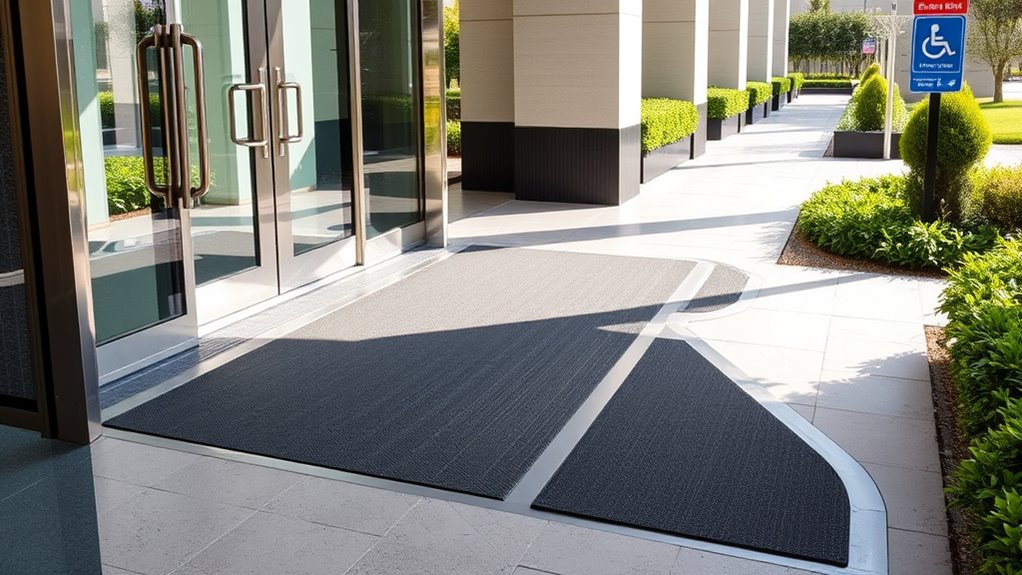
Start by examining the ramps and paths leading into the building to make certain they are smooth and wide enough. Next, confirm that elevators are accessible and have enough space for a wheelchair. These checks help you verify that entering and exiting are truly wheelchair-friendly.
Check Ramps and Paths
Before entering a venue, take a close look at the ramps and paths leading to the entrance. Check that the wheelchair ramps are gentle enough for your needs and have secure handrails. Make certain the path clearance is sufficient—there should be no obstructions like uneven surfaces or clutter that could cause difficulty. Look for smooth, level surfaces that are wide enough to maneuver comfortably. Confirm that: – The wheelchair ramps have a gentle incline and slip-resistant surface – There are no obstacles blocking the path, such as planters or signs – The sidewalk or walkway is wide enough for easy navigation. Additionally, verify the proper maintenance of accessible features, as well-maintained ramps and paths ensure safety and ease of use.
Confirm Elevator Access
To guarantee smooth entry and exit, it’s important to verify elevator accessibility at the venue. Ensure elevators are large enough for wheelchairs and have low buttons within reach. Check if service animals are allowed inside and if the elevator doors open wide enough for easy passage. Also, confirm that the elevator is operational and free of obstructions. When exploring restaurant accessibility, ask if the elevator can connect you directly to dining areas, minimizing transit challenges. Additionally, understanding modern toilet features can aid in overall bathroom accessibility planning. | Question to Ask | Details to Confirm |
| —————— | ——————– |
|---|---|
| Are elevators spacious? | Able to accommodate wheelchairs and service animals |
| Are buttons reachable? | Low enough for seated users and those with limited mobility |
| Is elevator access continuous? | Ensures seamless movement throughout the venue |
Ensuring Bathroom and Shower Accessibility
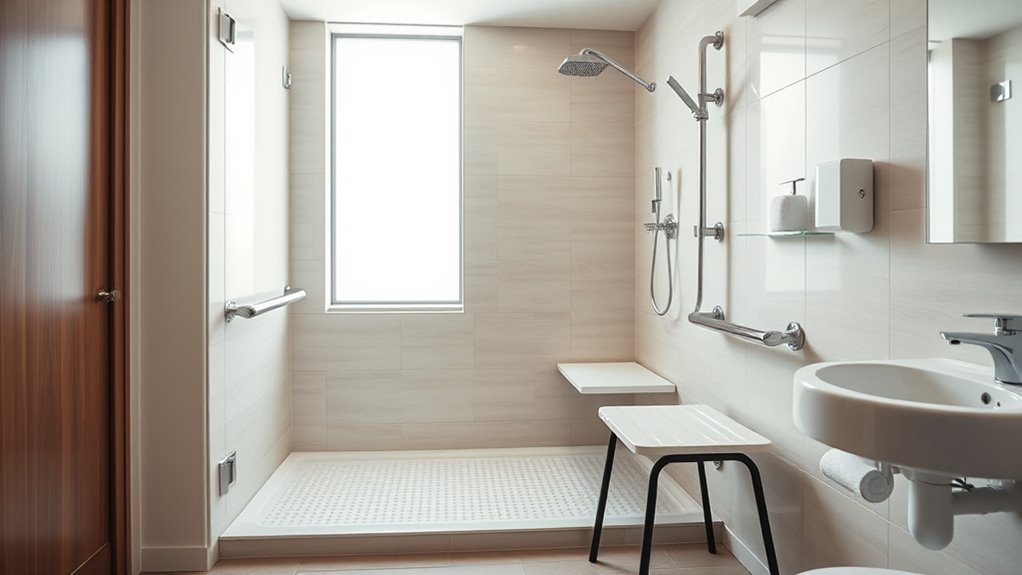
Are you confident that your bathroom and shower facilities are truly accessible on your wheel-friendly travels? Accessibility starts with understanding the features that make a bathroom usable. Ask about:
Ensure bathroom accessibility with reachable fixtures, grab bars, and barrier-free showers for confident wheel-friendly travels.
- Bathroom fixtures that are within easy reach, including grab bars and lowered sinks
- Shower controls that are lever-style or touchless for effortless operation
- The presence of a roll-in shower with a low or no threshold for easy wheelchair access
- Ensure the bathroom layout provides enough space for maneuvering and that fixtures are installed at accessible heights. Confirm that grab bars are securely mounted and that shower controls are simple to operate. These features make bathroom use safer and more comfortable, allowing you to maintain independence during your stay. Additionally, verifying the safety and comfort features aligns with vetted safety standards, ensuring a stress-free experience.
Checking for Accessible Room Layouts and Doorways

Ensuring your room layout accommodates a wheelchair is key to a comfortable stay. When booking, ask if the hotel offers rooms with open floor plans and wide doorways that can easily fit your mobility device. Check that pathways are clear of furniture, and door thresholds are low or beveled for smooth access. It’s also helpful to confirm their hotel pet policies if you travel with a service animal. This way, you avoid surprises and guarantee your pet is welcome. Additionally, look into the location of nearby accessible attractions that don’t require complex navigation through narrow corridors. By verifying these details beforehand, you can enjoy your stay without obstacles, making your trip more enjoyable and less stressful. Incorporating attention to detail into your planning enhances overall accessibility and comfort during your travels.
Inquiring About Elevator and Corridor Accessibility

When you ask about elevator accessibility, make sure to check for features like braille buttons and audio announcements. Clear, unobstructed corridors are essential for easy navigation, so don’t hesitate to inquire about their width and layout. Ensuring these details are in place can make your travel experience much smoother and more comfortable. Additionally, understanding the layer concepts involved in building design can help you better assess a hotel’s overall accessibility features.
Accessible Elevator Features
Accessible elevator features are essential for making travel seamless for everyone, especially those with mobility challenges. When booking a hotel, ask if the elevators have low buttons, wide doors, and auditory signals to ensure easy use. Confirm that the corridor widths accommodate wheelchairs comfortably, and that the elevator stops are at accessible heights. These features help you navigate the hotel efficiently and prevent unnecessary stress. Additionally, consider how these features integrate with your overall travel plans, including your travel insurance and local transportation options. Knowing the elevator’s accessibility can save you time and effort, especially if you need to coordinate with other mobility services. Security considerations, such as reliable access and safety features, also play a vital role in ensuring a hassle-free stay. Prioritize hotels with well-designed elevators to make your stay more comfortable and hassle-free.
Clear Corridor Navigation
To steer a hotel smoothly, it’s important to ask about the width and layout of corridors, as well as the placement of elevator stops. Ensure hallways are wide enough for your wheelchair or scooter to pass easily, and check for clear signage indicating accessible routes. Ask about service animal policies to confirm your pet’s presence won’t cause issues. Additionally, inquire about noise level considerations—some hotels may have quiet hours or designated quiet zones, which can make your stay more comfortable. Knowing if the corridors are free from obstructions and if elevators are conveniently located helps prevent frustrations. Clear, unobstructed paths are essential for safe, smooth travel within the hotel, especially when navigating with mobility aids or service animals. Considering automated systems in some hotels can also enhance accessibility by providing features like voice-activated controls or real-time assistance.
Tips for Communicating Your Needs Effectively
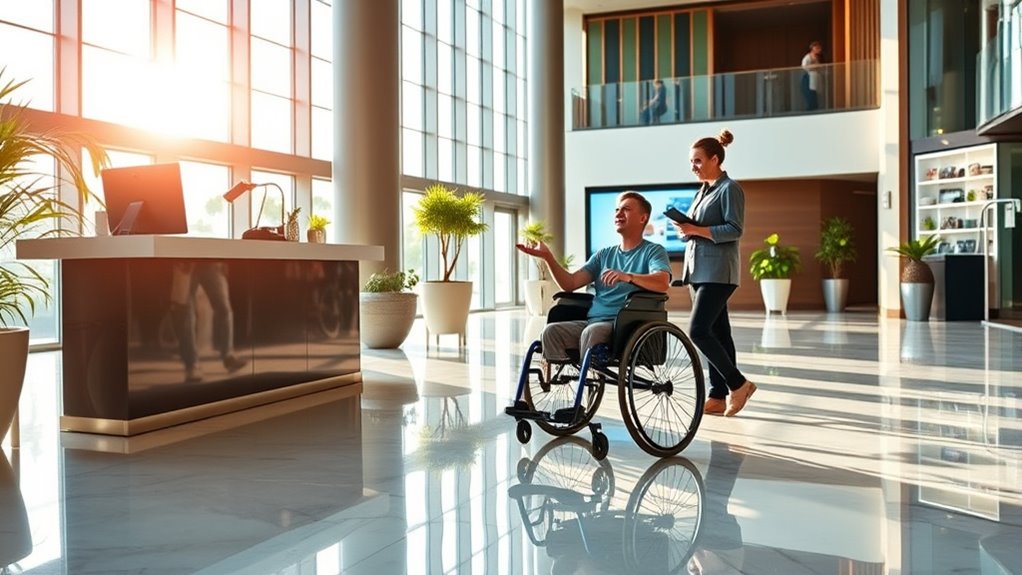
Clear communication is essential for ensuring your needs are understood and met during travel. To do this effectively, be specific about your requirements when booking and checking in. Share your experience in guest reviews to highlight staff training that needs improvement, helping hotels better serve future guests. When speaking with staff, calmly explain your accessibility needs and ask questions if anything isn’t clear. Remember, clear, respectful dialogue encourages better service and accommodations. Using appropriate communication strategies can significantly improve your travel experience.
Frequently Asked Questions
Are There Specific Brands or Models of Accessible Hotel Rooms Recommended?
You should look for hotel branding that emphasizes accessibility, like Marriott’s Accessible Rooms or Hilton’s ADA-compliant options. Specific brands often prioritize accessible amenities, ensuring wider doorways, grab bars, and lowered fixtures. When booking, ask directly about models and features to match your needs. This way, you’ll find accessible hotel rooms designed with your comfort in mind, making your travel experience smoother and more enjoyable.
How Do I Find Reviews Specifically Mentioning Accessibility Features?
To find reviews mentioning accessibility features, start by checking accessible review sites like TripAdvisor and Yelp, filtering for keywords like “accessible” or “wheelchair friendly.” Additionally, explore online accessibility forums where travelers share detailed experiences. These sources give you honest insights into hotel features, helping you choose accommodations that truly meet your needs. Always look for recent reviews to ensure the information is current and reliable.
Can I Request a Tour of Accessible Areas Before Booking?
Yes, you can request a tour of accessible areas before booking. When you’re making your booking, use your booking tips to ask the hotel directly about accessible amenities and tour options. Contact the hotel’s staff in advance to confirm if they can schedule a walkthrough of accessible rooms and amenities. This way, you guarantee the hotel meets your needs and feels comfortable before you commit to your stay.
What Are Common Accessibility Issues Travelers Should Be Aware Of?
You should be aware that common accessibility issues include insufficient wheelchair accessibility in hallways, doorways, and elevators. Also, check if the hotel offers bathroom modifications like grab bars, roll-in showers, and lowered sinks. Sometimes, even if a hotel advertises accessibility, certain areas may not be fully equipped for your needs. Always ask about specific features to guarantee your stay is comfortable and safe.
Are There Additional Costs for Accessible Rooms or Features?
You might find that accessible rooms come with hidden fees, like secret doors to amenity upgrades. Some hotels charge extra for enhanced features, turning your smooth journey into a maze of unexpected costs. Always ask upfront if there are additional charges for accessible rooms or features. By shining a light on these potential hidden fees, you guarantee your travel experience remains as seamless as a well-oiled wheel.
Conclusion
By asking the right questions, you can avoid hitting a brick wall and guarantee your hotel stay is smooth and comfortable. Clear communication about accessibility features helps you find accommodations that truly meet your needs. Don’t be afraid to speak up—your comfort depends on it. Remember, it’s better to be safe than sorry, so take the time to verify every detail. With the right information, you’ll be able to travel with confidence and ease.