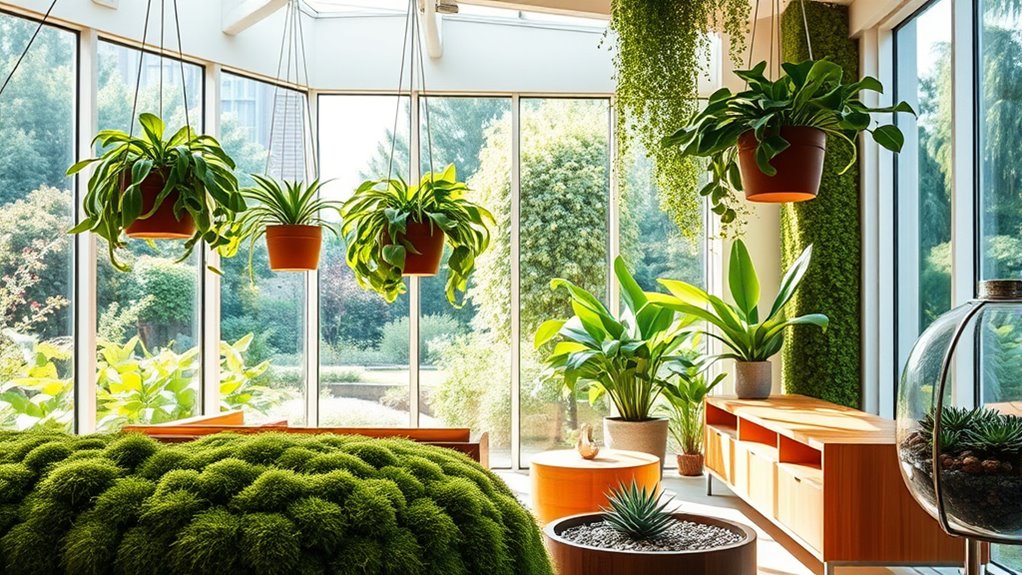

Biophilic design brings natural elements like plants, natural light, and organic shapes into your indoor spaces, helping you feel calmer and more energized. By incorporating greenery and natural materials, you’ll reduce stress, boost your mood, and improve your focus. Creating environments that reconnect you with nature supports your overall health and well-being. If you want to discover simple ways to transform your space into a healthier haven, keep exploring.

Turn quiet afternoons into listening time
- Thousands of audiobooks, podcasts and originals
- Listen on your phone, tablet or Echo — also offline
- Cancel anytime
Key Takeaways
- Incorporating natural elements like plants and organic shapes enhances indoor environments, promoting relaxation and reducing stress.
- Biophilic design connects occupants to nature, improving mood, cognitive function, and overall well-being.
- Using natural materials and ample natural light creates healthier, more inviting spaces that support mental health.
- Indoor greenery filters air, increases humidity, and acts as a calming visual cue, boosting indoor air quality and comfort.
- Small-scale plant integration and design strategies foster a sustainable, health-conscious environment that encourages daily nature exposure.
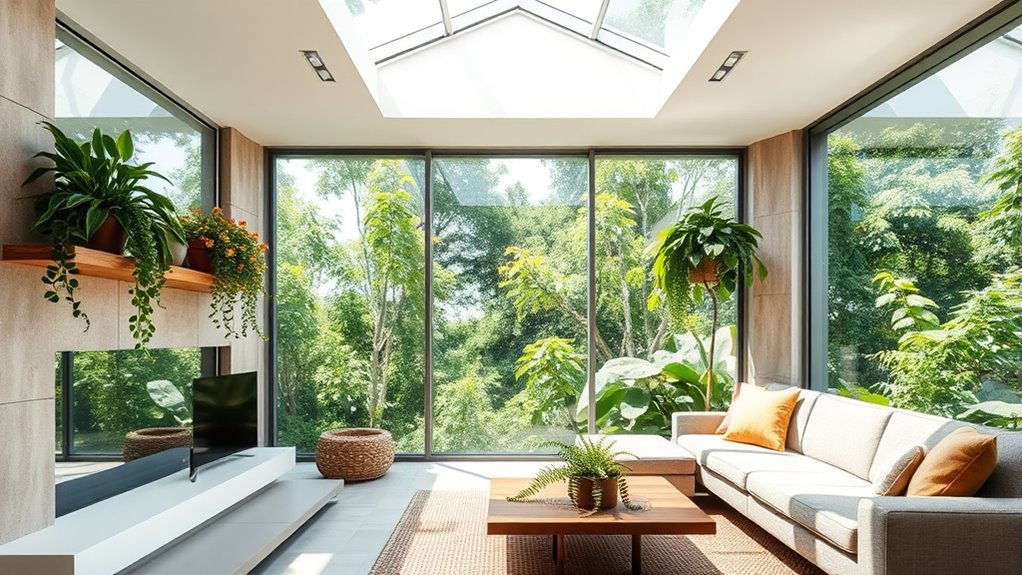
Have you ever wondered why spending time in nature feels so restorative? It’s because our brains are wired to respond positively to natural environments. This innate connection is exactly why biophilic design emphasizes nature integration—bringing elements of the outdoors inside to boost well-being. When you incorporate indoor greenery into your space, you’re not just adding aesthetic value; you’re creating an environment that can reduce stress, improve mood, and even enhance focus. Indoor greenery, such as potted plants, vertical gardens, or even small herb gardens, acts as a living extension of the natural world, reconnecting you with nature throughout your day.
Indoor greenery connects us with nature, reducing stress and boosting well-being in our daily environments.
Integrating natural elements into your living or working space isn’t just about decoration. It’s about fostering a sense of calm and importance by mimicking nature’s features. Biophilic design encourages the use of natural light, organic shapes, and materials like wood or stone, but indoor greenery is one of the most accessible and impactful ways to achieve this. As you add lush plants to your environment, you’ll start noticing how they filter the air, increase humidity, and add visual interest, all of which contribute to a healthier indoor atmosphere. These living elements act as a constant reminder of nature’s presence, helping you feel grounded even in urban settings.
You can integrate indoor greenery in various ways, from placing potted plants on desks and windowsills to creating large living walls in common areas. The key is to select plants that suit your space and lifestyle—low-maintenance varieties like snake plants, pothos, or succulents are excellent choices for beginners. Positioning plants near windows maximizes their growth and your exposure to natural light, further enhancing the biophilic effect. The act of caring for these plants can also be therapeutic, giving you a sense of purpose and connection.
Incorporating indoor greenery isn’t just an aesthetic decision; it’s a health-conscious move. Studies show that people exposed to natural elements report reduced anxiety and improved cognitive function. The presence of plants can also boost creativity and productivity, especially in workspaces. When you design your environment with nature integration at its core, you create a sanctuary that nurtures both your mind and body. So, start small—add a few plants—and let nature’s calming influence transform your space into a healthier, more inviting place to live and work.
Additionally, understanding how contrast ratio impacts image quality can help you choose the right projector for your space, ensuring a vivid and immersive viewing experience.
indoor potted plants for air purification
As an affiliate, we earn on qualifying purchases.
As an affiliate, we earn on qualifying purchases.
Frequently Asked Questions
How Does Biophilic Design Affect Mental Health?
You might wonder how your environment impacts your mental health. When you incorporate nature connection into your space, it can substantially reduce stress and boost your mood. Elements like plants, natural light, and outdoor views help create a calming atmosphere. This connection to nature encourages relaxation, enhances focus, and promotes overall well-being. Embracing biophilic design allows you to experience these mental health benefits every day, making your surroundings more supportive and uplifting.
What Are Budget-Friendly Ways to Incorporate Biophilic Elements?
Did you know that adding greenery can boost your mood and productivity? To incorporate biophilic elements on a budget, try DIY greenery projects like repurposing jars for succulents or hanging planters from your ceiling. Opt for budget-friendly decor such as faux plants or affordable potted herbs. You’ll enjoy the calming benefits of nature without breaking the bank, creating a healthier, more inviting space for yourself.
Can Biophilic Design Improve Productivity in Workplaces?
You can boost productivity by incorporating natural light and acoustic comfort into your workspace. Natural light reduces eye strain and boosts mood, helping you stay focused. Acoustic comfort minimizes distractions and noise, allowing you to concentrate better. These biophilic elements create a healthier, more inviting environment that encourages efficiency. When you prioritize natural light and sound management, you’ll find yourself more motivated and productive throughout your workday.
Are There Specific Plants Recommended for Indoor Environments?
When choosing indoor plants, you look for the best houseplants that thrive indoors and improve your environment. Specific indoor plant selection depends on your space, light, and maintenance preferences. Popular choices include snake plants, pothos, and peace lilies because they’re low-maintenance and filter air effectively. These plants add natural beauty, boost your mood, and create a healthier indoor atmosphere without requiring much effort.
How Does Biophilic Design Impact Energy Efficiency?
You notice that biophilic design improves energy efficiency by maximizing natural light optimization, which reduces your reliance on artificial lighting. Using sustainable materials in your space helps lower energy consumption and minimizes environmental impact. Incorporating plants and natural elements also enhances insulation, keeping your indoor environment more stable. Together, these strategies create a greener, more energy-efficient space that benefits both your comfort and the planet.
Conclusion
Embracing biophilic design connects you with nature’s calm amidst urban chaos. While concrete walls and screens dominate modern life, bringing greenery indoors offers a sanctuary of tranquility. You gain not just aesthetic beauty but improved well-being, a gust of fresh air within walls that often feel confining. In this contrast, you find that integrating natural elements isn’t just decoration—it’s an essential step toward healthier, more balanced living. Nature indoors transforms your space, and ultimately, your life.
Fall Picks
fall essentials
As an affiliate, we earn on qualifying purchases.