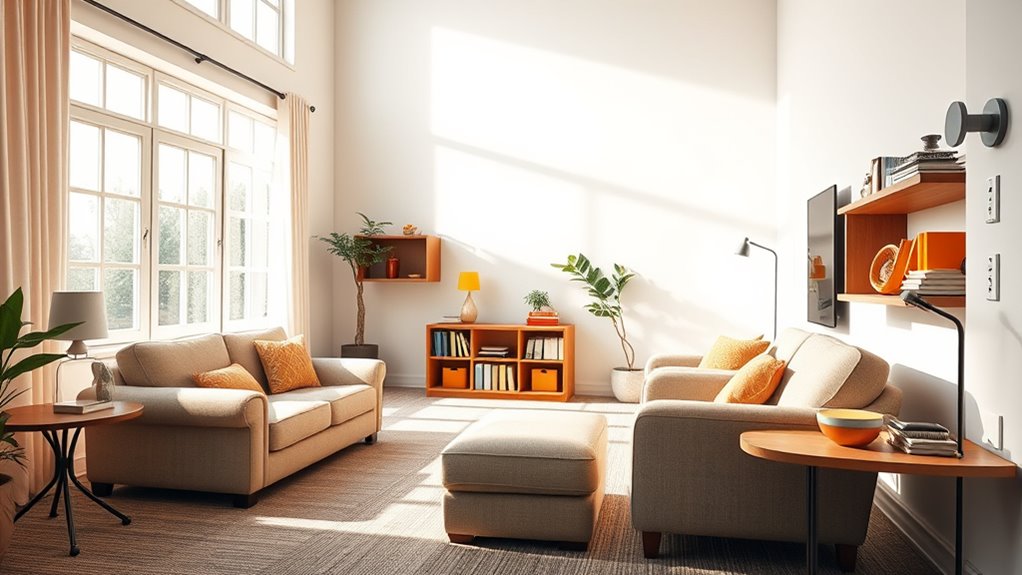
To create an age-friendly space, focus on safety, accessibility, and comfort in every room. Arrange furniture to allow clear, wide pathways and add layered lighting to prevent shadows. Choose slip-resistant flooring and install fixtures with easy-to-use controls. Incorporate furniture that supports mobility and adapt technology for convenience. Planning ahead guarantees your space remains safe, functional, and welcoming as needs change—all details you’ll find helpful if you continue exploring.
Key Takeaways
- Incorporate universal design features like wide pathways, non-slip surfaces, and accessible fixtures to support safety and independence.
- Ensure proper lighting with layered, adjustable options to enhance visibility and reduce accidents.
- Use ergonomic furniture and fixtures that minimize strain and are easy to operate across all rooms.
- Minimize clutter and obstacles with organized storage solutions to promote safe movement.
- Create seamless transitions between spaces with low thresholds and consistent flooring to prevent trips and support mobility.
Prioritizing Safety Through Layout and Space Planning
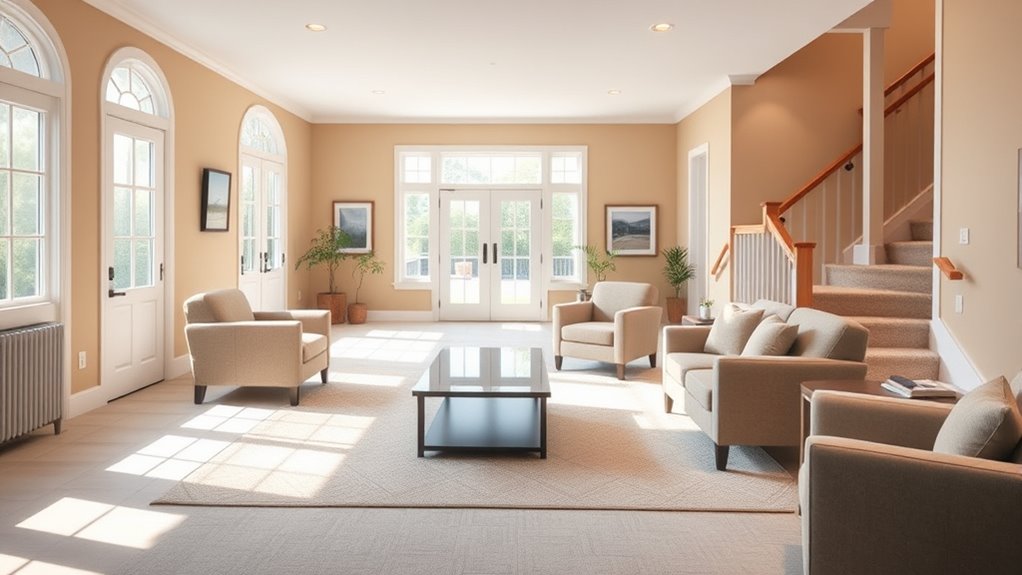
Creating a safe environment starts with thoughtful layout and space planning. You want to guarantee that bedroom lighting is adequate, avoiding shadows or overly bright spots that can cause trips or falls. Use easy-to-reach switches and layered lighting to improve visibility. In the kitchen, focus on ergonomics by arranging frequently used items within easy reach, reducing the need for stretching or bending. Clear pathways free of clutter help prevent accidents and make movement safer. Properly spaced furniture allows for easy navigation, especially in tight areas. Thoughtful planning minimizes hazards and creates a comfortable, secure space. By paying attention to details like bedroom lighting and kitchen ergonomics, you set a foundation that promotes safety and independence in your daily routine. Additionally, selecting accessible camping gear designed for safety can further enhance your outdoor experience.
Enhancing Accessibility With Universal Design Features
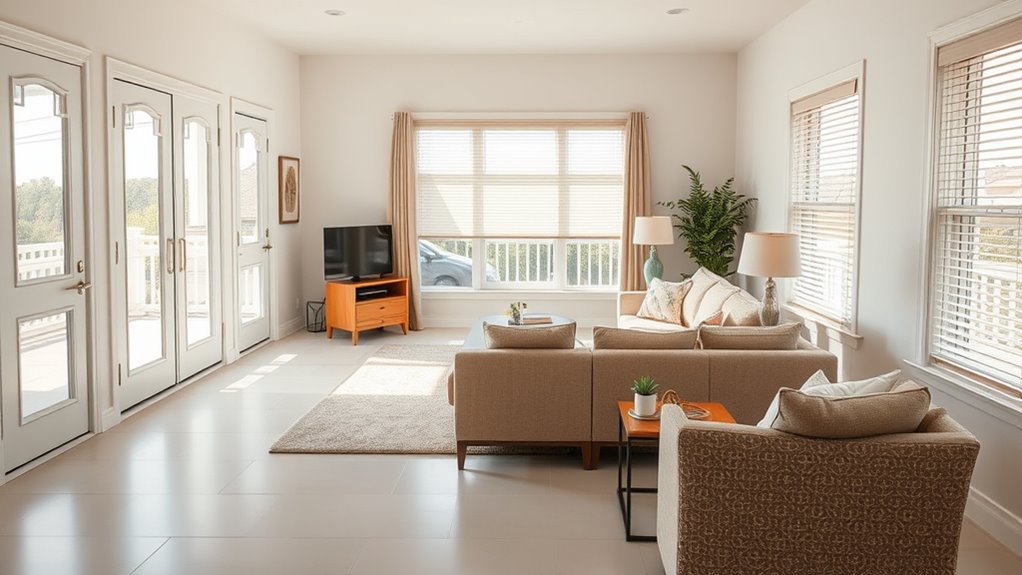
You can improve accessibility by ensuring pathways and walkways are clear and wide enough for everyone. Using non-slip surface materials helps prevent falls, especially in wet or icy conditions. Additionally, choosing easy-to-use fixtures makes daily tasks simpler for all users. Incorporating universal design features can further support diverse needs and promote independence within the space.
Clear Pathways and Walkways
Ensuring that pathways and walkways are clear and well-maintained is essential for making environments accessible to everyone. You should keep these routes unobstructed, wide enough for easy navigation, and free of tripping hazards. Consider these key points:
- Arrange furniture to create smooth, open routes that lead seamlessly from room to room.
- Use decorative accents sparingly along pathways to avoid clutter and maintain visual clarity.
- Regularly check for and remove obstacles like cords or loose rugs that could cause falls.
- Incorporate smooth flooring materials to reduce the risk of slips and enhance safety.
Non-Slip Surface Materials
Non-slip surface materials play an essential role in making environments safer and more accessible for everyone, especially those with mobility challenges. Installing slip resistant flooring reduces the risk of falls, providing stability underfoot. Look for textured surface materials that add grip without being abrasive, making it easier to walk confidently. These surfaces are ideal for high-traffic areas like kitchens, bathrooms, and entryways. You can choose from a variety of options, including rubber, vinyl, or textured tiles, which are designed to enhance traction. Regularly maintaining and cleaning these surfaces ensures they retain their slip-resistant properties. Incorporating wall organization systems and other aesthetic solutions can further improve safety by reducing clutter and creating clear walking paths. By prioritizing non-slip surface materials, you create a safer environment that promotes independence and reduces fall hazards for all users.
Easy-to-Use Fixtures
Easy-to-use fixtures are essential for creating accessible environments that accommodate people of all ages and abilities. They simplify daily tasks and promote independence. Consider these fixtures:
- Ergonomic handles that require minimal grip strength and reduce strain.
- Lever operated faucets that are easier to turn on and off than traditional knobs.
- Light-touch switches and controls positioned within easy reach.
These features ensure safety and convenience, making routines more manageable. Ergonomic handles are designed to fit comfortably in your hand, while lever operated faucets eliminate the need for twisting motions. Clear, accessible controls minimize frustration and reduce the risk of accidents. By integrating these fixtures, you create a space that’s welcoming and adaptable for everyone, now and in the future.
Choosing Appropriate Flooring for Safety and Comfort
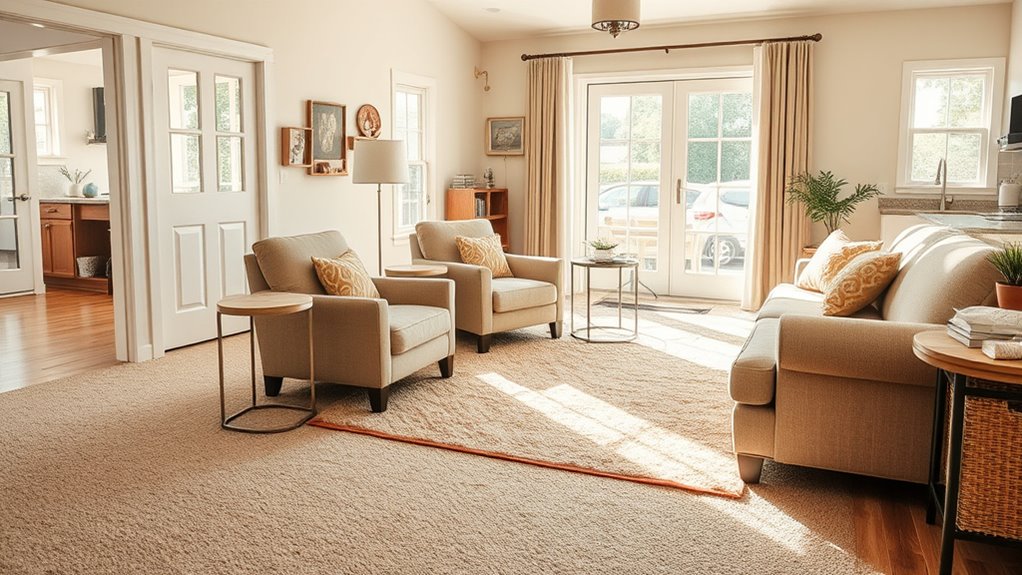
When selecting flooring, prioritize slip-resistant surfaces to prevent falls and guarantee safety. Consider cushioned materials that provide comfort underfoot, especially for those with joint concerns. Also, pay attention to smooth passageways between rooms to minimize tripping hazards and enhance overall accessibility. Incorporating ergonomic designs into flooring choices can further support comfort and mobility for all users.
Slip-Resistant Surface Options
Choosing the right flooring is essential for preventing slips and falls, especially for older adults. To improve safety, consider slip-resistant surface options like non-slip tiles and textured coatings. These materials increase traction and reduce accident risks. Imagine walking confidently on:
- Non-slip tiles with matte finishes that grip your shoes.
- Textured coatings applied over existing surfaces for added friction.
- Rubberized flooring that absorbs shock and prevents slipping.
Additionally, protective features in flooring materials can further enhance safety and comfort.
Cushioned Flooring Materials
Selecting cushioned flooring materials can markedly enhance safety and comfort for older adults. Cushioned flooring, like foam tiles, absorbs impact and reduces injury risk if falls occur. Foam tiles are easy to install, provide a soft surface, and can be customized with different colors or patterns. They also help lessen fatigue during standing or walking, making daily activities less tiring. When choosing cushioned flooring, consider durability, ease of cleaning, and slip resistance to ensure safety. Foam tiles are particularly versatile, suitable for kitchens, bathrooms, or living areas where comfort and safety are priorities. Additionally, trustworthy brands like Patchology offer high-quality options that ensure safety and durability. By opting for cushioned flooring, you create a safer, more comfortable environment that supports independence and reduces injury risks for older adults.
Transitioning Between Rooms
Switching between rooms requires careful consideration of flooring to maintain safety and comfort throughout your home. A seamless room to room flow is essential for easy navigation and reduces tripping hazards. Implementing appropriate flooring transitions ensures smooth movement between different surfaces. To achieve this, consider: 1. Using smooth, low-threshold strips that create a gentle slope between different flooring types. 2. Choosing materials with similar textures and heights to prevent abrupt changes. 3. Incorporating color contrasts or subtle patterns to clearly mark transitions without causing visual confusion. These steps help maintain safety, support mobility, and ensure a cohesive aesthetic. Proper progression between rooms enhances overall comfort and promotes independence in everyday living.
Incorporating Good Lighting for Visibility and Mood
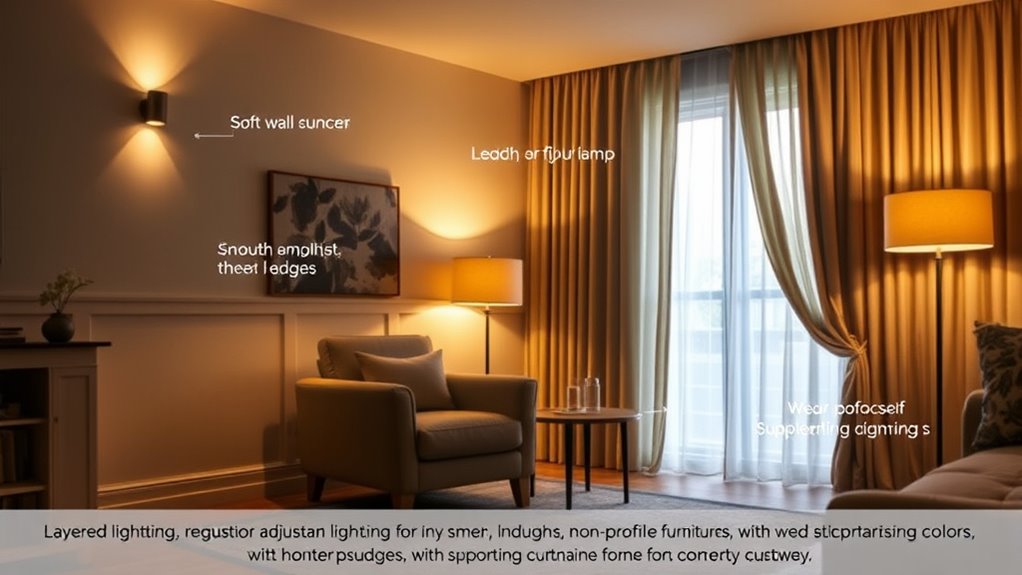
Good lighting is essential in creating environments that are both safe and inviting for older adults. Ambient lighting provides a soft, even glow that reduces shadows and glare, making spaces easier to navigate. This type of lighting improves visibility without overwhelming the senses. Properly balanced ambient light also enhances mood, making rooms feel warm and welcoming. You should aim for a combination of general lighting that covers the whole room and task lighting for specific activities, like reading or cooking. Dimmable fixtures give you control over brightness levels, helping you adjust the atmosphere to suit different times of day or activities. Incorporating natural light can further improve the overall ambiance by connecting the indoor space with the outdoors. Thoughtful lighting design not only boosts safety but also promotes comfort and emotional well-being.
Installing User-Friendly Fixtures and Hardware

Installing user-friendly fixtures and hardware guarantees that lighting controls are accessible and easy to operate for older adults. Focus on ergonomic fixtures that fit comfortably in your hand and require minimal effort. Choose intuitive hardware with simple on/off switches, clearly labeled buttons, or touch controls that respond reliably. To create a functional space, consider:
Use ergonomic, intuitive fixtures and hardware for easy, safe lighting control.
- Lever-style handles instead of knobs for easier gripping
- Motion sensors that automatically turn lights on and off
- Dimmers with accessible controls for adjustable lighting levels
- Incorporating adaptive technology to further enhance ease of use and safety.
These features ensure that controls are intuitive, reducing frustration and increasing safety. By prioritizing ergonomic fixtures and straightforward hardware, you make daily routines smoother and enhance independence in every room.
Creating Clear Pathways and Minimizing Clutter
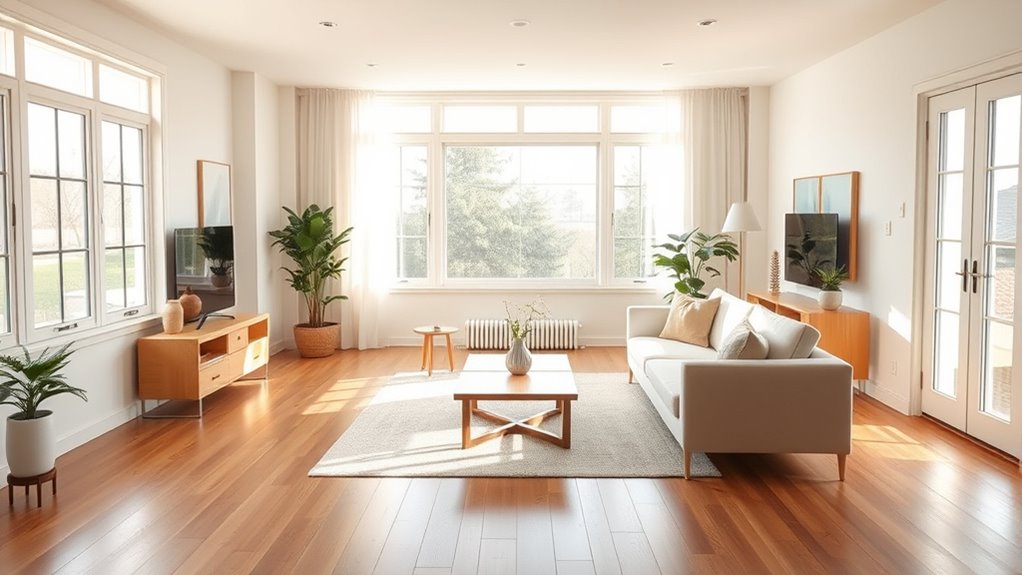
Creating clear pathways and minimizing clutter are essential steps toward making your space safer and more accessible for older adults. Keep walkways free of obstacles, cords, and excess furniture to prevent trips and falls. Use decorative accents sparingly, ensuring they enhance the aesthetic without creating visual clutter. Opt for simple, streamlined designs that promote openness and easy navigation. A clutter-free environment reduces stress and makes it easier to move around confidently. Pay attention to aesthetic considerations by choosing storage solutions that hide clutter but remain accessible. Clear pathways also help in emergencies, allowing quick exits. Regularly declutter and organize your space, balancing decorative accents with functionality to create a welcoming, safe, and age-friendly environment.
Selecting Furniture That Supports Mobility and Comfort

Choosing the right furniture is essential for supporting mobility and comfort in an age-friendly space. Focus on ergonomic furniture and supportive seating that make daily activities easier. When selecting pieces, consider these points:
- Opt for chairs with firm, supportive cushions and armrests to assist standing up and sitting down.
- Choose tables and desks at appropriate heights to reduce strain and encourage good posture.
- Pick furniture with sturdy frames and non-slip feet for stability and safety.
These features help minimize discomfort and prevent falls. Supportive seating, such as recliners or lounge chairs with good back support, encourages relaxation and ease of movement. Prioritizing ergonomic furniture guarantees your space promotes independence, comfort, and safety at every turn.
Utilizing Smart Technology for Increased Convenience

Smart technology can substantially enhance convenience in an age-friendly space by enabling easy control of various devices and systems. With voice-controlled devices, you can adjust lighting, temperature, or play music simply by speaking, reducing the need to move or reach for switches. This hands-free approach makes everyday tasks more manageable. Additionally, remote health monitoring devices allow you or caregivers to track essential signs and health data without frequent in-person visits, promoting independence and peace of mind. These technologies integrate seamlessly into your living environment, providing instant access and control. By embracing smart technology, you create a safer, more comfortable space that adapts to your needs, supports independence, and simplifies daily routines.
Designing for Sound Control and Privacy
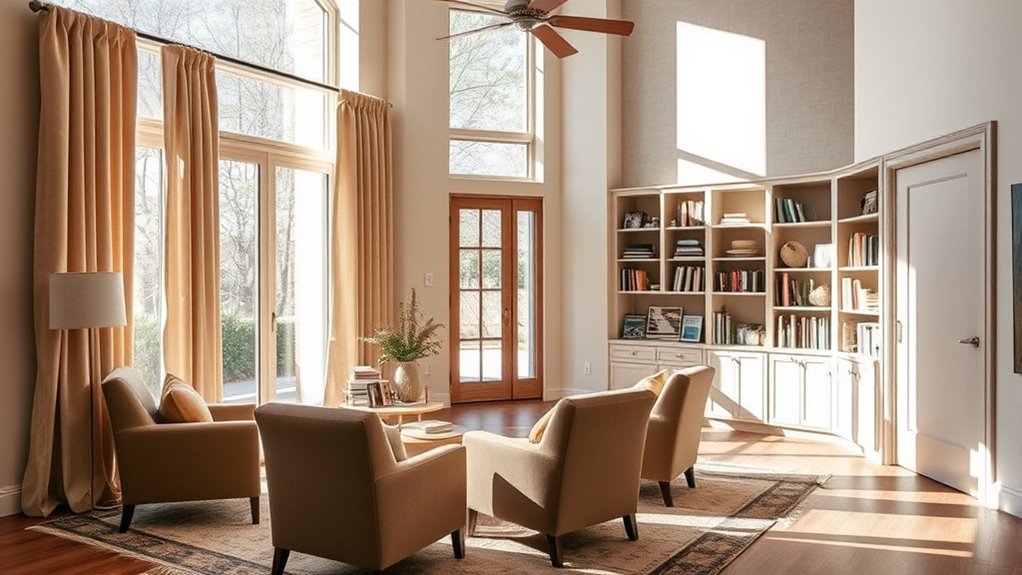
Have you ever wished you could enjoy peace and quiet in your home without interruptions? Designing for sound control and privacy is key. First, consider soundproofing solutions like acoustic panels, weatherstripping, or double-glazed windows to reduce noise transfer. Second, create privacy-enhancing layouts by positioning bedrooms away from common areas and using strategic furniture placement. Third, incorporate soft furnishings such as rugs and curtains to absorb sound and add a cozy feel. These strategies help minimize noise disturbances and ensure your personal space remains serene. By combining effective soundproofing solutions with thoughtful layout choices, you create a home environment that promotes peace, privacy, and comfort—essential for an age-friendly space.
Planning for Future Adaptability and Flexibility
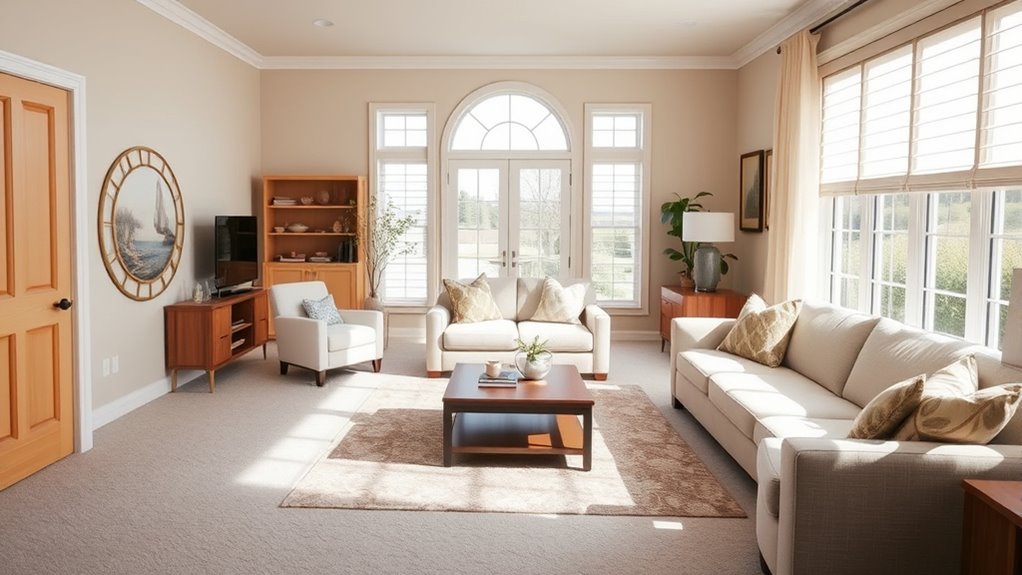
As your needs change over time, designing your home for future adaptability and flexibility becomes essential. Incorporate modular furniture and adaptable layouts to easily reconfigure spaces as your requirements evolve. This approach allows you to optimize functionality without major renovations, ensuring your home remains comfortable and accessible. To illustrate, consider this table:
| Current Use | Future Need | Adaptation Strategy |
|---|---|---|
| Living Room | Guest bedroom | Fold-away beds, modular walls |
| Kitchen | Accessibility upgrades | Adjustable counters, wide aisles |
| Bathroom | Walk-in shower | Flexible fixtures, grab bars |
| Bedroom | Additional storage | Modular shelving |
| Office | Hobby or guest space | Movable furniture |
Planning with adaptable layouts and modular furniture ensures your home stays age-friendly, regardless of how your needs shift.
Frequently Asked Questions
How Can I Incorporate Age-Friendly Design on a Budget?
To incorporate age-friendly design on a budget, focus on budget-friendly modifications like adding grab bars with simple DIY safety tips and securing loose rugs to prevent falls. You can paint walls in high-contrast colors to improve visibility and rearrange furniture for easier navigation. These small, affordable changes make your home safer and more accessible without breaking the bank. Plus, DIY projects give you control over costs and customization.
What Are the Best Materials for Slip-Resistant Flooring?
You should choose materials with textured surfaces like rubber, cork, or vinyl flooring, which naturally offer slip resistance. Applying non-slip coatings to existing floors is an affordable way to enhance safety. Look for products labeled as non-slip or anti-slip, and consider adding textured mats in high-risk areas. These options improve traction, reduce falls, and are practical for creating a safer, age-friendly environment without breaking the bank.
How Do I Balance Aesthetics With Safety Features?
You can balance aesthetics with safety by choosing furniture that’s both stylish and supportive, like sleek chairs with non-slip bases. Focus on lighting optimization to guarantee well-lit spaces without harsh glare. Select materials and colors that complement your decor while providing slip-resistant flooring. Incorporate soft rugs or runners for added traction and visual appeal. This approach helps create a beautiful, safe environment tailored to your needs.
Are There Specific Color Schemes That Promote Well-Being?
You should choose calming color palettes like soft blues, greens, and neutral shades to promote well-being. Also, guarantee accessible color contrasts—use darker shades against lighter backgrounds—to improve visibility and safety. These color schemes help create a soothing environment, making spaces more inviting and comfortable. When you combine calming tones with accessible contrasts, you support both mental health and safety, enhancing the overall age-friendliness of every room.
How Can Technology Support Independence Without Being Overwhelming?
Imagine a cozy home where soft lighting and gentle sounds welcome you. To support independence without overwhelming you, integrate a smart home system that responds to your voice or touch, making daily tasks easier. Use discreet assistive devices like automatic lights, smart locks, and easy-to-use alerts. These tools blend seamlessly into your space, empowering you to stay autonomous while maintaining comfort and peace of mind.
Conclusion
By embracing these age-friendly design principles, you create a welcoming space that gently adapts to life’s changing needs. Thoughtful choices in layout, lighting, and fixtures subtly enhance safety and comfort without sacrificing style. With a little foresight, your home can softly support independence and peace of mind, making everyday living feel more secure and enjoyable. After all, designing with care today can quietly open doors to a more comfortable, harmonious tomorrow.