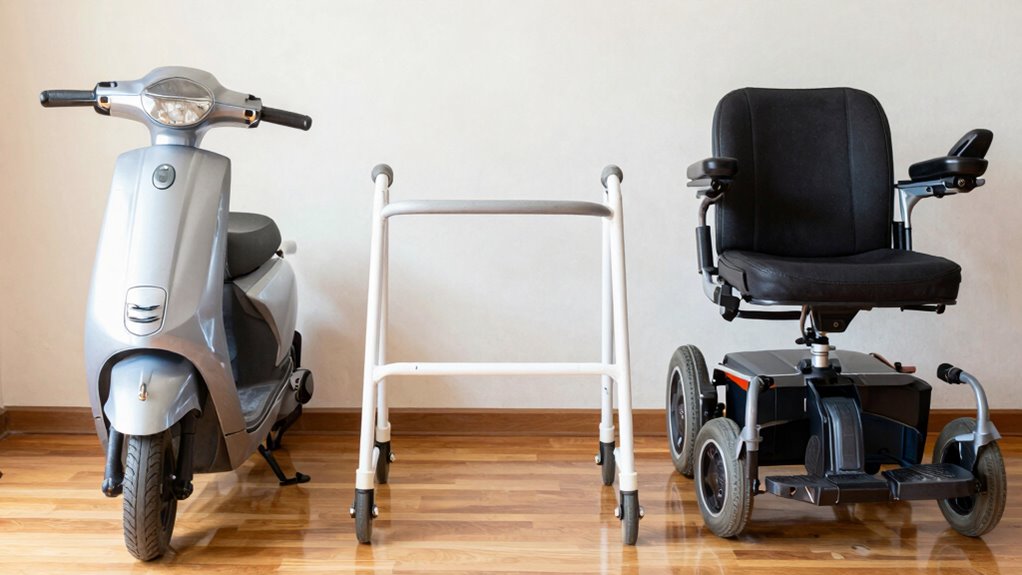
To choose between a scooter, walker, and power chair, you should assess your daily needs, environment, and physical abilities. Consider mobility, comfort, and ease of use—walkers work well for short distances indoors, scooters suit outdoor travel over rough terrain, and power chairs offer support for complex environments. Think about your budget, safety features, and long-term goals. Exploring more details can help you make a confident decision tailored to your lifestyle.

Turn quiet afternoons into listening time
- Thousands of audiobooks, podcasts and originals
- Listen on your phone, tablet or Echo — also offline
- Cancel anytime
Key Takeaways
- Assess your indoor and outdoor environment to determine which device handles terrain and space constraints effectively.
- Consider your physical strength, endurance, and ease of operation for choosing the most suitable mobility aid.
- Evaluate the device’s range, portability, and maintenance requirements to match your lifestyle and travel needs.
- Prioritize safety features like sensors, stabilization, and support for secure and comfortable usage.
- Consult healthcare professionals for personalized advice and testing different options before making a decision.
Products Worth Considering

Theragun Mini 3rd Generation Massage Gun – Travel Essential (Black)

Oral-B iO Series 3 Rechargeable Electric Toothbrush for Adults, Black, with 2 Brush Heads and Travel Case

Oral-B iO Series 5 Rechargeable Electric Toothbrush with Travel Case and 3 Brush Heads, Black
As an affiliate, we earn on qualifying purchases.
Deciding Which Mobility Aid Is Best for You
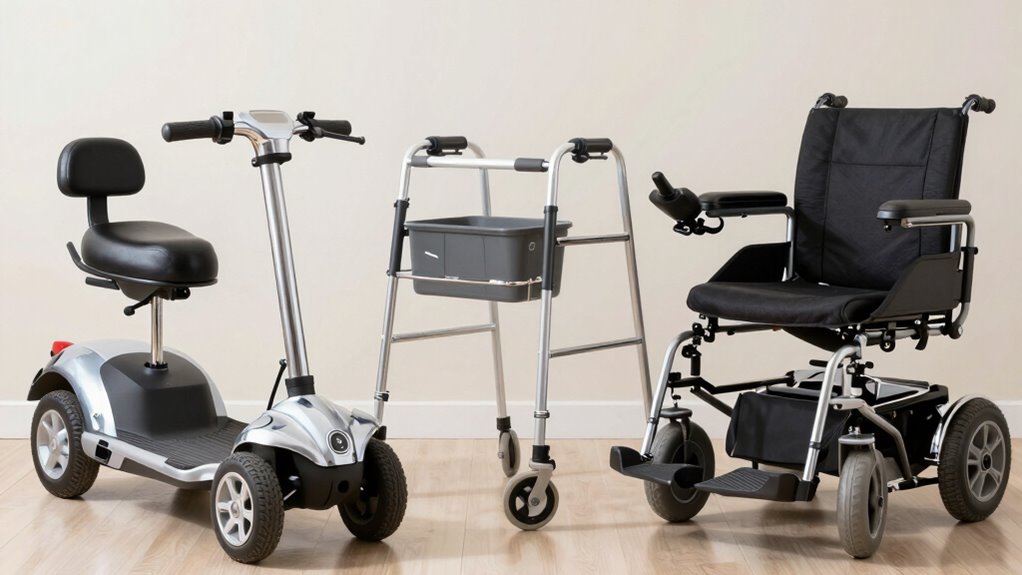
How do you determine which mobility aid suits your needs best? Start by considering your daily activities and environment. Think about whether you need something portable for travel or a sturdy option for home use. Travel accessories can enhance your mobility device, making trips easier. Additionally, custom fittings are essential, ensuring your chosen aid fits comfortably and supports proper posture. For example, a walker with adjustable height or a scooter with tailored controls can improve your experience. Assess how much support you require—do you need a lightweight option or something more supportive? By evaluating your lifestyle and consulting with a healthcare professional, you can choose a mobility aid that fits seamlessly into your routine, offering both comfort and independence. Incorporating personalized in-home care services can further support your mobility and overall well-being.
Assess Your Mobility Needs and Lifestyle
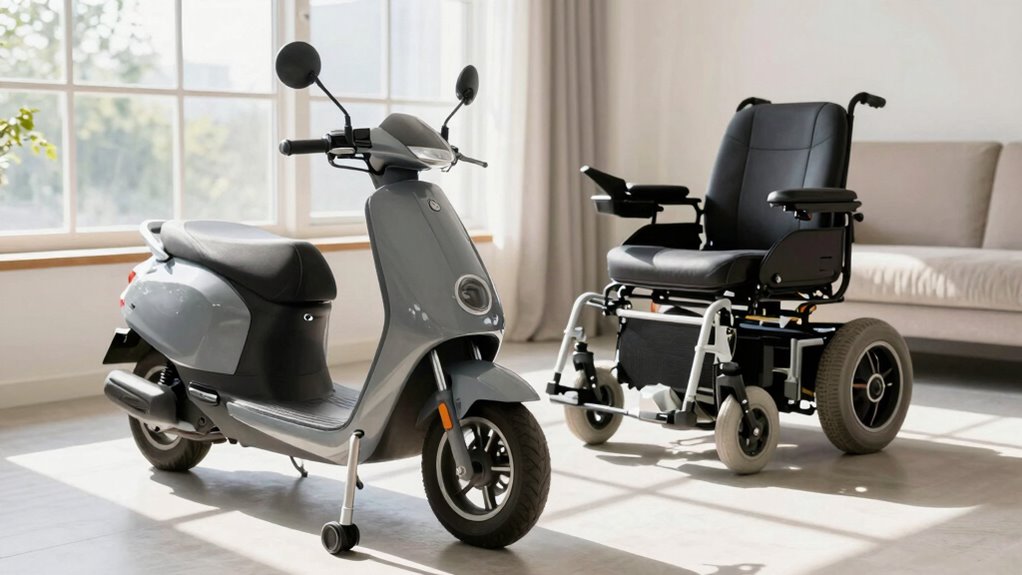
To choose the right mobility device, consider your daily activity needs and whether you mostly stay indoors or go outside. Think about your long-term mobility goals and how they might change over time. Understanding these factors helps you select a solution that fits both your lifestyle and future plans. Additionally, evaluating the contrast ratio of your options can ensure better visibility and comfort during use. Incorporating features like adjustable seating height and considering your environment can further enhance your overall experience. Recognizing the importance of support and boundaries in your decision-making can also help you find a device that balances safety with independence. Being aware of current mobility device trends can also assist you in choosing innovative and suitable options. Exploring environmental impact considerations, such as energy efficiency and sustainability, can guide you toward more eco-friendly choices.
Daily Activity Requirements
Understanding your daily activity requirements is essential when choosing the right mobility device. Think about how you move and what tasks you need to accomplish daily. Consider these factors:
- Will you need to travel long distances or stay close to home?
- Do you prefer a device with vibrant color options to match your style?
- Is ergonomic design important for comfort during extended use?
- Will you use the device indoors, outdoors, or both?
A comprehensive assessment of these factors can also help you explore emerging trends in digital publishing, which may offer additional resources and innovations in mobility solutions.
Your answers will help determine whether a scooter, walker, or power chair suits your lifestyle best. For example, scooters often feature customizable color options and ergonomic design, making them ideal for outdoor errands. Matching your device to your activity level ensures comfort, convenience, and independence.
Indoor vs. Outdoor Use
Choosing the right mobility device depends heavily on where you’ll be using it most. If most of your time is spent indoors, consider how your indoor décor and narrow doorways might affect your choice. Power chairs and walkers are often better suited for indoor use because they can maneuver easily through tight spaces. For outdoor terrain, look at the stability and durability of the device. Scooters are typically designed to handle uneven surfaces and rougher terrain, making them ideal for outdoor adventures. Think about how often you’ll shift between indoor and outdoor environments. If you need a device that performs well in both settings, choose one with versatile features. Additionally, understanding the environmental factors of your surroundings can help you select a device that offers safer, more comfortable movement every day. Being aware of terrain types can also influence your choice, especially if you encounter various surfaces regularly.
Long-term Mobility Goals
Evaluating your long-term mobility goals helps guarantee the device you select will support your lifestyle now and in the future. To do this effectively, consider these factors:
- Will you need travel accessories for convenience during trips or outings?
- How important is ergonomic design for comfort during extended use?
- Do you plan to use the device indoors, outdoors, or both?
- Will your mobility needs change over time, requiring adaptability?
- Reflecting on the vintage audio/vinyl revival can remind you of the importance of choosing adaptable and timeless solutions that suit evolving needs.
What Are the Main Types of Mobility Aids?

Mobility aids come in several main types, each designed to help you move more easily and safely. Over time, historical developments have shaped how these aids are designed and used, reflecting changing technological advances and medical understanding. Cultural perceptions also influence acceptance and preference, with some societies favoring traditional walking aids like canes and walkers, while others embrace modern options like scooters and power chairs. The primary types include walkers, which provide stability and support; manual wheelchairs, offering mobility without power; and powered devices like scooters and power chairs, which reduce physical effort. Additionally, the Paint Sprayer Zone highlights that choosing the right equipment involves understanding technical specifications and maintenance practices, which are essential for ensuring reliability and safety. Understanding these main types helps you choose the right aid for your needs, considering both their functionality and the cultural attitudes that might impact your choice.
Compare the Pros and Cons of Scooters, Walkers, and Power Chairs
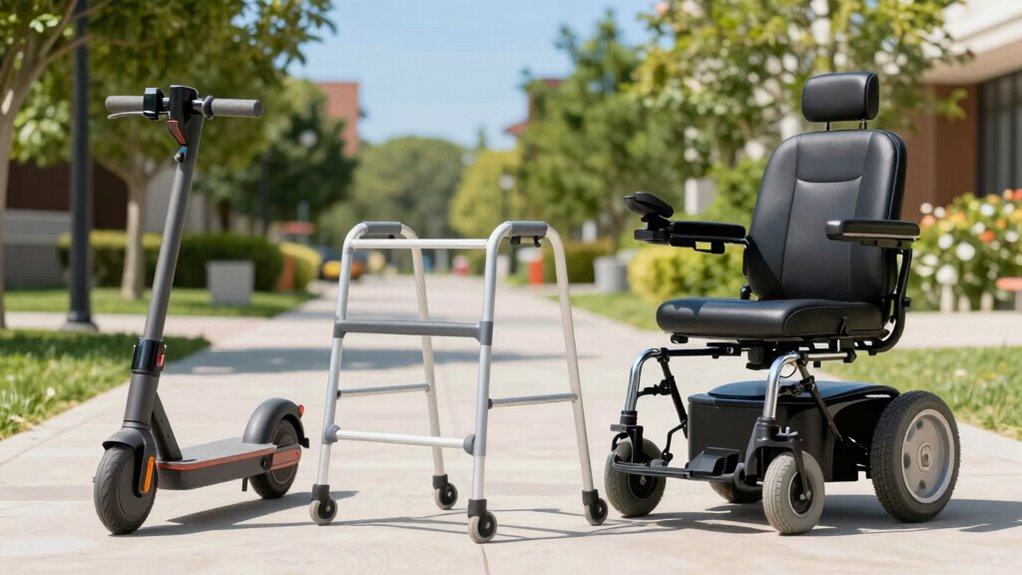
When choosing a mobility aid, you need to evaluate how each option handles your mobility and range needs. Ease of use, along with the costs and maintenance involved, also play a big role in your decision. Comparing these factors helps you find the best fit for your lifestyle and budget. Additionally, considering safety features and how well the device integrates into your daily routine can ensure a more comfortable and secure experience. Understanding ethical considerations related to mobility device choices can also help you make a more informed decision that aligns with your values. Evaluating technology integration can further enhance your mobility experience by providing modern features that improve convenience and safety. Incorporating smart home safety features, such as automated alerts or integrated controls, can also contribute to a safer environment for users of all mobility devices. Being aware of accessibility standards can help ensure the device meets necessary safety and usability requirements.
Mobility and Range
Are scooters, walkers, and power chairs truly equal when it comes to mobility and range? Not quite. Each offers different capabilities:
- Scooters often cover long distances quickly, with ergonomic design focused on user comfort for extended rides.
- Walkers provide stability but limited range, suitable for short trips and indoor use.
- Power chairs excel indoors and outdoors, offering excellent maneuverability but may lack the range of scooters.
- Battery life varies—scooters generally have longer ranges, while walkers don’t rely on batteries at all.
- Proper maintenance, such as cleaning stove glass, can help ensure optimal performance and longevity of mobility devices that rely on batteries.
Your choice depends on your mobility needs; consider how far you need to go and how comfortable you’ll be over time. Each option balances mobility and range differently, impacting your independence.
Ease of Use
Choosing the right mobility device involves more than just range and coverage; ease of use plays a significant role in your day-to-day life. Scooters offer ergonomic design that makes riding comfortable, but they may require some strength and coordination to operate safely. Walkers are straightforward, providing excellent user comfort with minimal learning curve, but they can be less convenient for longer distances. Power chairs excel in ergonomic design, prioritizing user comfort and ease of control through intuitive controls, but they might be more complex for new users. Each device has its pros and cons regarding ease of use, so consider your physical abilities and comfort preferences to find the best fit for your lifestyle. Additionally, household guides can help you evaluate how these devices fit into your home environment for maximum safety and convenience. Incorporating ergonomic design principles from outdoor equipment can also inform choices that improve comfort and usability in mobility devices. When selecting a device, it’s important to consider not only the initial ease of use but also how well it accommodates any changes in your mobility needs over time, which can be influenced by advanced features and technological improvements.
Cost and Maintenance
- Scooters generally have lower initial costs but may need battery replacements over time.
- Walkers are the most budget-friendly upfront, with minimal maintenance.
- Power chairs often come with higher purchase prices and ongoing maintenance costs.
- Maintenance tips include regularly checking batteries, lubricating moving parts, and inspecting tires or wheels.
Choosing the right device depends on your budget and willingness to handle upkeep. Scooters offer convenience with moderate costs, while walkers are the most economical but less versatile. Power chairs provide comfort at a higher expense. Always consider long-term expenses when making your decision.
Which Mobility Device Fits Different Environments?
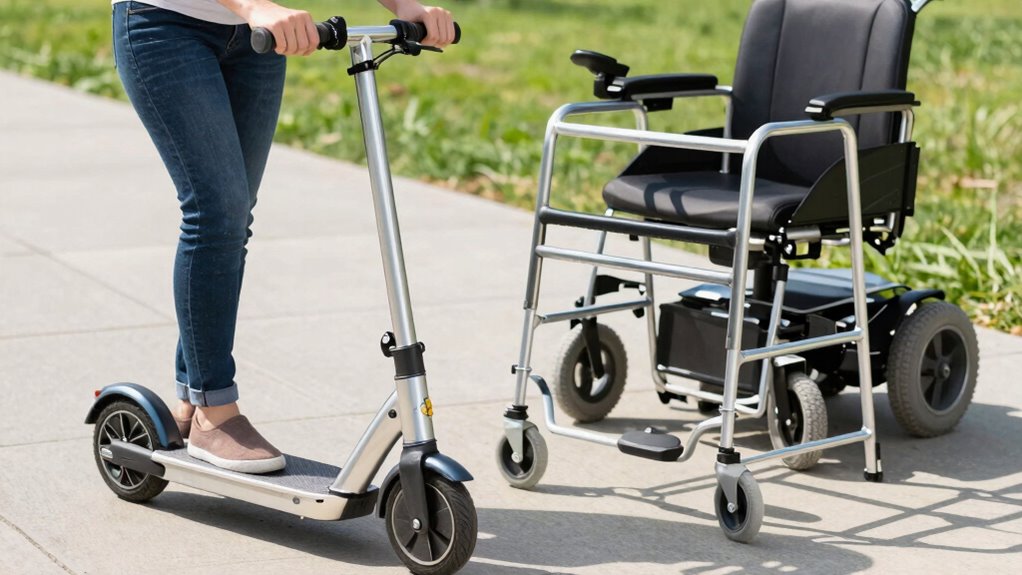
Different environments demand different mobility solutions, and selecting the right device depends on where you’ll be using it most. For indoor spaces like homes or malls, a walker offers stability and ease of use, enhancing accessibility and fostering community integration. Outdoors, a scooter provides greater maneuverability over uneven terrain and longer distances. Power chairs excel in complex environments such as crowded public places or uneven surfaces, offering customized support. Consider this comparison:
| Environment | Suitable Device | Key Benefit |
|---|---|---|
| Indoor/home/mall | Walker | Stability, accessibility |
| Urban streets, parks | Scooter | Maneuverability, outdoor use |
| Crowded public areas | Power Chair | Custom support, community participation |
| Rough terrains | Power Chair | Off-road capability |
Choosing the right device enhances independence and community participation. Additionally, understanding sauna safety tips can help prevent heat-related health issues during relaxation activities. Being aware of mobility device regulations can also ensure safe and compliant use in various environments. Recognizing the importance of inclusive design principles can further improve accessibility across different settings. Moreover, consulting with experts or providers who specialize in Gold IRA markets can offer valuable insights into investment options for long-term financial security.
How Do Your Physical Strength and Endurance Influence Your Choice?
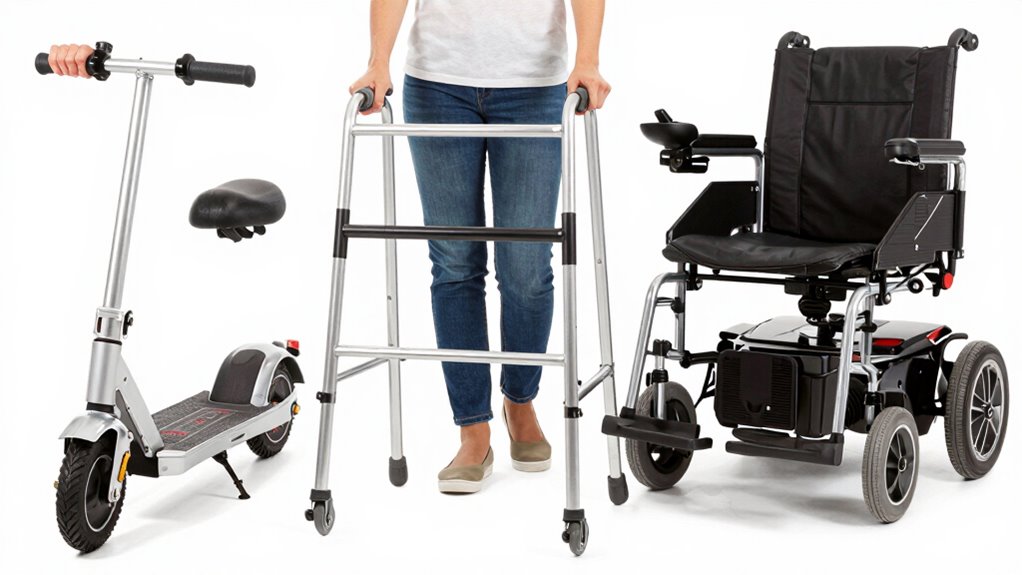
Your physical strength and endurance play a crucial role in determining which mobility device will work best for you. Conducting a strength assessment helps identify what you can comfortably handle. Consider these factors:
- Physical endurance: If you tire quickly, a power chair might be better than a walker or scooter.
- Strength assessment: Evaluate your upper body strength to operate a scooter or power chair effectively.
- Mobility needs: For limited strength but good endurance, a mobility scooter may suffice.
- Daily activity level: If you can stand or walk short distances, a walker could be suitable.
- Market trends: Staying informed about mobility device innovations can help you make a better choice aligned with current options.
Your choice hinges on honest self-assessment of your strength and endurance, ensuring you select a device that offers safety, comfort, and independence.
What Budget Options Are Available for Mobility Aids?

Budget considerations are a key factor when choosing a mobility aid, as prices can vary widely based on the device’s features and quality. Fortunately, there are affordable options available, so you don’t have to compromise safety or comfort. Look into funding sources like Medicare, Medicaid, or private insurance, which may cover part of the cost. Additionally, many community programs, non-profits, and local charities offer financial assistance or discounts for mobility aids. Used or refurbished devices can also be a cost-effective solution, provided they’re in good condition. Comparing prices and exploring these funding sources help you find a device that fits your financial situation while meeting your mobility needs. This approach guarantees you get reliable support without overspending.
What Safety Features Should You Look For?
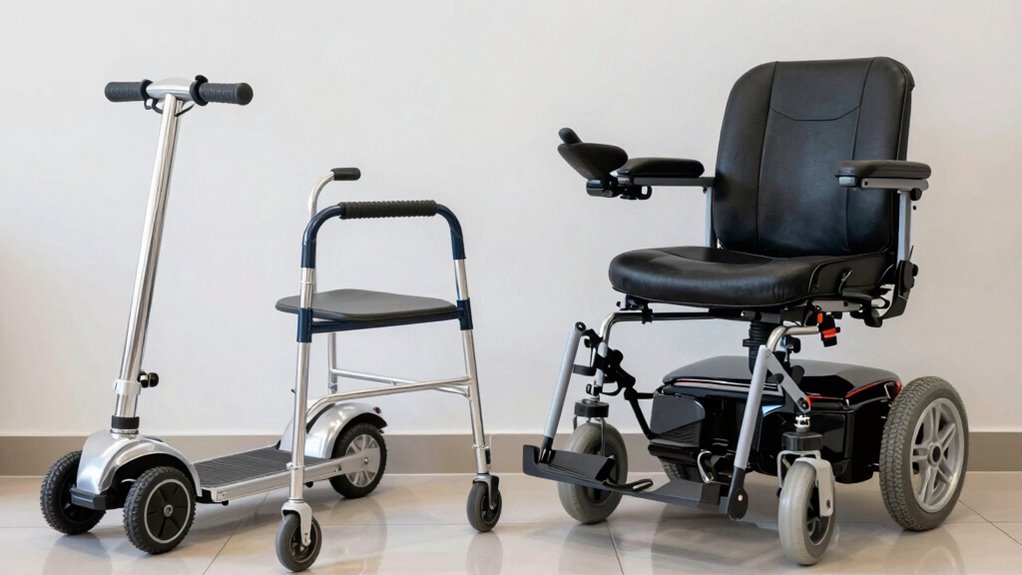
When choosing a mobility device, safety features like emergency stop mechanisms are essential for quick stops in emergencies. Anti-tip technologies help prevent falls on uneven surfaces or during sharp turns. Prioritizing these features guarantees your safety and confidence while using your device.
Emergency Stop Mechanisms
Have you considered how a quick stop could prevent accidents in an emergency? Emergency stop mechanisms are crucial safety features that can make all the difference. Look for devices with reliable emergency protocols and safety sensors that activate instantly. To guarantee safety, check if the device has:
- A clearly accessible emergency stop button
- An automatic stop feature triggered by safety sensors
- Easy-to-use manual controls for immediate halting
- A system that integrates with emergency protocols for quick response
These features allow you to pause movement swiftly, reducing the risk of falls or injuries during unexpected situations. An effective emergency stop mechanism is indispensable for safety, giving you peace of mind and confidence in your mobility device.
Anti-Tip Technologies
While emergency stop mechanisms help prevent accidents during sudden stops, ensuring stability during regular use is equally important. Anti-tip sensors are a key safety feature to look for, as they detect when the device is at risk of tipping and automatically slow or stop movement. These sensors provide real-time feedback, preventing dangerous falls during sharp turns or uneven surfaces. Device stabilization mechanisms also play a crucial role, offering enhanced balance and support on inclines or rough terrain. When choosing a mobility device, prioritize systems with reliable anti-tip sensors and solid stabilization features. These safety technologies help maintain balance, reduce the risk of falls, and give you confidence while steering different environments.
How to Test and Try Out Mobility Devices Before Buying
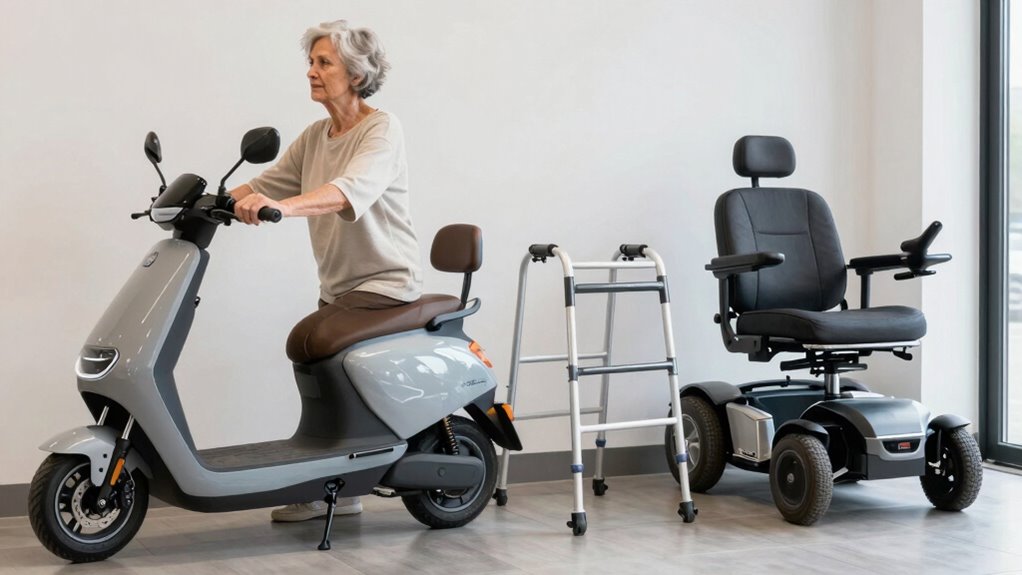
Before making a purchase, testing out different mobility devices is crucial to see which one feels most comfortable and suits your needs. When trying them, focus on key features:
- Ergonomic grip: Ensure the handles feel comfortable and secure in your hands.
- Test maneuverability: Move around to see how easy it is to turn and navigate tight spaces.
- Comfort and support: Sit or stand to check if the device provides proper back support and stability.
- Color options: Choose a device with colors that appeal to you, making it easier to personalize and find.
Take your time during trials, and don’t hesitate to ask questions about each feature. Trying out different models helps you find the perfect fit for your lifestyle.
How to Maintain and Troubleshoot Your Mobility Aid
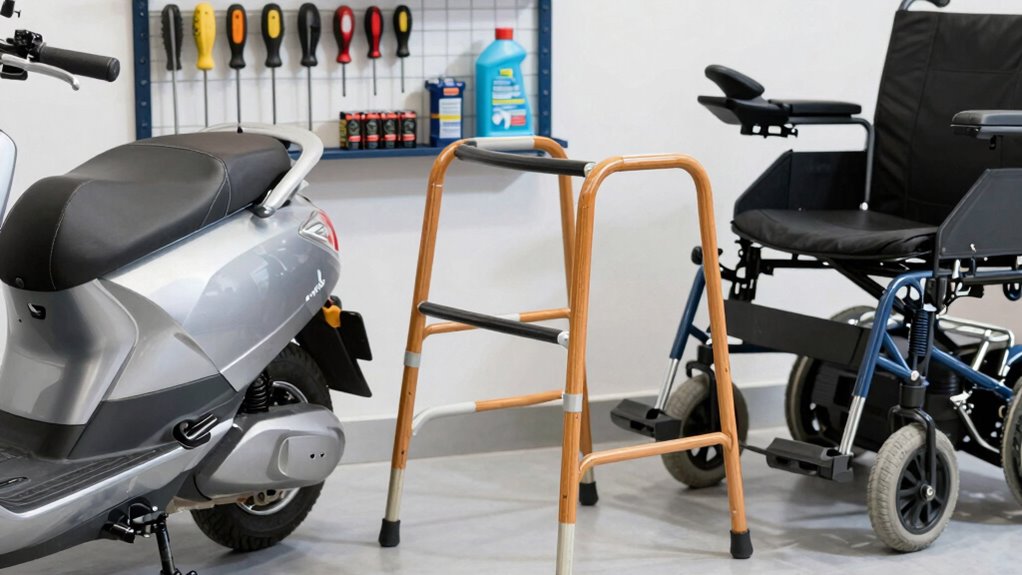
Maintaining your mobility aid is essential to guarantee it functions safely and reliably. Regularly check its accessibility features, like brakes, tires, and batteries, to assure they operate properly. Clean your device frequently to remove dirt and debris that can affect performance and user comfort. Keep an eye on warning signs, such as unusual noises or decreased battery life, and address issues promptly. Troubleshooting common problems, like sluggish movement or difficulty steering, can often be resolved by adjusting settings or replacing worn parts. Always follow the manufacturer’s maintenance guidelines. Proper upkeep not only prolongs your device’s lifespan but also ensures safety and comfort during use. Staying proactive with maintenance helps you enjoy smooth, secure mobility, regardless of the device you rely on.
Frequently Asked Questions
Are There Any Weight Restrictions for Scooters, Walkers, or Power Chairs?
Yes, there are weight restrictions for scooters, walkers, and power chairs. These devices come with specific weight limits to guarantee safety and ideal performance. Always check the manufacturer’s safety guidelines before purchasing or using them. Exceeding weight limits can compromise the device’s stability and safety. By adhering to these safety guidelines, you help prevent accidents and ensure the equipment functions effectively, providing you with reliable mobility support.
How Long Can Different Mobility Aids Be Used Continuously?
You can usually use mobility aids continuously for several hours, but it depends on battery life and comfort features. Scooters often run 8-12 hours on a full charge, while power chairs might last 6-10 hours. Walkers don’t rely on batteries, so they’re usable all day. Keep in mind, comfort features like padded seats or adjustable settings can affect how long you feel comfortable using your device without breaks.
Can Mobility Aids Be Customized for Special Needs?
Yes, mobility aids can definitely be customized for special needs. You can opt for personalized features like adjustable seats, custom grips, or enhanced support to suit your comfort. Adaptive technology also plays a big role, allowing devices to be tailored with specialized controls or extra stability features. By customizing your mobility aid, you guarantee it fits your specific requirements, making daily movement safer and more comfortable.
What Are the Insurance Options or Coverage for Mobility Devices?
Nearly 70% of insurance plans offer coverage for mobility devices. You can explore insurance coverage options through your health insurance, Medicare, or Medicaid, which often include partial or full reimbursement. Additionally, check warranty options with manufacturers, as they sometimes bundle coverage for repairs or replacements. Always review policy details to understand what’s covered, and consider consulting with your provider to maximize benefits and make certain you get the right device for your needs.
Do Mobility Aids Require Regular Professional Assessments?
Mobility aids generally require regular professional assessments to guarantee they meet your accessibility features and keep you safe. These assessments help identify any necessary adjustments or maintenance, preventing accidents. As your needs evolve, a professional can recommend upgrades or new devices. Regular check-ups also ensure your mobility aid continues to support user safety effectively, providing peace of mind and maximum independence.
Conclusion
Choosing the right mobility aid isn’t just about comfort or convenience—it’s about truly enhancing your independence. Ironically, the device that seems perfect in the store might not feel quite right once you’re home. So take your time, test thoroughly, and don’t settle for less. After all, the goal isn’t just to get around, but to do so confidently and safely—because the best mobility aid is the one that makes you forget you’re even using one.