
TL;DR

Get comfort and care essentials delivered free — and shop member deals
- Fast, free delivery on millions of items
- Access to Prime Big Deal Days deals on October 6–7
- Prime Video, Amazon Music and more included
A study published in Frontiers in Aging found unusually high late-life survival among women in Bolotana, Sardinia. Researchers estimate 13.8% of women there who reach 70 live to 100, but the study identifies a pattern, not its causes, and the village is being considered as a possible new blue zone.
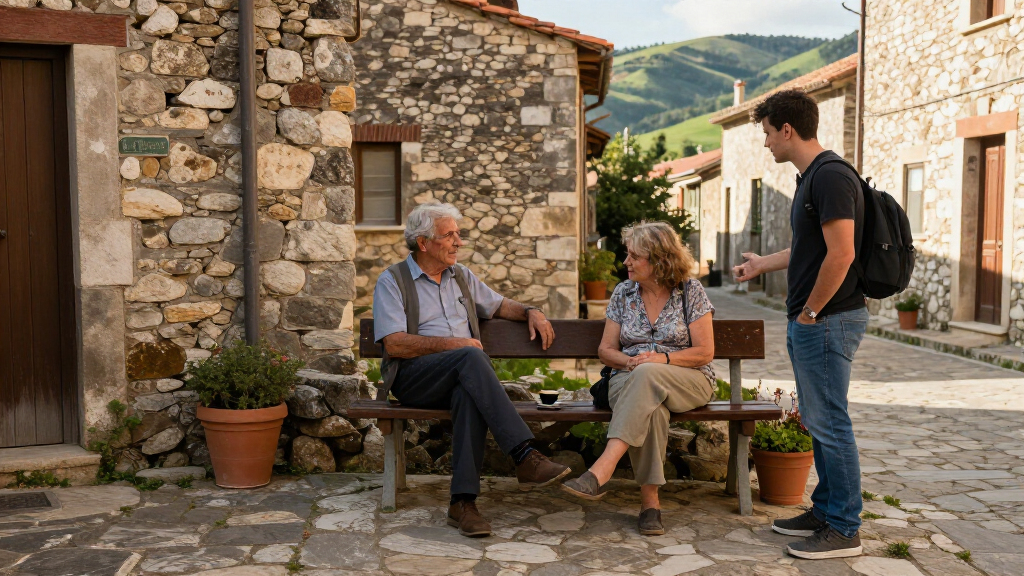
A study of historical records from Bolotana, a Sardinian village of about 2,300 people, found unusually high survival into very old age among women, prompting researchers to suggest the community may qualify as a new blue zone. The researchers estimate that 13.8% of women who reach age 70 in Bolotana live to 100, compared with about 3.5% in Italy and 3.6% in the United States; the findings do not establish why residents live so long.
Published in Frontiers in Aging, the study examined civil records and church archives to reconstruct the lives of people born in Bolotana between 1900 and 1925. Researchers documented 38 centenarians among 3,060 people born in the village during that period. They compared survival after age 70 and life expectancy at that age to assess whether Bolotana showed the pattern associated with a blue zone.
The team estimates that a Bolotana woman who reaches 70 has nearly 21 additional years of life expectancy. The study places Bolotana women second only to women in Hong Kong on the international benchmarks it assessed: life expectancy at 70 and the likelihood of reaching 100. These are population estimates, not predictions about any individual’s lifespan.
The researchers say they checked ages against birth, death and baptismal records. In 2024, six people aged 100 or older were living in the village, a concentration the study estimates was roughly 11 times the U.S. rate. That figure is a snapshot for that year, while the main analysis uses historical birth cohorts.
Why Bolotana’s Records Matter
Reports of extreme longevity can be difficult to evaluate if ages are recorded inaccurately. Bolotana’s municipal and church archives gave researchers multiple sources with which to verify births and deaths, addressing a concern that has shaped debate over claims of exceptional lifespans. Co-author S. Jay Olshansky, professor emeritus of epidemiology at the University of Illinois Chicago School of Public Health, said the records made it possible to independently check ages.
If further research confirms the survival pattern and identifies contributing factors, Bolotana could provide a useful case for studying healthy aging in a real community. The findings may inform research into how local conditions, family ties and behavior relate to longevity. They do not show that any single lifestyle choice causes people to live to 100, nor do they establish that those conditions can be reproduced elsewhere.
longevity dietary supplements for women
As an affiliate, we earn on qualifying purchases.
As an affiliate, we earn on qualifying purchases.
A Different Sardinian Pattern
Sardinia has long drawn attention from aging researchers. An area of the island was identified more than two decades ago as a blue zone, with unusually high longevity, particularly among men. Bolotana presents a different pattern: women are the standout group in the new analysis.
Blue zones are communities identified for unusually long lives compared with surrounding populations. Other examples cited in the report include Okinawa, Japan, and the Nicoya Peninsula in Costa Rica. The Bolotana study asks whether this village meets that standard by examining late-life survival, rather than relying only on the presence of individual centenarians.
“What makes Bolotana extraordinary is that it has an incredible historical record that allows us to definitively evaluate ages at birth and death.”
— S. Jay Olshansky, study co-author
What the Study Cannot Explain
The analysis shows an unusual survival pattern but does not identify its cause. The researchers say diet, physical activity, social connection, family support and genetics may all contribute; the study does not isolate or measure these factors as explanations. It is also unclear which, if any, can be separated from the village’s broader history and living conditions.
The label “blue zone” is presented as a possibility, not a settled conclusion. While the researchers report validating centenarian ages through records, the findings describe particular historical cohorts and do not establish that the same survival rates apply to today’s residents or future generations. The study’s estimates also compare different populations, so they should be read as population-level measures rather than direct guarantees.
Further Research Into Local Factors
The next step is to investigate which characteristics of Bolotana might help account for its late-life survival pattern. Researchers have identified local food production, a walkable setting and close family and social ties as possible lines of inquiry, alongside genetics. The report does not set out a specific timetable for additional studies.
For now, the study offers evidence that Bolotana merits further attention, not a recipe for extending lifespan. Researchers would need to test possible explanations and assess whether the pattern holds across other populations before drawing conclusions about how people elsewhere might benefit.
Key Questions
Where is Bolotana?
Bolotana is a village on the Italian island of Sardinia, with about 2,300 residents, according to the report.
What did the study find about women reaching 100?
The researchers estimate that 13.8% of women in Bolotana who reach age 70 live to 100. Their estimates for Italy and the United States were about 3.5% and 3.6%, respectively.
Does the study prove why people in Bolotana live longer?
No. The study identifies unusually high survival in the records but does not establish its causes. Diet, walking, social ties, family support and genetics are possibilities for further research.
Has Bolotana been confirmed as a blue zone?
The researchers suggest it may be a new blue zone. The study presents evidence of exceptional late-life survival, but the label remains a possibility rather than a definitive conclusion.
Source: rss
Cold & flu season Picks
humidifiers
As an affiliate, we earn on qualifying purchases.