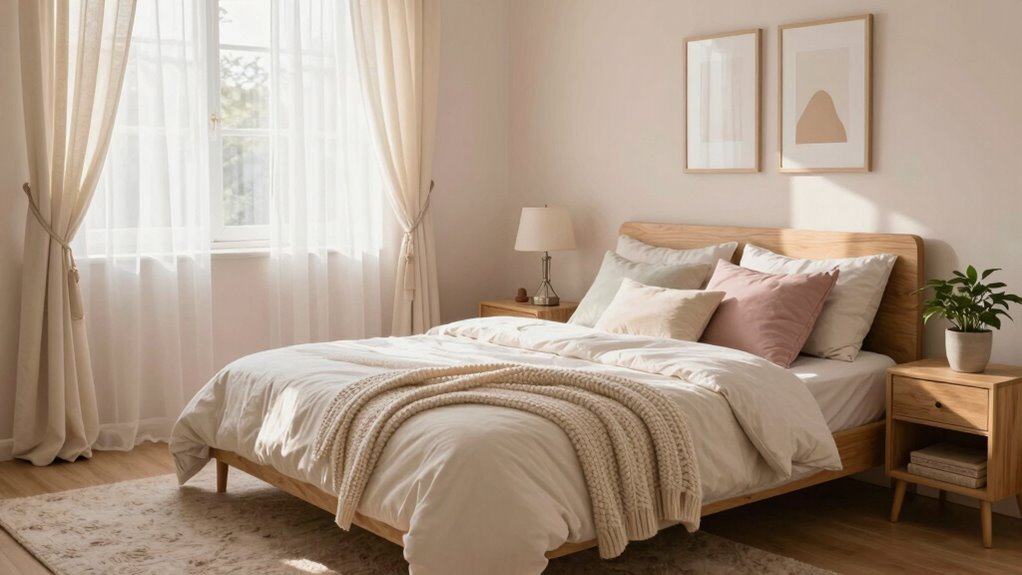

To make your bedroom feel restorative in later life, focus on creating a safe, calm, and personalized space. Use warm, layered lighting and calming colors to promote relaxation. Make sure furniture is supportive, adjustable, and easy to access, with safety features like non-slip rugs and grab bars. Keep the space clutter-free and incorporate personal touches for comfort. Smart technology can enhance safety and independence. Discover more tips to transform your bedroom into a peaceful retreat that nurtures your well-being.
Key Takeaways
- A calm, clutter-free environment with soothing colors and personalized decor promotes relaxation and emotional well-being.
- Proper lighting that adapts to day and night supports circadian rhythms and reduces glare.
- Safe, ergonomic furniture and clear pathways prevent falls and enhance comfort.
- Acoustic comfort through soundproofing and noise masking ensures restful sleep.
- Technology integration, like smart controls and emergency systems, enhances safety and independence.

AbyssZen Adjustable Queen Bed Frame with One Side Rail – Electric Ergonomic Design for Elderly & Seniors – Safe, Durable, and Comfortable for Home Care & Hospital Use
Designed with Your Safety in Mind: Our adjustable bed base is equipped with one sturdy side rail that…
As an affiliate, we earn on qualifying purchases.
As an affiliate, we earn on qualifying purchases.
What Are the Sleep Challenges Older Adults Face?
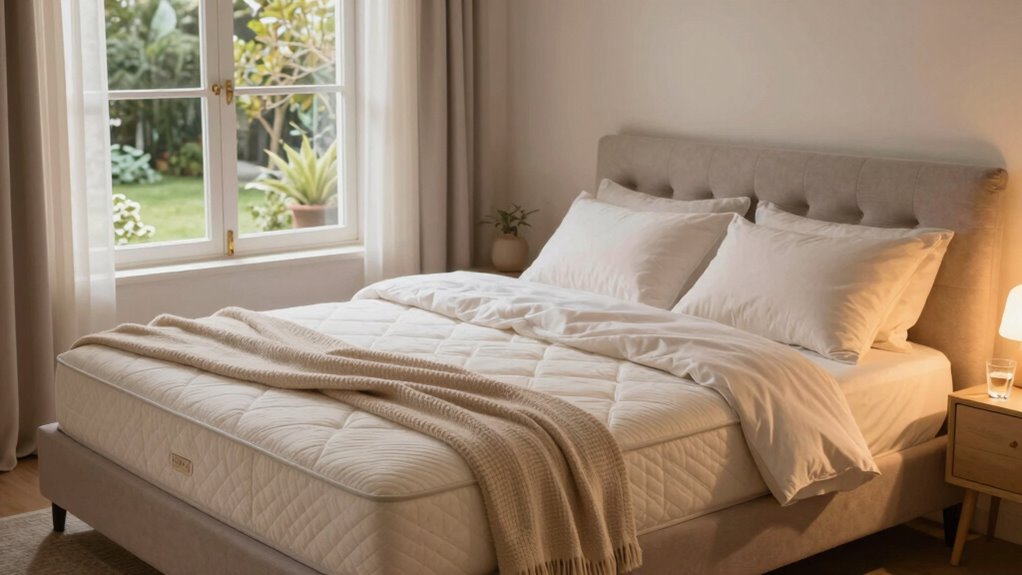
As you age, sleep often becomes more elusive, and many older adults find themselves facing a range of challenges that disrupt restful nights. Changes in sleep patterns are common, causing you to wake more frequently or take longer to fall asleep. You might notice lighter sleep or early morning awakenings that make it hard to get enough restorative rest. Disruptions in your sleep cycle can lead to fatigue and affect your overall well-being. To combat these issues, establishing consistent, restorative routines becomes essential. Going to bed at the same time each night, avoiding caffeine or screens before sleep, and creating a calming environment help support better sleep. Recognizing these challenges allows you to take steps toward improving your sleep quality and feeling more refreshed each day. Incorporating natural sleep aids and relaxation techniques can also promote a more restful night. Additionally, understanding home environment factors, such as temperature and air quality, can significantly influence sleep comfort. Maintaining optimal indoor air quality can reduce respiratory disturbances that may interfere with sleep, and paying attention to sleep environment factors like noise levels and bedding can further enhance sleep quality. Moreover, being aware of sleep cycle disruptions helps in adopting strategies to maintain a consistent sleep rhythm.

Veken Rug Gripper Pad for Hardwood Floors, Thick Non Slip Rug Pads for Area Rugs, Rug Grippers for Tile Floors, Under Carpet Anti Skid Mat, Keep Your Rugs Safe and in Place, 2×3 Ft
Non-slip Protection: Our pad's signature grip keeps rugs securely in place, preventing bunching and sliding during daily use….
As an affiliate, we earn on qualifying purchases.
As an affiliate, we earn on qualifying purchases.
How to Choose Safe and Supportive Bedroom Furniture for Seniors

When choosing bedroom furniture for seniors, safety should be your top priority. Look for pieces with sturdy construction, non-slip features, and rounded edges to prevent accidents. Additionally, opt for adjustable furniture to accommodate changing needs and enhance comfort. Incorporating comparative advantage principles can also help select furniture that maximizes usability and long-term value. To further promote safety, consider ergonomic design features that support proper posture and reduce strain during daily activities. Utilizing lightweight and easy-to-maneuver furniture can also facilitate safer movement within the space. Incorporating water-resistant materials can help maintain cleanliness and safety in case of spills or moisture. Being aware of airless paint spraying tips can also ensure that any updates or refinishing projects in the bedroom are completed safely and efficiently.
Prioritize Safety Features
Choosing safe and supportive bedroom furniture is essential to prevent falls and injuries for seniors. Focus on security measures like non-slip rugs, sturdy rails, and furniture with rounded edges to reduce hazards. Prioritize ergonomic design to guarantee comfort and proper support, which can lessen strain and improve posture. Look for beds with a low height to make getting in and out easier and safer. Secure furniture to the wall if necessary to prevent tipping. Ensure that light switches are easily reachable and that there’s adequate lighting to avoid trips. Incorporating mind-body healing practices can also help seniors manage stress and promote overall well-being. Additionally, selecting furniture made from safe and supportive materials can enhance durability and comfort. Using appropriate furniture materials is crucial for long-term safety and comfort. Paying attention to bedroom layout can further reduce clutter and create clear pathways for safe movement. Creating a clutter-free environment is especially important in natural and outdoor environments, where uneven terrain can increase risk. By combining these safety features, you create a bedroom environment that promotes confidence, independence, and peace of mind. Your goal is a space that’s as supportive and secure as it is restful.
Opt for Adjustable Pieces
Opt for adjustable bedroom furniture to enhance safety and support for seniors. Adjustable beds allow you to customize your sleeping position, reducing strain on your back and joints, and making it easier to get in and out of bed. Look for models with easy-to-use controls and sturdy frames to guarantee stability. Incorporate art and culture elements into your bedroom decor to create a calming and inspiring environment that promotes relaxation. Pair your bed with ergonomic chairs that provide proper lumbar support, whether for relaxing, reading, or dressing. These chairs promote good posture and help prevent discomfort. Choosing adjustable pieces ensures your bedroom adapts to your changing needs, reducing fall risks and supporting independence. Incorporating supportive furniture promotes a more restful and secure environment that encourages restful sleep and easy movement in later years. Regularly monitoring soil moisture and choosing supportive furnishings contribute to a more comfortable and secure space. Additionally, selecting body-friendly materials for furniture can help prevent irritation and discomfort, making your space more accommodating as you age. Considering ergonomic design principles can further optimize comfort and safety in your bedroom environment.
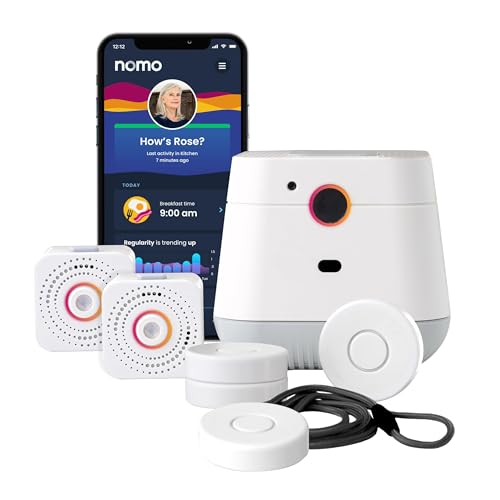
NOMO Smart Care Medical Alert System, Fall Detection for Seniors, WiFi in Home Monitoring Safety System, Emergency Call Button, Custom Fall Alert, Virtual Caregiver, 60-Day Trial, Monthly Subscription
NOMO SMART CARE ESSENTIAL KIT – A complete in-home monitoring safety system featuring a Smart Hub, two motion…
As an affiliate, we earn on qualifying purchases.
As an affiliate, we earn on qualifying purchases.
How to Create a Calm, Relaxing Atmosphere With Colors and Decor
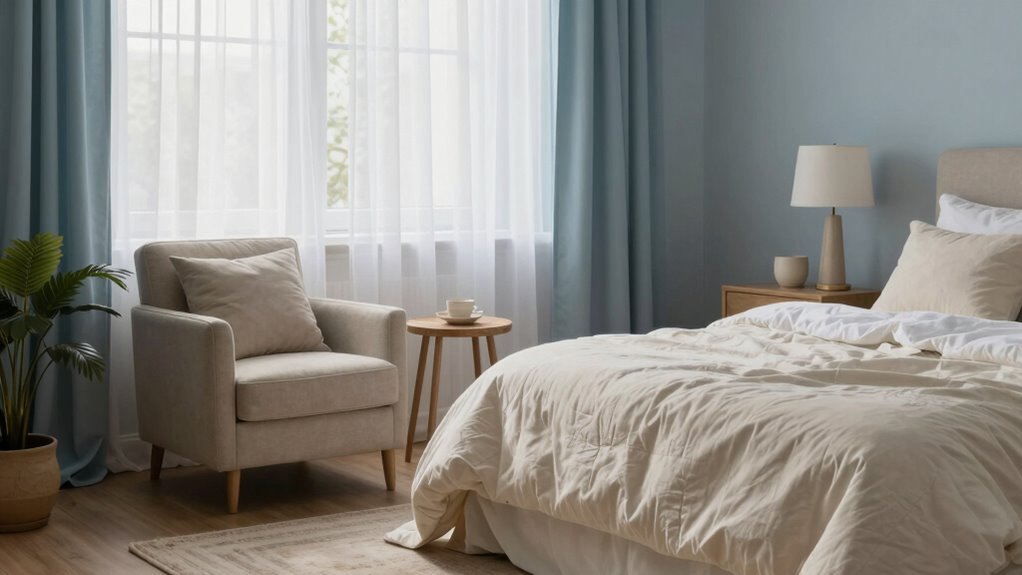
Creating a calm, relaxing atmosphere in a bedroom starts with selecting the right colors and decor. Color psychology plays a key role—softer hues like blues, greens, and neutrals evoke tranquility and reduce stress. These calming shades help you unwind and feel more at peace. Incorporate decorative accents that complement this soothing palette, such as textured throw pillows, gentle artwork, or natural elements like plants. Keep clutter to a minimum to create a sense of order and serenity. The goal is to craft a space that feels inviting and restful, so avoid overly bright or stimulating colors. Instead, focus on subtle, harmonious tones and simple decor that promote relaxation and comfort, making your bedroom a true sanctuary for restorative sleep and rejuvenation. Embracing minimalism allows you to do more with less, fostering an environment that emphasizes clarity and calm. Additionally, understanding the impact of Color psychology can help you select hues that best support your well-being and relaxation. When choosing your decor, consider sustainable options that are both eco-friendly and contribute to a peaceful atmosphere.

HUMIIEYE Northern Light Projector, Battery Operated Aurora Night Light, 16 Colors Galaxy Lamp Ocean Wave Ceiling Projector Mood Ambient Lighting for Bedroom Party Adults Kids Room Toddler Girl Gift
【Create The Perfect Vibe】 This battery-operated northern light projector brings the beauty of 16 dazzling aurora light colors…
As an affiliate, we earn on qualifying purchases.
As an affiliate, we earn on qualifying purchases.
What’s the Best Lighting Setup for Better Sleep and Waking Up Refreshed?

Good lighting plays an essential role in supporting restful sleep and a revitalizing wake-up. To enhance sleep hygiene, opt for soft, warm lighting in the evening to signal your body it’s time to wind down. Dimmer switches or adjustable mood lighting create a calming atmosphere, reducing exposure to blue light that can interfere with melatonin production. In the morning, use bright, natural light or daylight-mimicking bulbs to help you wake up feeling refreshed. Keep lighting consistent and avoid harsh, overhead fluorescents, which can disrupt your circadian rhythm. Incorporating layered lighting—combining task, ambient, and mood lighting—allows you to customize your space for relaxation or activity. Proper lighting setup can also help prevent eye strain and improve overall sleep quality. Understanding how contrast ratio impacts image quality can help you choose lighting that minimizes glare and enhances visual comfort, contributing to better sleep. This setup supports both quality sleep and a more energized start to your day.
How to Make Your Bedroom Easy to Access and Use

Creating a bedroom that’s easy to access starts with keeping pathways clear and free of clutter. Make sure lighting controls are simple to operate from your bed, and choose storage solutions that are within easy reach. These adjustments help you move safely and use your space comfortably every day.
Clear Pathways and Walkways
Ensuring clear pathways and walkways in your bedroom is essential for safe and easy movement, especially as mobility becomes more important with age. Keep furniture arranged to allow at least 24 inches of space around your bed and other key pieces. Avoid clutter, and select a decorative headboard that doesn’t protrude too much, reducing obstacles. Incorporate cozy textiles, like plush rugs, that add comfort without creating tripping hazards. Use furniture with rounded edges or low profiles to minimize accidents. Clear, unobstructed routes help you reach essential areas easily, whether you’re getting in and out of bed or accessing storage. Prioritizing open, well-defined pathways ensures your bedroom remains a safe, restful haven, supporting independence and peace of mind.
Easy-to-Use Lighting Controls
Accessible lighting controls are essential for making your bedroom safe and easy to navigate, especially as mobility changes. Smart bulbs allow you to adjust lighting levels remotely or with voice commands, reducing the need to get up and search for switches. Dimmer switches give you precise control over brightness, helping you create a calm atmosphere or brighter light when needed. Installing smart bulbs and dimmer switches in key areas, like bedside lamps and ceiling fixtures, simplifies your lighting setup. These controls minimize the risk of tripping or accidents at night and make it easier to customize lighting to suit your mood or activity. With accessible lighting options, you’ll find your bedroom feels more comfortable, safe, and restorative as you age.
Accessible Storage Solutions
To make your bedroom easier to navigate as you age, consider organizing your storage in ways that prioritize accessibility. Use decorative storage options, like woven baskets or stylish bins, to keep essentials within easy reach while adding aesthetic appeal. Opt for ergonomic furniture, such as beds with built-in drawers or nightstands with pull-out shelves, to reduce bending and reaching. Keep frequently used items, like glasses or medication, in open or low shelves for quick access. Avoid clutter by regularly decluttering and reorganizing your space. Incorporate furniture with smooth, easy-to-open mechanisms to minimize effort. These thoughtful storage solutions create a safer, more comfortable environment that supports your independence and makes daily routines more manageable.
How to Manage Noise and Disruptions for Better Sleep Quality
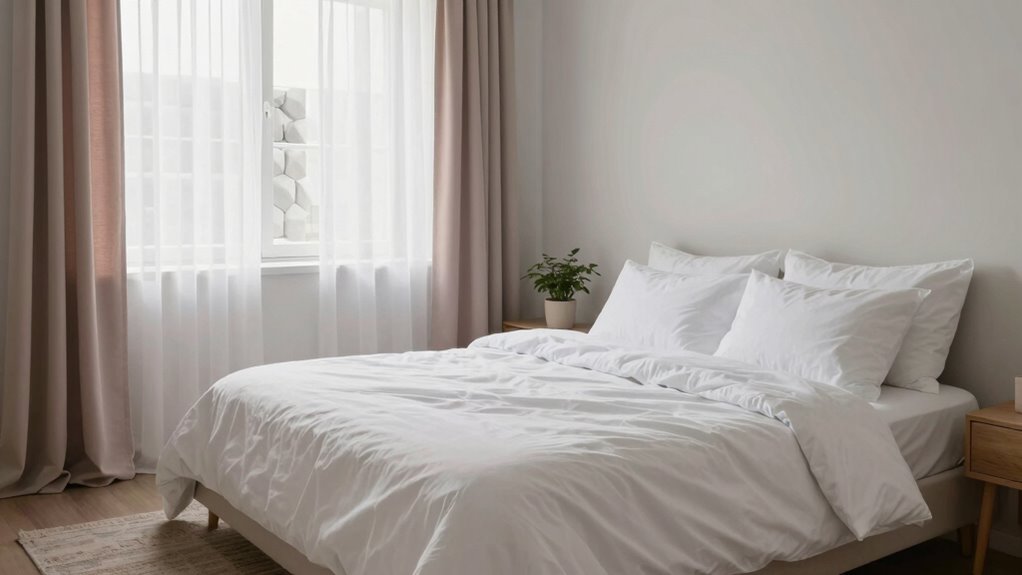
Living in a noisy environment can profoundly disrupt your sleep, especially as you age when sensitivity to sound often increases. To create a more peaceful bedroom, consider soundproofing techniques like sealing gaps around windows and doors or adding heavy curtains and rugs to absorb noise. You can also use noise canceling devices, such as white noise machines or earplugs, to block out disruptive sounds. These tools help mask sudden noises and create a consistent sound environment that promotes restful sleep. Maintaining a quiet, calming space is essential for restorative sleep in later life. By actively managing noise, you make your bedroom a sanctuary for relaxation and rejuvenation. Small adjustments can greatly enhance your sleep quality and overall well-being.
What Technology Can Help Maintain Independence and Safety?
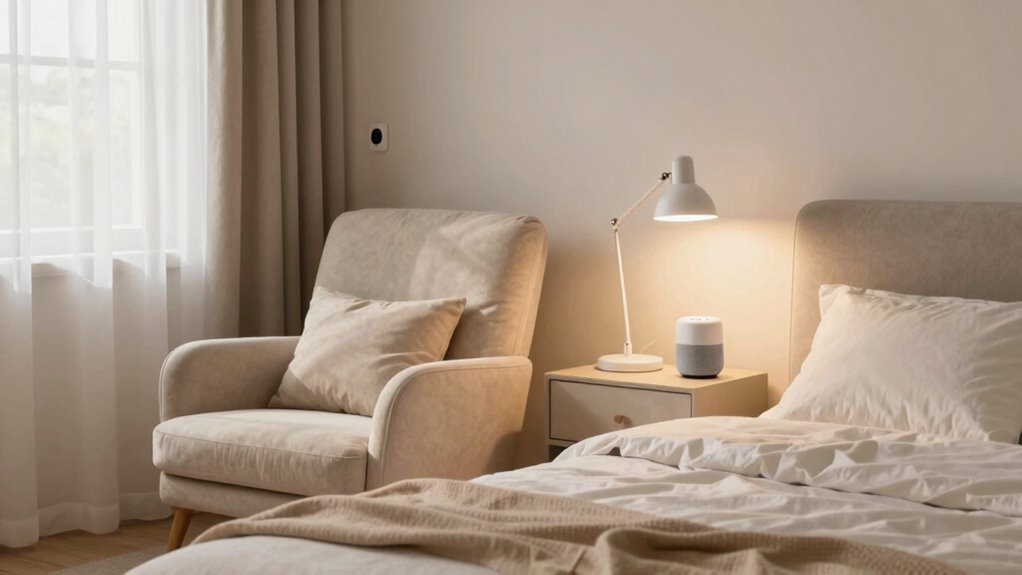
Smart home automation and emergency alert systems can be game-changers for maintaining your independence and safety. With these technologies, you can control lights, locks, and thermostats easily, reducing risks and increasing comfort. Additionally, emergency alerts guarantee help is just a push of a button when you need it most.
Smart Home Automation
Advances in home automation technology are transforming the way older adults maintain their independence and safety. Smart lighting allows you to customize your bedroom environment, ensuring gentle illumination that’s easy to control. With voice control, you can effortlessly adjust lights, temperature, or even curtains without leaving your bed. This technology reduces the need to reach for switches or remotes, minimizing fall risks and promoting convenience. Automated lighting can be set to turn on at specific times or respond to your voice commands, creating a comfortable, safe space. By integrating these features, your bedroom becomes more adaptable to your needs, helping you stay independent longer. Smart home automation enhances safety and comfort, making your bedroom a truly restorative space.
Emergency Alert Systems
You can enjoy:
- Easy-to-use wearable devices or pendants
- 24/7 monitoring services
- Instant contact with emergency responders
- Location tracking features
- Compatibility with home automation for added safety
With these tools, you stay connected and protected, ensuring help arrives fast when seconds matter. Emergency alert systems are essential for fostering a sense of security, so you can focus on enjoying your space and life with peace of mind.
How to Personalize Your Bedroom for Comfort and Emotional Well-Being

Personalizing your bedroom is essential for creating a space that promotes both comfort and emotional well-being as you age. Your personal decor reflects your style and memories, making the space feel truly yours. Incorporate items that bring you joy, like cherished photos, favorite artwork, or meaningful keepsakes. Soft textiles, such as cozy blankets and plush pillows, enhance emotional comfort and physical relaxation. Consider calming colors that soothe your mind and create a peaceful atmosphere. Adding a few personal touches makes your bedroom feel safe and inviting, helping you unwind after a long day. When your environment resonates with your personality and memories, it fosters a sense of belonging and emotional stability, making your bedroom a restorative sanctuary.
Tips for Keeping Your Bedroom Safe and Comfortable With Regular Maintenance
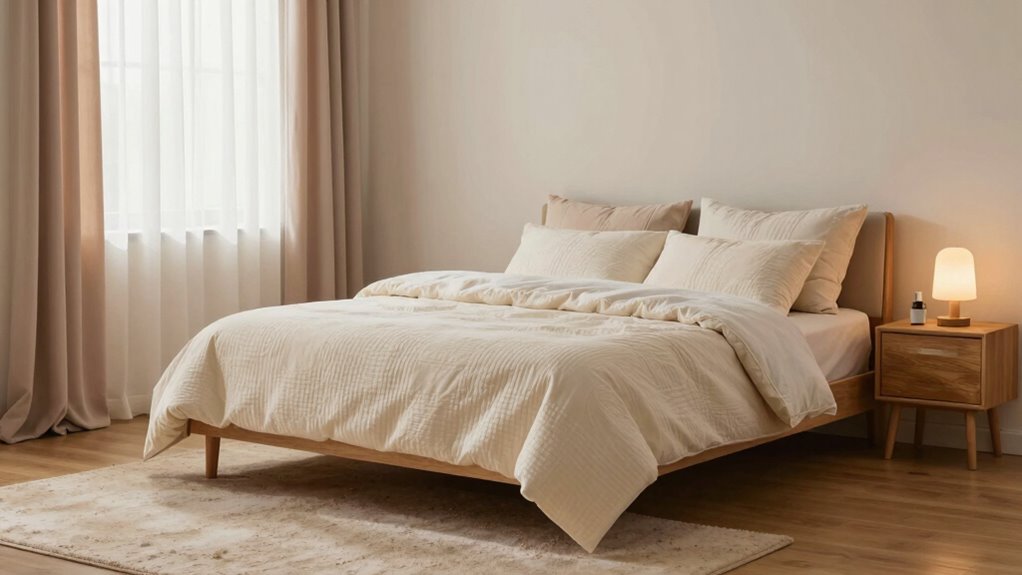
Maintaining your bedroom regularly is key to guaranteeing it remains a safe and comfortable retreat. Consistent upkeep keeps your space inviting and reduces hazards. Check that your bedding essentials—like supportive pillows and cozy blankets—are clean and in good condition. Refresh decorative accents to prevent dust buildup and replace worn items. Ensure your furniture is sturdy and free of sharp edges. Clean windows and curtains to improve natural light and airflow. Regularly inspect your flooring for loose rugs or tripping hazards. Keep pathways clear and well-lit to prevent falls. Incorporate decorative accents thoughtfully, making sure they don’t clutter or block exits. By staying on top of these maintenance tips, your bedroom stays a restorative haven, promoting relaxation and safety.
How to Keep Your Bedroom Safe and Rejuvenating as You Age

As you age, guaranteeing your bedroom remains a safe and rejuvenating space becomes increasingly important. Incorporate bedroom feng shui principles to promote positive energy and reduce clutter. Use personalized decor that reflects your style, making the space inviting and comforting. Arrange furniture to avoid obstacles and ensure easy movement, especially around the bed. Lighting should be soft and layered to prevent falls and promote relaxation. Consider non-slip rugs and grab bars where needed.
| Aspect | Tips | Benefits |
|---|---|---|
| Furniture placement | Keep pathways clear, avoid sharp corners | Prevents accidents, enhances flow |
| Lighting | Use adjustable, warm lighting | Supports circadian rhythm, reduces falls |
| Decor | Incorporate calming colors, personal items | Creates a soothing environment |
Frequently Asked Questions
How Can I Improve Airflow in My Bedroom for Better Sleep?
To improve airflow in your bedroom for better sleep, start by opening windows regularly to boost air circulation. Use fans or ceiling fans to keep air moving, especially if natural ventilation isn’t enough. Consider installing or upgrading ventilation systems to guarantee consistent fresh air. Keep vents unobstructed and avoid clutter that blocks airflow. These steps help maintain a cooler, more comfortable environment, promoting restful sleep.
What Are the Best Mattress Types for Older Adults?
The best mattress types for older adults include memory foam and adjustable beds. Memory foam provides excellent support and relieves pressure points, which helps reduce discomfort and improve sleep quality. Adjustable beds allow you to customize your sleeping position, easing issues like acid reflux or joint pain. Combining these options offers personalized comfort, promotes better circulation, and supports overall health, making your bedroom a truly restorative space.
How Can I Reduce Allergens in My Bedroom?
To reduce allergens in your bedroom, start by using allergy-proof bedding, such as dust mite-proof mattress and pillow covers. Regularly wash bedding in hot water to eliminate dust mites and allergens. Keep humidity levels low with a dehumidifier, and vacuum frequently with a HEPA filter vacuum cleaner. Also, minimize clutter and avoid heavy curtains or plush toys that can trap dust. These steps help control dust mites and create a healthier sleeping environment.
What Plants Are Safe and Beneficial for a Bedroom Environment?
You should choose indoor greenery that’s safe and beneficial, like snake plants, pothos, or peace lilies. These air purifying plants improve air quality, add calming beauty, and require minimal maintenance. You benefit from their natural ability to filter toxins, boost humidity, and create a soothing environment. By selecting safe, air-purifying plants, you bring energy and tranquility into your bedroom, making it a more restorative space for restful sleep and overall well-being.
How Do I Incorporate Ergonomic Design Into Bedroom Storage Solutions?
You can incorporate ergonomic design into your bedroom storage by choosing ergonomic furniture that reduces strain and prioritizes comfort. Opt for accessible storage solutions, like drawers with soft-close mechanisms, pull-out shelves, or open bins at waist level, making it easier to reach items without bending or stretching. Consider adjustable-height furniture or storage units that fit your body’s needs to promote ease of use and enhance your overall well-being.
Conclusion
Creating a bedroom that feels truly restorative as you age isn’t just about comfort—it’s about embracing change and anticipating what’s next. Every detail, from lighting to decor, plays a role in your well-being. But the real secret lies in continuous care and awareness, opening a space that adapts to your evolving needs. Are you ready to discover how small adjustments can open a lifetime of restful nights and renewed mornings? The key is in your hands.