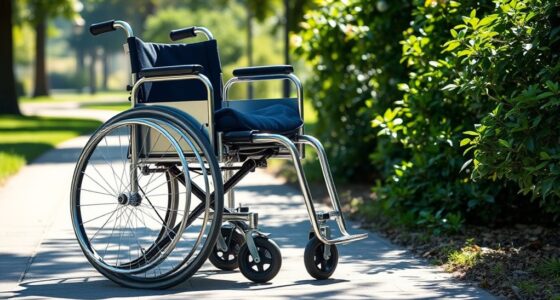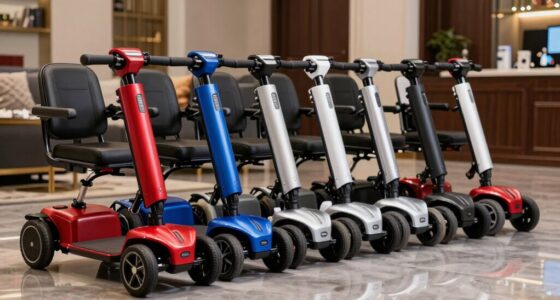

The Medline Lightweight Foldable Transport Wheelchair with Handbrakes and 12-Inch Wheels is my best overall choice among transport chairs for elderly adults because it balances caregiver control, manageable portability, and larger wheels for uneven surfaces. The Drive Medical Expedition is the stronger premium pick for frequent outings, while the 18LBS Ultra Lightweight Wheelchair makes more sense when lifting the chair into a vehicle is the main challenge. Buyers must weigh low carrying weight against stability and durability, along with seat fit, braking access, and the surfaces the chair will cross. Some models in this roundup are conventional caregiver-propelled chairs, while the Drive Blue Streak and Silver Sport 1 are closer to standard wheelchairs for users who may need self-propulsion. Continue reading for the full breakdown of which option best matches each user, caregiver, and travel routine.
Complete the kit


Key Takeaways
- The Medline 12-inch-wheel models with handbrakes offer the strongest all-around combination for assisted mobility because their larger wheels and caregiver controls address more real-world outings than basic small-wheel chairs.
- The 18LBS Ultra Lightweight Wheelchair is the clearest choice for frequent vehicle loading, but its low listed weight should not outweigh fit, stability, and long-term build needs.
- The Drive Medical Expedition models occupy the premium travel position, pairing a lightweight folding format with hand brakes for caregivers who expect regular outdoor trips.
- Several listings are close variants: the red and blue Medline 12-inch-wheel chairs, the two Medline ultra-lightweight chairs, and the blue and red Expedition models differ less than their separate listings suggest.
- The Drive Blue Streak and Silver Sport 1 are better suited to buyers who want standard-wheelchair versatility; they are less direct substitutes for a compact, caregiver-only transport chair.
| Medline Lightweight Foldable Transport Wheelchair with Handbrakes and 12-Inch Wheels |  | Best Overall | Chair weight: 26 lbs | Weight capacity: 300 lbs | Frame material: Aluminum | VIEW ON AMAZON | See Our Full Breakdown |
| Medline Ultra Lightweight Transport Wheelchair for Adults |  | Best for Car Travel | Chair weight: 15 lbs | Weight capacity: 300 lbs | Frame material: Aluminum | VIEW ON AMAZON | See Our Full Breakdown |
| Medline Ultra Lightweight Foldable Transport Wheelchair with Cup Holder | 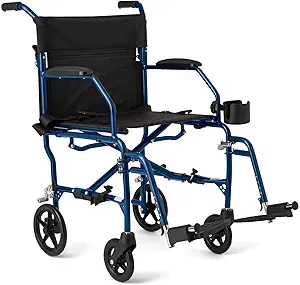 | Best for Errands | Chair weight: 19 lbs | Weight capacity: 300 lbs | Seat width: 19 inches | VIEW ON AMAZON | See Our Full Breakdown |
| Drive Medical Lightweight Expedition Folding Transport Wheelchair |  | Best Lightweight Outdoor Pick | Chair weight: 19 lbs | Weight capacity: 300 lbs | Frame material: Aluminum | VIEW ON AMAZON | See Our Full Breakdown |
| Drive Medical Silver Sport 1 Folding Wheelchair |  | Best Steel-Frame Pick | Chair weight: 37.6 lbs | Weight capacity: 250 lbs | Frame material: Steel | VIEW ON AMAZON | See Our Full Breakdown |
| Medline Durable Folding Steel Transport Wheelchair with Microban |  | Best for Easy-Care Upholstery | Weight Capacity: 300 lbs | Chair Weight: 32 lbs | Seat Size: 19 in W x 16 in D | VIEW ON AMAZON | See Our Full Breakdown |
| Drive Medical Blue Streak Lightweight Wheelchair | 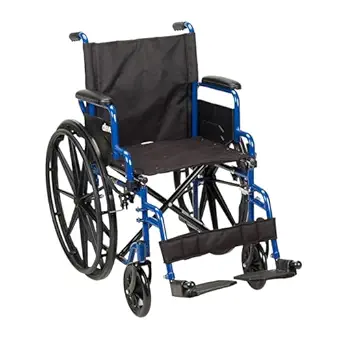 | Best for Desk and Table Transfers | Seat Width: 18 inches | Frame Material: Steel | Folded Width: 12.5 inches | VIEW ON AMAZON | See Our Full Breakdown |
| Vive Lightweight Transport Wheelchair for Seniors |  | Best for Occasional Errands | Seat Width: 19 inches | Weight Capacity: 250 lbs | Frame Material: Steel | VIEW ON AMAZON | See Our Full Breakdown |
| Medline Lightweight Foldable Transport Wheelchair with Handbrakes |  | Best Overall | Chair Weight: 26 lbs | Weight Capacity: 300 lbs | Frame Material: Aluminum | VIEW ON AMAZON | See Our Full Breakdown |
| Drive Medical Lightweight Expedition Transport Wheelchair with Hand Brakes |  | Best Lightweight Pick | Chair Weight: 19 lbs | Weight Capacity: 300 lbs | Frame Material: Aluminum | VIEW ON AMAZON | See Our Full Breakdown |
| 18LBS Ultra Lightweight Wheelchair |  | Best Ultralight Pick | Chair Weight: 18 lbs | Maximum Support Weight: 220 lbs | Frame Material: Aluminum alloy | VIEW ON AMAZON | See Our Full Breakdown |
| Medline Durable Folding Steel Transport Wheelchair |  | Best Sturdy Wide-Seat Pick | Chair Weight: 30 lbs | Weight Capacity: 250 lbs | Seat Width: 19 inches | VIEW ON AMAZON | See Our Full Breakdown |
| EconoHome Lightweight Wheelchair |  | Best High-Capacity Travel Pick | Chair Weight: 22 lbs | Weight Capacity: 300 lbs | Frame Material: Aluminum | VIEW ON AMAZON | See Our Full Breakdown |
| Drive Medical Folding Transport Wheelchair |  | Best Narrow-Seat Basic Pick | Frame Material: Steel | Wheel Size: 8 inches | Seat Width: 17 inches | VIEW ON AMAZON | See Our Full Breakdown |
| Lightweight Foldable Transport Wheelchair |  | Best Quick-Fold Pick for Petite Users | Chair Weight: 20 lbs | Maximum Support Weight: 220 lbs | Folding Speed: 1 second | VIEW ON AMAZON | See Our Full Breakdown |
| transport chairs for elderly | Frame material | Chair weight | Footrests | Weight capacity |
|---|---|---|---|---|
| Medline Lightweight Foldable T | Aluminum | 26 lbs | — | 300 lbs |
| Medline Ultra Lightweight Tran | Aluminum | 15 lbs | Swing-away | 300 lbs |
| Medline Ultra Lightweight Fold | — | 19 lbs | Swing-away | 300 lbs |
| Drive Medical Lightweight Expe | Aluminum | 19 lbs | Fold-down | 300 lbs |
| Drive Medical Silver Sport 1 F | Steel | 37.6 lbs | Removable swing-away | 250 lbs |
| Medline Durable Folding Steel | — | 32 lbs | — | 300 lbs |
| Drive Medical Blue Streak Ligh | Steel | — | Swing-away and removable | — |
| Vive Lightweight Transport Whe | Steel | — | Adjustable and swing-away | 250 lbs |
| Medline Lightweight Foldable T | Aluminum | 26 lbs | Swing-away and detachable | 300 lbs |
| Drive Medical Lightweight Expe | Aluminum | 19 lbs | Fold-down | 300 lbs |
| 18LBS Ultra Lightweight Wheelc | Aluminum alloy | 18 lbs | Flip-up and foldable | — |
| Medline Durable Folding Steel | Steel | 30 lbs | Swing-away | 250 lbs |
| EconoHome Lightweight Wheelcha | Aluminum | 22 lbs | Swing-away | 300 lbs |
| Drive Medical Folding Transpor | Steel | — | — | — |
| Lightweight Foldable Transport | High-tensile carbon steel | 20 lbs | Swing-away and foldable | — |
More Details on Our Top Picks
Medline Lightweight Foldable Transport Wheelchair with Handbrakes and 12-Inch Wheels
I rank the Medline Lightweight Foldable Transport Wheelchair first because it balances caregiver control, passenger space, and outdoor usability better than the other four chairs. Its 12-inch rear wheels and attendant handbrakes make slopes, thresholds, and paved paths easier to manage than with the 15-pound Medline Ultra Lightweight model and its 8-inch wheels. The 19-inch-wide seat also avoids forcing portability at the expense of room. At 26 pounds, however, this is not the easiest chair to lift into a trunk; the Drive Medical Expedition weighs seven pounds less while retaining 12-inch rear wheels. It also lacks adjustable seating or added positioning support. I see this as the most balanced choice for mixed indoor and outdoor trips, provided the passenger does not need tilt, recline, or long-duration postural support.
Pros:- Attendant handbrakes provide better control on ramps and slopes
- 12-inch rear wheels handle thresholds and paved paths better than small travel wheels
- 19-inch-wide seat offers useful room without exceeding a 300-pound capacity
- Aluminum frame folds for vehicle storage
Cons:- At 26 pounds, it is heavier to lift than the ultra-light Medline and Drive Expedition models
- Designed for smooth or paved surfaces rather than rough terrain
- No seat-height, recline, or positioning adjustments
Best for: Families who need one caregiver-operated chair for appointments, shopping trips, and paved outdoor routes
Not ideal for: Caregivers with limited lifting strength or passengers who need reclining and postural support
- Chair weight:26 lbs
- Weight capacity:300 lbs
- Frame material:Aluminum
- Seat width:19 inches
- Seat depth:16 inches
- Rear wheel size:12 inches
- Folding design:Yes
- Color:Red frame with black upholstery
Our verdict“This is my pick for buyers who want the strongest balance of safety, seat room, and everyday outdoor handling.”
Medline Ultra Lightweight Transport Wheelchair for Adults
The Medline Ultra Lightweight Transport Wheelchair earns its place through one decisive advantage: at 15 pounds, it is the easiest chair in this group to lift into a car. That is 11 pounds less than the Best Overall Medline model and more than 22 pounds less than the Drive Medical Silver Sport 1. Its 19-inch seat and 300-pound rating preserve adult-friendly space and capacity despite that lower weight, while swing-away footrests simplify entry. I would choose it for frequent appointments or travel where loading the chair is the main challenge. The compromise is less confidence on uneven outdoor routes: its 8-inch wheels are better matched to indoor floors and smooth pavement than broken sidewalks. The supplied data also does not list attendant handbrakes, and the basic seating offers little support for extended outings.
Pros:- Lowest listed weight in this group at 15 pounds
- Maintains a 300-pound capacity despite its ultra-light frame
- 19-inch seat provides more room than many compact travel chairs
- Swing-away footrests make transfers less awkward
Cons:- 8-inch wheels are less capable on cracks, thresholds, and uneven pavement than 12-inch wheels
- No attendant handbrakes are identified in the supplied product data
- Basic seating lacks recline and added positioning support
Best for: Caregivers who frequently load a transport chair into a car and mainly travel across indoor floors or smooth pavement
Not ideal for: Families facing sloped routes, rough sidewalks, or passengers who need supportive seating for extended periods
- Chair weight:15 lbs
- Weight capacity:300 lbs
- Frame material:Aluminum
- Seat width:19 inches
- Seat depth:16 inches
- Wheel size:8 inches
- Footrests:Swing-away
- Color:Red frame with black upholstery
Our verdict“I recommend this model when easy trunk loading matters more than rough-surface control or added seating support.”
Medline Ultra Lightweight Foldable Transport Wheelchair with Cup Holder
I place the Medline Ultra Lightweight Foldable Transport Wheelchair in the errands role because its cup holder, padded arm support, and swing-away footrests add practical convenience without making the chair difficult to transport. At 19 pounds, it remains much easier to lift than the 26-pound Medline handbrake model, though it is four pounds heavier than the red Medline Ultra Lightweight chair. The published folded dimensions also help buyers check vehicle storage space before ordering. This model makes sense for shopping centers, clinics, and social outings where a drink holder and comfortable arm placement have real value. Yet those extras do not turn it into a long-duration seating system: there is no recline or seat-height adjustment, and the nylon upholstery may show spills. I would also favor the 12-inch-wheel alternatives for rougher outdoor paths.
Pros:- 19-pound design remains manageable for vehicle loading
- Cup holder is useful during errands and appointments
- Swing-away footrests simplify transfers
- Published folded dimensions make storage planning easier
Cons:- No seat-height, recline, or other positioning adjustments
- Less surface capability than models identified with 12-inch rear wheels
- Black nylon upholstery may retain visible spills and stains
Best for: Older adults taking regular shopping, clinic, and social trips where a cup holder and easy transfers add convenience
Not ideal for: Passengers who remain seated for long periods or travel frequently over cracked and uneven outdoor surfaces
- Chair weight:19 lbs
- Weight capacity:300 lbs
- Seat width:19 inches
- Frame color:Blue
- Upholstery color:Black
- Folded dimensions:24 x 10 x 30 inches
- Assembled dimensions:39.5 x 23.2 x 37 inches
- Footrests:Swing-away
- Included accessory:Cup holder
Our verdict“This is my errands pick for buyers who value everyday conveniences but do not need supportive long-duration seating.”
Drive Medical Lightweight Expedition Folding Transport Wheelchair
The Drive Medical Lightweight Expedition pairs a 19-pound aluminum frame with 12-inch rear wheels, giving it a strong weight-to-surface-capability balance. It is seven pounds lighter than the Best Overall Medline handbrake chair, yet it should cope better with paved outdoor routes than the 15-pound Medline Ultra Lightweight model with 8-inch wheels. Padded armrests, fold-down footrests, and a 300-pound capacity cover the basics for appointments and day trips. I rank it below the Medline handbrake model because the supplied information gives no seat dimensions, making passenger fit harder to judge, and its seating is still intended for transport rather than prolonged use. Buyers who need recline or specialized positioning should skip it. For a caregiver who regularly lifts the chair but does not want tiny travel wheels, the lighter outdoor-ready design is the main reason to choose it.
Pros:- 19-pound frame is easier to lift than most 12-inch-wheel transport chairs
- Large rear wheels provide better paved-surface handling than 8-inch travel wheels
- Aluminum construction supports up to 300 pounds
- Folding frame and footrests simplify storage
Cons:- Seat width and depth are not provided in the supplied data
- Not designed for extended seating or independent mobility
- No reclining or specialized positioning features
Best for: Caregivers who want 12-inch rear wheels for paved outdoor trips without lifting a chair heavier than 20 pounds
Not ideal for: Buyers who need confirmed seat dimensions before purchase or passengers requiring recline and positioning support
- Chair weight:19 lbs
- Weight capacity:300 lbs
- Frame material:Aluminum
- Rear wheel size:12 inches
- Folding design:Yes
- Armrests:Padded
- Footrests:Fold-down
- Color:Blue
Our verdict“I would choose this for frequent outdoor day trips when low lifting weight and larger rear wheels matter equally.”
Drive Medical Silver Sport 1 Folding Wheelchair
I include the Drive Medical Silver Sport 1 for buyers who favor a substantial steel frame and full-length padded armrests over minimum carrying weight. Its removable swing-away footrests create a clearer path for transfers, while breathable nylon is better suited to routine use than a heavily padded surface that traps heat. Compared with the 15-pound Medline Ultra Lightweight chair, however, this 37.6-pound model is far harder for one caregiver to lift. Its 250-pound limit is also 50 pounds lower than every other chair in this batch, so the added mass does not bring higher capacity. I rank it fifth because portability is central to a transport chair, and the aluminum alternatives serve that need better. The Silver Sport 1 remains a sensible choice when steel construction and familiar full-length arm support outweigh trunk-loading ease.
Pros:- Steel frame offers a substantial, durable build
- Full-length padded armrests support the forearms during routine seating
- Removable swing-away footrests help with transfers and storage
- Breathable nylon upholstery limits heat buildup
Cons:- 37.6-pound weight makes trunk loading difficult for many solo caregivers
- 250-pound capacity is lower than the 300-pound ratings of the other four chairs
- No recline or advanced postural support
Best for: Households that prioritize a sturdy steel frame and full-length arm support and have help available for vehicle loading
Not ideal for: Solo caregivers, frequent travelers, or users weighing over 250 pounds because the chair is heavy and has the lowest capacity here
- Chair weight:37.6 lbs
- Weight capacity:250 lbs
- Frame material:Steel
- Frame finish:Silver vein
- Upholstery:Nylon
- Folding design:Yes
- Armrests:Full-length padded
- Footrests:Removable swing-away
Our verdict“This is my steel-frame choice for buyers who can manage the extra weight and do not need more than a 250-pound capacity.”
Medline Durable Folding Steel Transport Wheelchair with Microban
I rank the Medline Durable Folding Steel Transport Wheelchair as the hygiene-focused pick because its Microban antimicrobial protection helps limit odor- and stain-causing microbial growth between routine cleanings. The 19-inch seat and 300-pound capacity suit many older adults, while 12-inch rear wheels offer better outdoor rolling than chairs with smaller wheels. Compared with the Medline Lightweight Foldable Transport Wheelchair with Handbrakes, though, this steel model weighs six pounds more and lacks caregiver-operated handbrakes. That makes it less appealing for frequent car loading or sloped routes. Its eight-inch folded width is genuinely storage-friendly, but the fixed dimensions provide little scope for tailoring posture. I see it as a durable, straightforward chair for short outings, clinics, and shared-care settings where easier upkeep matters more than low carrying weight.
Pros:- Microban protection helps suppress odor- and stain-causing microbial growth
- Steel frame supports up to 300 pounds
- 12-inch rear wheels improve rolling over ordinary outdoor surfaces
- Folds to eight inches wide for narrow storage spaces
Cons:- The 32-pound frame is burdensome for frequent lifting
- No caregiver handbrakes are listed for controlling descents
- Fixed seating dimensions limit personalized positioning
Best for: Caregivers seeking a durable 19-inch transport chair with antimicrobial protection for frequent shared or clinical-style use
Not ideal for: Caregivers who regularly lift the chair into a car or manage slopes, since its 32-pound steel frame and rear-wheel brakes are less convenient
- Weight Capacity:300 lbs
- Chair Weight:32 lbs
- Seat Size:19 in W x 16 in D
- Rear Wheels:12 inches
- Front Wheels:8 inches
- Folded Dimensions:34 in L x 8 in W x 37.5 in H
- Assembled Dimensions:34 in L x 19 in W x 37.8 in H
- Colors:Gray frame with teal upholstery
Our verdict“Choose this model when easy-care materials and sturdy construction outweigh the need for the lightest possible chair.”
Drive Medical Blue Streak Lightweight Wheelchair
The Drive Medical Blue Streak earns its place for older adults who need easier positioning beside a dining table or desk. Its flip-back desk arms create access that the full-length arms on the Medline Lightweight Foldable Transport Wheelchair with Handbrakes do not. Swing-away, removable footrests also clear space for assisted transfers. This is a conventional wheelchair rather than a purpose-built compact transport chair, so I would not make it my first choice for caregivers focused mainly on car travel. The steel frame folds, but its 12.5-inch folded width is bulkier than the eight-inch-wide folded Medline Microban chair. Push-to-lock rear brakes secure the chair while parked, yet they do not give a caregiver the downhill control of loop-lock handbrakes. The 18-inch padded seat is comfortable for many users but narrower than the 19-inch alternatives here.
Pros:- Flip-back desk arms improve access to tables and transfer surfaces
- Swing-away removable footrests clear the approach for assisted transfers
- Padded 18-inch seat supports short and moderate outings
- Solid maintenance-free tires avoid inflation checks
Cons:- Bulkier when folded than several dedicated transport chairs
- Steel construction is less lift-friendly than aluminum alternatives
- Push-to-lock rear brakes do not provide caregiver braking on slopes
Best for: Older adults who frequently move beside desks or dining tables and need flip-back arms plus removable footrests
Not ideal for: Families seeking a compact caregiver-only travel chair, since this conventional steel wheelchair folds to a relatively bulky 12.5-inch width
- Seat Width:18 inches
- Frame Material:Steel
- Folded Width:12.5 inches
- Footrests:Swing-away and removable
- Armrests:Flip-back desk arms
- Tires:Solid and maintenance-free
- Brakes:Push-to-lock rear brakes
Our verdict“Pick the Blue Streak when table access and transfer-friendly hardware matter more than maximum travel portability.”
Vive Lightweight Transport Wheelchair for Seniors
I place the Vive Lightweight Transport Wheelchair in the occasional-use slot because it combines a 19-inch seat, quick flat folding, and swing-away adjustable footrests in a simple steel package. Those features suit appointments, shopping trips, and visits where the chair spends much of its time stored. Compared with the Medline Lightweight Foldable Transport Wheelchair with Handbrakes, the Vive carries 50 pounds less and does not list caregiver handbrakes or a measured chair weight. That missing information makes it harder to judge for frequent lifting and hill control. Its 250-pound limit is also the lowest among these five picks. Safety wheel locks help during stationary transfers, while ergonomic handles support routine pushing on ordinary surfaces. I would choose it for a smaller older adult with a caregiver who wants uncomplicated folding, not for long outings where seat padding and braking control become bigger priorities.
Pros:- Folds flat quickly for storage and travel
- Nineteen-inch seat provides more room than the Blue Streak’s 18-inch seat
- Adjustable swing-away footrests simplify entry and positioning
- FSA/HSA approval may suit eligible medical spending
Cons:- The 250-pound capacity trails every 300-pound model in this group
- No exact chair weight or folded measurements are supplied
- No seat cushioning or caregiver-operated handbrakes are listed
Best for: Caregivers transporting an older adult under 250 pounds on short, mostly level errands and medical visits
Not ideal for: Heavier users or caregivers handling hills and long outings, due to the 250-pound limit, unspecified padding, and lack of listed handbrakes
- Seat Width:19 inches
- Weight Capacity:250 lbs
- Frame Material:Steel
- Folding Design:Folds flat in seconds
- Footrests:Adjustable and swing-away
- Brakes:Safety wheel locks
- Purchase Eligibility:FSA/HSA approved
Our verdict“The Vive makes sense for lighter users needing a basic folding chair for brief, level-ground trips.”
Medline Lightweight Foldable Transport Wheelchair with Handbrakes
The Medline Lightweight Foldable Transport Wheelchair with Handbrakes takes my top position because it balances the features most caregivers need: a 26-pound aluminum frame, 300-pound capacity, 19-inch seat, and caregiver-operated handbrakes. Compared with the 32-pound Medline Microban steel chair, it is easier to lift and gives the person pushing more control on ramps. The Drive Medical Expedition is seven pounds lighter, but this Medline supplies detachable swing-away footrests and a roomy documented seat, making it the more rounded everyday choice. Twelve-inch rear wheels help smooth cracked pavement and thresholds, though neither this model nor the Expedition belongs on rough ground. Its folded width of 12 inches also consumes more cargo space than the Microban model’s eight-inch fold. I rank it first for its balanced portability and safety, not because it is the smallest or cheapest option.
Pros:- Twenty-six-pound aluminum frame balances carrying ease and durability
- Handbrakes give caregivers better control on ramps and during transfers
- Three-hundred-pound capacity exceeds the Vive chair’s limit
- Twelve-inch rear wheels handle thresholds and ordinary pavement well
Cons:- Twelve-inch folded width takes meaningful trunk or closet space
- Nineteen-inch seat may be restrictive for broader users
- Fixed height and full-length arms offer limited positioning flexibility
Best for: Families needing one versatile chair for appointments, everyday outings, ramps, and repeated car transport
Not ideal for: Users needing a wider seat, adjustable seat height, or a chair built for rough trails and deeply uneven ground
- Chair Weight:26 lbs
- Weight Capacity:300 lbs
- Frame Material:Aluminum
- Seat Size:19 in W x 16 in D
- Rear Wheels:12 inches
- Brakes:Handbrakes and rear-wheel locking brakes
- Folded Dimensions:30.25 in L x 12 in W x 37.5 in H
- Unfolded Dimensions:30.25 in L x 19 in W x 37.25 in H
- Footrests:Swing-away and detachable
Our verdict“This is my most balanced pick for families who want manageable weight, strong braking, and practical everyday seating.”
Drive Medical Lightweight Expedition Transport Wheelchair with Hand Brakes
At just 19 pounds, the Drive Medical Lightweight Expedition Transport Wheelchair is my choice for caregivers who lift a chair into a trunk several times a week. It is seven pounds lighter than the Medline Lightweight Foldable Transport Wheelchair with Handbrakes and 13 pounds lighter than the Medline Microban steel model, yet it still supports 300 pounds. Loop-lock handbrakes provide caregiver control, while 12-inch wheels are better suited to pavement and thresholds than tiny travel casters. The tradeoff is a leaner feature set: fold-down footrests are less removable than the Medline’s detachable pair, and no reclining or adjustable seating is listed. Although the padded armrests add comfort, the product data does not provide seat dimensions or folded measurements, so fit and cargo planning require extra checking. This pick wins on lifting ease, while the Medline remains better for buyers wanting fuller fit documentation.
Pros:- Nineteen-pound aluminum frame is the easiest of these five to lift
- Three-hundred-pound capacity matches much heavier models
- Loop-lock handbrakes improve caregiver control
- Twelve-inch wheels support smoother travel over thresholds and pavement
Cons:- Seat and folded dimensions are not provided in the supplied data
- Fold-down footrests offer less transfer flexibility than detachable designs
- No reclining or adjustable seating features are listed
Best for: Caregivers who repeatedly load a transport chair into a vehicle and need a 300-pound capacity without a heavy frame
Not ideal for: Buyers who need verified seat measurements, removable footrests, reclining support, or dependable performance on rough terrain
- Chair Weight:19 lbs
- Weight Capacity:300 lbs
- Frame Material:Aluminum
- Rear Wheels:12 inches
- Brakes:Loop-lock hand brakes
- Footrests:Fold-down
- Armrests:Padded
- Color:Red
Our verdict“Choose the Expedition when minimum lifting weight is the priority and its simpler seating configuration meets the user’s needs.”
18LBS Ultra Lightweight Wheelchair
I rank this model as the best choice for frequent lifting because its 18-pound aluminum frame is the lightest among these five chairs. That difference matters when an older caregiver must load it into a trunk or carry it upstairs. Compared with the 30-pound Medline Durable Folding Steel Transport Wheelchair, it is far easier to handle and store upright. Padded armrests and breathable seating add comfort for errands, while flip-up footrests simplify entry. The compromise is a 220-pound capacity, well below the EconoHome chair’s 300-pound limit. Its small PVC wheels also favor smooth indoor floors and paved paths over cracked sidewalks or gravel. I would choose it for portability, but not for buyers who need broader support or rugged outdoor performance.
Pros:- 18-pound frame is unusually easy to lift and carry
- Quick-folding design supports frequent travel and compact storage
- Padded armrests and breathable seat improve short-trip comfort
- Flip-up footrests make getting into the chair less awkward
Cons:- 220-pound capacity excludes many larger adults
- Small PVC wheels are poorly suited to uneven outdoor routes
- Limited support features may not suit users with complex positioning needs
Best for: Smaller adults and older caregivers who regularly lift a transport chair into a car or carry it up steps
Not ideal for: Users over 220 pounds or families who frequently travel across gravel, broken pavement, or other rough surfaces
- Chair Weight:18 lbs
- Maximum Support Weight:220 lbs
- Frame Material:Aluminum alloy
- Wheel Material:PVC
- Brake System:Two-stage brake
- Footrests:Flip-up and foldable
- Armrests:Padded
- Storage Format:Compact upright fold
Our verdict“This is my pick for families who place low carrying weight above capacity, cushioning, and rough-ground stability.”
Medline Durable Folding Steel Transport Wheelchair
The 19-inch seat and steel frame give this Medline chair a more substantial feel than the narrower 17-inch Drive Medical Folding Transport Wheelchair. I place it highest for buyers who value a roomy seat and straightforward construction more than minimum carrying weight. Its swing-away footrests clear space during transfers, and the manual locking brakes help keep the chair stationary while a senior sits down or stands. The 250-pound capacity falls between the 220-pound ultralight models and the 300-pound EconoHome chair. At 30 pounds, however, this is the heaviest option in this group; loading it repeatedly may be difficult for an older spouse. Eight-inch wheels also keep it oriented toward level indoor surfaces and maintained outdoor paths. I see it as a dependable basic chair, not the strongest travel companion.
Pros:- 19-inch seat provides more room than narrower transport chairs
- Steel frame offers sturdy support up to 250 pounds
- Swing-away footrests create clearer access during transfers
- Manual locking brakes stabilize the chair while parked
Cons:- 30-pound weight makes repeated lifting cumbersome
- Eight-inch wheels are less capable on rough ground than larger-wheel alternatives
- Fixed dimensions offer little accommodation for different user heights
Best for: Seniors who want a 19-inch seat and caregivers who prioritize a sturdy steel frame for home, clinic, or paved-route use
Not ideal for: Older caregivers who must lift the chair into a vehicle frequently, since its 30-pound weight is demanding
- Chair Weight:30 lbs
- Weight Capacity:250 lbs
- Seat Width:19 inches
- Seat Depth:16 inches
- Overall Dimensions:39.17 x 21.7 x 39.5 inches
- Folded Dimensions:22.24 x 10.43 x 29.13 inches
- Wheel Size:8 inches
- Frame Material:Steel
- Footrests:Swing-away
Our verdict“I recommend this chair for buyers who want roomy, sturdy everyday support and can manage its extra lifting weight.”
EconoHome Lightweight Wheelchair
I give the EconoHome chair this role because it combines a 300-pound capacity with a 22-pound aluminum frame, a pairing none of the other four matches. It supports 80 pounds more than the 18LBS Ultra Lightweight Wheelchair while adding only four pounds to the caregiver’s load. Hand brakes and a seat belt provide useful control for slopes and routine transport, while swing-away footrests help with transfers. It also arrives assembled and includes a waterproof cover, making it better prepared for travel than the simpler Drive Medical model. The drawbacks sit around comfort and terrain: limited seat cushioning may become tiring during long outings, and the small front wheels can feel less settled on broken pavement. I rank it for capacity and readiness, though it is not a substitute for a positioning wheelchair.
Pros:- 300-pound capacity exceeds the other four chairs in this batch
- 22-pound aluminum frame balances strength with portability
- Hand brakes and seat belt add caregiver control and rider security
- Fully assembled design and included waterproof cover simplify travel preparation
Cons:- Basic cushioning may be uncomfortable during extended sitting
- Small front wheels can feel less stable on uneven pavement
- Lacks specialized positioning support for complex mobility needs
Best for: Families needing a portable chair for an adult up to 300 pounds, especially when immediate setup and vehicle travel matter
Not ideal for: Seniors who require pressure-relieving cushions, postural supports, or stable performance on uneven paths
- Chair Weight:22 lbs
- Weight Capacity:300 lbs
- Frame Material:Aluminum
- Folding Design:Yes
- Brake Type:Hand brakes
- Safety Restraint:Seat belt
- Footrests:Swing-away
- Assembly:Fully assembled
- Included Accessory:Waterproof cover
Our verdict“This is my choice for buyers who need higher capacity without accepting the weight of a conventional steel chair.”
Drive Medical Folding Transport Wheelchair
This Drive Medical chair earns a place for its simple, compact steel design, especially for slimmer seniors who do not need a 19-inch seat. Its 17-inch seating surface is narrower than the Medline Durable Folding Steel Transport Wheelchair, which can make movement through tighter rooms easier but may feel restrictive for broader users. The fold-flat backrest and swing-away footrests help with storage and transfers, while nylon upholstery is practical to wipe clean after daily outings. Eight-inch wheels suit indoor floors and maintained walkways rather than long outdoor routes. I rank it below the EconoHome model for travel because the EconoHome adds hand brakes, a seat belt, and a stated 300-pound capacity. The Drive chair’s missing stated capacity also gives buyers less guidance, so it makes the most sense as uncomplicated short-distance support.
Pros:- 17-inch seat can fit more easily through compact indoor spaces
- Fold-flat backrest reduces storage bulk
- Swing-away footrests simplify entry and exit
- Easy-clean nylon upholstery suits routine caregiving
Cons:- Narrow seat may be uncomfortable for broader adults
- No weight capacity is supplied in the provided product data
- Eight-inch wheels limit comfort and control on rough routes
Best for: Slender seniors who need a compact attendant-pushed chair for short trips through homes, clinics, and maintained walkways
Not ideal for: Broader or heavier users who need a documented capacity, wider seating, or extended outdoor mobility
- Frame Material:Steel
- Wheel Size:8 inches
- Seat Width:17 inches
- Footrest Type:Swing-away
- Backrest:Fold-flat
- Seat Material:Easy-clean nylon
- Armrests:Padded
- Chair Type:Folding transport wheelchair
Our verdict“I would choose this for a slimmer senior needing basic short-trip mobility, but select the EconoHome for clearer capacity and added safety equipment.”
Lightweight Foldable Transport Wheelchair
The defining advantage here is the one-second folding system, which suits caregivers making frequent car stops or storing a chair in a small apartment. At 20 pounds, it is only two pounds heavier than the 18LBS Ultra Lightweight Wheelchair, yet it adds rotating armrests, swing-away footrests, and specified six-inch front and eight-inch rear wheels. Those features make transfers and packing less fiddly. I limit my recommendation to petite and medium-sized riders, since the guidance caps users at 220 pounds and recommends a height below 5.7 feet. That makes the 300-pound EconoHome a better choice for larger adults. The carbon-steel frame offers a sturdy structure, but small casters still restrict rough-ground use. This model ranks highly for fast storage, not for broad fit or all-terrain mobility.
Pros:- One-second fold makes repeated packing unusually convenient
- 20-pound weight remains manageable for many caregivers
- Rotating armrests and swing-away footrests provide easier transfer access
- Breathable mesh seat reduces heat buildup during short outings
Cons:- Recommended height below 5.7 feet excludes many adults
- 220-pound capacity is much lower than the EconoHome chair’s limit
- Six-inch front casters are not designed for rugged terrain
Best for: Caregivers transporting a senior under 5.7 feet and 220 pounds who need an exceptionally fast fold for cars or small storage spaces
Not ideal for: Tall adults, users over 220 pounds, or families expecting regular use on rugged and uneven ground
- Chair Weight:20 lbs
- Maximum Support Weight:220 lbs
- Folding Speed:1 second
- Frame Material:High-tensile carbon steel
- Front Casters:6-inch, 360-degree swivel
- Rear Wheels:8 inches
- Seat Material:Breathable mesh
- Armrest Rotation:270 degrees
- Footrests:Swing-away and foldable
Our verdict“This is my fast-fold choice for petite seniors, provided its strict height, weight, and terrain limits match the user.”

How We Picked
I ranked these chairs around the needs that most affect elderly riders and their caregivers: caregiver braking control, wheel size, chair weight, folded portability, seat dimensions, footrest design, stated capacity, and frame construction. I gave extra credit to models that balance safe assisted handling with realistic travel convenience. A light chair moved higher only when its design still appeared suitable for routine transfers and outings. Larger rear wheels and hand brakes also carried more weight in my ranking because ramps, parking areas, and cracked pavement expose the limits of basic small-wheel designs.
I also separated conventional transport chairs from standard wheelchairs, since they serve different mobility patterns even when retailers group them together. Models with steel frames gained points for durability but lost ground when their added lifting burden narrowed their travel appeal. Near-identical color variants stayed close together, and I would choose between them by current price rather than frame color. Final placement reflects how broadly useful each chair is, with specialized ultralight, heavy-duty, and self-propelled options ranked for narrower buyer groups.
| transport chairs for elderly | Frame material |
|---|---|
| Medline Lightweight Foldable T | Aluminum |
| Medline Ultra Lightweight Tran | Aluminum |
| Medline Ultra Lightweight Fold | — |
| Drive Medical Lightweight Expe | Aluminum |
| Drive Medical Silver Sport 1 F | Steel |
| Medline Durable Folding Steel | — |
| Drive Medical Blue Streak Ligh | Steel |
| Vive Lightweight Transport Whe | Steel |
| Medline Lightweight Foldable T | Aluminum |
| Drive Medical Lightweight Expe | Aluminum |
| 18LBS Ultra Lightweight Wheelc | Aluminum alloy |
| Medline Durable Folding Steel | Steel |
| EconoHome Lightweight Wheelcha | Aluminum |
| Drive Medical Folding Transpor | Steel |
| Lightweight Foldable Transport | High-tensile carbon steel |
Factors to Consider When Choosing Transport Chairs For Elderly
I would start by matching the chair to the rider’s transfer ability, the caregiver’s strength, and the surfaces encountered each week. The lightest chair is not automatically the easiest chair to live with, especially when poor fit, tiny wheels, or awkward brakes create new problems.
Choose the Right Chair Type
A conventional transport chair has four relatively small wheels and depends on a caregiver for propulsion. That layout folds compactly and keeps weight lower, making it useful for appointments, restaurants, airports, and short outings. A standard wheelchair has larger rear wheels that may let the rider propel independently, but it is usually bulkier to lift and store. The Drive Blue Streak and Silver Sport 1 fit this second pattern more closely than the dedicated Medline and Expedition transport models. I would favor self-propulsion only when the rider has enough upper-body strength, coordination, and awareness to use it safely. For someone who will always have assistance, a true transport chair usually provides a simpler and more portable setup.
Match Seat Fit to the Rider
The many 19-inch seats in this lineup offer a little more room than an 18-inch model, but extra width is not always better. A seat that is too wide can allow the rider to lean sideways, while a narrow seat can create pressure and make winter clothing uncomfortable. I would measure the seated hip width and add a modest amount of clearance rather than choosing by body weight alone. Seat depth, armrest height, and footrest position also affect posture during longer outings. A listed 300-pound capacity does not prove that the chair will fit a broad-hipped rider comfortably. When posture support is limited, a clinician or mobility specialist can help identify whether a basic transport chair is appropriate at all.
Prioritize Wheels and Caregiver Brakes
Larger 12-inch rear wheels can make curb cuts, pavement seams, and firm outdoor paths easier to manage than very small wheels. They do not turn a transport chair into an all-terrain device, and soft grass, gravel, steep slopes, and broken pavement may remain poor matches. Caregiver-operated hand brakes add control on ramps and during pauses, particularly when the handles incorporate a locking function. I would check whether the brake levers feel reachable for the person who will push the chair, since hand size and grip strength vary. Parking brakes should hold the chair during transfers, but they are not a substitute for transfer technique or physical assistance. If outings include hills, braking control deserves more weight than a small reduction in chair weight.
Account for Every Step of Vehicle Loading
Product weight matters most when someone must lift the chair across a trunk lip, carry it up steps, or move it several times per day. A model advertised at 18 pounds has a clear lifting advantage, yet folded dimensions and carrying grip can matter just as much. Swing-away or folding footrests may need to be removed before loading, creating extra pieces that can be misplaced. I would measure the vehicle opening and cargo depth instead of assuming every folding chair will fit. Caregivers with back, shoulder, or hand limitations may benefit more from an ultralight frame than from larger wheels or heavier upholstery. For home use with little vehicle travel, a sturdier steel frame may be the better compromise.
Plan for Transfers and Rider Comfort
Transport chairs are designed mainly for short-duration mobility, and their basic upholstery often provides less positioning support than a fitted wheelchair. Swing-away footrests can clear the approach for standing transfers, while fixed obstructions may force the rider to step around the frame. I would look for heel loops or secure foot placement when weakness or reduced leg control makes feet prone to slipping. Removable or desk-length arms can help in some transfer situations, although not every lightweight model provides them. A cushion may improve comfort, but adding one raises the seated height and can change footrest fit and arm support. Riders who spend much of the day seated need a proper mobility and pressure-management evaluation, not simply a thicker cushion on a travel chair.
Know When Paying More Makes Sense
A higher price is easier to justify when the chair will be used weekly, travel outdoors, or support a caregiver who relies on hand brakes. Premium travel models may deliver a better balance of frame weight, wheel size, folding convenience, and control than a basic steel chair. For rare medical appointments, a simple durable model may offer better value than paying for every portability feature. I would compare warranty coverage, replacement footrests, tires, brake parts, and local service access because these affect ownership beyond checkout. Upholstery treatments such as Microban may appeal to households focused on routine cleaning, but they do not replace wiping spills and checking seams. Price should follow the usage pattern: pay for handling and fit before cosmetic finishes.
Frequently Asked Questions
Are 12-Inch Wheels Better for an Elderly Rider?
12-inch rear wheels are usually more capable outdoors than the smallest transport-chair wheels, especially on pavement joints, curb cuts, and firm paths. They can also add weight and take up more space when folded. I would choose them when the chair will regularly leave smooth indoor floors or when the caregiver wants a steadier push over minor surface changes. They are not suitable for every trail, loose gravel area, or steep incline. For indoor appointments and tightly packed vehicles, a smaller ultralight chair may still be the more practical choice.
Should I Choose a Transport Chair or a Standard Wheelchair?
Choose a transport chair when a caregiver will always push and compact storage is a major priority. A standard wheelchair makes more sense when the rider can safely self-propel or needs the stability and seating options associated with larger rear wheels. In this lineup, the Drive Blue Streak and Silver Sport 1 better suit that broader wheelchair role. Standard wheelchairs are often harder for a caregiver to lift into a car. If the rider needs full-day seating or customized support, I would seek a professional fitting rather than treating either category as interchangeable.
How Much Chair Weight Can a Caregiver Realistically Lift?
There is no single safe lifting limit because trunk height, stairs, grip position, and the caregiver’s health all change the task. A few pounds can make a meaningful difference when the chair is loaded several times per day. I would have the intended caregiver compare the listed product weight with a familiar object, then account for awkward folded dimensions as well. The 18LBS model is the strongest candidate for frequent lifting, while steel chairs make more sense when they can remain on one floor. If lifting causes strain, a ramp, vehicle hoist, or second helper may matter more than switching between two similarly weighted chairs.
Do Hand Brakes Make a Transport Chair Safer?
Hand brakes give the caregiver better speed control on gentle slopes and may provide a convenient parking lock, depending on the design. Their benefit depends on correct adjustment and the caregiver having enough grip strength to operate both sides. Brakes do not make steep ramps automatically safe, nor should they be relied on to control a slope beyond the chair’s intended use. I favor the Medline 12-inch-wheel and Drive Expedition models partly because their hand-brake layouts better match varied outings. Buyers should inspect brake response regularly because cable stretch, wear, or poor adjustment can reduce control.
Can an Elderly Person Sit in a Transport Chair All Day?
Most basic transport chairs are better suited to short trips and assisted outings than all-day seating. Thin sling upholstery may provide limited pressure distribution, lateral support, and posture control. Adding a cushion can help some riders, but it may also alter seat height, arm position, and footrest alignment. I would seek advice from a physical therapist, occupational therapist, or wheelchair seating professional when the rider has pressure injuries, poor trunk control, pain, or very limited mobility. A fitted wheelchair may cost more and weigh more, but it is usually the more suitable path when the chair becomes the person’s primary seat.
What are the best transport chair?
The best transport chair options are those that offer a balance of comfort, portability, and ease of use. The picks above are designed to meet various needs, featuring lightweight frames, comfortable seating, and simple folding mechanisms. When choosing a transport chair, consider factors like wheel type, weight capacity, and whether it includes features such as adjustable footrests or armrests. These models are suitable for both indoor and outdoor use, providing reliable support and convenience for elderly users and caregivers alike. Overall, the best transport chair is one that fits your specific mobility needs while being easy to handle and transport.
Conclusion
For most buyers, I would choose the Medline Lightweight Foldable Transport Wheelchair with Handbrakes and 12-Inch Wheels as the best overall option; the red and blue versions are close enough that current price can decide between them. The Medline Durable Folding Steel Transport Wheelchair with Swing-Away Footrests is my best-value choice for occasional outings where low carrying weight is not the main concern. For frequent assisted travel, the Drive Medical Expedition earns the premium position through its lightweight folding design and caregiver hand brakes. The EconoHome Lightweight Wheelchair is the friendliest beginner pick because it arrives fully assembled and combines hand brakes with a stated 300-pound capacity. I would select the 18LBS Ultra Lightweight Wheelchair for frequent vehicle loading, the Microban-treated Medline steel model for cleaning-focused households, and the Drive Blue Streak for a rider who needs standard-wheelchair versatility rather than caregiver-only propulsion.