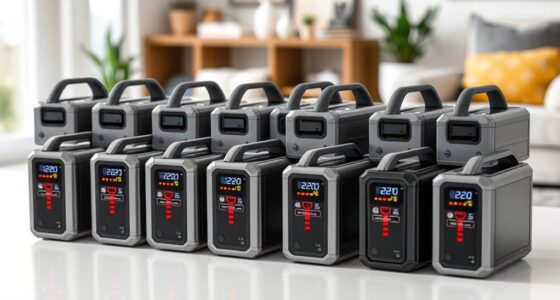
My first choice for home oxygen delivery is the Portable Oxygen Concentrator ROGS 1-9L Low Noise Machine. It is the only complete concentrator in this comparison, pairing a 1–9 L/min adjustable range with a 12-pound body, remote control, and a claimed noise level below 45 dB. Those qualities make it the more practical starting point for a buyer who has a prescription and wants a machine that can move between rooms.
The High Flow Oxygen Humidifier Bottle ranks second as my comfort-focused pick, but the distinction matters: it does not produce oxygen. It attaches to a compatible continuous-flow concentrator and adds moisture to the outgoing gas. I would choose it only after confirming that an existing machine supports external humidification and that a clinician recommends it.
The main decision is not simply price or maximum flow. Buyers need to match the prescribed flow mode, oxygen output, and operating schedule, then weigh noise, power dependence, maintenance, and room-to-room mobility. Manufacturer claims such as “up to 93%” do not show how purity behaves at every setting, while a universal connector does not guarantee compatibility with every machine. I treat both listings as products that require specification and medical verification before purchase.
Complete the kit


Key Takeaways
- I rank the ROGS machine first because it is the lineup’s only product that actually concentrates oxygen; the humidifier bottle is an accessory.
- The ROGS model’s 1–9 L/min adjustment sounds flexible, but I would verify oxygen purity and whether delivery is continuous or pulse-based at the prescribed setting.
- At 12 pounds, the ROGS is better viewed as a room-to-room home machine than a battery-powered ambulatory concentrator.
- I would add the humidifier bottle only to a compatible continuous-flow system when dryness is a recurring problem and humidification has clinical approval.
- Neither product should be selected from headline specifications alone; prescription fit, authorization status, warranty support, alarms, and replacement parts also matter.
| Portable Oxygen Concentrator ROGS 1-9L Low Noise Machine |  | Best Overall for Room-to-Room Home Use | Product Type: Portable-style home oxygen concentrator | Oxygen Flow: 1–9 liters per minute | Oxygen Concentration: Up to 93% | VIEW ON AMAZON | See Our Full Breakdown |
| High Flow Oxygen Humidifier Bottle for Oxygen Concentrators |  | Best Comfort Add-On for Compatible Continuous-Flow Systems | Product Type: Oxygen humidifier bottle; does not produce oxygen | Primary Function: Adds moisture to supplied oxygen | Compatibility: High-flow oxygen concentrators | VIEW ON AMAZON | See Our Full Breakdown |
| oxygen concentrators for home use | Product Type | Oxygen Flow | Oxygen Concentration | Weight |
|---|---|---|---|---|
| Portable Oxygen Concentrator R | Portable-style home oxygen concentrator | 1–9 liters per minute | Up to 93% | 12 lb (5.5 kg) |
| High Flow Oxygen Humidifier Bo | Oxygen humidifier bottle; does not produce oxygen | — | — | — |
More Details on Our Top Picks
Portable Oxygen Concentrator ROGS 1-9L Low Noise Machine
The ROGS 1-9L Low Noise Machine earns my top position because it is the comparison’s sole complete oxygen-producing device. Its adjustable 1–9 L/min range offers more setting flexibility than a fixed-output unit, while the claimed concentration of up to 93% gives buyers a useful starting figure. That does not mean every setting suits every prescription: “up to” describes a peak, not necessarily the output available across the entire range.
For day-to-day home placement, the combination of a 12-pound body, carry handle, and remote control is appealing. A caregiver could move it from a bedroom to a living area without handling a much heavier stationary machine, and the real-time display should make operating information easier to read. Compared with the humidifier bottle, this model performs the core therapy function rather than merely changing moisture. Still, I would call it room-to-room portable, not automatically travel-ready. The supplied details say it needs a power source and do not identify an included battery, vehicle adapter, or flight approval.
The listed noise level below 45 dB gives this machine an advantage for sleep, television viewing, and conversation. Noise ratings can be measured under controlled conditions, however, and compressor tone, vibration, alarms, or a hard floor may change how intrusive the machine sounds at home. The specification also leaves open whether 1–9 L/min is true continuous flow, pulse delivery, or another output measurement. That distinction can affect compatibility with sleep, exertion, and certain cannulas.
I would place the ROGS ahead of the humidifier accessory for a buyer starting from scratch, but I would not buy from the headline numbers alone. I would ask the seller for an oxygen-purity chart at every flow setting, delivery mode, alarm list, filter schedule, warranty terms, service contacts, and proof of authorization for sale. A prescribed 9 L/min requirement deserves special scrutiny because the machine’s maximum setting leaves no reserve and may not maintain its peak concentration there.
Pros:- Adjustable 1–9 L/min output provides broader setting flexibility than a single-flow machine
- Claimed concentration reaches up to 93%, subject to verification at the prescribed flow
- 12-pound body and carry handle support easier movement around the home
- Below-45 dB claim, real-time display, and remote control suit bedrooms and shared spaces
Cons:- Supplied details do not identify continuous versus pulse delivery or purity at each setting
- Requires external power, with no battery capability stated
- Maximum 9 L/min output may be insufficient for higher prescriptions and leaves no headroom at the limit
Best for: A prescription user who wants a relatively light, quiet, externally powered concentrator for movement between rooms at home.
Not ideal for: Anyone needing confirmed battery operation, airline travel, output above 9 L/min, or a machine whose prescription fit and authorization cannot be documented.
- Product Type:Portable-style home oxygen concentrator
- Oxygen Flow:1–9 liters per minute
- Oxygen Concentration:Up to 93%
- Weight:12 lb (5.5 kg)
- Noise Level:Below 45 dB
- Controls:On-unit controls and remote control
- Display:Real-time display
- Mobility:Carry handle for movement between rooms
- Power:External power required; battery not specified
Our verdict“My leading pick is the ROGS for quiet, room-to-room home use, provided its delivery mode, purity curve, authorization, and service support match the prescription.”
High Flow Oxygen Humidifier Bottle for Oxygen Concentrators
The High Flow Oxygen Humidifier Bottle fills a narrower role than the ROGS machine: it adds moisture to oxygen from an existing concentrator. I rank it second because it cannot replace an oxygen source. Its value is comfort, particularly when prolonged continuous flow contributes to nasal or throat dryness and a clinician approves humidification.
A clear, durable plastic reservoir makes the water line visible without removing the bottle, which can simplify routine checks. The listed universal connector may also fit many common oxygen arrangements. Compared with the ROGS concentrator, though, this bottle adds another junction to the breathing circuit and another maintenance task. “Universal” is a broad seller claim; I would match the fitting, outlet pressure, and humidifier guidance against the exact concentrator manual before connecting it.
This accessory makes the most sense beside a stationary or room-to-room continuous-flow concentrator. It is less suitable for portable units that prohibit external bottles, pulse-dose devices that may not operate correctly through added accessories, or households where the reservoir could be knocked over. The description does not provide bottle capacity, maximum operating pressure, tubing requirements, or cleaning instructions, leaving buyers without several practical details.
The tradeoff is straightforward: added moisture may improve comfort, but the bottle demands regular water checks, cleaning, and careful placement. Incorrect water, overfilling, contaminated parts, or tubing routed poorly may create problems. Compared with buying the ROGS, this is the cheaper and simpler product only when a compatible oxygen source is already present. I would skip it for a first-time buyer searching for a complete therapy machine.
Pros:- Adds moisture that may reduce dryness during extended continuous-flow therapy
- Clear reservoir allows quick water-level checks
- Simple refillable format suits a stable home setup
- Universal-style connection may fit many concentrators after compatibility is confirmed
Cons:- It is an accessory, not an oxygen concentrator
- Requires recurring refilling, cleaning, and spill-aware placement
- Capacity, pressure limits, and exact connector standard are not supplied
Best for: A continuous-flow concentrator user who already has an approved oxygen source and needs clinician-recommended humidification for home comfort.
Not ideal for: A buyer who needs an oxygen-producing machine, uses an incompatible portable or pulse-dose unit, or cannot manage regular refilling and cleaning.
- Product Type:Oxygen humidifier bottle; does not produce oxygen
- Primary Function:Adds moisture to supplied oxygen
- Compatibility:High-flow oxygen concentrators
- Therapy Mode:Designed for continuous-flow systems
- Material:Durable clear plastic
- Water-Level Monitoring:Visible through clear reservoir
- Connection Type:Universal-style connector; verify exact fit
- Maintenance:Regular water checks, refilling, and cleaning required
- Reservoir Capacity:Not specified
Our verdict“I recommend this bottle only as a clinician-approved comfort accessory for a verified continuous-flow setup, never as an alternative to a concentrator.”
How We Picked
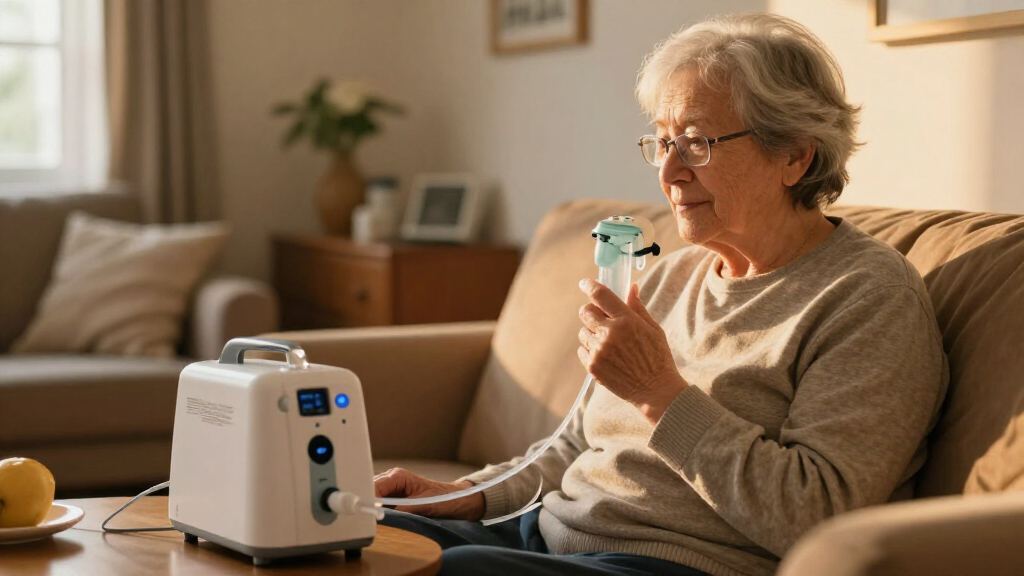
I ranked these products through the narrow lens of home oxygen therapy. My first filter was whether a product can deliver oxygen on its own. That puts the ROGS concentrator in first place and the humidifier bottle second, regardless of how useful the bottle may be for comfort. Calling an accessory a substitute for a concentrator would hide the most consequential difference in this lineup.
Next, I compared the details that affect daily home use: prescription matching, adjustable flow, noise, weight, controls, and power needs. The ROGS listing supplies useful headline figures, including 1–9 L/min, up to 93% concentration, 12-pound weight, and operation below 45 dB. I gave those figures measured credit because the supplied information does not identify flow mode, purity at each setting, battery capability, alarm types, filter schedule, or regulatory authorization. Those omissions keep it from being an unconditional recommendation.
For the humidifier bottle, I focused on compatibility, visibility, and upkeep. A clear reservoir can make water checks easier, and added moisture may reduce dryness for some continuous-flow users. Yet humidification introduces refilling, cleaning, spill, and contamination concerns. I also looked for a stated capacity and precise connector standard; neither was supplied. The “universal” description deserves confirmation against the concentrator manual rather than blind reliance.
My order reflects functional importance before convenience. The machine that generates concentrated oxygen takes the lead; the accessory that may make treatment more comfortable follows. I would still require a clinician-approved flow setting, dependable seller support, a suitable warranty, and documentation showing that the exact unit is legally marketed where it will be used.
| oxygen concentrators for home use | Product Type |
|---|---|
| Portable Oxygen Concentrator R | Portable-style home oxygen concentrator |
| High Flow Oxygen Humidifier Bo | Oxygen humidifier bottle; does not produce oxygen |
Factors to Consider When Choosing Oxygen Concentrators For Home Use
I would begin with the prescribed oxygen requirement, not a marketplace claim or maximum-flow number. A suitable home setup must deliver the ordered therapy mode and concentration during the hours and activities specified by a clinician. Comfort accessories come after that foundation.Match the Delivery Mode to the Prescription
Continuous flow and pulse delivery are not interchangeable labels. Continuous machines supply gas throughout the breathing cycle, while pulse systems release a measured dose after detecting inhalation. A setting of “3” on one type may not equal 3 L/min on another. I would request written confirmation of the ROGS delivery mode and show it to the prescribing clinician or respiratory supplier.
Sleep, exertion, and shallow breathing can change what a user needs. If oxygen is prescribed overnight, I would ask whether the machine’s detection method and alarms suit sleep. The humidifier bottle belongs only in a circuit whose manufacturer permits it; adding it without approval could affect resistance, alarms, or warranty coverage.
Read Flow and Purity Claims Together
A wide flow range has little value if oxygen concentration drops below the prescribed requirement at the chosen setting. The ROGS listing says up to 93%, but it does not give a setting-by-setting purity chart. I would ask for that chart, the permitted tolerance, warm-up time, and output under typical household temperature and humidity.
A user prescribed near the 9 L/min ceiling has less operating margin than someone prescribed a lower setting. I would favor a machine with documented output at the exact prescription rather than choosing by the largest number printed in the title.
Separate Home Portability From Travel Capability
The ROGS weighs 12 pounds and includes a carry handle, so it should be easier to reposition than many larger stationary units. That can help in a home where therapy moves between sleeping and living areas. Yet portability also depends on cord length, battery support, vehicle power, dimensions, and approval for transportation.
Because no battery is specified, I would plan for continuous access to household power and ask a clinician about backup oxygen for outages. I would not infer airline acceptance from the word “portable.” Air travel requires documentation and carrier acceptance of the exact model.
Account for Noise, Humidification, and Maintenance
A rating below 45 dB suggests the ROGS may suit a bedroom, but I would also check alarm volume and compressor character. Placing a machine on a stable surface with its vents unobstructed can reduce vibration without restricting airflow. Tubing length should follow the manufacturer’s limit.
Humidification can help some users with dryness, yet more moisture means more upkeep. I would follow the bottle and concentrator manuals for approved water, fill level, cleaning, replacement intervals, and placement. A clear reservoir aids inspection, but it does not remove contamination or spill risks.
Verify Safety Documentation and Service
Before ordering, I would confirm legal marketing status, prescription requirements, alarm functions, and seller support for the buyer’s country. Low-oxygen, power-failure, overheating, and blocked-flow alarms can matter during unsupervised home use, yet the supplied ROGS description does not list them.
I would also seek a written warranty, return policy, service location, replacement-filter availability, and a reachable support contact. Oxygen supports combustion, so smoking, flames, sparks, petroleum products, and blocked ventilation do not belong near the equipment. The clinician, equipment manual, and local fire-safety guidance should govern placement.
Frequently Asked Questions
Is the High Flow Oxygen Humidifier Bottle an oxygen concentrator?
No. The humidifier bottle does not generate or concentrate oxygen; it holds water so oxygen from a separate compatible machine can pick up moisture. I would buy it only when an oxygen concentrator is already available, the system supports an external humidifier, and a clinician recommends one. Buyers needing a complete device should start with the ROGS or another prescription-matched concentrator.
Does the ROGS 1–9 L/min range work for any oxygen prescription?
No. A broad setting range does not prove that the machine meets every prescription. I would verify continuous versus pulse delivery, oxygen purity at the required setting, and suitability during sleep or activity. A prescription above 9 L/min is outside the listed range, while a requirement near 9 L/min calls for proof that concentration remains adequate at maximum output.
Is a noise level below 45 dB quiet enough for sleeping?
A sub-45 dB claim suggests relatively quiet operation, but perceived sound depends on compressor tone, vibration, room acoustics, and alarm behavior. I would check the return policy and avoid placing the unit where bedding, curtains, or furniture could block ventilation. Sleep suitability also depends on prescribed delivery mode, not sound alone.
Do I need a prescription to buy a home oxygen concentrator?
Medical oxygen concentrators are prescription-regulated in many places, including the United States. I would consult a licensed clinician and verify local rules before buying. A prescription supplies the flow, delivery mode, and usage schedule that marketplace listings cannot determine. I would also confirm that the exact model is authorized for sale and supported by a qualified service provider.
How should I maintain a concentrator and humidifier bottle?
I would follow each manufacturer’s schedule for filter care, exterior cleaning, tubing replacement, reservoir cleaning, and approved water. The humidifier bottle needs frequent water-level checks and careful drying or replacement as directed. I would never alter a prescribed setting, lubricate fittings with petroleum products, or attach unapproved accessories. Any new alarm, reduced output, unusual heat, or breathing difficulty calls for immediate guidance from the equipment provider or clinician.
What are the best oxygen concentrator?
The best oxygen concentrator depends on your specific needs and preferences. The picks above are top-rated options that offer reliable performance, ease of use, and portability for home use. When choosing an oxygen concentrator, consider factors such as continuous flow capabilities, noise levels, and maintenance requirements. These models are designed to provide consistent oxygen delivery and are suitable for various settings. Always consult with a healthcare professional to ensure the selected device meets your medical needs.
Conclusion
For a buyer who needs a complete machine for quiet, room-to-room home oxygen use, my first pick is the ROGS 1-9L Low Noise Machine. Its adjustable output, 12-pound weight, display, and remote make it the more capable option here, but I would purchase only after confirming delivery mode, purity at the prescribed setting, alarms, legal status, and service coverage.
For someone who already owns a compatible continuous-flow concentrator and struggles with clinician-recognized dryness, I would choose the High Flow Oxygen Humidifier Bottle as a comfort add-on. Anyone seeking battery-backed travel use, documented high-flow performance above 9 L/min, or fully specified medical support should skip both listings and work with a respiratory equipment provider on a better-documented system.