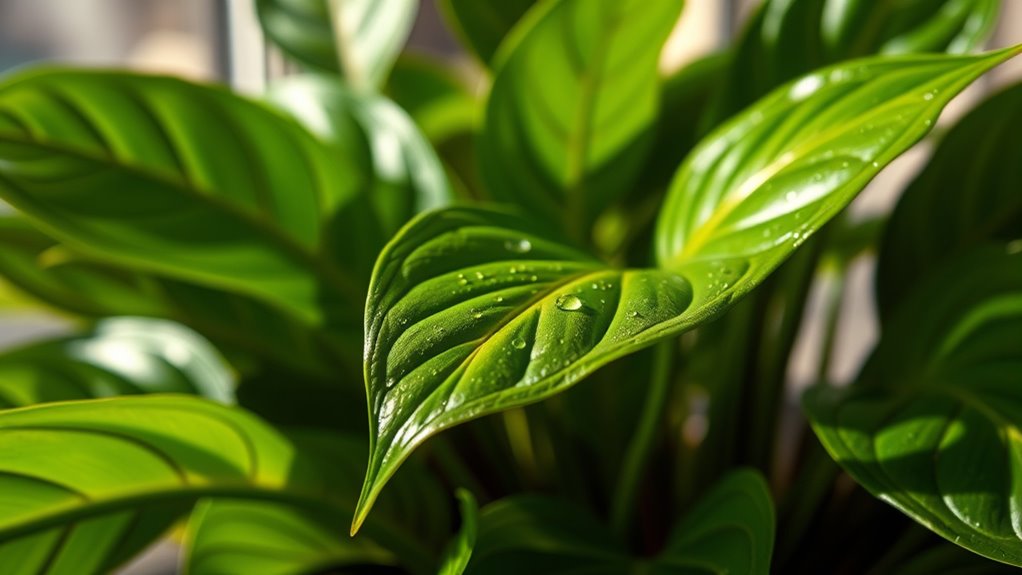

While some houseplants like snake plants and peace lilies are marketed as air purifiers, scientific evidence shows their impact on indoor air quality is modest at best. They can absorb certain toxins, but their real-world effectiveness depends on plant care and room conditions. For significant improvements, combine plants with good ventilation and air purifiers. If you’re curious about how much houseplants can truly help, there’s more to uncover below.
Key Takeaways
- Certain houseplants like snake plants and peace lilies can absorb some indoor air toxins, but their impact is generally modest.
- NASA’s 1989 study suggested plants could remove specific VOCs, but real-world effectiveness is limited and depends on conditions.
- Proper plant care, including healthy soil and environment, enhances their ability to purify air, but they shouldn’t be relied on solely.
- Houseplants work best as supplementary tools alongside ventilation and air purifiers for better indoor air quality.
- Scientific evidence indicates plants contribute to air improvement but are not a primary solution for significant pollutant removal.
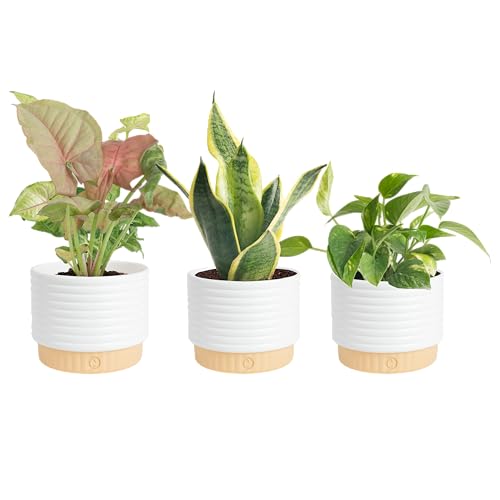
Costa Farms Live Indoor Plants in Decorative Pots, Easy to Maintain, Air Purifying Houseplants, Assorted Varieties, Room or Home Decor, House Warming Gift, 8-12 Inches Tall, Pack of 3
PERFECT CHRISTMAS HOLIDAY DÉCOR BUNDLE: This 3-pack offers incredible value to instantly decorate multiple spaces with live houseplant…
As an affiliate, we earn on qualifying purchases.
As an affiliate, we earn on qualifying purchases.
The Origins of Air Purification Claims for Houseplants
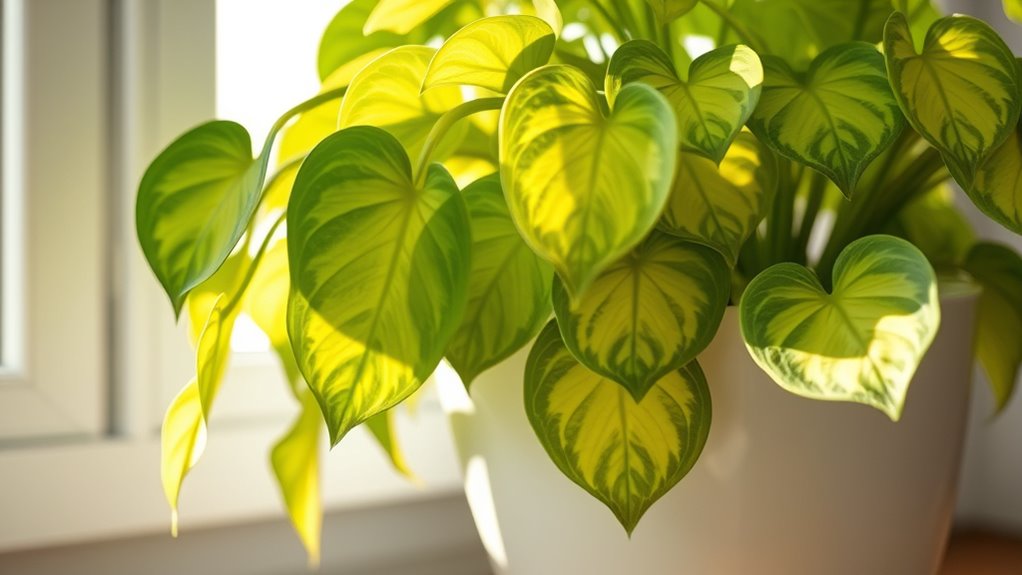
The idea that houseplants can purify indoor air gained widespread attention after NASA’s 1989 study, which suggested some plants might remove certain toxins from enclosed spaces. This claim is rooted in the understanding of plant metabolism, where plants absorb air pollutants through their leaf surface. When you look at a leaf, it’s not just for photosynthesis; its surface interacts with the surrounding air, potentially capturing airborne chemicals. Researchers believed that plants could actively filter toxins like formaldehyde and benzene by absorbing them through these leaf surfaces. However, while this process occurs naturally, the extent to which houseplants can markedly improve indoor air quality remains uncertain. Recent analyses highlight limitations of indoor air purification, indicating that the actual impact of houseplants on air quality might be less significant than initially thought. The initial enthusiasm sparked ongoing interest in exploring plants as natural air purifiers.

Costa Farms Snake Plant, Sansevieria Live Plant in Decorative Pot, Easy to Maintain, Air Purifying Succulent Indoor Houseplant, Assorted Variety, Home, Room, or Office Décor, 8-12 Inches Tall
AIR-PURIFYING STYLE: The architectural upright leaves of this live Snake Plant provide a modern, sleek look that defines…
As an affiliate, we earn on qualifying purchases.
As an affiliate, we earn on qualifying purchases.
Key Studies Investigating Plants and Indoor Air Quality

You should look at NASA’s pioneering research, which first demonstrated that certain houseplants can remove toxins from the air. Recent experimental findings build on this work, providing more detailed insights into how plants improve indoor air quality. These studies help you understand which plants are most effective and how they can benefit your living space. Additionally, understanding the color accuracy of indoor plants can enhance their visual appeal and overall health benefits.
NASA’s Pioneering Research
NASA’s groundbreaking research in the 1980s revealed that certain houseplants can substantially improve indoor air quality by removing toxins. This pioneering work demonstrated how plants like the peace lily and snake plant filter air pollutants such as formaldehyde and benzene. When choosing plants, consider plant aesthetics to match your space and guarantee they enhance your environment. Growing conditions are vital; proper light, humidity, and watering influence their effectiveness and health. NASA’s studies showed that not only do these plants purify air, but they also add visual appeal. Additionally, understanding how plant care impacts their toxin-removing ability is essential for maximizing benefits. This research laid the foundation for understanding how indoor greenery benefits health and atmosphere. Your focus should be on selecting plants that thrive in your environment for maximum toxin removal and visual harmony.
Recent Experimental Findings
Recent experimental studies have provided strong evidence that certain houseplants can markedly reduce indoor air pollutants. Researchers have observed that healthy plant growth correlates with improved air quality, especially when soil composition is ideal. Plants with balanced soil promote better root systems, enhancing their ability to absorb volatile organic compounds (VOCs) and other pollutants. Experiments show that soil rich in organic matter and proper drainage supports vigorous plant growth, which in turn boosts their air-purifying capacity. These findings suggest that selecting plants with optimal soil conditions can maximize indoor air cleaning. Conversely, poor soil composition can hinder plant growth and reduce their effectiveness. Overall, the studies highlight how maintaining healthy plant growth through proper soil management is key to leveraging their air-purifying benefits.
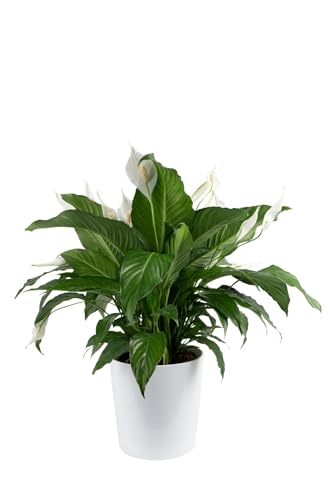
Costa Farms Peace Lily Live Plant in Decorative Pot, Air Purifying Flowering Large Indoor Houseplant, Perfect for Home, Room, or Office Decor, Great House Warming or Birthday Gift, 2-3 Feet Tall
ELEGANT FLOWERING ROOM DÉCOR: The pure white flowering spathes of the large Peace Lily add a touch of…
As an affiliate, we earn on qualifying purchases.
As an affiliate, we earn on qualifying purchases.
Which Plants Are Commonly Marketed as Natural Air Filters?
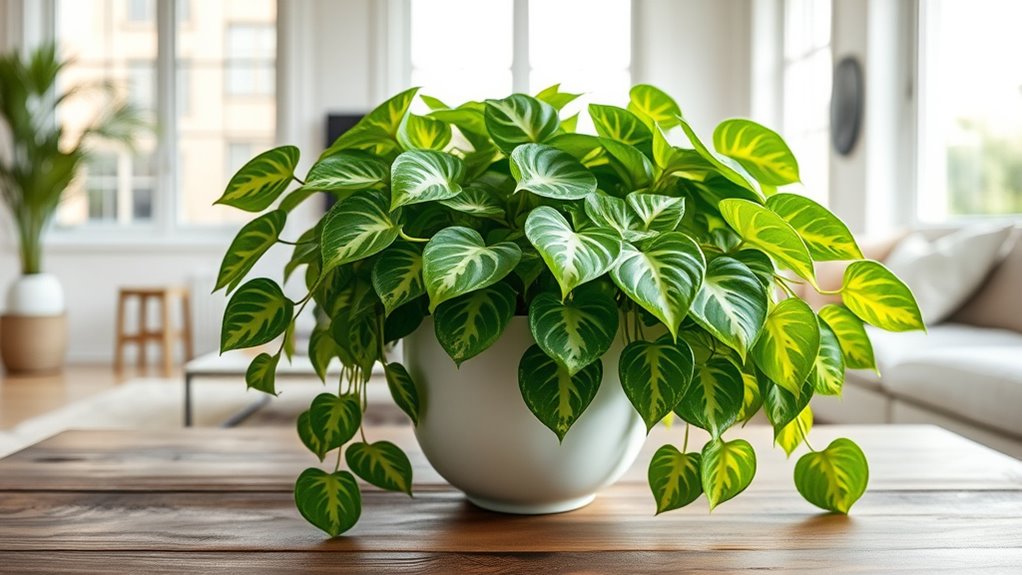
You’ve probably seen popular air-purifying plants like the snake plant, peace lily, and pothos marketed as natural filters for your home. These plants are widely available and often advertised for their ability to improve indoor air quality. Let’s explore which of these common options are most effective and easy to care for. Additionally, understanding the air purification capabilities of these plants can help you make informed decisions about incorporating them into your living space.
Popular Air-Purifying Plants
Many popular air-purifying plants are widely marketed as natural filters for indoor air quality. You might recognize some like the snake plant, pothos, spider plant, or peace lily. These plants are often chosen for their ability to remove toxins, but it’s important to contemplate plant toxicity, especially if you have pets or children. Some, like the peace lily, are toxic if ingested. Water requirements vary: snake plants need minimal watering, while pothos prefer consistent moisture. Keep in mind that overwatering can lead to root rot, so balance is key. These plants are generally easy to care for, but understanding each plant’s specific needs helps maximize their air-purifying potential while keeping your household safe. Additionally, the low-maintenance nature of these plants makes them suitable for busy households or beginners in plant care.
Commonly Marketed Options
Are you wondering which plants are most commonly marketed as natural air filters? Many popular options include the snake plant, pothos, and peace lily. These plants are often advertised for their ability to improve indoor air quality, but it’s important to weigh plant toxicity and pet safety. For example, peace lilies contain compounds that can be toxic if ingested by pets, while snake plants are generally safer but still pose risks if consumed. Pothos is also common but can cause irritation to pets’ mouths and digestive systems. While these plants may seem like great air purifiers, always research their safety and toxicity levels before bringing them into your home, especially if you have curious pets. Understanding plant toxicity is essential for making safe choices in sustainable living.
Costa Farms Live Indoor Plants in Decorative Pots, Easy to Maintain, Air Purifying Houseplants, Assorted Varieties, Room or Home Decor, House Warming Gift, 8-12 Inches Tall, Pack of 3
PERFECT CHRISTMAS HOLIDAY DÉCOR BUNDLE: This 3-pack offers incredible value to instantly decorate multiple spaces with live houseplant…
As an affiliate, we earn on qualifying purchases.
As an affiliate, we earn on qualifying purchases.
How Effective Are Plants at Removing Indoor Pollutants?
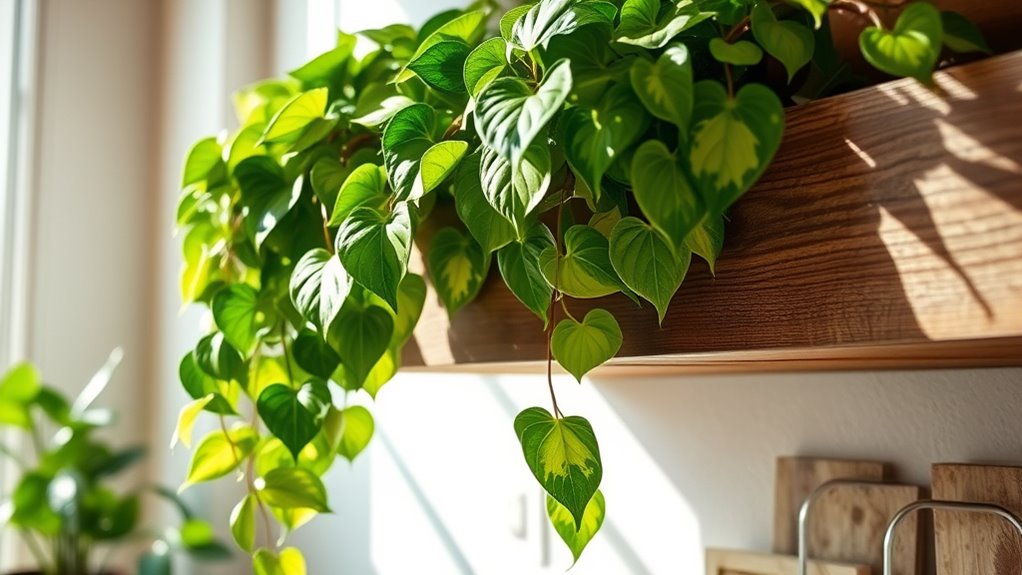
While houseplants are often praised for their air-purifying abilities, their effectiveness varies depending on the type of pollutant and plant species. Some plants can absorb indoor VOCs (volatile organic organic compounds) through their leaves and roots, aided by plant photosynthesis. However, their capacity to markedly improve air quality in real-world settings is limited. You might notice small reductions in certain pollutants, but they typically don’t remove enough contaminants to replace ventilation or air purifiers. Factors like plant size, number, and placement also influence their impact. Keep in mind that plants work best as complementary tools rather than primary solutions for indoor air cleaning. Ultimately, while they contribute to better air quality, their pollutant removal ability is modest at best. Additionally, necessary cookies help monitor site performance, which can inform future improvements to how indoor air quality information is presented.
Limitations of Laboratory and Real-World Findings
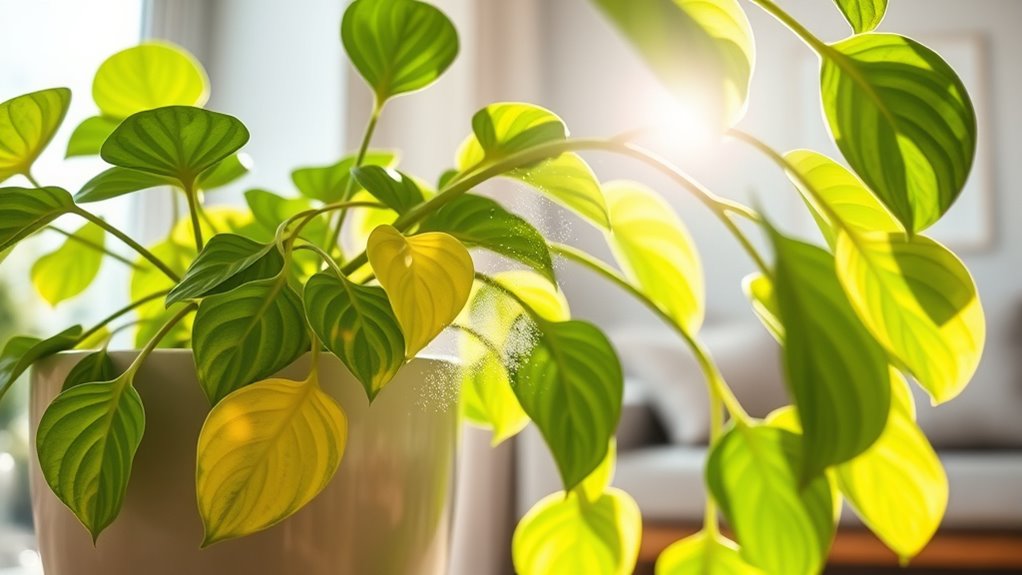
Laboratory studies often show that certain houseplants can absorb pollutants effectively under controlled conditions. However, these findings don’t always translate to real-world settings. Factors like airflow, light, and space influence how well plants remove pollutants at home. Additionally, some plants may pose plant toxicity risks if ingested, especially around children or pets. Maintenance challenges also come into play, as keeping plants healthy requires regular watering, pruning, and monitoring for pests. These practical issues can limit their ability to consistently improve indoor air quality. Moreover, plant maintenance can be time-consuming and may deter some from keeping healthy plants long-term. So, while lab results are promising, you should be cautious about expecting the same level of air purification in your home. The real-world effectiveness is often less dramatic than what controlled studies suggest.
Practical Tips for Improving Indoor Air Quality
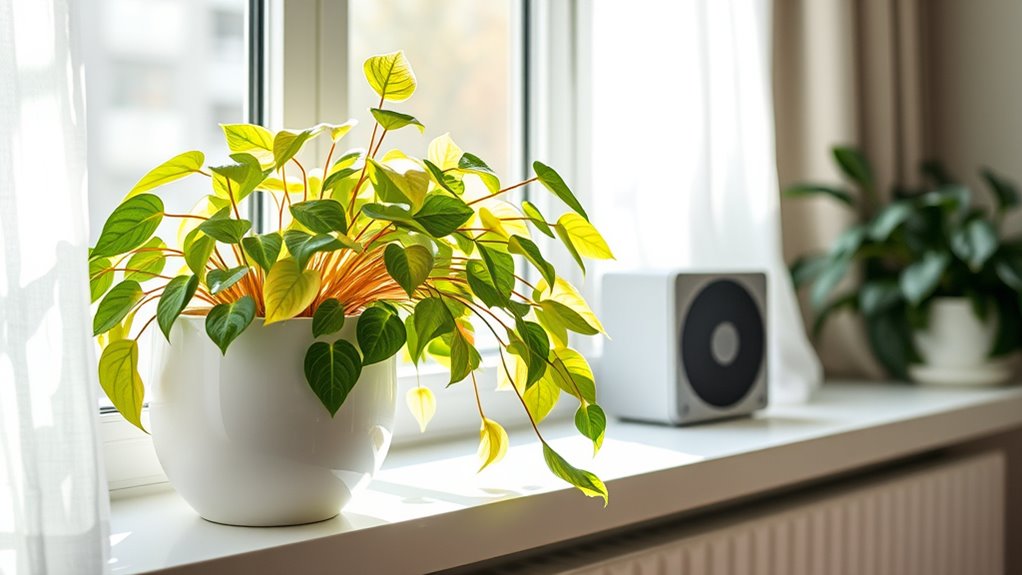
Improving indoor air quality doesn’t require complex solutions; simple, consistent actions can make a notable difference. To start, monitor indoor humidity levels—keeping it around 40-50% helps prevent mold growth and reduces allergens. Regularly ventilate your space by opening windows or using exhaust fans to refresh air and remove pollutants. Keep surfaces clean to minimize dust, which can carry allergens. Consider using air purifiers with HEPA filters for additional help. Also, control sources of indoor pollutants like tobacco smoke and strong chemicals. These practical steps can notably improve your indoor environment, making it healthier and more comfortable. Additionally, understanding the impact of air quality on engine performance can help you maintain your vehicle better and prevent issues caused by contaminants. Remember, maintaining consistent habits is key to long-term air quality improvements.
Balancing Houseplant Benefits With Other Air Purification Strategies
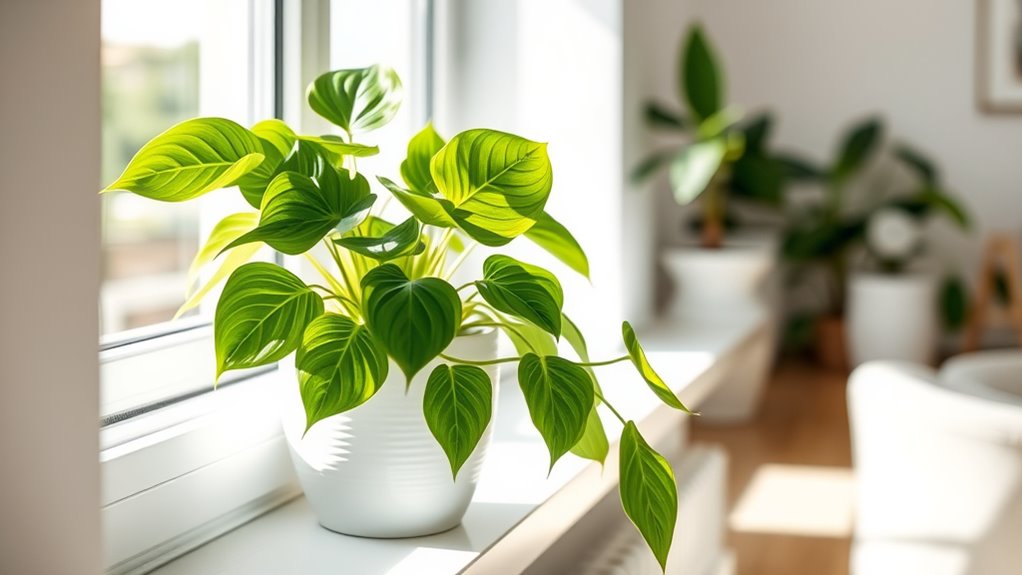
Houseplants offer natural air purification benefits, but relying solely on them isn’t enough to guarantee ideal indoor air quality. To maximize their effectiveness, focus on proper plant care to keep them healthy and efficient at filtering pollutants. Combining houseplants with other strategies, like good ventilation and air purifiers, creates a more comprehensive approach. This balance helps improve air quality faster and more reliably. Additionally, choose plants that complement your space’s aesthetic benefits, enhancing your home’s look while boosting air quality. Remember, plants contribute to a calming environment, but they shouldn’t be your only solution. Incorporating multiple air purification methods, such as HEPA filters, ensures cleaner air and a more comfortable, visually appealing space. Balancing plant care with other strategies is key to achieving excellent indoor air health.
Frequently Asked Questions
Do All Houseplants Improve Indoor Air Quality Equally?
No, not all houseplants improve indoor air quality equally. Different plant species vary in their ability for air filtration, with some like pothos and snake plants more effective at removing toxins. You’ll notice that the best plants for air purification have large leaves and are easy to care for. So, choose your plant species wisely if you want to maximize indoor air quality benefits.
Can Plants Completely Replace Traditional Air Purification Systems?
Plants can’t fully replace traditional air purification systems because they rely on natural processes like air exchange and may pose plant toxicity risks if ingested. While they improve indoor air quality by filtering some pollutants, their impact is limited compared to mechanical systems. For thorough air purification, use plants as a supplement, not a substitute, and guarantee you select non-toxic varieties safe for your environment.
How Long Does It Take for Plants to Significantly Clean Indoor Air?
It typically takes several weeks for plants to considerably improve indoor air quality through air exchange. During this time, their leaf surface and root system work actively to absorb toxins. Keep in mind, the plant’s lifespan influences its effectiveness; healthier, mature plants usually purify air better over time. Regular care and proper placement boost their air-cleaning potential, but don’t expect instant results—patience is key for noticeable improvements.
Are There Any Risks Associated With Certain Houseplants?
They say “better safe than sorry,” and that’s true for houseplants too. Some plants pose toxicity concerns, especially if you have pets or children, so you should check pet safety. Certain popular houseplants, like dieffenbachia or pothos, can be toxic if ingested. Always research your plant’s toxicity before bringing it home, and keep them out of reach to avoid accidental poisoning.
What Maintenance Do Air-Purifying Plants Require?
You should water your air-purifying plants when the top inch of soil feels dry, typically every 1-2 weeks. Make sure they have good soil drainage to prevent root rot and avoid overwatering. Keep an eye on their light needs and rotate them for even growth. Regularly dust the leaves to maximize their air-filtering ability, and check for pests to keep your plants healthy and effective at purifying your air.
Conclusion
Think of houseplants as beautiful, green filters in your home’s air. While they add life and charm, they’re just one piece of the puzzle. Real air purification is like tending a garden—you need multiple strategies working together. So, enjoy your plants, but don’t rely on them alone. Combine good ventilation, cleaning, and air purifiers for truly fresh, healthy air—like a well-tuned orchestra creating harmonious, pure sound.