
To improve your balance at home, start with basic exercises like standing still for 30 seconds, then progress by lifting one foot or closing your eyes. Use visual cues and slow movements to boost awareness and control. challenge yourself with unstable surfaces or dynamic motions as you get stronger. Keep safety in mind by clearing hazards and maintaining proper footing. If you follow these simple steps, you’ll discover more effective techniques to deepen your practice.
Key Takeaways
- Start with basic standing balance exercises, maintaining proper posture and gradually increasing duration for foundational stability.
- Progress to single-leg stances, adding challenges like closing eyes or standing on unstable surfaces.
- Incorporate visual cues, such as focusing on a point or mirror, to enhance proprioception and body awareness.
- Use unstable surfaces like wobble boards or foam pads for advanced static and dynamic balance training.
- Ensure a safe environment by removing hazards, securing rugs, and using proper footwear to prevent falls during exercises.

Amazon Basics Wood Wobble Balance Trainer Board, Slip Resistant, for Exercise and Core Strength, 265 lb Weight Capacity, Black
Black balance board can help improve core strength, coordination, posture, and balance
As an affiliate, we earn on qualifying purchases.
As an affiliate, we earn on qualifying purchases.
Starting With Basic Standing Balance Exercises
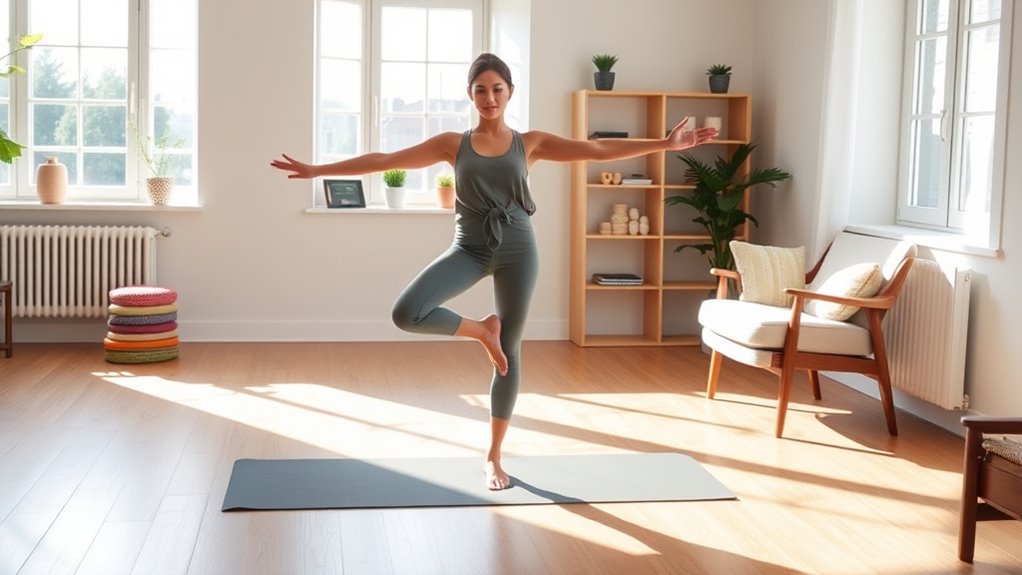
To begin improving your balance at home, start with simple standing exercises that require minimal equipment. Focus on maintaining proper posture alignment; stand tall with shoulders back, chest open, and chin parallel to the floor. Good posture helps activate core muscles and promotes stability. Incorporate breathing techniques by taking slow, deep breaths to keep your body relaxed and centered. Breathe in through your nose, filling your lungs fully, then exhale smoothly. This calm breathing supports better focus and control during your exercises. Keep your feet shoulder-width apart and engage your leg muscles gently. Practice standing still for 30 seconds to a minute, gradually increasing duration. Developing awareness of your body position can further enhance your balance and stability. These foundational steps build stability, improve posture, and prepare you for more advanced balance exercises.

Stability Trainer Pad – Foam Balance Exercise Pad Cushion for Therapy, Yoga, Dancing Balance Training, Pilates,and Fitness (Blue c)
It is soft and thick enough to support ankle stability, relief pains for knee, and elbow.
As an affiliate, we earn on qualifying purchases.
As an affiliate, we earn on qualifying purchases.
Incorporating Single-Leg Stances for Greater Challenge
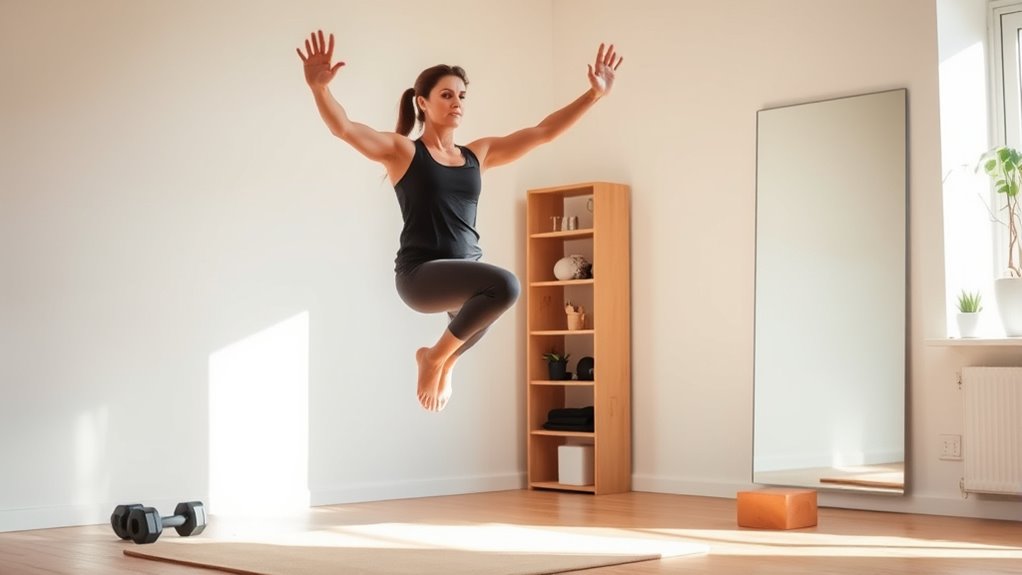
Have you tried balancing on one leg yet? Incorporating a single-leg stance adds a new level of challenge to your balance routine. This unilateral training improves stability, strengthens supporting muscles, and enhances proprioception. To start, find a stable surface and lift one foot off the ground, keeping your core engaged and hips level. Hold the position for 10-30 seconds, then switch sides. As you progress, try closing your eyes or standing on an uneven surface to increase difficulty. Single-leg stances can be integrated into your daily routine, making your balance training more effective and functional. Remember, the goal is control and stability, not perfection. Regular practice with this simple progression will help you develop better balance and prevent falls over time. Fathers can even model and encourage these exercises, promoting healthy habits and resilience in family routines.

Frgofl Balance Board for Ankle Strengthening & Physical Therapy – Adjustable Single Leg Board for Recovery from Sprains, Plantar Fasciitis | Stability Trainer with Video Guide and Carry Bag
Accelerate Ankle Recovery & Relieve Pain Effectively – Say goodbye to ankle discomfort and welcome a stronger you….
As an affiliate, we earn on qualifying purchases.
As an affiliate, we earn on qualifying purchases.
Using Visual Cues to Enhance Stability
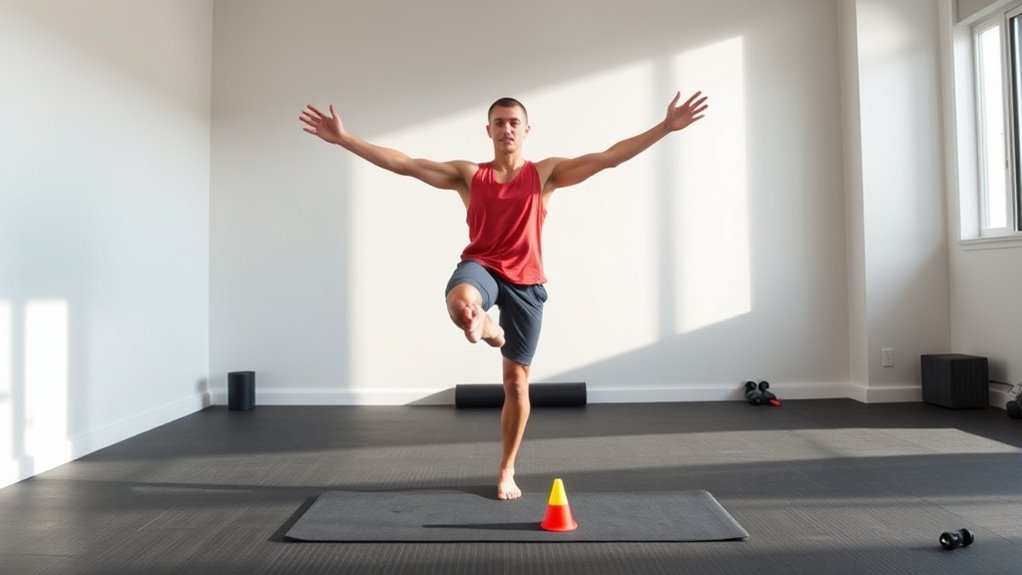
Using visual cues can considerably improve your balance by providing your brain with additional information about your body’s position. When you focus on visual cues, you enhance your balance feedback, making it easier to maintain stability. For example, fixate on a stationary point in front of you or use a mirror to observe your posture. These cues help your brain interpret your body’s orientation and make quick adjustments. Incorporating visual cues into your balance exercises increases awareness, helping you detect small shifts in your position. Over time, this heightened awareness develops better proprioception and stability. Recognizing patterns in angel numbers can also serve as subtle signals from the universe, guiding your focus and enhancing your balance practice. Remember, the more consistent you are with using visual cues, the more your balance improves, especially during challenging or unfamiliar movements.

ProsourceFit Core Balance Disc Trainer, 14" Diameter with Pump for Fitness, Balance Training, or Seating; Wobble Board for Core Stability; Flexible Floor Cushions for Kids, Purple
IMPROVE CORE STRENGTH & BALANCE – Strengthens and engages multiple core muscles at once to maintain balance during…
As an affiliate, we earn on qualifying purchases.
As an affiliate, we earn on qualifying purchases.
Adding Slow, Controlled Movements to Improve Coordination
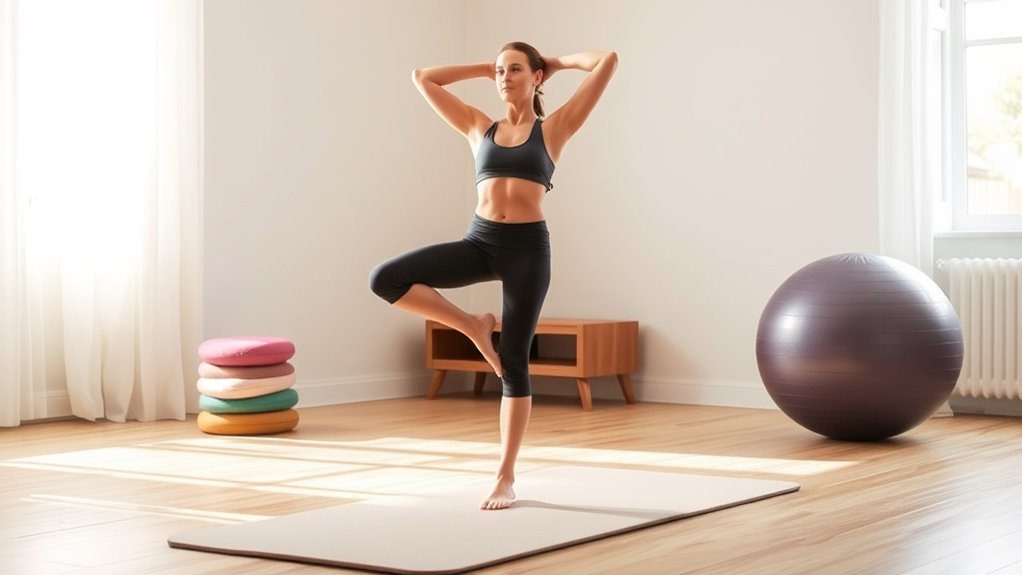
Adding slow, controlled movements helps you enhance your motor control and develop better coordination. When you focus on deliberate, mindful motions, you build the stability skills necessary for maintaining balance. Incorporating these exercises into your routine can make a noticeable difference in your overall stability. Using mindfulness practices during movement can further improve your focus and body awareness.
Enhancing Motor Control
To improve motor control, incorporating slow, controlled movements into your routine is highly effective. These movements help you focus on sensory feedback, allowing you to better sense your body’s position and movement. By slowing down, you give your muscles time to activate properly, which enhances coordination and precision. Concentrate on maintaining steady, deliberate motions, paying attention to how your muscles engage and relax. This process trains your nervous system to send accurate signals for muscle activation, leading to improved control over your movements. Consistently practicing mindful, controlled exercises strengthens the connection between your brain and muscles, helping you develop more precise motor responses. Regular practice with controlled exercises further enhances your ability to maintain balance and coordination, translating into better performance in daily activities and physical tasks.
Building Stability Skills
Building stability skills involves harnessing the power of slow, controlled movements to enhance your coordination. Focus on exercises that challenge your core strength and require deliberate, mindful motion. Proper footwear selection is essential; opt for supportive shoes that stabilize your feet during balance work. To build stability, try movements like:
- Maintaining a single-leg stance while shifting your weight gradually
- Performing slow, controlled leg lifts or arm raises
- Engaging your core to hold positions longer without wobbling
These exercises develop neuromuscular control and improve coordination by emphasizing precision over speed. When you slow down, you better engage your stabilizers, making your balance more resilient. Incorporating mindful decluttering strategies into your routine can help create a more focused environment for practicing stability exercises. Consistently practicing these controlled movements helps your body adapt, leading to stronger, more stable coordination at home.
Progressing to Dynamic Balance Challenges
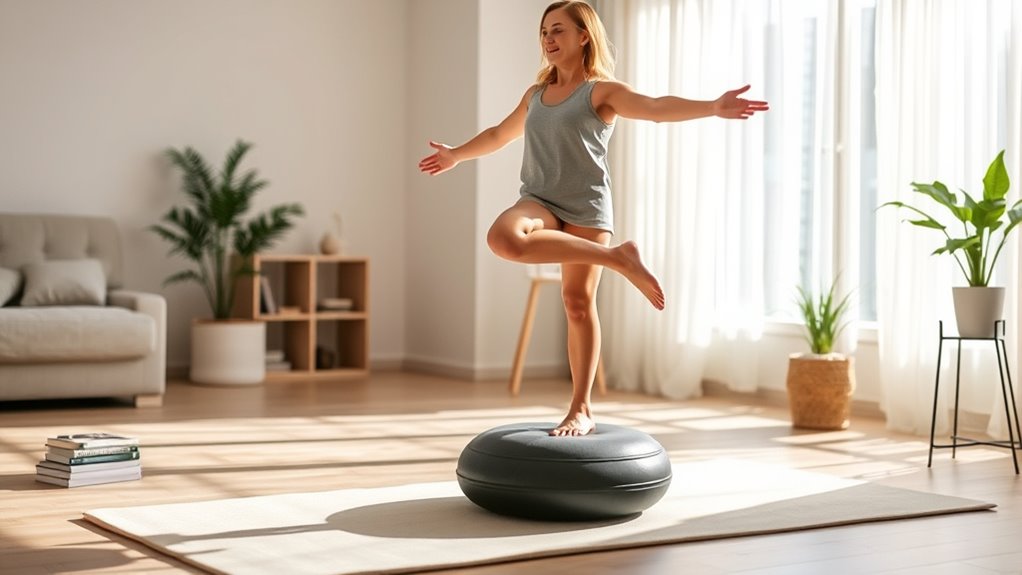
To challenge your balance further, start incorporating movement variations like arm or leg motions while maintaining stability. Gradually increase the duration and complexity of these exercises to build strength and confidence. This approach helps you develop better control and adapt to real-life dynamic situations. Incorporating performance upgrades into your training routine can also improve your overall stability and responsiveness.
Incorporate Movement Variations
As you progress in your balance training, adding movement variations challenges your stability in new ways. Incorporate dynamic exercises that engage your ankle strengthening and proprioception drills to boost your control. Think about shifting your weight while standing on one leg, or moving your arms and legs in different directions simultaneously. These variations force your body to adapt quickly, sharpening your reflexes. Picture yourself:
- Reaching forward or sideways while balancing on one foot
- Incorporating gentle twists or turns during stance exercises
- Moving your arms or legs in controlled patterns to challenge stability
These movement variations increase your overall balance and coordination, making your routine more effective. They also help your body respond better to real-life situations, where stability is rarely static. Regular practice of these exercises can also reduce the risk of falls during pregnancy, ensuring safety as you build strength and confidence.
Increase Duration and Complexity
Once you’ve mastered basic balance exercises, increasing the duration and complexity of your routines can considerably enhance your stability. To progress, challenge your core strength by holding poses longer and adding dynamic movements. Incorporate breathing techniques to maintain focus and control, especially during extended holds or unstable positions. Try balancing on one foot while shifting your gaze or reaching for objects to engage multiple muscles simultaneously. As your endurance improves, move onto more complex tasks, like doing gentle squats or lunges on an unstable surface. These dynamic balance challenges not only improve your stability but also train your body to respond effectively to real-life situations. Remember, controlled breathing helps you stay calm and centered, making your balance more reliable and sustainable over time. Integrating movement patterns inspired by home exercise routines can further boost your functional stability and confidence.
Introducing Unstable Surfaces for Advanced Training

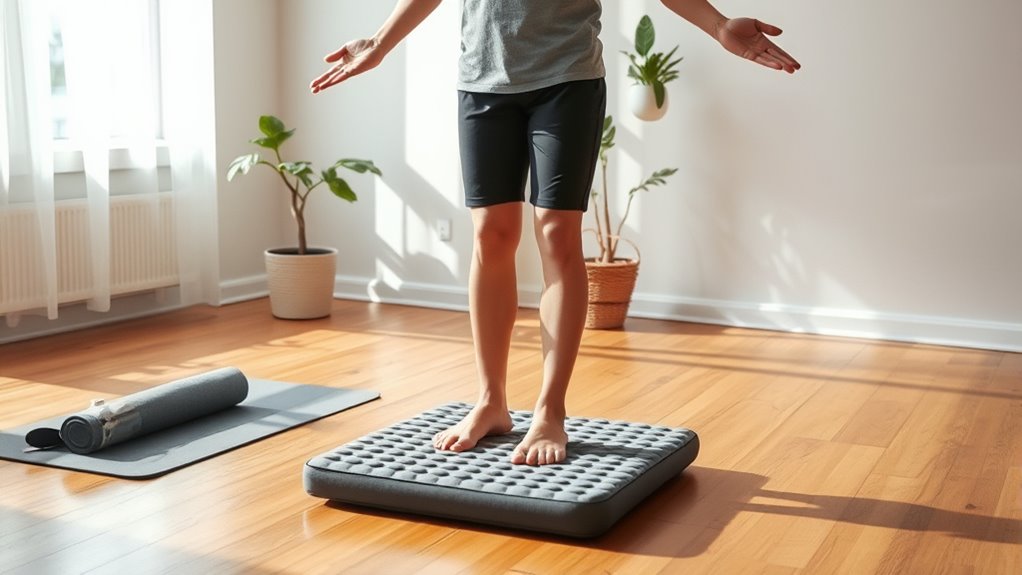
Introducing unstable surfaces into your home balance training can substantially challenge your stability and improve core strength. By incorporating tools like balancing on wobble boards or using foam pads, you push your body to adapt to shifting surfaces. Imagine standing on a wobble board, feeling the constant need to engage your leg muscles, or stepping onto foam pads that create an uneven foundation. These elements force you to activate stabilizers more intensively. Picture yourself:
- Maintaining balance on a wobble board, adjusting to its movement
- Using foam pads to create an unstable platform for squats or lunges
- Combining both for increased difficulty during static holds
Adding these unstable surfaces accelerates progress, making your routine more dynamic and effective. Just ensure safety and progress gradually to prevent falls or injury. Incorporating contrast ratio considerations can help optimize your training environment by controlling ambient lighting for better visibility and focus.
Integrating Functional Movements Into Your Routine

Incorporating functional movements into your home balance routine enhances stability by mimicking real-life activities. Focus on exercises that promote core activation, which helps stabilize your spine and improves overall control. Movements like single-leg stands while reaching or bending simulate daily tasks, boosting proprioceptive awareness—your body’s ability to sense its position in space. These exercises challenge your balance more effectively than static holds alone. As you progress, incorporate dynamic actions such as lunges or squats that require coordination and stability. This integration not only improves your balance but also makes everyday movements safer and more efficient. Keep your movements controlled and mindful, emphasizing proper form to maximize benefits. Regularly blending functional movements keeps your routine engaging and directly relevant to real-world stability demands.
Tips for Consistency and Safety During Home Balance Practice
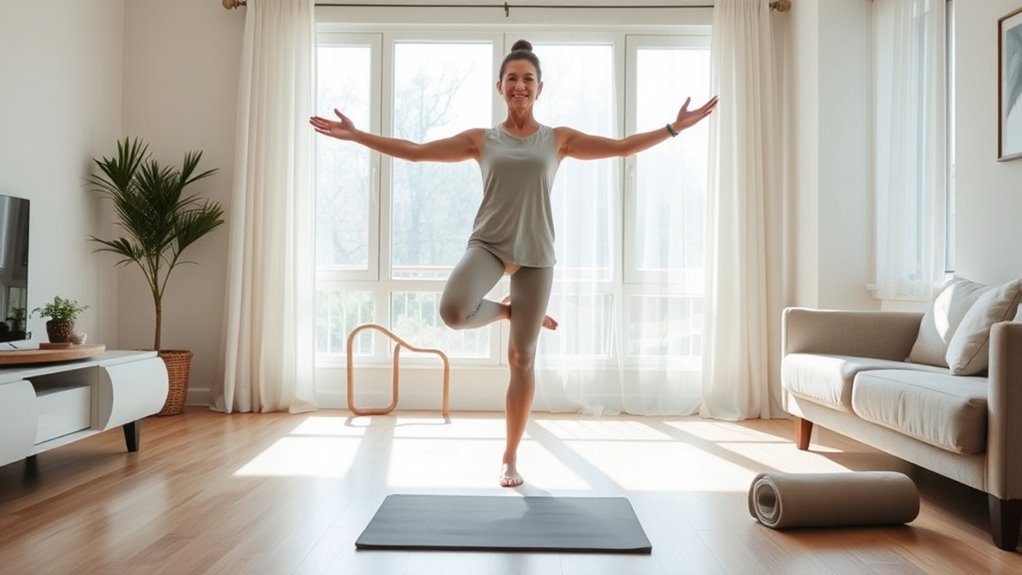
Staying consistent with your home balance exercises requires establishing a routine that fits your schedule and setting clear goals to stay motivated. To guarantee safety, pay attention to footwear selection—choose supportive, non-slip shoes or go barefoot on a safe surface. Keep household safety in mind by removing clutter, securing rugs, and ensuring proper lighting. This minimizes the risk of falls or injuries during practice. Create a dedicated space for balance training where hazards are minimized. Use these tips to build confidence and maintain progress:
- Wear appropriate footwear that provides grip and stability
- Clear the area of obstacles and loose cords
- Ensure good lighting and secure rugs or mats
Following these guidelines helps you stay consistent, safe, and injury-free during your home balance routine.
Frequently Asked Questions
How Often Should I Practice Balance Exercises for Optimal Results?
You should practice balance exercises at least 3 to 4 times a week for ideal results. Following the frequency guidelines helps you build stability effectively. Stay consistent by incorporating these exercises into your daily routine, gradually increasing difficulty as you progress. Consistency tips include setting reminders and tracking your progress. This approach ensures steady improvement and helps prevent falls, boosting your confidence and overall mobility over time.
Are There Specific Age Groups That Benefit Most From Home Balance Training?
You might picture balance training as a delicate dance, especially for seniors or children. Age considerations matter because developmental benefits are strongest when exercises suit your stage of life. Older adults gain stability and prevent falls, while kids enhance coordination and motor skills. Regardless of age, consistent practice improves confidence and functional movement, making balance training a valuable tool for all ages to stay active and safe at home.
Can Balance Exercises Help Prevent Falls in Older Adults?
Yes, balance exercises are effective for fall prevention in older adults. When you practice these exercises regularly, you improve muscle coordination and strengthen stabilizing muscles, which helps you stay steady on your feet. Better balance reduces the risk of falls, especially on uneven surfaces or when multitasking. Incorporating simple home routines can markedly enhance your safety and confidence, making daily activities safer and more enjoyable.
What Are Signs of Overtraining or Injury During Balance Practice?
During balance practice, watch for signs of overtraining or injury like muscle fatigue, which makes your muscles feel overly sore or weak, and dizziness or lightheadedness, which can cause you to lose stability. If you experience these symptoms, stop immediately and rest. Pushing through these signs can lead to falls or strains. Always listen to your body and modify exercises as needed to stay safe.
How Can I Modify Exercises if I Have Joint or Mobility Issues?
If you have joint or mobility issues, you should use joint-friendly modifications and mobility-based adjustments. Focus on exercises that reduce impact, like seated or supported balance activities. Use props such as chairs or cushions for extra stability, and slow down movements to avoid strain. Listen to your body, and gradually increase difficulty as your strength and mobility improve. Always consult with a healthcare professional before starting new exercises.
Conclusion
By gradually progressing through these balance exercises, you’ll build strength and stability at home. For example, imagine Sarah, who started with simple standing holds and now confidently manages single-leg stances on uneven surfaces. Stay consistent, listen to your body, and prioritize safety. With time and dedication, you’ll notice improved confidence and coordination—making everyday activities easier and reducing your risk of falls. Keep pushing forward, and your balance will keep improving.