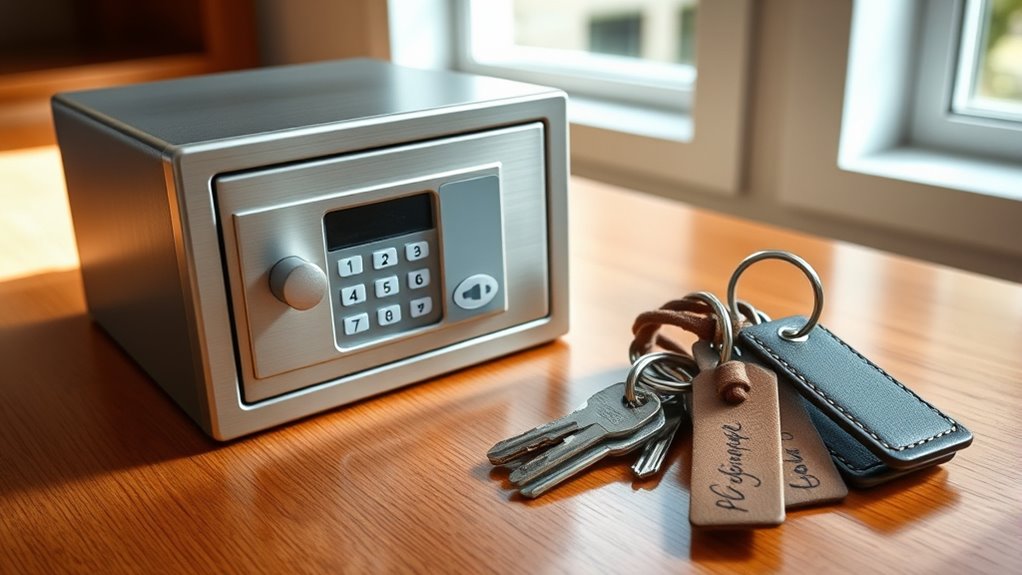

Managing lockboxes and keys effectively is essential for your care team to protect patient privacy and maintain security. Implementing secure systems like biometric lockboxes or electronic key safes helps control access, track usage, and prevent unauthorized entries. Regularly reviewing access logs, training staff on procedures, and using technology for real-time monitoring ensure accountability. Continuing with these strategies will shed more light on how to optimize your lockbox and key management practices for better security and efficiency.

Turn quiet afternoons into listening time
- Thousands of audiobooks, podcasts and originals
- Listen on your phone, tablet or Echo — also offline
- Cancel anytime
Key Takeaways
- Implement biometric or electronic lockboxes to ensure secure, auditable access for authorized care team personnel.
- Establish clear key issuance, return, and documentation procedures to prevent loss and unauthorized duplication.
- Use real-time digital logs and alerts to monitor access activity and detect suspicious or unauthorized entries.
- Conduct regular audits of key inventories and access logs to maintain security and accountability.
- Integrate lockbox systems with hospital management software for streamlined access control and improved operational efficiency.
biometric lockbox for healthcare
As an affiliate, we earn on qualifying purchases.
As an affiliate, we earn on qualifying purchases.
The Importance of Secure Access Control in Healthcare
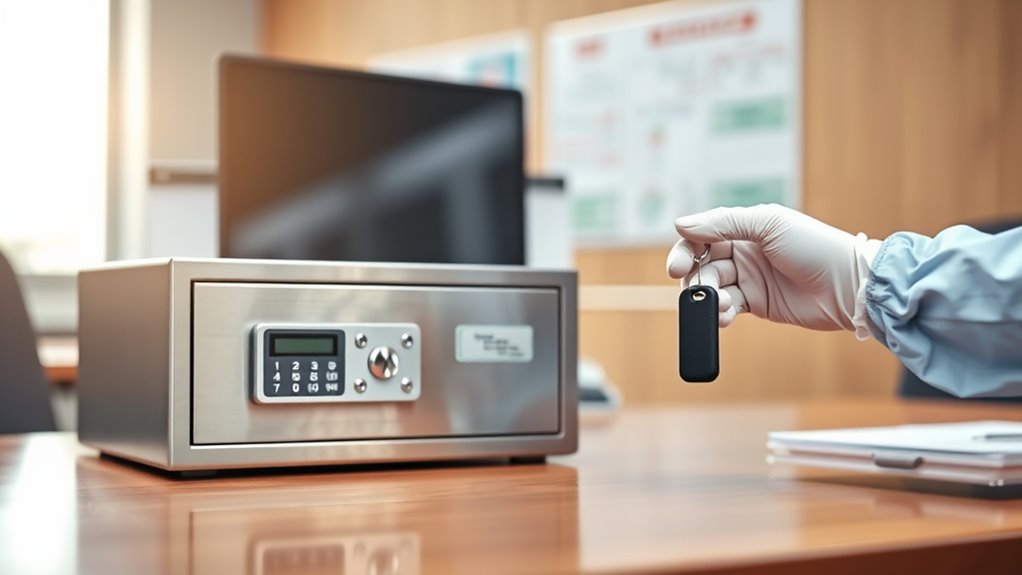
Why is secure access control crucial in healthcare? It protects patient privacy by limiting access to sensitive information and ensures only authorized staff can view or handle medical records. When emergencies happen, quick and reliable emergency access becomes essential, allowing care teams to respond swiftly without compromising security. Proper access control prevents unauthorized individuals from entering restricted areas, reducing the risk of theft or tampering. It also helps maintain accountability, as you can track who accessed what and when. This balance between security and accessibility ensures that patients’ confidentiality is upheld while enabling timely care in urgent situations. Implementing robust lockboxes and key management systems helps you maintain this critical balance, safeguarding both patient information and staff efficiency.
Types of Lockboxes and Key Management Systems Available
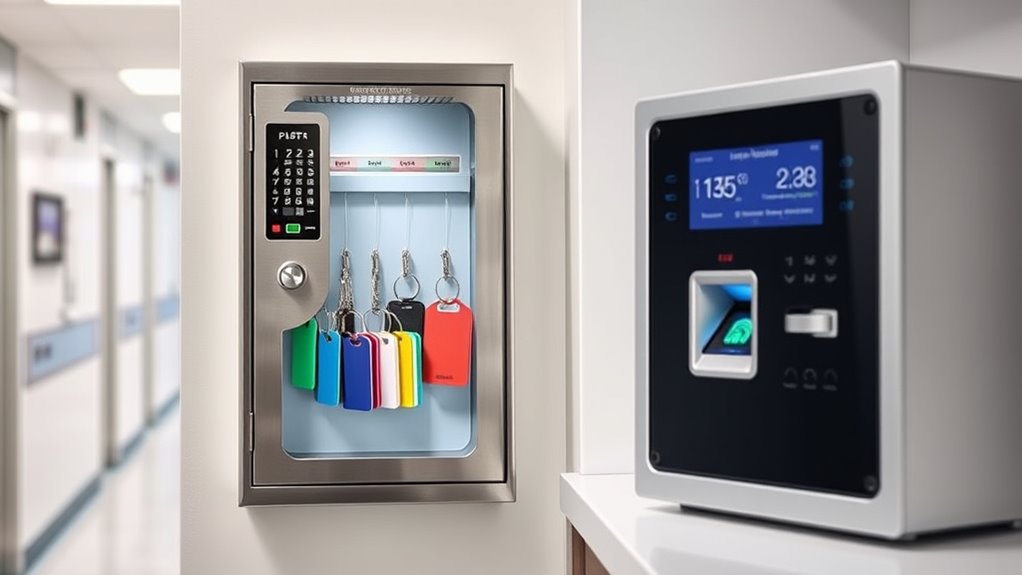
Choosing the right lockboxes and key management systems is essential for maintaining security and efficiency in healthcare settings. You have options like biometric authentication-enabled lockboxes, which use fingerprint or retina scans to restrict access to authorized personnel only. Smart lock technology offers remote access control, allowing you to monitor and change permissions instantly. Electronic key safes provide audit trails and time-stamped access logs, enhancing accountability. Combination lockboxes are simple and cost-effective but less secure. Some systems integrate with hospital management software, streamlining access management. By selecting a system that incorporates biometric authentication or smart lock technology, you guarantee that sensitive keys are protected while care teams can access needed areas quickly and securely. The right choice balances security, ease of use, and operational needs. Proper key management is crucial for preventing unauthorized access and ensuring quick response times in emergency situations.
Assessing Your Care Team’s Access Needs and Security Risks
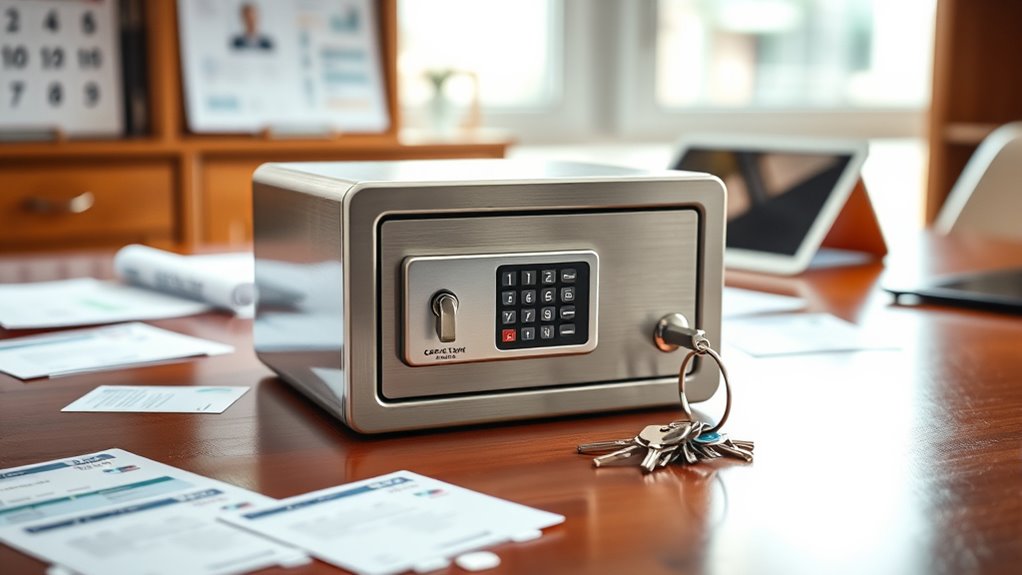
To protect your care team and patients, you need to understand who needs access to what and why. Identify potential security vulnerabilities that could put sensitive information or keys at risk. By evaluating these needs and risks, you can create a more secure and efficient access management plan. Incorporating reliable paint sprayer accessories can also help ensure secure and consistent handling of equipment.
Evaluating Access Requirements
Understanding your care team’s access needs is essential for balancing security and efficiency. Begin by reviewing your existing access policy to identify who needs what level of access and why. Consider the different roles within your team and their responsibilities to determine appropriate permissions. Evaluate the security risks associated with each access point, ensuring user authentication methods are robust enough to prevent unauthorized entry. Ask yourself if current practices align with best security standards and whether any gaps could lead to vulnerabilities. Regularly updating your access requirements helps prevent over-privileged accounts and minimizes potential breaches. Incorporating access control measures is crucial to safeguarding sensitive information while allowing your team to work effectively. By carefully appraising these needs, you can create a streamlined system that safeguards sensitive information while allowing your team to work effectively.
Identifying Security Vulnerabilities
Building on your assessment of access requirements, the next step is to identify where security vulnerabilities may exist within your care team’s systems. Focus on uncovering potential cybersecurity vulnerabilities and physical security gaps that could lead to unauthorized access. To do this effectively:
- Review access logs for suspicious activity or unauthorized attempts.
- Conduct physical security audits of key storage areas.
- Identify outdated or weak passwords that could be exploited.
- Evaluate whether current lockbox and key controls limit access to authorized personnel only.
- Assess the contrast ratio of your security measures to ensure that visual indicators clearly differentiate authorized from unauthorized access points.
Implementing Digital Lockbox Solutions for Enhanced Efficiency
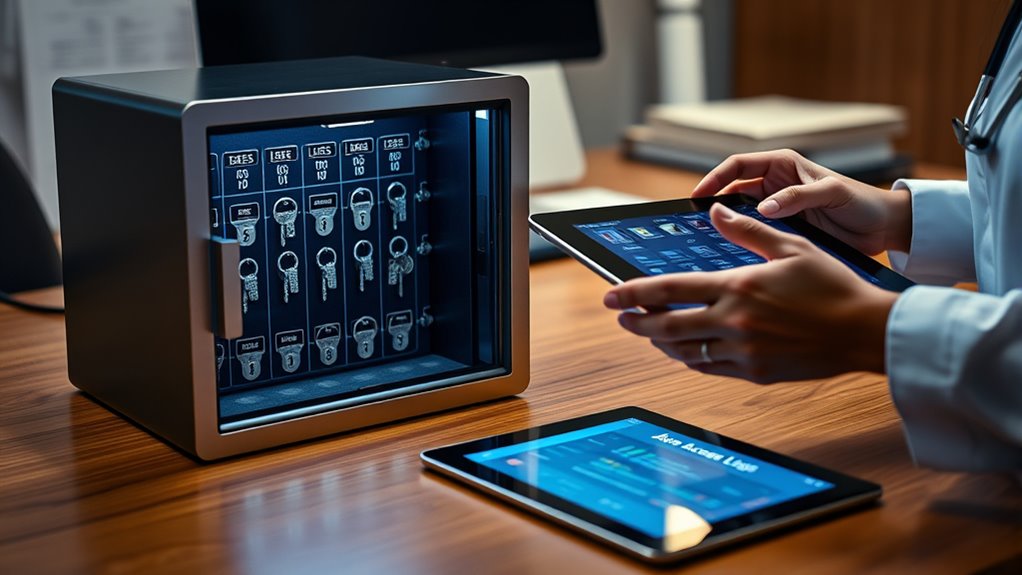
Implementing digital lockbox solutions can substantially streamline how care teams manage access to keys and sensitive information. These systems leverage innovative access methods, such as biometric authentication or secure mobile apps, to enhance security and convenience. When selecting a digital lockbox, consider lockbox design considerations like user interface simplicity, integration capabilities with existing systems, and robust encryption protocols. Digital solutions reduce reliance on physical keys, minimize loss risks, and allow real-time access tracking. You’ll find that automation features, like scheduled access or temporary permissions, improve workflow efficiency. By adopting these advanced lockbox solutions, you ensure quicker, safer access management while maintaining compliance with security standards. Moving to digital enhances overall care team operations, saving time and reducing errors related to manual key handling. Fokos offers comprehensive solutions that comply with industry standards to further enhance security and efficiency.
Best Practices for Managing and Tracking Keys
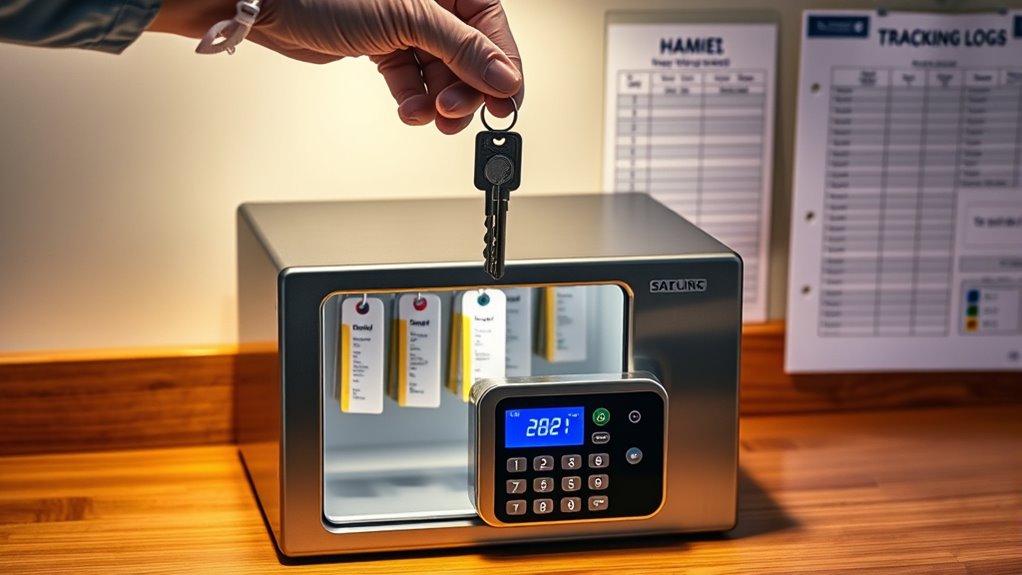
Digital lockbox solutions have already transformed access management by reducing reliance on physical keys and increasing security. To manage and track keys effectively, you should adopt best practices that minimize risks like key duplication and enhance physical security. First, implement a centralized tracking system to log every key check-in and check-out. Second, restrict key access to authorized personnel only. Third, regularly audit key inventories to identify potential key duplication issues or lost keys. Fourth, use secure storage for keys to prevent unauthorized access. Fifth, maintain key management policies that clearly outline procedures and responsibilities for all team members. By maintaining accurate records and limiting physical access, you reduce the chance of key duplication and strengthen overall security. These practices ensure your care team maintains control over access, safeguarding both patients and staff.
Integrating Lockbox Systems With Healthcare Security Protocols
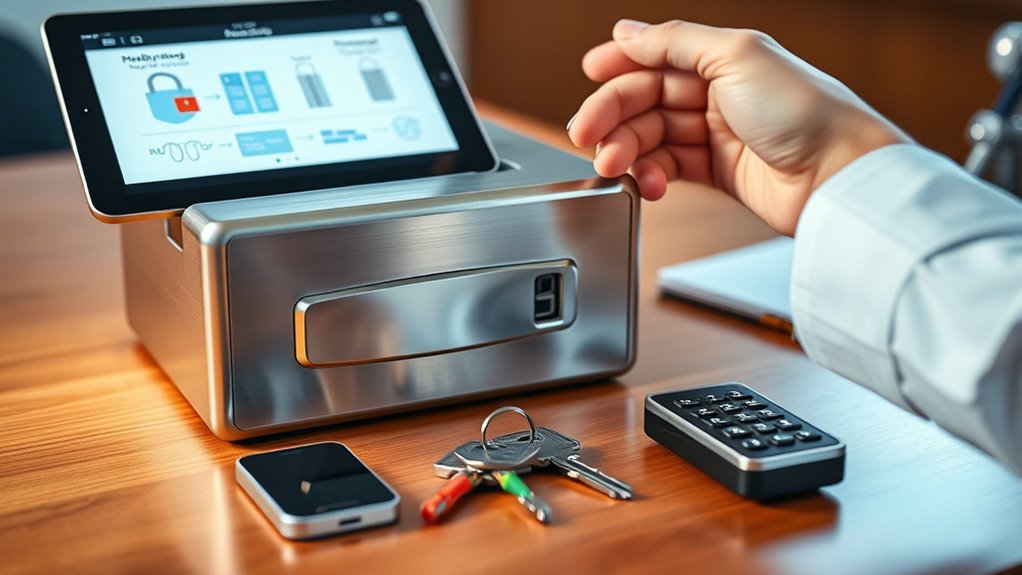
Integrating lockbox systems with healthcare security protocols is essential for creating a seamless and secure access management process. You should implement biometric authentication to verify identities before granting access, reducing the risk of unauthorized entry. Combining biometric methods with physical security measures, like secure lockboxes, ensures that only authorized personnel can retrieve keys or access sensitive areas. This integration aligns with healthcare protocols that prioritize patient safety and confidentiality. You can also synchronize lockbox access logs with your existing security systems, providing real-time tracking and audit trails. This approach can be complemented by incorporating Crochet Styles for Locs to facilitate staff training on diverse security procedures. By doing so, you enhance accountability and guarantee compliance with regulatory standards. Ultimately, a well-integrated system streamlines operations, improves security, and minimizes risks associated with key management and access control.
Training Staff on Proper Lockbox and Key Management Procedures
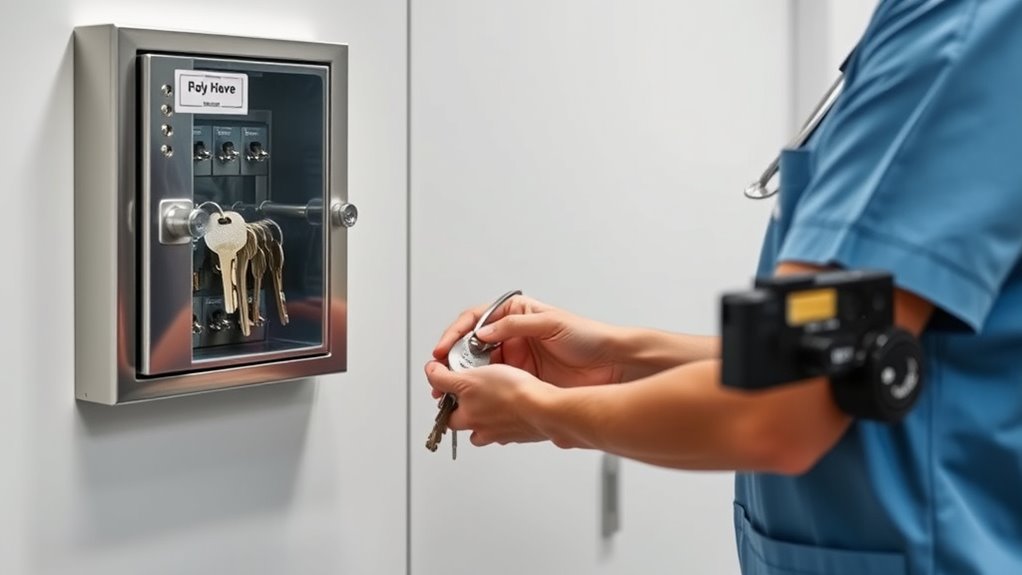
Training staff on proper lockbox and key management procedures is essential to maintaining security and operational efficiency. Well-trained staff understand the importance of safeguarding access and adhering to compliance standards. Focus on these key areas:
- Clearly explain the importance of security protocols and the risks of mishandling keys.
- Demonstrate proper procedures for key issuance, return, and documentation.
- Emphasize the importance of reporting lost or stolen keys immediately.
- Regularly review compliance standards and update staff on policy changes.
- Engage staff in understanding inspirational quotes to foster motivation and accountability. Effective staff training ensures everyone understands their responsibilities and reduces the chance of security breaches. It also helps meet regulatory requirements, fostering a culture of accountability. Consistent training keeps the team aligned with best practices, ensuring the lockbox system remains secure and compliant.
Troubleshooting Common Challenges in Key Management

Even with thorough staff training, challenges in key management can still arise, impacting security and operations. One common issue is key duplication, which can lead to unauthorized access if keys fall into the wrong hands. Regular audits help identify unnecessary copies and prevent this problem. Staff training should emphasize the importance of controlling duplicates and understanding how to request new keys properly. Miscommunication or lack of awareness can cause misplaced keys or untracked copies, compromising safety. To troubleshoot, review your key distribution procedures regularly and reinforce staff knowledge about security protocols. Establish clear policies for key duplication, including documentation and approval processes. Addressing these issues proactively keeps your care team’s access secure and operational smoothly, minimizing risks related to key management challenges. Additionally, understanding retail hours today list can assist in planning timely key pickups or visits during extended hours.
Leveraging Technology for Real-Time Access Monitoring

Using technology, you can track access in real time through digital logs that record every entry and exit. Instant permission alerts notify you immediately of any unauthorized or unexpected activity, enhancing security. Remote lock monitoring allows you to control and verify lock status from anywhere, ensuring your care team’s safety at all times. Additionally, integrating access data with all waterparks can help optimize safety protocols and improve guest experience management.
Digital Access Logs
Digital access logs have become essential tools for care teams seeking to monitor lockbox and key activity in real time. These digital logs offer precise access tracking, enabling you to quickly identify who accessed a lockbox, when, and for how long. Implementing digital logs enhances security and accountability by providing an audit trail. To maximize their effectiveness, focus on these key points:
- Consistently review access logs for suspicious activity.
- Integrate logs with your existing security systems.
- Use timestamps to verify authorized access times.
- Ensure logs are automatically stored and backed up securely.
Instant Permission Alerts
Building on the importance of access logs, real-time permission alerts immediately notify your team whenever someone gains or attempts to gain access to a lockbox. Instant permission alerts keep you informed of every access event, ensuring you’re aware of authorized entries and potential access overrides. If an individual attempts an access override, you’ll receive an immediate alert, allowing you to investigate or respond quickly. These alerts help prevent unauthorized access, reduce security risks, and improve accountability. By leveraging this technology, your team can monitor lockbox activity continuously, making sure that every access is legitimate. Instant permission alerts are essential for maintaining security, especially in high-stakes environments, and give you peace of mind knowing you’re always aware of who’s accessing sensitive areas in real time.
Remote Lock Monitoring
Remote lock monitoring allows your team to oversee lockbox activity from anywhere in real time, ensuring you stay informed of all access events without being physically present. By integrating remote lock monitoring with biometric authentication, you can enhance security and verify user identities instantly. This technology provides several benefits:
- Immediate alerts for unauthorized access attempts
- Real-time tracking of lock and unlock activity
- Detailed access logs for audit purposes
- Enhanced security through biometric authentication verification
With remote lock monitoring, you gain full visibility into your lockbox system, reducing the risk of breaches and ensuring only authorized personnel access sensitive areas. This proactive approach helps maintain safety and accountability across your care team.
Future Trends in Lockbox Security and Access Management
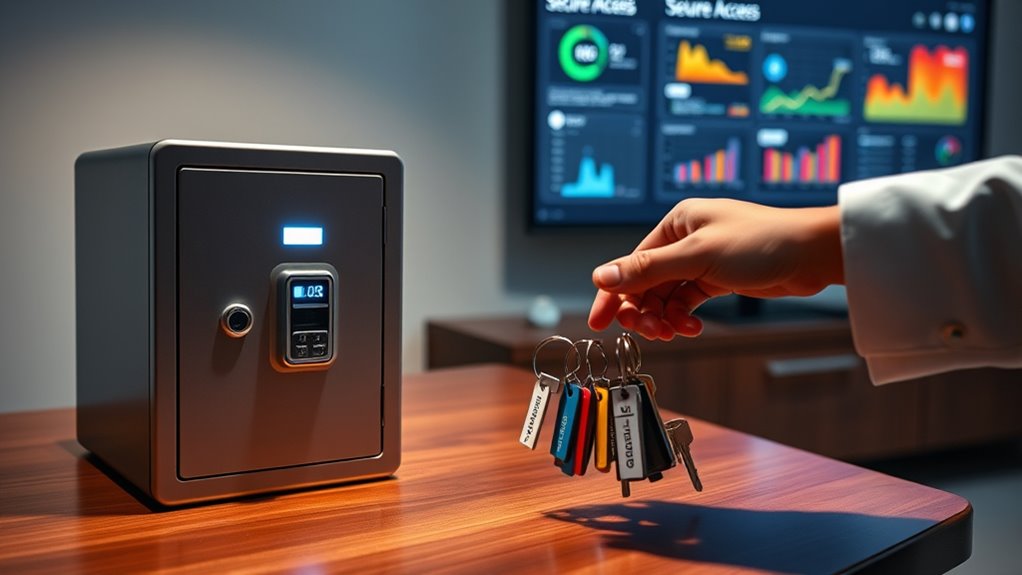
As technology continues to evolve, lockbox security and access management systems are becoming more sophisticated, integrating advanced features to enhance safety and efficiency. Biometric authentication is increasingly used to verify identities quickly and accurately, reducing the risk of unauthorized access. Additionally, blockchain security offers a decentralized approach to record-keeping, ensuring tamper-proof logs of access events that enhance transparency and trust. Future trends point toward smarter lockboxes that adapt in real time, utilizing AI to detect anomalies and respond proactively. You’ll see more integration of these technologies, making access control more seamless and secure for care teams. These innovations will help prevent breaches, streamline operations, and provide peace of mind in managing sensitive environments.
Frequently Asked Questions
How Do Lockbox Systems Comply With Healthcare Data Privacy Regulations?
You guarantee compliance with healthcare data privacy regulations by implementing lockbox systems that use data encryption to protect sensitive information. You also establish strict access controls, allowing only authorized personnel to retrieve or manage keys. This combination safeguards patient data, prevents unauthorized access, and meets regulatory standards like HIPAA, giving you peace of mind and maintaining trust with those you serve.
What Are the Costs Associated With Different Lockbox Management Solutions?
You’ll find that lockbox management solutions vary greatly in cost, with basic systems starting around $50 per month and advanced options exceeding $500. A thorough cost comparison helps you plan your budget effectively, considering factors like security features, integration, and support. Remember, investing in a cost-effective solution now can prevent expensive security breaches later, making strategic budget planning essential for healthcare organizations.
How Can Lockbox Systems Be Integrated With Existing Hospital Security Infrastructure?
You can integrate lockbox systems with your hospital security infrastructure by guaranteeing compatibility with your existing access control systems. Work with vendors to enable seamless communication between the lockboxes and your security network. Additionally, conduct staff training to ensure proper use and security protocols. This approach helps streamline access management, enhances safety, and maintains compliance with hospital security policies, making your overall system more efficient and reliable.
What Are the Best Strategies for Preventing Lockbox Tampering or Theft?
Think of your lockbox system as a fortress guarding valuable keys. To prevent tampering or theft, you should implement strict access control, limiting who can open it. Incorporate tamper detection features that alert you to unauthorized attempts. Regularly audit access logs and reinforce physical security. These measures act like vigilant guards, ensuring your lockbox remains secure, and your care team’s equipment stays protected from any sneaky intruders.
How Often Should Lockboxes and Keys Be Audited for Security Compliance?
You should conduct regular inspections of lockboxes and keys, ideally monthly, to guarantee security compliance. During these audits, verify that access logs are accurate and that no unauthorized entries occurred. Incorporate staff training into your routine to reinforce proper handling and security protocols. Regular inspections and ongoing staff education help prevent tampering or theft, maintaining the integrity of your lockbox system and safeguarding sensitive assets effectively.
Conclusion
By embracing secure lockbox and key management, you’re building a fortress around your care team’s access points—each key a essential guard at the gates. When you implement the right systems and stay vigilant, you create a seamless flow of trust and safety. Think of it as orchestrating a symphony where every note is perfectly timed, ensuring your team’s security is harmonious, resilient, and ready to face any challenge ahead.
Evergreen bestsellers Picks
bestsellers
As an affiliate, we earn on qualifying purchases.