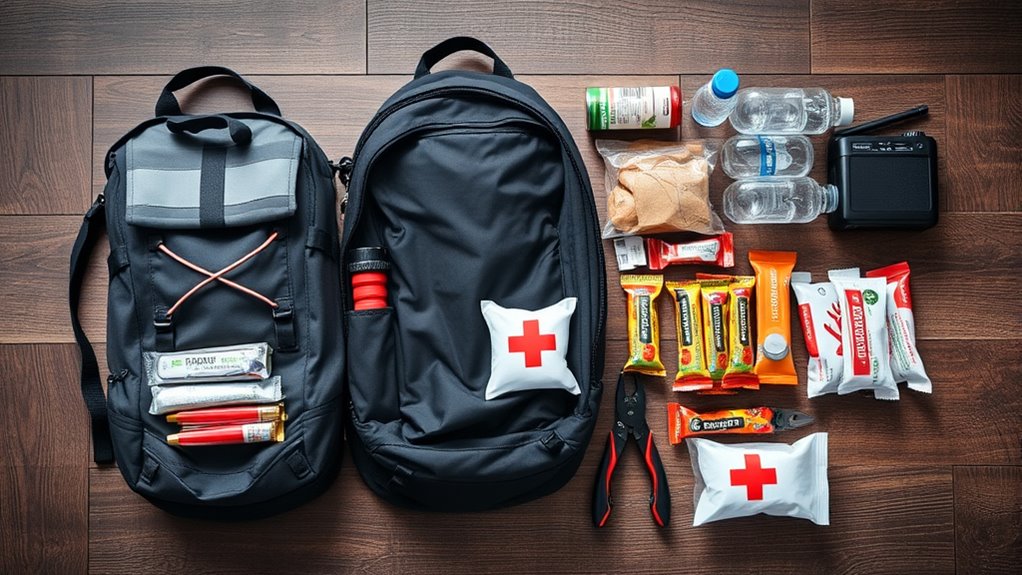

For a ready-to-carry household kit, I rank the Everlit Complete 72-Hour Earthquake Bug Out Bag as my best overall pick because it combines evacuation gear for a family in one package. The Ready America 70285 Deluxe 2-Person Backpack is a simpler choice for two people, while the ReadyWise 120-Serving Bucket is better suited to building an emergency food reserve. The main tradeoff is coverage: a grab-and-go kit can save packing time, but may not match your household’s needs for water, medication, clothing, or food preferences. First aid kits and food buckets address narrower needs and usually call for other supplies alongside them. Read on for how I compare all 11 options and who each one suits.

Turn quiet afternoons into listening time
- Thousands of audiobooks, podcasts and originals
- Listen on your phone, tablet or Echo — also offline
- Cancel anytime
Complete the kit


Key Takeaways
- The Everlit family bags rank ahead of the single-purpose options for readers seeking one evacuation-oriented starting point, though buyers still need to check household fit and fill gaps.
- Ready America’s two-person backpack and one-person kit serve different planning assumptions: choose based on the people you need to equip, not the number of bags alone.
- The 120-serving ReadyWise bucket emphasizes quantity, while the 88-serving meat-and-rice option centers on a different meal mix; neither replaces water, cooking arrangements, or a broader emergency kit.
- The 250-piece gear kit and dedicated first aid kits are add-ons or focused picks, since first aid supplies and survival tools cover different needs from food, water, and evacuation basics.
- Some listings appear to overlap or use near-identical names, including the two Everlit family kits; compare each listing’s actual contents and quantities before choosing between them.
| Ready America 70285 Deluxe 2-Person 3-Day Emergency Backpack |  | Best Overall for Two | Capacity: 2 people | Duration: Up to 72 hours | Food: Two 2,400-calorie emergency food bars | VIEW ON AMAZON | See Our Full Breakdown |
| Ready America 72-Hour Deluxe Emergency Kit for One Person |  | Best for Solo Preparedness | Capacity: 1 person for 3 days | Food: One 2,400-calorie food bar | Water: Three 4.225-ounce pouches and one 32-ounce bottle | VIEW ON AMAZON | See Our Full Breakdown |
| Everlit Complete 72-Hour Earthquake Bug Out Bag Emergency Survival Kit for Family |  | Best for Medical and Gear Depth | Capacity: 2 people for 72 hours | Water: 24 packs of 125 mL; listed with a 5-year shelf life | Food: Two 3,600-calorie emergency food bars | VIEW ON AMAZON | See Our Full Breakdown |
| Ready America 70280 2-Person, 3-Day Emergency Survival Backpack |  | Best Simple Two-Person Starter Kit | Capacity: 2 people for 3 days | Food: Two emergency food bars totaling 4,800 calories; listed with a 5-year shelf life | Water: 12 pouches of 4.225 ounces each; listed with a 5-year shelf life | VIEW ON AMAZON | See Our Full Breakdown |
| ReadyWise Emergency Food Supply – 120 Servings Sample Bucket, Survival Food Kit, Freeze Dried Meals for Camping & Emergency Preparedness |  | Best Long-Term Food Reserve | Servings: 120 | Shelf life: Up to 25 years | Food type: Assorted freeze-dried meals | VIEW ON AMAZON | See Our Full Breakdown |
| Ready America 72-Hour Deluxe Emergency Kit for 4 People |  | Best for a Four-Person Household | Capacity: 4 people | Preparedness duration: 72 hours | Emergency food: Four 2,400-calorie food bars | VIEW ON AMAZON | See Our Full Breakdown |
| 250Pcs Survival Gear First Aid Kit with Molle System Compatible Bag and Emergency Tent |  | Best for Outdoor Survival Gear Variety | Number of pieces: 250 | Included components: Survival gear and first aid kit | Bag material: 1000D nylon | VIEW ON AMAZON | See Our Full Breakdown |
| SurviveX Large First Aid Kit for 3–4 People |  | Best for Organized First Aid Access | Capacity: 3–4 people | Organization: Color-coded, labeled compartments | Mounting: Mountable | VIEW ON AMAZON | See Our Full Breakdown |
| Everlit Complete 72 Hours Earthquake Bug Out Bag Emergency Survival Kit for Family |  | Best for Three-Person Disaster Planning | Duration: 72 hours | Capacity: 3 people | Water supply: 36 packs of 125 mL | VIEW ON AMAZON | See Our Full Breakdown |
| SURVIVAL Large First Aid Kit, 142-Piece Emergency Response System |  | Best for Workplace and Vehicle First Aid | Number of pieces: 142 | Material: 600D Oxford polyester | Water resistant: Yes | VIEW ON AMAZON | See Our Full Breakdown |
| ReadyWise Emergency Food Supply – 88 Servings Meat & Rice Bucket, Freeze Dried Protein Meals, Camping Essentials, Bulk Rice & Survival Food, Disaster Prepping Supplies, up to 25 Year Shelf Life |  | Best for Long-Term Food Storage | Servings: 88 | Main ingredients: Meat and rice | Included foods: Diced chicken, beef, sausage crumbles, rice | VIEW ON AMAZON | See Our Full Breakdown |
| emergency preparedness kit | Capacity |
|---|---|
| Ready America 70285 Deluxe 2-P | 2 people |
| Ready America 72-Hour Deluxe E | 1 person for 3 days |
| Everlit Complete 72-Hour Earth | 2 people for 72 hours |
| Ready America 70280 2-Person | 2 people for 3 days |
| ReadyWise Emergency Food Suppl | — |
| Ready America 72-Hour Deluxe E | 4 people |
| 250Pcs Survival Gear First Aid | — |
| SurviveX Large First Aid Kit f | 3–4 people |
| Everlit Complete 72 Hours Eart | 3 people |
| SURVIVAL Large First Aid Kit | — |
| ReadyWise Emergency Food Suppl | — |
More Details on Our Top Picks
Ready America 70285 Deluxe 2-Person 3-Day Emergency Backpack
For two people who want a single bag covering several basic emergency needs, the Ready America 70285 offers a useful balance of food, first aid, hygiene, shelter items, and signaling gear. Its hand-crank power station adds a radio, flashlight, siren, and phone charging, giving it more communication and lighting options than the simpler Ready America 70280. The kit is listed for up to 72 hours, but its water supply—six small pouches plus a 32-ounce bottle—is limited, so I would treat purification tablets as a supplement rather than assume the included water is ample. The listed weight is just two pounds, though the contents and dimensions are still worth checking against your carrying needs. I’d choose it for a grab-and-go starting point, with a plan to add water and check replacement dates for consumables.
Pros:- Combines food, first aid, hygiene, shelter items, and tools in one backpack.
- Hand-crank power station provides a radio, flashlight, siren, and phone charging.
- Includes supplies intended for two people for up to 72 hours.
Cons:- Included water is limited to six small pouches and one 32-ounce bottle.
- Product details do not specify expiration dates or replacement guidance for consumables.
Best for: Two adults who want a compact, all-in-one starting kit with radio and signaling features for home or vehicle preparedness.
Not ideal for: People who need substantial drinking water in the bag or want documented expiration and replacement guidance for every consumable.
- Capacity:2 people
- Duration:Up to 72 hours
- Food:Two 2,400-calorie emergency food bars
- Water:Six 4.225-ounce pouches and one 32-ounce bottle
- Water purification:Purification tablets
- First aid:33-piece kit
- Power station:Hand-crank flashlight, AM/FM radio, siren, and phone charger
- Dimensions:10 x 8 x 15 inches
- Weight:2 pounds
Our verdict“Choose this for a two-person emergency kit with useful communication features, provided you supplement its limited water supply.”
Ready America 72-Hour Deluxe Emergency Kit for One Person
When the kit is for one person, the Ready America 72-Hour Deluxe avoids carrying supplies sized for a pair. It includes a 2,400-calorie food bar, water pouches, a reusable bottle, purification tablets, a 33-piece first-aid kit, and basic shelter and hygiene supplies. That makes it a more focused personal option than the two-person Ready America 70285, whose hand-crank unit adds a radio and phone charging but is designed around a second person as well. Here, lighting comes from a hand-crank flashlight, with no radio listed, and the included food and water remain limited to the stated quantities. I’d pick this for a solo worker or driver who wants basic supplies kept together; someone preparing for a household should choose a larger-capacity kit and add provisions matched to their needs.
Pros:- Supplies are packaged for one person rather than a two-person group.
- Includes purification tablets and a reusable 32-ounce water bottle.
- Combines food, first aid, lighting, tools, shelter, and hygiene items.
Cons:- Food and drinking water are limited to the included quantities.
- Designed for one person and a three-day period, so households need additional supplies.
- Includes a hand-crank flashlight but no radio is listed.
Best for: Solo commuters, drivers, or workers who want a personal 72-hour kit stored at home, work, or in a vehicle.
Not ideal for: Couples or families who need supplies sized for more than one person, or buyers who want a radio included.
- Capacity:1 person for 3 days
- Food:One 2,400-calorie food bar
- Water:Three 4.225-ounce pouches and one 32-ounce bottle
- Water purification:Purification tablets
- First aid:33-piece kit
- Lighting:Hand-crank flashlight
- Dimensions:10 x 6 x 13 inches
- Weight:5 pounds
- Material:Nylon
Our verdict“Choose this for a solo 72-hour starting kit if a flashlight matters more to you than the radio and charging features in the 70285.”
Everlit Complete 72-Hour Earthquake Bug Out Bag Emergency Survival Kit for Family
The Everlit Complete 72-Hour kit is the gear-heavy choice among these two-person bags. Its listed 200-piece medical supply set, including a CAT tourniquet, and its 1000D polyester backpack set it apart from the more basic Ready America 70280, which includes a 33-piece first-aid kit and simpler warmth and signaling items. Everlit also specifies 24 water packs and two 3,600-calorie food bars, giving buyers clearer stated quantities than some kits in this roundup. That added gear has a carrying cost: the product details describe it as heavy, and supplies may need replacement after several years. Its capacity is still two people, so a larger household will need a separate plan. This makes the most sense for buyers prioritizing medical equipment and a more substantial pack over a lighter, simpler loadout.
Pros:- Includes 200 medical pieces, including a CAT tourniquet.
- Lists food and water quantities for a two-person, 72-hour kit.
- Uses a 1000D polyester backpack with organized compartments.
- Includes a multi-function flashlight, shelter, blankets, goggles, gloves, and other tools.
Cons:- The extensive contents make the pack heavy and potentially cumbersome.
- Some supplies may expire after several years and require replacement.
- Designed for two people, so larger families need additional provisions.
Best for: Two-person households preparing for earthquakes or evacuation who prioritize a larger medical set and substantial backpack construction.
Not ideal for: People seeking a lightweight bag, a kit for more than two people, or minimal gear that needs little maintenance.
- Capacity:2 people for 72 hours
- Water:24 packs of 125 mL; listed with a 5-year shelf life
- Food:Two 3,600-calorie emergency food bars
- Medical supplies:200 pieces, including a CAT tourniquet
- Backpack material:1000D polyester
- Purification:Water purification tablets
- Lighting:Multi-function flashlight
- Additional gear:Emergency shelter, thermal blankets, poncho, goggles, gloves, camping knife, compass, and glow sticks
Our verdict“Choose Everlit when medical gear and a substantial pack matter more than keeping a two-person emergency bag light.”
Ready America 70280 2-Person, 3-Day Emergency Survival Backpack
The Ready America 70280 keeps its two-person, three-day setup straightforward: food bars, water pouches, a basic first-aid kit, ponchos, blankets, lightsticks, masks, gloves, and a whistle. That makes it easier to understand as a basic grab-and-go bundle than the feature-rich Ready America 70285, which adds a hand-crank radio and phone charger. The 70280’s listed food and water each have a five-year shelf life, giving buyers a specific reference for those supplies, though the amounts remain limited. Its 33-piece first-aid kit is for basic care, not an extensive medical response. I’d use it as a starting point for a home or car emergency bag, then add supplies based on household needs and local risks. Choose another option if communication gear or deeper medical supplies are priorities.
Pros:- Includes food and water supplies intended for two people.
- Food bars and water pouches are listed with a five-year shelf life.
- Bundles basic warmth, shelter, first aid, lighting, and signaling items.
- Backpack keeps the included supplies together for grab-and-go storage.
Cons:- Food and water amounts are limited to the included supplies.
- The 33-piece first-aid kit is intended for basic care.
- Does not list a radio or phone-charging feature.
Best for: Two people who want a simple, preassembled home or vehicle kit with stated shelf life for the food and water.
Not ideal for: Buyers who need a hand-crank radio, phone charging, extensive medical supplies, or more than the included food and water.
- Capacity:2 people for 3 days
- Food:Two emergency food bars totaling 4,800 calories; listed with a 5-year shelf life
- Water:12 pouches of 4.225 ounces each; listed with a 5-year shelf life
- First aid:33-piece kit
- Shelter and warmth:Two emergency ponchos and two survival blankets
- Lighting:Two lightsticks, each listed for 12 hours
- Safety supplies:Two dust masks, four nitrile gloves, and one plastic whistle
- Included extras:Pocket tissue pack and backpack
Our verdict“Choose the 70280 for a simple two-person starting kit, and choose the 70285 if radio and phone-charging functions matter more.”
ReadyWise Emergency Food Supply – 120 Servings Sample Bucket, Survival Food Kit, Freeze Dried Meals for Camping & Emergency Preparedness
The ReadyWise 120 Servings bucket fills a different role from the backpack kits: it adds a shelf-stable meal reserve, rather than bundling water, first aid, shelter, and signaling supplies. Its stated shelf life of up to 25 years makes it suited to storage for future emergencies, while the stackable bucket and split lid offer a way to keep the food contained and accessible. Compared with the Ready America 70280, which includes a limited set of food bars alongside basic emergency gear, ReadyWise puts the emphasis on meal quantity and longer storage. The tradeoff is that buyers must supply water and the rest of their emergency equipment separately; the meals also need water to prepare, and the available options are preselected. I’d treat it as a pantry reserve, not a complete emergency kit.
Pros:- Provides 120 servings of assorted freeze-dried meals.
- Shelf life is listed as up to 25 years.
- Stackable bucket with a split lid supports contained storage and access.
- Meals are prepared by adding water.
Cons:- Does not include the water, first aid, shelter, or signaling gear found in backpack kits.
- Meals require water for preparation.
- Preselected meal options offer limited choice, and the bucket can take up storage space.
Best for: Households building a long-term emergency food reserve to supplement water, medical, and shelter supplies stored separately.
Not ideal for: Buyers looking for a ready-to-carry kit with water, first aid, lighting, or meals that need no preparation.
- Servings:120
- Shelf life:Up to 25 years
- Food type:Assorted freeze-dried meals
- Preparation:Add water
- Packaging:Stackable bucket with split lid
Our verdict“Choose ReadyWise as a stored meal reserve if you already have a separate plan for water and emergency gear.”
Ready America 72-Hour Deluxe Emergency Kit for 4 People
Four-person coverage gives this backpack a clear role among the roundup’s family kits: it packs food, water, first aid, shelter, and lighting together, while the Everlit Complete 72 Hours Earthquake Bug Out Bag is sized for three people and provides water purification tablets. Ready America’s hand-crank power station adds a flashlight, radio, siren, and phone charger, useful when a household needs basic communication and light in one grab-and-go pack. Its listed food and water supply sets a firm limit, though: four food bars and four one-liter cartons leave little room for hydration or varied meals over three days. I’d treat it as a compact starting point for four people, with extra water and food stored alongside it. The 33-piece count is straightforward, but offers less gear variety than the 250-piece survival kit.
Pros:- Combines food, water, first aid, shelter, and lighting in one backpack
- Designed for four people for up to 72 hours
- Hand-crank power station combines a flashlight, AM/FM radio, siren, and phone charger
- Includes four ponchos, four survival blankets, and four 12-hour lightsticks
Cons:- Four one-liter cartons provide limited water for four people
- The listed food supply consists of four emergency food bars
- Its 33-piece set has less equipment variety than the 250-piece survival kit
Best for: Households of four seeking one backpack with basic food, water, first aid, shelter, and communication gear for a short emergency
Not ideal for: People who need ample drinking water or meal variety for three days, since the listed kit has four one-liter cartons and four food bars
- Capacity:4 people
- Preparedness duration:72 hours
- Emergency food:Four 2,400-calorie food bars
- Water:Four 1-liter cartons
- First aid kit:107 pieces
- Power station:Flashlight, AM/FM radio, siren, and cell phone charger
- Shelter:Four ponchos and four survival blankets
- Storage:Backpack
Our verdict“Choose this backpack for a four-person household that wants basic emergency categories together and can supplement its limited food and water.”
250Pcs Survival Gear First Aid Kit with Molle System Compatible Bag and Emergency Tent
Gear breadth is this kit’s main distinction: it combines first aid supplies with items such as an emergency tent, blanket, knife, and fire starter in a 250-piece package. That makes it more oriented toward outdoor survival tasks than the Ready America 72-Hour Deluxe Emergency Kit for 4 People, which provides defined food and water portions plus a radio and phone charger. The tradeoff is that the listing does not specify a 72-hour food or water supply, so I would not treat its high piece count as equivalent to a household ration kit. A 1000D nylon bag with MOLLE compatibility and water-resistant material suits people adding equipment to an existing pack or vest. The 8-by-6.5-by-6-inch bag is compact, but the many assorted tools may feel less useful to casual users, and some specialized items have limited instructions.
Pros:- Includes a wide assortment of survival gear and first aid supplies
- Emergency tent, blanket, knife, and fire starter cover varied outdoor needs
- Water-resistant 1000D nylon bag is MOLLE compatible
- Compact bag dimensions suit attachment to a larger pack or vest
Cons:- The listing does not specify food or water provisions for a defined emergency duration
- The large assortment may be heavy or overwhelming for casual users
- Limited instructions are provided for some specialized equipment
Best for: Campers, hikers, and preparedness-minded buyers who want a broad assortment of emergency tools to attach to existing MOLLE-compatible gear
Not ideal for: Households seeking a clearly specified three-day food and water reserve, since the listing does not give those supplies or a duration
- Number of pieces:250
- Included components:Survival gear and first aid kit
- Bag material:1000D nylon
- Bag dimensions:8 × 6.5 × 6 inches
- Bag compatibility:MOLLE compatible
- Bag property:Water resistant
- Model number:HHG-BIGQSGJ
Our verdict“Pick this for outdoor gear variety and MOLLE carry options, but pair it with separately planned food and water.”
SurviveX Large First Aid Kit for 3–4 People
Fast supply access is the SurviveX kit’s defining advantage: color-coded, labeled compartments help users locate medical items without sorting through an undivided pouch. That gives it a more focused role than the 250Pcs Survival Gear First Aid Kit, which bundles medical supplies with a wide assortment of outdoor tools. SurviveX also lists non-invasive emergency laceration closures and mounting options, including MOLLE compatibility, so it can be placed in a vehicle, home, or carried with outdoor gear. Its emergency-preparedness scope is narrower, however: the product data does not provide a detailed inventory or list food, water, or shelter provisions. I’d choose it as a dedicated first aid station within a larger household plan, not as a standalone emergency kit. Its stated capacity of three to four people helps with sizing, but does not indicate how long supplies will last.
Pros:- Color-coded, labeled compartments support quick supply access
- Mountable design and MOLLE compatibility offer flexible placement
- Includes non-invasive emergency laceration closures
- Designed for home, travel, vehicles, and outdoor activities
Cons:- The available product data does not provide a detailed supply inventory
- No food, water, or shelter provisions are listed
- Capacity is stated by people served, without a duration
Best for: Families or vehicle owners who want an organized first aid kit for three to four people and plan to source emergency food, water, and shelter separately
Not ideal for: Buyers looking for a complete grab-and-go emergency kit, since the listed details focus on first aid organization rather than food, water, or shelter
- Capacity:3–4 people
- Organization:Color-coded, labeled compartments
- Mounting:Mountable
- Compatibility:MOLLE compatible
- Wound closure:Non-invasive emergency laceration closures
- Use settings:Home, travel, vehicle, and outdoor activities
- Eligibility:FSA and HSA eligible
Our verdict“Choose SurviveX as an organized first aid component for a broader emergency plan, not as a complete preparedness kit.”
Everlit Complete 72 Hours Earthquake Bug Out Bag Emergency Survival Kit for Family
Defined three-person, 72-hour supplies make this Everlit pack a more specified family ration option than the 250-piece survival kit, whose listing does not state food or water quantities. It includes 36 small water packs, purification tablets for 25 quarts, three 3,600-calorie food bars, and 200 medical pieces, including a CAT tourniquet. That combination offers both carried water and a way to treat additional water, a useful distinction when planning for earthquakes or other disruptions. Compared with the Ready America 72-Hour Deluxe Emergency Kit for 4 People, Everlit is sized for one fewer person but lists water purification and a broader medical kit. Its 1000D polyester backpack is described as water resistant and tear resistant, with MOLLE and adjustable straps. The tradeoff is weight, plus the need to track item expiration dates and replace supplies as needed.
Pros:- Specifies food and water supplies for three people over 72 hours
- Includes purification tablets for treating up to 25 quarts of water
- 200-piece medical supply set includes a CAT tourniquet
- Water-resistant, tear-resistant 1000D polyester backpack has MOLLE and adjustable straps
Cons:- The bag may be cumbersome because of its weight
- Capacity is limited to three people
- Some supplies may require replacement after five years
Best for: Three-person households preparing a grab-and-go bag for earthquakes, storms, or similar disruptions, especially those who value water treatment and medical gear
Not ideal for: Families of four or more who need a single pack sized for the whole group, or buyers who cannot manage a heavier bag and supply replacement
- Duration:72 hours
- Capacity:3 people
- Water supply:36 packs of 125 mL
- Water purification:Tablets for 25 quarts
- Food supply:Three packs of 3,600-calorie emergency food bars
- Medical supplies:200 pieces, including CAT tourniquet
- Backpack material:1000D polyester
- Backpack features:Water resistant, tear resistant, MOLLE system, adjustable straps
Our verdict“Choose Everlit for a three-person emergency bag with listed rations, water treatment, and medical gear, provided you can carry and maintain it.”
SURVIVAL Large First Aid Kit, 142-Piece Emergency Response System
Color-coded organization gives this 142-piece kit a practical role for buyers who need a dedicated first aid set at work, at home, or in a vehicle. Its water-resistant 600D Oxford polyester case and MOLLE compatibility make it easier to position with other emergency gear than a basic loose-supply box. Compared with the SurviveX Large First Aid Kit for 3–4 People, this kit provides a stated piece count and material, while SurviveX describes its capacity and non-invasive laceration closures. Neither product listing supplies a detailed inventory here, and this SURVIVAL kit does not cover the broader preparedness categories found in the Ready America four-person backpack, such as food, water, and shelter. It is a first aid component, not a standalone emergency reserve. The case may be bulky in compact storage, and used supplies need restocking.
Pros:- 142-piece emergency response kit
- Color-coded organization supports faster supply selection
- Water-resistant 600D Oxford polyester construction
- MOLLE compatibility supports attachment to compatible gear
Cons:- The case may be bulky for compact storage
- Used supplies require restocking for continued readiness
- The listing does not specify food, water, or shelter provisions
Best for: Workplaces, vehicle owners, and outdoor groups wanting a water-resistant, organized first aid kit that can attach to MOLLE-compatible gear
Not ideal for: People seeking a complete emergency kit with food, water, or shelter, or those with very limited storage space
- Number of pieces:142
- Material:600D Oxford polyester
- Water resistant:Yes
- MOLLE compatible:Yes
- Organization:Color-coded
- Designed in:Australia
Our verdict“Choose this as a durable, organized first aid station for work, vehicles, or outdoor gear, while planning other emergency supplies separately.”
ReadyWise Emergency Food Supply – 88 Servings Meat & Rice Bucket, Freeze Dried Protein Meals, Camping Essentials, Bulk Rice & Survival Food, Disaster Prepping Supplies, up to 25 Year Shelf Life
For an emergency preparedness kit focused on food reserves, this 88-serving meat-and-rice bucket adds a specific strength: a stated shelf life of up to 25 years. The chicken, beef, sausage crumbles, and rice give it more protein variety than the ReadyWise 120 Servings Sample Bucket, while its narrower meal focus may suit buyers who want familiar staples rather than a broad menu. Preparation calls for water, which keeps cooking steps simple, but still depends on having water available during an outage. The stackable, portable container helps with organized storage, though a bucket takes more room than a compact emergency backpack. Its main tradeoffs are the limited meal range and processed freeze-dried ingredients; I’d pair it with other food types rather than make it the only food reserve.
Pros:- 88 servings provide a substantial food reserve.
- Shelf life is stated as up to 25 years for long-term storage planning.
- Includes diced chicken, beef, sausage crumbles, and rice.
- Stackable, portable bucket is designed for organized storage.
Cons:- Preparation requires water, which may be scarce during an emergency.
- Bucket packaging takes more storage space than a backpack kit.
- The description indicates limited meal variety and processed freeze-dried ingredients.
Best for: Households building a long-term emergency pantry who want a substantial supply of meat and rice meals and have room to store a bucket.
Not ideal for: People with limited storage, those who need a ready-to-carry evacuation kit, or anyone seeking a wide range of meal types.
- Servings:88
- Main ingredients:Meat and rice
- Included foods:Diced chicken, beef, sausage crumbles, rice
- Stated shelf life:Up to 25 years
- Preparation:Designed for preparation with water
- Storage format:Stackable bucket
- Portability:Portable
Our verdict“Choose this bucket for a long-term pantry reserve centered on meat and rice, and add other foods if you need broader variety.”
How We Picked
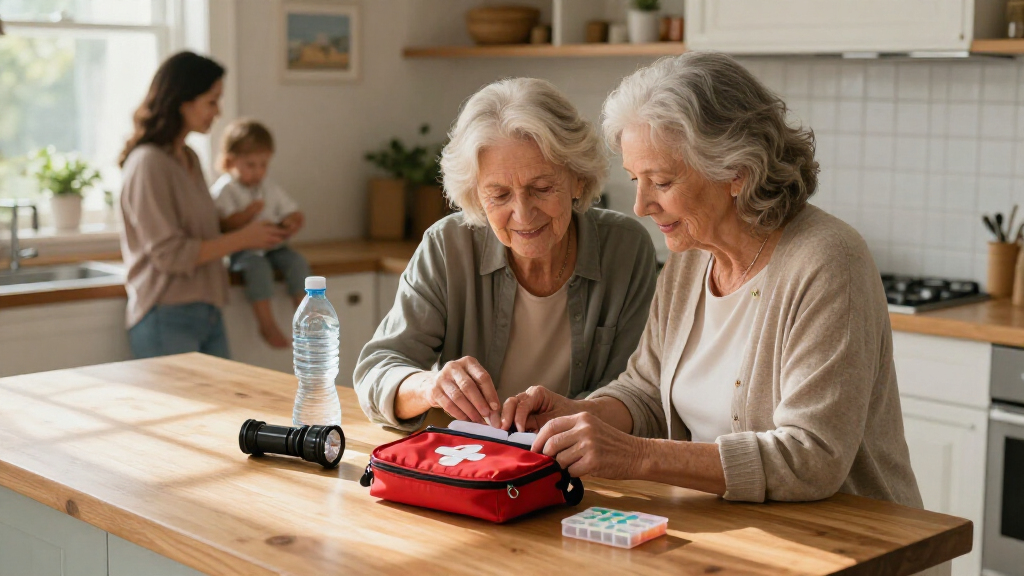
I ranked these options by how directly their stated contents address the needs implied by emergency preparedness: household coverage, portability, food or first aid specialization, and the effort needed to build around the kit. A backpack meant for evacuation has a broader role than a food bucket or a first aid case, so I weighed breadth of purpose alongside the number of people each listing says it serves. I also considered whether the product’s role is clear enough for a buyer to understand what remains to be supplied separately.
The ranking favors options that can serve as a practical starting point for a stated household or evacuation scenario, then places more specialized supplies after them. Within similar categories, the stated capacity and intended use distinguish the picks: two-person versus one-person coverage, family-oriented bags, and different food-bucket formats. Product names and listed claims do not establish that a kit will meet every household’s needs, so I treat contents, quantities, storage needs, and missing essentials as part of the buying decision.
Factors to Consider When Choosing Emergency Preparedness Kit
I’d choose an emergency kit by mapping it to the situation I’m preparing for, then checking what I would still need to provide. These broader checks help avoid buying a kit that looks complete but does not fit the household, storage space, or likely emergency.
Match the kit to the emergency scenario
Start by deciding whether you need to shelter at home, leave quickly, or cover both situations. A backpack can make evacuation gear easier to carry, while a food bucket is more suited to stored meals and a first aid case focuses on treating injuries. A common mistake is assuming one product covers every kind of emergency because its name includes “survival” or “preparedness.” Think through the disruptions most likely where you live, such as an evacuation, a power outage, or a temporary loss of water service. If you want both home and evacuation coverage, plan for separate supplies or verify that the kit can support each use.
Count people and plan for individual needs
Use the stated person count as a starting point, then check what that number means for each category of supply. A kit labeled for a family may not provide equal amounts of food, water, first aid materials, or useful gear for every person. Account for children, older adults, pets, prescription medicines, allergies, and mobility needs when making a household list. Avoid choosing solely by the biggest household count; a smaller kit plus carefully selected personal items may fit better. Keep a written inventory of what the kit supplies and what each person needs separately.
Check food, water, and preparation requirements
Food serving counts are not a complete picture of emergency meal coverage. Check serving size, meal variety, dietary fit, water needed for preparation, and whether you have a safe way to heat food if the instructions call for it. Food supplies also do not solve the need for drinking water, so plan water storage or treatment as a separate part of the setup. A large bucket can be useful for building a pantry reserve, but it may be less useful during a fast evacuation than compact food packed for carrying. Choose the format around where you plan to use it and how you will prepare it.
Treat first aid as one layer of readiness
A large first aid kit can give you a better starting point for minor injuries, but piece counts alone do not show whether its contents match your household or skills. Look for a contents list and check for items you know how to use, supplies that suit likely needs, and space for personal medication or familiar products. Do not assume a survival gear bundle includes a complete first aid setup, or that a first aid case covers shelter, water, and communication. If someone in the household has a specific medical need, plan that supply directly rather than relying on a general-purpose kit. Store the kit where it can be reached quickly and keep its contents organized.
Plan for storage, rotation, and carrying
Before buying, decide where the kit will live and whether you may need to carry it over a distance. A backpack format can simplify evacuation, while a bucket or large case may make sense for a home supply area but can be awkward to move. Check package dimensions, total weight, storage conditions, and any maintenance or expiration guidance provided for food and medical items. Set a reminder to review supplies after use or when household needs change. A kit that fits your storage plan and can be checked regularly is more useful than one left out of reach or forgotten.
Budget for the gaps around the kit
Compare the kit’s included categories against a household checklist before treating it as a finished solution. You may need extra water, weather-appropriate clothing, lighting, batteries, phone charging, sanitation supplies, copies of documents, or food suited to individual diets. These additions can cost time and storage space, so include them in the decision from the start. Paying more for a broader kit makes sense when its actual contents cover items you would otherwise need to source, but a focused food or first aid product can be the better fit when you already own the rest. I’d choose based on the cost and effort of closing the specific gaps, rather than on packaging claims alone.
Frequently Asked Questions
Should I buy a two-person kit or separate kits for each person?
That depends on whether you expect to evacuate together and how you want to distribute the load. A shared two-person backpack can reduce duplicate gear, but one person may end up carrying most of the supplies. Separate kits can make individual needs easier to manage and keep each person equipped if the group splits up. Check the contents and quantities rather than assuming the stated person count means every item is doubled. Add personal medication, clothing, and other household-specific items either way.
Can a 72-hour kit cover my household’s food and water needs?
Not automatically: the term describes an intended duration, but the actual food and water coverage depends on the listed quantities and directions. Check how many servings or water units are included, what a serving represents, and whether food preparation requires extra water. Plan separate drinking water and a backup method for obtaining or treating it if the kit does not provide enough. Consider dietary needs and whether everyone can eat the included meals. Treat the duration label as a prompt to verify coverage, not as a guarantee for every household.
Is an emergency food bucket enough if I already have a first aid kit?
No single food bucket addresses all emergency needs, even when paired with first aid supplies. You would still need to consider drinking water, cooking or preparation, light, communication, sanitation, and a way to carry essential supplies if you evacuate. A food reserve is most useful when it fills a known gap in your home plan and can be stored according to the product’s instructions. Review serving sizes and meal suitability before counting it toward your household’s coverage. Build a separate checklist for sheltering at home and leaving quickly.
How do I compare two kits with similar names or product descriptions?
Compare the itemized contents, quantities, household capacity, bag or container dimensions, and stated use side by side. Similar names may refer to different bundles, and repeated brand or model wording does not show that their contents match. Check whether food, water, first aid, and tools are included or described only as compatible additions. Look for the precise listing version and read its current details before ordering. If a listing does not make contents clear, treat that uncertainty as a reason to compare another option.
Should I choose a large first aid kit or a general survival gear bundle?
Choose according to the gap you need to fill: a first aid kit is focused on medical supplies, while a gear bundle may emphasize tools, shelter, or other emergency equipment. Piece count alone is a weak comparison because many small items can inflate the total without adding the supplies your household needs. Review the contents list and consider whether someone can use the medical items appropriately. If you lack both categories, plan for both rather than expecting one bundle to replace the other. Keep personal medicines and any specialized medical supplies separate and accessible.
Conclusion
For a broad evacuation starting point, I’d choose the Everlit family bug out bag as best overall, then verify that its actual contents fit the people in my household. The Ready America 70280 two-person backpack is my best value direction for a simpler two-person setup, while the ReadyWise 120-serving bucket is my best premium-style pick for readers prioritizing a larger food reserve. Beginners may find the Ready America 70285 Deluxe two-person backpack easier to use as a single starting package, provided they check the remaining gaps. For specific needs, I’d choose the 88-serving meat-and-rice bucket for that meal format, a dedicated first aid kit for medical supplies, or the 250-piece gear kit for a tool-focused bundle. Whichever route you choose, make the final decision from the contents list, your household plan, and the supplies you still need to add.