
To avoid leaks and water damage, regularly inspect your pipes for cracks, rust, or leaks around joints. Keep an eye on water pressure; too high can cause stress, while too low affects performance, so use a gauge and adjust as needed. Insulate exposed pipes before cold weather and maintain steady indoor temperatures. Routine inspections and proper maintenance help prevent costly repairs, so stay proactive to keep your plumbing safe and efficient. Keep going to discover more tips.
Key Takeaways
- Insulate exposed pipes before cold weather to prevent freezing and bursting.
- Regularly inspect pipes for cracks, leaks, and signs of wear to address issues early.
- Maintain proper water pressure (40-60 psi) using a pressure regulator to avoid stress on pipes.
- Avoid using excessive force when tightening fittings to prevent damage and leaks.
- Keep interior temperatures consistent and open cabinet doors to protect pipes from extreme cold.
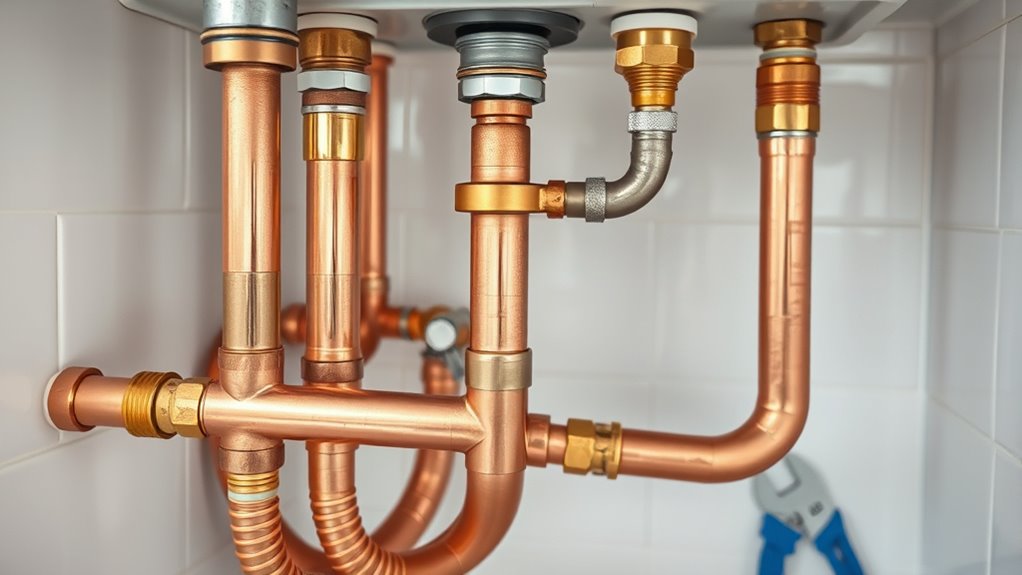
Have you ever wondered what keeps your home’s water flowing smoothly? It’s often the small details that make a big difference, especially when it comes to your plumbing system. One key factor is pipe insulation. When pipes are properly insulated, they’re protected from extreme temperatures, which can cause them to freeze and burst. Frozen pipes are a common cause of water damage and costly repairs. Insulating your pipes helps maintain consistent water pressure and prevents sudden breaks that can flood your home. Not only does pipe insulation protect against freezing, but it also reduces heat loss, saving you money on energy bills. You can easily install foam or rubber pipe sleeves around vulnerable pipes, especially those in unheated areas like basements, attics, or garages. Ensuring proper insulation techniques can significantly enhance the longevity and safety of your plumbing system.
Water pressure plays a vital role in your plumbing health. Too high, and it can strain your pipes, joints, and fixtures, increasing the risk of leaks or bursts. Too low, and it can make everyday tasks frustrating—showers feel weak, and appliances don’t operate efficiently. Maintaining an ideal water pressure is essential to avoid stress on your plumbing system. You can measure your water pressure with a simple pressure gauge attached to an outdoor spigot or laundry faucet. Ideally, your home’s water pressure should be between 40 and 60 psi (pounds per square inch). If it exceeds this range, think about installing a pressure regulator or adjusting the existing one. Proper regulation helps prevent damage to pipes and fixtures, reducing the likelihood of leaks and water damage over time.
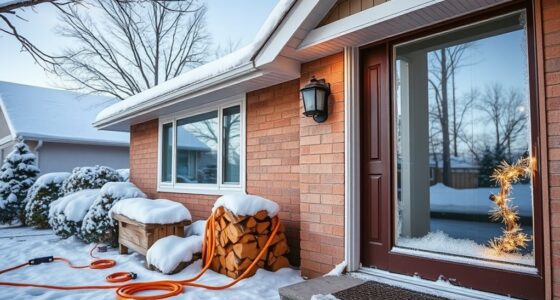
Another aspect to consider is how you handle your pipes during extreme weather. When cold weather approaches, insulating exposed pipes becomes even more critical. Wrap them with foam or pipe insulation to prevent freezing. Additionally, keep your home’s interior temperature consistent and open cabinet doors under sinks to allow warm air to circulate around pipes. During warmer months, avoid exposing exterior pipes to direct sunlight, which can cause expansion and contraction, stressing the joints and increasing leak risks.
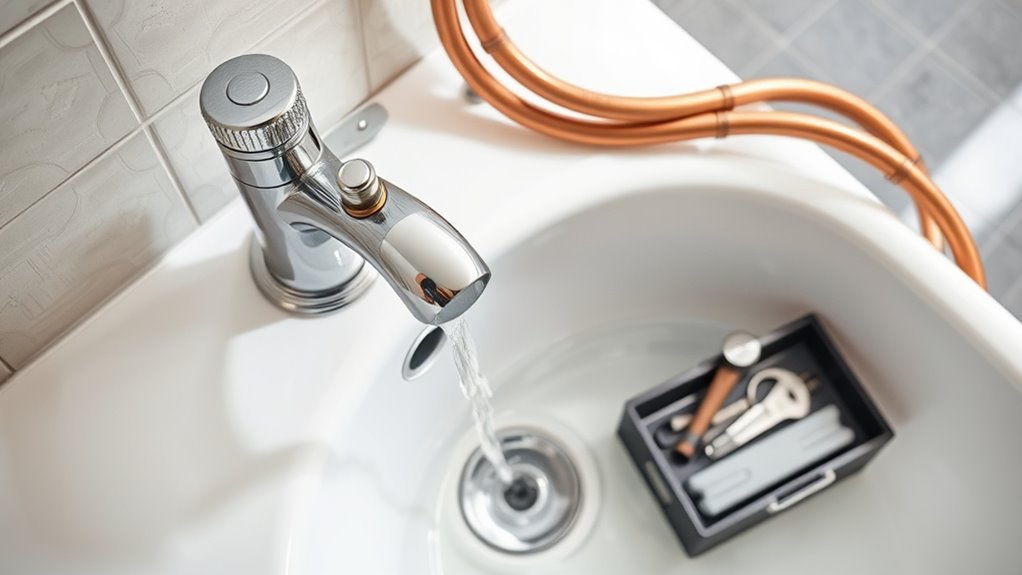
Regular inspections are essential. Check for any signs of wear, such as cracks, rust, or leaks around joints. If you notice a drop in water pressure or damp spots on walls or ceilings, don’t ignore these signs—they often point to underlying pipe issues. Addressing problems early can save you from major water damage and expensive repairs later. In essence, taking proactive steps—insulating pipes, monitoring water pressure, and inspecting your plumbing—can greatly extend the life of your system, keep water flowing smoothly, and protect your home from preventable water damage.

Duck Brand Foam Pipe Covers, Pipe Insulation Foam Tubes for Hot and Cold Water Pipes, Pre Slit and Self Sealing Adhesive Edge, 0.75 in. x 1 Ft., 6 Sticks Per Package, 6 Feet Total, Black
- Suitable for Hot and Cold Pipes: Insulates hot and cold water pipes
- Pre-Slit for Easy Installation: Pre-slit design for quick setup
- Self-Sealing Edges: Securely seals around pipes
As an affiliate, we earn on qualifying purchases.
As an affiliate, we earn on qualifying purchases.
Frequently Asked Questions
How Can I Detect Hidden Plumbing Leaks Early?
To detect hidden plumbing leaks early, you should actively monitor your water usage and look for signs like increased bills or damp spots. Leak detection devices and water alarms can alert you to leaks before they cause damage. Regularly check under sinks, around toilets, and near appliances for moisture or mold. Using water alarms and inspecting for signs of leaks helps you catch problems early and prevent costly water damage.
What Are the Best Tools for Minor Plumbing Repairs?
Thinking you need a plumbing genius? Nope, just a pipe wrench and a plunger. For minor repairs, these tools are your best friends. Use a pipe wrench to tighten or loosen fittings, and a plunger to clear clogs. No fancy gadgets needed—just a little patience and these trusty tools to keep your pipes flowing smoothly. Save money and avoid water damage with the right tools and a bit of DIY spirit.
How Often Should I Inspect My Plumbing System?
You should inspect your plumbing system at least once a year to catch issues early. Check for signs of leaks, especially around pipe insulation, and monitor water pressure to ensure it’s within normal ranges. Regular inspections help prevent water damage and costly repairs. If you notice any irregularities, address them promptly. Staying proactive keeps your plumbing running smoothly and protects your home from water-related issues.
What Are Common Causes of Pipe Corrosion?
You might notice pipe corrosion caused by factors like pipe material and environmental conditions. For example, steel pipes are prone to rust if exposed to moisture, while copper pipes can corrode due to acidic water. Environmental factors such as high humidity, soil chemistry, and water pH levels accelerate corrosion. Regular inspections help identify early signs, preventing leaks and costly water damage caused by compromised pipes.
When Should I Call a Professional Plumber Instead of DIY?
You might think you’ve got plumbing myths under control, but when it comes to tricky issues, it’s best to call a professional. DIY pitfalls can lead to bigger problems or water damage. If you’re dealing with complex repairs, persistent leaks, or unfamiliar tools, don’t push your luck. Know your limits—professional plumbers are there to guarantee your system stays leak-free and damage-free, saving you time, money, and stress in the long run.
Conclusion
Remember, understanding plumbing basics is like knowing how to fix a small leak before it floods your entire house. I once ignored a tiny drip, only to wake up to a burst pipe flooding my basement. Just like a single drop can cause a flood, small issues can turn into big problems if ignored. Stay attentive, address leaks early, and you’ll keep your home safe and dry—because prevention is always better than repair.