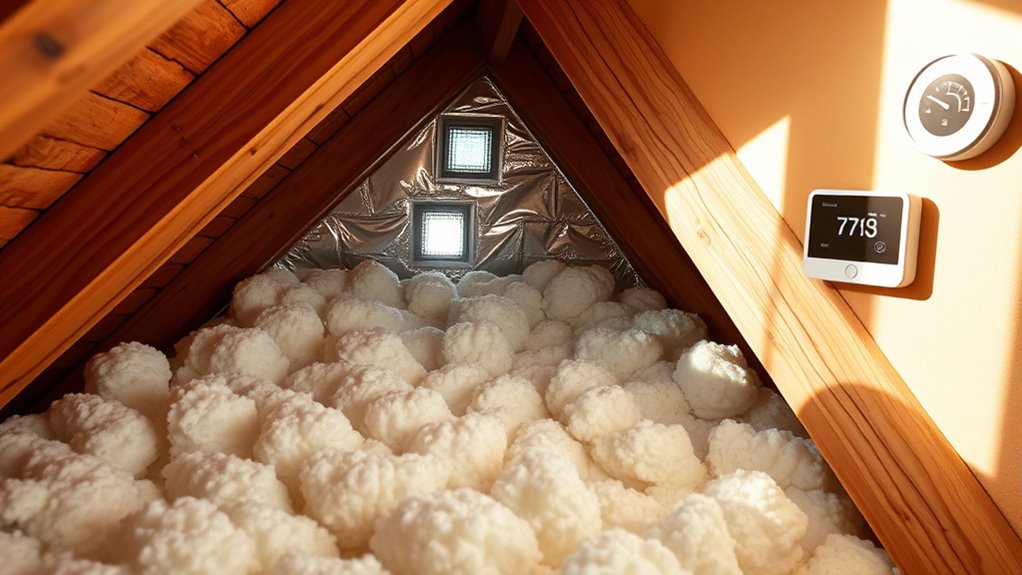

To cut your energy bills, start by sealing window and door drafts with weatherstripping or caulking to keep warm air in. Use heavy curtains or thermal blinds as extra insulation and consider upgrading to double-glazed windows. Maintain your heating system by changing filters and scheduling inspections to guarantee efficiency. Keep doors closed in unused rooms and set your thermostat to a comfortable 68-70°F. For more tailored tips, explore further options that boost your home’s warmth and save you money.
Key Takeaways
- Seal window drafts with weatherstripping or caulking to prevent heat loss and improve insulation.
- Install double-glazed windows or add heavy curtains for better thermal insulation.
- Maintain and regularly service your heating system to ensure energy-efficient operation.
- Set your thermostat to 68-70°F when home and lower it during sleep or absence to save energy.
- Use draft stoppers and close unused rooms to minimize heat loss and enhance overall home warmth.
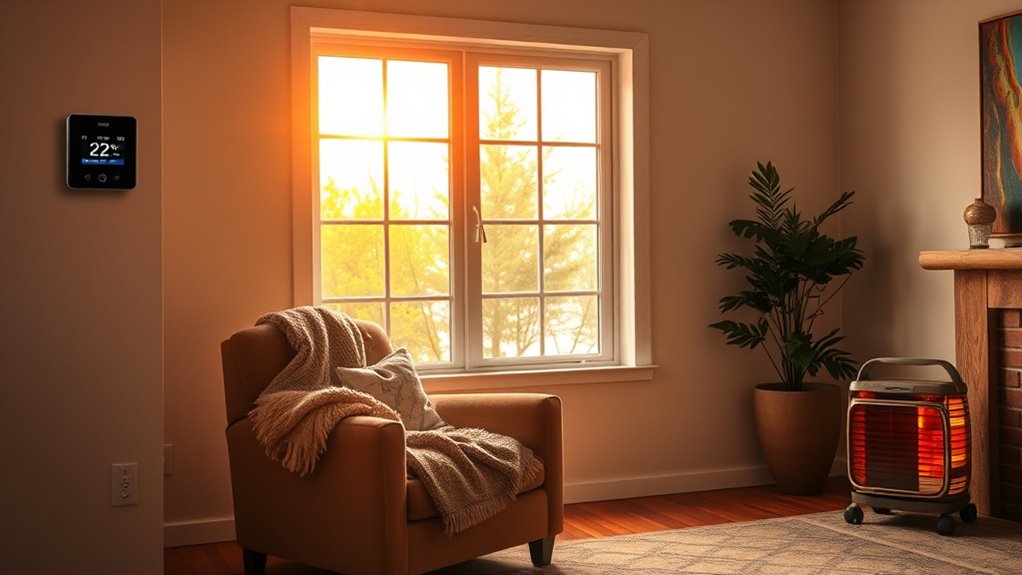
Keeping your home warm and energy-efficient starts with proper insulation and heating strategies. One of the first steps you should take is to identify and seal any window drafts. Cold air sneaking in through gaps around your windows can considerably lower indoor temperatures and force your heating system to work harder. You can easily check for drafts by holding a lit candle or a piece of tissue near the window frames; if the flame flickers or the tissue moves, you’ve found a draft. Sealing these leaks with weatherstripping or caulking helps keep the warm air inside and prevents cold air from entering, reducing your heating bill and improving comfort.
Seal window drafts to keep warm air in and reduce heating costs.
Next, pay close attention to your thermostat settings. Many people tend to set the thermostat higher than necessary, thinking it will warm their home faster, but that only wastes energy. Instead, aim to keep your thermostat at a consistent, comfortable temperature—around 68 to 70 degrees Fahrenheit when you’re home. When you’re sleeping or away, lower the temperature by a few degrees to conserve energy. Using a programmable thermostat makes this easier, allowing you to automatically adjust the temperature during different times of the day. This way, you won’t forget to turn down the heat when nobody’s home, and you’ll avoid unnecessary energy consumption.
In addition to sealing drafts and setting the thermostat wisely, consider upgrading your windows or adding window treatments. Double-glazed windows provide better insulation than single-pane options, keeping warmth inside longer. If replacing windows isn’t in the budget, heavy curtains or thermal blinds can offer extra insulation overnight or during particularly cold days. These window coverings act as an additional barrier against drafts and help maintain a stable indoor temperature.
Another tip is to make sure your heating system is running efficiently. Regular maintenance, like changing filters and scheduling professional inspections, ensures your furnace or heat pump operates at peak performance. An efficient system uses less energy to produce the same amount of warmth, which directly translates into lower bills. Additionally, understanding the basics of soaring and gliding can inspire you to explore energy-efficient transportation alternatives, like electric vehicles or solar-powered devices, further reducing your household energy footprint.
Finally, don’t forget about the small, everyday actions that add up. Closing doors to unused rooms prevents heat from escaping into unoccupied spaces. Using draft stoppers on doors and windows further minimizes cold air infiltration. Combining these habits with good insulation and smart thermostat use creates an all-encompassing approach that helps you cut energy costs while staying comfortably warm all winter long.

33 Ft Gray Self-Adhesive Soundproofing Weather Stripping for Doors and Windows, 0.35" Wide x 0.2" Thick
Strong Adhesive, Saves Money】Weather stripping door seal prevent heat and cold from escaping, save your heating and cooling…
As an affiliate, we earn on qualifying purchases.
As an affiliate, we earn on qualifying purchases.
Frequently Asked Questions
How Often Should I Replace My Insulation Materials?
You’re wondering about how often to replace your insulation materials. The insulation lifespan varies depending on the type and conditions, but generally, you should consider replacement every 15 to 25 years. Regular inspections help identify signs of wear, moisture damage, or settling. If your insulation looks damaged or isn’t performing well, it’s time for a replacement. Staying on top of the replacement frequency guarantees your home stays energy-efficient and comfortable.
What Are the Best Eco-Friendly Insulation Options?
Oh, because everyone loves sacrificing comfort for eco-friendliness, right? Luckily, you can choose green building options with sustainable materials like sheep’s wool, cork, or recycled denim insulation. These eco-friendly options reduce your carbon footprint and promote a healthier planet. Plus, they often perform better and last longer. So, go ahead—embrace sustainable materials and turn your home into a model of green building without sacrificing coziness or style.
How Can Smart Thermostats Reduce Heating Costs?
A smart thermostat helps you optimize your heating system for energy savings. By learning your schedule and adjusting the temperature accordingly, it prevents unnecessary heating when you’re away or asleep. You can control it remotely, ensuring your home stays comfortable without wasting energy. This technology reduces your heating costs over time, making your energy bills more affordable while maintaining a cozy environment. Embrace a smart thermostat to maximize efficiency effortlessly.
Is It Worth Insulating Basement Walls?
You should consider insulating basement walls because it helps control basement moisture and improves overall comfort. Wall insulation types like foam boards or spray foam are effective, sealing gaps and reducing heat loss. Insulating your basement can lower energy bills, prevent mold growth, and protect your home’s structure. If your basement feels damp or chilly, investing in proper wall insulation is worth it, especially with the right insulation types for your space.
What Maintenance Is Needed for Heating Systems?
Think of your heating system as the heart of your home, needing gentle care to keep it beating strong. Regularly replace the air filter to guarantee clean airflow and efficient operation. Seal ducts to prevent heat leaks, like closing the cracks in a vessel to prevent loss. These simple maintenance steps keep your system running smoothly, save energy, and reduce bills, making your home warm and cozy with less effort.

ACHAZEL 6000 BTU Window Air Conditioner with WiFi, Smart Window AC Unit with Remote, Energy Saving, Easy Install Kit, Cools up to 250 Square Feet
EFFICIENT COOLING: Cooling Coverage up to 250 Square feet, this unit is perfect for smaller spaces like living…
As an affiliate, we earn on qualifying purchases.
As an affiliate, we earn on qualifying purchases.
Conclusion
By taking these insulation and heating tips to heart, you can transform your home into a cozy haven while slashing your energy bills. Think of your home as a fortress—protect it from the cold and unnecessary costs. Every small change adds up, making a big difference over time. So, why not start today? After all, a warm home isn’t just a comfort; it’s a smart choice that keeps your wallet happy and your spirits high.

New! Honeywell Home Programmable Thermostat, Single-Stage, 1 Heat/1 Cool Compatibility, 5-2 Day Schedule, X2P, White, RTH20B
CUSTOMIZE: Choose to receive change air filter reminders and select display settings to optimize this thermostat for home.The…
As an affiliate, we earn on qualifying purchases.
As an affiliate, we earn on qualifying purchases.

NICETOWN 100% Blackout Window Curtain Panels, Cold and Full Light Blocking Drapes with Black Liner for Nursery, 84 inches Drop Thermal Insulated Draperies (White, 2 Pieces, 52 Wide Each Panel)
Ready Made: 2 panels per package. Each Classic Curtain measures 52" wide x 84" long (Total width is…
As an affiliate, we earn on qualifying purchases.
As an affiliate, we earn on qualifying purchases.