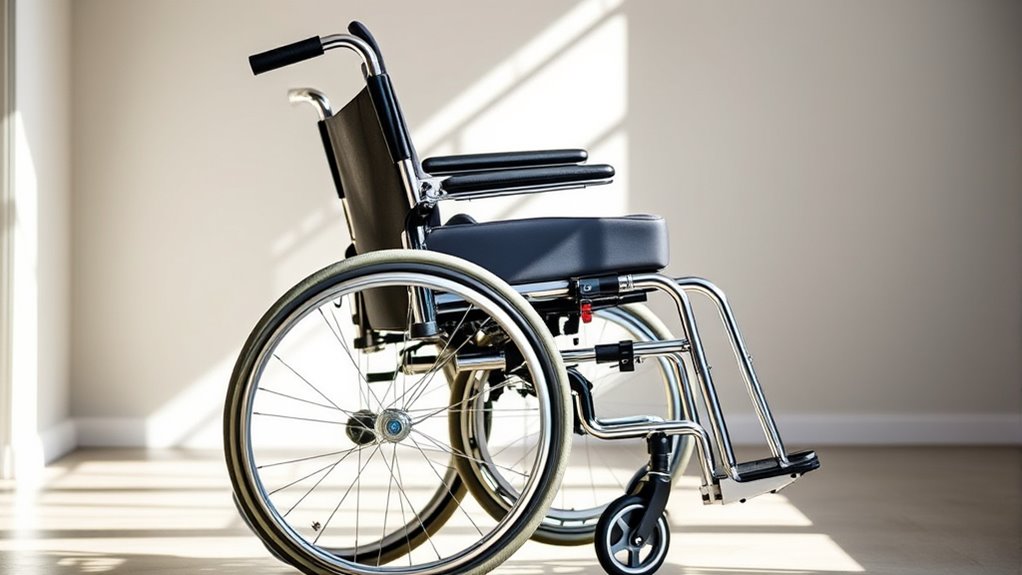

For tall people, wheelchair fit depends on more than seat width: seat depth, leg support, and the position of the footrests can affect comfort and posture. My best overall pick is the Medline Excel Extra-Wide Bariatric Wheelchair, whose 24-inch seat gives more room than the standard-width models here, though a wider chair may be harder to maneuver. The 22-inch bariatric wheelchair with removable desk-length armrests is a strong alternative for users who need a roomy seat and easier side transfers, while the Medline folding wheelchair with elevating footrests suits people who need leg support. The main tradeoff is between a roomier chair and easier transport, and none of these listed seat dimensions alone confirms a tall user’s seat depth or leg fit. Read on for the full breakdown, fit checks, and guidance on choosing between standard, bariatric, and transport chairs.

Turn quiet afternoons into listening time
- Thousands of audiobooks, podcasts and originals
- Listen on your phone, tablet or Echo — also offline
- Cancel anytime
Complete the kit


Key Takeaways
Seat width is not the same as tall-user fit: The 24-inch Medline Excel and 22-inch bariatric chairs provide more width, but the listings do not specify extra seat depth or longer leg support.
The lineup splits into self-propelled wheelchairs and transport chairs: The Blue Streak and standard Medline folding models are wheelchair-style options, while the bariatric transport chairs are designed to be pushed by a caregiver.
Elevating leg rests serve a different need from extra seat room: The Medline and Vive reclining options may suit users who need adjustable leg positioning, but they do not replace a proper fit assessment.
Higher capacity and wider seats can mean more bulk: The 450- and 500-pound-capacity bariatric models may suit users who need added capacity, but their larger frames can be less convenient in tight spaces or for transport.
Specifications vary in what they disclose: Several listings give seat width but not seat depth, seat-to-floor height, or leg-rest adjustment range, so buyers should confirm those measurements before choosing for a tall user.


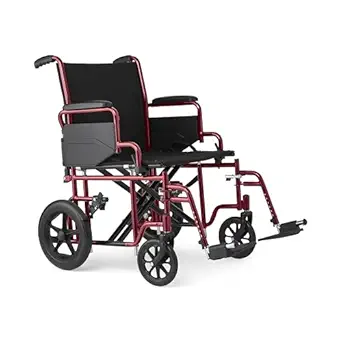


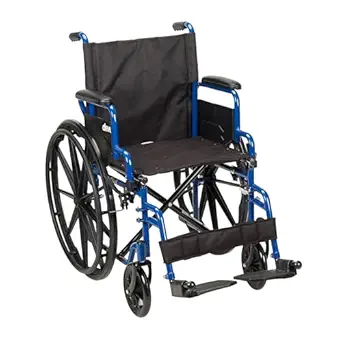
| wheelchairs for tall people | Seat width | Footrests | Weight capacity | Armrests |
|---|---|---|---|---|
| 22-Inch Bariatric Wheelchair w | 22 inches (from product title) | Swing-away | — | Removable, desk-length |
| Medline Comfortable Folding Wh | 20 inches | Swing-away | 300 lbs | Swing-back, desk-length, padded |
| Medline Comfortable Folding Wh | 20 inches | Elevating leg rests | 300 lbs | — |
| Medline Excel Extra-Wide Baria | 24 inches | Swing-away | 500 lbs | Removable, desk-length |
| Vive Mobility Reclining Wheelc | 18 inches | — | 300 lbs | — |
| Drive Medical Blue Streak Ligh | 18 inches | — | — | Padded desk arms |
| Medline Bariatric Transport Ch | 22 inches | Foldable | 450 lbs | Swing-away, desk-length |
| Medline Lightweight Wheelchair | 20 inches | — | 300 lbs | — |
| Vive Mobility Bariatric Transp | 22 inches | — | 450 lbs | — |
| Drive Medical Bariatric Transp | 22 inches | Swing-away | 450 lbs | — |
| Wheelchairs for Adults | 20 inches | Swing-away; open inward and outward | — | — |
| Drive Medical Blue Streak Ligh | 18 inches | Swing-away | — | Flip-back desk arms |
More Details on Our Top Picks
22-Inch Bariatric Wheelchair with Removable Desk-Length Armrests and Swing-Away Foot Rests
I rank this model for buyers who need a 22-inch seat and value transfer access more than a documented weight limit. Its removable desk-length armrests can make side transfers easier, while the swing-away footrests help clear the front of the chair. Compared with the Medline Excel Extra-Wide Bariatric Wheelchair, it has a narrower stated seat and far less capacity information: the Excel lists a 24-inch seat and a 500-pound limit, while this product’s data gives neither a seat depth nor a weight capacity. Vinyl upholstery is straightforward to wipe clean, and solid tires avoid punctures, but the listing does not say whether the chair folds or how much it weighs. I’d shortlist it only after confirming fit and capacity with the seller.
Pros:- Stated 22-inch seat width offers more room than the 20-inch Medline folding models in this lineup.
- Removable desk-length armrests can ease transfers from a bed or chair.
- Swing-away footrests clear the front for transfers and positioning.
- Vinyl upholstery is easy to clean, and solid tires do not need inflation.
Cons:- Weight capacity and seat depth are not provided, leaving fit and safe use uncertain.
- No weight, folded dimensions, or foldability details are listed for transport planning.
- No seat-height or leg-rest adjustment information is provided for tall users.
Best for: Buyers who specifically need a 22-inch seat and removable arms, and can verify capacity and overall fit before purchase.
Not ideal for: Taller users who need confirmed seat depth, leg positioning dimensions, or a published weight limit; those needing a clearly portable chair should also skip it.
- Seat width:22 inches (from product title)
- Frame finish:Hammertone
- Armrests:Removable, desk-length
- Footrests:Swing-away
- Upholstery:Vinyl
- Tires:Solid, smooth-rolling
Our verdict“Choose it only if the 22-inch seat and removable arms suit your needs and you can confirm its capacity and dimensions first.”
Medline Comfortable Folding Wheelchair with Swing-Back Desk-Length Arms and Swing-Away Footrests, 20”W x 16”D Seat
This is the most practical choice here for a buyer who wants a folding daily-use chair and can fit comfortably in a 20-by-16-inch seat. The stated 300-pound capacity and dual-axle maneuverability offer useful context that the 22-Inch Bariatric Wheelchair lacks, while its folding frame is easier to store or take along than the Medline Excel Extra-Wide Bariatric Wheelchair. Swing-back desk-length arms and swing-away footrests can help with transfers; padded arms add comfort during routine use. For tall people, though, seat width alone does not establish a good fit: the supplied data gives no seat-height adjustment or leg-rest extension measurements. The 16-inch seat depth may feel short if your thighs need more support, and the chair can still be heavy to lift once folded.
Pros:- Folds for storage and transport, unlike the bariatric model with no foldability details.
- 20-inch seat width and 16-inch seat depth are clearly specified.
- Swing-back arms and swing-away footrests support easier transfers.
- Dual axle and smooth tires are described as aiding maneuverability.
Cons:- The 300-pound capacity is lower than the 500-pound limit listed for the Medline Excel Extra-Wide.
- No adjustable seat-height or extended leg-rest measurements are provided for tall-user fit.
- May be heavy to lift into a vehicle even when folded.
Best for: A daily wheelchair user who needs a foldable chair, values easier transfers, and fits a 20-inch-wide, 16-inch-deep seat.
Not ideal for: Tall users who need a longer seat or adjustable seat height, and anyone who needs more than a 300-pound capacity.
- Seat width:20 inches
- Seat depth:16 inches
- Weight capacity:300 lbs
- Frame:Folding wheelchair frame
- Armrests:Swing-back, desk-length, padded
- Footrests:Swing-away
- Axle:Dual axle
Our verdict“Pick this for routine use and easier storage if a 20-by-16-inch seat fits and you do not need bariatric capacity.”
Medline Comfortable Folding Wheelchair with Swing-Back, Desk-Length Arms and Elevating Footrests, 20”W x 16”D Seat
I’d choose this Medline over the standard Medline Comfortable Folding Wheelchair when elevating leg support matters more than keeping the setup simple. Its elevating leg rests can change leg position, and swing-back desk-length arms help clear the sides for transfers. The 20-by-16-inch seat and 300-pound capacity are specified, but tall buyers should not mistake leg-rest adjustability for a longer seat: the supplied data does not give seat-height adjustment or an extended leg measurement. At 38 pounds, it folds more readily for storage than the Medline Excel Extra-Wide Bariatric Wheelchair, which weighs 60 pounds, yet remains a substantial lift for some users. Its 20-inch seat is also narrower than the Excel’s 24-inch option, so this pick favors leg positioning and foldability over extra width.
Pros:- Elevating leg rests offer more positioning options than the standard Medline folding model’s swing-away rests.
- Swing-back arms can make side transfers easier.
- Folding frame and listed folded dimensions help with storage planning.
- Seat dimensions and 300-pound capacity are stated.
Cons:- The 20-by-16-inch seat may not provide enough width or thigh support for some tall users.
- At 38 pounds, it may be difficult for one person to lift into a vehicle.
- No adjustable seat height or leg-rest extension measurements are listed.
Best for: Users who need elevating leg rests for positioning and want a folding chair with a specified 20-inch seat.
Not ideal for: Tall users needing verified long-seat or extended-leg dimensions, people who need a seat wider than 20 inches, or buyers unable to lift a 38-pound chair.
- Seat width:20 inches
- Seat depth:16 inches
- Weight capacity:300 lbs
- Chair weight:38 lbs
- Overall dimensions:32.5 x 26.5 x 36.5 inches (L x W x H)
- Folded dimensions:32.5 x 11.5 x 36.5 inches (L x W x H)
- Frame:Hammertone
- Footrests:Elevating leg rests
Our verdict“Choose this over the standard Medline folding chair if elevating leg support is a priority and its seat dimensions fit you.”
Medline Excel Extra-Wide Bariatric Wheelchair for Adults and Seniors with 24-Inch Seat, Supports Up to 500 lbs
Among these five, this is the clearest choice when a tall buyer’s main need is more seat room and a high stated capacity. Its 24-inch seat, 18-inch depth, and 500-pound limit are more fully specified than the 22-Inch Bariatric Wheelchair, whose capacity and depth are not listed. Removable desk-length arms and swing-away footrests support transfers, while the chrome frame is built for heavy-duty use. The tradeoff is size: at 60 pounds and 32.5 inches wide when assembled, it is less convenient to lift and maneuver in tight spaces than either folding 20-inch Medline chair. The 18-inch seat depth gives more thigh room than those models’ 16-inch seats, but the product data does not list adjustable seat height or leg-rest extension. I’d prioritize it for space and capacity, not portability.
Pros:- 24-inch seat and 18-inch depth provide more space than the 20-by-16-inch Medline folding chairs.
- 500-pound capacity is the highest clearly stated capacity among these five products.
- Removable desk-length arms and swing-away footrests can aid transfers.
- Folded width is specified, helping with storage planning.
Cons:- At 60 pounds, it is difficult for many users or caregivers to lift regularly.
- Its 32.5-inch assembled width may limit access through narrower doorways.
- No seat-height adjustment or leg-rest extension measurement is listed for taller users.
Best for: Adults who need a wide 24-inch seat, an 18-inch seat depth, and a stated capacity up to 500 pounds.
Not ideal for: Tall users who need a lightweight chair for frequent car transfers or must maneuver through narrow doorways and tight rooms.
- Seat width:24 inches
- Seat depth:18 inches
- Weight capacity:500 lbs
- Chair weight:60 lbs
- Assembled dimensions:32.5 x 32.5 x 36.5 inches (L x W x H)
- Folded dimensions:32.5 x 13 x 36.5 inches (L x W x H)
- Frame:Chrome
- Armrests:Removable, desk-length
- Footrests:Swing-away
Our verdict“Choose this when seat space and a documented 500-pound capacity outweigh the need for easy lifting or narrow-space maneuverability.”
Vive Mobility Reclining Wheelchair with Elevating Leg Rests, 18″ Seat, Supports up to 300 lbs
This Vive is the specialized pick for users who need to recline and elevate their legs, rather than simply gain extra seat width. Its 180-degree recline, head and neck support, and height-adjustable elevating leg rests offer positioning options the Medline Comfortable Folding Wheelchair with Elevating Footrests does not list. That added adjustability may suit users who spend long periods seated, but it does not make this the roomiest choice for tall people: its 18-inch seat is narrower than the 20-inch Medline seats and far narrower than the Medline Excel’s 24-inch seat. The reinforced steel frame supports up to 300 pounds, and the chair folds flat, though its weight is not provided and may make lifting difficult. Check seat depth and leg length with the seller before choosing it for a tall user.
Pros:- 180-degree recline offers positioning beyond the fixed seating described for the Medline folding chairs.
- Elevating, swing-away, height-adjustable leg rests provide multiple leg-position options.
- Head and neck support is included in the described design.
- Folds flat for travel and storage.
Cons:- The 18-inch seat is narrower than both Medline folding models and the bariatric choices.
- Weight and seat depth are not specified, limiting fit and transport planning.
- Its 300-pound capacity is below the Medline Excel’s stated 500-pound limit.
Best for: Users who need a reclining position, head and neck support, and elevating leg rests, and who fit an 18-inch seat.
Not ideal for: Tall users who need extra seat width or verified long-leg support, and buyers who need a clearly stated chair weight for lifting or transport.
- Seat width:18 inches
- Weight capacity:300 lbs
- Recline range:Up to 180 degrees
- Leg rests:Elevating, swing-away, height-adjustable
- Rear wheels:24 inches
- Front casters:8 inches
- Frame:Reinforced steel
Our verdict“Choose this for recline and adjustable leg positioning if an 18-inch seat fits and you do not need bariatric capacity.”
Drive Medical Blue Streak Lightweight Foldable Wheelchair – 18 Inch Seat, Blue/Black
The 18-inch seat makes the Blue Streak a more plausible fit for tall buyers with narrower hips than the 22-inch transport chairs in this roundup, though seat width alone does not confirm legroom or overall fit. Its swing-away, elevating leg rests offer useful flexibility for transfers and lower-leg positioning. Compared with the Medline Lightweight Wheelchair with a 20-inch seat, this model has a narrower seat and a steel frame, so it may suit buyers who value a more contained sitting area over extra width. The foldable design and padded desk arms help with storage and access at tables. The tradeoff is that it may be heavier than ultra-light alternatives, and the supplied details do not give seat depth or seat-to-floor height—key measurements for taller users. Check fit dimensions before choosing it for long periods of sitting.
Pros:- 18-inch seat offers a narrower option than the 22-inch bariatric transport chairs.
- Swing-away, elevating leg rests allow more flexibility for transfers and leg positioning.
- Foldable steel frame supports storage and transport.
- Padded desk arms provide support while allowing access to tables.
Cons:- Seat depth and seat-to-floor height are not provided, limiting fit assessment for tall users.
- Steel construction may be heavier to lift than an ultra-light wheelchair.
- Tire maintenance may be needed over time.
Best for: Tall adults with narrower hips who need a foldable daily-use chair and want elevating leg rests, after confirming seat depth and seat-to-floor height.
Not ideal for: Tall buyers who need extra-wide seating, precise published fit measurements, or the lightest chair for frequent lifting.
- Seat width:18 inches
- Frame material:Steel
- Foldable:Yes
- Leg rests:Swing-away, elevating
- Armrests:Padded desk arms
- Wheel locks:Push-to-lock
- Color:Blue/Black
Our verdict“Choose the Blue Streak if you want an 18-inch seat and elevating leg rests, but verify seat depth and legroom before buying for a tall user.”
Medline Bariatric Transport Chair for Adults and Seniors, Supports up to 450 lbs, Extra-Wide 22″ Seat, Swing-Away Desk Length Arms and Footrests, Red
For a tall buyer whose main fit concern is seat width, this Medline offers a clear step up from the Drive Medical Blue Streak’s 18-inch seat: its seat measures 22 inches wide and 18 inches deep. That deeper, wider sitting area may provide more room, though it does not establish adequate thigh support or legroom for every tall user. Swing-away desk-length arms and footrests can make transfers easier, while the fold-down back helps with storage. Its 450-pound capacity also distinguishes it from standard-capacity chairs such as the 300-pound Medline Lightweight Wheelchair. The central tradeoff is portability: at 45 pounds, it can be difficult for some caregivers to lift into a vehicle. I’d also treat it as a transport chair, not assume it has self-propelling wheels, since those are not specified here.
Pros:- 22-inch seat is wider than the Blue Streak’s 18-inch seat.
- 18-inch seat depth provides a published fit measurement for comparison.
- 450-pound weight capacity suits users who need bariatric support.
- Swing-away arms and footrests aid transfers; the back folds for storage.
Cons:- At 45 pounds, it may be challenging for one person to lift and transport.
- Seat depth alone does not confirm adequate thigh support for every tall user.
- The supplied specifications do not identify self-propelling wheels.
Best for: Tall adults who need a wider, deeper seat and higher weight capacity, with a caregiver available to manage a 45-pound chair.
Not ideal for: Solo travelers who must lift a chair into a car often, or tall users who need confirmed long-leg positioning or self-propelling wheels.
- Seat width:22 inches
- Seat depth:18 inches
- Weight capacity:450 lbs
- Chair weight:45 lbs
- Frame material:Steel
- Armrests:Swing-away, desk-length
- Footrests:Foldable
- Back:Fold-down
Our verdict“Pick this Medline when a 22-by-18-inch seat and 450-pound capacity matter more than easy lifting.”
Medline Lightweight Wheelchair for Adults With Swing-Back, Desk-Length Arms, Elevating Leg Rests; 20″ x 16″D Seat
This Medline is the most useful option here for buyers who want more than seat width when checking fit: its 20-inch seat width is paired with a listed seat-height adjustment from 16 to 20 inches. That range gives tall users a concrete measurement to compare with their transfer needs, though it does not replace checking leg length and seat depth. At 34 pounds, it is lighter than the 45-pound Medline bariatric transport chair, while offering elevating leg rests and swing-back arms for access and transfers. Its 300-pound capacity is also lower than the 450-pound Drive Medical Bariatric Transport Chair, so buyers needing bariatric support should look there instead. The chair folds to 10.5 inches wide, but the supplied information does not say the seat height adjusts; the stated range should be confirmed before purchase.
Pros:- 20-inch seat width offers more room than the Blue Streak’s 18-inch seat.
- Listed 16-to-20-inch seat-height range supports closer comparison with transfer needs.
- At 34 pounds, it weighs less than the 45-pound Medline bariatric transport chair.
- Swing-back desk arms and elevating leg rests support transfers and leg positioning.
Cons:- 300-pound capacity is below the 450-pound capacity of the bariatric chairs in this batch.
- The stated seat-height range should be verified, as adjustment details are not supplied.
- Seat depth is listed as 16 inches, which may not provide enough thigh support for some tall users.
Best for: Tall adults who need a 20-inch seat, a stated 16-to-20-inch seat-height range, and a chair lighter than the 45-pound bariatric Medline.
Not ideal for: Users needing more than 300 pounds of capacity, or buyers who need confirmed seat-depth or legrest-length measurements before purchase.
- Seat width:20 inches
- Seat depth:16 inches
- Seat height:16–20 inches, as listed in the product description
- Weight capacity:300 lbs
- Chair weight:34 lbs
- Dimensions assembled:30 in L x 25.5/27.5 in W x 38 in H
- Folded width:10.5 inches
- Leg rests:Elevating
Our verdict“Choose this Medline if its stated 16-to-20-inch seat-height range suits your transfer needs and you fall within its 300-pound capacity.”
Vive Mobility Bariatric Transport Wheelchair for Adults – Supports 450lbs – Foldable, Heavy Duty Travel Wheel Chair – Portable, Transfer Aid with Swing Away Footrests & 22 Inch Wide Seat
The Vive Mobility pairs a 22-by-18-inch seat with 12-inch wheels, making it a stronger match for buyers who want a wide sitting area and larger wheels for travel over varied surfaces. Its seat dimensions match the Medline Bariatric Transport Chair’s listed width and depth, but Vive states the chair’s overall footprint—27 inches wide and 42 inches deep—so doorway clearance is a more visible concern. Compared with the 33-pound Drive Medical Bariatric Transport Chair, this model weighs 48 pounds, a substantial portability penalty. Height-adjustable, swing-away leg rests and dual handbrakes add useful flexibility for caregivers, and the steel frame supports up to 450 pounds. It may suit travel between accessible locations, but measure doors and storage spaces first; its width can rule out some homes and facilities.
Pros:- 22-inch seat width and 18-inch depth provide clear fit dimensions.
- 450-pound capacity supports bariatric users.
- 12-inch wheels and dual handbrakes are useful for caregiver-assisted movement and stopping.
- Height-adjustable, swing-away leg rests support positioning and transfers.
Cons:- The 27-inch frame may not pass through narrow doorways.
- At 48 pounds, it is heavier than the 33-pound Drive Medical Bariatric Transport Chair.
- Its 42-inch overall depth may complicate storage and maneuvering in tight spaces.
Best for: Tall adults who need a 22-by-18-inch seat and 450-pound capacity, travel with a caregiver, and have doorways wide enough for a 27-inch frame.
Not ideal for: People living with narrow doorways, solo users who need to lift a chair into a vehicle, or anyone requiring a compact transport chair.
- Seat width:22 inches
- Seat depth:18 inches
- Weight capacity:450 lbs
- Chair weight:48 lbs
- Overall dimensions:27 in W x 42 in D x 36 in H
- Wheel size:12 inches
- Frame material:Steel
- Leg rests:Height-adjustable, swing-away
Our verdict“Choose the Vive if you need a wide, high-capacity transport chair and have both a caregiver and adequate doorway clearance.”
Drive Medical Bariatric Transport Chair, 22 Inches, Red
Among this batch’s 450-pound-capacity transport chairs, the Drive Medical stands out for a relatively low listed weight of 33 pounds. That is 15 pounds less than the Medline Bariatric Transport Chair and also below the 48-pound Vive Mobility, which may make loading and storage easier for a caregiver. The 22-inch seat offers the same width as those alternatives, but no seat depth is supplied, so tall buyers cannot judge thigh support from the listed dimensions alone. A fold-down back, swing-away footrests, padded armrests, seat belt, and flat-free rear wheels make its feature set practical for assisted trips. Its 12-inch wheels are also specified. The tradeoff is that it remains a transport chair and still weighs 33 pounds; buyers who need self-propelling wheels or more complete leg-fit measurements should compare other chair types.
Pros:- At 33 pounds, it is lighter than the 45-pound Medline and 48-pound Vive bariatric transport chairs.
- 22-inch seat and 450-pound capacity suit users needing wider seating and higher support.
- Fold-down back and swing-away footrests help with storage and transfers.
- Seat belt and flat-free rear wheels add practical travel features.
Cons:- Seat depth is not provided, limiting fit checks for tall users.
- At 33 pounds, it may still be difficult for some caregivers to lift.
- The transport-chair format may not suit users who need to propel themselves.
Best for: Tall adults needing a 22-inch seat and 450-pound capacity, whose caregiver prioritizes a lighter transport chair for vehicle loading.
Not ideal for: Independent users seeking self-propelling wheels or tall buyers who need a stated seat depth to check thigh support.
- Seat width:22 inches
- Weight capacity:450 lbs
- Chair weight:33 lbs
- Wheel size:12 inches
- Color:Red
- Back:Fold-down
- Footrests:Swing-away
- Safety features:Seat belt and anti-tippers, as listed in product data
Our verdict“Pick this Drive Medical if you need a wide, 450-pound-capacity transport chair and want a lighter option than the Medline and Vive alternatives.”
Wheelchairs for Adults, Lightweight Wheelchair Foldable 20” Manual Transport Chair with Swing-Away Footrests & Flip-Back Arms bariatric Wheelchair (Supports 400 lbs) Detachable Cushion & Dual Brakes
The 20-inch seat and stated 400-pound capacity make this a more plausible fit for taller or broader adults than the Drive Medical Blue Streak, which has an 18-inch seat. Its 36.6-inch overall height is listed, but the product data gives no seat height, seat depth, or backrest dimensions, so I can’t tell from the specs alone whether it will provide enough legroom or back support for a particular tall rider. The swing-away footrests and flip-back arms can ease transfers, while the linked front and rear brakes offer control for both rider and caregiver. At around 41 pounds, it folds to an 11-inch depth for vehicle storage, but it is not a particularly light lift. Choose it over the Blue Streak for the wider seat and higher capacity; skip it if verified tall-user fit or easy solo loading matters most.
Pros:- 20-inch seat is wider than the 18-inch seat listed for the Drive Medical Blue Streak.
- Stated 400-pound maximum capacity.
- Swing-away footrests and flip-back arms support easier transfers.
- Folds to 11 inches deep and has linked front and rear brakes.
Cons:- At around 41 pounds, it may be difficult for one person to lift into a vehicle.
- Seat depth, seat height, and backrest dimensions are not provided, limiting fit checks for tall riders.
- Product data does not clarify whether the chair is self-propelled or intended mainly for caregiver pushing.
Best for: Taller or broader adults who need a 20-inch seat, a stated 400-pound capacity, and a foldable chair for caregiver-assisted outings.
Not ideal for: Tall riders who need confirmed seat depth, legroom, or backrest measurements, and users who must lift a wheelchair into a vehicle without help.
- Seat width:20 inches
- Maximum capacity:400 lbs
- Weight:Approximately 41 lbs
- Unfolded dimensions:33.46 L × 27.5 W × 36.6 H inches
- Folded dimensions:33.46 L × 11 W × 36.6 H inches
- Frame:Thickened steel tube
- Footrests:Swing-away; open inward and outward
- Brakes:Linked front and rear brakes
Our verdict“Choose this for a wider seat and higher stated capacity than the Blue Streak, but confirm seat and legroom measurements before buying for a tall rider.”
Drive Medical Blue Streak Lightweight Wheelchair – Portable Folding Mobility Aid with Swing-Away Footrests and Desk Arms
The Drive Medical Blue Streak is the more compact choice in this pair, with an 18-inch seat, folding steel frame, and solid, low-maintenance wheels. That narrower seat can suit a tall, slim adult who values portability, but it is less accommodating than the 20-inch seat on the other wheelchair in this batch—and seat width alone says nothing about legroom. The flip-back desk arms can make side transfers and access to tables easier; swing-away footrests also help clear the way when getting in or out. The product description calls it lightweight, yet gives no weight, and the supplied drawbacks flag that lifting it alone may still be difficult. I’d favor it over the 400-pound-capacity chair for a buyer prioritizing a familiar, foldable daily-use design, but its listed specifications do not establish a fit for especially tall riders.
Pros:- Folding steel frame supports storage and transport.
- Flip-back desk arms can help with side transfers and table access.
- Swing-away footrests clear space for getting in and out.
- Solid wheels require little maintenance.
Cons:- The 18-inch seat is narrower than the 20-inch seat on the other chair in this batch.
- Product data provides no seat depth, seat height, or maximum capacity for tall-user fit checks.
- Its weight is not specified, and the supplied information notes that lifting it alone may be difficult.
Best for: Tall, slimmer adults who fit an 18-inch seat and want a folding chair with desk arms for indoor use and caregiver-assisted outings.
Not ideal for: Broader users or tall riders who need confirmed seat depth, legroom, or a wider seat; the 20-inch chair in this batch offers more seat width.
- Seat width:18 inches
- Frame material:Steel
- Design:Folding
- Footrests:Swing-away
- Armrests:Flip-back desk arms
- Wheels:Solid, low-maintenance
- Intended use:Mobility aid
Our verdict“Pick the Blue Streak if an 18-inch seat fits and folding convenience matters more than extra width or documented tall-user dimensions.”

How We Picked
I compared the 12 listed models by the fit details most relevant to tall users: stated seat width and depth, footrest and leg-rest options, armrest design, and supported user weight where supplied. I also separated self-propelled wheelchairs from transport chairs, since a transport chair generally depends on a companion to push it and is not a direct substitute for an everyday self-propelled chair. These distinctions matter more than a model’s general description as lightweight, bariatric, or comfortable.
The ranking favors options with clearer room or positioning advantages, then weighs practical tradeoffs such as frame bulk, portability, and how much fit information the listing provides. The 24-inch Medline Excel leads for users prioritizing a wide seat and stated capacity; the 22-inch bariatric wheelchair ranks closely for its transfer-friendly removable arms. Standard-width chairs and transport models remain useful for different needs, but I rank them lower for tall-user fit when their listed dimensions offer less evidence of extra room. I do not treat weight capacity or seat width as proof that a chair fits a particular person’s height; buyers should confirm all key measurements with the seller or a clinician.
| wheelchairs for tall people | Armrests | Footrests |
|---|---|---|
| 22-Inch Bariatric Wheelchair w | Removable, desk-length | Swing-away |
| Medline Comfortable Folding Wh | Swing-back, desk-length, padded | Swing-away |
| Medline Comfortable Folding Wh | — | Elevating leg rests |
| Medline Excel Extra-Wide Baria | Removable, desk-length | Swing-away |
| Vive Mobility Reclining Wheelc | — | — |
| Drive Medical Blue Streak Ligh | Padded desk arms | — |
| Medline Bariatric Transport Ch | Swing-away, desk-length | Foldable |
| Medline Lightweight Wheelchair | — | — |
| Vive Mobility Bariatric Transp | — | — |
| Drive Medical Bariatric Transp | — | Swing-away |
| Wheelchairs for Adults | — | Swing-away; open inward and outward |
| Drive Medical Blue Streak Ligh | Flip-back desk arms | Swing-away |
Factors to Consider When Choosing Wheelchairs For Tall People
Choosing among these chairs takes more than picking the widest seat or highest capacity. I would check how the chair will be used, how the user’s legs rest, and whether the available measurements match the user’s body and home. These broader fit checks can prevent a chair that looks roomy on paper from being uncomfortable or difficult to use day to day.
Measure Seat Depth, Not Just Width
Seat width helps prevent pressure at the hips, but seat depth affects how the thighs are supported. A seat that is too shallow can leave the legs unsupported; one that is too deep can press behind the knees or make it difficult to sit back against the backrest. Measure from the back of the pelvis to the bend behind the knee, then compare that figure with the chair’s usable seat depth and any cushion being added. Do not assume a bariatric label means a longer seat, since the wider models in this roundup do not all list depth. If a seller cannot provide the measurement, ask before ordering rather than using overall chair dimensions as a substitute.
Check Leg Length and Footrest Adjustment
Tall users may need more than a wide seat: the distance from the seat to the footplates determines whether the legs rest comfortably. Elevating leg rests can change leg position, but they do not automatically provide greater length or fit every user’s lower legs. Ask for the leg-rest adjustment range and the seat-to-footplate measurement, and check whether the footplates can be set without putting pressure on the thighs. A footplate that is too high or too low can leave the legs poorly supported. If leg swelling, injury, or a prescribed position is part of the need, ask a clinician which support arrangement is appropriate.
Choose a Self-Propelled or Transport Chair
A self-propelled wheelchair has large rear wheels intended for the user to push, while a transport chair is generally pushed by another person and uses smaller wheels. Buyers sometimes choose a transport model because it folds for travel, then find it does not support independent movement in the way they expected. Decide who will push the chair most of the time before comparing portability features. Transport models in this lineup include wide-seat bariatric options, but their capacity and width do not make them equivalent to a self-propelled chair. For occasional outings with a caregiver, transport may be practical; for independent daily mobility, verify the wheel configuration and intended use.
Match Width and Capacity to the Places You Go
A wider seat can provide needed room, but the full chair width—not just the seat width—determines whether it fits through doorways, into bathrooms, and alongside a table. Check the manufacturer’s overall width and turning space, then compare them with the narrowest route the chair must pass. Also leave a margin between the user’s weight and the chair’s stated capacity, following manufacturer guidance rather than treating the limit as a target. Wider bariatric frames can be heavier or bulkier to store and transport than standard models. If the chair will go in a vehicle, confirm folded dimensions and lifting needs as well as the seat measurements.
Account for Transfers, Arms, and Cushions
Armrests that swing back, come off, or sit at desk height can make side transfers and positioning at a table easier, but those features serve different purposes. Removable arms may create a clearer transfer path, while desk-length arms can leave room to approach a desk; check that the chosen design works with the user’s transfer method and support needs. A detachable cushion can change effective seat depth and seat height, so compare measurements with the cushion installed rather than relying only on bare-frame specifications. Ask whether a cushion is included and whether it is suitable for the user’s pressure-management needs. If transfers require assistance, have the caregiver or clinician review the chair’s setup before purchase.
Decide When Specialized Support Is Worth It
Reclining backs and elevating leg rests add positioning options, but they can increase chair complexity and may be unnecessary for someone who mainly needs a basic folding chair. Pay for these features when they address a specific comfort, care, or positioning need identified by the user or a clinician. A basic model may be easier to store and operate, while a specialized chair can be a better match for longer periods of sitting or prescribed leg positioning. Do not infer that reclining or elevating features solve poor seat depth or inadequate overall fit. When medical positioning is involved, have a qualified professional confirm the configuration before choosing.
Frequently Asked Questions
Does a 22-inch or 24-inch seat mean a wheelchair will fit a tall person?
Not by itself. Seat width describes the space across the chair, while a tall user’s comfort also depends on seat depth, back height, and the distance to the footplates. The 22-inch and 24-inch options in this roundup offer more width than the listed 18- and 20-inch models, but the product names do not establish that they have longer seat depth. Compare the user’s measurements with the manufacturer’s measurements, including any cushion in use. If depth or leg length is not listed, request it before buying.
Should I choose a bariatric wheelchair or a bariatric transport chair?
Choose based on who needs to move the chair. A wheelchair with large rear wheels is generally intended to support self-propulsion, while a transport chair is built for a companion to push. The bariatric options in this lineup include both types, so a wide seat or high capacity alone does not tell you how the chair is operated. Check the wheel layout and the manufacturer’s intended use, then consider the user’s strength, independence, and caregiver availability. If independent propulsion matters, do not substitute a transport chair just because it folds or has a roomy seat.
Are elevating leg rests a good choice for every tall wheelchair user?
No. Elevating leg rests can support a particular leg position, but they do not necessarily add legroom or correct an incorrect seat-to-footplate fit. They may also add setup steps and bulk compared with standard footrests. Check the adjustment range and confirm that the user’s legs can rest without pressure or unsupported gaps. If elevating the legs is needed for a medical reason, ask a clinician to recommend the appropriate position and chair setup. For a user who does not need that positioning, a simpler footrest may be easier to manage.
What should I measure before ordering a wheelchair for a tall person?
Measure the user’s seated hip width, buttock-to-knee length, lower-leg length, and the distance from the seat surface to the floor or footplates as relevant to the chair style. Compare these with the chair’s seat width, usable seat depth, and leg-rest range, using the cushion that will actually be used. Measure doorways, turning areas, and vehicle storage space too, especially for a wider bariatric model. Ask the supplier for any missing dimensions rather than estimating from the product name. A seating specialist can help interpret measurements when the user has pain, limited mobility, or specific positioning needs.
Can I use a wheelchair’s maximum weight capacity as the main way to choose its size?
No. Capacity indicates a stated load limit, not whether the seat width, depth, or leg support will fit the user. A chair can meet a user’s weight requirement and still be too narrow, too shallow, or difficult to maneuver in their home. Treat capacity as one safety requirement, then verify the fit measurements and intended use separately. For bariatric models, check overall frame width and folded size as well as the seat dimensions. Follow the manufacturer’s instructions and consult a clinician or supplier if the user’s needs are complex.
Conclusion
For most buyers prioritizing room, I recommend the Medline Excel Extra-Wide Bariatric Wheelchair as the best overall choice in this lineup, provided its width works in the user’s home and its seat depth is confirmed. For a wide seat with transfer-friendly removable arms, the 22-inch bariatric wheelchair is the best value-oriented pick based on its listed features; verify its capacity and fit details before purchase. The best premium-style choice for users who need more positioning options is the Vive reclining wheelchair, while the Medline folding wheelchair with swing-back arms is a straightforward place for beginners to start if its 20-inch seat and 16-inch depth match their measurements. For caregiver-led outings, consider one of the 22-inch bariatric transport chairs; for leg positioning, compare the elevating-footrest models. My final recommendation is to choose by measured fit and how the chair will be propelled, not by the word “bariatric” or “tall” in a listing.