
If you’re looking for the best wander alarms for Alzheimer’s patients, I recommend considering systems with loud alarms (80-120 dB), visual alerts, and easy setup. Wireless sensors for doors, windows, and beds help monitor movement and prevent falls. Expandability and long battery life are also key factors. These options provide reliable safety and peace of mind. Stay with me, and I’ll show you the top choices to keep your loved ones safe and calm.
Key Takeaways
- Look for systems with loud, customizable alarms (80-120 dB) to alert caregivers immediately and prevent wandering incidents.
- Choose wireless, easy-to-install sensors with long battery life and visual indicators for reliable, discreet coverage.
- Opt for dual alert options like sound and vibration to keep patients calm while ensuring caregiver awareness.
- Prioritize expandability to add multiple sensors for comprehensive monitoring of beds, doors, and hallways.
- Select systems with adjustable volume, silent modes, and visual alerts to accommodate patient comfort and safety needs.
Caregiver Wireless Door Alarm System (Three Sensors, Two Receivers)


If you’re caring for an Alzheimer’s patient or someone prone to wandering, the Caregiver Wireless Door Alarm System is an excellent choice because it offers reliable detection and easy expandability. With three sensors and two receivers, it covers multiple doors or windows, alerting you promptly when they open. The system’s wireless design makes setup quick and simple—just plug in the receivers and attach sensors with double-sided tape. It’s highly customizable, with 58 ringtones, adjustable volume levels, and the ability to pair sensors with multiple receivers. Plus, visual LED indicators help alert hearing-impaired users, ensuring everyone’s safety and peace of mind.
Best For: caregivers and family members monitoring children, elderly, or dementia patients to prevent wandering and unauthorized door or window access.
Pros:
- Easy plug-and-play setup with wireless sensors and receivers for quick installation
- Highly customizable with 58 ringtones, 5 adjustable volume levels, and expandability for multiple sensors and receivers
- Visual LED indicators assist hearing-impaired users, enhancing overall safety and accessibility
Cons:
- Limited detection range of approximately 260 feet may be insufficient for large properties
- Requires batteries for sensors, which need periodic replacement
- The system may be susceptible to interference from other wireless devices in busy environments
120 dB Door and Window Alarm Sensor 3 Pack for Home Security
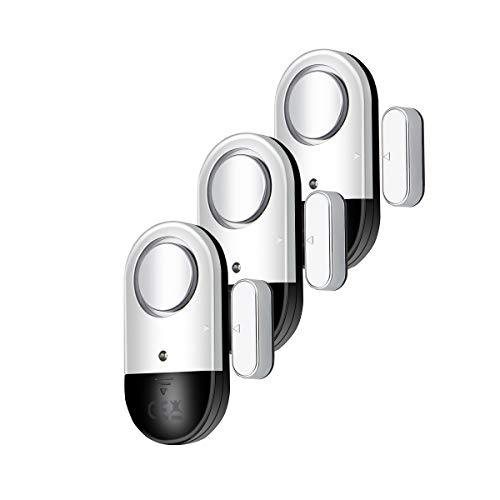
The 120 dB Door and Window Alarm Sensor 3 Pack is an excellent choice for caregivers and families seeking reliable security for Alzheimer’s patients. These wireless sensors are easy to install with adhesive, requiring no wiring, and are powered by long-lasting batteries. When a door or window opens, the loud alarm sounds instantly, audible over 750 feet, effectively alerting you and deterring intruders. Compact and discreet, they blend seamlessly into any home. The included batteries last 6-12 months and feature a low battery indicator, ensuring continuous protection. This pack provides a simple, effective way to enhance safety and maintain peace of mind.
Best For: families, caregivers, and homeowners seeking a reliable, easy-to-install security solution to protect doors, windows, and loved ones.
Pros:
- Easy to install with adhesive, no wiring required for quick setup
- Loud 120 dB alarm effectively deters intruders and alerts occupants over long distances
- Long-lasting batteries with low battery indicator ensure continuous security for 6-12 months
Cons:
- Limited operational distance of 8mm may require precise placement on certain doors or windows
- Alarm volume may be too loud for sensitive environments or nighttime use without caution
- Batteries are pre-installed, but replacement may be needed once they run out, requiring additional purchase
Upgraded Bed Sensor Alarm and Fall Prevention for Elderly
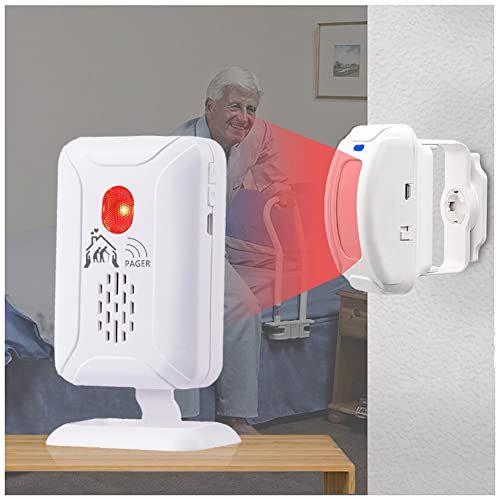
This upgraded bed sensor alarm is an excellent choice for caregivers seeking reliable fall prevention for elderly or dementia patients, especially since it minimizes false alarms with its floor-based motion sensors. The system uses wireless sensors placed under the bed or at doorways to detect when a patient’s foot touches the ground or they attempt to leave, reducing false triggers from incontinence or displacement. It transmits signals within 918 feet, ensuring coverage over large spaces without startling the patient. The setup includes a caregiver pager, adjustable volume levels, and dual power options, making it easy to monitor activity and prevent falls effectively while maintaining peace of mind.
Best For: caregivers and family members seeking a reliable, easy-to-install fall prevention system for elderly or dementia patients that minimizes false alarms.
Pros:
- Wireless sensors placed under the bed or at doorways reduce false alarms caused by displacement or incontinence.
- Transmits signals up to 918 feet, suitable for large spaces without disturbing the patient.
- Dual power options (batteries and Micro USB) offer flexible and convenient setup.
Cons:
- Requires initial testing to ensure proper sensing range and direction before installation.
- Batteries need regular replacement or charging, which may require ongoing maintenance.
- The system may be less effective in areas with significant electronic interference or obstructions.
Lunderg Wireless Bed Alarm for Elderly and Dementia Patients

Designed specifically for elderly and dementia patients, the Lunderg Wireless Bed Alarm offers early alerts that help caregivers respond before a person gets out of bed. Its patented Pre-Alert Smart Technology detects the process of standing up, reducing false alarms caused by shifting or repositioning. The pressure sensor pad is easy to clean, resistant to incontinence, and measures 10 x 33 inches. The wireless system connects seamlessly, alerting caregivers with a vibrating pager that can be customized for volume and vibration. With a lifespan of around 15 months, it provides reliable, long-term fall prevention, ensuring safety and peace of mind for both patients and caregivers.
Best For: elderly and dementia patients, as well as caregivers seeking reliable fall prevention and early alert systems.
Pros:
- Features patented Pre-Alert Smart Technology that detects the process of standing up, reducing false alarms.
- Long-lasting system with a lifespan of approximately 15 months, outperforming many competitors.
- Wireless setup with customizable vibrating pager, making it easy to install and suitable for day and night use.
Cons:
- Requires proper placement of the sensor pad under a fitted sheet to prevent false alarms.
- May be limited in range depending on the environment, affecting alert responsiveness.
- Some users might find the initial setup or calibration process challenging without detailed instructions.
Caregiver Wireless Door Alarm System for Dementia Patients and Kids

If you’re caring for a loved one with dementia or young children prone to wandering, a caregiver wireless door alarm system can provide essential peace of mind. With a detection range of nearly 260 feet, it alerts me when doors or windows are opened, helping prevent escapes or unauthorized entry. The system offers 58 customizable ringtones and five volume levels, so I can choose the alerts that work best for my situation. Built-in LED indicators ensure visual alerts for hearing-impaired users. Easy to install with no wiring needed, each receiver supports up to 20 sensors, making it scalable and adaptable for my home or office security needs.
Best For: caregivers and families seeking a reliable, customizable security solution for dementia patients and young children to prevent wandering or unauthorized access.
Pros:
- Long detection range of nearly 260 feet for comprehensive coverage
- 58 customizable ringtones and 5 adjustable volume levels for personalized alerts
- Easy plug-and-play installation without wiring, suitable for quick setup
Cons:
- Limited to a maximum of 20 sensors per receiver, which may be insufficient for very large properties
- Requires batteries or power source for the receiver (not specified), potentially needing replacements or outlets
- Visual LED indicators may not be as noticeable in very bright or dim environments
Smart Caregiver Bed Exit Alarm with Wireless Pager

The Smart Caregiver Bed Exit Alarm with Wireless Pager is an excellent choice for caregivers managing Alzheimer’s patients who are at risk of wandering or falling out of bed. It features a soft, pressure-sensitive bed pad that sends wireless alerts when pressure is removed, signaling the patient gets up. Supporting up to six sensors, it covers beds, chairs, and doorways for all-encompassing safety. The system’s advanced sensor reduces false alarms, and the included pager vibrates or sounds to notify caregivers promptly. Easy to set up with batteries and a 300-foot range, it’s reliable, discreet, and effective—helping keep patients safe while offering caregivers peace of mind.
Best For: caregivers and families managing Alzheimer’s patients or individuals at risk of wandering or falling out of bed who need reliable, wireless safety alerts.
Pros:
- Wireless alert system with a range of up to 300 feet for flexible monitoring.
- Supports multiple sensors (up to six) covering beds, chairs, and doorways for comprehensive safety.
- Reduces false alarms with advanced pressure sensors, providing dependable notifications.
Cons:
- Requires 2 AA batteries, which need periodic replacement for continuous operation.
- Noise level can reach up to 70 decibels, potentially disturbing quiet environments.
- Setup may require careful placement of sensors and pairing, which could be challenging for some users.
Caregiver Door Alarm System with Sensors and Receiver
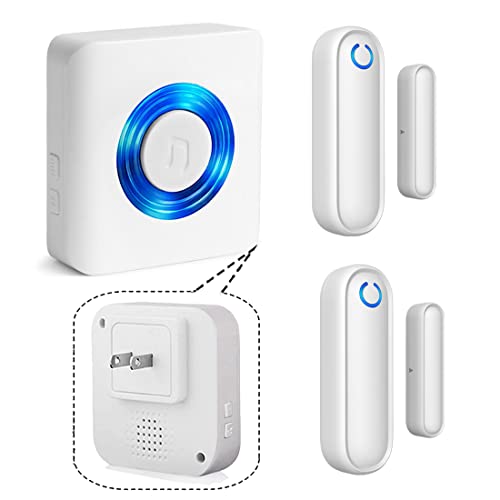
Looking for a reliable way to monitor door and window openings for an Alzheimer’s patient or loved one? The Caregiver Door Alarm System with Sensors and Receiver is a great choice. It uses wireless sensors with a range of up to 260 feet to alert you when doors or windows are opened, helping prevent wandering. The system includes two sensors and one receiver, which can connect to up to 50 sensors and 20 receivers. It offers 58 melodies and adjustable volume levels up to 110 dB, ensuring you’ll hear alerts clearly. Easy to install and customize, it provides peace of mind and enhanced safety at home.
Best For: Caregivers and family members monitoring dementia patients, children, or the elderly to prevent wandering and unauthorized access.
Pros:
- Wireless sensors with a long detection range of up to 260 feet for flexible placement.
- Customizable with 58 melodies and five volume levels up to 110 dB for clear alerts.
- Expandable system supporting multiple sensors and receivers for comprehensive coverage.
Cons:
- Requires batteries for sensors, potentially needing regular replacement.
- Limited to 50 sensors and 20 receivers, which may be insufficient for very large properties.
- Installation may be less discreet due to audible alerts and visible sensors.
EverNary Bed Alarm for Elderly Dementia Patients
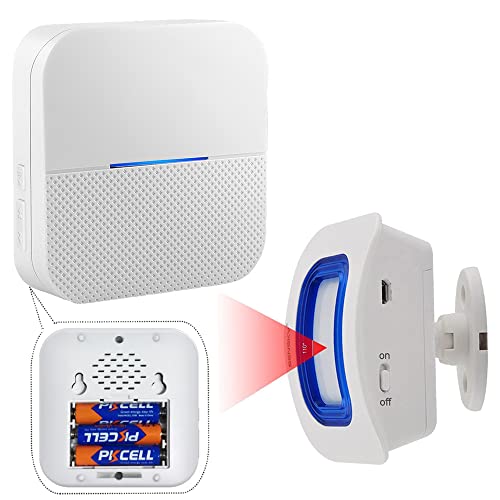
Evernary Bed Alarm is an ideal choice for caregivers seeking a reliable way to monitor elderly dementia patients and prevent falls. Its wireless, portable caregiver pager and motion sensors enable remote supervision, giving peace of mind. The motion sensor detects movement within 16.4 feet and a 110-degree angle, and can be mounted anywhere—on walls, doorways, or floors. The system supports multiple sensors and pagers, allowing extensive coverage. With adjustable volume levels and 52 ringtones, it’s customizable to each user’s needs. Lightweight and easy to operate, this alarm helps keep loved ones safe while allowing them some independence.
Best For: caregivers and family members of elderly dementia patients seeking a reliable, customizable, and portable monitoring solution to prevent falls and ensure safety.
Pros:
- Wireless and portable design allows remote supervision and easy mobility for caregivers.
- Supports pairing multiple sensors and pagers for comprehensive coverage and customization.
- Adjustable volume levels and 52 ringtones offer personalized alerts suited to user preferences.
Cons:
- Requires batteries (AAA), which need regular replacement to maintain functionality.
- Limited to a range of 260 ft in open areas, possibly restricting use in larger or complex layouts.
- Some users may find setup or pairing process challenging without detailed instructions.
Rechargeable Door & Bed Exit Alarm for Elderly Dementia Patients

If you’re caring for an elderly person with dementia or sleepwalking tendencies, the Rechargeable Door & Bed Exit Alarm offers a reliable way to monitor their movements without the hassle of frequent battery replacements. It uses motion-activated infrared sensors to accurately detect when their foot approaches the ground, sending alerts up to 918 feet away. The device is easy to install, turns on with a switch, and self-tests to guarantee proper function. With rechargeable batteries, adjustable volumes, tones, and light settings, it provides customizable alerts that help keep your loved one safe and calm, reducing the risk of falls or wandering.
Best For: caregivers of elderly, dementia, or sleepwalking patients seeking a reliable, customizable safety alert system without frequent battery replacements.
Pros:
- Accurate detection of human movement reduces false alarms compared to pressure pads
- Rechargeable batteries eliminate the need for frequent replacements and include low battery alerts
- Versatile alert options with multiple tones, volume levels, light brightness, and flashing lights for tailored monitoring
Cons:
- Requires 2 AA batteries (not included), which may need replacement over time
- Infrared sensors and wireless signals may have limited effectiveness in large or obstructed spaces
- Setup and adjustments may require some initial familiarity with device controls and app connectivity
Smart Caregiver Bed Alarm System with 10″x30″ Bed Pad
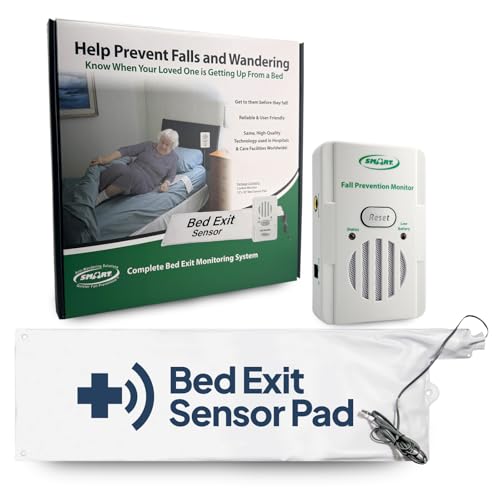
The Smart Caregiver Bed Alarm System with 10″x30″ Bed Pad is an excellent choice for caregivers seeking reliable fall prevention for loved ones with dementia or mobility challenges. Its durable vinyl sensor pad, with soft foam interior, fits discreetly under the lower fitted sheet at shoulder blades or hips, providing consistent, long-lasting protection. The alarm alerts caregivers instantly when pressure is removed, with optional wireless alerts to avoid startling the patient. Easy to install and operate, it features adjustable volume, reset button, and status lights for battery and sensor monitoring. This system offers peace of mind, ensuring safety while respecting your loved one’s comfort.
Best For: caregivers seeking a reliable, discreet fall prevention solution for loved ones with dementia or mobility challenges.
Pros:
- Durable vinyl sensor pad with soft foam interior for long-lasting comfort and protection
- Flexible alert options including in-room and wireless notifications for caregiver convenience
- Easy to install, operate, and monitor with adjustable volume, reset button, and status lights
Cons:
- Requires one 9-Volt battery (included) or AC-02 Adapter (not included), which may need regular replacement
- Wireless alert system sold separately, adding to overall cost
- The sensor pad may need proper placement for optimal effectiveness and discreetness
Lunderg Bed Alarm and Chair Alarm Set for Elderly and Dementia Patients

For caregivers seeking a reliable way to prevent falls among elderly or dementia patients, the Lunderg Bed Alarm and Chair Alarm Set offers an advanced solution. It alerts me before my loved one tries to get out of bed or a chair, enabling early intervention. The smart technology detects the standing process, reducing false alarms thanks to improved sensors. The wireless setup makes installation quick and easy, while the lightweight pager allows me to customize alerts with adjustable volume and vibration modes. With long-lasting batteries and incontinence-resistant sensor pads, this set provides peace of mind and consistent protection, helping keep my loved ones safe and calm.
Best For: caregivers and family members of elderly or dementia patients seeking reliable fall prevention and early alert systems.
Pros:
- Advanced pre-alert smart technology minimizes false alarms by detecting the standing process early.
- Easy wireless setup with adjustable volume and vibration options for personalized alerts.
- Long-lasting batteries, with sensor pads lasting approximately 15 months, reducing maintenance and replacement frequency.
Cons:
- Sensor pads need proper placement and maintenance to prevent false alarms.
- May require initial training to ensure correct installation and use.
- The alert system may not be suitable for patients with very active or unpredictable movement patterns.
Newly Upgraded Bed Alarm System for Elderly Dementia Patients

Elderly dementia patients who are prone to wandering benefit most from the newly upgraded bed alarm system, as it offers reliable and immediate alerts when they attempt to leave their beds or rooms. This wireless system includes a sensor and receiver, providing real-time monitoring with dual alert options—LED lights and loud 110dB sounds. It’s customizable with 17 tones, adjustable volume, and a silent vibration mode for nighttime use. The advanced motion sensors detect bed exits instantly, whether placed under the bed or near the door. With flexible power options and a wireless range over 500 feet, this system ensures caregivers stay informed and can respond promptly to keep their loved ones safe.
Best For: caregivers and family members of elderly dementia or Alzheimer’s patients who need reliable, real-time bed and room exit monitoring to prevent wandering and ensure safety.
Pros:
- Offers dual alert notifications with LED lights and loud 110dB sounds for effective caregiver alerts
- Customizable with 17 alarm tones, adjustable volume, and silent vibration mode for flexible use
- Wireless range over 500 feet and portable receiver clip allows for monitoring anywhere in the home
Cons:
- Requires batteries or Micro USB charging, which may need frequent replacements or charging
- Placement under the bed or near doors may require some initial adjustment for optimal detection
- Limited to one sensor and receiver in the package, potentially necessitating additional units for larger spaces
Newly Upgraded Bed Alarm System for Elderly and Dementia Patients

If you’re caring for someone with dementia or Alzheimer’s, upgrading to this new bed alarm system can make a significant difference. It features wireless fall detection and motion sensors that instantly alert you when your loved one tries to leave the bed or room. The dual alert system includes bright LED indicators and loud 110dB sounds, with customizable tones, volume, and silent vibration modes for nighttime safety. Easy to set up with a quick self-test, it operates on batteries or USB power and has a range over 500 feet. This portable, reliable system helps you monitor your loved one’s movements in real time, providing peace of mind and enhancing their safety.
Best For: families and caregivers of elderly individuals with dementia or Alzheimer’s seeking a reliable, easy-to-use bed alarm system for safety and real-time monitoring.
Pros:
- Wireless fall detection and instant alerts improve safety and caregiver response.
- Customizable alert tones, adjustable volume, and silent vibration modes accommodate different needs and nighttime use.
- Long-range wireless connectivity over 500 feet allows monitoring from anywhere within or outside the home.
Cons:
- Requires batteries or USB power, which may need regular replacement or charging.
- Setup, while straightforward, may still require initial familiarization with the device features.
- Limited to use with beds and doorways, so additional sensors may be needed for full-room coverage in some environments.
CallToU Bed Alarm for Elderly Adults with Motion Sensor and Fall Prevention System

The CallToU Bed Alarm is an excellent choice for caregivers seeking a reliable fall prevention system that detects movement within a wide range. I appreciate its wireless motion sensor, which covers up to 33 feet with an adjustable 360° swivel, reducing false alarms from sunlight or temperature changes. It’s easy to place under beds or at doorways, making setup simple. The accompanying pager keeps me informed with adjustable volume and vibration options, even from across the house. With a wireless range of up to 500 feet, I can monitor seniors effectively, helping prevent falls and ensuring their safety and peace of mind.
Best For: caregivers and families seeking a reliable, easy-to-install fall prevention system for seniors that offers extensive wireless range and customizable alerts.
Pros:
- Wireless motion sensor covers a wide detection range of up to 33 feet with adjustable swivel for flexible placement.
- Portable pager with adjustable volume and vibration ensures caregivers stay informed from anywhere in the home.
- Easy setup with simple placement under beds or at doorways, reducing false alarms and enhancing safety.
Cons:
- Requires battery replacements for sensors and pager over time, which may need regular monitoring.
- May have limited effectiveness in very bright or highly variable temperature environments despite swivel adjustments.
- Wireless range, while extensive, could be affected by thick walls or interference in larger or complex homes.
Smart Caregiver Wireless Motion Sensor Alarm System with Pager

For caregivers seeking a reliable way to monitor Alzheimer’s patients and prevent wandering or falls, the Smart Caregiver Wireless Motion Sensor Alarm System with Pager offers an excellent solution. It monitors bed or door movement and alerts you remotely, giving you peace of mind. With a range of up to 300 feet, you can stay connected without being right beside your loved one. The system includes a pager (batteries sold separately) and a motion sensor, which are easy to mount and customize. This wireless setup enables early detection of movement, helping prevent falls and wandering incidents while allowing caregivers to maintain their independence.
Best For: caregivers seeking a reliable, easy-to-use system to monitor loved ones at risk of wandering or falling in medical or home care settings.
Pros:
- Wireless design allows for flexible placement and easy setup
- Up to 300-foot range ensures reliable remote alerts
- Customizable alert settings help tailor the system to specific needs
Cons:
- Batteries for pager and sensor sold separately, adding to initial cost
- Requires mounting of sensor and pager, which may need additional tools or effort
- Limited to movement detection, not continuous monitoring of other vital signs
Factors to Consider When Choosing Wander Alarms for Alzheimer’s Patients
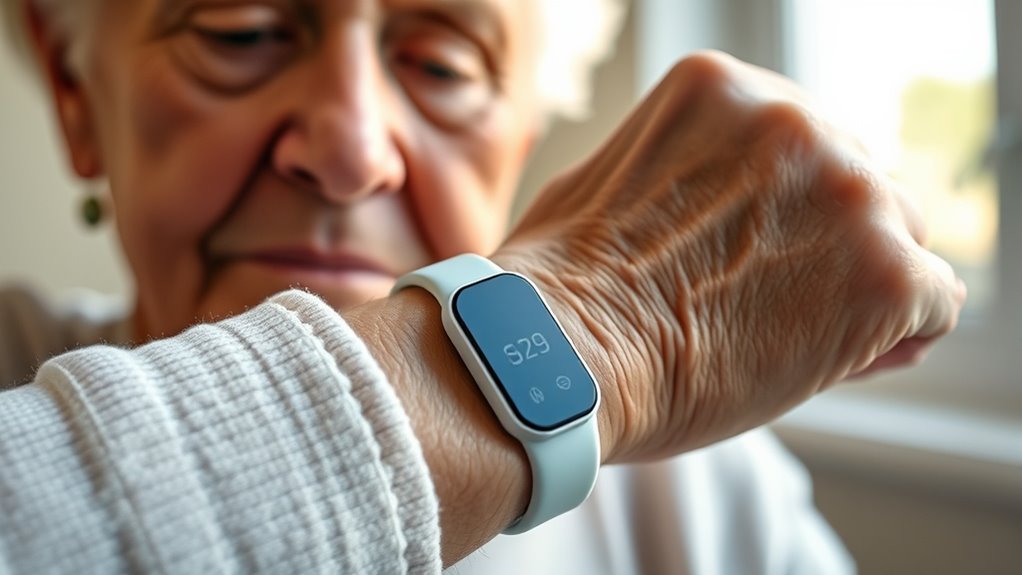
When selecting a wander alarm, I consider factors like detection range and coverage to guarantee it alerts me promptly. I also check the alarm’s sound and volume so it’s noticeable without being overwhelming, and I look for easy installation to avoid hassle. Additionally, I think about visual alerts and system expandability to customize the setup as needs change.
Detection Range and Coverage
Choosing a wander alarm with the right detection range is crucial to guarantee your loved one stays safe. I recommend selecting a system with at least a 260-foot detection radius to cover the entire monitored area effectively. It’s essential to verify that the alarm provides dependable coverage, especially in multi-room or large open spaces, so no area goes unmonitored. Wireless sensors are a great option because they can be strategically placed to maximize coverage and minimize blind spots. I also suggest checking if the technology accurately detects movement or door/window openings without triggering false alarms, as this can cause unnecessary stress. Finally, ensure the coverage area aligns with your home’s layout, giving you thorough monitoring of your loved one’s movements.
Alarm Sound and Volume
Selecting the right alarm sound and volume is vital to guarantee prompt caregiver response without causing unnecessary distress. The alarm should be loud enough to be heard throughout the house, typically between 80 to 120 decibels, ensuring it grabs attention quickly. Adjustable volume controls are essential, allowing me to tailor the sound level for hearing impairments or specific environments. The tone or melody should be distinctive and easily recognizable, so I can identify it immediately and respond swiftly. I also look for alarms with silent or vibration modes for discreet alerts when necessary. Most importantly, the sound level must meet safety standards to prevent hearing damage or excessive noise, balancing effectiveness with safety and comfort.
Ease of Installation
Ease of installation plays a significant role in guaranteeing that wander alarms are set up quickly and correctly. I recommend choosing systems with simple, plug-and-play setups to save time and avoid frustration. Look for models with adhesive or tool-free mounting options, which make placement on doors, windows, or walls straightforward without needing complex wiring or tools. Clear, step-by-step instructions or visual guides are essential to guarantee proper installation and ideal functioning. Wireless models are particularly convenient, as they eliminate wiring concerns and adapt easily to different home layouts. Additionally, lightweight and compact alarm components make handling and placement effortless, allowing you to position sensors in various locations without difficulty. Prioritizing easy installation ensures the system is functional quickly and reliably.
Visual Alert Features
Visual alert features are indispensable for ensuring that caregivers can quickly notice when a door or window has been opened, especially for individuals with hearing impairments. LED indicators provide clear, immediate signals that are easy to see at a glance. Bright, flashing lights are especially useful in low-light conditions, ensuring alerts aren’t missed. Customizable visual signals, like different colors or flashing patterns, help differentiate between sensors or zones, making it easier to identify specific areas. Proper placement of visual indicators is vital—they should be positioned where caregivers are most likely to see them, such as near beds or main caregiver stations. Combining visual alerts with auditory signals further enhances awareness, reducing the risk of missing critical alerts and improving overall safety.
System Expandability
When choosing a wander alarm system for Alzheimer’s patients, it’s crucial to take into account how easily it can expand to meet your changing needs. I look for systems that allow me to add extra sensors effortlessly, especially for multiple entry points like doors and windows. It’s also important that the system supports pairing with several receivers, so I can monitor different areas simultaneously. Checking the maximum number of sensors the system can handle helps me plan for future needs without replacing everything. Additionally, I ensure the expandability includes compatibility with various sensor types — door, window, or motion sensors — to create a comprehensive safety network. Scalable solutions give me peace of mind, knowing the system can grow with my loved one’s needs without costly upgrades or reconfigurations.
Battery Life and Power
Choosing a wander alarm system isn’t just about expandability; battery life and power sources play an essential role in reliable protection. A long-lasting battery ensures continuous safety without frequent replacements, reducing gaps in security. Some alarms use rechargeable batteries, which can lower ongoing costs and maintenance, making them more convenient. The battery type—whether alkaline, lithium, or rechargeable—directly influences how long the device can operate before needing a recharge or replacement. It’s vital to have low battery indicators that alert us early, preventing unexpected failures. Additionally, power sources should be dependable even during outages or emergencies, guaranteeing the alarm remains functional when it matters most. Prioritizing these factors helps maintain constant protection and peace of mind.
Safety and Discreteness
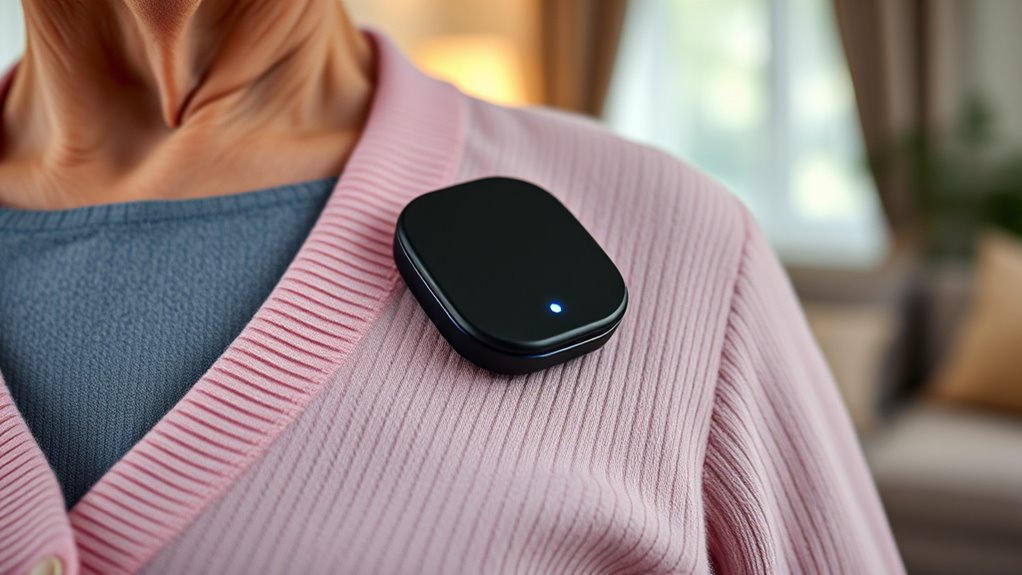
Since Alzheimer’s patients can become easily distressed by noticeable alarms, ensuring that wander alarms are discreet is essential. A discreet alarm minimizes the risk of causing unnecessary anxiety or confusion. Look for alarms that blend seamlessly into clothing or accessories, such as small wristbands, pendants, or clip-on devices. These are less likely to draw attention and help keep the patient calm. Discreet alarms also reduce the chance of patients tampering with or disabling them out of curiosity. Safety isn’t just about alerting caregivers; it’s about doing so in a way that reassures the patient rather than alarms or alarms that cause distress. Choosing a device that combines safety with subtlety helps create a more comfortable and secure environment for the patient.
Frequently Asked Questions
How Long Do Battery Charges Typically Last on Wander Alarm Devices?
Battery life on wander alarm devices usually lasts between 24 to 48 hours on a full charge. I recommend checking the specific product details because some models have longer-lasting batteries, especially those with power-saving features. It’s a good idea to recharge or replace batteries regularly to guarantee continuous safety. I always keep spare batteries handy to avoid any interruptions in monitoring your loved one.
Are These Alarms Suitable for Outdoor Use or Only Indoors?
You might think these alarms are just for indoors, but many are actually designed to withstand outdoor use too. I’ve seen models with rugged, water-resistant features that keep working even in unpredictable weather. However, not all alarms are built for outdoor environments, so it’s essential to check each product’s specifications. If you want peace of mind outside, choose alarms explicitly marketed for outdoor safety and durability.
Can Alarms Be Customized for Individual Patient Needs?
Yes, alarms can definitely be tailored for individual patient needs. I find that many systems allow you to adjust sensitivity levels, set specific zones, or even program personalized alerts. This flexibility helps guarantee the alarm responds appropriately to each person’s habits and environment, providing peace of mind while respecting their unique needs. Customization makes these devices more effective and less intrusive, ultimately keeping your loved ones safer and calmer.
What Is the Typical Response Time After a Sensor Trigger?
Typically, response times after a sensor trigger range from immediate to a few seconds, ensuring quick intervention. Studies show that rapid responses markedly reduce wandering-related risks, with many alarms alerting caregivers within 10 seconds. I find this impressive because swift alerts help prevent dangerous situations and keep loved ones safe. When alarms are optimized, caregivers can react promptly, offering reassurance to both patients and their families.
Do These Systems Integrate With Existing Home Security Setups?
Yes, many wander alarm systems can integrate with existing home security setups. I’ve found that this compatibility allows for seamless monitoring and control, making it easier to manage safety features alongside your current security devices. However, it’s essential to verify each system’s specifications and compatibility before purchasing. I recommend consulting with a professional to ensure smooth integration and to tailor the setup to your specific security needs.
Conclusion
Choosing the right wander alarm feels like planting a gentle lighthouse in a foggy night—guiding your loved one safely back home. These alarms are more than devices; they’re a comforting embrace, offering peace of mind amid uncertainty. When you find that perfect fit, it’s like opening a calm harbor for both of you, where safety and reassurance shine brightly like stars guiding the way through life’s unpredictable journey.