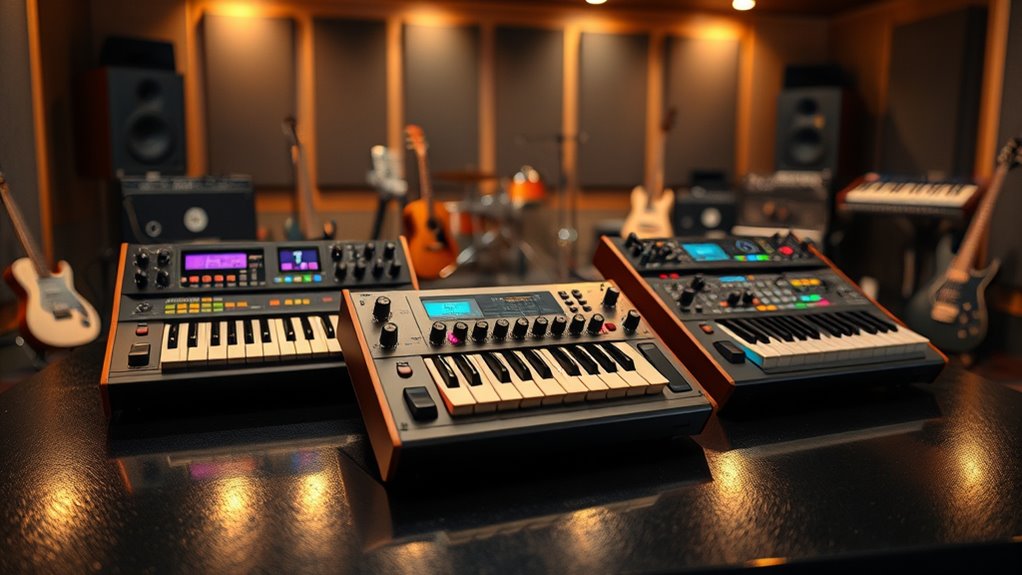
Choosing the right synthesizer can dramatically impact your music creation process. The best models balance sound quality, versatility, and ease of use, but tradeoffs often include price, complexity, or portability. The Yamaha MODX M8 stands out as a comprehensive, professional-grade option, while the Stylophone GENX-2 offers a portable, analog experience ideal for on-the-go musicians. Meanwhile, the Arturia MicroFreak strikes a compelling balance between digital flexibility and tactile control. Continue reading for a detailed breakdown of these and other top picks, helping you find the perfect fit for your needs.
Complete the kit


Key Takeaways
- Top synthesizers combine versatile sound engines with intuitive interfaces, making complex synthesis accessible.
- Portability is a key consideration for musicians who perform live or travel frequently, favoring compact designs like Stylophone GENX-2.
- Price range varies widely; premium models like Moog Subsequent 37 offer advanced features, but more affordable options still deliver impressive sound.
- Hybrid models, such as Arturia MicroFreak, offer a blend of digital and analog features, appealing to diverse sound design needs.
- Build quality and key action impact playability; professional-grade synths tend to have more durable construction and better keyboard feel.




More Details on Our Top Picks
Stylophone The Original Pocket Electronic Synthesizer
The Stylophone The Original stands out for its iconic, instantly recognizable sound that gained fame through artists like David Bowie. Its compact size makes it ideal for portability and casual use, especially compared to larger, more complex synths like the Yamaha MODX M8. While its limited to 3 octaves and battery-powered operation restrict its versatility, it offers a straightforward, tactile experience that appeals to beginners and nostalgic musicians. It’s less suited for studio use or advanced performances but provides a unique, vintage flavor that cannot be replicated digitally.
Pros:- Iconic retro sound loved by famous musicians
- Extremely portable and fits in your pocket
- Simple to play with a touch-sensitive metal surface
- Includes headphone socket and line input for connectivity
Cons:- Limited to just 3 octaves, restricting complex melodies
- Battery-only operation can be inconvenient for extended use
- Basic features may not satisfy studio or professional needs
Best for: Beginners, musicians seeking a nostalgic, portable synth, and educators introducing basic synthesis concepts
Not ideal for: Professional producers or advanced performers needing extensive polyphony or digital effects
- Octaves:3
- Power:3 x AA batteries
- Connectivity:3.5mm stereo input
- Size:Less than 12cm wide
- Sound:Analog, retro
Our verdict“This synth is perfect for those wanting a nostalgic, portable instrument with straightforward playability, but not for demanding studio work.”
Yamaha 88-Key Music Synthesizer MODX M8
The Yamaha MODX M8 offers an authentic playing experience with its graded hammer action, making it ideal for pianists transitioning into synthesis and performance. Compared to the more straightforward Stylophone, it provides a broad palette of sounds thanks to its versatile sound engines, such as FM and realistic instrument modeling. Its color touchscreen and physical controls streamline workflow, though the array of features may overwhelm beginners. While it excels in expressive performance and studio integration, its relatively limited built-in effects and connectivity options mean it’s best suited for those with some synthesis experience.
Pros:- Realistic graded-hammer key action for authentic piano feel
- Multiple sound engines for a wide range of tones
- Intuitive controls with a color touch screen and physical faders
- Lightweight and portable for a full-sized keyboard
Cons:- Can be complex for users new to synthesis or MIDI setup
- Limited information on built-in effects and connectivity options
- Higher price point may be a barrier for casual users
Best for: Intermediate to advanced musicians requiring a full-sized keyboard with versatile sound design capabilities
Not ideal for: Beginners or those seeking a compact, simple synth for casual use
- Number of Keys:88
- Action:Graded Hammer
- Sound Engines:3 (analog synths, FM synths, realistic instruments)
- Display:Color touch screen
- Performance Controls:8 faders, Super Knob
- Weight:Lightweight design
Our verdict“This keyboard makes sense for performers and producers needing expressive keys and versatile sounds, but less so for absolute beginners or casual players.”
Stylophone GENX-2 Portable Analogue Synthesizer with Built-in Speaker, LFO, Filter, Delay, and CV/Gate Output
The Stylophone GENX-2 elevates portability with its built-in speaker and extensive sound-shaping features, making it ideal for live gigs and experimental studio work. Unlike the simpler original Stylophone, it offers complex modulation options like LFOs, filters, and delay, which unlock a broader palette of sounds. Its expression strip and stylus keyboard provide expressive control, but the array of features could be daunting for beginners without a solid understanding of synthesis. Its pure analogue architecture appeals to sound designers seeking hands-on, gritty textures, though digital alternatives might offer more flexibility for some users.
Pros:- Portable with a built-in speaker for on-the-go use
- Rich sound-shaping options including filter, delay, and modulation
- Flexible connectivity for external gear and DAW integration
- Expressive controls for dynamic performance
Cons:- Features may have a learning curve for beginners
- Limited to analogue synthesis, lacking digital versatility
- Battery operation can limit long sessions without recharge
Best for: Electronic musicians, live performers, and sound designers who want a portable, analogue synth with advanced modulation options
Not ideal for: Beginners or users seeking a simple, plug-and-play synth, as its complexity requires some learning
- Power:Battery operated
- Built-in speaker:Yes
- Outputs:Headphone, audio, CV, Gate
- LFO:Square and triangle waves
- Filter:Resonant low-pass
- Delay:Analogue delay
- Keyboard:Stylus-powered with expression strip
Our verdict“This synth is ideal for creative performers and sound designers who want hands-on control and portability, but not for those seeking simplicity or digital flexibility.”
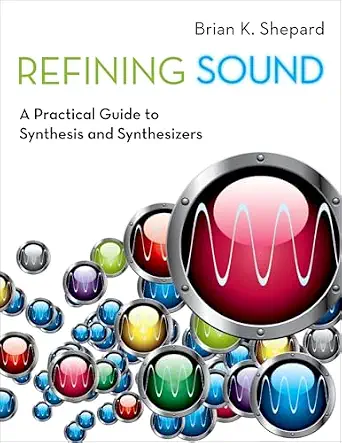
Refining Sound: A Practical Guide to Synthesis and Synthesizers
This book provides practical insights into sound synthesis, making it a valuable resource for musicians and sound designers eager to deepen their understanding beyond basic presets. Compared to the beginner-friendly How Synthesizers Work, this guide dives into more complex techniques and real-world applications, helping users craft unique sounds. While it doesn’t include technical specs or user reviews, its focus on practical techniques makes it an essential read for those committed to mastering synthesis, though it may be less useful for casual learners or those seeking quick reference.
Pros:- Offers practical, hands-on guidance for sound creation
- Helps develop a deeper understanding of synthesis techniques
- Suitable for musicians and sound designers looking to expand their skillset
Cons:- Lacks detailed technical specifications of hardware
- No user reviews or ratings to gauge effectiveness
- Requires some prior knowledge of basic synthesis concepts
Best for: Intermediate to advanced musicians and sound designers seeking practical synthesis knowledge
Not ideal for: Beginners or casual hobbyists who prefer simple, introductory material
Our verdict“This guide is well-suited for those wanting to move beyond basics into advanced sound design, but less helpful for absolute beginners.”
How Synthesizers Work: A Simple Guide
How Synthesizers Work offers straightforward explanations that demystify complex concepts, making it a perfect starting point for newcomers. Unlike the detailed Refining Sound guide, this book emphasizes clarity and simplicity, making technical ideas accessible without overwhelming the reader. It lacks detailed diagrams or technical specifications but provides enough foundational knowledge to spark curiosity and guide initial exploration. This makes it less suitable for advanced users or those seeking in-depth technical analysis, but an excellent primer for beginners.
Pros:- Clear and simple explanations of synthesis concepts
- Great for beginners wanting an accessible introduction
- Encourages curiosity and initial experimentation
Cons:- Lacks detailed technical information or diagrams
- No visuals or in-depth analysis for advanced users
- Limited depth for those seeking comprehensive knowledge
Best for: Beginners interested in understanding the basics of how synthesizers operate
Not ideal for: Experienced users seeking detailed technical breakdowns or advanced synthesis techniques
Our verdict“This book is ideal for newcomers eager to grasp fundamental concepts before diving into more complex synthesis topics.”
Stylophone Theremin – Portable Touch-Sensitive Synthesizer with Retro Analog Sound, Built-In Speaker, Delay & Vibrato Effects
The Stylophone Theremin stands out for its compact, battery-powered design that makes it ideal for spontaneous performances or experimentation anywhere. Its touch slider offers precise pitch control, and the built-in effects add creative depth, making it a fun alternative to larger, more complex synths like the MOOG Messenger. However, its exclusive analog sound and limited connectivity restrict versatility for those seeking digital integration or a broader sound palette. This pick makes the most sense for players looking for a portable, vintage-inspired instrument that emphasizes tactile control and immediate sound manipulation. The main tradeoff is its simplicity—lacking MIDI or extensive connectivity might frustrate advanced users wanting seamless studio integration.Pros:- Compact, lightweight, and battery-powered for mobility
- Includes a built-in speaker and multiple audio outputs for versatile use
- Precise control with touch slider and built-in effects for dynamic sound shaping
Cons:- Limited to analog sound, which may not suit those seeking digital textures
- No MIDI or digital connectivity options, restricting studio integration
- Requires familiarity with theremins or synths to maximize its features
Best for: Musicians and performers who need a portable, tactile synth for live use or spontaneous sound exploration
Not ideal for: Studio producers or digital-centric artists who require extensive connectivity and digital sound options
- Type:Theremin synthesizer
- Power:Battery-powered
- Features:Built-in speaker, headphone output, delay & vibrato effects, touch slider control
- Connectivity:Headphone and audio outputs
Our verdict“This synthesizer is perfect for portable, tactile sound experiments, especially for vintage sound enthusiasts who value simplicity.”
Arturia MicroFreak Synthesizer Keyboard – 25-Key Hybrid Synth with PCB Keyboard, Wavetable & Digital Oscillators, Analog Filters
The Arturia MicroFreak offers a unique blend of digital and analog synthesis, making it a versatile choice for sound designers who want a compact keyboard with extensive oscillator modes like wavetable and digital engines. Its PCB capacitive touch keyboard with polyphonic aftertouch provides expressive control that traditional keys often can’t match, setting it apart from models like the MOOG Subsequent 37, which emphasizes hands-on analog control over digital versatility. Still, the lack of traditional weighted keys may alienate players accustomed to piano-style action, and the depth of its modulation and sequencing features can create a steep learning curve. This makes it ideal for experimentalists and producers seeking a compact, feature-rich synth with modern connectivity and extensive sound-shaping tools.Pros:- Wide range of oscillator modes, including wavetable and digital engines
- Capacitive touch PCB keyboard with polyphonic aftertouch for expressive playing
- Extensive connectivity options like CV, USB, and MIDI for studio integration
- Innovative features such as automation recording and randomization
Cons:- No traditional weighted keys, which may feel less familiar to pianists
- Learning curve due to complex modulation and sequencing features
- Small footprint might limit some performance techniques
Best for: Electronic music producers and sound designers who value compactness and deep modulation capabilities
Not ideal for: Keyboard players seeking a traditional feel or beginners who prefer straightforward interfaces
- Number of Keys:25
- Keyboard Type:Capacitive touch PCB
- Oscillator Modes:17
- Analog Filter:Yes
- Polyphonic Aftertouch:Yes
- Connectivity:CV outputs, USB, MIDI
- Automation Recording:Yes
- Sequencer:Spice and Dice
Our verdict“This hybrid synth is best for experimental musicians and producers seeking deep modulation options in a compact form.”
MOOG Subsequent 37 Paraphonic Analog Synthesizer and MIDI Keyboard
The MOOG Subsequent 37 excels with its extensive control panel, offering a broad palette of sounds via multiple oscillators, filters, and modulation options, making it ideal for dedicated sound designers. Its 37 semi-weighted keys with velocity and aftertouch bridge the gap between studio and performance, providing expressive playing in a semi-paraphonic context. Compared to the simpler Messenger, the Subsequent 37’s rich interface and preset management support complex sound shaping, though its complex layout can be daunting for beginners. This synth makes the most sense for experienced users who want serious hands-on control and deep sound design in a portable package, though its interface may require some patience to master.Pros:- Rich sound design with multiple oscillators and modulation options
- Large control panel with 40 knobs and 74 switches for detailed shaping
- Includes a software editor for preset management and editing
- Paraphonic play with velocity and aftertouch
Cons:- Complex interface may be overwhelming for newcomers
- Limited to 2-note polyphony, restricting full polyphonic performance
- Higher price point may be prohibitive for casual users
Best for: Experienced electronic musicians and studio producers who want deep, hands-on control over analog sound design
Not ideal for: Beginners or performers seeking a straightforward or polyphonic instrument for live use
- Number of Keys:37 semi-weighted
- Polyphony:2-note paraphonic
- Presets:256
- Controls:40 knobs and 74 switches
- Oscillators:2 variable waveshape, 1 sub oscillator
- Additional Features:Headphone amp, software editor, MIDI, CV/GATE
Our verdict“This synth is ideal for seasoned sound designers and performers who want a tactile, versatile analog instrument with extensive editing options.”
MOOG Messenger Monophonic Analog Synthesizer with 32 Keys, 64-Step Sequencer, 256 Presets, and Resonance Bass Compensation
The MOOG Messenger offers a portable, full-size key experience combined with classic MOOG analog tones and modern sequencing features. Its 64-step sequencer and extensive preset library facilitate creative live and studio use, making it a practical choice for performers who want a straightforward monophonic synth with advanced features. Its resonance bass compensation helps craft powerful basslines, setting it apart from simpler monosynths. The main drawback is its monophonic limitation, which restricts polyphonic textures, and the complex feature set might challenge beginners. This synth targets players who prioritize classic sound and sequencing depth over polyphony or a simplified interface.Pros:- Portable design with full-size keys suitable for performance
- Rich analog sound with versatile filter options and modulation
- Built-in 64-step sequencer and arpeggiator for creative sequences
- Extensive connectivity including MIDI, CV, and external audio in
Cons:- Limited to monophonic play, restricting harmonic complexity
- Feature set can be complex for beginners to navigate
- Price may be high relative to simple monosynths
Best for: Live performers and studio musicians seeking a portable, feature-rich monophonic synth with sequencing capabilities
Not ideal for: Keyboardists needing polyphony or beginners looking for an easy-to-learn instrument
- Number of Keys:32
- Sequencer Steps:64
- Presets:256
- Oscillators:Two wavefolding VCOs with sync and FM, sub-oscillator
- Filters:Next-Gen Ladder Filter with Resonance Bass Compensation
- Connectivity:6 CV patch points, external audio in, MIDI over USB-C
Our verdict“This synthesizer is perfect for performers and producers who want classic monophonic sounds combined with advanced sequencing in a portable package.”

How We Picked
The synthesizers included in this roundup were selected based on a combination of performance, usability, build quality, and value. We prioritized models that cater to different skill levels and use cases, from portable options to professional studio gear. Our evaluation considered user interface design, sound versatility, connectivity options, and overall durability. The ranking reflects a balance between affordability and advanced features, aiming to guide both newcomers and seasoned musicians toward the best choice for their specific needs.Factors to Consider When Choosing Synthesizers
When selecting a synthesizer, it’s important to consider how you plan to use it, your experience level, and your budget. The right synth should complement your workflow, whether you’re producing in a studio, performing live, or experimenting at home. Beyond features, think about how intuitive the interface is and whether the synth’s sound palette matches your style. Understanding these factors helps avoid common pitfalls, such as overpaying for unnecessary features or choosing a model too complex for your skill level.Sound Engine and Versatility
Look for a synth with a sound engine that matches your musical style. Some models excel at classic analog sounds, while others offer extensive digital wavetables and modulation options. A versatile engine allows for a wider range of sounds, but it can also introduce complexity. Decide whether you need a dedicated instrument for specific genres or a flexible synth that can cover multiple styles. Keep in mind that more features often mean a steeper learning curve, so balance your needs accordingly.
Ease of Use and Interface
Intuitive controls and a clear interface make a significant difference, especially for beginners. Touchscreens, dedicated knobs, and well-organized menus can simplify sound design and programming. However, a more complex interface might offer deeper customization for advanced users. Consider your comfort with technology and whether you prefer hands-on controls or a more menu-driven approach. Testing the synth’s layout before purchase can save frustration later.
Portability and Size
If you plan to perform live or travel frequently, a compact, lightweight model is essential. Portable synths like the Stylophone GENX-2 provide analog sounds in a small package, but often at the expense of fewer features or less robust build quality. Larger, full-sized keyboards like the Yamaha MODX M8 offer more keys and controls but are less convenient to transport. Assess your mobility needs carefully to avoid choosing a synth that’s either too bulky or too limited for your setup.
Connectivity and Integration
Check for comprehensive connectivity options such as MIDI, CV/Gate outputs, USB, and audio inputs/outputs. These features ensure seamless integration with other gear, whether you’re connecting to DAWs, modular synths, or effects. If you perform live, reliable MIDI and audio outputs are essential. For studio use, USB and CV outputs expand creative possibilities. Neglecting connectivity can limit your workflow or require additional equipment, adding to costs and complexity.
Price and Future-Proofing
Balance your budget with the potential for future expansion. While premium models like Moog offer extensive features, they come at a high cost. Conversely, budget-friendly options may lack advanced modulation or connectivity but can still deliver satisfying sounds. Consider whether the synth’s features align with your long-term goals; investing in a slightly more capable model now can save money later if you outgrow simpler options. Always check for firmware updates and manufacturer support, which extend the lifespan of your instrument.
Frequently Asked Questions
Can I use a synthesizer for live performances?
Absolutely. Many synthesizers are designed with live performance in mind, offering features like robust build quality, real-time controls, and reliable connectivity. Compact models such as Stylophone GENX-2 are portable and easy to set up, making them ideal for on-the-go gigs. Larger, full-featured synthesizers like the Yamaha MODX M8 provide extensive sound options and full-sized keys, suitable for stage use. The key is to choose a synth that matches your performance style and has dependable hardware.
Is a hybrid synthesizer better than a fully digital one?
Hybrid synthesizers combine analog and digital components to offer the best of both worlds: warm, organic sounds from analog circuits and extensive modulation options from digital engines. They tend to be more versatile and expressive, making them appealing for sound designers and performers alike. However, hybrids can be more expensive and complex to operate. If simplicity and affordability are priorities, a fully digital synth might be more suitable. Your choice depends largely on your sound preferences and workflow needs.
How important are keys and keyboard action in choosing a synth?
The feel of the keys significantly impacts your playing experience. Fully weighted, piano-style keys benefit pianists or those seeking expressive control, while synth-action keys are lighter and more responsive for fast playing or portability. Some models come with velocity-sensitive keys or aftertouch, adding expressive capabilities. If you perform live or practice daily, investing in a quality keyboard action can improve your technique and enjoyment. For purely studio work, less expensive keybeds may suffice, but comfort remains important.
Should I prioritize more features or better sound quality?
This depends on your priorities. More features like modulation options, effects, and connectivity can expand your creative possibilities but might complicate the interface. Conversely, a synth with high-quality sound engines and straightforward controls can deliver professional results with less hassle. For beginners, simplicity and sound quality are often more beneficial, whereas experienced users may prefer models that offer extensive modulation and customization. Always balance your desire for features with ease of use and your specific musical goals.
Is it worth investing in a premium synthesizer?
Premium synthesizers typically offer superior build quality, richer sound engines, and advanced features that can handle professional-level tasks. They are a good investment if you require reliable gear for frequent live performances or professional studio work. However, for hobbyists or newcomers, more affordable models often provide ample capabilities to learn and experiment without breaking the bank. Consider your current needs and future aspirations before investing heavily; sometimes, a mid-range synth can serve you well until your skills or requirements evolve.
Conclusion
For those starting out or seeking a versatile, affordable option, the Arturia MicroFreak provides excellent value and creative freedom. If you need a reliable, full-featured synthesizer for professional studio work, the Yamaha MODX M8 stands out as the best overall choice. Musicians who prioritize premium sound and build quality should consider the MOOG Subsequent 37, especially for live performance or studio use. Beginners and hobbyists will benefit from models with simple interfaces, while experienced sound designers may opt for hybrid or modular-compatible options. Ultimately, your decision should align with your specific musical goals and budget.