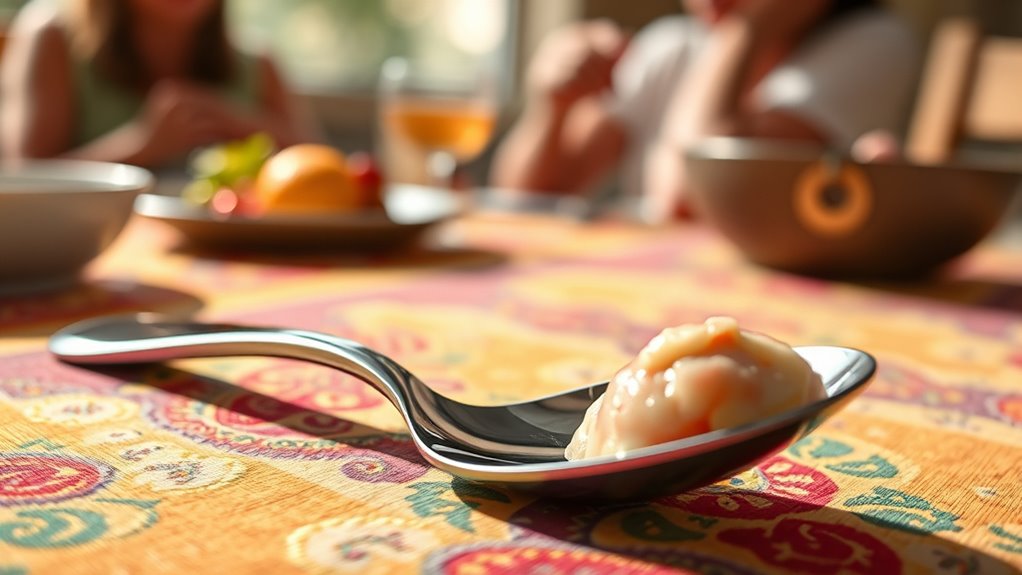

If you’re comparing self-stabilizing spoons for Parkinson’s, the key choice is whether you want a motor to counter tremors or a simpler utensil that adds weight and grip support. I rank the GYENNO Parkinson’s Spoon (B0DX252Y7H) first for its active stabilization and app-based fit check, while the closely related GYENNO model B0DNJ35DN1 offers the same core approach. The 42° weighted set is the straightforward alternative for people who prefer conventional silverware and do not need electronic compensation. Suitability can vary with tremor pattern, hand comfort, and willingness to charge and manage an app, so I’d compare those tradeoffs before choosing.

Turn quiet afternoons into listening time
- Thousands of audiobooks, podcasts and originals
- Listen on your phone, tablet or Echo — also offline
- Cancel anytime
Complete the kit


Key Takeaways
- The GYENNO B0DX252Y7H ranks first because it combines active tremor compensation with an app-based usability check; it still requires charging and may not suit every tremor pattern.
- The GYENNO B0DNJ35DN1 has the same basic active-stabilization and app features, so compare the exact listing contents and support details before treating it as a distinct upgrade.
- The 42° adaptive set relies on utensil weight, an angled design, and textured handles rather than a motor, making it simpler but less targeted at tremor cancellation.
- The weighted set is specified as right-handed and may feel too large for small hands, while either electronic spoon calls for comfort with charging and an app.
- If possible, check fit and function in a meal-like setting before relying on any option, and involve an occupational therapist when grip, posture, or swallowing needs affect utensil choice.
| GYENNO Parkinson’s Spoon for Tremor Relief, Self-Feeding Adaptive Utensil with Active Stabilization |  | Best Overall — active stabilization with an app-based fit check | ASIN: B0DX252Y7H | Technology: Active tremor stabilization with intelligent chip and digital motor | App: GYENNO SPOON app for Google Play and App Store | VIEW ON AMAZON | See Our Full Breakdown |
| GYENNO Parkinson Spoon with Active Stabilizing Technology for Essential Tremor and Parkinson’s Disease |  | Best Alternative Electronic Pick — active stabilization without the listed fit-check detail | ASIN: B0DNJ35DN1 | Product type: Adaptive spoon for Parkinson’s disease and essential tremor | Stabilization: Smart chip and high-precision digital motor | VIEW ON AMAZON | See Our Full Breakdown |
| 4-Piece Adaptive Utensils Set – 42° Angled Parkinson’s Utensils, 2.5 oz Weighted Silverware for Hand Tremors and Parkinson’s Patients (Grey: Right-Handed) |  | Best Non-Electronic Option — weighted, angled utensils for a simpler routine | ASIN: B0D5PWZW6K | Pieces: 4 | Weight: 2.5 oz per utensil | VIEW ON AMAZON | See Our Full Breakdown |
| self stabilizing spoons for parkinsons patient | ASIN | App | Data feature | Updates |
|---|---|---|---|---|
| GYENNO Parkinson’s Spoon for T | B0DX252Y7H | GYENNO SPOON app for Google Play and App Store | Tremor visualization as graphs when charging | OTA firmware and algorithm updates |
| GYENNO Parkinson Spoon with Ac | B0DNJ35DN1 | GYENNO SPOON app for Google Play and App Store | Tremor data visualization | OTA firmware and algorithm updates |
| 4-Piece Adaptive Utensils Set | B0D5PWZW6K | — | — | — |
More Details on Our Top Picks
GYENNO Parkinson’s Spoon for Tremor Relief, Self-Feeding Adaptive Utensil with Active Stabilization
This is my first pick for someone specifically seeking a self-stabilizing spoon. Its described chip and digital motor detect hand tremors and compensate at the spoon, a more direct approach than the 42° set’s added weight and textured grip. The product information also mentions a free app-based usability test, which gives a prospective user a way to check fit before depending on it. That matters because an electronic aid can feel unfamiliar, and the listed technology is intended for a particular range of tremors.
The tradeoff is a more involved routine: users need to charge the spoon and use the companion app to access its fuller feature set. Tremor graphs and over-the-air updates may appeal to people who value device data and ongoing software changes, but neither replaces clinical advice or guarantees a better meal. Compared with the B0DNJ35DN1 listing, the stabilization and app features look much the same; the clearest distinction in the supplied details is the explicit usability test. I’d choose this version when that trial step is useful, and skip it if charging or phone setup would add frustration.
Pros:- Active stabilization is designed to counter hand tremors at the spoon head.
- App-based usability test can help check fit before relying on the device.
- Companion app displays tremor data as graphs.
- OTA firmware and algorithm updates are supported.
Cons:- Requires charging, and full functionality involves an app.
- The described stabilization may not work for every tremor pattern or user.
Best for: People with hand tremors who want active spoon-head compensation and are comfortable charging a device and using a phone app.
Not ideal for: Anyone seeking conventional, maintenance-light silverware, or whose tremor pattern falls outside the device’s supported range.
- ASIN:B0DX252Y7H
- Technology:Active tremor stabilization with intelligent chip and digital motor
- App:GYENNO SPOON app for Google Play and App Store
- Data feature:Tremor visualization as graphs when charging
- Updates:OTA firmware and algorithm updates
- Usability check:Free app-based usability test described
Our verdict“I’d start here when active compensation and a pre-purchase usability check matter more than keeping the meal routine entirely conventional.”
GYENNO Parkinson Spoon with Active Stabilizing Technology for Essential Tremor and Parkinson’s Disease
Best Alternative Electronic Pick — active stabilization without the listed fit-check detail
View on AmazonThe B0DNJ35DN1 is another electronic option for shoppers who want a motorized spoon rather than added utensil weight. Its smart chip and high-precision digital motor are described as detecting tremors and stabilizing the spoon head; it also includes app-based tremor visualization and firmware updates. Against the B0DX252Y7H, the core function appears very similar. The supplied description does not mention the other listing’s free usability test, so I’d compare the live listing details and seller support before deciding between them.
This makes sense for a buyer drawn to active assistance who has already checked that the app, charging routine, and spoon’s handling are manageable. The data graph can help a user observe tremor patterns, but it should not be mistaken for a diagnosis or proof of how well the spoon will perform during meals. Like its GYENNO counterpart, it may not match every person’s tremor severity or movement pattern. The 42° weighted set is simpler to maintain; this model’s advantage is the intended electronic compensation, purchased at the cost of setup and device upkeep.
Pros:- Motorized spoon-head stabilization targets tremor directly.
- Companion app can display tremor data.
- Firmware and algorithm updates are supported.
Cons:- App use and charging add steps to everyday meals.
- Effectiveness may vary by tremor severity and individual condition.
- The supplied description does not mention an app-based pre-purchase usability test.
Best for: A person with Parkinson’s or essential tremor who wants an actively stabilized spoon and has confirmed the device and app fit their routine.
Not ideal for: Buyers who want a passive utensil, prefer not to use a companion app, or need a spoon whose suitability is already established for their particular tremor pattern.
- ASIN:B0DNJ35DN1
- Product type:Adaptive spoon for Parkinson’s disease and essential tremor
- Stabilization:Smart chip and high-precision digital motor
- App:GYENNO SPOON app for Google Play and App Store
- Data feature:Tremor data visualization
- Updates:OTA firmware and algorithm updates
Our verdict“I’d choose this GYENNO listing when its active-stabilization approach fits and listing details check out, while comparing it closely with B0DX252Y7H first.”
4-Piece Adaptive Utensils Set – 42° Angled Parkinson’s Utensils, 2.5 oz Weighted Silverware for Hand Tremors and Parkinson’s Patients (Grey: Right-Handed)
This set takes a different route: 2.5-ounce utensils, a 42° angle, and textured silicone handles aim to make grasping and wrist positioning more manageable. It has a spoon along with a fork, knife, and an additional piece, so it offers a broader everyday set than either single spoon. Compared with the GYENNO models, it has no active motor or app; its appeal is familiar stainless-steel cutlery with passive support and fewer device steps.
That simplicity comes with a meaningful limitation for this roundup: weight and grip are not the same as active tremor compensation. It may help a user who benefits from a steadier-feeling, larger handle, but it is not described as electronically stabilizing the spoon. The set is also specified for right-handed users, and the handles may overwhelm smaller hands. I’d favor it for someone who wants a conventional-feeling set and can comfortably manage its size and weight; if direct tremor cancellation is the priority, the GYENNO spoons are the closer match.
Pros:- 42° angled design is intended to reduce wrist strain.
- Weighted utensils may provide a steadier feel for some users.
- Large textured silicone handles support grip.
- Stainless-steel set includes more than a spoon for daily meals.
Cons:- Right-handed configuration is not suited to left-handed users.
- Large handles may be uncomfortable for small hands.
- Passive weight and angle do not offer the active stabilization described for GYENNO.
Best for: Right-handed users who prefer a non-electronic utensil set with weighted, angled pieces and larger textured grips.
Not ideal for: Left-handed users, people with small hands who find built-up grips cumbersome, or buyers seeking active tremor cancellation.
- ASIN:B0D5PWZW6K
- Pieces:4
- Weight:2.5 oz per utensil
- Material:Stainless steel with silicone handles
- Design:42° angled, built-up handles
- Handedness:Right-handed
- Color:Grey
- Intended users:People with Parkinson’s, hand tremors, arthritis, or age-related grip needs
Our verdict“I’d pick this set for a right-handed user who values simple, weighted utensils and a fuller cutlery set over motorized tremor compensation.”

How We Picked
I ranked these three options by how directly their stated features address the search for a self-stabilizing spoon, then weighed ease of use, fit, and practical tradeoffs. The two GYENNO spoons describe active tremor stabilization with a smart chip and motor, so they sit ahead of a utensil set that depends on passive weight and grip features. Between the GYENNO listings, the B0DX252Y7H gets the lead because its supplied description mentions an app-based usability test before relying on it; the core stabilization descriptions otherwise overlap substantially.
I also considered the information a buyer needs to judge suitability: handedness, handle size, weight, app and charging needs, data features, and the possibility that performance varies across users. I did not treat product claims as medical guarantees or assume that listed features work equally well for every person. The supplied product details do not provide spoon weight, battery duration, cleaning instructions, or full dimensions for the GYENNO models, so those are sensible points to confirm on the listing or with the seller before purchase. For any feeding aid, comfort and safe handling matter as much as its advertised mechanism.
| self stabilizing spoons for parkinsons patient | ASIN | Data feature |
|---|---|---|
| GYENNO Parkinson’s Spoon for T | B0DX252Y7H | Tremor visualization as graphs when charging |
| GYENNO Parkinson Spoon with Ac | B0DNJ35DN1 | Tremor data visualization |
| 4-Piece Adaptive Utensils Set | B0D5PWZW6K | — |
Factors to Consider When Choosing Self Stabilizing Spoons For Parkinsons Patients
I’d choose by matching the assistance mechanism to the person’s movement, grip, and daily routine. A product described as self-stabilizing may use active motorized correction, while weighted adaptive silverware offers a passive change in feel. Those approaches solve different problems, and comfort is individual.
Active stabilization or added weight
The two GYENNO spoons are described as detecting tremors and using a motor to stabilize the spoon head. That makes them the closer fit when a buyer is specifically looking for active compensation. The 42° set instead adds weight, angle, and handle texture; it may suit someone who wants a simpler utensil or benefits from a larger grasp, but it does not claim motorized correction. I’d avoid treating weight alone as equivalent to tremor cancellation.
Check grip, angle, and handedness
A spoon that is difficult to hold or position can undermine its intended support. The adaptive set’s built-up handles are described as large, which can help some grips and feel cumbersome to others; its listing specifies right-handed use. The GYENNO listings do not include handle dimensions in the supplied details, so check product photographs, specifications, and return terms. If possible, assess the grip while seated at a usual meal position.
Account for charging and app use
Both electronic spoons pair their stabilization with an app and describe tremor data visualization and software updates. That may appeal to users who are comfortable with phone setup and charging. A buyer who wants utensils ready without electronics may prefer the weighted set, accepting that it uses passive support. Confirm battery and cleaning instructions on the product listing, since the provided information does not specify them.
Try the aid in the intended routine
The B0DX252Y7H listing specifically describes a free app-based usability test; the other GYENNO listing does not mention one in the supplied details. Either way, I would assess handling in a realistic meal setting before depending on the utensil. An occupational therapist can help evaluate grip, reach, posture, and whether an adaptive spoon suits the user’s needs. If swallowing or choking is a concern, ask a qualified clinician for guidance rather than relying on a utensil feature.
Compare the two GYENNO listings carefully
The electronic models share the same broad proposition: chip-and-motor tremor stabilization, app compatibility, tremor visualization, and OTA updates. The strongest stated difference here is the app-based usability test associated with B0DX252Y7H. Since the descriptions otherwise overlap, check included accessories, current instructions, cleaning guidance, app requirements, and seller support on each listing. Choose based on verified details and fit rather than assuming one model has better stabilization.
Frequently Asked Questions
Do these utensils stop Parkinson’s tremors?
No product description here supports a promise that tremors will stop. The GYENNO spoons are described as using active stabilization to compensate for hand movement, while the adaptive set uses weight, angle, and grip features. How helpful either approach feels can vary with the user and tremor pattern. Treat product claims as descriptions of intended function, and ask a clinician or occupational therapist if you need help selecting a feeding aid.
What is the difference between the two GYENNO spoons?
Both listings describe a smart chip, digital motor, active spoon stabilization, companion app, tremor visualization, and software updates. The supplied information for B0DX252Y7H also mentions a free app-based usability test; that detail is not included for B0DNJ35DN1. The descriptions do not establish a difference in stabilization performance, so I’d check each listing for current instructions, included items, support, and fit before choosing.
Is a weighted spoon as effective as an active-stabilizing spoon?
They use different mechanisms, so I would not assume they are equivalent. A weighted utensil may provide a steadier or more substantial feel and can suit someone who prefers simple silverware. An active-stabilizing spoon is designed to use a motor to compensate for tremor movement. Individual response depends on the person’s needs, and the product descriptions do not establish comparative clinical effectiveness.
What should I check before choosing a spoon for someone with Parkinson’s?
Check whether the user can grip and position it comfortably, whether the utensil is appropriate for their dominant hand, and whether electronics, charging, and app setup fit their routine. For the 42° set, note the right-handed specification and larger handle. For the GYENNO models, confirm battery and cleaning guidance on the listing. If dexterity, posture, or swallowing concerns complicate meals, an occupational therapist or clinician can advise on a suitable aid.
Can I rely on the app’s tremor graphs to guide treatment?
The descriptions say the app can display tremor data, but they do not establish that those graphs diagnose a condition or guide treatment. A user may find the visualization useful for observing device-collected data, but treatment decisions belong with a qualified healthcare professional. If you share app information with a clinician, ask how they want the data recorded and interpreted.
Conclusion
For someone seeking active tremor compensation and willing to manage charging and an app, I’d begin with the GYENNO B0DX252Y7H because its description includes a usability test. The B0DNJ35DN1 is a close alternative when its verified listing details and fit are preferable. For a right-handed user who wants a simple weighted set with an angled design and larger handles, the 42° utensils make more sense, provided the size is comfortable. Match the mechanism to the user’s movement and routine, and seek an occupational therapist’s input when fit or safe eating is uncertain.
Halloween Picks
halloween
As an affiliate, we earn on qualifying purchases.