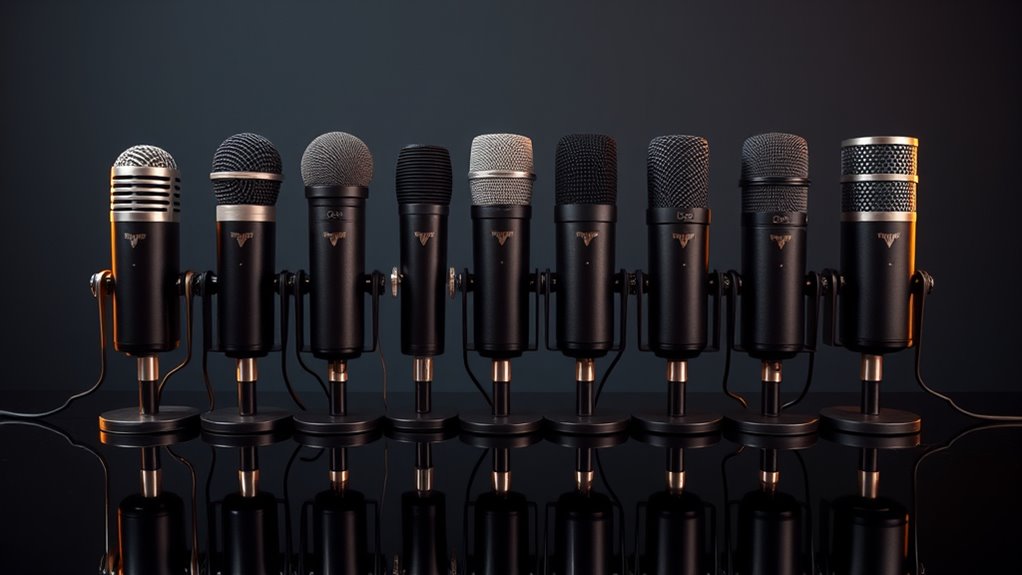

When selecting a professional microphone, the goal is to find a model that offers clear sound, durability, and versatility for your specific needs. The Sennheiser E 945 stands out for its super-cardioid precision, ideal for live vocals, while the RØDE NT1 provides studio-quality warmth perfect for recording. Tradeoffs often include balancing sound quality with durability, price, and intended use—no single microphone excels in all areas. Continue reading for a detailed breakdown of the best options and how to choose the right microphone for your setup.
Complete the kit

Key Takeaways
- The top-ranked microphones balance professional sound quality with robust build for demanding environments.
- Condenser microphones like the RØDE NT1 and Audio-Technica AT2035 excel in studio settings due to their sensitivity and clarity.
- Dynamic mics such as the Shure SM58 and Sennheiser E 835 are more durable and better suited for live performances.
- USB microphones like the Blue Yeti offer convenience but often compromise on audio fidelity compared to XLR counterparts.
- Price often correlates with features and build quality, but the best value options provide professional sound without premium pricing.
| Sennheiser E 835 Dynamic Cardioid Vocal Microphone |  | Best Overall for Live Vocals | Pickup Pattern: Cardioid | Frequency Response: Balanced | Construction: Rugged metal | VIEW ON AMAZON | See Our Full Breakdown |
| Sennheiser Professional E 945 Dynamic Super-Cardioid Vocal Microphone, Black |  | Best for Isolated Live Vocal Performance | Pickup Pattern: Super-Cardioid | Type: Dynamic | Color: Black | VIEW ON AMAZON | See Our Full Breakdown |
| RØDE NT1 Signature Series Large-Diaphragm Condenser Microphone with Shock Mount, Pop Filter, and XLR Cable |  | Best for Studio and High-Quality Recording | Type: Large-diaphragm condenser | Polar Pattern: Cardioid | Capsule Size: 1 inch | VIEW ON AMAZON | See Our Full Breakdown |
| Audio-Technica AT2035 Cardioid Condenser Microphone |  | Best for Versatile Studio and Streaming Use | Polar Pattern: Cardioid | Type: Condenser | Output: XLR | VIEW ON AMAZON | See Our Full Breakdown |
| Logitech Blue Yeti USB Microphone for PC, Mac, Gaming, Recording, Streaming, Podcasting, Studio and Computer – Blackout |  | Best for Beginners and Versatile Content Creation | Pickup Patterns: Cardioid, Omni, Bidirectional, Stereo | Connectivity: USB | Software: Blue VO!CE effects | VIEW ON AMAZON | See Our Full Breakdown |
| Shure SM58-LC Dynamic Vocal Microphone |  | Best Overall for Live Vocal Performance | Type: Dynamic Vocal Microphone | Pattern: Cardioid | Color: Black | VIEW ON AMAZON | See Our Full Breakdown |
| Audio-Technica AT2020 Cardioid Condenser Studio XLR Microphone, Black, 20-20,000 Hz, 144 dB Max SPL |  | Best for Studio and Home Recording | Connectivity Technology: Wired | Connector Type: XLR | Frequency Response: 20 Hz – 20,000 Hz | VIEW ON AMAZON | See Our Full Breakdown |
| Sennheiser XS 1 Handheld Dynamic Microphone, Black |  | Best Budget-Friendly Live Microphone | Polar Pattern: Cardioid | Type: Dynamic Microphone | Color: Black | VIEW ON AMAZON | See Our Full Breakdown |
| Sennheiser E 835-S Dynamic Cardioid Vocal Microphone with On/Off Switch |  | Best for Live Vocal Clarity and Feedback Rejection | Frequency Response: 40-16,000 Hz | Impedance: 350 Ohms | Pick-up Pattern: Cardioid | VIEW ON AMAZON | See Our Full Breakdown |
| Sennheiser Pro Audio e 935 Cardioid Dynamic Vocal Microphone |  | Best for Rugged, High-Performance Vocal Use | Frequency Response: 40-16,000 Hz | Impedance: 350 Ohms | Pick-up Pattern: Cardioid | VIEW ON AMAZON | See Our Full Breakdown |
| professional microphone | Type |
|---|---|
| Sennheiser E 835 Dynamic Cardi | — |
| Sennheiser Professional E 945 | Dynamic |
| RØDE NT1 Signature Series Larg | Large-diaphragm condenser |
| Audio-Technica AT2035 Cardioid | Condenser |
| Logitech Blue Yeti USB Microph | — |
| Shure SM58-LC Dynamic Vocal Mi | Dynamic Vocal Microphone |
| Audio-Technica AT2020 Cardioid | — |
| Sennheiser XS 1 Handheld Dynam | Dynamic Microphone |
| Sennheiser E 835-S Dynamic Car | — |
| Sennheiser Pro Audio e 935 Car | — |
More Details on Our Top Picks
Sennheiser E 835 Dynamic Cardioid Vocal Microphone
The Sennheiser E 835 stands out for its rugged build and reliable feedback rejection, making it a top choice for live vocal performances. Its balanced frequency response and presence boost deliver clear, natural vocals even in noisy environments. Compared with the Sennheiser E 945, it offers slightly less rejection of off-axis noise but is more straightforward for basic live setups. The absence of included accessories means you’ll need to purchase a stand or mount separately, which adds to the initial investment. This microphone excels in durability and ease of use but is less suited for studio use or recording applications where detailed sound capture is required.
Pros:- Excellent feedback rejection and signal isolation
- Rugged metal construction for durability
- Vocal clarity with presence boost
Cons:- Designed primarily for live vocals, not studio use
- Limited to vocal applications
- No included stand mount or accessories
Best for: Live performers needing a durable, feedback-resistant vocal mic for gigs and touring.
Not ideal for: Studio engineers or podcasters who require detailed, nuanced vocal recordings or studio-grade sound quality.
- Pickup Pattern:Cardioid
- Frequency Response:Balanced
- Construction:Rugged metal
- Features:Gentle presence boost, minimal proximity effect
Our verdict“This microphone is perfect for performers seeking a tough, feedback-resistant vocal mic for live environments.”
Sennheiser Professional E 945 Dynamic Super-Cardioid Vocal Microphone, Black
The Sennheiser E 945 offers superior isolation thanks to its super-cardioid pattern, making it ideal for loud stage environments where off-axis bleed must be minimized. Its shock-mounted capsule and hum compensating coil significantly reduce handling noise and electrical interference, providing cleaner live sound compared to standard dynamic mics like the Sennheiser E 835. While it’s excellent for live vocals, it isn’t designed for studio recording, where capturing subtle nuances is more important. Its durable metal construction ensures longevity through rigorous touring. However, its focus on live use limits versatility for studio or podcast applications.
Pros:- Excellent sound isolation with super-cardioid pattern
- Robust metal construction for durability
- Reduces handling noise and electrical interference
Cons:- Primarily designed for live vocals, not studio recording
- Less suited for capturing subtle studio nuances
Best for: Vocalists performing in noisy, high-volume live settings where sound isolation is critical.
Not ideal for: Home studio users or podcasters who need a versatile microphone suitable for recording and streaming.
- Pickup Pattern:Super-Cardioid
- Type:Dynamic
- Color:Black
- Construction:Metal
- Magnet:Neodymium ferrous with boron
Our verdict“This mic is highly recommended for live performers who prioritize sound isolation and durability in loud environments.”
RØDE NT1 Signature Series Large-Diaphragm Condenser Microphone with Shock Mount, Pop Filter, and XLR Cable
The RØDE NT1 is a standout for studio-quality sound, boasting an extremely low self-noise of 4 dBA, making it ideal for vocal, music, and podcast recordings. Its large 1-inch capsule delivers a smooth, natural tone that surpasses many entry-level condensers like the Audio-Technica AT2035. The included shock mount and pop filter enhance sound clarity and reduce unwanted noise, while its high SPL handling means it can record loud sources without distortion. The main tradeoff is needing phantom power and an XLR interface, which makes it less portable and more complex for casual users. Its premium build quality and warranty make it a solid investment for serious studios.
Pros:- Exceptional low noise for studio recordings
- Includes high-quality shock mount and pop filter
- High SPL handling for loud sound sources
Cons:- Requires phantom power and XLR connection
- Higher cost compared to entry-level mics
Best for: Professional studios and content creators needing high-fidelity recordings with minimal self-noise.
Not ideal for: Beginners or mobile users who prefer USB microphones for simplicity and portability.
- Type:Large-diaphragm condenser
- Polar Pattern:Cardioid
- Capsule Size:1 inch
- Self-Noise:4 dBA
- Maximum SPL:142 dB
- Included Accessories:Shock mount, pop filter, XLR cable
Our verdict“This mic is tailored for professionals demanding pristine sound quality in a dedicated studio environment.”
Audio-Technica AT2035 Cardioid Condenser Microphone
The Audio-Technica AT2035 offers a natural, detailed sound thanks to its large diaphragm, making it well-suited for studio recording, podcasting, and streaming. Its switchable high-pass filter and 10dB pad provide flexibility for different recording scenarios, outclassing simpler mics like the Sennheiser E 835 in versatility. The included custom shock mount improves isolation and reduces handling noise, which is critical for professional content creation. However, needing an XLR connection limits portability, and it may be more than casual users need. Its price and feature set make it more appropriate for serious hobbyists or professionals with dedicated setups.
Pros:- Natural, detailed sound with large diaphragm
- Switchable high-pass filter and pad for versatility
- Includes custom shock mount for better isolation
Cons:- Requires XLR connection, not USB
- May be overkill for casual or mobile users
Best for: Content creators, streamers, and studio users who need a flexible, high-quality condenser microphone.
Not ideal for: Beginners or those seeking a plug-and-play USB solution without extra equipment.
- Polar Pattern:Cardioid
- Type:Condenser
- Output:XLR
- High-Pass Filter:Switchable 80Hz
- Pad:10dB
- Includes:Shock mount, pouch
Our verdict“This microphone is ideal for users who want a versatile, professional-grade condenser for multiple recording scenarios.”
Logitech Blue Yeti USB Microphone for PC, Mac, Gaming, Recording, Streaming, Podcasting, Studio and Computer – Blackout
The Blue Yeti offers an accessible entry point for high-quality recording, with four selectable pickup patterns—cardioid, omni, bidirectional, and stereo—making it adaptable for various recording needs. Its plug-and-play USB connection simplifies setup for users who prefer not to handle XLR gear, unlike the RØDE NT1. The included Blue VO!CE software and controls for gain, mute, and pattern selection empower creators to produce professional-sounding content without extensive audio expertise. However, its bulkier desktop stand can take up significant space, and some users find the software complex. It’s best suited for hobbyists, streamers, and podcasters who value convenience and versatility over ultimate audio fidelity.
Pros:- Multiple pickup patterns for diverse recording needs
- User-friendly with plug-and-play USB setup
- Built-in customizable effects and controls
Cons:- Bulkier desktop stand consumes desk space
- Limited mobility due to USB dependency
- Software can be complex for some users
Best for: Streamers, podcasters, and amateur content creators seeking an easy-to-use, all-in-one microphone.
Not ideal for: Professional recording engineers or musicians requiring studio-grade sound quality and minimal post-processing.
- Pickup Patterns:Cardioid, Omni, Bidirectional, Stereo
- Connectivity:USB
- Software:Blue VO!CE effects
- Controls:Headphone volume, pattern selection, mute, gain
- Design:Adjustable desktop stand, pivotable microphone
- Compatibility:Mac, PC
Our verdict“This mic suits beginners and casual creators who want flexible, high-quality sound without the complexity of traditional studio gear.”
Shure SM58-LC Dynamic Vocal Microphone
The Shure SM58-LC stands out for its legendary durability and warm, articulate sound tailored for live vocals. Its integrated pop protection and focused cardioid pattern help minimize stage noise and feedback, making it a reliable choice for touring performers. Compared to the Sennheiser E 835, the SM58’s rugged metal construction offers superior longevity, though it relies solely on XLR connections and may require additional equipment for optimal use. This microphone is best suited for professionals who prioritize durability and consistent vocal clarity under demanding conditions. The tradeoff is that it lacks the versatility of condenser microphones like the Audio-Technica AT2020 for studio detail. If you need a dependable, stage-ready microphone, the SM58 remains a top contender.
Pros:- Excellent vocal clarity with warm, articulate sound
- Effective built-in pop protection reduces noise
- Rugged metal construction withstands frequent handling
Cons:- Requires XLR connection and possibly additional gear
- Limited to professional environments, not ideal for casual or USB setups
Best for: Vocalists and live performers needing rugged, reliable microphones for touring or stage use.
Not ideal for: Home studio users or podcasters who prefer condenser microphones for detailed recordings and easier setup.
- Type:Dynamic Vocal Microphone
- Pattern:Cardioid
- Color:Black
- Connectivity:XLR
- Durability:Rugged metal construction
Our verdict“Ideal for performers who need a durable, stage-ready microphone that delivers clear vocals with minimal fuss.”
Audio-Technica AT2020 Cardioid Condenser Studio XLR Microphone, Black, 20-20,000 Hz, 144 dB Max SPL
The Audio-Technica AT2020 offers a detailed, extended frequency response that makes it a favorite for studio and project recordings. Its custom-engineered low-mass diaphragm ensures crisp transient response and broad sound capture, outperforming many dynamic options like the Sennheiser E 835 in capturing nuanced vocals or instruments. However, it requires phantom power, which could limit compatibility if your audio interface lacks it, and it doesn’t come with accessories like shock mounts or pop filters, increasing setup costs. Compared with the RØDE NT1, the AT2020 provides a more affordable yet still professional-grade solution for serious recording. It’s best suited for content creators, podcasters, or musicians seeking studio-quality sound. The main drawback is the need for phantom power and additional accessories for optimal performance.
Pros:- Excellent sound quality with extended frequency response
- High SPL handling allows recording loud sources without distortion
- Durable metal construction for long-term reliability
Cons:- Requires phantom power, not compatible with all interfaces
- No included accessories such as shock mount or pop filter
Best for: Home studio owners, podcasters, and musicians wanting professional studio sound on a budget.
Not ideal for: Users with basic audio interfaces lacking phantom power or those seeking a plug-and-play USB microphone.
- Connectivity Technology:Wired
- Connector Type:XLR
- Frequency Response:20 Hz – 20,000 Hz
- Max SPL:144 dB
- Impedance:200 Ohms
- Power Source:Phantom Power
Our verdict“Best suited for those needing a versatile, studio-grade condenser microphone for detailed recordings.”
Sennheiser XS 1 Handheld Dynamic Microphone, Black
The Sennheiser XS 1 offers solid sound quality for live performances at a budget-friendly price. Its cardioid pattern helps reduce stage feedback, and the silent mute switch adds convenience during performances. Compared to higher-end models like the Sennheiser e 935, it lacks advanced features and a more refined build but compensates with portability and ease of use. Its simple design makes it suitable for amateurs or casual performers who need a reliable microphone without extra bells and whistles. The limited feature set and basic appearance make it less ideal for professional studio work, but it’s a practical choice for schools, small venues, or beginners. Its main compromise is basic build quality and lack of wireless options, fitting those who prioritize affordability.
Pros:- Good sound quality for live performances
- Built-in mute switch for convenience
- Includes carry pouch and mic clip
Cons:- Limited to basic features
- No wireless or advanced functionalities
Best for: Beginner performers or event organizers seeking an easy-to-use, reliable handheld microphone for live use.
Not ideal for: Professional recording studios or performers needing advanced features and premium build quality.
- Polar Pattern:Cardioid
- Type:Dynamic Microphone
- Color:Black
- Features:Silent mute switch
Our verdict“A budget-friendly choice for casual performers who need dependable performance without extra features.”
Sennheiser E 835-S Dynamic Cardioid Vocal Microphone with On/Off Switch
The Sennheiser E 835-S excels at delivering clear vocals with a presence boost that cuts through on stage. Its internal shock-mount and durable metal housing provide resilience against handling noise and stage abuse. Compared to the Sennheiser XS 1, the E 835-S offers a wider frequency response and better feedback rejection, making it suitable for demanding live environments. However, its limited frequency range (40-16,000 Hz) might restrict its use for detailed studio work. The impedance of 350 Ohms may require matching with certain audio gear for optimal sound. This microphone is best for vocalists who prioritize feedback rejection and clarity, especially in noisy settings. The downside is that it isn’t designed for studio recording or applications requiring extended frequency response.
Pros:- Clear vocal reproduction with presence boost
- Good feedback rejection due to cardioid pattern
- Durable metal construction with internal shock-mount
Cons:- Limited frequency response (40-16,000 Hz)
- Impedance may require matching with specific equipment
Best for: Vocalists and stage performers needing a reliable microphone with excellent feedback rejection.
Not ideal for: Studio engineers or musicians seeking detailed, full-range recordings at home or in the studio.
- Frequency Response:40-16,000 Hz
- Impedance:350 Ohms
- Pick-up Pattern:Cardioid
- Construction:Metal housing
- Features:On/Off switch, internal shock-mount
Our verdict“Ideal for performers who need a feedback-resistant, clear vocal microphone for live stage use.”
Sennheiser Pro Audio e 935 Cardioid Dynamic Vocal Microphone
The Sennheiser e 935 offers a robust build and excellent feedback rejection, making it suitable for demanding live vocal performances. Its presence boost enhances vocal clarity, especially in loud environments, and its durable metal housing with internal shock-mount reduces handling noise. Compared to the E 835-S, the e 935 provides a more tailored frequency response for vocals, but its limited frequency range (40-16,000 Hz) may restrict use for detailed studio recordings. The impedance of 350 Ohms aligns well with professional sound systems, though it may require matching with suitable gear. This microphone is best for singers and performers who need a tough, reliable stage mic with excellent feedback control. Its main limitation is its specialized focus on vocals, with no features aimed at studio or instrument recording.
Pros:- Excellent feedback rejection with cardioid pattern
- Rugged metal construction for longevity
- Internal shock-mount reduces handling noise
Cons:- Limited frequency response for studio work
- No extra features or accessories included
Best for: Vocalists and stage performers seeking durability and feedback control in a professional microphone.
Not ideal for: Home recording or multi-instrument recording where broader frequency response is desired.
- Frequency Response:40-16,000 Hz
- Impedance:350 Ohms
- Pick-up Pattern:Cardioid
- Construction:Metal housing
- Features:Internal shock-mount
Our verdict“Best for performers who need a tough, feedback-resistant microphone for demanding stage conditions.”
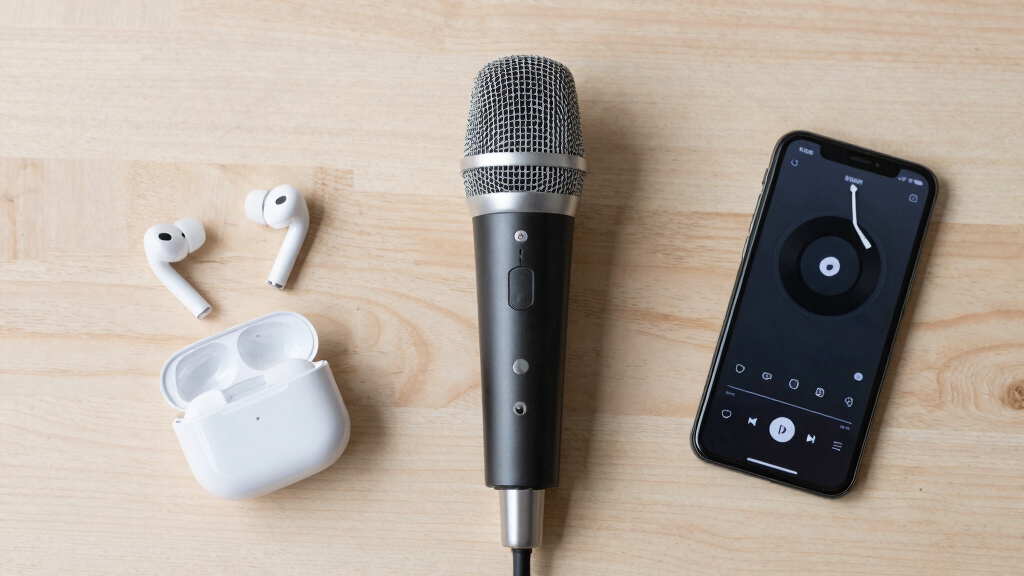
How We Picked
These microphones were selected based on a combination of performance, build quality, versatility, and value. We prioritized models that are widely used in professional settings, from studio recording to live performances. Each product was evaluated for sound clarity, durability, ease of use, and feature set, ensuring they meet the demands of different professional audio applications. The ranking reflects how well each microphone balances these factors relative to its price, with a focus on real-world usability rather than niche specifications.| professional microphone | Type |
|---|---|
| Sennheiser E 835 Dynamic Cardi | — |
| Sennheiser Professional E 945 | Dynamic |
| RØDE NT1 Signature Series Larg | Large-diaphragm condenser |
| Audio-Technica AT2035 Cardioid | Condenser |
| Logitech Blue Yeti USB Microph | — |
| Shure SM58-LC Dynamic Vocal Mi | Dynamic Vocal Microphone |
| Audio-Technica AT2020 Cardioid | — |
| Sennheiser XS 1 Handheld Dynam | Dynamic Microphone |
| Sennheiser E 835-S Dynamic Car | — |
| Sennheiser Pro Audio e 935 Car | — |
Factors to Consider When Choosing Professional Microphones
Choosing the right professional microphone involves understanding several key factors that influence sound quality, durability, and suitability for your specific use case. Beyond brand reputation, considering your environment and typical recording or performance scenarios will help narrow down your options. Here are some important considerations to keep in mind when selecting your microphone.Type of Microphone: Dynamic vs. Condenser
Dynamic microphones are generally more rugged and handle high sound pressure levels well, making them ideal for live performances and loud sources. Condenser microphones, on the other hand, are more sensitive and produce a more detailed sound, which is better suited for studio recording. Understanding where you’ll use the microphone most often helps determine which type offers the best tradeoff between durability and sound accuracy.
Polar Pattern and Directionality
The polar pattern determines how well a microphone picks up sound from different directions. Cardioid patterns focus on sound from the front, reducing background noise, which is crucial for live vocals and single-source recordings. Super-cardioid and hyper-cardioid patterns offer even narrower focus, ideal for stage use. Omnidirectional mics capture sound equally from all directions, suitable for group recordings but less common in professional solo applications.
Connectivity: XLR vs. USB
XLR microphones typically require an audio interface but deliver higher audio fidelity and are more flexible for professional setups. USB microphones are plug-and-play, making them appealing for ease of use, streaming, or podcasting, but often lack the same level of sound quality and expansion options. Your choice depends on your technical setup and whether you prioritize convenience over ultimate audio performance.
Build Quality and Durability
Professional microphones must withstand frequent use, transport, and sometimes harsh environments. Look for sturdy construction, metal casings, and reliable internal components. Cheaper models may save money upfront but can be prone to damage or inconsistent performance over time. Investing in a well-built microphone ensures consistent results and a longer lifespan.
Price vs. Performance
While high-end microphones offer superior sound and durability, they come with a significant price tag. For many users, mid-range options provide a good balance of quality and affordability. Beware of overspending on features you won’t use, but don’t settle for very cheap models if you need professional results. Matching your budget with your specific needs helps avoid costly upgrades later.
Frequently Asked Questions
Is a condenser microphone better than a dynamic microphone for vocals?
Condenser microphones generally produce a more detailed and accurate vocal sound, making them a popular choice for studio recordings. However, they tend to be more fragile and sensitive to background noise, which can be problematic in live settings. Dynamic microphones are more durable and handle loud sources well, making them better suited for live vocals or environments with background noise. The choice depends on whether your priority is studio quality or durability and noise rejection.
Can I use a USB microphone for professional studio recording?
While USB microphones are convenient and easy to set up, they often don’t match the audio fidelity of XLR microphones paired with dedicated audio interfaces. For casual streaming or podcasting, a high-quality USB mic can suffice, but for professional studio work, an XLR setup typically delivers cleaner, more natural sound. If you’re serious about recording, investing in an XLR microphone and interface will usually provide better results and more flexibility.
What is the main benefit of a super-cardioid microphone?
A super-cardioid microphone offers a narrower pickup pattern than standard cardioids, which means it captures sound mainly from the front while rejecting more background noise and room reflections. This makes it ideal for live performances on stage where feedback and ambient noise are concerns. However, super-cardioids can be more sensitive to positioning and require careful placement to avoid off-axis volume drops.
Are more expensive microphones worth the investment?
Higher-priced microphones typically provide better sound quality, greater durability, and more features tailored to professional use. For critical applications like studio recording, voice-over work, or live performances, investing in a higher-quality microphone can significantly improve results. However, for casual use or beginners, mid-range models often deliver excellent value without the steep price tag, so consider your specific needs and budget carefully.
How do I choose the right microphone for streaming and podcasting?
For streaming and podcasting, ease of use, built-in features, and good sound clarity are key. USB microphones like the Blue Yeti simplify setup and configuration, making them a popular choice for beginners. However, if you want a more professional sound and plan to upgrade your setup later, an XLR condenser microphone paired with an audio interface can deliver richer audio. Consider your environment, budget, and whether you prefer plug-and-play or room for growth.