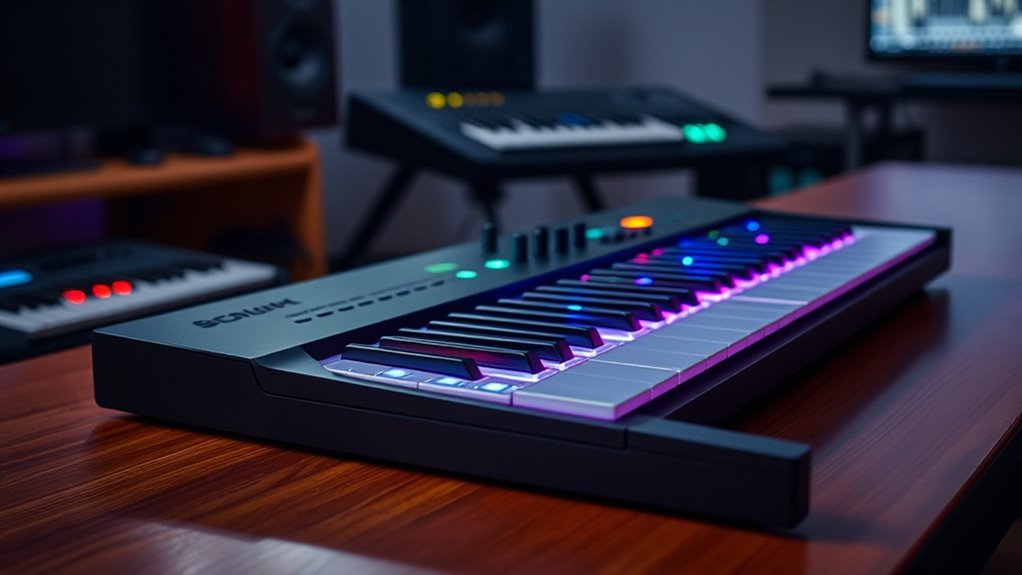

Choosing a professional keyboard in 2026 means balancing key feel, sound quality, connectivity, and portability. For players seeking authentic piano action, the Yamaha P-145BT stands out with its weighted keys and portable design. Those needing versatile sounds and advanced controls might prefer the Yamaha PSR-E583 or the PSR-E483. For live performers or studio musicians prioritizing sound engine and polyphony, the Yamaha MX88 offers a compelling option. Each model presents tradeoffs, whether in features, size, or price, making your choice depend on your specific performance or practice needs.
Listen free for 30 days with Audible
Thousands of audiobooks and originals — cancel anytime.
Start your free trialAs an affiliate, we earn on qualifying purchases.
Complete the kit


Key Takeaways
- Weighted keys are essential for authentic piano feel, especially in digital pianos like the Yamaha MX88 and P-145BT.
- Versatility in sound and style options is best served by the Yamaha PSR-E583, which offers extensive voices and styles for diverse genres.
- Portability and connectivity features such as Bluetooth are crucial for casual playing and practice, as seen in the Yamaha P-145BT.
- Advanced controls and polyphony levels matter for professional use, making the MX88 a strong all-around choice despite its lack of built-in speakers.
- Each model’s tradeoff involves balancing features like key count, portability, control surface, and price.
| Yamaha MX88 88-Key Weighted Action Synthesizer |  | Best for Authentic Piano Feel and Studio Use | Number of Keys: 88 | Weighted Keys: Yes | Polyphony: 128 notes | VIEW ON AMAZON | See Our Full Breakdown |
| Yamaha PSR-E583 61-Key Touch-Sensitive Portable Keyboard with 890 Voices and 345 Styles |  | Best for Versatility and Advanced Controls | Number of Keys: 61 | Voices: 890 | Styles: 345 | VIEW ON AMAZON | See Our Full Breakdown |
| Yamaha PSR-E483 61-Key Touch-Sensitive Portable Keyboard |  | Best for Beginners and Versatile Practice | Number of Keys: 61 | Voices: 860 | Polyphony: 64 notes | VIEW ON AMAZON | See Our Full Breakdown |
| Yamaha P-145BT 88-Key Digital Piano with Weighted Keys, Bluetooth, Compact Design, and Built-in Speakers |  | Best for Beginners and Casual Players | Number of Keys: 88 | Skill Level: All | Special Features: Bluetooth, Built-in Speakers | VIEW ON AMAZON | See Our Full Breakdown |
| professional keyboard | Number of Keys | Polyphony | Voices | Styles |
|---|---|---|---|---|
| Yamaha MX88 88-Key Weighted Ac | 88 | 128 notes | — | — |
| Yamaha PSR-E583 61-Key Touch-S | 61 | — | 890 | 345 |
| Yamaha PSR-E483 61-Key Touch-S | 61 | 64 notes | 860 | 345 |
| Yamaha P-145BT 88-Key Digital | 88 | — | — | — |
More Details on Our Top Picks
Yamaha MX88 88-Key Weighted Action Synthesizer
The Yamaha MX88 stands out for its realistic weighted keys that mimic an acoustic piano, making it ideal for serious pianists and studio work. Its 128-note polyphony ensures smooth performances even with complex arrangements, and the Motif sound engine offers professional-quality tones. Compared with the compact options, the MX88’s focus on key action and sound quality makes it less portable but perfect for dedicated practice or recording sessions. Its lack of built-in speakers and limited control surface means it’s less suitable for live solo playing or casual use, but it excels in studio environments where sound quality is paramount.
Pros:- Weighted keys provide a realistic piano experience
- High polyphony for complex performances
- Plug-and-play USB audio/MIDI connectivity
- Versatile sound engine suited for studio use
Cons:- No built-in speakers, requiring external amplification
- Limited control surface, less suited for live tweaking
Best for: Professional pianists, studio musicians, and serious performers who prioritize authentic piano feel.
Not ideal for: Casual players, beginners, or those needing a portable, self-contained instrument.
- Number of Keys:88
- Weighted Keys:Yes
- Polyphony:128 notes
- Connectivity:USB audio/MIDI
- Sound Engine:Motif
- Display:3-digit LED + 20×2 backlit LCD
Our verdict“A top-tier choice for those who need authentic keyboard action and professional sound quality in a studio setting.”
Yamaha PSR-E583 61-Key Touch-Sensitive Portable Keyboard with 890 Voices and 345 Styles
The Yamaha PSR-E583 offers a broad palette of 890 instrument voices and 345 accompaniment styles, making it suitable for a wide range of musical genres. Its touch-sensitive keys and advanced controls, including live control knobs and pitch bend wheels, give performers expressive flexibility. While its 61 keys make it less suitable for classical piano players, it compensates with extensive sound options and connectivity features like USB and MIDI. Compared to more simplified beginner models, the PSR-E583’s complexity allows for professional-level sound shaping, though it might be overwhelming for absolute novices.
Pros:- Extensive instrument voices and styles
- Advanced controls for expressive performance
- Includes accessories such as music rest and power adapter
- Versatile for both live and studio applications
Cons:- May be complex for complete beginners
- Heavy for portable use
- No dedicated recording feature
Best for: Performers and producers needing a versatile, feature-rich keyboard for live shows or studio use.
Not ideal for: Players who prioritize full-range piano feel or portability over sound variety and control options.
- Number of Keys:61
- Voices:890
- Styles:345
- Includes:Music Rest, PA-300c Power Adapter
Our verdict“Ideal for musicians seeking a highly versatile keyboard with advanced expressive controls for diverse musical settings.”
Yamaha PSR-E483 61-Key Touch-Sensitive Portable Keyboard
The Yamaha PSR-E483 shares many features with the E583 but offers a slightly scaled-down experience with 860 voices and 345 styles. Its auto chord play and USB audio recorder make it a practical choice for those starting out or practicing at home. While its 61 keys limit its suitability for advanced classical piano, it delivers enough sound variety and control for most casual or semi-professional use. Its portability and included accessories make it appealing to students and hobbyists, but those needing full-range piano experience might find it restrictive.
Pros:- Wide variety of sounds and styles
- Includes useful features like auto chords and recorder
- Portable and lightweight
- Affordable for its feature set
Cons:- Limited to 61 keys, less suited for classical piano
- No advanced control surface
- Limited to semi-professional use
Best for: Beginners and intermediate players looking for an affordable, feature-rich portable keyboard.
Not ideal for: Professional pianists or performers needing full-range 88-key action and advanced features.
- Number of Keys:61
- Voices:860
- Polyphony:64 notes
- Styles:345
- Includes:Music Rest, Power Adapter
Our verdict“A versatile, beginner-friendly keyboard that balances features and portability at an accessible price point.”
Yamaha P-145BT 88-Key Digital Piano with Weighted Keys, Bluetooth, Compact Design, and Built-in Speakers
The Yamaha P-145BT combines the feel of a grand piano with the convenience of modern connectivity. Its weighted, touch-sensitive keys deliver authentic piano action, making it suitable for beginners who want a true piano experience. The built-in Bluetooth connectivity allows streaming music directly from devices, making practice sessions more engaging. Its compact, lightweight design makes it portable, ideal for casual players or home use. However, it lacks advanced features like extensive sound editing or multiple control surfaces, limiting its appeal for professional performers or studio use.
Pros:- Weighted keys for realistic piano feel
- Bluetooth connectivity for easy music streaming
- Compact and portable
- Rich sound profile suitable for practice and casual playing
Cons:- Limited advanced features for professional use
- No built-in recording capabilities
- Requires external power source
Best for: Beginners and casual players who want an authentic piano feel with added convenience of Bluetooth streaming.
Not ideal for: Advanced musicians seeking multi-layered sound design or extensive control options.
- Number of Keys:88
- Skill Level:All
- Special Features:Bluetooth, Built-in Speakers
- Weight:24.47 Pounds
- Dimensions:10.55 x 52.21 x 5.08 inches
Our verdict“A practical, portable digital piano that balances authentic feel with modern connectivity for casual and beginner players.”

How We Picked
Our selection process focused on key features that define professional-grade keyboards: key feel (weighted vs. touch-sensitive), sound quality, connectivity options, polyphony, and versatility. We prioritized models suitable for both live performance and studio work, considering their control interfaces, expandability, and overall value. We excluded entry-level options that lack professional features and avoided models with overly complex or limited controls for serious musicians. Our goal was to identify models that cater to a range of professional needs, from studio musicians to performers on stage.
| professional keyboard | Includes |
|---|---|
| Yamaha MX88 88-Key Weighted Ac | — |
| Yamaha PSR-E583 61-Key Touch-S | Music Rest, PA-300c Power Adapter |
| Yamaha PSR-E483 61-Key Touch-S | Music Rest, Power Adapter |
| Yamaha P-145BT 88-Key Digital | — |
Factors to Consider When Choosing Professional Keyboards
Selecting the right professional keyboard depends on your primary use—whether studio recording, live performance, or practice. Key factors include the type of keys (weighted or touch-sensitive), polyphony (more is better for complex arrangements), connectivity options (USB, MIDI, Bluetooth), and portability. Understanding these aspects helps narrow down your options to models that match your workflow and performance environment.Key Action and Feel
For serious piano playing, weighted keys that mimic acoustic pianos are essential, as seen in the Yamaha MX88 and P-145BT. Touch-sensitive keys are suitable for expressive playing and dynamic control, especially useful in live settings or studio recording. Less expensive models with synth-action keys are better for experimenting with sounds rather than performing classical pieces.
Sound Quality and Polyphony
A professional keyboard needs high-quality sounds and sufficient polyphony to handle complex performances. The Yamaha MX88 offers 128-note polyphony, ideal for layered sounds or multi-instrument arrangements. Lower polyphony, like 64 notes, may cut off sounds prematurely during complex passages, which can be frustrating for advanced players.
Connectivity and Controls
For studio work and live performance, features like USB audio/MIDI, Bluetooth, and multiple control knobs enhance flexibility. The Yamaha PSR-E583 provides extensive options, while simpler models may lack these features, limiting their professional usability. Consider what connections and controls you need for your setup before choosing.
Portability and Size
If you travel or perform in multiple venues, portability matters. The Yamaha P-145BT and PSR-E483 are compact and lightweight, suitable for on-the-go use. Conversely, full-sized 88-key models like the MX88 are heavier and less portable but excel in studio environments or dedicated practice spaces.
Frequently Asked Questions
What is the main difference between weighted and touch-sensitive keys?
Weighted keys simulate the resistance and feel of an acoustic piano, providing a more authentic playing experience for pianists. Touch-sensitive keys respond to the velocity of your key press, allowing for expressive dynamics, which is essential for expressive playing and recording. The choice depends on whether you prioritize realistic piano feel or versatility in sound and performance controls.
Why is polyphony important in a professional keyboard?
Polyphony refers to how many notes a keyboard can produce simultaneously. Higher polyphony allows for more complex sounds, layered textures, and sustain without cutting off notes prematurely. For recording or live performances with multiple instrument layers, 128-note polyphony, as in the Yamaha MX88, offers the most flexibility. Lower polyphony may cause notes to cut out when playing complex arrangements.
Are portable keyboards suitable for professional use?
Portable keyboards like the Yamaha PSR-E583 and P-145BT are designed for convenience and mobility, making them suitable for practice, casual gigs, or home use. However, they often lack the full range of features and key action that serious professionals require. For stage or studio work, models with weighted keys and higher polyphony are generally better suited.
Should I prioritize sound variety or key action?
This depends on your main focus. If you need a versatile instrument for different genres or sound design, a model like the PSR-E583 offers extensive voices and styles. If your priority is authentic piano feel, then weighted keys and high-quality sound, as in the Yamaha MX88 or P-145BT, should take precedence. Balancing both is ideal but often involves tradeoffs in price and complexity.
What features are most important for professional studio recording?
For studio recordings, high polyphony, high-quality sound engines, and reliable connectivity are key. Features like MIDI over USB, multiple output options, and a good keyboard action are essential. The Yamaha MX88’s 128-note polyphony and professional sound engine make it a strong choice, whereas simpler models may lack the depth needed for high-level production.
Conclusion
For dedicated pianists and studio musicians, the Yamaha MX88 provides unmatched key feel and sound quality, though it comes at a higher price and less portability. Beginners or hobbyists who want a versatile, portable option should consider the Yamaha PSR-E483 or P-145BT, especially if budget and ease of use matter. Live performers and those needing extensive controls might prefer the PSR-E583, while casual players will find the P-145BT offers excellent value for authentic piano experience in a compact form. Ultimately, your choice hinges on your specific performance needs and environment.
Flea & tick season Picks
flea and tick prevention
As an affiliate, we earn on qualifying purchases.