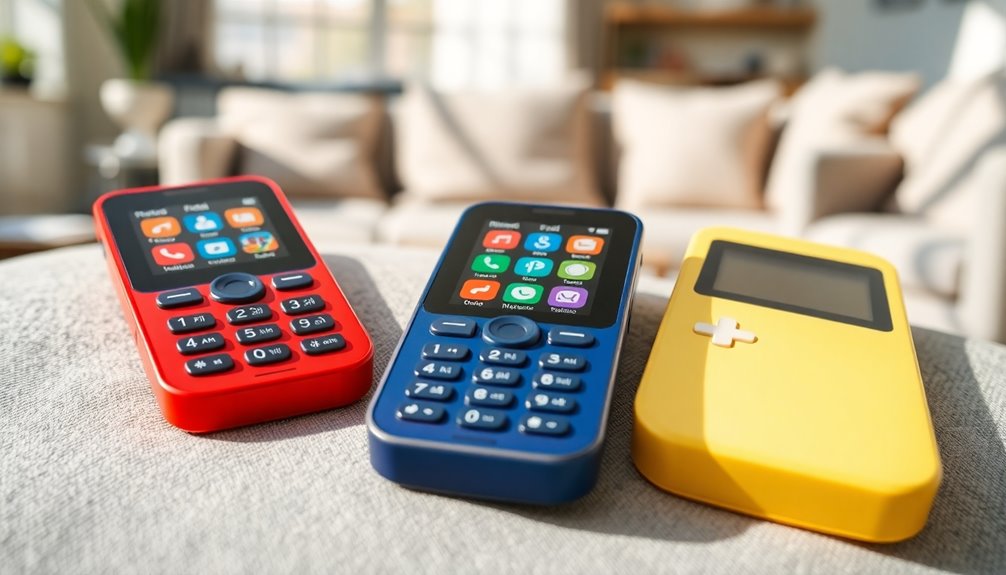

Finding a phone that truly meets the needs of an elderly person with hearing difficulties can be challenging. The best options combine loud, clear sound, simple controls, and hearing aid compatibility. The Hamilton CapTel 2400iSPNBT stands out as the overall top pick thanks to its captioning features and large touch screen, ideal for those who need visual support. For those seeking affordability, the VTech SN5147 offers powerful amplification and extra-loud ringtones at a lower price. Meanwhile, the Clarity Amplified Big-Button Phone is better suited for users who prefer a straightforward, corded design. Keep reading for a full breakdown of these options and more, along with what to consider when choosing the right phone for your loved one.
Complete the kit


Key Takeaways
- Amplification power varies widely; choosing a model with at least 30dB boost is essential for clarity.
- Hearing aid compatibility is a key feature, but not all amplified phones are compatible with every device—check before buying.
- Large buttons and high-contrast displays significantly improve usability for seniors with visual impairments.
- Captioned telephones offer a valuable visual aid, especially for those with severe hearing loss, but tend to be more expensive.
- Simpler, corded designs often provide more reliable amplification and ease of use for first-time users.


More Details on Our Top Picks
Hamilton CapTel 2400iSPNBT Captioned Telephone with Large Touch Screen and Hearing Aid Compatibility
The Hamilton CapTel 2400iSPNBT stands out for its comprehensive captioning features, large touchscreen, and hearing aid compatibility, making it ideal for users who depend heavily on visual cues during calls. Compared to the Clarity XL40, which offers more sound amplification but lacks live captioning, this model prioritizes clarity through real-time captions that benefit those with severe hearing loss. The main tradeoff is its reliance on Wi-Fi and internet, which might complicate setup for some users. Its large display and customizable captions make it suitable for those who value visual assistance over portability or smart features. However, users without reliable internet or those preferring a simple phone might find it too complex.
Pros:- Large, easy-to-read touchscreen display
- Real-time captions enhance understanding
- High-volume amplification up to 40dB
- Hearing aid compatible for seamless use
Cons:- Requires high-speed internet and phone service
- Potentially complex setup for non-tech-savvy users
- Limited to US residents with hearing impairments
Best for: Older adults with significant hearing loss who rely on visual captioning for understanding conversations
Not ideal for: Users seeking a purely portable device or simple landline without internet dependency
- Amplified Sound:up to 40dB
- Hearing Aid Compatibility:Yes
- Display:Large touchscreen
- Connectivity:Wi-Fi capable
- Power:Standard electrical power
- Captioning:Auto and assisted with live operator support
Our verdict“This model makes the most sense for those who prioritize visual captioning and have reliable internet service, despite setup complexity.”
Ameriphone JV35 Phone with 37-dB Amplification, Braille Characters and Talk Back
The Ameriphone JV35 excels by combining high amplification with tactile Braille buttons and voice feedback, making it ideal for users who struggle with both hearing and vision. Compared with the Panasonic KX-TGM450S, which offers louder volume but lacks tactile features, the JV35 provides a more accessible experience for those needing multi-sensory cues. Its large buttons and voice dialling help reduce errors, but the setup can be overwhelming due to its extensive features. Battery backup ensures continued operation during outages, though replacing batteries can be inconvenient. This phone is best suited for seniors who need both visual and tactile support.
Pros:- High amplification of 37dB for clear sound
- Large, tactile Braille buttons for easy dialing
- Voice announcements for contacts and numbers
- Visual indicators for calls and voicemails
Cons:- Complex initial setup with many features
- Bulkier design may not appeal to all users
- Requires batteries for backup, which need replacement
Best for: Elderly users with hearing loss and low vision who benefit from tactile and voice features
Not ideal for: Users who prefer wireless options or minimal setup complexity
- Amplification:37 dB
- Extra loud ringer:95+ dB
- Hearing aid compatible:Yes
- Adjustable incoming volume:Yes
- Adjustable tone:600-2400Hz
- Power source:Battery backup
Our verdict“This phone offers a multi-sensory approach that benefits users with both hearing and sight challenges, despite its complexity.”
Clarity Amplified Corded Big-Button Telephone with Clarity Power Technology (XL40)
The Clarity XL40 is designed for straightforward amplification, delivering up to 43dB of sound boost, making it ideal for those who prefer a simple corded phone with maximum volume. Compared to the cordless Panasonic, which offers more features like talking caller ID and Slow Talk, this model focuses solely on sound clarity. Its large, backlit keypad and visual ring indicator enhance usability for those with limited vision or hearing, but its corded nature limits mobility and modern smart features. It’s a solid choice for users who want reliable amplification without extra gadgets or wireless connectivity.
Pros:- Amplifies sound up to 43dB for clear hearing
- Large, backlit keypad for easy use
- Visual ring indicator and extra loud ringer
- Hearing aid compatible
Cons:- Limited to corded operation, less mobility
- No modern smart features or wireless connectivity
- Potentially bulky for small spaces
Best for: Older adults who need high-volume sound amplification and prefer a simple, reliable corded phone
Not ideal for: Those who want mobility or wireless features for convenience
- Technology:Clarity Power
- Amplification:Up to 43 decibels
- Keypad:Large, backlit
- Additional features:Visual ring indicator, extra loud ringer, hearing aid compatible
Our verdict“This corded model is best suited for users prioritizing maximum amplification and a simple design over mobility or smart features.”
Panasonic Cordless Phone with Amplified Sound and Large Display
The Panasonic Cordless Phone offers a balanced mix of amplification and convenience, with up to 40dB of sound boost, a loud 100dB ringer, and a large backlit LCD. Compared to the KX-TGM450S, which emphasizes noise reduction and more advanced features, this model is better suited for those who want simplicity alongside smart features like talking caller ID and Slow Talk. Its cordless design provides mobility, though the bulkier handset might be less comfortable for some. With expandable handsets, it covers a whole home, making it ideal for users who need accessible features in multiple rooms but prefer a landline setup.
Pros:- Loud ringer and amplified sound for hearing-impaired users
- Large, backlit display and buttons
- Expandable to six handsets for whole-home coverage
- Includes Slow Talk and talking caller ID
Cons:- Limited to landline use only
- Bulkier handset design may be less portable
- Requires power backup for continued operation during outages
Best for: Elderly individuals who want a cordless, expandable phone with smart features and strong amplification
Not ideal for: Users seeking a corded, minimalist phone or who dislike bulky handsets
- Volume Boost:40dB
- Ringer Volume:100dB
- Display Size:1.8 inches
- Number of Handsets:Expandable to 6
- Additional Features:Slow Talk, Talking Caller ID, Noise Reduction
Our verdict“This cordless model suits seniors needing mobility and smart features, with good amplification for hearing challenges.”
Panasonic KX-TGM450S Amplified Cordless Phone with Digital Answering Machine, 1 Handset, Silver (Renewed)
The Panasonic KX-TGM450S excels with its impressive 50dB volume boost and noise reduction, making it ideal for very loud environments or those with severe hearing difficulties. Compared to the Ameriphone JV35, which offers tactile features, this model focuses on delivering maximum sound clarity and simplicity, but only includes a single handset, limiting coverage. Its digital answering machine adds convenience, yet being a renewed product might mean limited warranty or potential wear. The large backlit LCD and loud ringer make it a practical choice for users who need the loudest possible sound and minimal fuss.
Pros:- Amplifies sound up to 50dB for severe hearing loss
- Large backlit LCD and oversized buttons
- Noise reduction enhances clarity in noisy settings
- Includes digital answering machine
Cons:- Renewed product may have limited warranty
- Only one handset included, less coverage
- Lacks tactile or smart features for additional accessibility
Best for: Users who need maximum amplification with simple operation and don’t require multiple handsets
Not ideal for: People seeking a multi-handset setup or tactile feedback features
- Model:KX-TGM450S
- Type:Cordless Phone
- Features:Amplified sound, Digital answering machine, Noise reduction
- Color:Silver
- Handsets:1
Our verdict“This phone is best suited for users needing the loudest amplification and straightforward operation, despite its limited coverage.”
Swissvoice 3355 DECT 6.0 Corded Big Button Phone for Elderly with Answering Machine and Additional Cordless Handset
This model stands out for combining large, photo memory buttons and an extra loud ringer with hearing aid compatibility, making it a strong choice for seniors who primarily use landlines. Compared with the Olympia Seniors phone, it offers more connectivity options, including support for multiple handsets, but this also makes it bulkier and less suited for small spaces. Its adjustable ringer volume up to 90 dB and photo buttons help those with visual impairments and hearing difficulties, yet it remains limited to landline service, which might be restrictive for users wanting mobile features. The inclusion of multiple handsets enhances flexibility in larger homes, but the device’s size can be cumbersome for some users.
Pros:- Large photo memory buttons for easy identification
- Extra loud ringer with adjustable volume up to 90 dB
- Hearing aid compatible design
- Includes multiple handsets for added flexibility
Cons:- Limited to landline use, no mobile features
- Bulky design may be unsuitable for small spaces
Best for: Seniors needing a reliable landline phone with visual and hearing aid support, especially in larger living spaces
Not ideal for: Those seeking a cordless or mobile solution, or with limited space that requires a more compact device
- Photo Buttons:4 large photo memory buttons including SOS
- Large Buttons:Yes, with photos and numbers
- Ringer Volume:Adjustable up to 90 dB
- Hearing Aid Compatibility:Yes
- Additional Handsets:Includes 1 cordless handset, supports up to 3
- Answering Machine:Yes
Our verdict“This phone suits seniors who rely on a dependable, amplified landline with visual cues and multiple handsets, but it isn’t ideal for those wanting cordless mobility.”
Hamilton CapTel 840i Captioned Telephone with Large Buttons and Hearing Aid Compatibility
This pick makes the most sense for users who want real-time captions during calls, greatly improving conversation clarity compared with traditional phones like the Olympia Seniors model. Its large buttons and adjustable volume up to 40dB make it user-friendly, but the reliance on high-speed internet and landline limits portability and setup simplicity. Unlike the Swissvoice 3355, it offers captioned communication, which is ideal for those with moderate to severe hearing impairments, yet it trades off mobility and ease of installation for its advanced features. The built-in answering machine adds convenience, but the corded setup can feel restrictive for mobile users.
Pros:- Real-time captioning enhances understanding during calls
- Large buttons and volume boost up to 40dB simplify use
- Built-in answering machine with captioned voicemail
- Hearing aid compatible
Cons:- Requires high-speed internet and landline service
- Corded design limits mobility
- Setup may be complex for some users
Best for: Hearing-impaired seniors who frequently make landline calls and benefit from captioned conversations
Not ideal for: Individuals looking for cordless or mobile solutions, or those without high-speed internet access
- Power Source:Corded Electric
- Dialer Type:Single Keypad
- Answering System Type:Digital
- Answering Machine:Yes
- Conference Call Capability:Yes
- Hearing Aid Compatibility:Yes
Our verdict“This phone excels for hearing-impaired seniors who prioritize captioned calls, but its corded, internet-dependent design limits flexibility.”
VTech SN5147 Amplified Corded/Cordless Senior Phone with Answering Machine, Big Buttons, 90dB Extra-Loud Ringer, 50dB Audio Assist, Call Blocker
This model is ideal for users who want a combination of corded reliability and cordless convenience, offering a 90dB ringer and 50dB audio boost for hearing impairments. It compares favorably to the Olympia Seniors phone by providing expandability up to four handsets and call blocking features, though it doesn’t support Bluetooth for wireless accessories. Its large, high-contrast buttons and backlit display improve usability, but the need for power for the base limits its effectiveness during outages. While the hybrid design offers versatility, some users may find the handset size less comfortable, and the setup could be overwhelming due to its many features.
Pros:- Loud ringer and adjustable volume for hearing difficulties
- Hybrid corded and cordless design enhances reliability
- Large buttons and backlit display for easy use
- Includes call blocking and photo speed dial features
Cons:- Limited to 4 handsets expansion
- No Bluetooth connectivity
- Requires power for base unit operation
Best for: Seniors who need a flexible landline system with amplification and call blocking features
Not ideal for: Those seeking a purely cordless or mobile phone, or with limited space for multiple handsets
- Type:Amplified Corded/Cordless Senior Phone
- Extra-Loud Ringer:90dB
- Audio Assist:50dB
- Answering Machine:22 minutes
- Expandable Handsets:Up to 4
- Call Blocker:Yes, up to 1,000 numbers
Our verdict“This phone suits seniors wanting a dependable, amplify-capable landline with call blocking, but it’s less suited for those wanting cordless mobility exclusively.”
Olympia Seniors Large Button Landline Telephone with Hearing Aid Compatibility
This device is designed for those who prefer straightforward operation, with extra-large dial buttons and a backlit LCD, making it accessible for seniors with visual impairments. Compared to the VTech SN5147, it lacks amplification beyond hearing aid compatibility but excels in simplicity and emergency features with its programmable SOS button. Its limited feature set means it’s less suitable for users who want advanced call management or cordless options, but it provides reliable, easy-to-use landline access for emergencies and basic communication needs. Its static design and absence of modern features make it less adaptable for tech-savvy seniors.
Pros:- Extra-large dial buttons for easy pressing
- Backlit LCD display improves visibility
- Programmable SOS button for emergencies
- Supports hearing aid compatibility
Cons:- Limited to landline use, no cordless or mobile features
- No amplification beyond hearing aid compatibility
- Basic feature set may not satisfy tech-savvy users
Best for: Seniors needing a simple, reliable landline phone with emergency features and hearing aid compatibility
Not ideal for: Users looking for cordless, amplified, or multi-feature phones with large displays
- Extra large dial buttons:Yes
- LCD display:Yes, backlit
- Programmable SOS button:Yes
- Call memory:Up to 60 incoming, 20 outgoing
- Volume control:Yes, booster button
- Supports:Sound and pulse dial
Our verdict“This phone is perfect for seniors who want a simple, emergency-ready landline, but it doesn’t cater to those seeking amplification or cordless convenience.”
Panasonic KX-TGM420W + 2 KX-TGMA44W Amplified Cordless Phones with Digital Answering Machine
This set is ideal for seniors needing mobility around the house, offering amplified caller volume up to 40 dB and talking caller ID. Compared with the Swissvoice 3355, it provides cordless convenience and additional accessibility features like a talking keypad, making it more flexible in multi-room environments. Its digital answering machine and ability to expand up to six handsets make it suitable for larger homes, but the bulkier design of handsets may be less comfortable for some users, and setup can be complex. It balances amplification with mobility, though it’s less suited for those who prefer wired simplicity or minimal features.
Pros:- Amplified volume up to 40 dB for hearing impairment
- Expandable up to six handsets for home-wide coverage
- Includes talking caller ID and talking keypad
- Digital answering machine with remote access
Cons:- Bulkier handset design may be less comfortable
- Requires power backup for continued operation during outages
- Setup can be complex for some users
Best for: Seniors who want amplified cordless communication with multi-room coverage and accessibility features
Not ideal for: Those preferring wired phones or minimal feature sets, or with limited space for multiple handsets
- Amplified Volume:up to 40 dB
- Number of Handsets:up to 6
- Backlit LCD:Yes
- Includes:Digital Answering Machine, Power Backup
- Talking Caller ID:Yes
- Call Block:Yes
Our verdict“This cordless set offers excellent amplification and accessibility for active seniors in larger homes, but setup complexity and handset size are considerations.”
Panasonic KX-TGM420W + KX-TGMA44W Amplified Cordless Phone with Digital Answering Machine and Voice Volume Booster
This cordless option stands out for its high volume boost of up to 40 dB and noise reduction features, making it ideal for users with moderate hearing loss who need clarity during calls. Compared to the Clarity XLC3.4+, it offers more expandability and advanced features like a talking keypad and caller ID, but its bulkier design may be less comfortable for users with limited dexterity. The digital answering machine adds convenience, while the ability to expand up to six handsets offers flexibility for larger households. However, its complexity might overwhelm seniors unfamiliar with technology, and the size can be cumbersome for some. Best for users who want a versatile, expandable cordless phone with excellent sound clarity.
Pros:- Loud volume boost for clearer conversations
- Includes noise reduction technology
- Expandable to six handsets for multiple locations
- Features like talking caller ID and call blocking
Cons:- Bulkier design may be difficult to handle for some users
- Advanced features can be complex for those unfamiliar with technology
Best for: Seniors or hard-of-hearing users who prefer a cordless system with advanced features and room to grow.
Not ideal for: Elderly users who prioritize simplicity and minimal setup, as this model’s numerous features may be confusing.
- Volume Boost:up to 40 dB
- Number of Handsets:2
- Expandable to:6 handsets
- Backlit LCD:Yes
- Additional Features:Digital Answering Machine, Noise Reduction, Power Backup, Speakerphone, Talking Caller ID, Talking Keypad, Call Block, Intercom, Slow Talk
Our verdict“This model suits seniors needing a flexible, feature-rich cordless phone with strong amplification and expandability.”
Amplified 110dB Landline Phone for Seniors & Hearing Impaired – Hearing Aid Compatible, Large Button Corded Phone with 3 Photo Speed Dial and Speakerphone
This wired phone excels in delivering extremely loud audio, with a maximum gain of 80dB and a ringer volume of 110dB, making it perfect for users with profound hearing loss who need straightforward operation. Unlike the Clarity XLC3.4+, which offers more features and portability, this model focuses on raw amplification and ease of use, though it sacrifices mobility and some advanced functionalities. The large buttons and photo speed dial simplify calling, and the flashing LED indicator ensures visibility in any lighting. Its wired design limits flexibility, and programming photo memory can require patience. Best suited for seniors with severe hearing loss who want a straightforward, high-volume landline phone.
Pros:- Extremely loud volume and ringer for profound hearing loss
- Hearing aid compatibility for enhanced clarity
- Large buttons and photo speed dial for ease of use
- Flashing LED indicator for incoming calls
Cons:- Limited to wired connection, reducing portability
- Programming photo memory may be challenging for some users
- Not suitable for users wanting cordless flexibility
Best for: Individuals with profound hearing impairment seeking a simple, loud, and reliable landline phone.
Not ideal for: Users who prefer cordless phones or need mobility, as this model is wired and less portable.
- Maximum Receiver Gain:80dB
- Ringer Volume:110dB
- Number of Speed Dial Buttons:3
- Photo Memory Buttons:3
- Adjustable Ringtone Volume:Yes
- Hearing Aid Compatibility:Yes
Our verdict“This phone is ideal for seniors who need maximum amplification and simplicity in a wired landline device.”
Clarity XLC3.4+ Amplified Cordless Landline Phone for Seniors, Elderly, Hard of Hearing
The Clarity XLC3.4+ offers a solid 50dB amplification, making it suitable for users with moderate to severe hearing loss who want a cordless experience. Compared to the Panasonic KX-TGM420W, it provides a more portable design and includes features like a talking caller ID and talking keypad, enhancing accessibility. However, it doesn’t match the higher volume levels of the other two models, limiting its effectiveness for profound hearing impairment. Its portability makes it a good choice for those who need a phone that can be moved around easily, but the reliance on power backup and the potential bulkiness for some may pose drawbacks. This model makes sense for those valuing mobility and speech clarity in a cordless package.
Pros:- High amplification of 50dB suitable for moderate to severe loss
- Includes talking caller ID and talking keypad for better accessibility
- Cordless and portable for flexibility
- Expandable with up to 3 handsets
Cons:- Limited maximum amplification compared to other models
- Requires power backup for continuous operation during outages
- May be bulky for some users with limited hand mobility
Best for: Seniors who want a portable cordless phone with good amplification and accessibility features.
Not ideal for: Users with profound hearing loss requiring maximum volume or those who prefer a wired device for stability.
- Amplification:50dB
- Outgoing Speech Amplification:15dB
- Tone Settings:4
- Loud Ringer:95dB
- Portability:Cordless, portable
- Expandable Handsets:Up to 3
Our verdict“This pick is best for seniors seeking a portable cordless phone with reliable amplification and accessibility features, but not for those with profound hearing loss.”

How We Picked
Our evaluation focused on performance, usability, build quality, and value. We prioritized phones with strong amplification (at least 30dB), hearing aid compatibility, and straightforward controls, as these directly impact an elderly user’s ability to communicate effectively. We also considered features like large displays, captioning, and additional accessibility options, which enhance usability for users with both hearing and visual impairments. Finally, we balanced these features against price and overall durability, ranking products that deliver reliable performance at different price points to serve a range of needs and budgets.Factors to Consider When Choosing Phone For Elderly Hard Of Hearing
Choosing the right phone for an elderly person with hearing difficulties requires careful consideration of several factors. Beyond basic features, understanding how amplification, compatibility, and ease of use interact can prevent costly mistakes and ensure long-term satisfaction. Here are key factors to keep in mind:Amplification Power
Look for phones with at least 30dB of amplification, which is usually sufficient for most users with moderate to severe hearing loss. Higher amplification levels can make speech clearer but may also introduce background noise; balancing volume with clarity is essential. Some phones allow adjustable settings, so test whether the device offers multiple volume levels or tone controls to customize sound based on individual needs.
Hearing Aid Compatibility
This feature ensures the phone works seamlessly with hearing aids, reducing whistling or feedback. Not all amplified phones are compatible, so verify the compatibility ratings—look for Hearing Aid Compatibility (HAC) ratings of M3/T3 or higher. Choosing a device with this feature can dramatically improve the listening experience without needing additional accessories.
Ease of Use and Buttons
Large, high-contrast buttons and simple interfaces are crucial for users with visual impairments or dexterity issues. Some models include extra-large keys, tactile markings, or voice prompts to guide users. Avoid overly complex menus or tiny buttons, which can frustrate elderly users and hinder quick response times during calls.
Display and Visual Aids
High-contrast, large displays help users easily see caller ID, menu options, and captioning. Captioned phones, which display spoken words as text, are ideal for severe hearing loss but tend to be more expensive. For those with visual impairments, adjustable font sizes and backlit screens can make a significant difference in usability.
Additional Features and Price
Features like digital answering machines, caller ID, call blocking, and cordless options add convenience but often come at a higher price. Balance must be struck between needed features and budget. Simpler, corded models usually offer more reliable amplification and minimal setup, making them suitable for first-time or less tech-savvy users.
Frequently Asked Questions
Can I use a hearing aid with amplified phones?
Many amplified phones are designed to be hearing aid compatible, but not all are. It’s important to check the HAC rating—ideally M3 or higher—before purchasing. Compatibility reduces whistling and feedback, enabling clearer conversations. If the user already wears hearing aids, verifying this feature ensures the phone will integrate smoothly with their devices.
Are captioned phones worth the extra cost?
Captioned phones provide real-time text of spoken words, which can be invaluable for users with severe hearing loss. While they tend to be more expensive, they often improve communication significantly and reduce frustration. If visual support is a priority, investing in a captioned model can make a meaningful difference in daily interactions.
Is a corded or cordless phone better for elderly users?
Corded phones typically offer more consistent amplification and are simpler to operate, making them ideal for seniors who prefer straightforward devices. Cordless models add mobility but may introduce complexity and issues with signal interference. For those with significant hearing or dexterity challenges, corded phones often provide a more reliable, user-friendly experience.
What should I prioritize if the user has both hearing and visual impairments?
In this case, look for phones with large, high-contrast displays, adjustable font sizes, and captioning features. Easy-to-press, tactile buttons and voice prompts can further aid usability. Combining amplification with visual aids creates a more accessible communication device tailored to combined sensory challenges.
How much should I expect to pay for a good phone for elderly with hearing loss?
Prices vary greatly depending on features, from budget-friendly models around $50 to premium captioned phones costing several hundred dollars. Generally, spending more ensures better amplification, durability, and additional accessibility features. Consider your budget alongside the user’s specific needs—sometimes a mid-range device offers the best balance of cost and function.