Choosing a hearing amplifier starts with how and where you want to hear more clearly: across a room, during conversation, or throughout the day. The Williams AV Pocketalker Ultra is my best overall pick for focused listening, with a pocket design and included headphone and earbud options. For a simpler personal sound amplifier, the SuperEar SE5000 stands out, while the Oricle Rechargeable In-Ear pairs discreet in-ear wear with a portable charging case. The main tradeoffs are listening range, fit, control simplicity, and whether you prefer headphones, earbuds, or an in-ear device. Read on for the full comparison and advice on matching a model to your routine.

Turn quiet afternoons into listening time
- Thousands of audiobooks, podcasts and originals
- Listen on your phone, tablet or Echo — also offline
- Cancel anytime
Complete the kit


Key Takeaways
- The Pocketalker Ultra is the most adaptable focused-listening choice: its pocket format and included headphone and earbud options give it more listening flexibility than a single-style amplifier.
- Traditional personal amplifiers and in-ear hearing devices serve different routines: the SuperEar SE5000 and Reizen Loud Ear suit amplified listening with accessories, while Oricle and Audien Atom One favor a device worn in the ear.
- Rechargeable designs are common, but charging convenience varies: Oricle adds a portable charging case, while other rechargeable models may better suit buyers who are comfortable charging the devices directly.
- Controls and fit can matter more than feature claims: one-button operation on the Flaygo may appeal to beginners, while directional microphones and gain control on select models are aimed at more focused adjustments.
- Product details vary widely across this lineup: buyers should verify included accessories, fit options, and adjustment methods before choosing, especially when product names make broad claims about noise handling or sound quality.
| Manzelun GM-105 Rechargeable Behind-the-Ear Hearing Aids with Noise Cancellation |  | Best for Physical Controls | Fit: Behind-the-ear | Controls: Slide switch and volume control knob | Noise control: Active noise cancellation | VIEW ON AMAZON | See Our Full Breakdown |
| SuperEar SE5000 Personal Sound Amplifier with Headphones |  | Best for Portable Listening | Amplification: Up to 50+ dB | Battery: One AAA battery included | Battery life: Up to 30 hours | VIEW ON AMAZON | See Our Full Breakdown |
| Rechargeable OTC Hearing Aids for Seniors with Noise Cancellation | 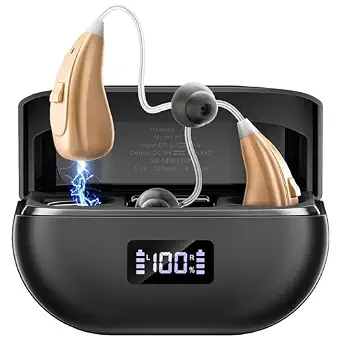 | Best for Simple In-Ear Adjustments | Fit: In-ear | Sound processing: 16-channel | Noise control: Adaptive noise cancellation | VIEW ON AMAZON | See Our Full Breakdown |
| MSA PRO Rechargeable Personal Sound Amplifier, Nude |  | Best for a Single-Ear Fit | Model: MSA PRO | Sound amplification: Up to 30 times | Fit: On-ear; adjustable for right or left ear | VIEW ON AMAZON | See Our Full Breakdown |
| iRoger Rechargeable Hearing Amplifier with Automatic Gain Control | 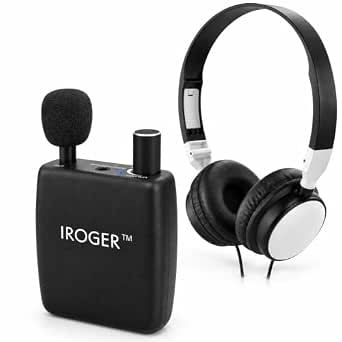 | Best for Long Runtime | Product type: Hearing amplifier | Maximum gain: Up to 50 dB | Battery life: Up to 100 hours | VIEW ON AMAZON | See Our Full Breakdown |
| Oricle Rechargeable In-Ear Hearing Aids with Noise Reduction and Portable Charging Case |  | Best for Long Wear | Fit: Completely in canal | Model: Standard 3.0 (HA-JHA490-3.0) | Sound levels: 5 | VIEW ON AMAZON | See Our Full Breakdown |
| Reizen Loud Ear Personal Hearing Amplifier |  | Best for Listening at a Distance | Fit: In-ear earphone | Sound pickup range: Up to 100 feet | Sensitivity: 110 dB ±3 dB per mW | VIEW ON AMAZON | See Our Full Breakdown |
| Eduitai Rechargeable Digital Hearing Amplifier with Noise Cancellation |  | Best for Quick Recharging | Fit: In-canal | Volume levels: 5 | Noise reduction modes: 2 | VIEW ON AMAZON | See Our Full Breakdown |
| Hearing Amplifier for Seniors with Rechargeable Battery and Directional Microphone |  | Best for Simple, Long-Running Use | Microphone: Directional noise-canceling | Battery type: Lithium-ion | Battery life: Up to 120 hours | VIEW ON AMAZON | See Our Full Breakdown |
| Audien Atom One OTC Hearing Aids |  | Best for Hands-On Sound Adjustment | Fit: In-ear; universal fit for either ear | Intended use: Adults with mild to moderate hearing loss | Battery life: Up to 24 hours per charge | VIEW ON AMAZON | See Our Full Breakdown |
| Williams AV Pocketalker Ultra Personal Sound Amplifier with Headphones and Earbud |  | Best for TV Listening | Brand: Williams AV | Model: Pocketalker Ultra PKTD1-EH | Frequency range: 20 Hz–20 kHz | VIEW ON AMAZON | See Our Full Breakdown |
| Miniature Rechargeable Hearing Aids for Adults and Seniors, Noise Cancelling, Crystal Clear Sound, LED Power Display, White-Green |  | Best for Simple Rechargeable Wear | Style: In-ear | Color: White-Green | Feedback feature: Noise cancelling | VIEW ON AMAZON | See Our Full Breakdown |
| Flaygo Hearing Aids for Seniors, Hearing Aids for People with Hearing Loss, Sound Quality Restoration, Intelligent Noise Reduction, Standby 80h, One-Button Operation, Comfortable Wearing, Beige |  | Best for Fine-Grained Sound Processing | Processing: 16-channel digital chip | Noise control: Intelligent noise reduction | Feedback control: Whistling suppression system | VIEW ON AMAZON | See Our Full Breakdown |
| Blue Deer Rechargeable OTC Hearing Amplifiers for Seniors |  | Best for Listening Modes and Fit Options | Type: In-ear hearing amplifiers | Processing: 8-channel | Listening modes: Normal, Low F, High F, TV | VIEW ON AMAZON | See Our Full Breakdown |
| hearing amplifier | Battery life | Fit | Controls |
|---|---|---|---|
| Manzelun GM-105 Rechargeable B | — | Behind-the-ear | Slide switch and volume control knob |
| SuperEar SE5000 Personal Sound | Up to 30 hours | — | Adjustable volume control |
| Rechargeable OTC Hearing Aids | — | In-ear | One-button control with five volume levels |
| MSA PRO Rechargeable Personal | Up to 20 hours | On-ear; adjustable for right or left ear | Button control |
| iRoger Rechargeable Hearing Am | Up to 100 hours | — | Single manual dial for power and volume |
| Oricle Rechargeable In-Ear Hea | Up to 60 hours per charge | Completely in canal | Buttons; hold for 5 seconds to turn on or off |
| Reizen Loud Ear Personal Heari | — | In-ear earphone | Button control with adjustable volume |
| Eduitai Rechargeable Digital H | Up to 24 hours | In-canal | — |
| Hearing Amplifier for Seniors | Up to 120 hours | — | — |
| Audien Atom One OTC Hearing Ai | Up to 24 hours per charge | In-ear; universal fit for either ear | Analog volume and frequency dials |
| Williams AV Pocketalker Ultra | Up to 200 hours | — | — |
| Miniature Rechargeable Hearing | 13–16 hours per charge | — | — |
| Flaygo Hearing Aids for Senior | — | — | — |
| Blue Deer Rechargeable OTC Hea | Up to 24 hours per charge in description; 50 hours in product highlight | In-ear; 6 pairs of adjustable earbud tips | — |
More Details on Our Top Picks
Manzelun GM-105 Rechargeable Behind-the-Ear Hearing Aids with Noise Cancellation
The Manzelun GM-105 suits buyers who want a rechargeable pair with controls they can operate by feel. Its slide switch and volume knob offer a more direct adjustment than the one-button setup on the Rechargeable OTC Hearing Aids for Seniors with Noise Cancellation. Active noise cancellation may help reduce background sound, while the behind-the-ear hooks and included tips give buyers options for fit. The case can recharge both aids up to four times, which is useful when outlets are not close by, and each charge is listed for about 25 hours of use. The tradeoff is a slight operating noise, and first-time users may need time to adapt. Choose this pair for tactile controls and case charging; skip it if you want a silent operation claim or prefer an in-ear style.
Pros:- Slide switch and volume knob provide direct physical adjustments
- Ergonomic behind-the-ear hooks keep the aids supported
- Charging case can recharge both aids up to four times
- Active noise cancellation is included
Cons:- May produce slight operating noise
- New users may need an adaptation period
Best for: Buyers who want a rechargeable behind-the-ear pair with separate physical power and volume controls
Not ideal for: People sensitive to faint device noise or those who prefer discreet in-ear hearing amplifiers
- Fit:Behind-the-ear
- Controls:Slide switch and volume control knob
- Noise control:Active noise cancellation
- Runtime:Approximately 25 hours per charge
- Charging:Cable or case; case recharges both aids up to four times
- Battery:Lithium-ion, 3.7 V
- Item weight:48 g
- Included:Pair of hearing aids, charging compartment, two cleaning brushes, five pairs of ear tips, operation guide and user guide
Our verdict“Pick the GM-105 if tactile controls and a rechargeable case matter more to you than silent operation or an in-ear fit.”
SuperEar SE5000 Personal Sound Amplifier with Headphones
The SuperEar SE5000 takes a different approach from the wearable pairs in this roundup: it is a handheld personal sound amplifier used with headphones or earbuds. That makes it a practical pick for someone who wants to amplify nearby conversation or TV sound without putting an aid in each ear. Its swivel microphone can be pointed toward a speaker, and the tactile volume control supports quick adjustments. It claims up to 30 hours on one AAA battery, while the rechargeable Manzelun GM-105 avoids routine battery replacement and is better suited to all-day wearable use. The SuperEar’s key limitation is connectivity: it does not connect directly or wirelessly to a television, so the microphone must pick up sound in the room. It is also less discreet than an in-ear or behind-the-ear option.
Pros:- Swivel microphone can be aimed toward a sound source
- Tactile volume control allows straightforward adjustment
- Includes stereo headphones and earbuds
- Up to 30 hours of battery life from one AAA battery
Cons:- Does not connect directly or wirelessly to a television
- Requires replacing a AAA battery
- Handheld unit and headphones are less discreet than wearable aids
Best for: Listeners who want a portable amplifier for nearby conversations or room sound and are comfortable using headphones or earbuds
Not ideal for: Buyers seeking a discreet wearable aid or direct wireless television audio
- Amplification:Up to 50+ dB
- Battery:One AAA battery included
- Battery life:Up to 30 hours
- Microphone:Swivel microphone
- Controls:Adjustable volume control
- Included accessories:Deluxe stereo headphones, stereo earbuds, belt clip and screw
- TV connection:No direct or wireless connection
Our verdict“Choose the SE5000 for portable, headphone-based amplification of nearby sound, but look elsewhere for a wearable aid or direct TV connection.”
Rechargeable OTC Hearing Aids for Seniors with Noise Cancellation
For buyers who prefer an in-ear fit and want a small number of controls, this rechargeable pair offers a straightforward setup: one button selects among five volume levels. Its listed 16-channel processing and adaptive noise cancellation are aimed at making speech easier to pick out amid background sound. Compared with the Manzelun GM-105, these aids trade a behind-the-ear hook and separate knob for a lighter 3 g earpiece and a simpler control scheme. The charging case is listed for more than 100 hours of combined use, with a display for charging status; each charge is claimed to last 25 hours or more. Those are product-description claims, so buyers should treat them as expectations rather than independently confirmed results. Skip this model if you want detailed manual controls or prefer an external amplifier.
Pros:- One-button operation with five volume levels
- Adaptive noise cancellation and 16-channel processing are specified
- Each hearing aid weighs 3 g
- Charging case includes a status display
Cons:- Runtime and sound performance figures come from the product description
- Single-button operation offers less direct adjustment than the Manzelun GM-105’s knob and switch
Best for: People seeking a light in-ear pair with one-button operation and several volume settings
Not ideal for: Buyers who want separate physical volume controls, over-ear support, or independently verified performance claims
- Fit:In-ear
- Sound processing:16-channel
- Noise control:Adaptive noise cancellation
- Controls:One-button control with five volume levels
- Runtime:25+ hours per charge; 100+ hours with charging case
- Charging time:Up to 2 hours
- Weight:3 g per hearing aid
- Warranty:1 year
Our verdict“Pick this pair if you favor a light in-ear fit and simple settings, and are comfortable relying on the stated performance figures.”
MSA PRO Rechargeable Personal Sound Amplifier, Nude
The MSA PRO is a single-unit personal sound amplifier for buyers who want adjustable volume and a fit that can be set for either ear. Its clear tubing and six silicone tips provide several ways to adjust the contact point, while the included charging base avoids disposable batteries. The listed runtime is up to 20 hours per charge, shorter than the roughly 25-hour claims for the Manzelun GM-105 and Rechargeable OTC Hearing Aids for Seniors with Noise Cancellation. This model also lists no noise control, so it offers fewer tools for managing background sound than those options. It is designed to amplify sound, not to serve as general-purpose headphones. With just one amplifier included, it makes more sense for someone seeking a single-ear setup than for buyers who want a matched pair.
Pros:- Adjustable fit for either the right or left ear
- Includes six silicone tips for fit customization
- Rechargeable base is included
- Lightweight design with clear tubing
Cons:- Includes one amplifier rather than a pair
- No noise control is specified
- Up to 20 hours of runtime is shorter than the listed runtimes of several rechargeable pairs
Best for: Buyers who want one rechargeable amplifier with adaptable right- or left-ear fit and multiple tip sizes
Not ideal for: People who need a pair, background-noise control, or a device for headphone-style listening
- Model:MSA PRO
- Sound amplification:Up to 30 times
- Fit:On-ear; adjustable for right or left ear
- Controls:Button control
- Battery life:Up to 20 hours
- Charging:Rechargeable; fast charging station included
- Included accessories:Recharging base, six silicone tips, cleaning brush and user guide
- Quantity:1
Our verdict“Choose the MSA PRO for a customizable single-ear fit, but choose a paired model if you need amplification in both ears.”
iRoger Rechargeable Hearing Amplifier with Automatic Gain Control
The iRoger IR8 stands out for buyers who prioritize long intervals between charges: its built-in battery is listed for up to 100 hours, with a recharge time of about one hour. Automatic gain control adjusts amplification as incoming sounds change, while the directional microphone focuses on sound from the direction it faces. That focus can help when listening to a particular source, but it requires the wearer to aim the unit; it is less hands-off than the adaptive noise cancellation specified for the Rechargeable OTC Hearing Aids for Seniors with Noise Cancellation. The IR8 also lists no noise control, so it does not offer that model’s background-noise approach. Its single dial keeps power and volume simple, though the 6 × 2.5 inch body and 4.8 oz weight make it a handheld amplifier rather than a discreet ear-worn pair.
Pros:- Up to 100 hours of listed battery life
- Approximately one-hour recharge time
- Automatic gain control responds to changing incoming sound
- Single dial combines power and volume control
Cons:- Directional microphone needs to be aimed toward the sound source
- No noise control is listed
- Handheld dimensions and 4.8 oz weight are less discreet than wearable aids
Best for: Listeners who want a handheld amplifier with long stated runtime and can aim its microphone toward a speaker
Not ideal for: Buyers seeking a discreet wearable pair or hands-free noise reduction in changing environments
- Product type:Hearing amplifier
- Maximum gain:Up to 50 dB
- Battery life:Up to 100 hours
- Recharge time:Approximately 1 hour
- Controls:Single manual dial for power and volume
- Microphone:Directional
- Dimensions:6 × 2.5 in
- Item weight:4.8 oz
Our verdict“Choose the iRoger IR8 if long stated runtime and directional listening matter more than a compact wearable design or noise control.”
Oricle Rechargeable In-Ear Hearing Aids with Noise Reduction and Portable Charging Case
Oricle’s soft silicone tips and completely in-canal fit make this a strong choice for buyers who want a compact amplifier for conversation and extended wear. Five sound levels offer straightforward adjustment across different settings, while the charging case handles automatic on/off and remembers settings. Its stated up to 60 hours per charge with the case gives it more between-charge convenience than the Eduitai, which lists up to 24 hours, though the descriptions may count case-supported use differently. The tradeoff is that an in-ear fit can feel uncomfortable or insecure for some people, and Oricle doesn’t specify charging time. Buyers who prefer a separate microphone and earpiece, like the Reizen, should look elsewhere.
Pros:- Soft silicone tips are designed for a secure fit during extended wear
- Five sound levels allow simple adjustment between environments
- Charging case supports automatic on/off and setting memory
- Noise reduction is intended to help speech stand out
Cons:- In-ear fit may not suit every wearer
- Charging time is not specified
Best for: People who want a discreet in-ear amplifier with silicone tips and case-supported operation for daily conversations
Not ideal for: Wearers who dislike canal-style devices or need a clearly stated recharge time
- Fit:Completely in canal
- Model:Standard 3.0 (HA-JHA490-3.0)
- Sound levels:5
- Battery life:Up to 60 hours per charge
- Battery type:Lithium-ion
- Controls:Buttons; hold for 5 seconds to turn on or off
- Automatic operation:Turns on or off when removed from or placed in the charging case
- Included components:Hearing aids, case, charger
Our verdict“Choose Oricle if you want a compact, case-based in-ear amplifier and are comfortable with its fit.”
Reizen Loud Ear Personal Hearing Amplifier
Reizen’s separate microphone and single earphone make it the lineup’s clearest fit for listening to a speaker from farther away: its stated pickup range is up to 100 feet. That setup differs from the Oricle and Eduitai in-canal models, which are worn in the ear and are described for close conversation. A belt clip and adjustable volume keep operation simple, and the unit runs on two AAA batteries. That also creates its main tradeoff: it is a visible, wired-style personal amplifier rather than a discreet rechargeable aid, and the included single earphone provides no two-ear listening. Buyers who want a compact device worn in the canal should favor Oricle; Reizen suits people who value distance pickup and can manage a separate unit.
Pros:- Sound pickup range is specified up to 100 feet
- Adjustable volume control
- Belt clip supports portable use
- Includes two AAA batteries
Cons:- Includes only one earphone
- Requires replaceable AAA batteries
- Separate amplifier and earphone are less discreet than in-canal options
Best for: Listeners who want to amplify a speaker across a room or at a distance and are comfortable carrying a clipped-on unit
Not ideal for: Buyers seeking a discreet in-ear device, rechargeable operation, or listening through both ears
- Fit:In-ear earphone
- Sound pickup range:Up to 100 feet
- Sensitivity:110 dB ±3 dB per mW
- Frequency range:20 Hz–20 kHz
- Estimated battery life:48 hours
- Power source:2 AAA alkaline batteries
- Controls:Button control with adjustable volume
- Dimensions and weight:2.5 × 1.75 × 0.75 inches; 2.4 ounces
Our verdict“Choose Reizen if distance pickup matters more than a discreet fit or rechargeable convenience.”
Eduitai Rechargeable Digital Hearing Amplifier with Noise Cancellation
Eduitai’s one-hour Type-C recharge is its clearest advantage for buyers who want to top up quickly between outings. Two noise reduction modes add a choice that the Oricle, with its five sound levels, does not specify; those controls address different needs, since modes change noise handling while volume levels adjust loudness. The nearly invisible in-canal shape also keeps it closer to Oricle than the more exposed Reizen amplifier. Its stated runtime is up to 24 hours, shorter than Oricle’s listed case-supported use, so buyers prioritizing longer intervals between charges may prefer that model. Eduitai lists five volume levels and two modes, but provides little detail about fit materials or controls. It makes most sense for someone who values a fast recharge and simple sound adjustment over extensive customization.
Pros:- Two noise reduction modes provide a choice in sound processing
- Type-C charging takes about one hour
- Lightweight, nearly invisible in-canal design
- Up to 24 hours of use per charge
Cons:- In-canal fit may not suit every wearer
- Only five volume levels are specified
- Product details do not describe controls or included accessories
Best for: People who want a lightweight in-canal amplifier and can recharge it daily or between outings
Not ideal for: Buyers who need longer stated runtime between charges or find in-canal devices uncomfortable
- Fit:In-canal
- Volume levels:5
- Noise reduction modes:2
- Battery life:Up to 24 hours
- Recharge time:About 1 hour
- Charging type:Type-C
- Color:Dark
Our verdict“Choose Eduitai if a fast Type-C recharge and two noise reduction modes matter more than longer runtime.”
Hearing Amplifier for Seniors with Rechargeable Battery and Directional Microphone
A single dial and directional noise-canceling microphone give this model a more straightforward listening setup than the Audien Atom One, which separates volume and frequency adjustment across two dials. Its over-the-head headphones and earbuds also offer a different wearing choice from the in-canal Oricle and Eduitai. The headline advantage is up to 120 hours of battery life, making it appealing to buyers who want fewer charging interruptions; the description identifies a rechargeable lithium-ion battery but doesn’t say how long a recharge takes. Simplicity comes at the cost of control: there are no additional noise settings or detailed sound adjustments listed. Choose it for basic listening support and easy volume changes, but skip it if you want a small, discreet aid or more tailored sound control.
Pros:- Listed battery life is up to 120 hours
- Directional microphone is intended to reduce background noise
- One-dial operation keeps volume adjustment simple
- Includes over-the-head headphones and earbuds
Cons:- No additional noise control settings are listed
- Basic manual controls offer limited sound adjustment
- Recharge time and extra accessories are not specified
Best for: Seniors who prefer a simple volume dial, a directional microphone, and a choice of headphones or earbuds
Not ideal for: Buyers who want discreet in-canal wear or multiple sound and noise settings
- Microphone:Directional noise-canceling
- Battery type:Lithium-ion
- Battery life:Up to 120 hours
- Control type:Manual, one dial
- Included listening options:Over-the-head headphones and earbuds
- Dimensions:6 × 2.5 inches
- Weight:4.8 ounces
- Material:Plastic
Our verdict“Choose this model for simple controls and long listed runtime if a headphone or earbud setup suits you.”
Audien Atom One OTC Hearing Aids
Separate volume and frequency dials give the Audien Atom One more direct sound adjustment than the one-dial senior amplifier in this lineup. That can help buyers who want to tune loudness and frequency independently without using an app. Its universal in-ear design comes with three silicone dome sizes, a USB-C charging dock, cleaning tools, and expert-guided setup, making its package more equipped for ongoing care than the Eduitai, whose included accessories are not specified. The tradeoff is a roughly three-hour recharge, longer than Eduitai’s one-hour claim, and a stated intended range of mild to moderate hearing loss. Its 24-hour runtime is similar to Eduitai’s listing. This is the more suitable pick for people who want hands-on adjustment and setup support, provided the in-ear fit works for them.
Pros:- Separate analog dials adjust volume and frequency without an app
- Includes three silicone ear dome sizes
- USB-C charging dock and cleaning accessories support routine care
- Expert-guided setup and one-year warranty are included
Cons:- Recharge takes about three hours
- Designed for mild to moderate hearing loss
- In-ear fit may not suit every wearer
Best for: Adults with mild to moderate hearing loss who want separate manual volume and frequency adjustment with fitting accessories
Not ideal for: People seeking faster recharging, a non-in-ear design, or a device specified for hearing loss beyond the stated mild-to-moderate range
- Fit:In-ear; universal fit for either ear
- Intended use:Adults with mild to moderate hearing loss
- Battery life:Up to 24 hours per charge
- Recharge time:About 3 hours
- Charging:USB-C charging dock
- Controls:Analog volume and frequency dials
- Ear dome sizes:Small, medium, large
- Warranty:1 year
Our verdict“Choose the Atom One if you want direct volume and frequency controls plus fitting and cleaning accessories.”
Williams AV Pocketalker Ultra Personal Sound Amplifier with Headphones and Earbud
Large physical controls and a 12-foot TV cord make the Pocketalker Ultra a practical choice for someone who wants to hear nearby speech or television through included headphones. Automatic gain control helps moderate abrupt changes in volume, while the tone knob offers a simple way to adjust sound. Compared with the Blue Deer Rechargeable OTC Hearing Amplifiers, this model gives up rechargeable convenience and in-ear discretion for a more flexible, accessory-rich setup, including both headphones and an earbud. Its support for an external microphone or neckloop may also suit particular listening arrangements. The tradeoff is a wired, pocket-sized device powered by replaceable AAA batteries, and the supplied information lists no noise control feature. I’d favor it for home listening and straightforward controls, not for someone seeking a discreet rechargeable aid.
Pros:- Automatic gain control helps moderate sudden changes in sound level
- Large volume and tone knobs are straightforward to adjust
- Includes headphones, an earbud, microphone, and 12-foot TV cord
- Supports an external microphone or neckloop
Cons:- Uses replaceable AAA batteries rather than rechargeable power
- The listing does not specify a noise control feature
- Wired headphones and a separate amplifier are less discreet than an in-ear option
Best for: People who mainly want amplified television or nearby conversation and prefer large, simple controls
Not ideal for: Buyers seeking a discreet in-ear device, rechargeable power, or a listed noise reduction feature
- Brand:Williams AV
- Model:Pocketalker Ultra PKTD1-EH
- Frequency range:20 Hz–20 kHz
- Audio sensitivity:110 dB
- Power source:2 AAA batteries
- Battery life:Up to 200 hours
- Connectivity:3.5 mm jack
- Included accessories:Folding headphones, earbud, plug-in microphone, 12-foot TV cord, lanyard, belt clip, 2 AAA batteries
- Warranty:5 years on parts and labor; 90 days on accessories
Our verdict“Choose the Pocketalker Ultra for home TV and conversation listening with simple physical controls and included accessories.”
Miniature Rechargeable Hearing Aids for Adults and Seniors, Noise Cancelling, Crystal Clear Sound, LED Power Display, White-Green
Compact in-ear styling and one-button operation give this model a simpler, more discreet daily-wear pitch than the Pocketalker Ultra, which is built around a separate amplifier and headphones. Its listed 13–16 hours per charge may cover a typical day, while the case adds charging capacity and the stated 80-hour standby time can help between uses. The description also calls out noise reduction, though it provides little detail about how that feature works or performs. Compared with the Flaygo Hearing Aids, this option lists a longer per-charge range at the upper end, while Flaygo provides more specific claims about channels and volume levels. The tradeoff here is uncertainty: the listing offers limited detail on fit and sound adjustment, and notes that some users may need to adjust to both.
Pros:- Compact in-ear design is less conspicuous than a pocket amplifier with headphones
- One-button operation keeps the basic controls simple
- Listed battery life is 13–16 hours per charge
- Charging case is listed with 60 hours of standby capacity
Cons:- Fit and sound may take adjustment
- The listing gives limited detail on noise reduction and sound controls
- Per-charge battery life is shorter than the Blue Deer listing’s stated maximum of 24 hours
Best for: Adults or seniors who want a small rechargeable in-ear amplifier with a simple control
Not ideal for: Buyers who need clearly documented sound settings, detailed fit guidance, or a familiar over-ear setup
- Style:In-ear
- Color:White-Green
- Feedback feature:Noise cancelling
- Battery life:13–16 hours per charge
- Standby time:80 hours
- Charging case capacity:60 hours standby
- Operation:One-button; long press to turn on
- Volume control:Fingerprint volume control
Our verdict“Pick this model if you want a compact, rechargeable in-ear option with minimal controls and can allow time to adjust the fit.”
Flaygo Hearing Aids for Seniors, Hearing Aids for People with Hearing Loss, Sound Quality Restoration, Intelligent Noise Reduction, Standby 80h, One-Button Operation, Comfortable Wearing, Beige
Sixteen-channel processing and four volume levels give the Flaygo a more specified sound-control story than the miniature rechargeable model, whose listing focuses on one-button use without describing comparable channel detail. Its noise reduction and whistling suppression claims could appeal to someone bothered by background sound or feedback, while a 3.5 g in-ear design aims for a low-profile fit. The stated charging setup offers up to 80 hours of listening across the device and case, with USB-C charging. Compared with the Blue Deer Rechargeable OTC Hearing Amplifiers, Flaygo lists more processing channels, while Blue Deer names four listening modes and supplies six pairs of ear tips. Flaygo’s drawback is less buyer-ready detail: there is no separate technical spec list, and the charging claims do not clarify the per-charge runtime.
Pros:- Describes a 16-channel digital chip with noise reduction
- Whistling suppression is specifically claimed
- Four volume levels offer some adjustment across listening settings
- USB-C charging and a case are included in the stated charging setup
Cons:- No separate technical specs are provided in the listing
- The stated 80 hours combines device and case use without giving per-charge runtime
- The listing does not specify included ear-tip sizes or fit options
Best for: Seniors wanting a discreet rechargeable in-ear amplifier with several volume levels and stated whistling suppression
Not ideal for: Buyers who want clearly itemized battery runtime, extensive fit options, or a detailed spec sheet before choosing
- Processing:16-channel digital chip
- Noise control:Intelligent noise reduction
- Feedback control:Whistling suppression system
- Weight:3.5 g
- Charging connection:USB-C
- Charging time:2 hours per charge
- Listening time:Up to 80 hours stated with charging box
- Volume control:One-button adjustment; four volume levels
Our verdict“Consider Flaygo if discreet in-ear wear and stated noise and whistling suppression matter more than a fully specified battery and fit profile.”
Blue Deer Rechargeable OTC Hearing Amplifiers for Seniors
Four listening modes and six pairs of ear tips make Blue Deer the most configurable choice here for someone adapting an in-ear amplifier to different environments and fits. Its modes include normal, low-frequency, high-frequency, and TV, and the listing describes adjustable volume with seven levels. That gives it a more environment-specific approach than the Flaygo, which lists four volume levels but no named listening modes. A two-hour charge is stated to provide up to 24 hours of use, though another product highlight claims 50 hours, so I would treat the runtime as uncertain. The weight is also inconsistent across the listing. Compared with the Pocketalker Ultra, Blue Deer trades physical knobs and included headphones for rechargeable, discreet in-ear wear; that makes fit and battery claims more central to the buying decision.
Pros:- Four named listening modes include a TV mode
- Seven volume levels are noted in the product highlights
- Includes six pairs of adjustable earbuds for fit selection
- A two-hour charging time is stated
Cons:- Battery claims conflict: up to 24 hours in the description and 50 hours in a highlight
- Weight differs between the description and product information
- Button controls may offer less direct adjustment than the Pocketalker Ultra’s large knobs
Best for: In-ear amplifier buyers who want several named listening modes and multiple tip sizes to try
Not ideal for: People who need dependable runtime or weight specifications, or prefer a separate amplifier with headphones
- Type:In-ear hearing amplifiers
- Processing:8-channel
- Listening modes:Normal, Low F, High F, TV
- Volume control:Adjustable; 7 levels noted in product highlight
- Battery life:Up to 24 hours per charge in description; 50 hours in product highlight
- Charging time:2 hours
- Weight:3 g per aid in description; 0.27 g listed under product information
- Fit:In-ear; 6 pairs of adjustable earbud tips
- Noise control:Active noise cancellation
Our verdict“Choose Blue Deer if multiple listening modes and tip choices matter most, while treating its runtime and weight claims as unconfirmed.”

How We Picked
I ranked these products by how clearly their design fits a real listening need, looking at wearing style, control simplicity, included listening accessories, charging approach, and the degree of adjustment suggested by the listed features. A pocket amplifier with multiple accessory options can serve focused listening differently from an in-ear device designed for routine wear, so I treated those as distinct strengths rather than comparing them as interchangeable products.
The highest placements go to options with a clear use case and practical flexibility, led by the Williams AV Pocketalker Ultra for focused listening and the SuperEar SE5000 for a straightforward personal amplifier format. Rechargeable in-ear models such as Oricle earn attention for everyday wear and charging convenience, while models with limited detail about fit, controls, or included accessories rank lower. Product names alone do not establish clinical suitability or prove performance; buyers should check current manufacturer information and seek professional hearing advice when needed.
Factors to Consider When Choosing Hearing Amplifier
Before choosing a hearing amplifier, decide how you expect to use it and what kind of device you will comfortably operate every day. These factors can help distinguish focused listening tools from wearable in-ear options.
Match the device style to your listening situation
A pocket amplifier with headphones or an earbud is built around listening to a nearby sound source, while an in-ear device is intended to be worn as you move through ordinary activities. Think about whether you most often want help following a television, one conversation partner, or sounds throughout the day. A focused listening device can be easier to direct at one source, but holding or carrying its main unit may feel inconvenient. An in-ear model keeps the electronics on you, though comfort and secure fit become daily concerns. Avoid choosing by appearance alone: the style that works at home may not suit meals, errands, or shared spaces. If your listening needs change across settings, prioritize a format you can adjust or wear comfortably for those settings.
Check fit and controls before prioritizing extra features
Fit affects comfort, retention, and how much outside sound reaches the ear, so it deserves attention before a long feature list. Look for clear information about included ear tips, headphone options, and whether the controls can be operated without small, precise movements. A one-button design may reduce setup friction, but it can offer fewer ways to tailor listening. More adjustment options can help some buyers, yet they also add steps and may be harder to manage. Consider who will handle setup and cleaning, especially if dexterity or vision is limited. When possible, confirm the return policy and fit guidance before buying, since product descriptions cannot predict comfort for an individual ear.
Treat noise reduction and directional features as use-case clues
Terms such as noise cancellation, noise reduction, and directional microphone describe different design aims and do not guarantee clear speech in every setting. A directional microphone is meant to emphasize sound from a particular direction, which may help when concentrating on a nearby speaker. Noise reduction may alter background sound, but busy restaurants and overlapping conversations can still be difficult. Consider the environment where you need support most rather than assuming a feature label solves every noisy situation. For television or one-on-one listening, a simpler amplifier may be sufficient. If speech remains hard to understand across settings, professional assessment can help identify whether an amplifier is the right tool.
Compare the whole charging routine
Rechargeable devices avoid regular battery replacement, but they still require a reliable charging habit. A portable charging case can make it easier to top up small in-ear devices between uses, while a direct-charge design may mean keeping a cable and outlet accessible. Check how the product signals battery status and whether the case itself needs charging. Do not rely on a standby-hours claim as a substitute for expected listening time; standby and active use are different. Buyers who often forget to charge devices may prefer a model with an obvious display or a consistent place to store it. Also account for the time and dexterity needed to connect small charging contacts.
Set expectations about amplification and hearing care
A hearing amplifier makes sound louder, but that is not the same as a hearing aid selected and programmed for a diagnosed hearing loss. Broad amplification can raise unwanted sounds along with speech, and it may not address differences between pitches or ears. If hearing difficulty is sudden, affects one ear much more than the other, or comes with pain, dizziness, or ringing, seek medical advice rather than relying on a consumer amplifier. For gradual difficulty, a hearing professional can help clarify what type of support fits your needs. This check can prevent spending time on a device that does not match the cause of the problem. Treat product claims as a starting point for comparison, not a substitute for individualized guidance.
Frequently Asked Questions
Should I choose a pocket amplifier or an in-ear hearing amplifier?
Choose a pocket amplifier if you mainly want to focus on a nearby speaker or sound source and are comfortable carrying a separate unit. The Pocketalker Ultra and SuperEar SE5000 represent this style, with accessories for listening through headphones or an earbud. An in-ear model may suit you better if you prefer a wearable device for routine use, as with Oricle or Audien Atom One. Fit, comfort, and ease of handling can outweigh a smaller profile. Consider where you will use it most and whether you want a separate listening accessory.
Can a hearing amplifier replace a hearing aid?
A consumer hearing amplifier is generally intended to make sounds louder, while a hearing aid is designed to address hearing loss and may be adjusted for an individual’s needs. Amplification alone can make background sounds louder along with speech. The products in this roundup include both personal sound amplifier styles and devices marketed as OTC hearing aids, so check each model’s intended use and current product information. If you have persistent difficulty hearing, a hearing professional can help determine which kind of device is appropriate. Sudden changes or symptoms such as ear pain or dizziness call for medical attention.
What should I check before buying a rechargeable model?
Check how the device charges, how battery status is shown, and whether the charging case or cable suits your routine. Oricle includes a portable charging case, which can help keep compact devices together between uses. A battery display may make charge status easier to track, but product descriptions do not establish how long a device will last during your typical listening. Ask whether active-use time is specified separately from standby time. Also consider whether you can comfortably handle the charging contacts and keep a regular charging spot.
Will noise reduction make conversation clear in a crowded room?
Not necessarily. Noise reduction and directional microphone features can be useful design cues, but they do not promise that speech will stand out amid several people talking. A directional microphone is aimed at sound from a particular direction, so your position relative to the speaker may matter. For crowded settings, assess the device in the kind of environment where you need it and check the return terms before purchase. If conversation remains difficult even in quieter places, amplification may not address the underlying issue.
Which features matter most for someone new to hearing amplifiers?
Start with a comfortable style, controls you can operate, and a straightforward charging routine. A simple control layout such as the one-button operation listed for Flaygo may reduce setup steps, while the Pocketalker Ultra offers a different kind of flexibility through its listening accessories. More features are only useful if you can adjust and maintain the device comfortably. Confirm what is included, how the product fits, and how returns work before deciding. If you are unsure whether an amplifier is appropriate, ask a hearing professional before buying.
Conclusion
For best overall focused listening, I recommend the Williams AV Pocketalker Ultra because its pocket format and headphone and earbud options give buyers useful flexibility. The SuperEar SE5000 is my value-oriented pick for someone who wants a personal sound amplifier with headphones, while Oricle is the better fit for buyers drawn to rechargeable in-ear wear and a portable charging case. New users who favor fewer control steps may want to compare the Flaygo one-button design with the Pocketalker’s accessory-based approach. For specific needs, choose a directional-microphone model for a more focused listening setup or a compact in-ear style for less conspicuous wear, after checking fit and controls. If you need help with hearing across many situations, consult a hearing professional before treating any amplifier as a substitute for tailored care.